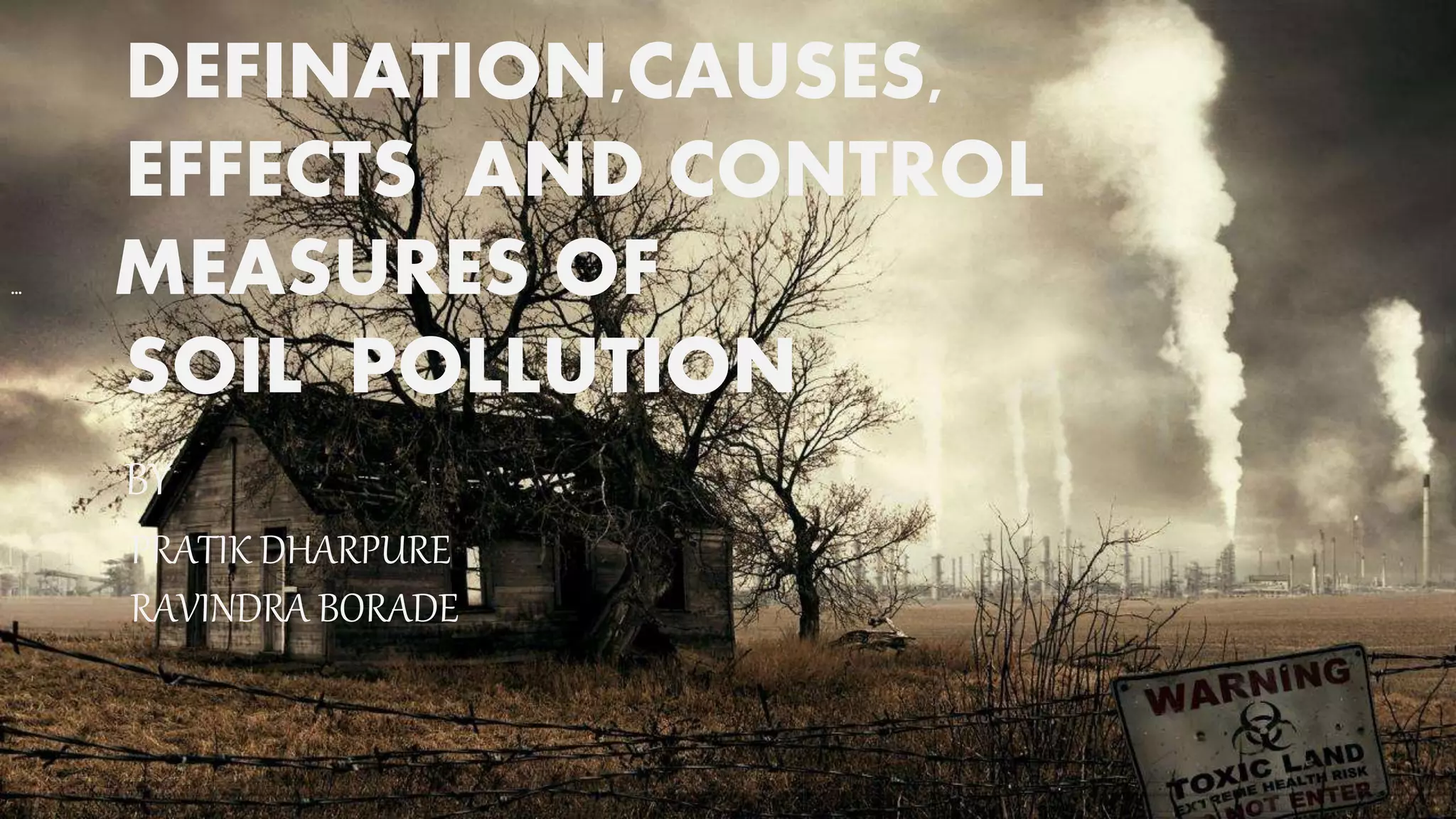
DEFINATION,CAUSES,
EFFECTS AND CONTROL
… MEASURES OF
SOIL POLLUTION
BY
PRATIK DHARPURE
RAVINDRA BORADE
1. What is Soil ?
2. What is soil pollution ?
3. How is it caused ?
4. Types of soil pollution .
5. What are the effects of soil pollution ?
6. How can we control soil pollution ?
Contents
• Soil is the thin layer of organic and inorganic materials that
covers the Earth's rocky surface
• Soil is composed of particles of broken rock that have been
altered by chemical and mechanical processes that include
weathering and erosion
What is Soil ?
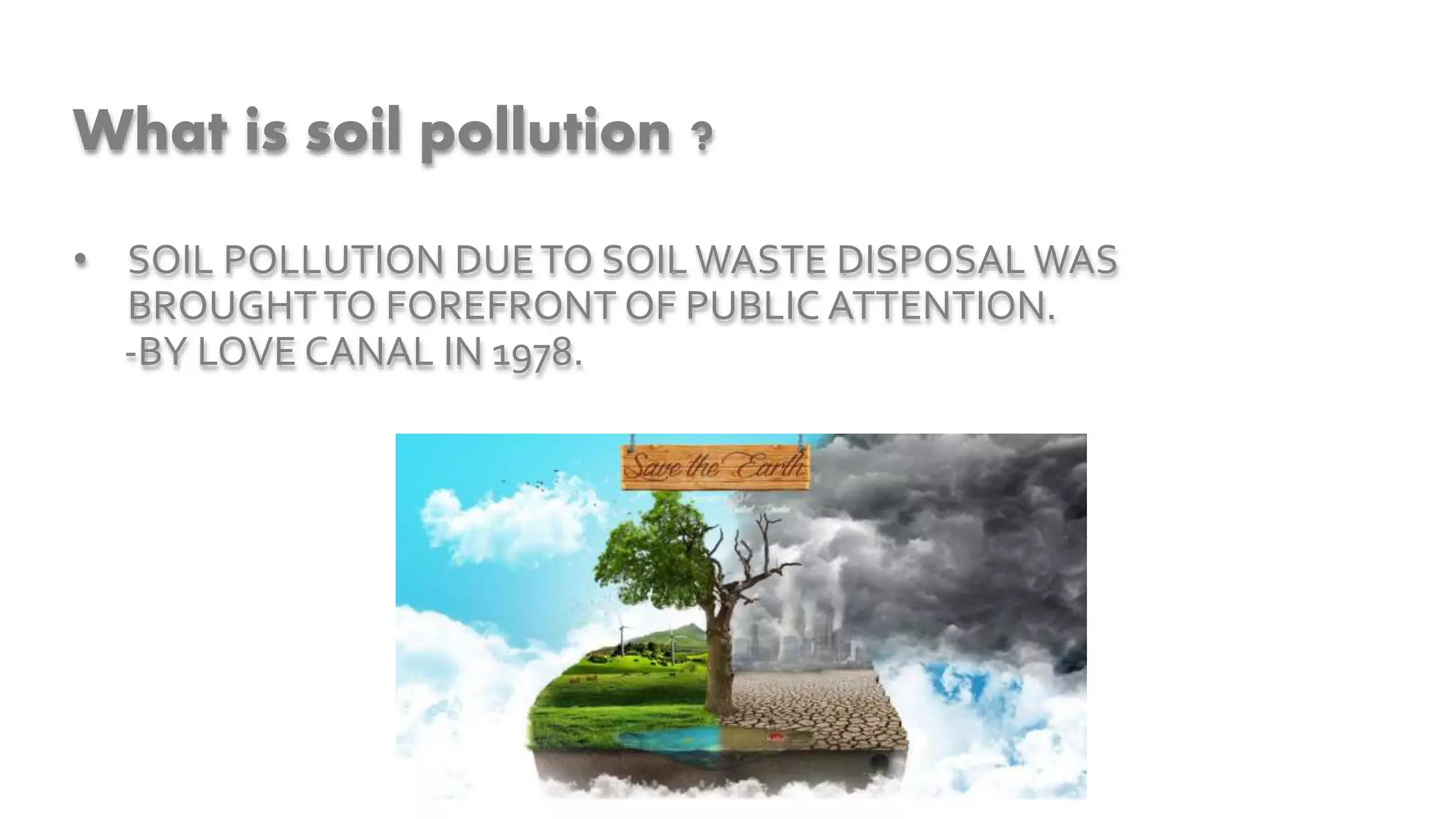
What is soil pollution ?
• SOIL POLLUTION DUETO SOIL WASTE DISPOSAL WAS
BROUGHTTO FOREFRONT OF PUBLIC ATTENTION.
-BY LOVE CANAL IN 1978.
• It is defined as the build-up in soils of persistent toxic compounds,
chemicals, salts, radioactive materials, or disease causing agents,
which have adverse effects on plant growth and animal health.
• Soil pollution is also caused by means other than the direct addition
of xenobiotic (man-made) chemicals such as agricultural runoff
waters, industrial waste materials, acidic precipitates, and
radioactive fallout.
DEFINATION
Causes of Soil Pollution
• Seepage from a landfill
• Discharge of industrial waste into the soil
• Percolation of contaminated water into the soil
• Rupture of underground storage tanks
• Excess application of pesticides, herbicides or fertilizer
• Solid waste seepage
• Deforestation and Soil erosion
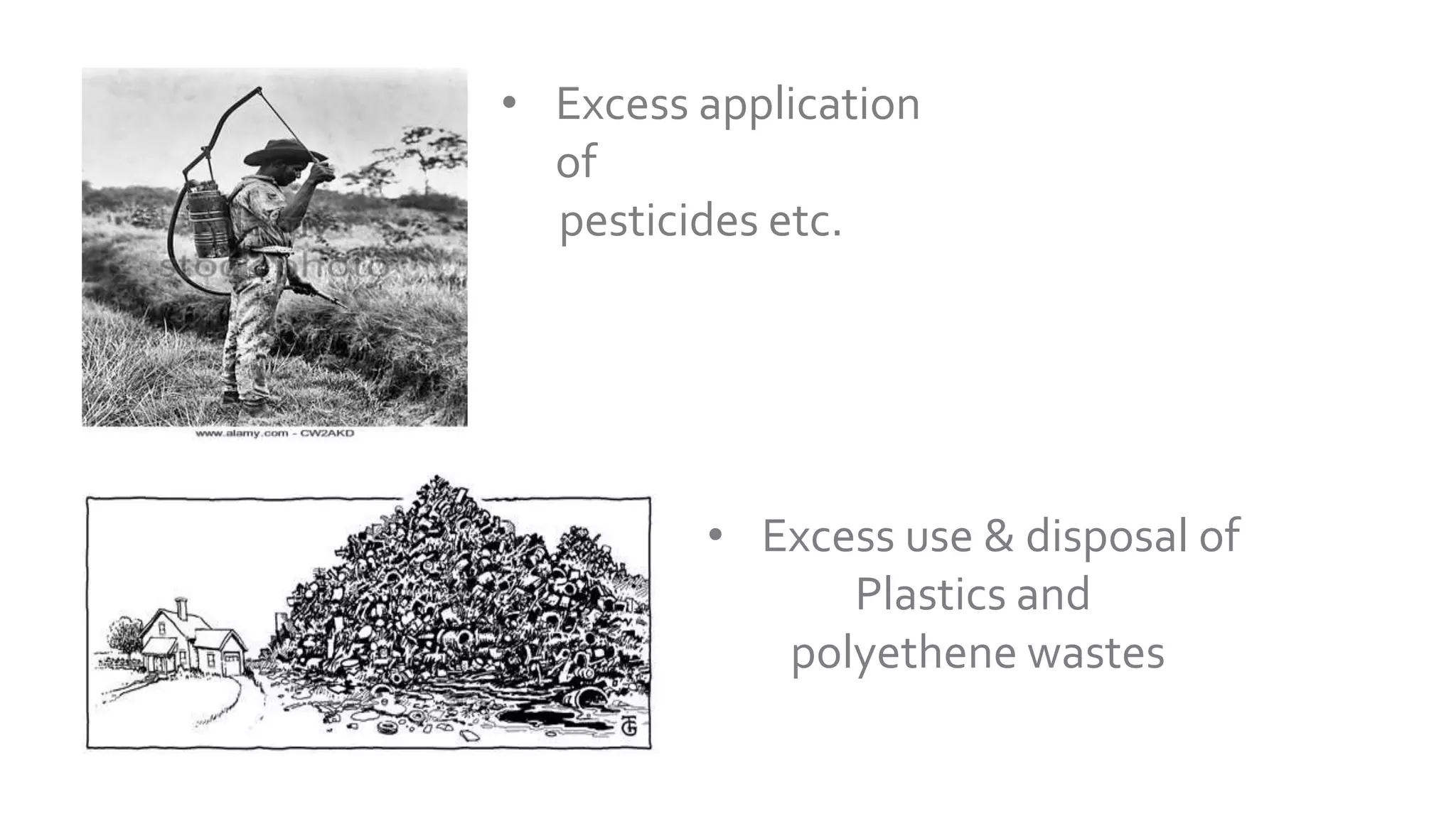
• Excess application
of
pesticides etc.
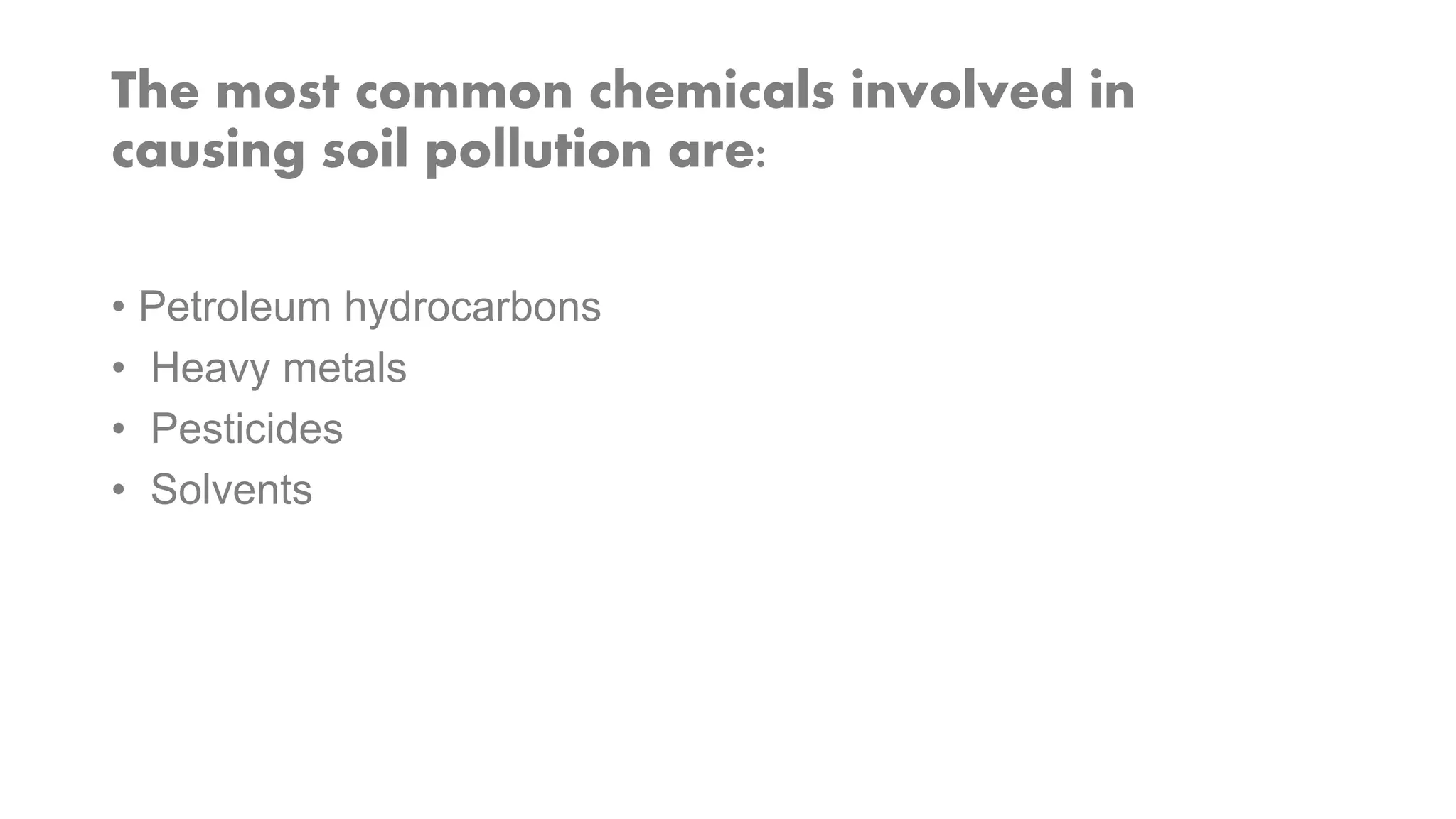
• Excess use & disposal of
Plastics and
polyethene wastes
The most common chemicals involved in
causing soil pollution are:
• Petroleum hydrocarbons
• Heavy metals
• Pesticides
• Solvents
Types of Soil Pollution
• Agricultural Soil Pollution
 pollution of surface soil
 pollution of underground soil
• Soil pollution by industrial effluents and solid wastes
 pollution of surface soil
 disturbances in soil profile
• Pollution due to urban activities
 pollution of surface soil
 pollution of underground soil
Pervasive Computing
Architecture
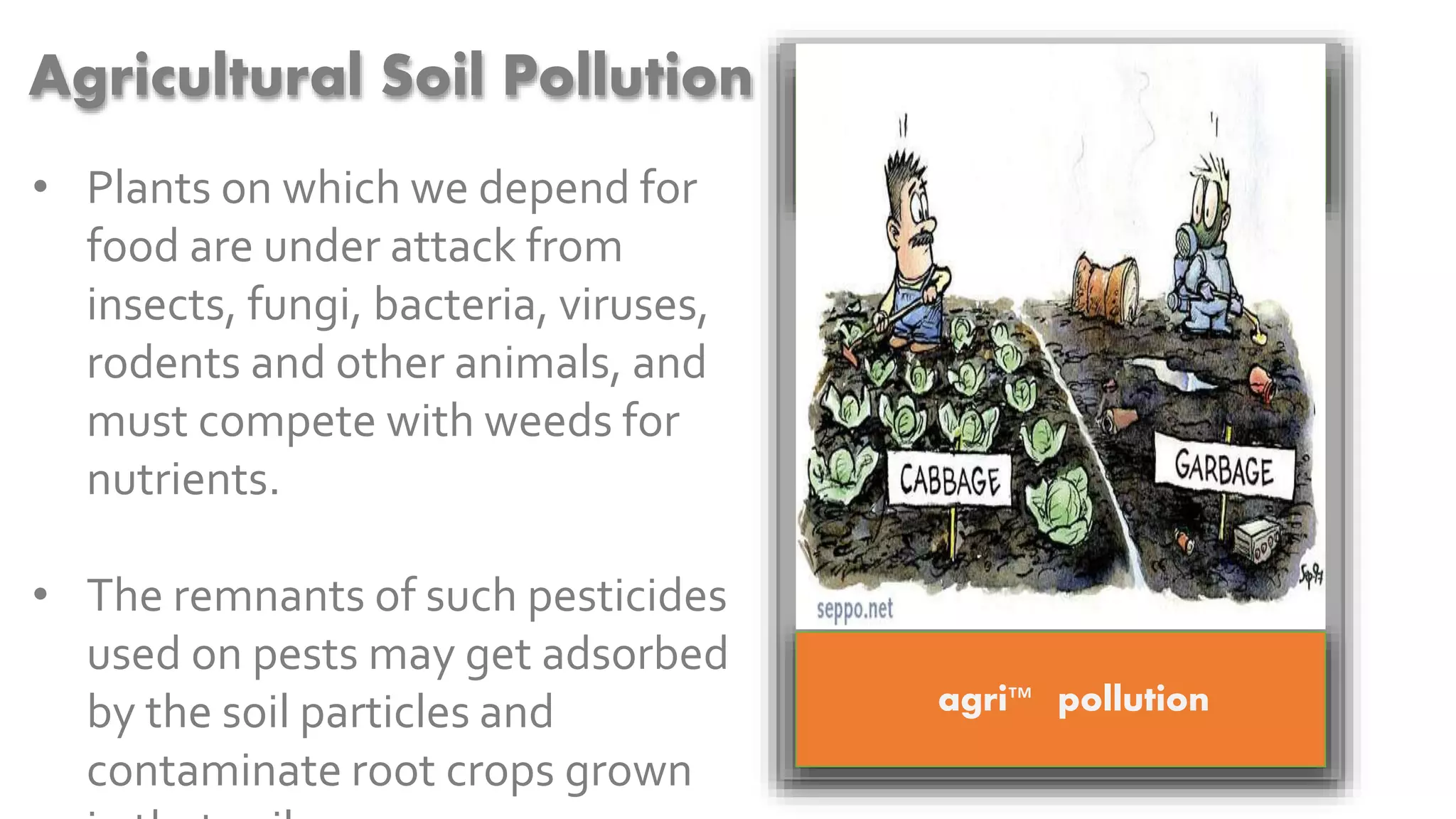
Agricultural Soil Pollution
Appliction Layer
agri™ pollution
• Plants on which we depend for
food are under attack from
insects, fungi, bacteria, viruses,
rodents and other animals, and
must compete with weeds for
nutrients.
• The remnants of such pesticides
used on pests may get adsorbed
by the soil particles and
contaminate root crops grown
Pervasive Computing
Architecture
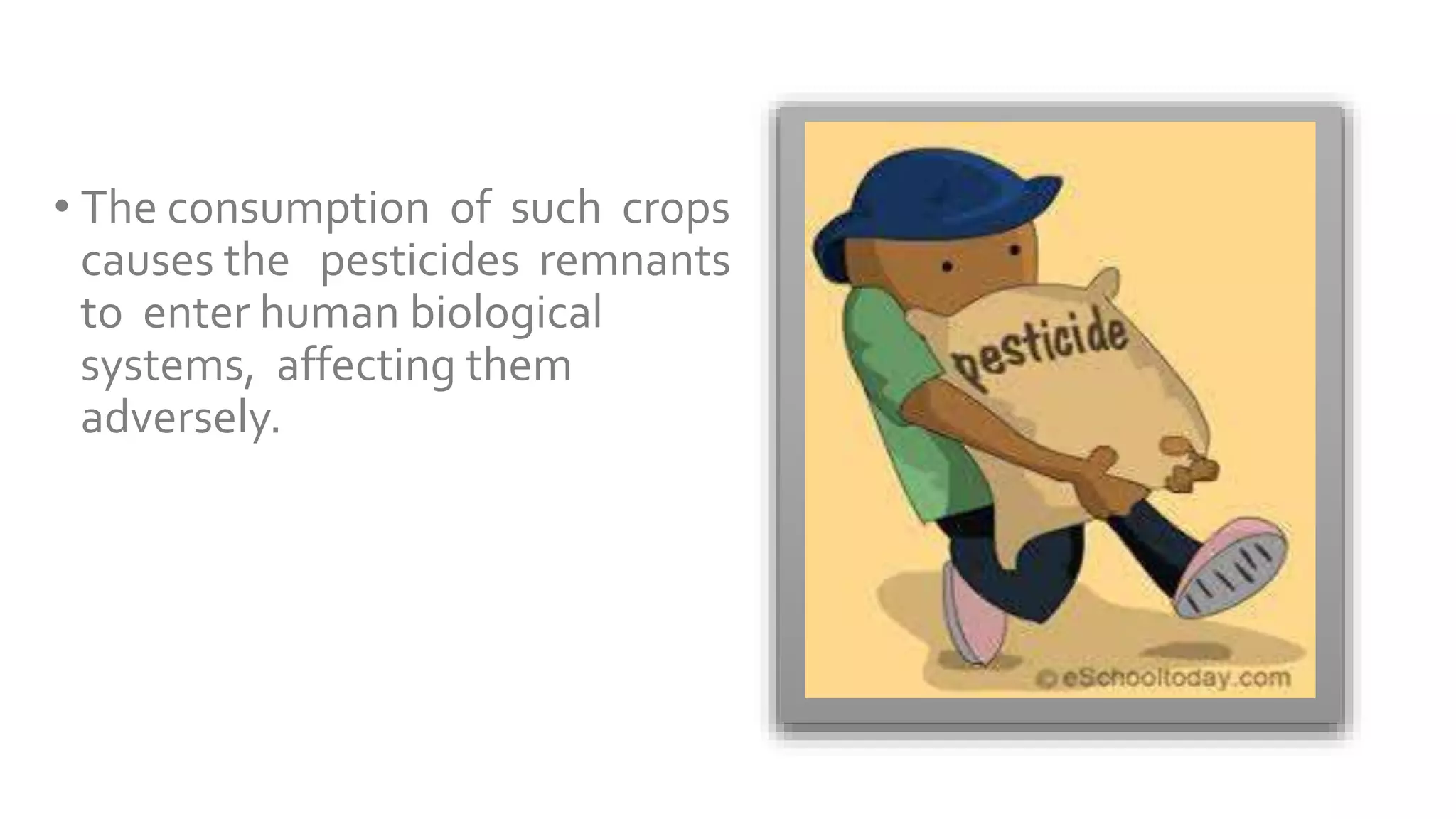
• The consumption of such crops
causes the pesticides remnants
to enter human biological
systems, affecting them
adversely.
Agricultural effects
System Architecture
• Reduced soil fertility
• Reduced nitrogen fixation
• Increased erodibility
• Larger loss of soil and nutrients
• Deposition of silt in tanks and reservoirs
• Reduced crop yield
• Imbalance in soil fauna and flora
Industrial Soil Pollution
• Large quantity of solid wastes like unused and rejected
chemicals (like sludge, press mud, saw dust, bottles, plastic
materials etc.), unwanted industrial wastes generated
during manufacturing processes are dumped over on the
surface of soil by almost all industries with difference in the
degree.
• Larger the production base, larger is the generation of
wastes.
• Traditionally, these materials have been dumped around
the factory site or around the entire city. Rarely, they are
System Architecture
Industrial effects
System Architecture
Pervasive Computing
Architecture
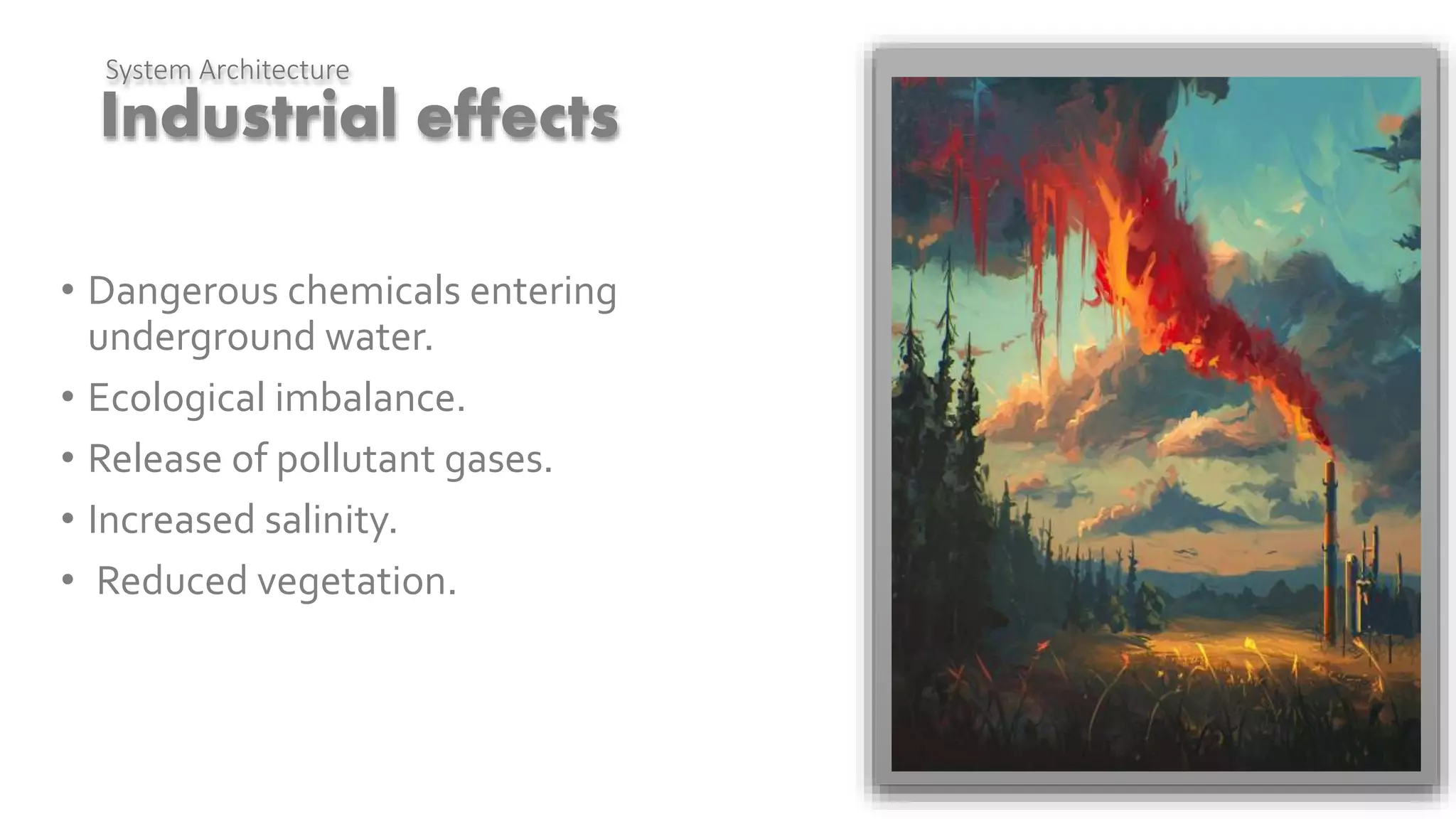
• Dangerous chemicals entering
underground water.
• Ecological imbalance.
• Release of pollutant gases.
• Increased salinity.
• Reduced vegetation.
Soil Pollution due to Urbanization
• Urban activities generate large quantities of city wastes
including several Biodegradable materials (like vegetables,
animal wastes, papers, wooden pieces, carcasses, plant twigs,
leaves, cloth wastes as well as sweepings) and many non-
biodegradable materials (such as plastic bags, plastic bottles,
plastic wastes, glass bottles, glass pieces, stone / cement pieces).
• On a rough estimate indian cities are producing solid city
wastes to the tune of 50,000 - 80,000 metric tons every day.
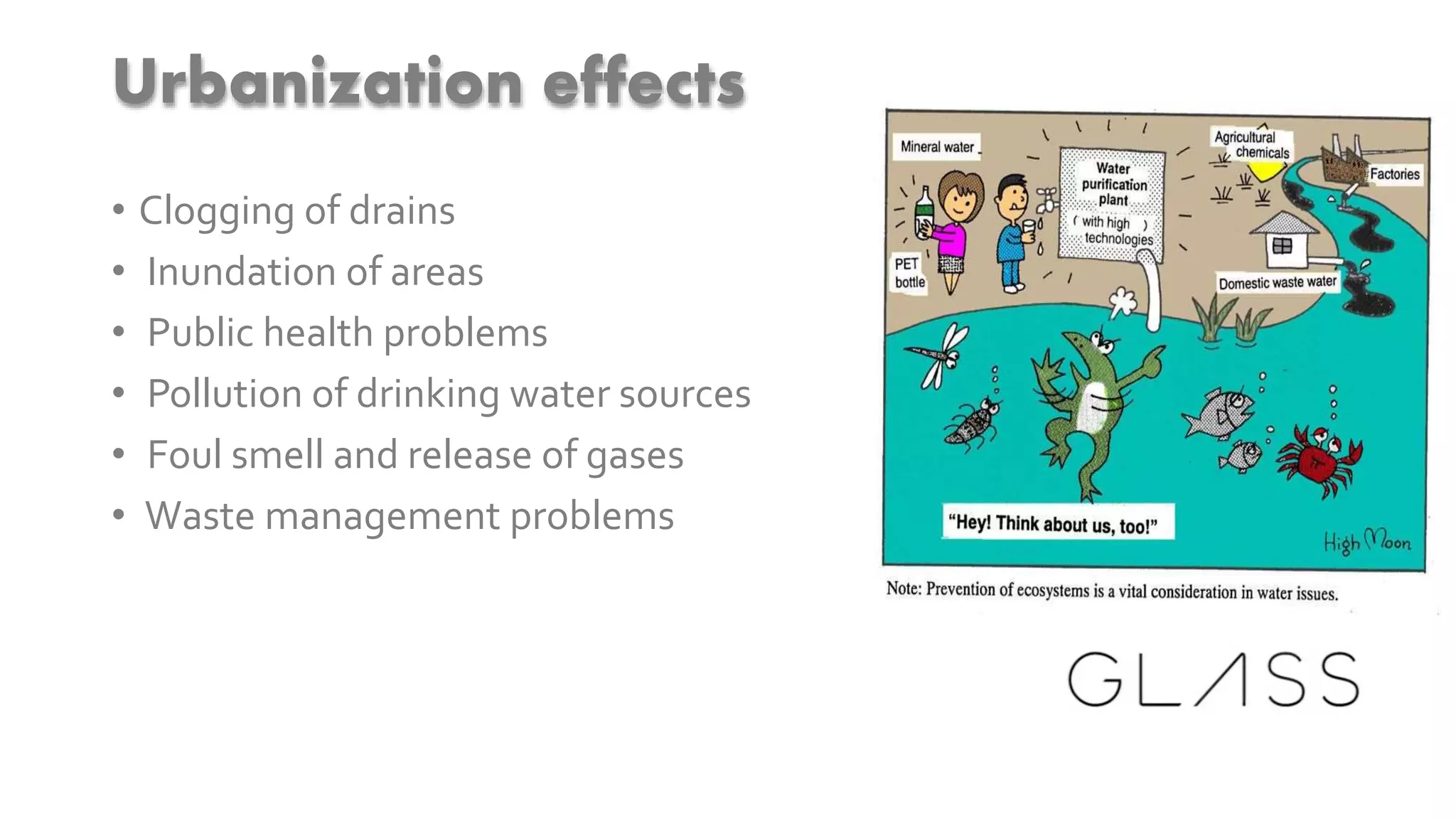
Urbanization effects
• Clogging of drains
• Inundation of areas
• Public health problems
• Pollution of drinking water sources
• Foul smell and release of gases
• Waste management problems
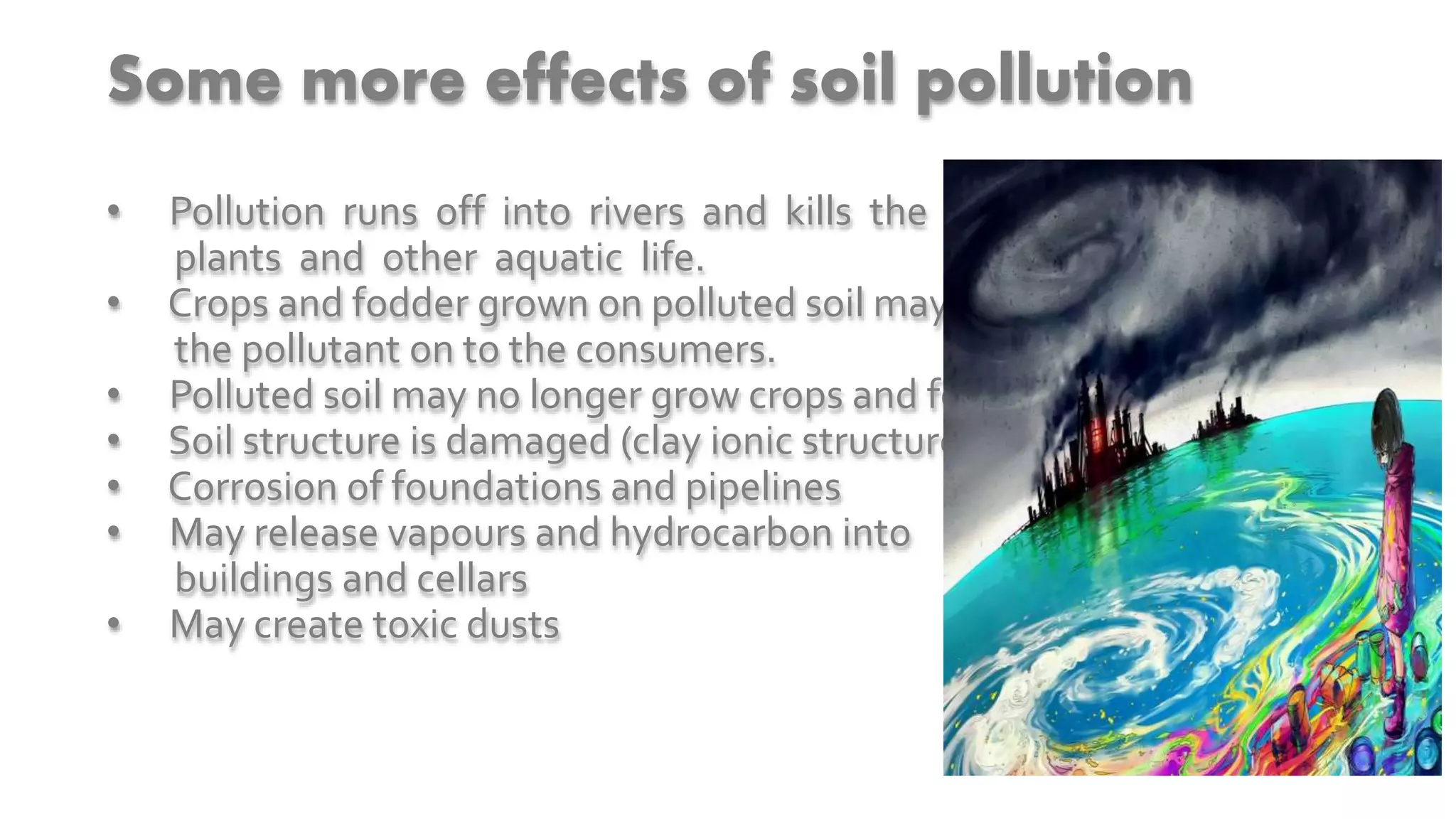
Some more effects of soil pollution
• Pollution runs off into rivers and kills the fish,
plants and other aquatic life.
• Crops and fodder grown on polluted soil may pass
the pollutant on to the consumers.
• Polluted soil may no longer grow crops and fodder
• Soil structure is damaged (clay ionic structure impaired.)
• Corrosion of foundations and pipelines
• May release vapours and hydrocarbon into
buildings and cellars
• May create toxic dusts
Methods to control Soil Pollution™
• BIODEGRADABLEWASTES USED FOR BIOGAS... AND NON-
BIODEGRADABLEWASTES MAY BE RECYCLED...
• PLANTING OFTREES MUST BE ENCOURAGED...
• DISPOSAL OF HAZARDOUS RADIOACTIVE WASTES INTO SOIL SHOULD BE
PROHIBITED...
• SOLIDWASTE CAN ALSO BE USED FOR ELECTRICITY GENERATION...
• USE OF CHEMICAL FERTILIZERS AND PESTICIDES SHOULD BE
MINIMISED...
Methods to control Soil Pollution™
• Weeds soak up minerals in the soil. Reducing weed growth helps
reduce soil pollution. One of the more common methods of
reducing weed growth is covering the soil with numerous layers of
wet newspapers or a plastic sheet for several weeks before
cultivation.This prevents light from reaching the weeds, which
kills them.
CASE STUDY
• It is important to protect the land from deforestation,
fragmentation, degradation and drought. About 69% of India's total
geographical area is under dry lands .These areas incidentally are
highly populated which makes the people impacts livelihoods
directly . An estimated 32 percent of India’s total land area is affected
by land degradation.
• Land degradation in northern coastal belts are degraded due to
overgrazing , wind ,conversion of rangelands in rain fed croplands.
• Land degradation in western desert are over exploitation of soil
groundwater resources .
• Lands in the eastern desert are degraded due to water and wind
degradation .
References
• www.Wikipedia.com
• www.google.com/glass
• images.google.com
• www.Livescience.com
• www.Buzzle.com
Thank you

soil pollution- definition, causes and measures control

  • 1.
    DEFINATION,CAUSES, EFFECTS AND CONTROL …MEASURES OF SOIL POLLUTION BY PRATIK DHARPURE RAVINDRA BORADE
  • 2.
    1. What isSoil ? 2. What is soil pollution ? 3. How is it caused ? 4. Types of soil pollution . 5. What are the effects of soil pollution ? 6. How can we control soil pollution ? Contents
  • 3.
    • Soil isthe thin layer of organic and inorganic materials that covers the Earth's rocky surface • Soil is composed of particles of broken rock that have been altered by chemical and mechanical processes that include weathering and erosion What is Soil ?
  • 4.
    What is soilpollution ? • SOIL POLLUTION DUETO SOIL WASTE DISPOSAL WAS BROUGHTTO FOREFRONT OF PUBLIC ATTENTION. -BY LOVE CANAL IN 1978.
  • 5.
    • It isdefined as the build-up in soils of persistent toxic compounds, chemicals, salts, radioactive materials, or disease causing agents, which have adverse effects on plant growth and animal health. • Soil pollution is also caused by means other than the direct addition of xenobiotic (man-made) chemicals such as agricultural runoff waters, industrial waste materials, acidic precipitates, and radioactive fallout. DEFINATION
  • 6.
    Causes of SoilPollution • Seepage from a landfill • Discharge of industrial waste into the soil • Percolation of contaminated water into the soil • Rupture of underground storage tanks • Excess application of pesticides, herbicides or fertilizer • Solid waste seepage • Deforestation and Soil erosion
  • 7.
    • Excess application of pesticidesetc. • Excess use & disposal of Plastics and polyethene wastes
  • 8.
    The most commonchemicals involved in causing soil pollution are: • Petroleum hydrocarbons • Heavy metals • Pesticides • Solvents
  • 9.
    Types of SoilPollution • Agricultural Soil Pollution  pollution of surface soil  pollution of underground soil • Soil pollution by industrial effluents and solid wastes  pollution of surface soil  disturbances in soil profile • Pollution due to urban activities  pollution of surface soil  pollution of underground soil
  • 10.
    Pervasive Computing Architecture Agricultural SoilPollution Appliction Layer agri™ pollution • Plants on which we depend for food are under attack from insects, fungi, bacteria, viruses, rodents and other animals, and must compete with weeds for nutrients. • The remnants of such pesticides used on pests may get adsorbed by the soil particles and contaminate root crops grown
  • 11.
    Pervasive Computing Architecture • Theconsumption of such crops causes the pesticides remnants to enter human biological systems, affecting them adversely.
  • 12.
    Agricultural effects System Architecture •Reduced soil fertility • Reduced nitrogen fixation • Increased erodibility • Larger loss of soil and nutrients • Deposition of silt in tanks and reservoirs • Reduced crop yield • Imbalance in soil fauna and flora
  • 13.
    Industrial Soil Pollution •Large quantity of solid wastes like unused and rejected chemicals (like sludge, press mud, saw dust, bottles, plastic materials etc.), unwanted industrial wastes generated during manufacturing processes are dumped over on the surface of soil by almost all industries with difference in the degree. • Larger the production base, larger is the generation of wastes. • Traditionally, these materials have been dumped around the factory site or around the entire city. Rarely, they are System Architecture
  • 14.
    Industrial effects System Architecture PervasiveComputing Architecture • Dangerous chemicals entering underground water. • Ecological imbalance. • Release of pollutant gases. • Increased salinity. • Reduced vegetation.
  • 15.
    Soil Pollution dueto Urbanization • Urban activities generate large quantities of city wastes including several Biodegradable materials (like vegetables, animal wastes, papers, wooden pieces, carcasses, plant twigs, leaves, cloth wastes as well as sweepings) and many non- biodegradable materials (such as plastic bags, plastic bottles, plastic wastes, glass bottles, glass pieces, stone / cement pieces). • On a rough estimate indian cities are producing solid city wastes to the tune of 50,000 - 80,000 metric tons every day.
  • 16.
    Urbanization effects • Cloggingof drains • Inundation of areas • Public health problems • Pollution of drinking water sources • Foul smell and release of gases • Waste management problems
  • 17.
    Some more effectsof soil pollution • Pollution runs off into rivers and kills the fish, plants and other aquatic life. • Crops and fodder grown on polluted soil may pass the pollutant on to the consumers. • Polluted soil may no longer grow crops and fodder • Soil structure is damaged (clay ionic structure impaired.) • Corrosion of foundations and pipelines • May release vapours and hydrocarbon into buildings and cellars • May create toxic dusts
  • 18.
    Methods to controlSoil Pollution™ • BIODEGRADABLEWASTES USED FOR BIOGAS... AND NON- BIODEGRADABLEWASTES MAY BE RECYCLED... • PLANTING OFTREES MUST BE ENCOURAGED... • DISPOSAL OF HAZARDOUS RADIOACTIVE WASTES INTO SOIL SHOULD BE PROHIBITED... • SOLIDWASTE CAN ALSO BE USED FOR ELECTRICITY GENERATION... • USE OF CHEMICAL FERTILIZERS AND PESTICIDES SHOULD BE MINIMISED...
  • 19.
    Methods to controlSoil Pollution™ • Weeds soak up minerals in the soil. Reducing weed growth helps reduce soil pollution. One of the more common methods of reducing weed growth is covering the soil with numerous layers of wet newspapers or a plastic sheet for several weeks before cultivation.This prevents light from reaching the weeds, which kills them.
  • 20.
    CASE STUDY • Itis important to protect the land from deforestation, fragmentation, degradation and drought. About 69% of India's total geographical area is under dry lands .These areas incidentally are highly populated which makes the people impacts livelihoods directly . An estimated 32 percent of India’s total land area is affected by land degradation. • Land degradation in northern coastal belts are degraded due to overgrazing , wind ,conversion of rangelands in rain fed croplands. • Land degradation in western desert are over exploitation of soil groundwater resources . • Lands in the eastern desert are degraded due to water and wind degradation .
  • 21.
    References • www.Wikipedia.com • www.google.com/glass •images.google.com • www.Livescience.com • www.Buzzle.com
  • 22.