
INDUSTRIAL POLLUTION
By-
Manish Sahu
M.Sc. Chemistry (Final)
Sp.- Physical Chemistry
SYNOPSIS
 Introduction
 Definition
 Types of Industrial Pollution
 Causes of Industrial Pollution
 Effects of Industrial Pollution
 How to Control Industrial Pollution
 Conclusion
 Reference
INTRODUCTION
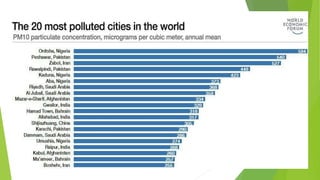
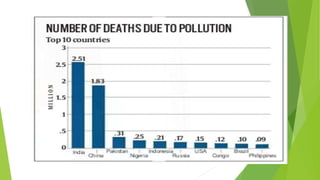
 Pollution form industry households, vehicles and farms causes health
problem for people and animals. It can effect both the air and quality of
water in rivers, lakes and seas.
 Industrial Pollution is the introduction of contaminants into a
natural environmental that causes instability, disorder, harm or
discomfort to the Ecosystem.
 This is one of the leading causes of Pollution Worldwide.
DEFINITION
When harmful substance contaminate the
environmental it is called Pollution.
Any form of Pollution that can its immediate
source to industrial practices is known as Industrial Pollution.
TYPES
• Air Pollution
• Water Pollution
• Soil Pollution
• Noise Pollution
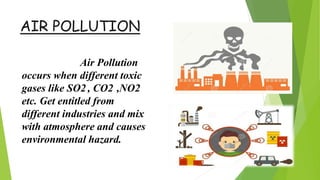
AIR POLLUTION
Air Pollution
occurs when different toxic
gases like SO2 , CO2 ,NO2
etc. Get entitled from
different industries and mix
with atmosphere and causes
environmental hazard.
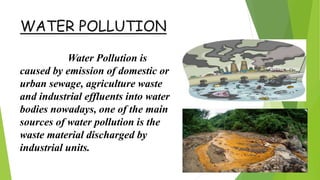
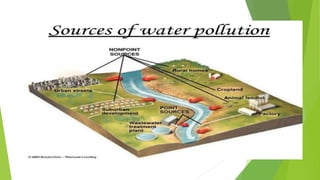
WATER POLLUTION
Water Pollution is
caused by emission of domestic or
urban sewage, agriculture waste
and industrial effluents into water
bodies nowadays, one of the main
sources of water pollution is the
waste material discharged by
industrial units.
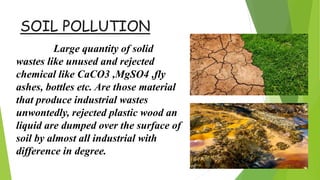
SOIL POLLUTION
Large quantity of solid
wastes like unused and rejected
chemical like CaCO3 ,MgSO4 ,fly
ashes, bottles etc. Are those material
that produce industrial wastes
unwontedly, rejected plastic wood an
liquid are dumped over the surface of
soil by almost all industrial with
difference in degree.
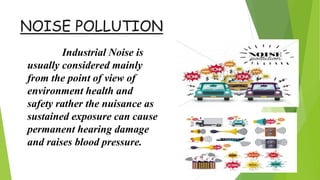
NOISE POLLUTION
Industrial Noise is
usually considered mainly
from the point of view of
environment health and
safety rather the nuisance as
sustained exposure can cause
permanent hearing damage
and raises blood pressure.
CAUSES
 Lack of policies to control pollution .
 Unplanned industrial growth.
 Use of outdated technologies.
 Presence of a large number of small scale industries.
 Inefficient waste Disposal.
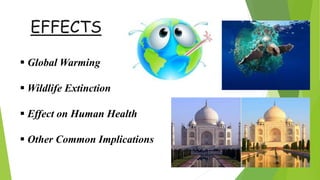
EFFECTS
 Global Warming
 Wildlife Extinction
 Effect on Human Health
 Other Common Implications
CONTROLS
 Read labels and rejected products.
 Investigate where a Company’s , Plants are located.
 The industries should ensure the new machines that should be noise
proof.
 Industries should be setup outside. Residential area and not near
schools.
CONCLUSION
The issue of industrial pollution
concerns every nation on the planet. As a result, many steps
have been taken to seek permanent solution to the problem.
Better technology is bring developed for disposal of waste
and recycling as much polluted water in the industries as
possible.
REFERENCES
 Environmental Chemistry By-
“B. K. Sharma”
(Page No. 289-293)
 Environmental Chemistry By-
“C. Baird & W. H. Freeman”
Industrial pollution

Industrial pollution

  • 1.
    INDUSTRIAL POLLUTION By- Manish Sahu M.Sc.Chemistry (Final) Sp.- Physical Chemistry
  • 2.
    SYNOPSIS  Introduction  Definition Types of Industrial Pollution  Causes of Industrial Pollution  Effects of Industrial Pollution  How to Control Industrial Pollution  Conclusion  Reference
  • 3.
    INTRODUCTION  Pollution formindustry households, vehicles and farms causes health problem for people and animals. It can effect both the air and quality of water in rivers, lakes and seas.  Industrial Pollution is the introduction of contaminants into a natural environmental that causes instability, disorder, harm or discomfort to the Ecosystem.  This is one of the leading causes of Pollution Worldwide.
  • 4.
    DEFINITION When harmful substancecontaminate the environmental it is called Pollution. Any form of Pollution that can its immediate source to industrial practices is known as Industrial Pollution.
  • 5.
    TYPES • Air Pollution •Water Pollution • Soil Pollution • Noise Pollution
  • 6.
    AIR POLLUTION Air Pollution occurswhen different toxic gases like SO2 , CO2 ,NO2 etc. Get entitled from different industries and mix with atmosphere and causes environmental hazard.
  • 8.
    WATER POLLUTION Water Pollutionis caused by emission of domestic or urban sewage, agriculture waste and industrial effluents into water bodies nowadays, one of the main sources of water pollution is the waste material discharged by industrial units.
  • 10.
    SOIL POLLUTION Large quantityof solid wastes like unused and rejected chemical like CaCO3 ,MgSO4 ,fly ashes, bottles etc. Are those material that produce industrial wastes unwontedly, rejected plastic wood an liquid are dumped over the surface of soil by almost all industrial with difference in degree.
  • 11.
    NOISE POLLUTION Industrial Noiseis usually considered mainly from the point of view of environment health and safety rather the nuisance as sustained exposure can cause permanent hearing damage and raises blood pressure.
  • 12.
    CAUSES  Lack ofpolicies to control pollution .  Unplanned industrial growth.  Use of outdated technologies.  Presence of a large number of small scale industries.  Inefficient waste Disposal.
  • 15.
    EFFECTS  Global Warming Wildlife Extinction  Effect on Human Health  Other Common Implications
  • 16.
    CONTROLS  Read labelsand rejected products.  Investigate where a Company’s , Plants are located.  The industries should ensure the new machines that should be noise proof.  Industries should be setup outside. Residential area and not near schools.
  • 17.
    CONCLUSION The issue ofindustrial pollution concerns every nation on the planet. As a result, many steps have been taken to seek permanent solution to the problem. Better technology is bring developed for disposal of waste and recycling as much polluted water in the industries as possible.
  • 18.
    REFERENCES  Environmental ChemistryBy- “B. K. Sharma” (Page No. 289-293)  Environmental Chemistry By- “C. Baird & W. H. Freeman”