David Skok
The Key Drivers for SaaS Success
What Outputs do we
want to optimize?
Growth
Profitability
Cash
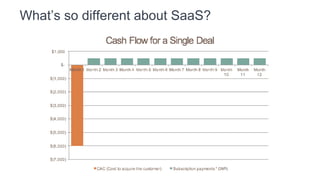
What’s so different about SaaS?
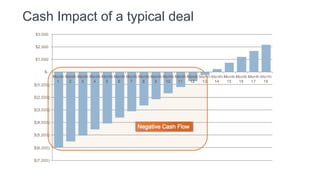
Cash Impact of a typical deal
If cash flow is bad for one
customer…
what happens when we grow,
and add many more customers?
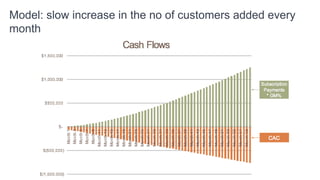
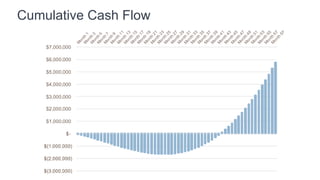
Model: slow increase in the no of customers added every
month
Cumulative Cash Flow
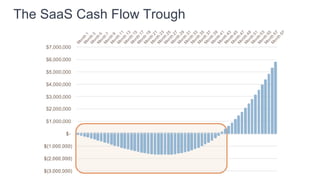
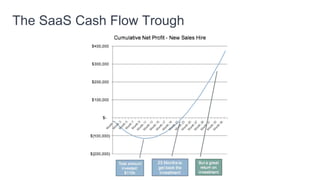
The SaaS Cash Flow Trough
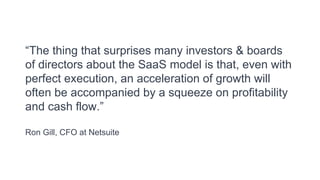
“The thing that surprises many investors & boards
of directors about the SaaS model is that, even with
perfect execution, an acceleration of growth will
often be accompanied by a squeeze on profitability
and cash flow.”
Ron Gill, CFO at Netsuite
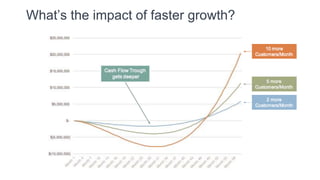
What’s the impact of faster growth?
When your SaaS business is losing
money at an increasing rate, how can
you tell if the business is going to work
eventually?
Unit Economics
Unit Economics
Can I make more profit from my
customers than it costs me to
acquire them?
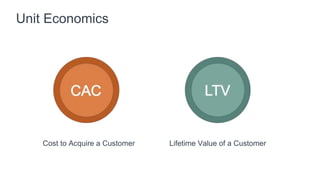
Unit Economics
Cost to Acquire a Customer Lifetime Value of a Customer
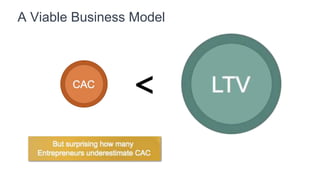
A Viable Business Model
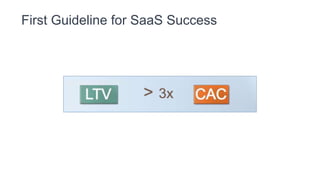
First Guideline for SaaS Success
A Deeper Look at LTV
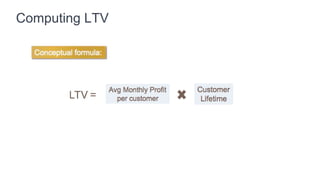
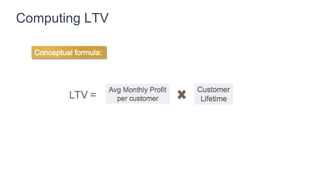
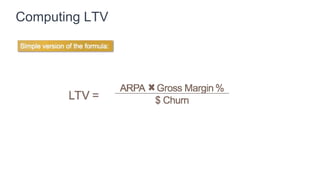
Computing LTV
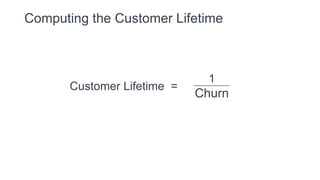
Computing the Customer Lifetime
Customer Lifetime =
1
Churn
So CHURN is an important driver
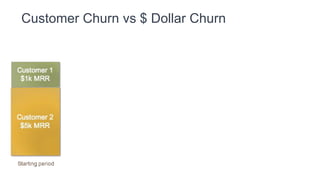
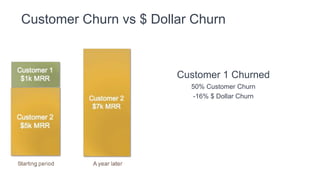
Customer Churn vs $ Dollar Churn
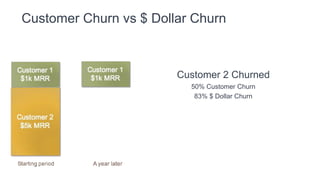
Customer 2 Churned
50% Customer Churn
83% $ Dollar Churn
Customer Churn vs $ Dollar Churn
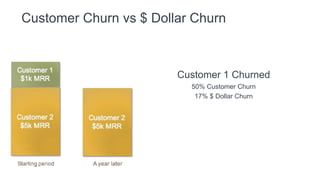
Customer 1 Churned
50% Customer Churn
17% $ Dollar Churn
Customer Churn vs $ Dollar Churn
Customer 1 Churned
50% Customer Churn
-16% $ Dollar Churn
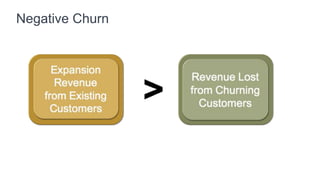
Negative Churn
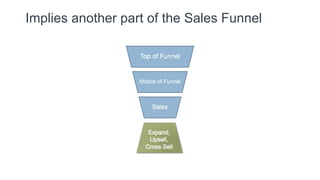
Implies another part of the Sales Funnel
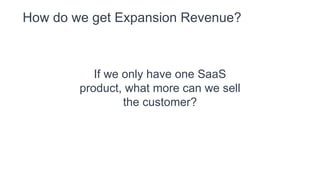
How do we get Expansion Revenue?
If we only have one SaaS
product, what more can we sell
the customer?
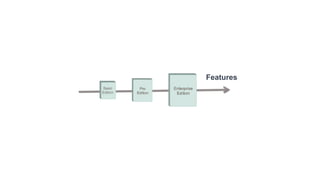
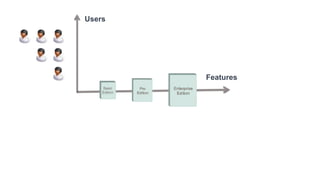
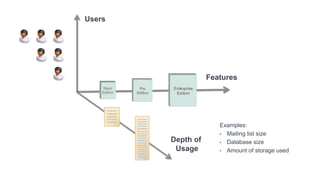
Variable Pricing Axes
Driving SaaS Success
Using Key Metrics
Features
Driving SaaS Success
Using Key Metrics
Features
Users
Driving SaaS Success
Using Key Metrics
Features
Users
Depth of
Usage
Examples:
• Mailing list size
• Database size
• Amount of storage used
CASH
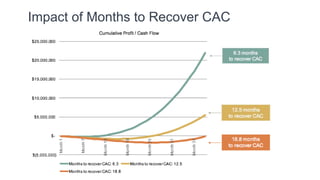
Cash Consumed
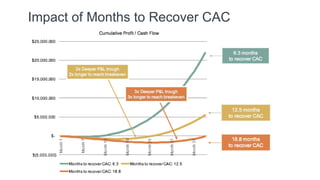
Impact of Months to Recover CAC
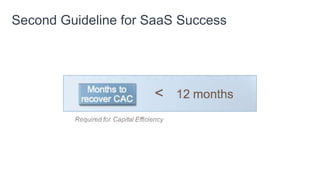
Second Guideline for SaaS Success
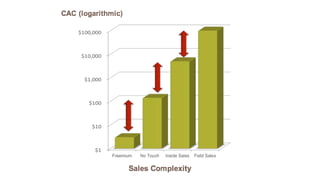
More On CAC
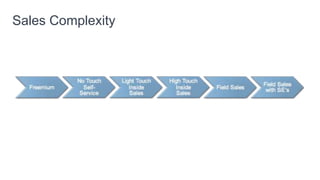
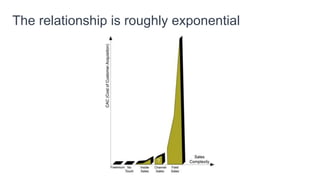
Sales Complexity
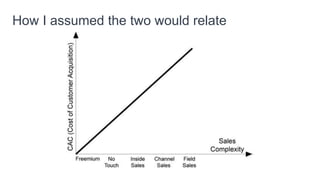
How I assumed the two would relate
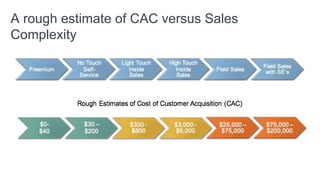
A rough estimate of CAC versus Sales
Complexity
The relationship is roughly exponential
The Primary Unit of Growth
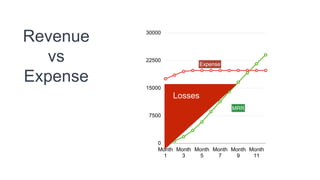
Revenue
vs
Expense
0
7500
15000
22500
30000
Month
1
Month
3
Month
5
Month
7
Month
9
Month
11
MRR
Expense
Losses
The SaaS Cash Flow Trough
What happens if we
hire 2 sales people
every month?
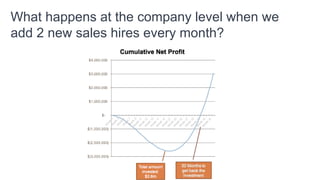
What happens at the company level when we
add 2 new sales hires every month?
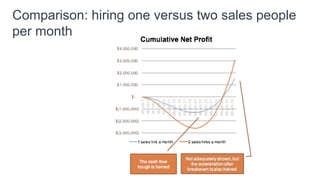
Comparison: hiring one versus two sales people
per month
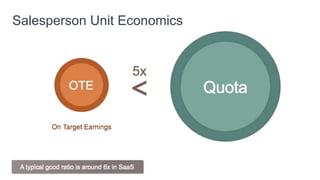
Salesperson Unit Economics
CASH IN ADVANCE
Annual up-front payment
Instead of Monthly
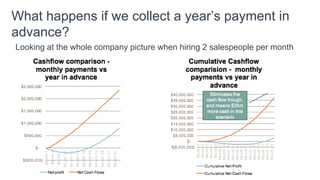
What happens if we collect a year’s payment in
advance?
Looking at the whole company picture when hiring 2 salespeople per month
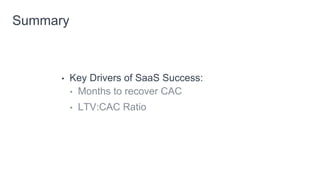
Summary
Summary
• Key Drivers of SaaS Success:
• Months to recover CAC
• LTV:CAC Ratio
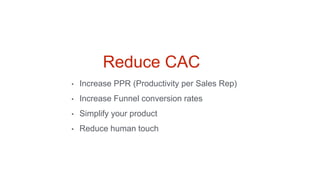
Reduce CAC
• Lower costs per lead
• Increase Funnel conversion rates
• Increase PPR (Productivity per Sales Rep)
• Simplify your product
• Reduce human touch
Increase LTV
• Achieve Negative $ churn
• Improve product stickiness
• Sell to the right customers
• Nail On-boarding and Customer Success
• Use variable pricing axes
• Nail expansion sales
• Increase Gross Margin %
• Increase average deal size
For more information…
Visit my blog:
www.forentrepreneurs.com
Full slide deck is available here:
www.forentrepreneurs.com/saastr
Appendix
Additional topics that would have been
covered had there been more time
What Metrics should we use to
measure a SaaS business?
We care about recurring revenue
MRR Monthly Recurring Revenue
ARR Annual Recurring Revenue
Driving SaaS Success
Using Key Metrics
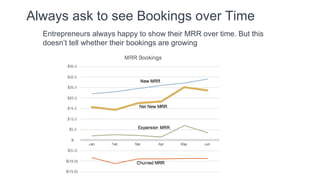
Always ask to see Bookings over Time
Entrepreneurs always happy to show their MRR over time. But this
doesn’t tell whether their bookings are growing
Computing LTV
Computing LTV
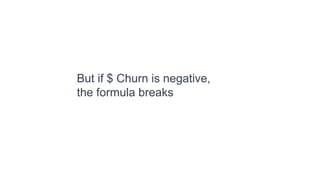
But if $ Churn is negative,
the formula breaks
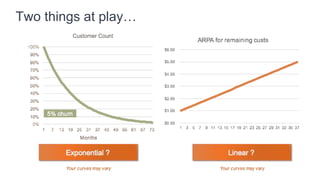
Two things at play…
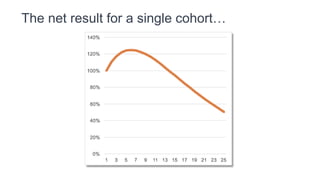
The net result for a single cohort…
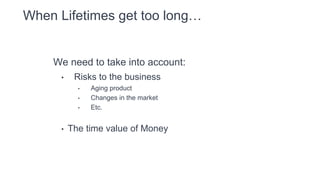
When Lifetimes get too long…
We need to take into account:
• Risks to the business
• Aging product
• Changes in the market
• Etc.
• The time value of Money
The Solution:
• Discount future cash flows
Real World LTV Calculator
• Use the spreadsheet provided here:
• http://www.forentrepreneurs.com/ltv/
• Formulae involved:
Understanding Public SaaS Companies
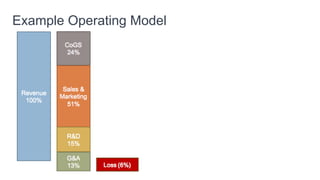
Example Operating Model
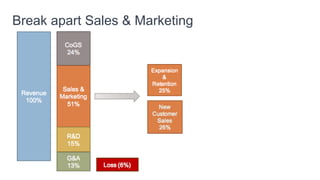
Break apart Sales & Marketing
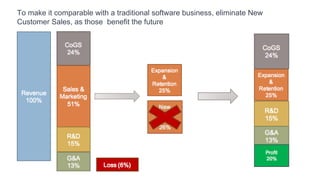
To make it comparable with a traditional software business, eliminate New
Customer Sales, as those benefit the future
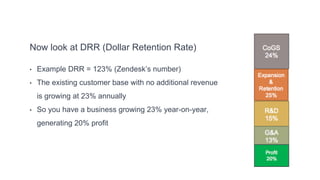
Now look at DRR (Dollar Retention Rate)
• Example DRR = 123% (Zendesk’s number)
• The existing customer base with no additional revenue
is growing at 23% annually
• So you have a business growing 23% year-on-year,
generating 20% profit
The Magic Number
• In general, I don’t like the Magic Number
• Hard to explain and understand
• BUT — a public company may not give:
• LTV:CAC ratio
• Months to recover CAC
• So use Magic Number to calculate something roughly equivalent
• First developed by Josh James, CEO of Omnivore
• The key insight - if your Magic Number is:
• Above 0.75 — Step on the gas
• Below 0.75 — Step back and look at your business
• Below 0.5 — business probably not ready to expand
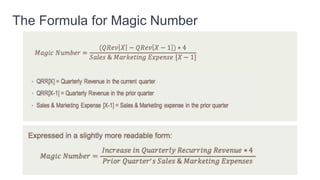
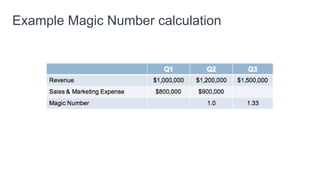
The Formula for Magic Number
Example Magic Number calculation
2008 Magic Number Graph
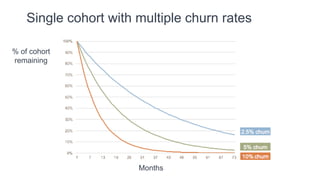
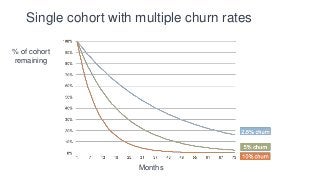
Single cohort with multiple churn rates
Months
% of cohort
remaining