Downloaded 450 times
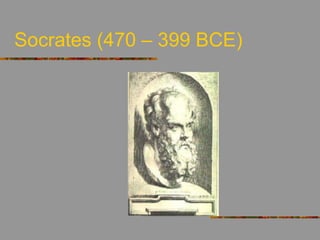





Socrates (470-399 BCE) was an Athenian philosopher who questioned the moral and political values of his time through dialectic discussions. He believed that an examined interior life focused on virtue, truth, and wisdom was more important than wealth, fame or power. Accused of corrupting the youth of Athens, Socrates refused to escape his death sentence through hemlock poisoning, remaining committed to his philosophical ideals. His influence shaped later philosophers like Plato, as he pioneered inductive reasoning and the Socratic method of questioning beliefs.


