Preparedby:
ROBERT JASON A. MONREAL
Reconstructionism is a also known as Social Reconstructionism.
Social Reconstructionism is a philosophy that emphasizes the addressing of
social questions and a quest to create a better society and worldwide
democracy.
Reconstructionist educators focus on a curriculum that highlights social
as the aim of education.
Premises of
Reconstructionism:
1. Society is in
need of change or
reconstruction
2. Education must
take the lead in the
reconstruction
Promoting critical
thinking
Fostering active
citizenship
Addressing social
injustice
Encouraging
democratic values
Cultivating social
responsibility
Creating social aware
and conscious
individual
Inspiring social activism
AIMS OF SOCIAL RECONSTRUCTIONISM IN
EDUCATION:
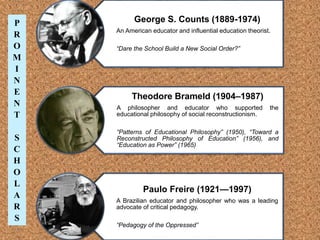
George S. Counts (1889-1974)
An American educator and influential education theorist.
“Dare the School Build a New Social Order?”
Theodore Brameld (1904–1987)
A philosopher and educator who supported the
educational philosophy of social reconstructionism.
“Patterns of Educational Philosophy” (1950), “Toward a
Reconstructed Philosophy of Education” (1956), and
“Education as Power” (1965)
Paulo Freire (1921—1997)
A Brazilian educator and philosopher who was a leading
advocate of critical pedagogy.
“Pedagogy of the Oppressed”
P
R
O
M
I
N
E
N
T
S
C
H
O
L
A
R
S
Reflect democratic ideals and emphasize civic education
Opportunity for students to gain first hand experience in studying real
social problems and controversial issues
Students consider societal problems such as place of ethics in
improving quality of life, conserve natural resources, and issues of
foreign policy and naturalism
CURRICULUM
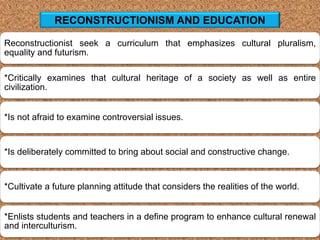
Reconstructionist seek a curriculum that emphasizes cultural pluralism,
equality and futurism.
*Critically examines that cultural heritage of a society as well as entire
civilization.
*Is not afraid to examine controversial issues.
*Is deliberately committed to bring about social and constructive change.
*Cultivate a future planning attitude that considers the realities of the world.
*Enlists students and teachers in a define program to enhance cultural renewal
and interculturism.
RECONSTRUCTIONISM AND EDUCATION
Holistic Assessment Authentic Assessment
Ongoing Assessment
Self and Peer
Assessment
Equity in Assessment
ASSESSMENT
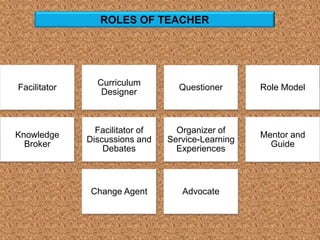
Facilitator
Curriculum
Designer
Questioner Role Model
Knowledge
Broker
Facilitator of
Discussions and
Debates
Organizer of
Service-Learning
Experiences
Mentor and
Guide
Change Agent Advocate
ROLES OF TEACHER
Critical Thinker Problem Solver Active Participant
Community
Member
Advocate
Independent
Learner
Collaborator
Reflective
Practitioner
Change Agent Lifelong Learner
ROLES OF STUDENT
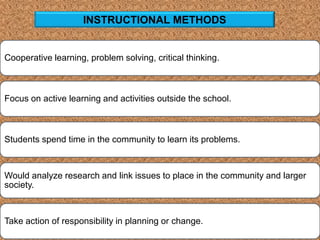
Cooperative learning, problem solving, critical thinking.
Focus on active learning and activities outside the school.
Students spend time in the community to learn its problems.
Would analyze research and link issues to place in the community and larger
society.
Take action of responsibility in planning or change.
INSTRUCTIONAL METHODS
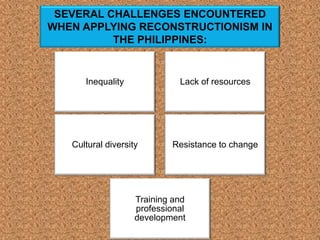
Inequality Lack of resources
Cultural diversity Resistance to change
Training and
professional
development
SEVERAL CHALLENGES ENCOUNTERED
WHEN APPLYING RECONSTRUCTIONISM IN
THE PHILIPPINES:
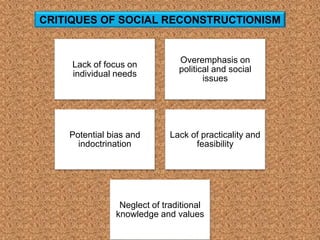
Lack of focus on
individual needs
Overemphasis on
political and social
issues
Potential bias and
indoctrination
Lack of practicality and
feasibility
Neglect of traditional
knowledge and values
CRITIQUES OF SOCIAL RECONSTRUCTIONISM
THANK YOU !

SOCIAL-RECONTRUCTIONISM.presentation.pptx

  • 1.
  • 2.
    Reconstructionism is aalso known as Social Reconstructionism. Social Reconstructionism is a philosophy that emphasizes the addressing of social questions and a quest to create a better society and worldwide democracy. Reconstructionist educators focus on a curriculum that highlights social as the aim of education.
  • 3.
    Premises of Reconstructionism: 1. Societyis in need of change or reconstruction 2. Education must take the lead in the reconstruction
  • 4.
    Promoting critical thinking Fostering active citizenship Addressingsocial injustice Encouraging democratic values Cultivating social responsibility Creating social aware and conscious individual Inspiring social activism AIMS OF SOCIAL RECONSTRUCTIONISM IN EDUCATION:
  • 5.
    George S. Counts(1889-1974) An American educator and influential education theorist. “Dare the School Build a New Social Order?” Theodore Brameld (1904–1987) A philosopher and educator who supported the educational philosophy of social reconstructionism. “Patterns of Educational Philosophy” (1950), “Toward a Reconstructed Philosophy of Education” (1956), and “Education as Power” (1965) Paulo Freire (1921—1997) A Brazilian educator and philosopher who was a leading advocate of critical pedagogy. “Pedagogy of the Oppressed” P R O M I N E N T S C H O L A R S
  • 6.
    Reflect democratic idealsand emphasize civic education Opportunity for students to gain first hand experience in studying real social problems and controversial issues Students consider societal problems such as place of ethics in improving quality of life, conserve natural resources, and issues of foreign policy and naturalism CURRICULUM
  • 7.
    Reconstructionist seek acurriculum that emphasizes cultural pluralism, equality and futurism. *Critically examines that cultural heritage of a society as well as entire civilization. *Is not afraid to examine controversial issues. *Is deliberately committed to bring about social and constructive change. *Cultivate a future planning attitude that considers the realities of the world. *Enlists students and teachers in a define program to enhance cultural renewal and interculturism. RECONSTRUCTIONISM AND EDUCATION
  • 8.
    Holistic Assessment AuthenticAssessment Ongoing Assessment Self and Peer Assessment Equity in Assessment ASSESSMENT
  • 9.
    Facilitator Curriculum Designer Questioner Role Model Knowledge Broker Facilitatorof Discussions and Debates Organizer of Service-Learning Experiences Mentor and Guide Change Agent Advocate ROLES OF TEACHER
  • 10.
    Critical Thinker ProblemSolver Active Participant Community Member Advocate Independent Learner Collaborator Reflective Practitioner Change Agent Lifelong Learner ROLES OF STUDENT
  • 11.
    Cooperative learning, problemsolving, critical thinking. Focus on active learning and activities outside the school. Students spend time in the community to learn its problems. Would analyze research and link issues to place in the community and larger society. Take action of responsibility in planning or change. INSTRUCTIONAL METHODS
  • 12.
    Inequality Lack ofresources Cultural diversity Resistance to change Training and professional development SEVERAL CHALLENGES ENCOUNTERED WHEN APPLYING RECONSTRUCTIONISM IN THE PHILIPPINES:
  • 13.
    Lack of focuson individual needs Overemphasis on political and social issues Potential bias and indoctrination Lack of practicality and feasibility Neglect of traditional knowledge and values CRITIQUES OF SOCIAL RECONSTRUCTIONISM
  • 14.