B y : Sittie Sirad
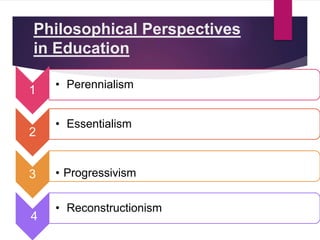
Philosophical Perspectives
in Education
1 • Perennialism
2
• Essentialism
3 • Progressivism
4
• Reconstructionism
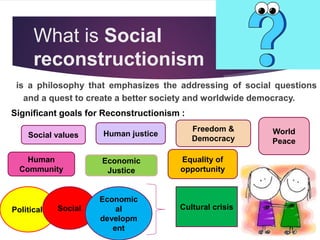
What is Social
reconstructionism
is a philosophy that emphasizes the addressing of social questions
and a quest to create a better society and worldwide democracy.
Significant goals for Reconstructionism :
Social values Human justice
Freedom &
Democracy
Human
Community
World
Peace
Economic
Justice
Equality of
opportunity
Politicall Social
Economic
al
developm
ent
Cultural crisis
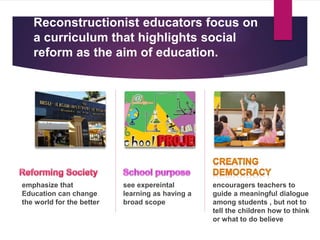
Reconstructionist educators focus on
a curriculum that highlights social
reform as the aim of education.
emphasize that
Education can change
the world for the better
see expereintal
learning as having a
broad scope
encouragers teachers to
guide a meaningful dialogue
among students , but not to
tell the children how to think
or what to do believe
The two major premises of
reconstructionism
1. Society is in need of constant reconstruction or
change .
2. Such social change involves a reconstruction of
education in reconstructing the society
Reconstructionist educators
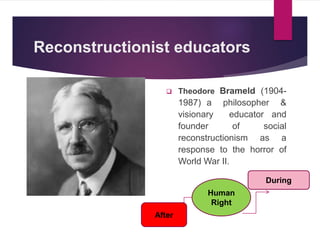
 Theodore Brameld (1904-
1987) a philosopher &
visionary educator and
founder of social
reconstructionism as a
response to the horror of
World War II.
Human
Right
During
After
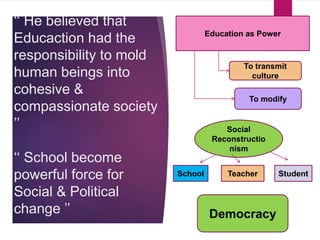
‘‘ He believed that
Educaction had the
responsibility to mold
human beings into
cohesive &
compassionate society
’’
‘‘ School become
powerful force for
Social & Political
change ’’
Education as Power
To transmit
culture
To modify
Social
Reconstructio
nism
School Teacher Student
Democracy
Reconstructionist educators
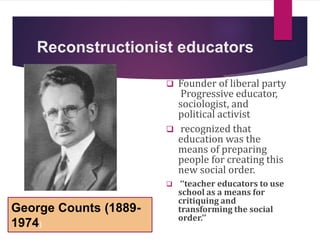
 Founder of liberal party
Progressive educator,
sociologist, and
political activist
 recognized that
education was the
means of preparing
people for creating this
new social order.
 ‘‘teacher educators to use
school as a means for
critiquing and
transforming the social
order.’’
George Counts (1889-
1974)
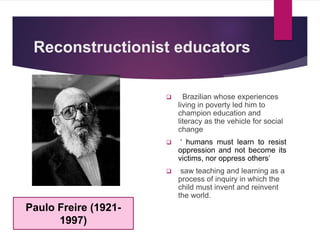
Reconstructionist educators
 Brazilian whose experiences
living in poverty led him to
champion education and
literacy as the vehicle for social
change
 ‘ humans must learn to resist
oppression and not become its
victims, nor oppress others’
 saw teaching and learning as a
process of inquiry in which the
child must invent and reinvent
the world.
Paulo Freire (1921-
1997)
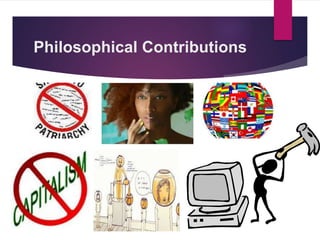
Philosophical Contributions
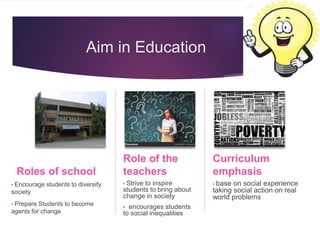
Aim in Education
Roles of school
• Encourage students to diversify
society
• Prepare Students to become
agents for change
Role of the
teachers
• Strive to inspire
students to bring about
change in society
• encourages students
to social inequalities
Curriculum
emphasis
• base on social experience
taking social action on real
world problems
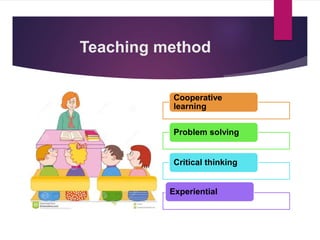
Teaching method
Cooperative
learning
Problem solving
Critical thinking
Experiential
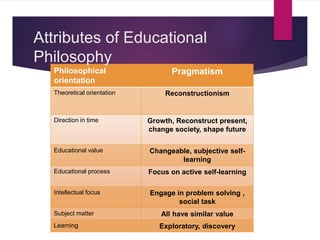
Philosophical
orientation
Pragmatism
Theoretical orientation Reconstructionism
Direction in time Growth, Reconstruct present,
change society, shape future
Educational value Changeable, subjective self-
learning
Educational process Focus on active self-learning
Intellectual focus Engage in problem solving ,
social task
Subject matter All have similar value
Learning Exploratory, discovery
Attributes of Educational
Philosophy
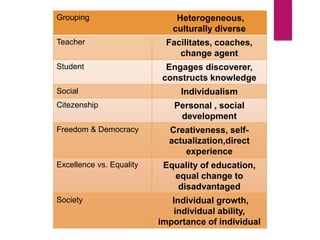
Grouping Heterogeneous,
culturally diverse
Teacher Facilitates, coaches,
change agent
Student Engages discoverer,
constructs knowledge
Social Individualism
Citezenship Personal , social
development
Freedom & Democracy Creativeness, self-
actualization,direct
experience
Excellence vs. Equality Equality of education,
equal change to
disadvantaged
Society Individual growth,
individual ability,
importance of individual
Reconstructionism

Reconstructionism

  • 1.
    B y :Sittie Sirad
  • 2.
    Philosophical Perspectives in Education 1• Perennialism 2 • Essentialism 3 • Progressivism 4 • Reconstructionism
  • 3.
    What is Social reconstructionism isa philosophy that emphasizes the addressing of social questions and a quest to create a better society and worldwide democracy. Significant goals for Reconstructionism : Social values Human justice Freedom & Democracy Human Community World Peace Economic Justice Equality of opportunity Politicall Social Economic al developm ent Cultural crisis
  • 4.
    Reconstructionist educators focuson a curriculum that highlights social reform as the aim of education. emphasize that Education can change the world for the better see expereintal learning as having a broad scope encouragers teachers to guide a meaningful dialogue among students , but not to tell the children how to think or what to do believe
  • 5.
    The two majorpremises of reconstructionism 1. Society is in need of constant reconstruction or change . 2. Such social change involves a reconstruction of education in reconstructing the society
  • 6.
    Reconstructionist educators  TheodoreBrameld (1904- 1987) a philosopher & visionary educator and founder of social reconstructionism as a response to the horror of World War II. Human Right During After
  • 7.
    ‘‘ He believedthat Educaction had the responsibility to mold human beings into cohesive & compassionate society ’’ ‘‘ School become powerful force for Social & Political change ’’ Education as Power To transmit culture To modify Social Reconstructio nism School Teacher Student Democracy
  • 8.
    Reconstructionist educators  Founderof liberal party Progressive educator, sociologist, and political activist  recognized that education was the means of preparing people for creating this new social order.  ‘‘teacher educators to use school as a means for critiquing and transforming the social order.’’ George Counts (1889- 1974)
  • 9.
    Reconstructionist educators  Brazilianwhose experiences living in poverty led him to champion education and literacy as the vehicle for social change  ‘ humans must learn to resist oppression and not become its victims, nor oppress others’  saw teaching and learning as a process of inquiry in which the child must invent and reinvent the world. Paulo Freire (1921- 1997)
  • 10.
  • 11.
    Aim in Education Rolesof school • Encourage students to diversify society • Prepare Students to become agents for change Role of the teachers • Strive to inspire students to bring about change in society • encourages students to social inequalities Curriculum emphasis • base on social experience taking social action on real world problems
  • 12.
  • 13.
    Philosophical orientation Pragmatism Theoretical orientation Reconstructionism Directionin time Growth, Reconstruct present, change society, shape future Educational value Changeable, subjective self- learning Educational process Focus on active self-learning Intellectual focus Engage in problem solving , social task Subject matter All have similar value Learning Exploratory, discovery Attributes of Educational Philosophy
  • 14.
    Grouping Heterogeneous, culturally diverse TeacherFacilitates, coaches, change agent Student Engages discoverer, constructs knowledge Social Individualism Citezenship Personal , social development Freedom & Democracy Creativeness, self- actualization,direct experience Excellence vs. Equality Equality of education, equal change to disadvantaged Society Individual growth, individual ability, importance of individual