NAME :PRATHEET N GUDISAGAR
CLASS: 7 “A”
•Pictures
•Founder of the monument
•History
•Features
•Location
PICTURES
MOHAMMED ADIL SHAH
The mausoleum was designed by Yaqut of Dabul. Situated in the northern
Karnataka, Gol Gumbaz marks the splendour of Adil Shahi rule in the
Southern India. The seventh ruler of the Adil Shahi empire, Mohammed
Adil Shah started the construction of the tomb right after he became the
Sultan in 1626.
HISTORY
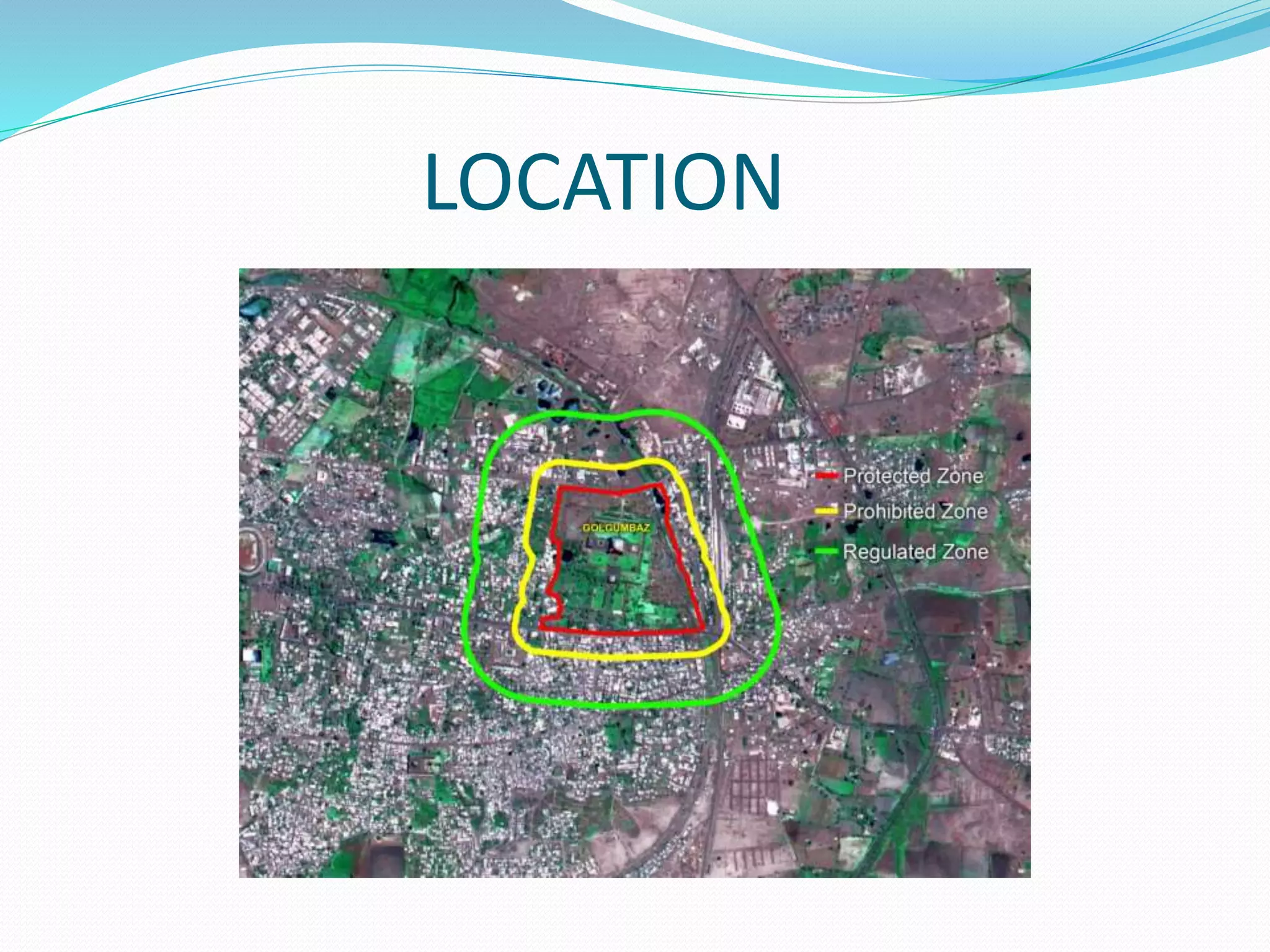
Celebrated for its Muhammad Adil Shah‘s architectural treasures, the city of Bijapur,
in northern Karnataka has in recent years gained celebrity, both in popular domain as a
destination for travel and tourism, and in the intellectual domain as an object of
academic study.
Even though art – historical studies of Bijapur have tended to focus attention upon the
monuments and urban layout developed during the Muhammad Adil Shah‘s period,
the city was already evidenced by the cosmopolitan population and architectural
activity before Muhammad Adil Shah transformed it during the 16th and 17th centuries
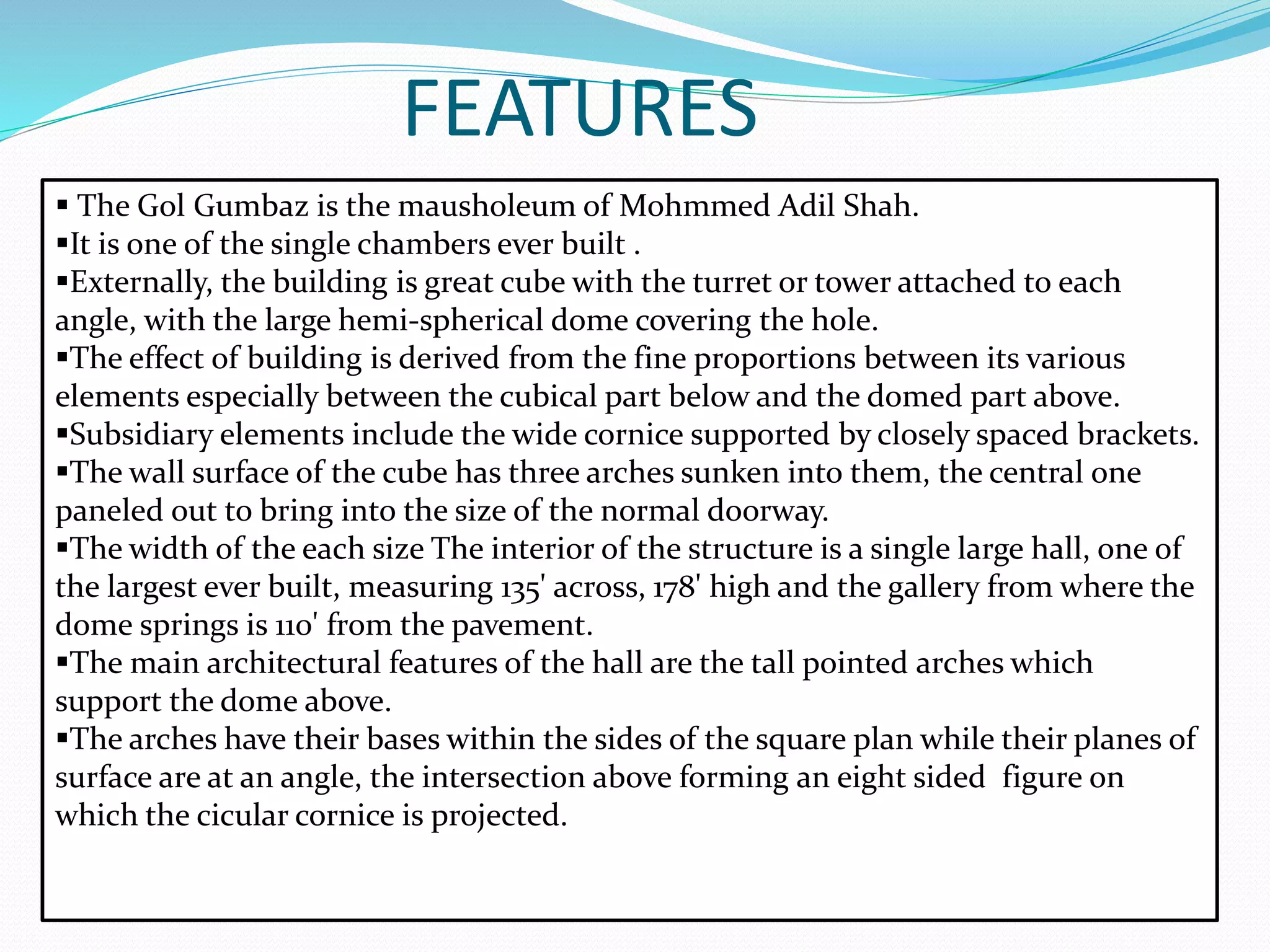
to function as their capital. Gol Gumbaz and Ibrahim Roza in Bijapur continue to draw
hundreds of visitors everyday .
There have been no reductions in the number of Indian tourists visiting the two sites,
there has been a decrease of between 50 and 100 in the number of arrivals from abroad
compared to last year. In order to attract more tourists, the Archaeological Survay of
India has taken to steps to upgrade Bara Kaman, Gagan mahal, Chota Gumbaz , and
The Citadel Wall.
FEATURES
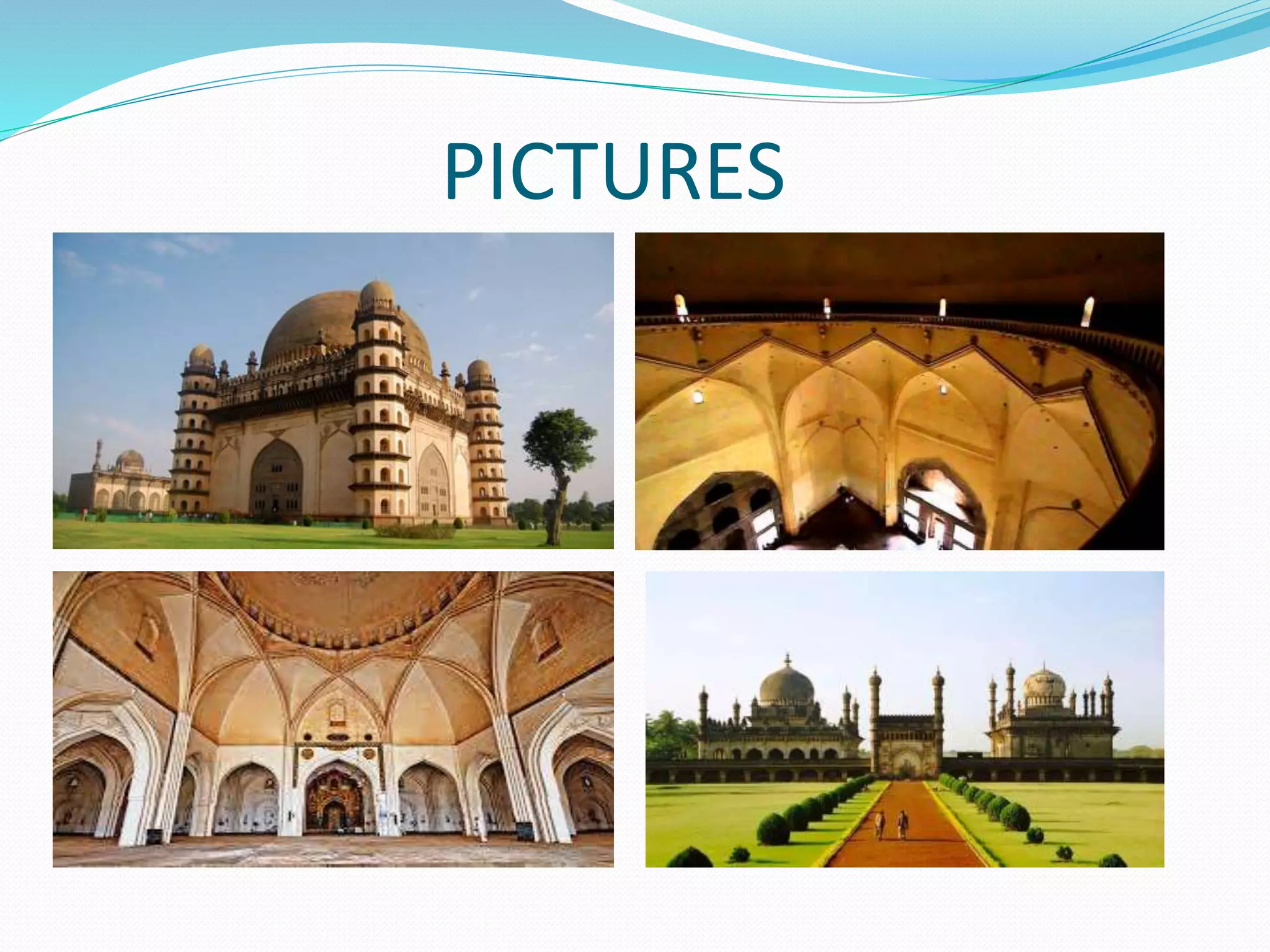
 The Gol Gumbaz is the mausholeum of Mohmmed Adil Shah.
It is one of the single chambers ever built .
Externally, the building is great cube with the turret or tower attached to each
angle, with the large hemi-spherical dome covering the hole.
The effect of building is derived from the fine proportions between its various
elements especially between the cubical part below and the domed part above.
Subsidiary elements include the wide cornice supported by closely spaced brackets.
The wall surface of the cube has three arches sunken into them, the central one
paneled out to bring into the size of the normal doorway.
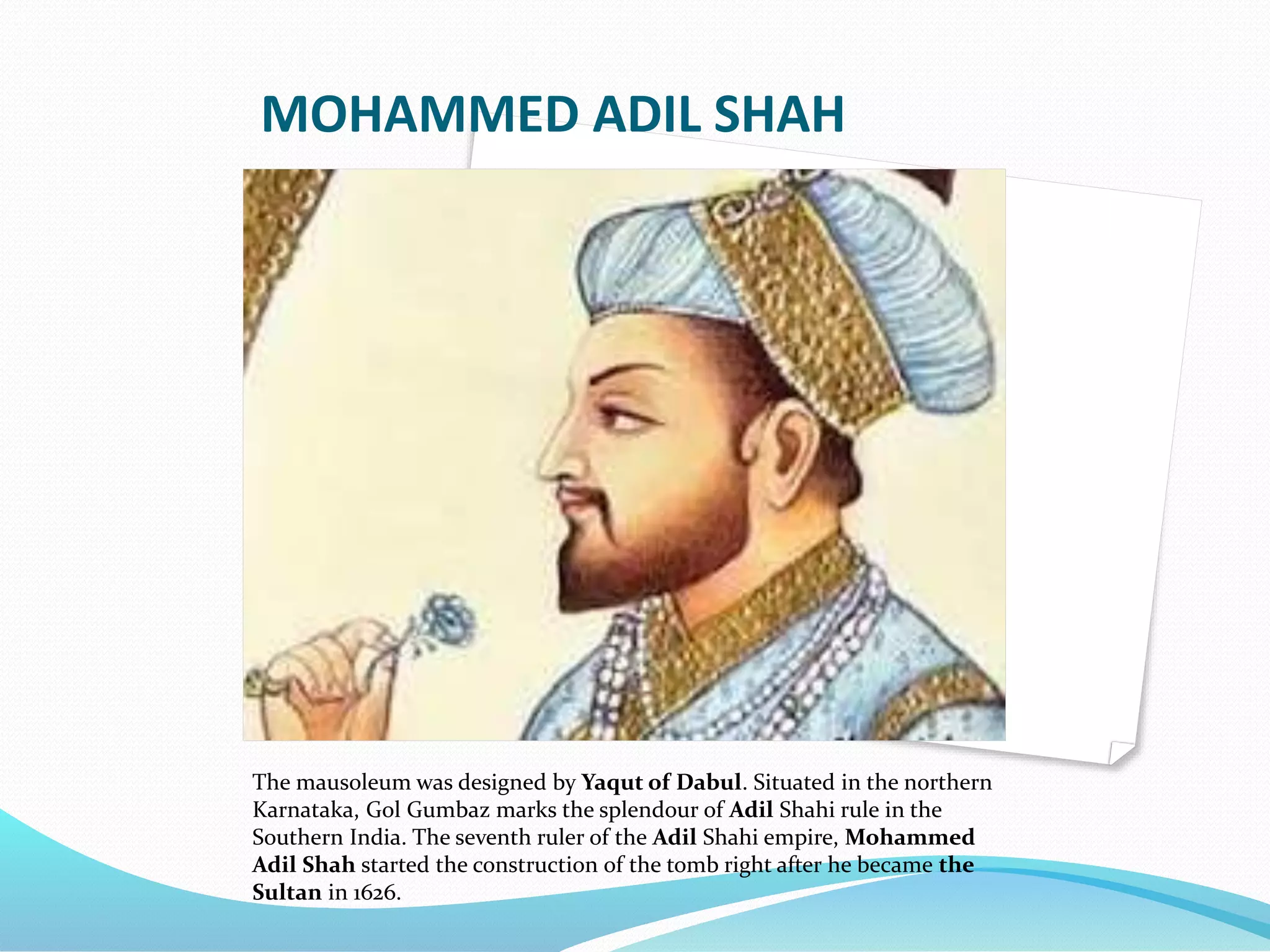
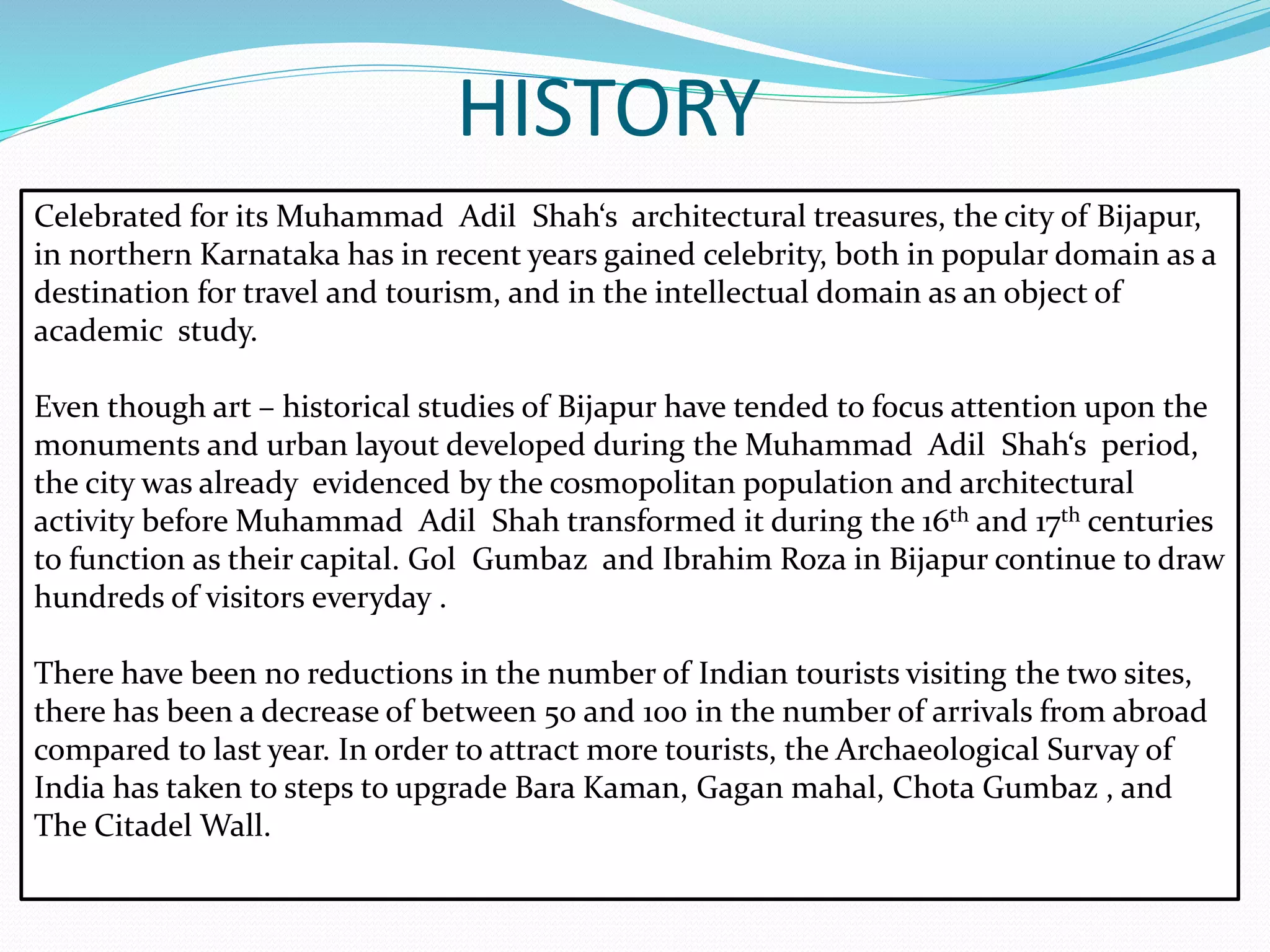
The width of the each size The interior of the structure is a single large hall, one of
the largest ever built, measuring 135' across, 178' high and the gallery from where the
dome springs is 110' from the pavement.
The main architectural features of the hall are the tall pointed arches which
support the dome above.
The arches have their bases within the sides of the square plan while their planes of
surface are at an angle, the intersection above forming an eight sided figure on
which the cicular cornice is projected.
LOCATION
•Pictures
•Founder of the monument
•History
•Features
•Location
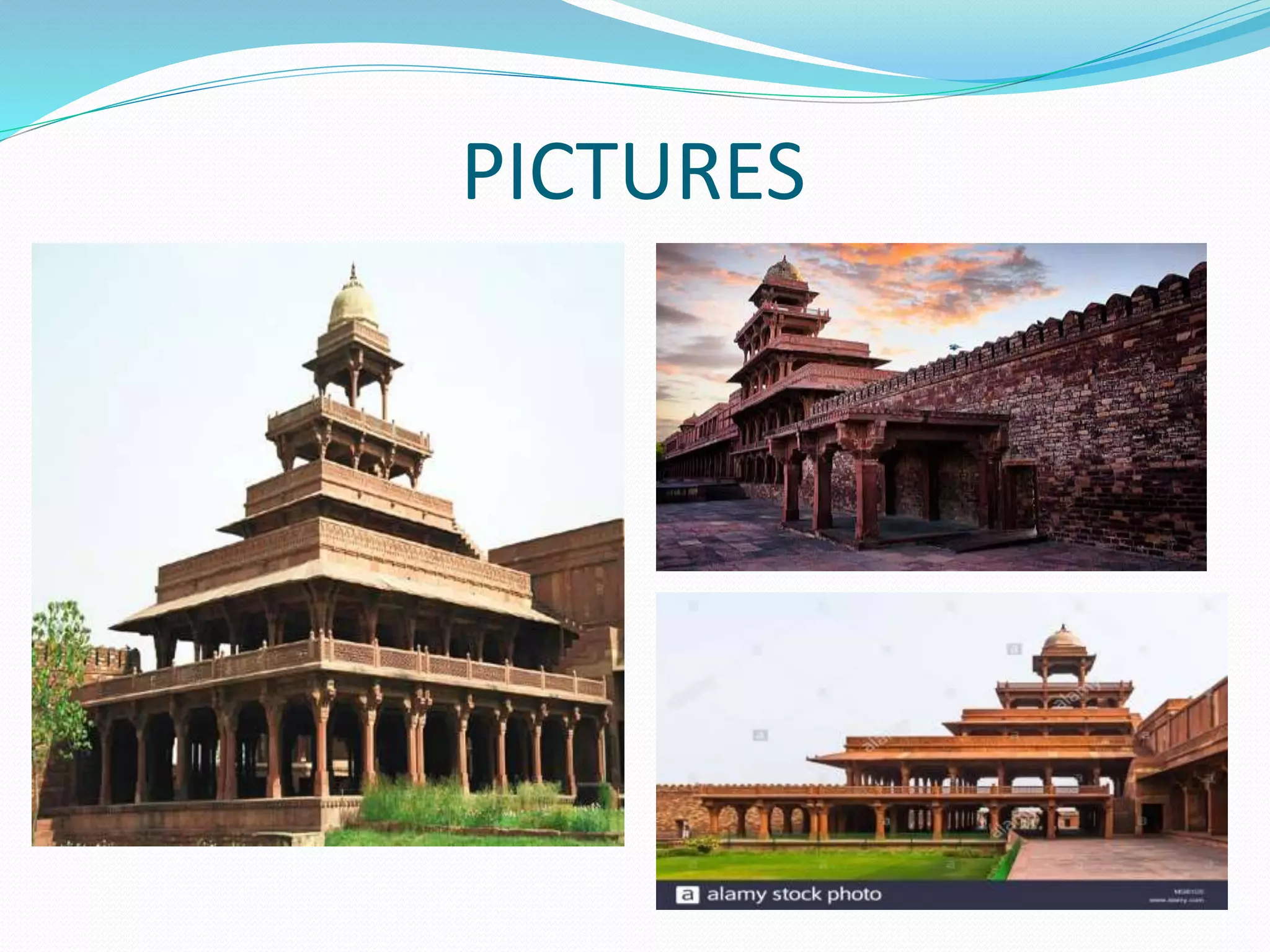
PICTURES
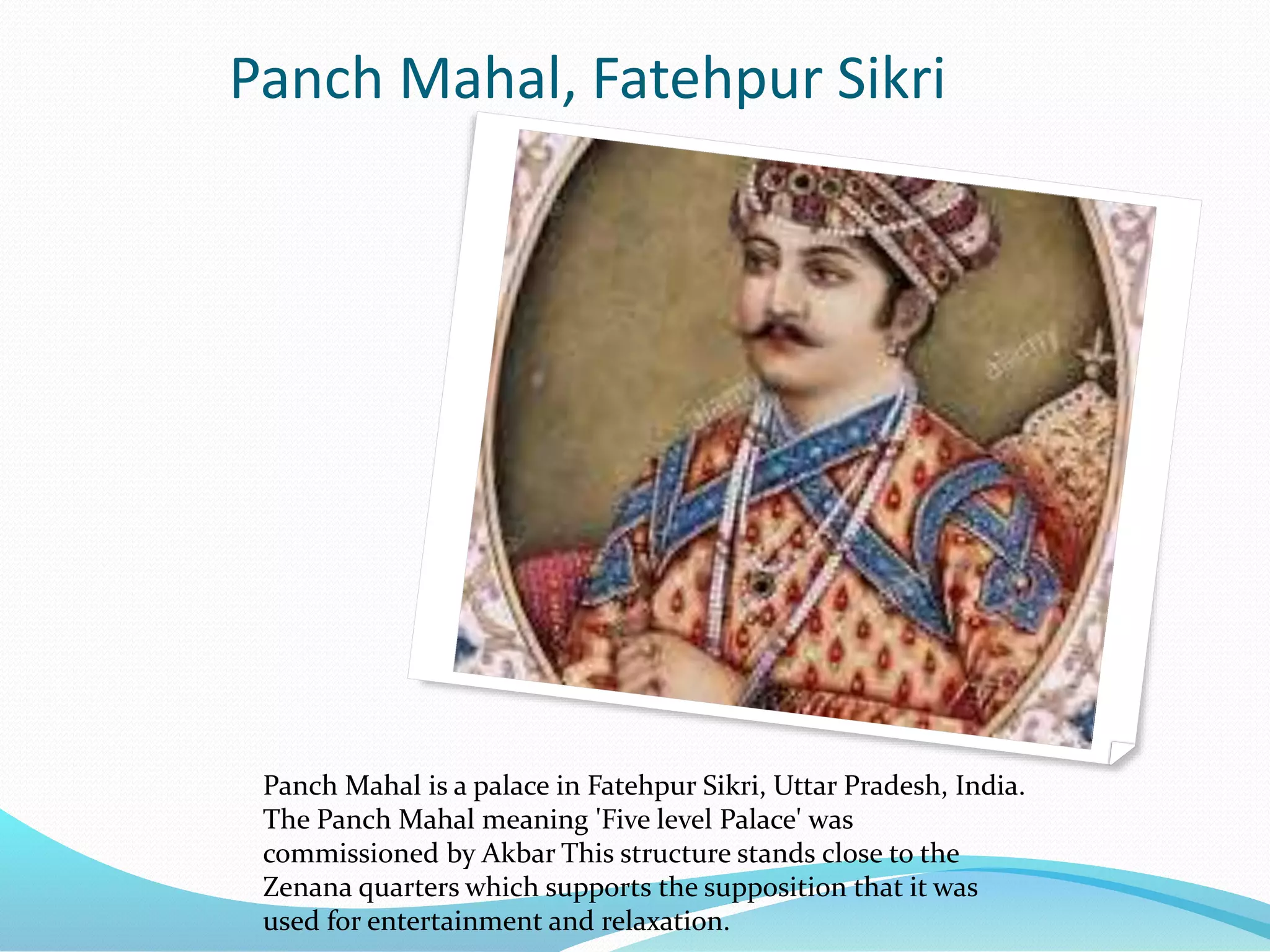
Panch Mahal, Fatehpur Sikri
Panch Mahal is a palace in Fatehpur Sikri, Uttar Pradesh, India.
The Panch Mahal meaning 'Five level Palace' was
commissioned by Akbar This structure stands close to the
Zenana quarters which supports the supposition that it was
used for entertainment and relaxation.
HISTORY
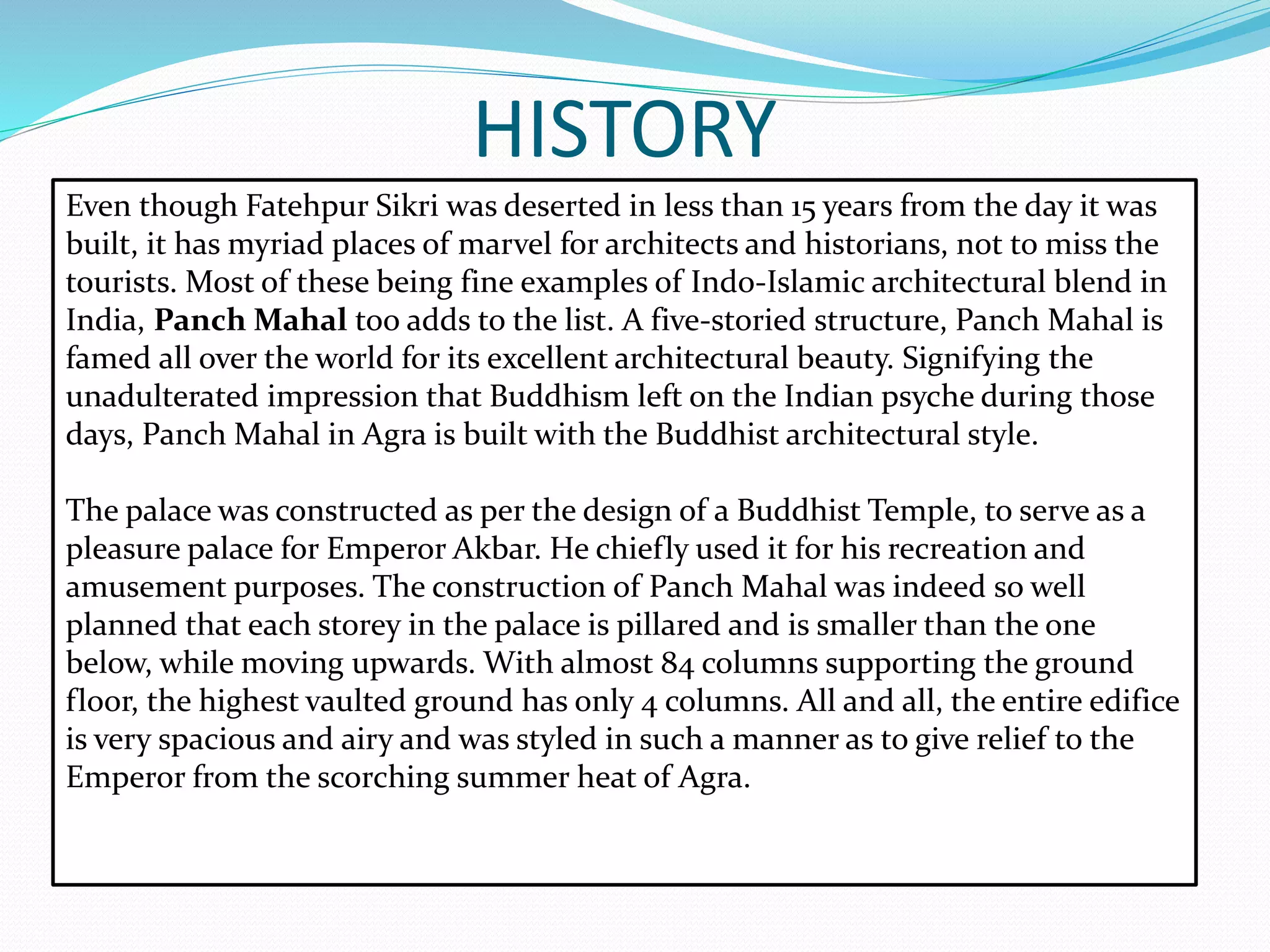
Even though Fatehpur Sikri was deserted in less than 15 years from the day it was
built, it has myriad places of marvel for architects and historians, not to miss the
tourists. Most of these being fine examples of Indo-Islamic architectural blend in
India, Panch Mahal too adds to the list. A five-storied structure, Panch Mahal is
famed all over the world for its excellent architectural beauty. Signifying the
unadulterated impression that Buddhism left on the Indian psyche during those
days, Panch Mahal in Agra is built with the Buddhist architectural style.
The palace was constructed as per the design of a Buddhist Temple, to serve as a
pleasure palace for Emperor Akbar. He chiefly used it for his recreation and
amusement purposes. The construction of Panch Mahal was indeed so well
planned that each storey in the palace is pillared and is smaller than the one
below, while moving upwards. With almost 84 columns supporting the ground
floor, the highest vaulted ground has only 4 columns. All and all, the entire edifice
is very spacious and airy and was styled in such a manner as to give relief to the
Emperor from the scorching summer heat of Agra.
LOCATION
•Pictures
•Founder of the monument and Period
•Features
•Political Map
PICTURES
Founder of the Monument and
Period
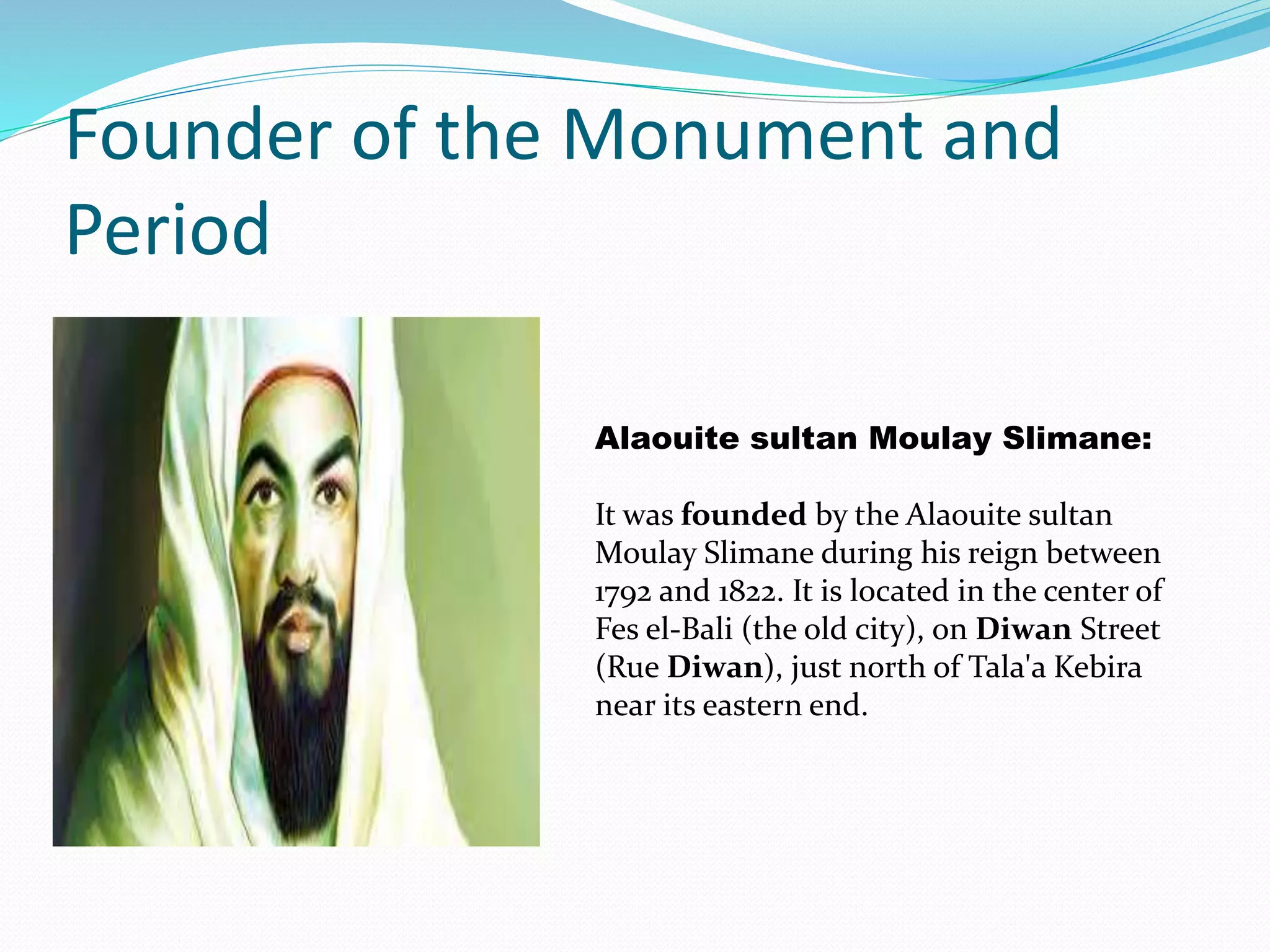
Alaouite sultan Moulay Slimane:
It was founded by the Alaouite sultan
Moulay Slimane during his reign between
1792 and 1822. It is located in the center of
Fes el-Bali (the old city), on Diwan Street
(Rue Diwan), just north of Tala'a Kebira
near its eastern end.
LOCATION
•Pictures
•Founder of the monument and Period
•Features
•Political Map
Pictures
Founder of the Monument and
Period
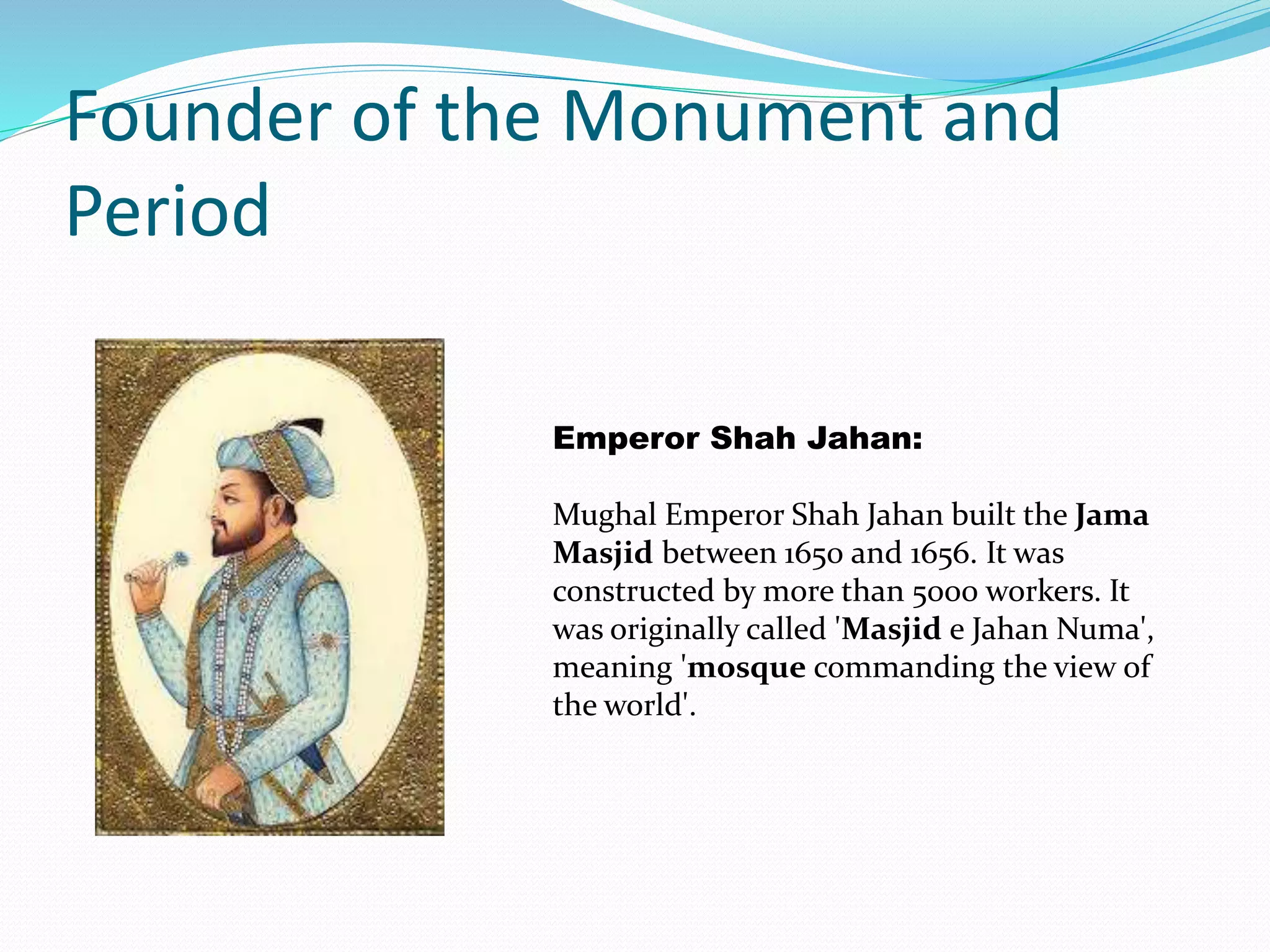
Emperor Shah Jahan:
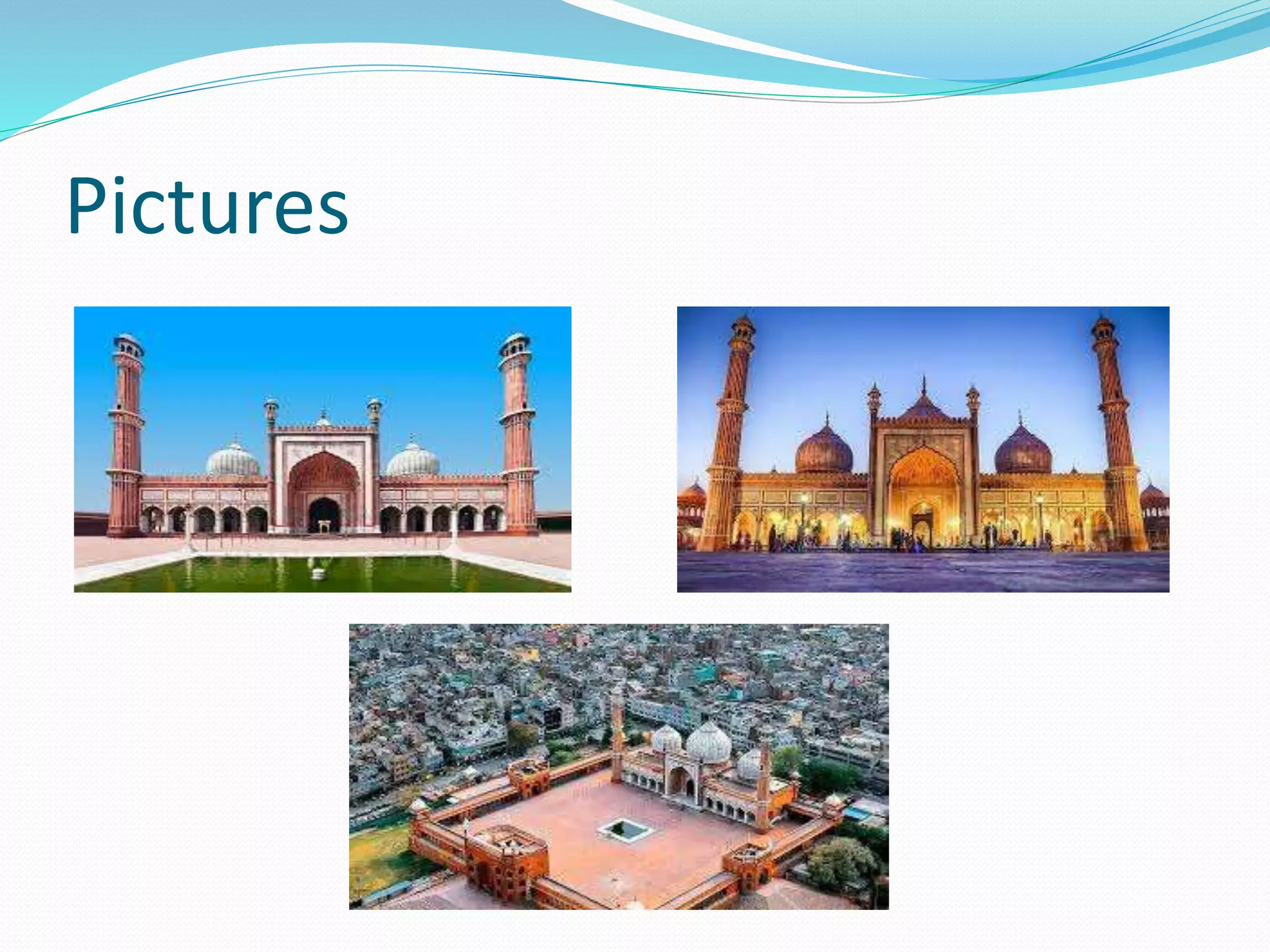
Mughal Emperor Shah Jahan built the Jama
Masjid between 1650 and 1656. It was
constructed by more than 5000 workers. It
was originally called 'Masjid e Jahan Numa',
meaning 'mosque commanding the view of
the world'.
Political Map
•Pictures
•Founder of the monument and Period
•Features
•Political Map
Pictures
Founder of the Monument and
Period
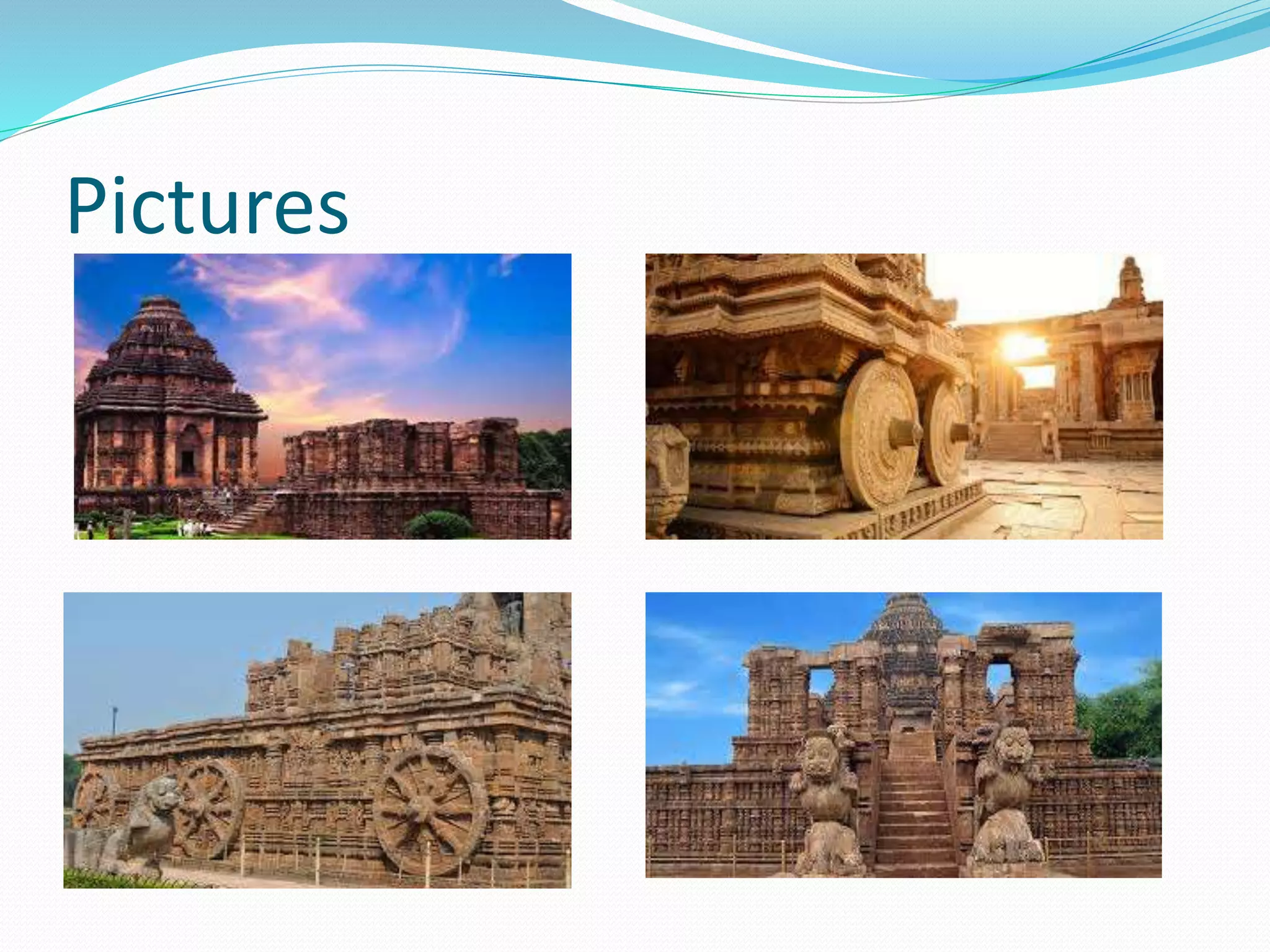
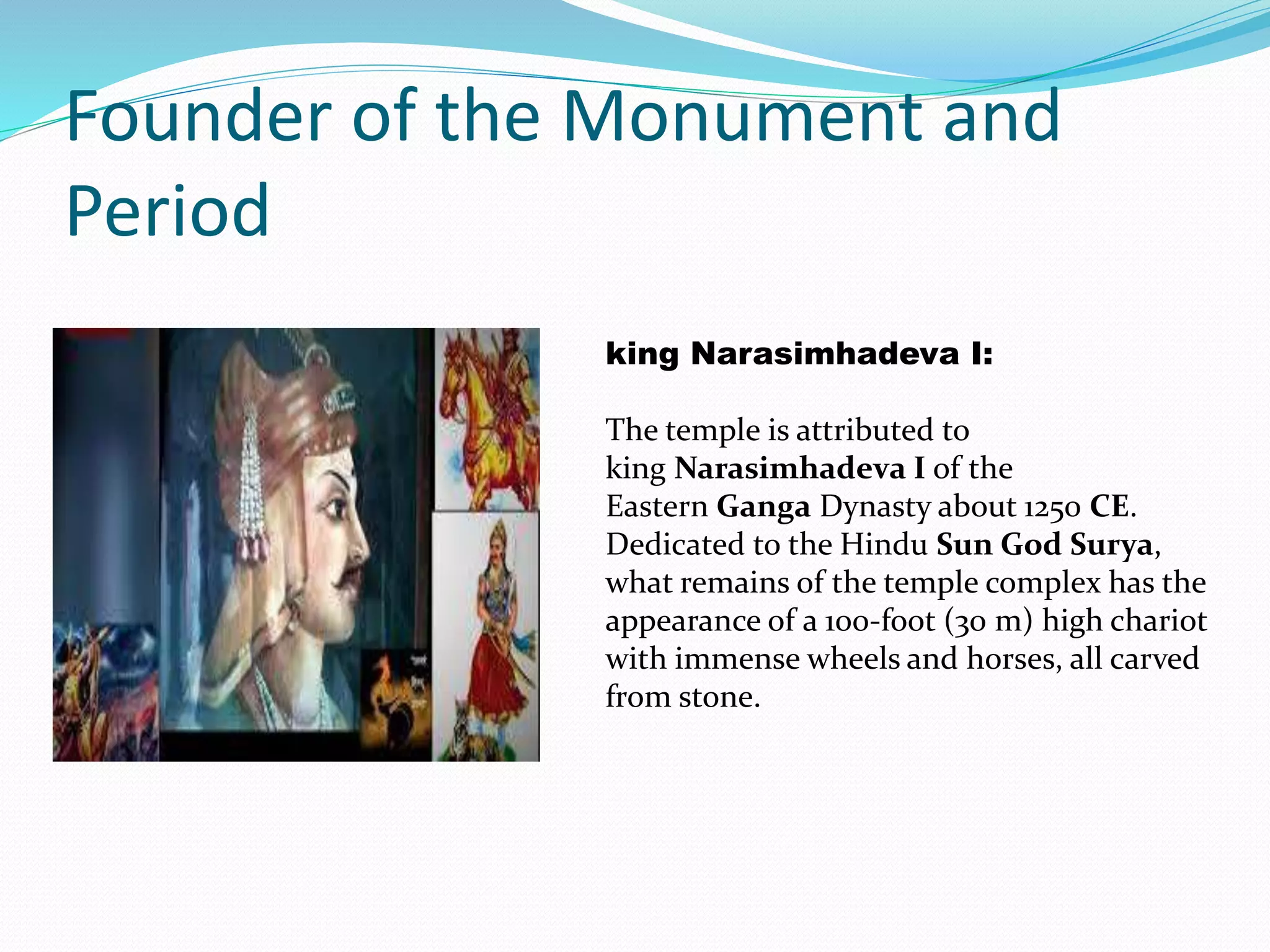
king Narasimhadeva I:
The temple is attributed to
king Narasimhadeva I of the
Eastern Ganga Dynasty about 1250 CE.
Dedicated to the Hindu Sun God Surya,
what remains of the temple complex has the
appearance of a 100-foot (30 m) high chariot
with immense wheels and horses, all carved
from stone.
Political Map

Social science assignment

  • 1.
    NAME :PRATHEET NGUDISAGAR CLASS: 7 “A”
  • 2.
    •Pictures •Founder of themonument •History •Features •Location
  • 3.
  • 4.
    MOHAMMED ADIL SHAH Themausoleum was designed by Yaqut of Dabul. Situated in the northern Karnataka, Gol Gumbaz marks the splendour of Adil Shahi rule in the Southern India. The seventh ruler of the Adil Shahi empire, Mohammed Adil Shah started the construction of the tomb right after he became the Sultan in 1626.
  • 5.
    HISTORY Celebrated for itsMuhammad Adil Shah‘s architectural treasures, the city of Bijapur, in northern Karnataka has in recent years gained celebrity, both in popular domain as a destination for travel and tourism, and in the intellectual domain as an object of academic study. Even though art – historical studies of Bijapur have tended to focus attention upon the monuments and urban layout developed during the Muhammad Adil Shah‘s period, the city was already evidenced by the cosmopolitan population and architectural activity before Muhammad Adil Shah transformed it during the 16th and 17th centuries to function as their capital. Gol Gumbaz and Ibrahim Roza in Bijapur continue to draw hundreds of visitors everyday . There have been no reductions in the number of Indian tourists visiting the two sites, there has been a decrease of between 50 and 100 in the number of arrivals from abroad compared to last year. In order to attract more tourists, the Archaeological Survay of India has taken to steps to upgrade Bara Kaman, Gagan mahal, Chota Gumbaz , and The Citadel Wall.
  • 6.
    FEATURES  The GolGumbaz is the mausholeum of Mohmmed Adil Shah. It is one of the single chambers ever built . Externally, the building is great cube with the turret or tower attached to each angle, with the large hemi-spherical dome covering the hole. The effect of building is derived from the fine proportions between its various elements especially between the cubical part below and the domed part above. Subsidiary elements include the wide cornice supported by closely spaced brackets. The wall surface of the cube has three arches sunken into them, the central one paneled out to bring into the size of the normal doorway. The width of the each size The interior of the structure is a single large hall, one of the largest ever built, measuring 135' across, 178' high and the gallery from where the dome springs is 110' from the pavement. The main architectural features of the hall are the tall pointed arches which support the dome above. The arches have their bases within the sides of the square plan while their planes of surface are at an angle, the intersection above forming an eight sided figure on which the cicular cornice is projected.
  • 7.
  • 8.
    •Pictures •Founder of themonument •History •Features •Location
  • 9.
  • 10.
    Panch Mahal, FatehpurSikri Panch Mahal is a palace in Fatehpur Sikri, Uttar Pradesh, India. The Panch Mahal meaning 'Five level Palace' was commissioned by Akbar This structure stands close to the Zenana quarters which supports the supposition that it was used for entertainment and relaxation.
  • 11.
    HISTORY Even though FatehpurSikri was deserted in less than 15 years from the day it was built, it has myriad places of marvel for architects and historians, not to miss the tourists. Most of these being fine examples of Indo-Islamic architectural blend in India, Panch Mahal too adds to the list. A five-storied structure, Panch Mahal is famed all over the world for its excellent architectural beauty. Signifying the unadulterated impression that Buddhism left on the Indian psyche during those days, Panch Mahal in Agra is built with the Buddhist architectural style. The palace was constructed as per the design of a Buddhist Temple, to serve as a pleasure palace for Emperor Akbar. He chiefly used it for his recreation and amusement purposes. The construction of Panch Mahal was indeed so well planned that each storey in the palace is pillared and is smaller than the one below, while moving upwards. With almost 84 columns supporting the ground floor, the highest vaulted ground has only 4 columns. All and all, the entire edifice is very spacious and airy and was styled in such a manner as to give relief to the Emperor from the scorching summer heat of Agra.
  • 12.
  • 13.
    •Pictures •Founder of themonument and Period •Features •Political Map
  • 14.
  • 15.
    Founder of theMonument and Period Alaouite sultan Moulay Slimane: It was founded by the Alaouite sultan Moulay Slimane during his reign between 1792 and 1822. It is located in the center of Fes el-Bali (the old city), on Diwan Street (Rue Diwan), just north of Tala'a Kebira near its eastern end.
  • 16.
  • 17.
    •Pictures •Founder of themonument and Period •Features •Political Map
  • 18.
  • 19.
    Founder of theMonument and Period Emperor Shah Jahan: Mughal Emperor Shah Jahan built the Jama Masjid between 1650 and 1656. It was constructed by more than 5000 workers. It was originally called 'Masjid e Jahan Numa', meaning 'mosque commanding the view of the world'.
  • 20.
  • 21.
    •Pictures •Founder of themonument and Period •Features •Political Map
  • 22.
  • 23.
    Founder of theMonument and Period king Narasimhadeva I: The temple is attributed to king Narasimhadeva I of the Eastern Ganga Dynasty about 1250 CE. Dedicated to the Hindu Sun God Surya, what remains of the temple complex has the appearance of a 100-foot (30 m) high chariot with immense wheels and horses, all carved from stone.
  • 24.