Social Media for Journalists Wilkes University 11th Annual Tom Bigler Journalism Conference Robin J. Phillips @RobinJP on Twitter   Web managing editor, The Reynolds Center for Business Journalism 
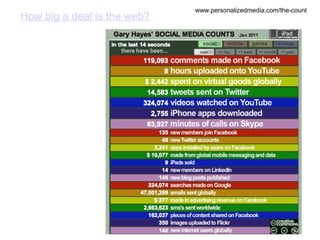
How big a deal is the web? www.personalizedmedia.com/the-count
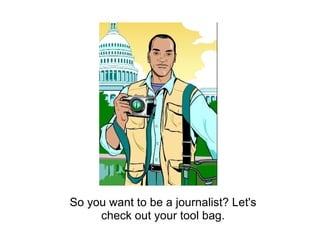
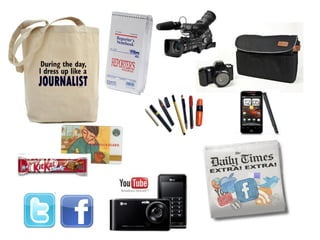
So you want to be a journalist? Let's check out your tool bag.
 
Is it all just a fad?
Why use Twitter or Facebook? Journalists can:  monitor the activities, discussions of people on your beat. connect with people who will provide you helpful tips and information. connect with colleagues, share ideas with them or get ideas from them. “crowdsource” stories, asking followers for story ideas or tips.  quickly find people who witnessed or experienced an event. drive traffic to your content. ... and,  honestly , improve your writing as you learn to make points directly in just 140 characters. (If a lead doesn’t fit in a tweet, it’s probably too long.)   --  Thanks to Steve Buttry, The Buttry Diary
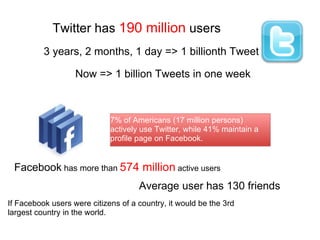
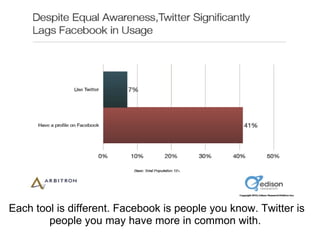
Facebook  has more than   574 million  active users If Facebook users were citizens of a country, it would be the 3rd largest country in the world.   7% of Americans (17 million persons) actively use Twitter, while 41% maintain a profile page on Facebook. Twitter has  190 million  users 3 years, 2 months, 1 day => 1 billionth Tweet Now => 1 billion Tweets in one week Average user has 130 friends
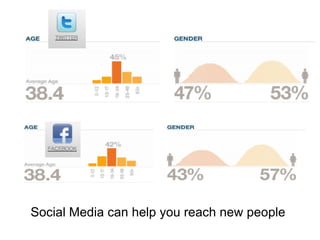
Social Media can help you reach new people
Each tool is different. Facebook is people you know. Twitter is people you may have more in common with. 
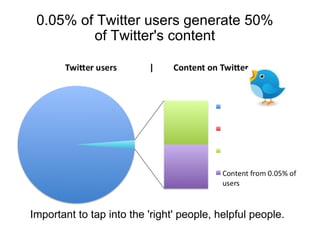
0.05% of Twitter users generate 50%  of Twitter's content  Important to tap into the 'right' people, helpful people.
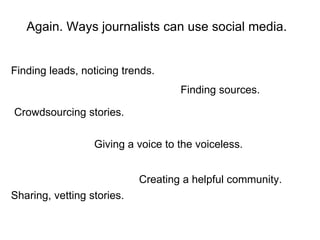
Again. Ways journalists can use social media. Finding leads, noticing trends. Finding sources. Crowdsourcing stories. Giving a voice to the voiceless. Sharing, vetting stories. Creating a helpful community.
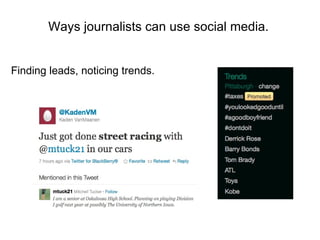
  Ways journalists can use social media. Finding leads, noticing trends.
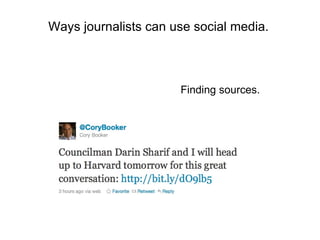
  Ways journalists can use social media. Finding sources.
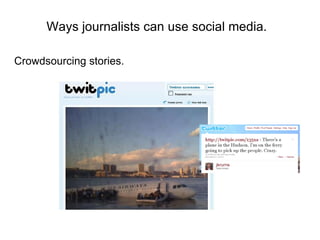
Ways journalists can use social media. Crowdsourcing stories.
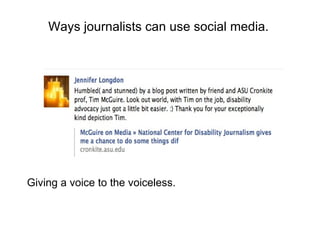
  Ways journalists can use social media. Giving a voice to the voiceless.
Ways journalists can use social media. Creating a helpful community.
Ways journalists can use social media. Sharing, vetting stories.
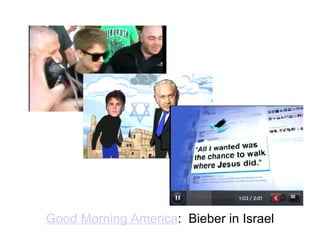
Good Morning America :  Bieber in Israel
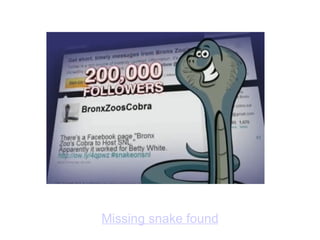
Missing snake found
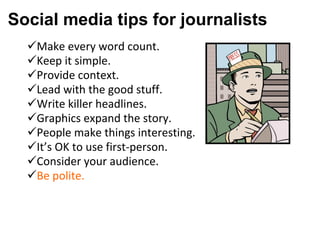
Social media tips for journalists  Make every word count.  Keep it simple.   Provide context.  Lead with the good stuff.  Write killer headlines.  Graphics expand the story.  People make things interesting.  It’s OK to use first-person.   Consider your audience.  Be polite.
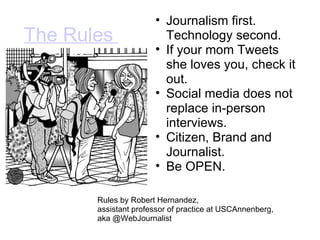
The Rules  Rules by Robert Hernandez,  assistant professor of practice at USCAnnenberg, aka @WebJournalist Journalism first. Technology second. If your mom Tweets she loves you, check it out. Social media does not replace in-person interviews.  Citizen, Brand and Journalist. Be OPEN. 

Social Media for high school journalists

  • 1.
    Social Media forJournalists Wilkes University 11th Annual Tom Bigler Journalism Conference Robin J. Phillips @RobinJP on Twitter   Web managing editor, The Reynolds Center for Business Journalism 
  • 2.
    How big adeal is the web? www.personalizedmedia.com/the-count
  • 3.
    So you wantto be a journalist? Let's check out your tool bag.
  • 4.
  • 5.
    Is it alljust a fad?
  • 6.
    Why use Twitteror Facebook? Journalists can:  monitor the activities, discussions of people on your beat. connect with people who will provide you helpful tips and information. connect with colleagues, share ideas with them or get ideas from them. “crowdsource” stories, asking followers for story ideas or tips.  quickly find people who witnessed or experienced an event. drive traffic to your content. ... and, honestly , improve your writing as you learn to make points directly in just 140 characters. (If a lead doesn’t fit in a tweet, it’s probably too long.)   --  Thanks to Steve Buttry, The Buttry Diary
  • 7.
    Facebook hasmore than 574 million active users If Facebook users were citizens of a country, it would be the 3rd largest country in the world.   7% of Americans (17 million persons) actively use Twitter, while 41% maintain a profile page on Facebook. Twitter has 190 million users 3 years, 2 months, 1 day => 1 billionth Tweet Now => 1 billion Tweets in one week Average user has 130 friends
  • 8.
    Social Media canhelp you reach new people
  • 9.
    Each tool isdifferent. Facebook is people you know. Twitter is people you may have more in common with. 
  • 10.
    0.05% of Twitterusers generate 50%  of Twitter's content Important to tap into the 'right' people, helpful people.
  • 11.
    Again. Ways journalistscan use social media. Finding leads, noticing trends. Finding sources. Crowdsourcing stories. Giving a voice to the voiceless. Sharing, vetting stories. Creating a helpful community.
  • 12.
      Ways journalistscan use social media. Finding leads, noticing trends.
  • 13.
      Ways journalistscan use social media. Finding sources.
  • 14.
    Ways journalists canuse social media. Crowdsourcing stories.
  • 15.
      Ways journalistscan use social media. Giving a voice to the voiceless.
  • 16.
    Ways journalists canuse social media. Creating a helpful community.
  • 17.
    Ways journalists canuse social media. Sharing, vetting stories.
  • 18.
    Good Morning America:  Bieber in Israel
  • 19.
  • 20.
    Social media tipsfor journalists  Make every word count.  Keep it simple.  Provide context.  Lead with the good stuff.  Write killer headlines.  Graphics expand the story.  People make things interesting.  It’s OK to use first-person.  Consider your audience.  Be polite.
  • 21.
    The Rules Rules by Robert Hernandez, assistant professor of practice at USCAnnenberg, aka @WebJournalist Journalism first. Technology second. If your mom Tweets she loves you, check it out. Social media does not replace in-person interviews.  Citizen, Brand and Journalist. Be OPEN.