



Responsible
Digital
Citizenship
By Gab Billones
Founder, Y-loop Digital Solutions
Do you consider yourself a
responsible social media user?
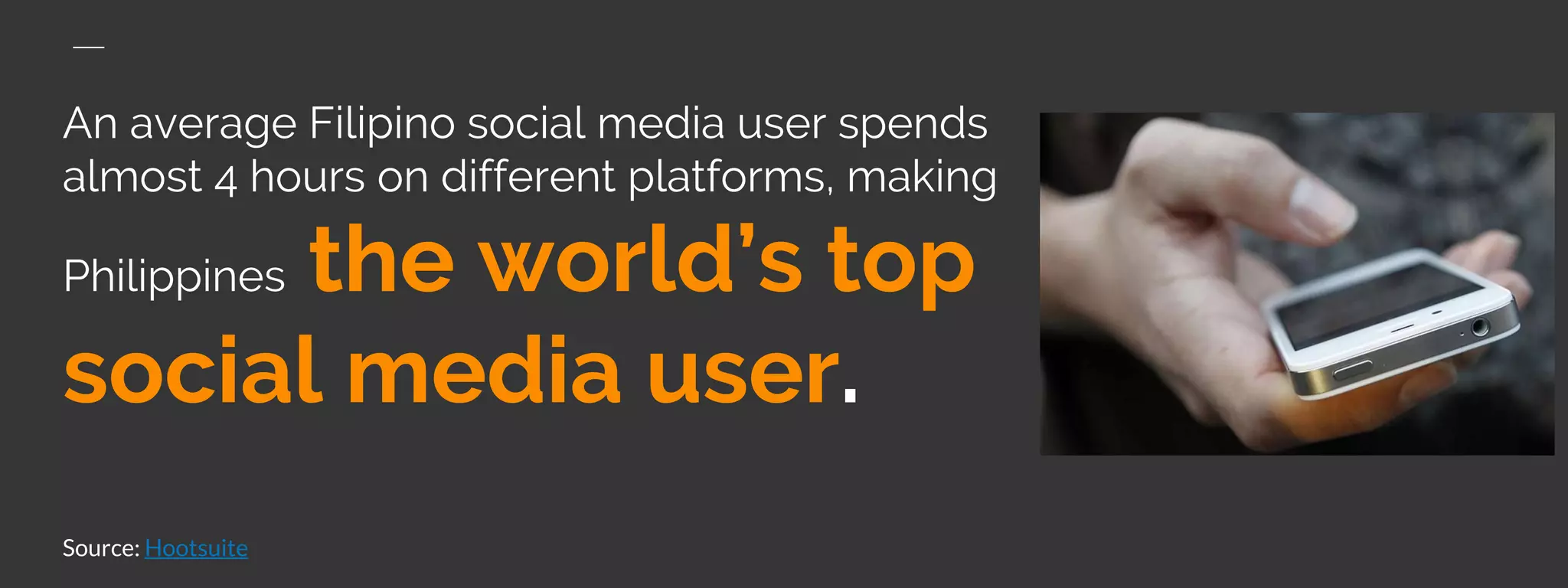
An average Filipino social media user spends
almost 4 hours on different platforms, making
Philippines the world’s top
social media user.
Source: Hootsuite
Selfie capital of the world Viral trends
Connect with idols Watch vlogs
Among peoples of the world,
Filipinos are the third
“MOST IGNORANT”
ABOUT THEIR
COUNTRY’S
KEY ISSUES, after South
Africans and Brazilians.
Source: Perils of Perception
Q: How can we all become
‘responsible digital citizens’ able
to exercise critical thinking?
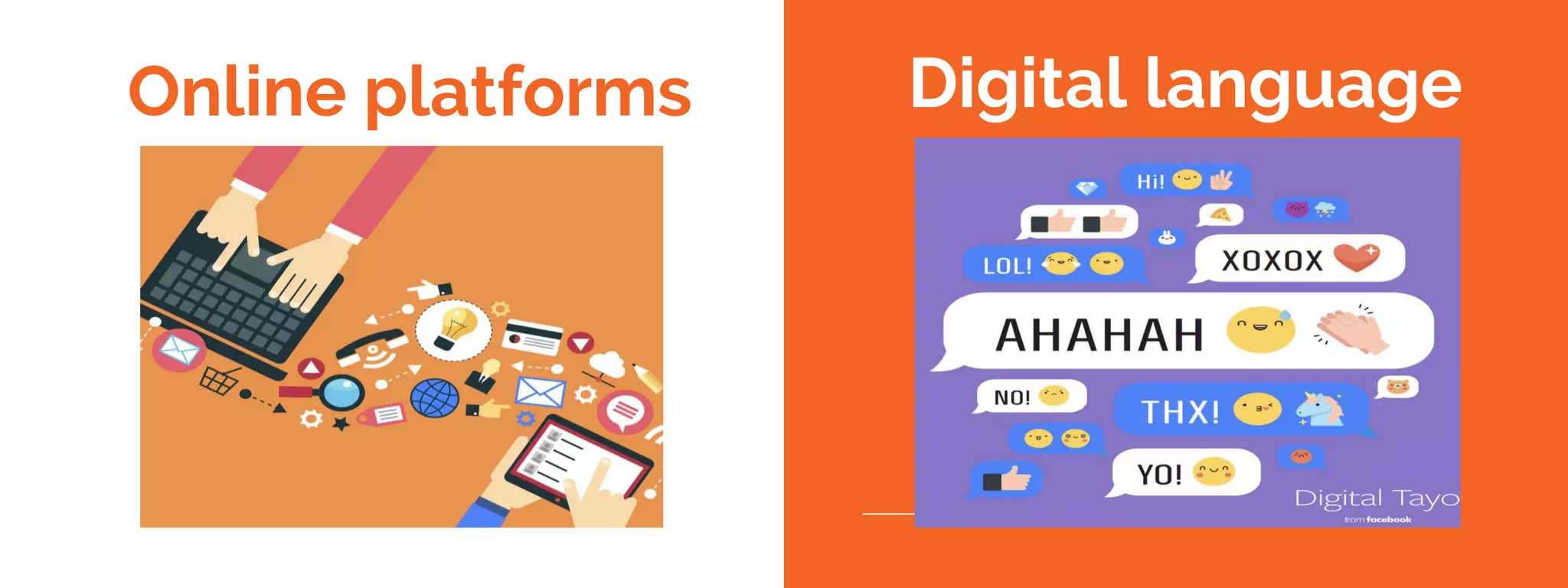
Online platforms Digital language
Q: How do we practice
communicating respectfully
online?
Be respectful and accepting of
differences
Perspective
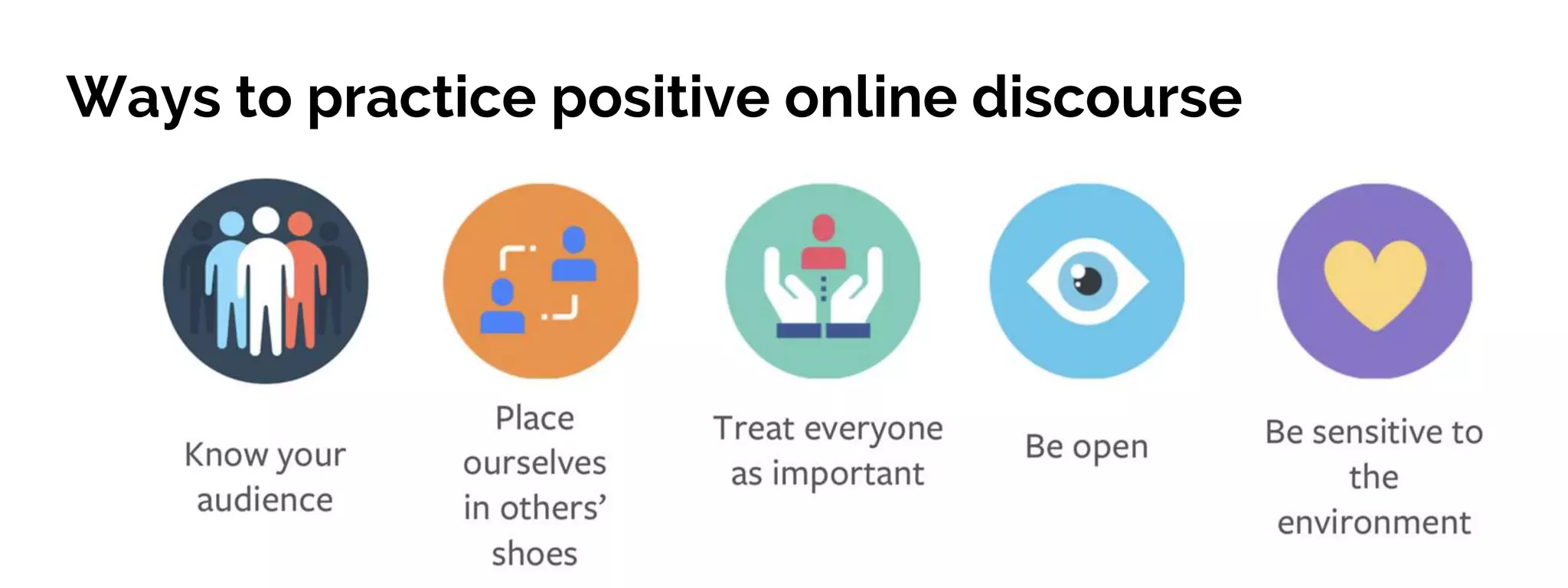
Ways to practice positive online discourse
Q: When do we know when
someone’s dangerous and how
should we handle dangerous
personalities?
Identify:
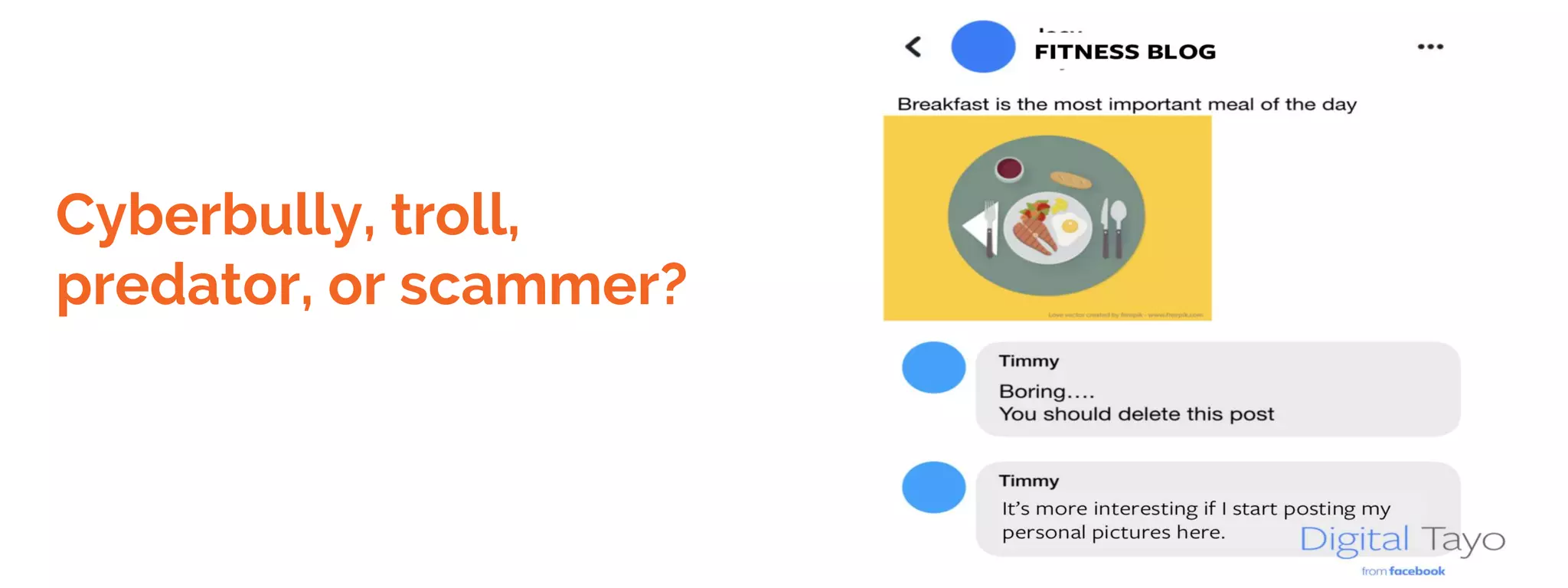
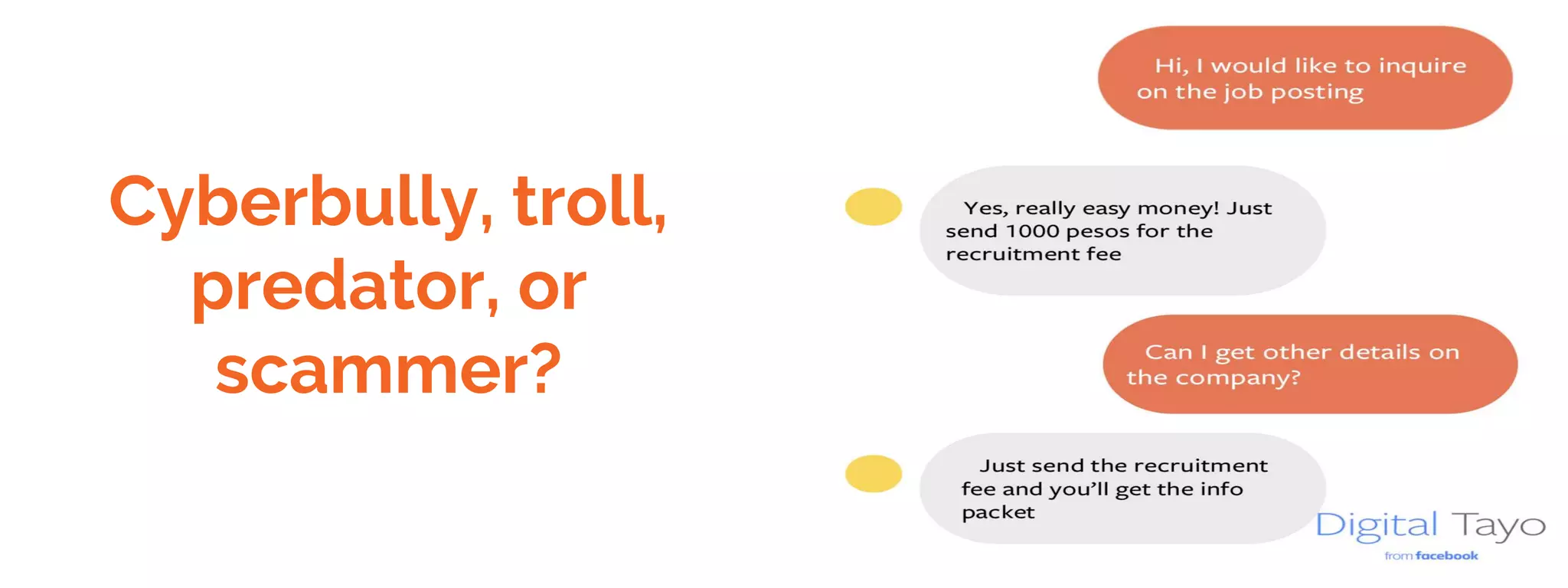
Cyberbully, troll, predator or
scammer?
Cyberbully, troll,
predator, or
scammer?
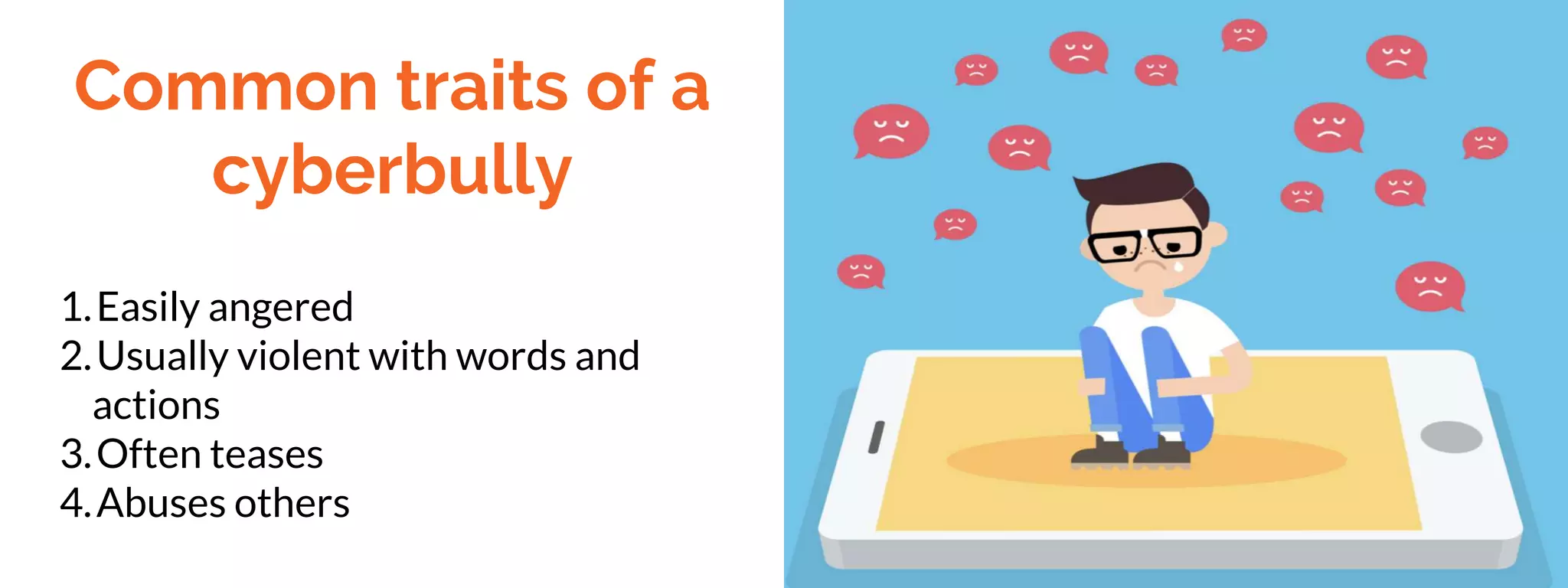
Common traits of a
cyberbully
1.Easily angered
2.Usually violent with words and
actions
3.Often teases
4.Abuses others
Cyberbully, troll,
predator, or scammer?
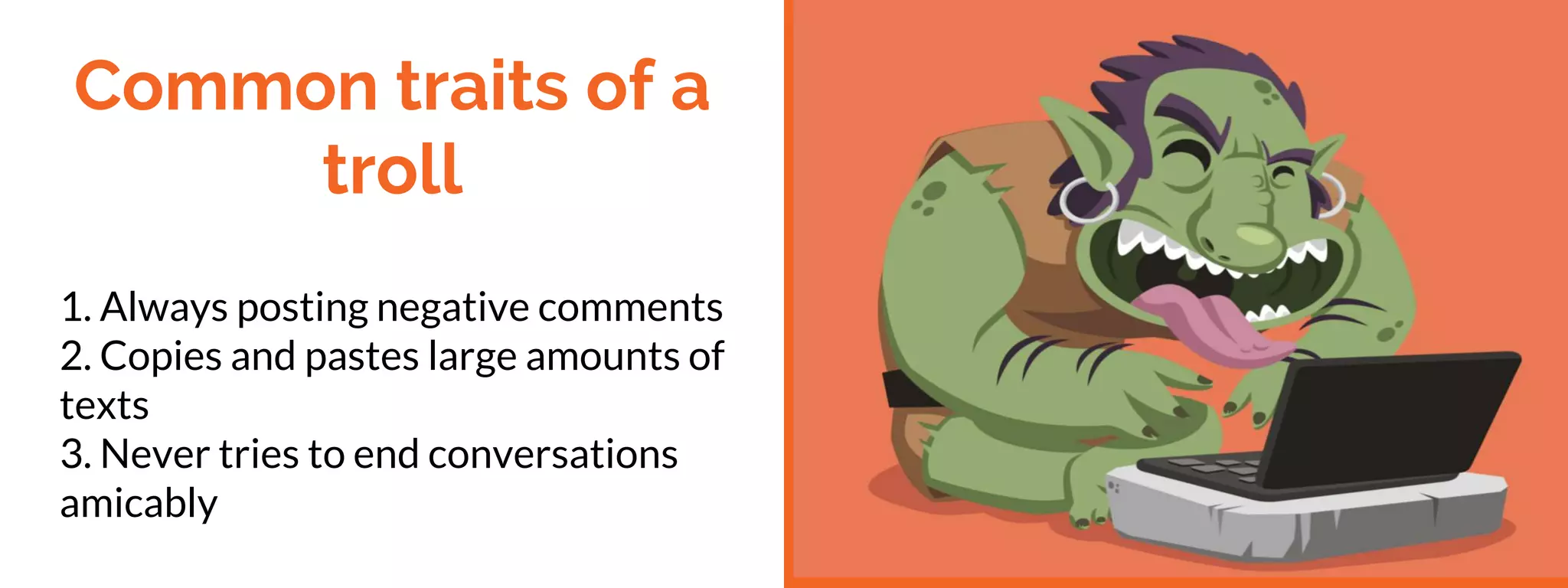
Common traits of a
troll
1. Always posting negative comments
2. Copies and pastes large amounts of
texts
3. Never tries to end conversations
amicably
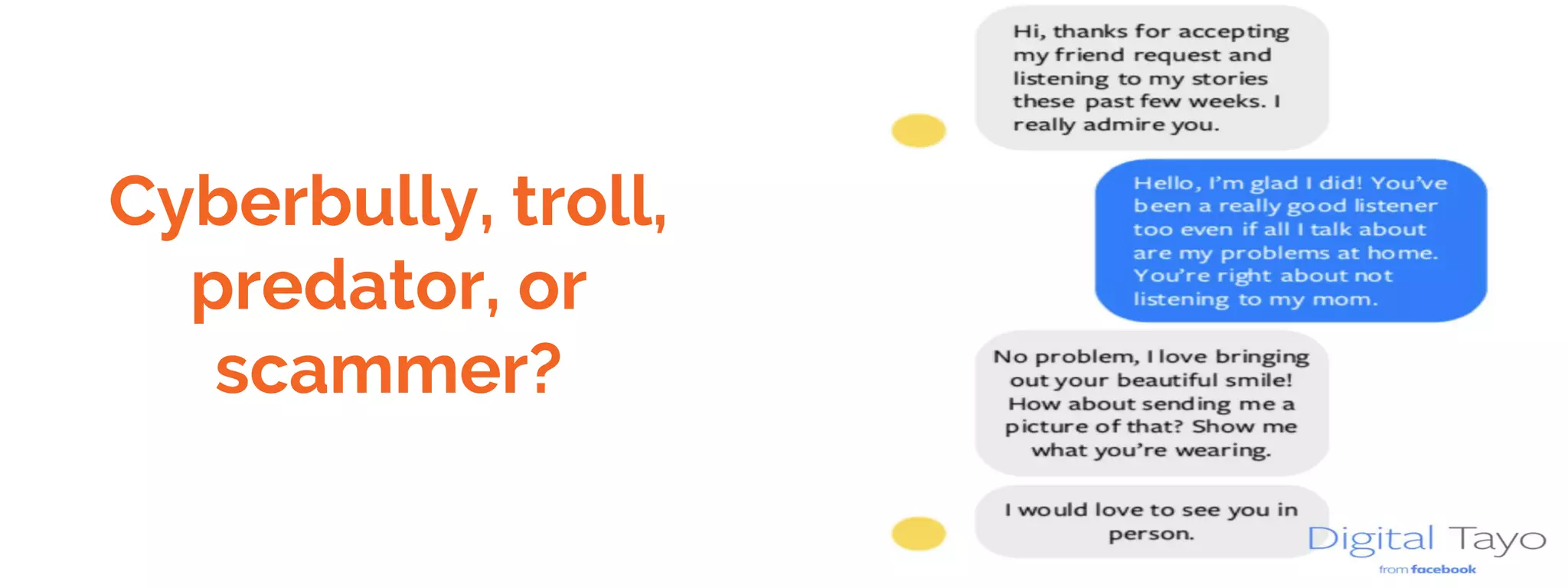
Cyberbully, troll,
predator, or
scammer?
Common traits of a
predator
1. Plays victim
2. Pretends that they need your
help to get your trust
3. Separates from people your trust
Cyberbully, troll,
predator, or
scammer?
Common traits of a
scammer
1. Focuses on getting your money
than giving background
information or detailed explanation
2. Is not transparent – does not
answer questions completely
3. Proposes too good to be true
products/ventures
How do I avoid dangerous
conversations/situations?
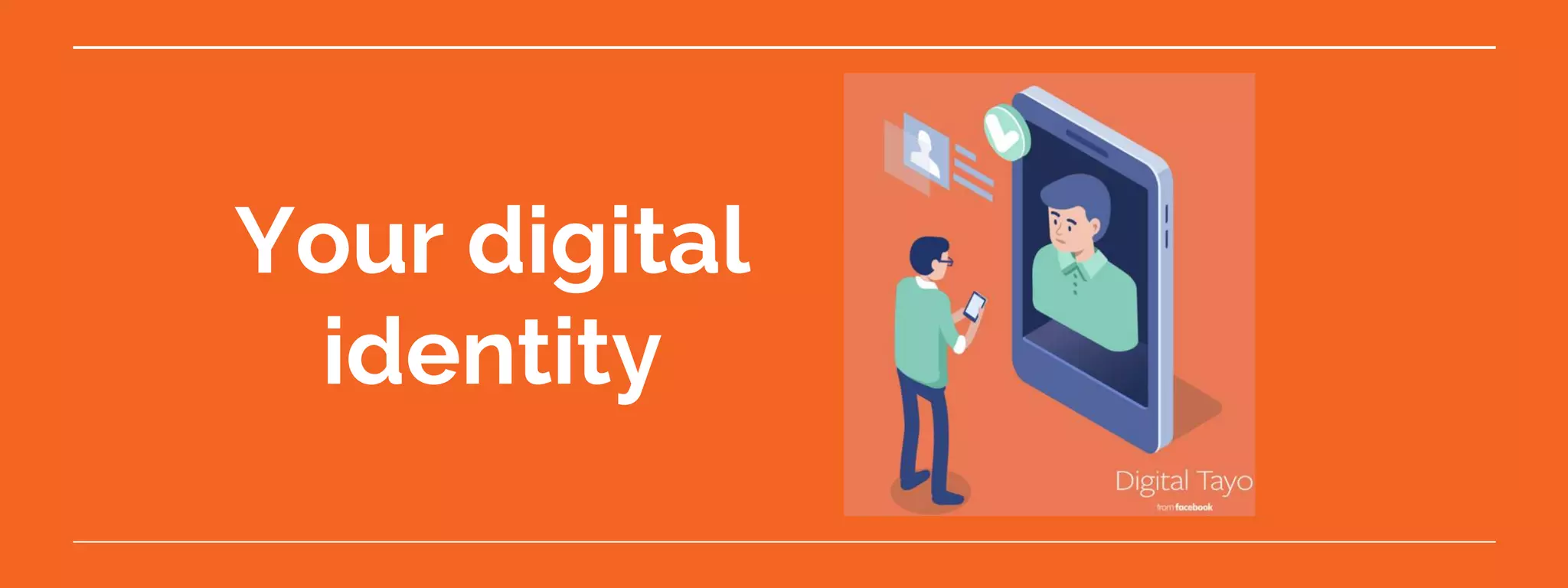
Your digital
identity
Meet Angeli.
She is 19 years old, and she is studying to be a
nurse.
She is from Metro Manila and she loves Karaoke!
Her family raised her and her brother Migs as
Christian and her and her brother grew up to be
very close since he is only 2 years younger than
she is.
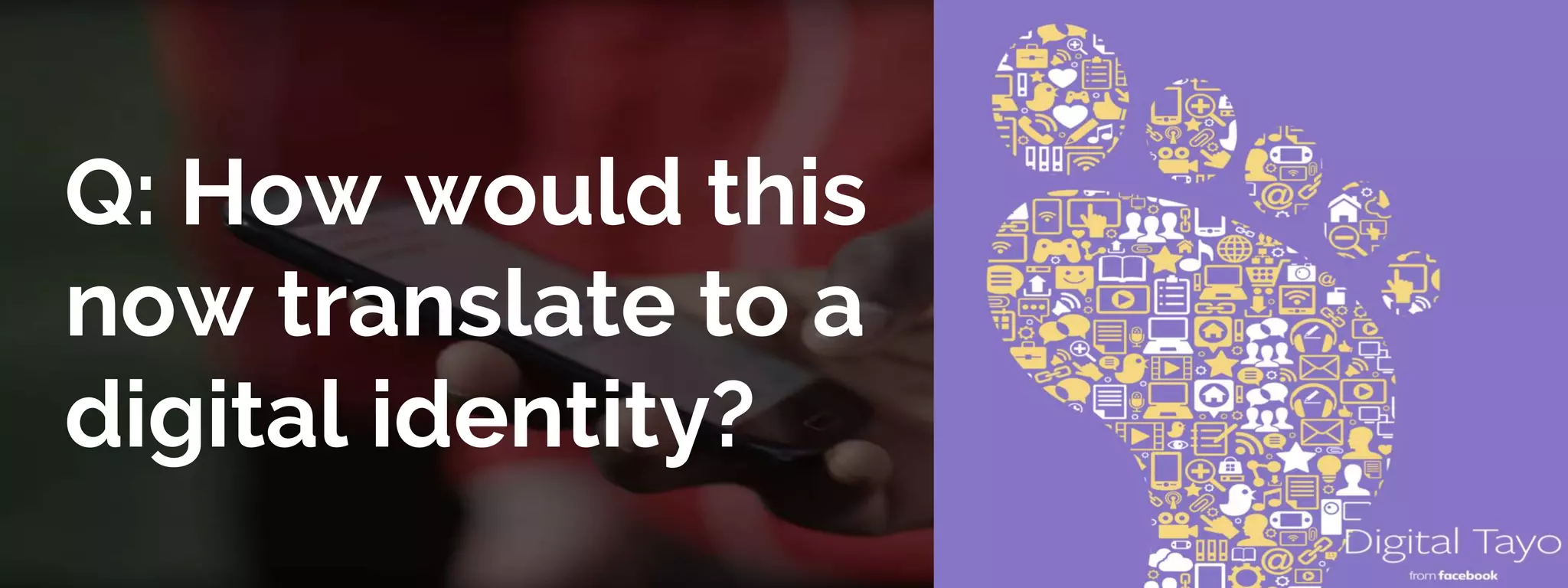
Q: How would this
now translate to a
digital identity?
What you share
about yourself
● Profile and Personal Information
● Posts
● Messages
● What You Share/Like
Who are the ones
who have access
to that info?
● Online friends and relationships
Being aware...
Identity
Theft
Repu-
tation
Money
Theft
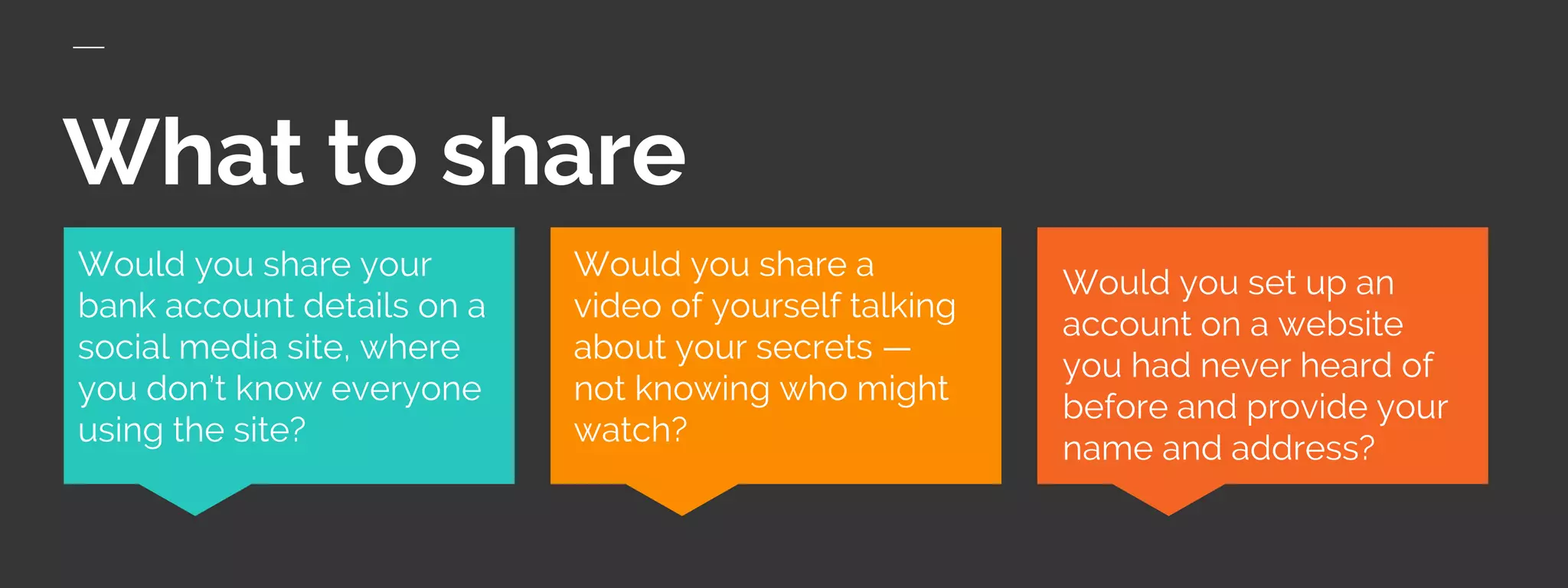
What to share
Would you set up an
account on a website
you had never heard of
before and provide your
name and address?
Would you share your
bank account details on a
social media site, where
you don’t know everyone
using the site?
Would you share a
video of yourself talking
about your secrets —
not knowing who might
watch?
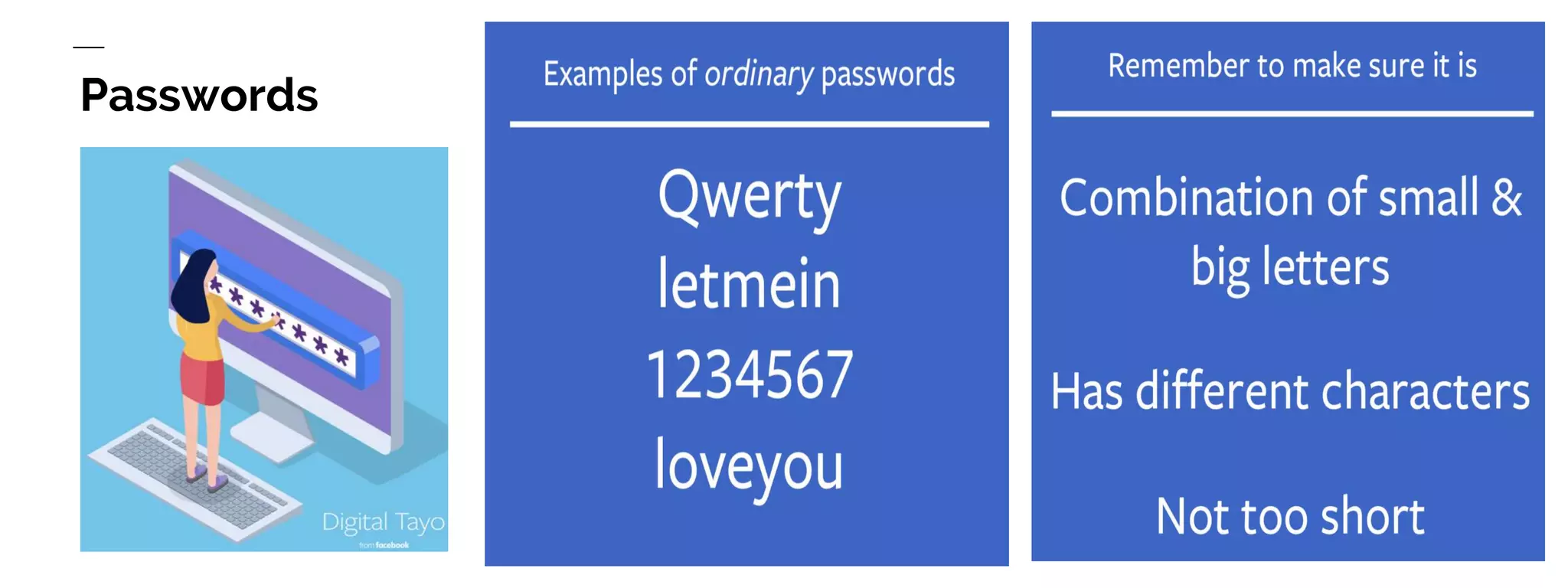
Passwords
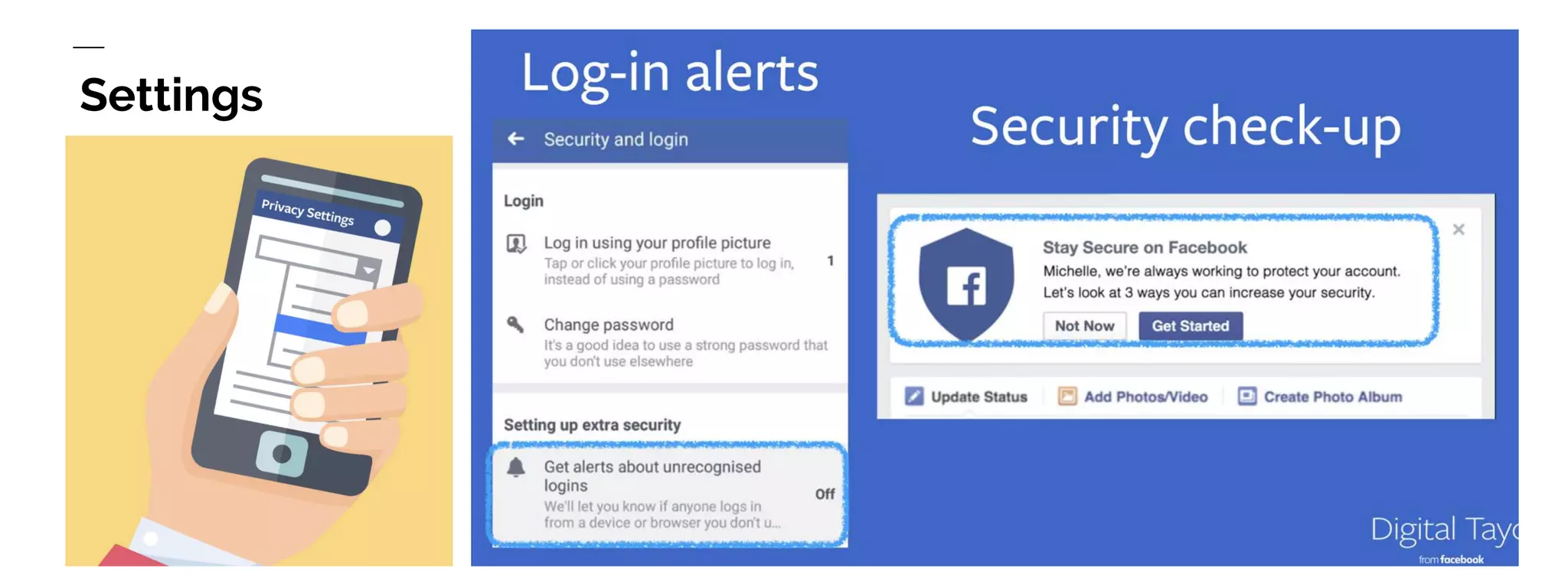
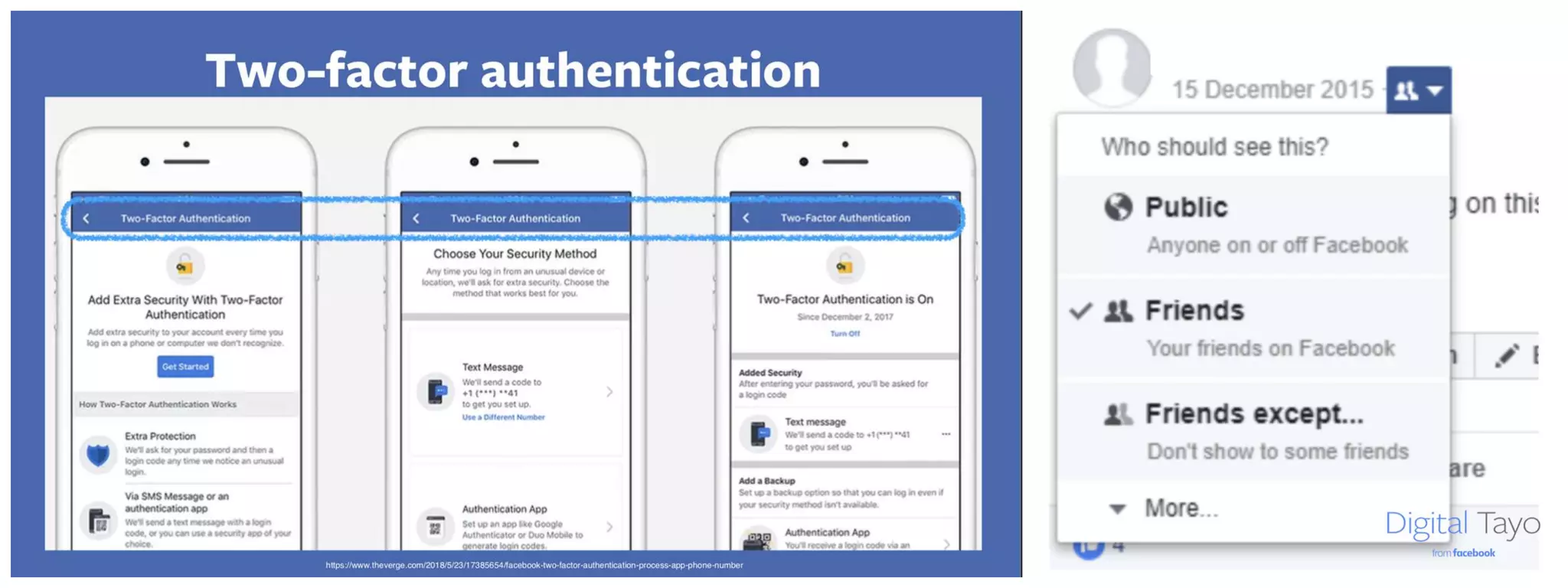
Settings
Meet Juan.
Juan has just recently joined Facebook and
today, we will be helping him out.
Juan has been having a hard time
distinguishing between different kinds of
info he sees online.
Intention
Report and share information to
make better informed decisions
Share their personal experience
or opinion
Intention
Make people laugh
Sell their products
Intention
Harm or trick people
Both make people laugh and
share opinion
Q: So what are the things that I
can look out for to determine
truth of content online?
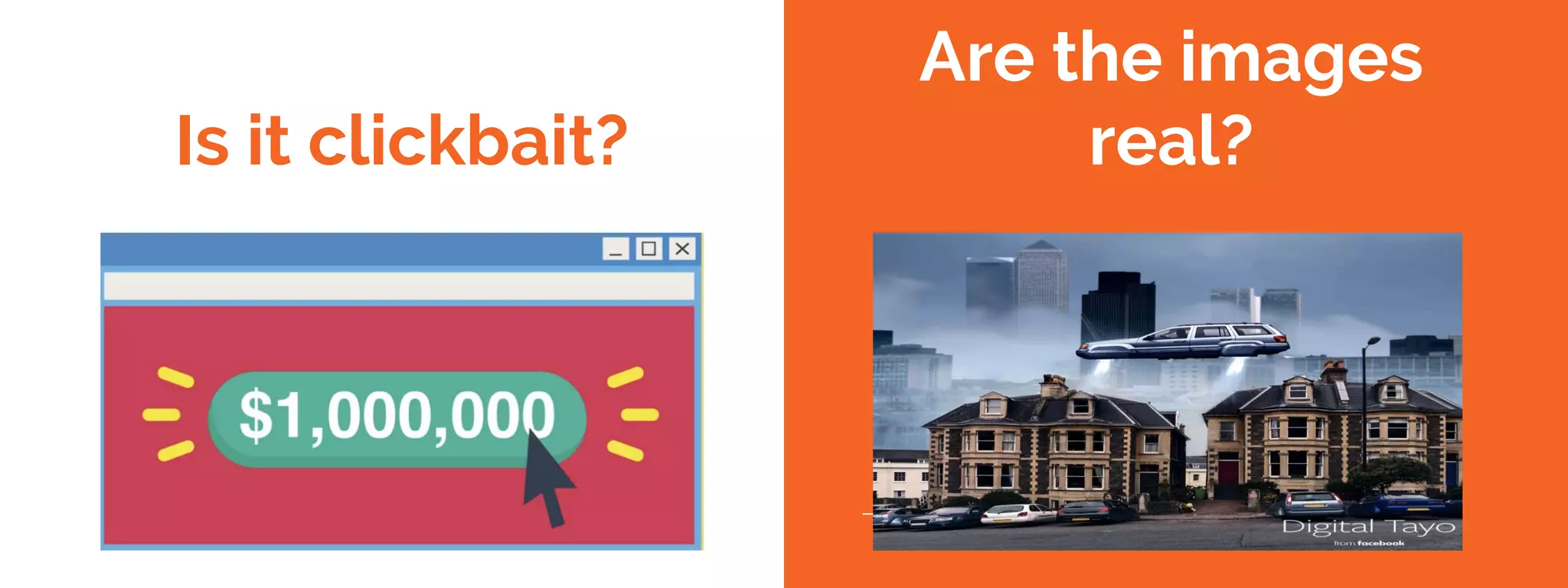
Is it clickbait?
Are the images
real?
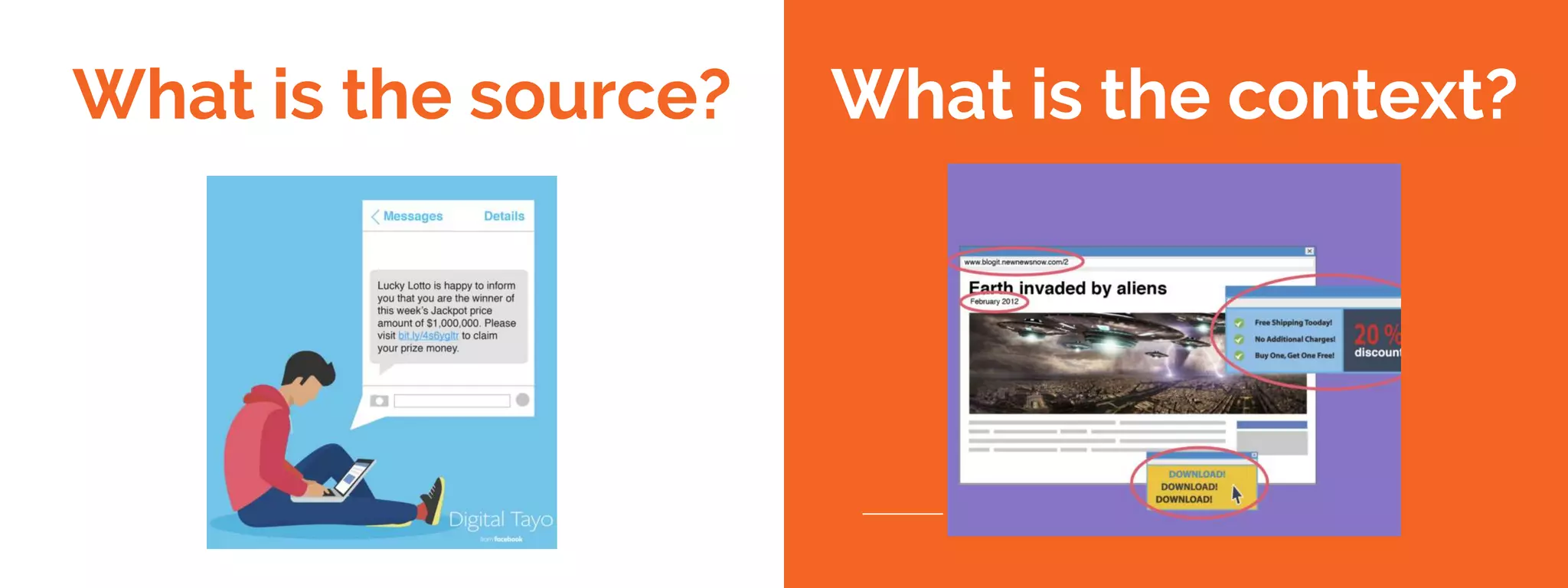
What is the source? What is the context?
Can you check the
information
elsewhere?
Tips for
Spotting Fake
News, Hoax and
Disinformation
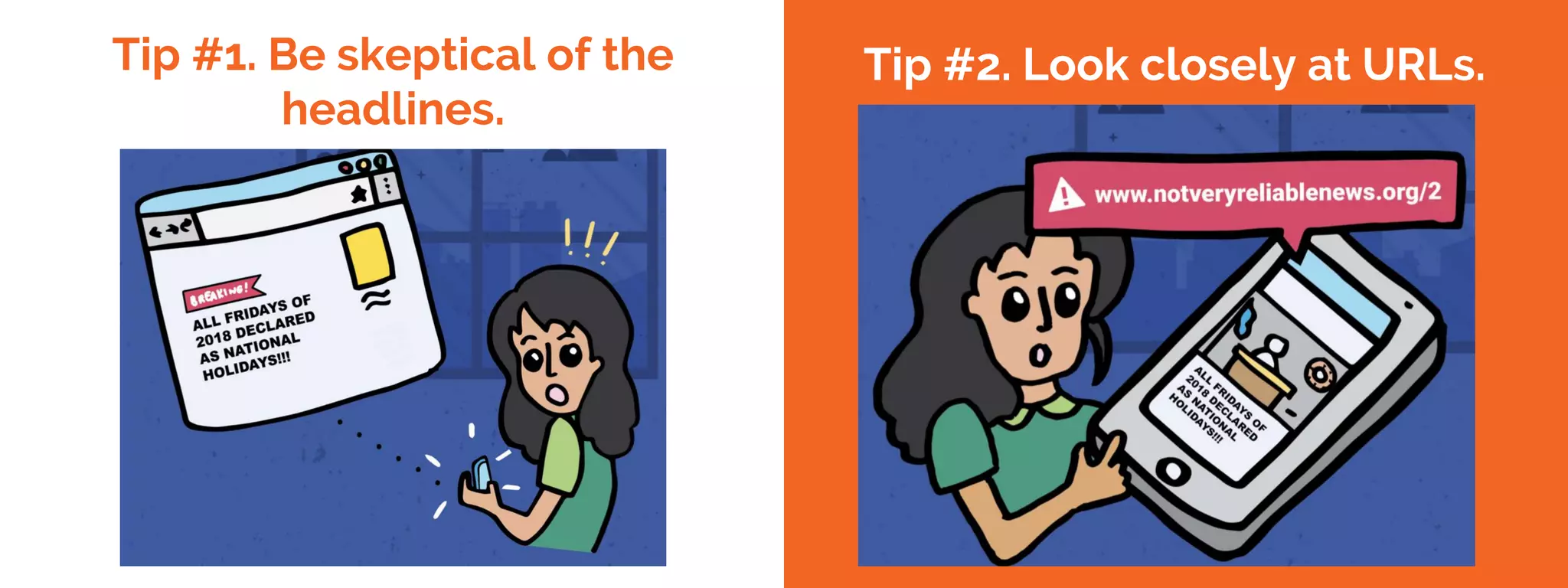
Tip #1. Be skeptical of the
headlines.
Tip #2. Look closely at URLs.
Tip #3. Investigate the source. Tip #4. Watch for unusual
formatting.
Tip #5. Consider the images. Tip #6. Check the date.
Tip #8. Check evidence and
look at other reports. Tip #9. Is the story a joke?
Tip #10. Some stories are
intentionally false.
Want to know more?
Visit digitaltayo.fb.com
Contact me in Facebook at
fb.com/gabrielbillonesjr
& write me a review.

Responsible Digital Citizenship

Editor's Notes

  • #10 What does it mean to communicate online? Digital communication is a two way street You can use: web browser, a social media platform, a banking app, an interactive game, or an email. And communicate: using emojis, text, videos, images, GIFS, audio recordings, or a combination of all of to help get across your digital messages.”
  • #28 All the behaviours you do (i.e. enter, post and share) while you are on the internet forms your digital identity.