
Medical ethics in use
and donation and of
embryo and fetuses
By:
Vijayakumar David, Angelyn Veronica
MD II B (2013-14)
Topics to discuss
1. Introduction
2. Embryo donation and embryo adoption
3. Cryopreservation of „spare embryos‟
4. What is done with the „spare‟ frozen embryos?
5. The Pros and Cons
6. Medical Ethics
7. Conclusion
Introduction
• It is estimated that 2.1 million married couples
in the United States are affected by infertility.
• Approximately 10-15% of infertile couples
become candidates for various forms of Assisted
Reproductive Technologies (ARTs) to assist
them in having their own biological children and
here with it comes the concept
of embryo donation and adoption.
Embryo Donation
• The giving of fertilized egg(embryo) that are
created during In Vitro Fertilization(IVF) cycle
by couples who are affected by infertility.
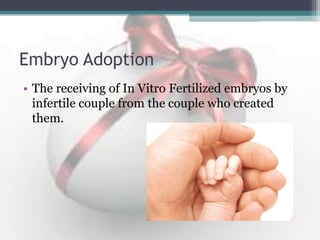
Embryo Adoption
• The receiving of In Vitro Fertilized embryos by
infertile couple from the couple who created
them.
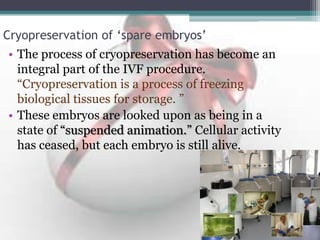
Cryopreservation of ‘spare embryos’
• The process of cryopreservation has become an
integral part of the IVF procedure.
“Cryopreservation is a process of freezing
biological tissues for storage. ”
• These embryos are looked upon as being in a
state of “suspended animation.” Cellular activity
has ceased, but each embryo is still alive.
What is done with the ‘spare’ frozen
embryos?
• Donate them to someone else who wants to
conceive (embryo donation).
• Donate them to scientific research.
• Converted into embryonic stem cell lines.
• Continue to maintain them in storage
indefinitely.
• Discard the embryos.
Success rate of embryo adoption
• To date, no long-term studies have been carried
out since the age of the oldest child born as a
result of frozen embryo transfer 14 years ago.
• It is estimated that 23,000 - 100,000 embryos
could be adopted, and successfully born from the
400,000 - 500,000 live human embryos stored
at present.
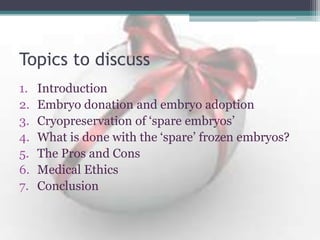
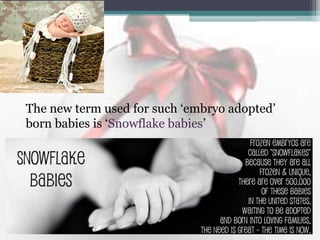
The new term used for such „embryo adopted‟
born babies is „Snowflake babies‟
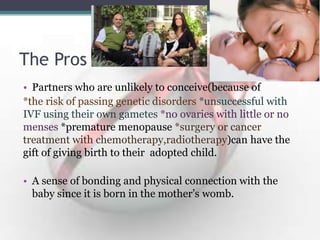
The Pros
• Partners who are unlikely to conceive(because of
*the risk of passing genetic disorders *unsuccessful with
IVF using their own gametes *no ovaries with little or no
menses *premature menopause *surgery or cancer
treatment with chemotherapy,radiotherapy)can have the
gift of giving birth to their adopted child.
• A sense of bonding and physical connection with the
baby since it is born in the mother‟s womb.
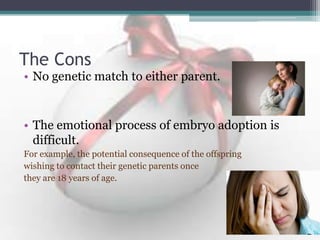
The Cons
• No genetic match to either parent.
• The emotional process of embryo adoption is
difficult.
For example, the potential consequence of the offspring
wishing to contact their genetic parents once
they are 18 years of age.
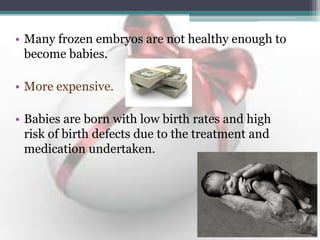
• Many frozen embryos are not healthy enough to
become babies.
• More expensive.
• Babies are born with low birth rates and high
risk of birth defects due to the treatment and
medication undertaken.
Medical Ethics
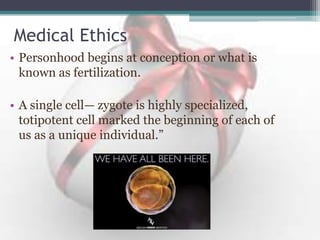
• Personhood begins at conception or what is
known as fertilization.
• A single cell— zygote is highly specialized,
totipotent cell marked the beginning of each of
us as a unique individual.”
• Life must be absolutely respected and protected
from the moment of conception. Right from
fertilization is begun the adventure of a human
life, and each of its great capacities requires
time. . .to find its place and to be in a position to
act.
• In consequence of the fact that they have been
produced in vitro, those embryos which are not
transferred into the body of the mother and are
called „spares‟ are exposed to an absurd fate,
with no possibility of their survival.
• Ethically, embryo donation/adoption focuses on
the issue of personhood.
• Embryos, being a life, it is a moral imperative to
“rescue” these embryos from their current status
of being in “frozen animation”.
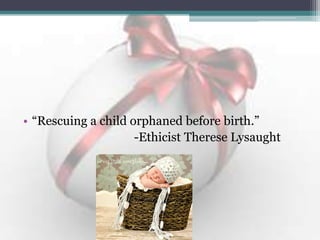
• “Rescuing a child orphaned before birth.”
-Ethicist Therese Lysaught
• Alternatives to embryo donation:
1. Discarding of the embryos.
2. Destruction of the embryos for research
purposes and
3. Allowing the embryos to stay in “suspended
animation” indefinitely.
None of these alternatives will protect and
preserve the value of the life of the embryo.
• Principle of Beneficence
First principle of morality -„do good and avoid evil‟
• Principle of Propotionate reason
This principle is applicable because the situation is
faced with two options both of which are unavoidable
actions-
Donating- Violates the privacy and autonomy of the
donors but preserves life.
Not donating- Embryos are destroyed by research or
left in suspended animation.
Conclusion
• The bottom line is that these embryos already
exist and therefore, the preservation of their
lives takes moral precedence over any other
consideration.
• The direct intention of embryo
donation/adoption is to protect and preserve
human life by saving the lives of vulnerable at-
risk embryos and hence it would be ethical to
donate embryo.
References
• 1. National Center for Health Statistics, “Infertility,”
October 31, 2007.
http://www.cdc.gov/nchs/fastats/fertile.htm.
• 2. Center for Disease Control and Prevention,
“Assisted Reproductive Technology,” June 2008.
Http://www.cdc.gov/ART/
• 3. Rand Law and Health/Society of Assisted
Reproductive Technology (SART) Working Group,
“How Many Frozen Human Embryos Are Available
For Research?” May 2003.
http://www.rand.org/pubs/research_briefs/RB903
8/index1.html.
THANK YOU 

Snowflake Babies

  • 1.
    Medical ethics inuse and donation and of embryo and fetuses By: Vijayakumar David, Angelyn Veronica MD II B (2013-14)
  • 2.
    Topics to discuss 1.Introduction 2. Embryo donation and embryo adoption 3. Cryopreservation of „spare embryos‟ 4. What is done with the „spare‟ frozen embryos? 5. The Pros and Cons 6. Medical Ethics 7. Conclusion
  • 3.
    Introduction • It isestimated that 2.1 million married couples in the United States are affected by infertility. • Approximately 10-15% of infertile couples become candidates for various forms of Assisted Reproductive Technologies (ARTs) to assist them in having their own biological children and here with it comes the concept of embryo donation and adoption.
  • 4.
    Embryo Donation • Thegiving of fertilized egg(embryo) that are created during In Vitro Fertilization(IVF) cycle by couples who are affected by infertility.
  • 5.
    Embryo Adoption • Thereceiving of In Vitro Fertilized embryos by infertile couple from the couple who created them.
  • 6.
    Cryopreservation of ‘spareembryos’ • The process of cryopreservation has become an integral part of the IVF procedure. “Cryopreservation is a process of freezing biological tissues for storage. ” • These embryos are looked upon as being in a state of “suspended animation.” Cellular activity has ceased, but each embryo is still alive.
  • 7.
    What is donewith the ‘spare’ frozen embryos? • Donate them to someone else who wants to conceive (embryo donation). • Donate them to scientific research. • Converted into embryonic stem cell lines. • Continue to maintain them in storage indefinitely. • Discard the embryos.
  • 8.
    Success rate ofembryo adoption • To date, no long-term studies have been carried out since the age of the oldest child born as a result of frozen embryo transfer 14 years ago. • It is estimated that 23,000 - 100,000 embryos could be adopted, and successfully born from the 400,000 - 500,000 live human embryos stored at present.
  • 9.
    The new termused for such „embryo adopted‟ born babies is „Snowflake babies‟
  • 10.
    The Pros • Partnerswho are unlikely to conceive(because of *the risk of passing genetic disorders *unsuccessful with IVF using their own gametes *no ovaries with little or no menses *premature menopause *surgery or cancer treatment with chemotherapy,radiotherapy)can have the gift of giving birth to their adopted child. • A sense of bonding and physical connection with the baby since it is born in the mother‟s womb.
  • 11.
    The Cons • Nogenetic match to either parent. • The emotional process of embryo adoption is difficult. For example, the potential consequence of the offspring wishing to contact their genetic parents once they are 18 years of age.
  • 12.
    • Many frozenembryos are not healthy enough to become babies. • More expensive. • Babies are born with low birth rates and high risk of birth defects due to the treatment and medication undertaken.
  • 13.
    Medical Ethics • Personhoodbegins at conception or what is known as fertilization. • A single cell— zygote is highly specialized, totipotent cell marked the beginning of each of us as a unique individual.”
  • 14.
    • Life mustbe absolutely respected and protected from the moment of conception. Right from fertilization is begun the adventure of a human life, and each of its great capacities requires time. . .to find its place and to be in a position to act.
  • 15.
    • In consequenceof the fact that they have been produced in vitro, those embryos which are not transferred into the body of the mother and are called „spares‟ are exposed to an absurd fate, with no possibility of their survival.
  • 16.
    • Ethically, embryodonation/adoption focuses on the issue of personhood. • Embryos, being a life, it is a moral imperative to “rescue” these embryos from their current status of being in “frozen animation”.
  • 17.
    • “Rescuing achild orphaned before birth.” -Ethicist Therese Lysaught
  • 18.
    • Alternatives toembryo donation: 1. Discarding of the embryos. 2. Destruction of the embryos for research purposes and 3. Allowing the embryos to stay in “suspended animation” indefinitely. None of these alternatives will protect and preserve the value of the life of the embryo.
  • 19.
    • Principle ofBeneficence First principle of morality -„do good and avoid evil‟ • Principle of Propotionate reason This principle is applicable because the situation is faced with two options both of which are unavoidable actions- Donating- Violates the privacy and autonomy of the donors but preserves life. Not donating- Embryos are destroyed by research or left in suspended animation.
  • 20.
    Conclusion • The bottomline is that these embryos already exist and therefore, the preservation of their lives takes moral precedence over any other consideration. • The direct intention of embryo donation/adoption is to protect and preserve human life by saving the lives of vulnerable at- risk embryos and hence it would be ethical to donate embryo.
  • 21.
    References • 1. NationalCenter for Health Statistics, “Infertility,” October 31, 2007. http://www.cdc.gov/nchs/fastats/fertile.htm. • 2. Center for Disease Control and Prevention, “Assisted Reproductive Technology,” June 2008. Http://www.cdc.gov/ART/ • 3. Rand Law and Health/Society of Assisted Reproductive Technology (SART) Working Group, “How Many Frozen Human Embryos Are Available For Research?” May 2003. http://www.rand.org/pubs/research_briefs/RB903 8/index1.html.
  • 22.