Advanced Nuclear Reactors, Small Modular
Reactors(SMRs), & Nuclear Waste: An Overview
Fred Dilger, PhD
Executive Director, Nevada Agency for Nuclear Projects
Presentation to Nevada Commission on Nuclear Projects
June 22, 2022
What are Advanced Nuclear Reactors?
• U.S. nuclear electricity is currently generated by light water reactors (LWRs), commercialized in the 1950s
and early 1960s, and now used throughout most of the world. LWRs are cooled by ordinary (“light”) water,
which also slows (“moderates”) the neutrons that maintain the nuclear fission chain reaction.
• An “advanced nuclear reactor” is defined in 2018 legislation as “a nuclear fission reactor with significant
improvements over the most recent generation of nuclear fission reactors” or a reactor using nuclear fusion
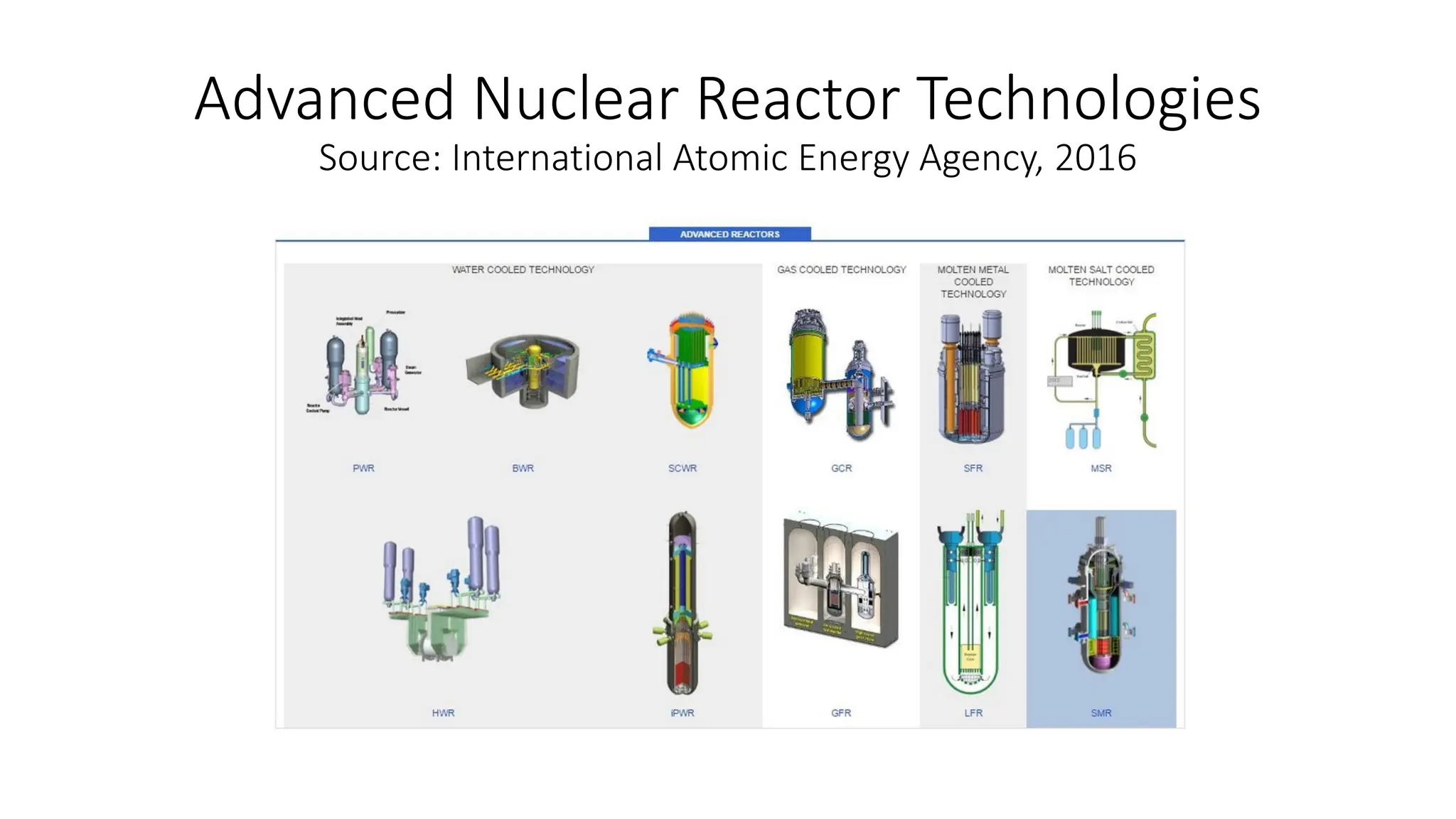
(P.L. 115-248). Advanced nuclear reactors include new LWR designs; gas-cooled reactors, which could use
graphite as a neutron moderator or have no moderator; liquid metal-cooled reactors, which would be cooled
by liquid sodium or other metals and have no moderator; molten salt reactors, which would use liquid fuel;
and fusion reactors, which would release energy through the combination of light atomic nuclei rather than
the splitting (fission) of heavy nuclei such as uranium.
• The Nuclear Energy Innovation and Modernization Act (NEIMA), enacted on January 14, 2019, is intended to
promote the commercialization of new nuclear reactor designs that, compared to current reactors, provide
additional inherent safety features, significantly lower levelized cost of electricity, lower waste yields, greater
fuel utilization, enhanced reliability, increased proliferation resistance, increased thermal efficiency, or ability
to integrate into electric and nonelectric applications.
• Most advanced reactor types have never been constructed in the U.S. and require new safety and
environmental analyses before licensing; some were last operated in the U.S. several decades ago.
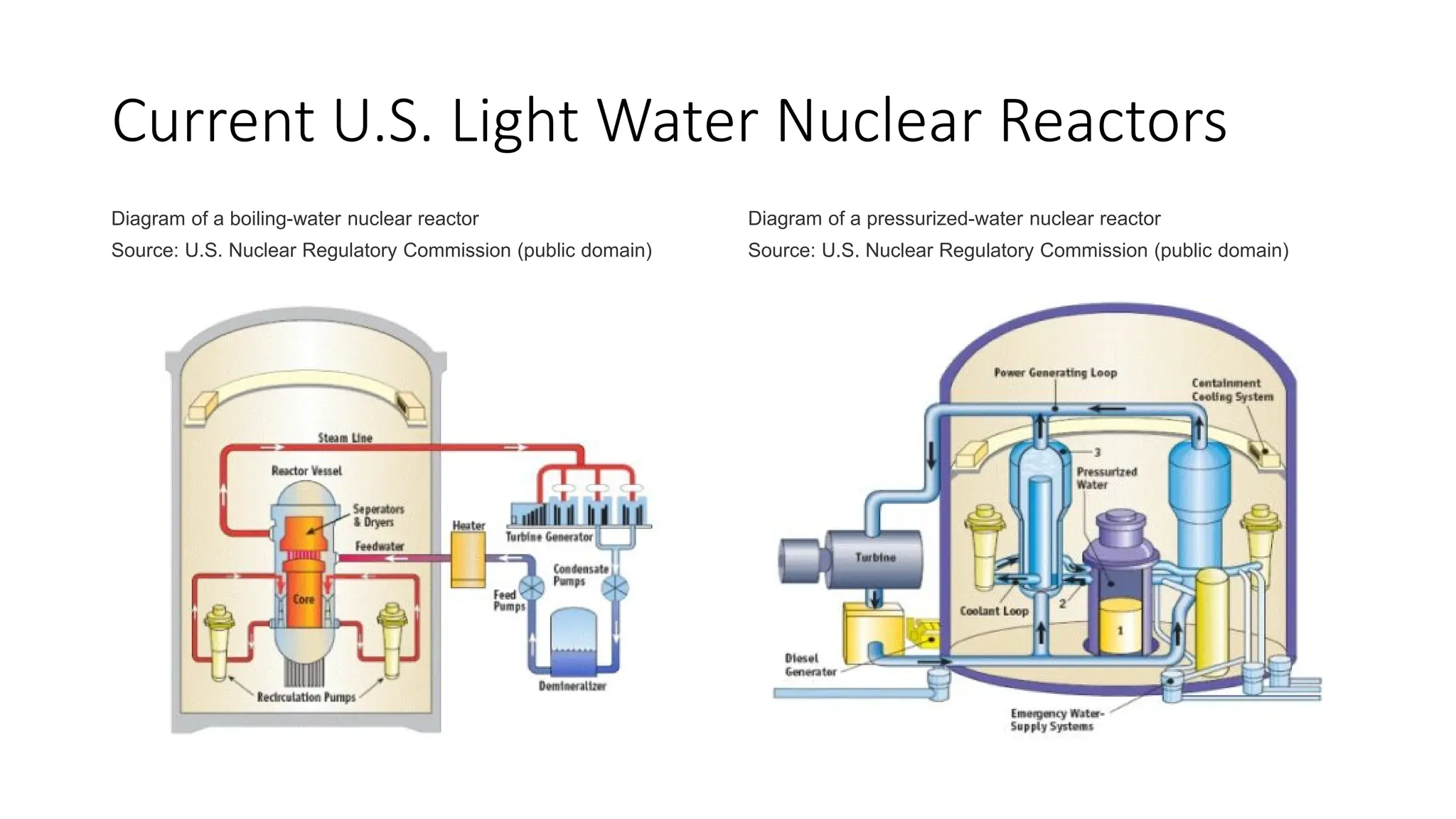
Current U.S. Light Water Nuclear Reactors
Diagram of a boiling-water nuclear reactor Diagram of a pressurized-water nuclear reactor
Source: U.S. Nuclear Regulatory Commission (public domain) Source: U.S. Nuclear Regulatory Commission (public domain)
COOLED TECHNOLOGY
-
-
-
-
PWR
ADVANCED REACTORS
GAS COOLED TECHNOLOGY
SCWR GCR
iP'NR GFR
MOLTEN METAL
COOLED
TECHNOLOGY
SFR
LFR
MOLTEN SALT COOLED
TECHNOLOGY
MSR
SMR
Advanced Nuclear Reactor Technologies
Source: International Atomic Energy Agency, 2016
What are Small Modular Reactors (SMRs)?
• Small modular reactors (SMRs) are advanced reactors that have electric generating capacities up to 300
megawatts, compared to the current average 1,000 megawatts for existing U.S. commercial reactors.
Microreactors would produce 1-20 megawatts of thermal energy for use directly as industrial heat sources,
for generating electricity, and/or for district heating.
• Many SMRs would use high-assay low enriched uranium (HALEU) fuel, enriched up to 20 percent uranium-
235 (current fuels are enriched up to 5 percent). Availability of U.S. HALEU is currently a major constraint.
• As of 2022, four companies have submitted license applications to the NRC for light-water advanced
SMRs: the NuScale 50 MW pressurized water reactor; the General Electric-Hitachi BWRX-300 300 MW
boiling water reactor; the HOLTEC SMR-160, a 160 MW pressurized water reactor; and the BWXT mPower
180 MW pressurized water reactor.
• Some SMRs under licensing review by the NRC could be deployed by 2030. NuScale plans to operate its first
SMR at the Idaho National Laboratory by 2029.
• NRC expects to issue new regulations for licensing non-LWR SMRs by July 2025. Non-LWR SMRs – including
high-temperature gas reactors, gas-cooled fast reactors, sodium-cooled fast reactors, lead-cooled fast
reactors, and molten salt reactors - could be deployed in the 2030s.
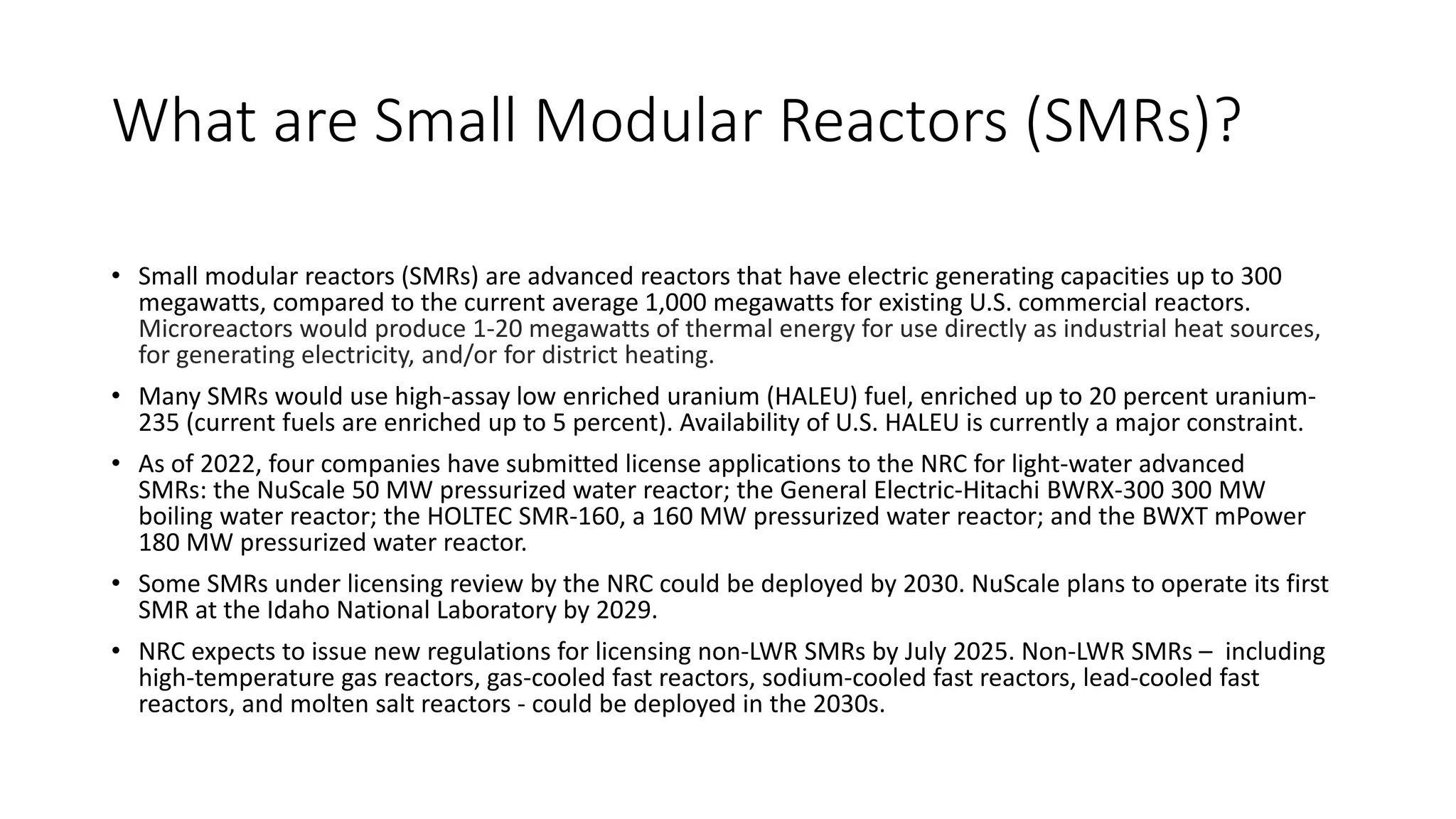
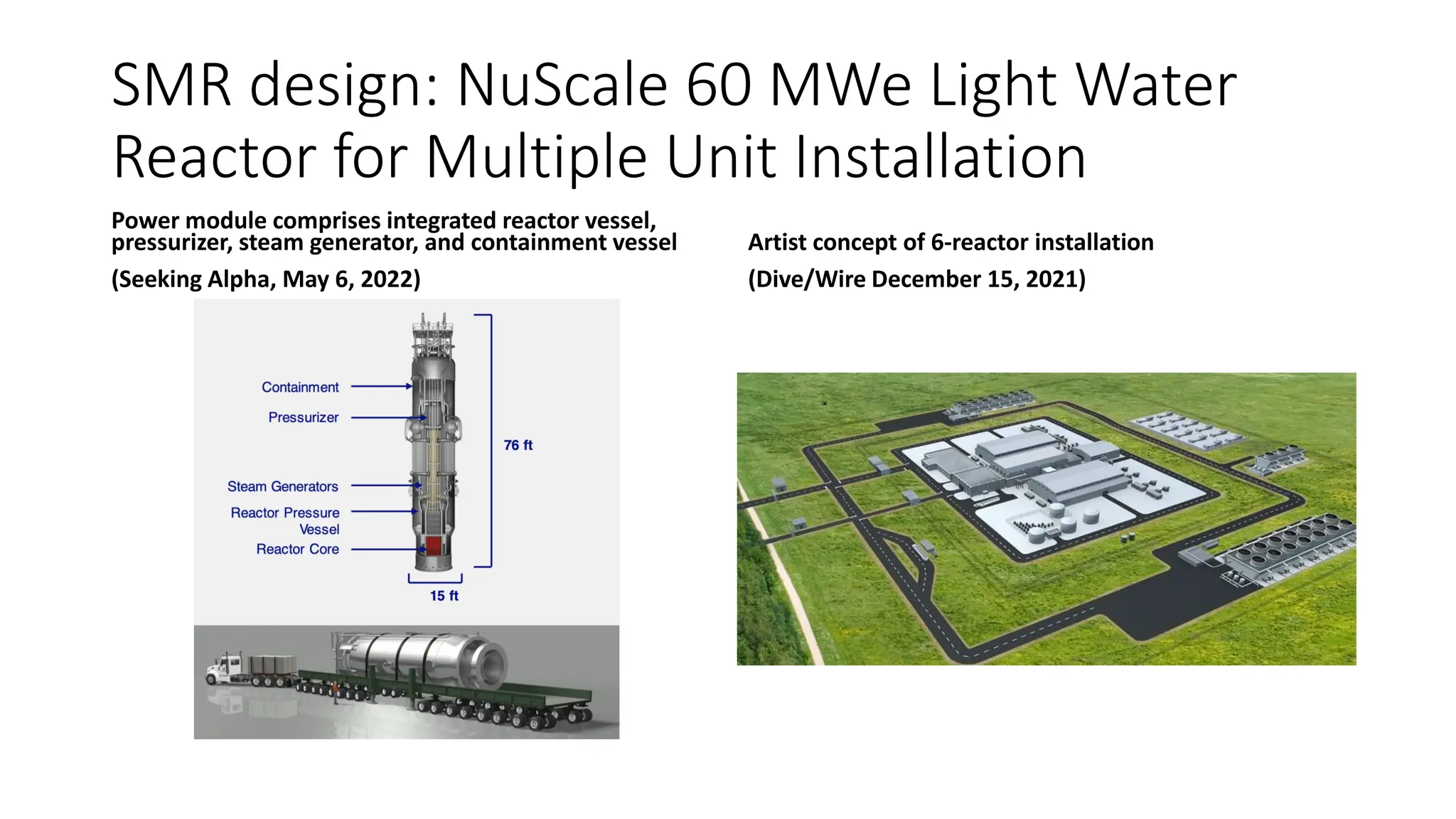
Pressurizer
Steam Generators
Reactor Pressure
Vessel
Reactor Core
76 ft
SMR design: NuScale 60 MWe Light Water
Reactor for Multiple Unit Installation
Power module comprises integrated reactor vessel,
pressurizer, steam generator, and containment vessel Artist concept of 6-reactor installation
(Seeking Alpha, May 6, 2022) (Dive/Wire December 15, 2021)
...
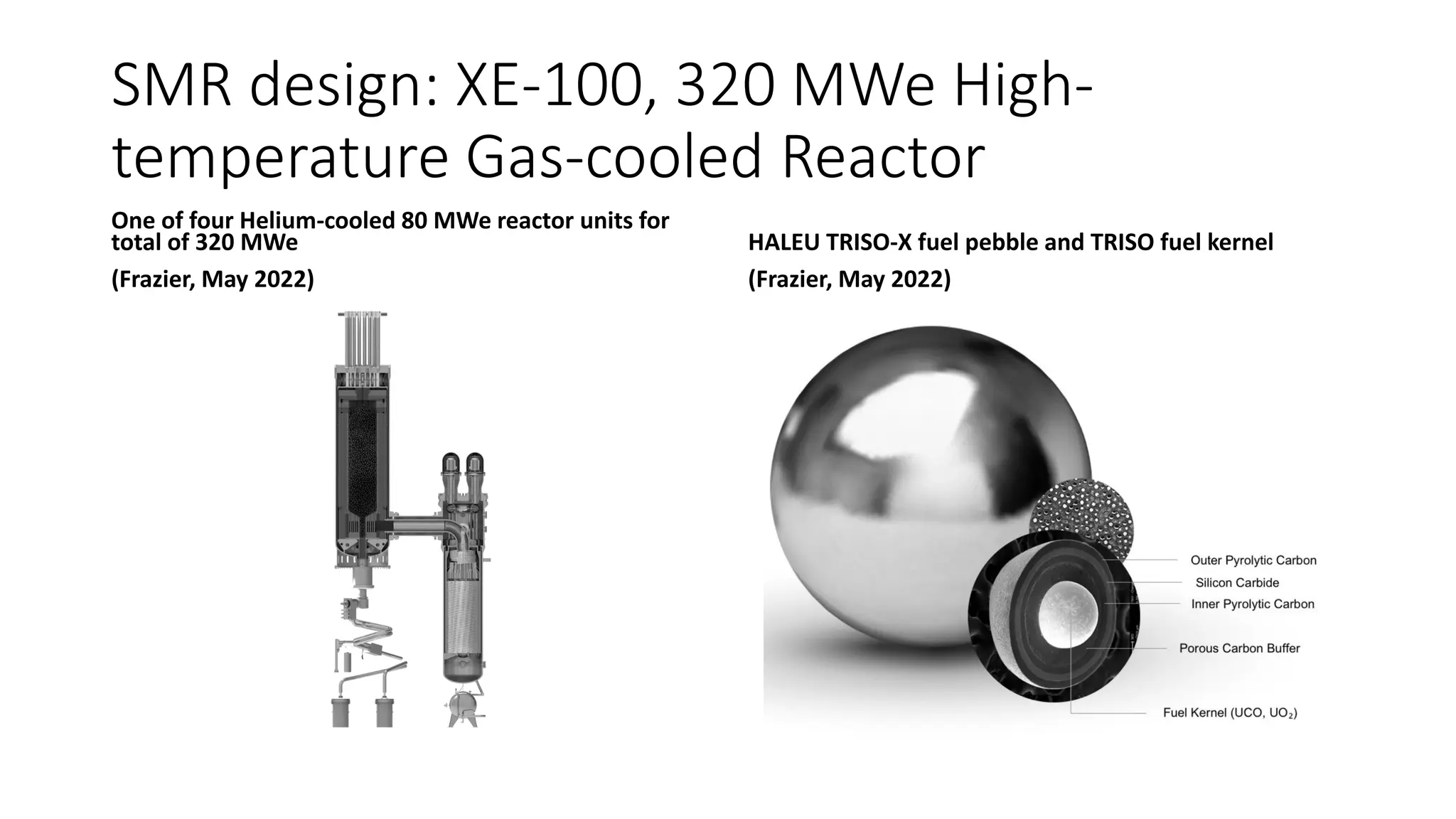
Outer Pyrolytic Carbon
Silicon Carbide
Inner Pyrolytic Carbon
Porous Carbon Buffer
Fuel Kernel (UCO, UO2)
SMR design: XE-100, 320 MWe High-
temperature Gas-cooled Reactor
One of four Helium-cooled 80 MWe reactor units for
total of 320 MWe HALEU TRISO-X fuel pebble and TRISO fuel kernel
(Frazier, May 2022) (Frazier, May 2022)
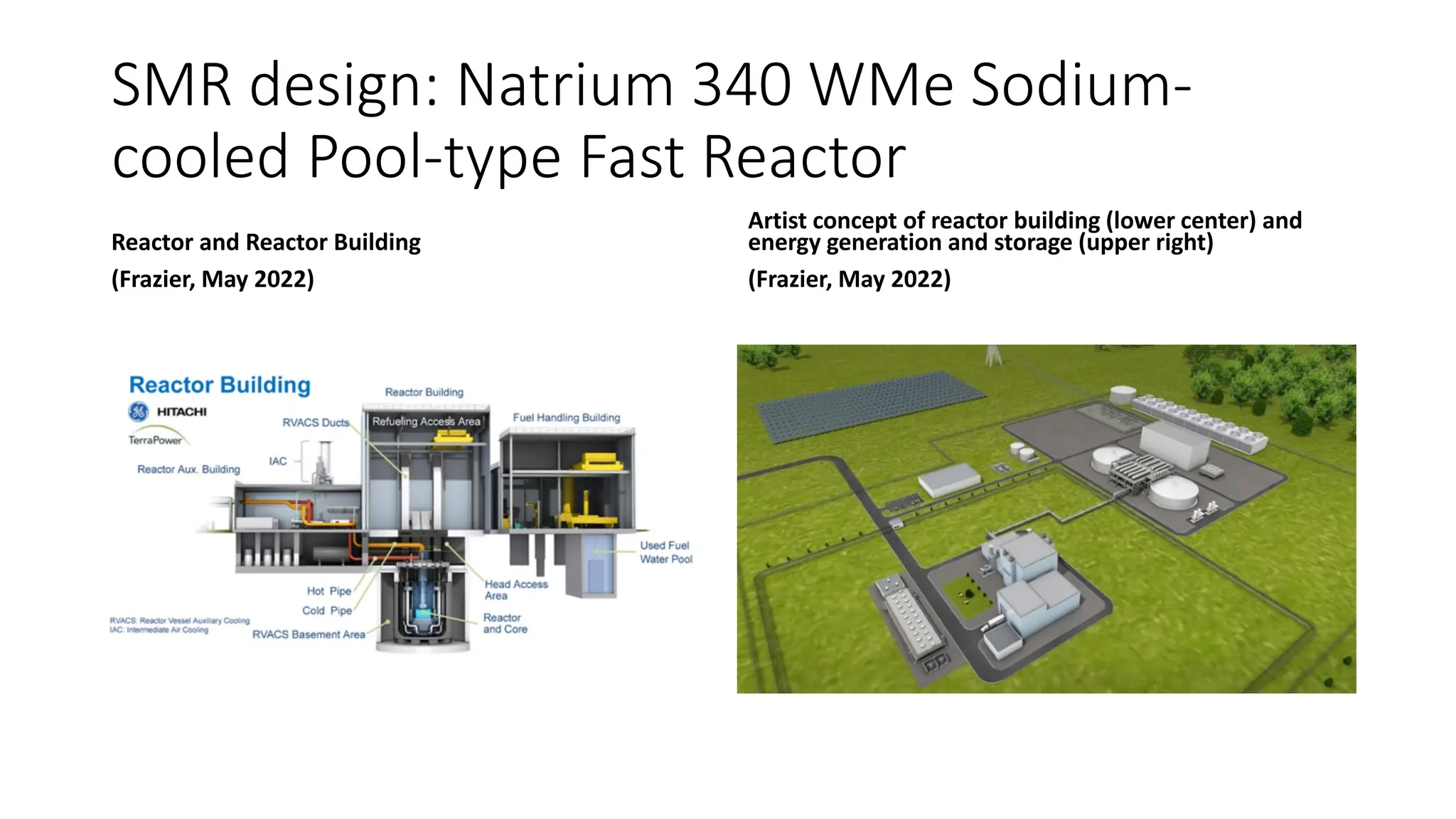
Reactor Building
HITACHI
~ ~
RVACS Ducts
RVACS _ _ ,.._, 11)'0-ng
tAC ,_,_, 11 MCOOl,ng RVACS Base~nl Area
R actor Bu1
ld1ng
Reactor
and Core
Used Fuel
W;iter Pool
SMR design: Natrium 340 WMe Sodium-
cooled Pool-type Fast Reactor
Artist concept of reactor building (lower center) and
Reactor and Reactor Building energy generation and storage (upper right)
(Frazier, May 2022) (Frazier, May 2022)
What is the motivation for producing SMRs?
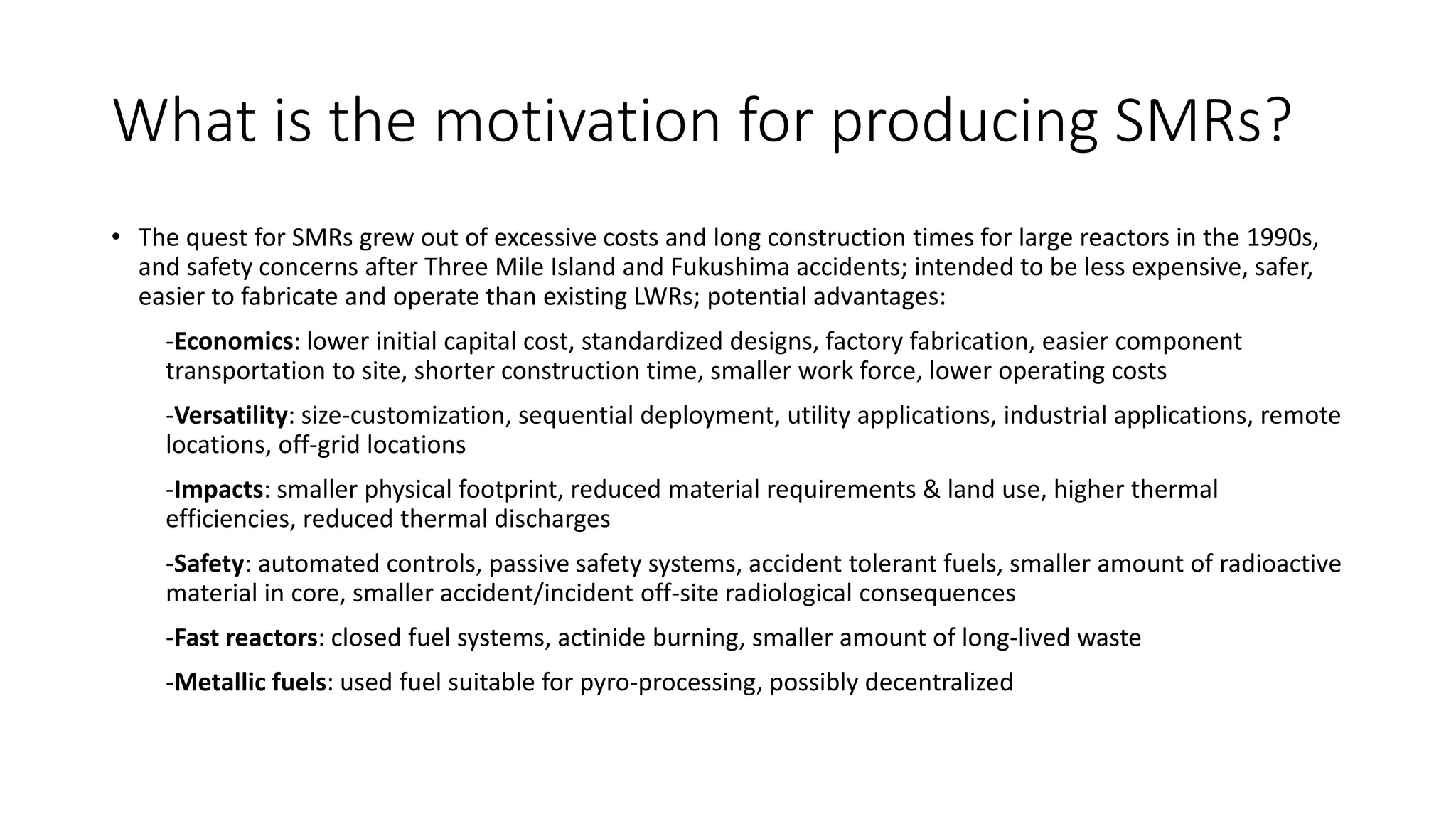
• The quest for SMRs grew out of excessive costs and long construction times for large reactors in the 1990s,
and safety concerns after Three Mile Island and Fukushima accidents; intended to be less expensive, safer,
easier to fabricate and operate than existing LWRs; potential advantages:
-Economics: lower initial capital cost, standardized designs, factory fabrication, easier component
transportation to site, shorter construction time, smaller work force, lower operating costs
-Versatility: size-customization, sequential deployment, utility applications, industrial applications, remote
locations, off-grid locations
-Impacts: smaller physical footprint, reduced material requirements & land use, higher thermal
efficiencies, reduced thermal discharges
-Safety: automated controls, passive safety systems, accident tolerant fuels, smaller amount of radioactive
material in core, smaller accident/incident off-site radiological consequences
-Fast reactors: closed fuel systems, actinide burning, smaller amount of long-lived waste
-Metallic fuels: used fuel suitable for pyro-processing, possibly decentralized
What are the expected characteristics of
nuclear waste produced by SMRs?
• Recent study published in Proceedings of the National Academy of Sciences concluded “… SMRs will
exacerbate the challenges of nuclear waste management and disposal.” [p.1]
• “This analysis of three distinct SMR designs shows that, relative to a gigawatt-scale PWR, these reactors will
increase the energy-equivalent volumes of SNF, long-lived LILW, and short-lived LILW by factors of up to 5.5,
30, and 35, respectively. These findings stand in contrast to the waste reduction benefits that advocates have
claimed for advanced nuclear technologies.” [p.10]
• “… SMR waste streams will bear significant (radio-)chemical differences from those of existing reactors.
Molten salt– and sodium-cooled SMRs will use highly corrosive and pyrophoric fuels and coolants that,
following irradiation, will become highly radioactive. Relatively high concentrations of [plutonium-239] and
[uranium-235] in low–burnup SMR SNF will render recriticality a significant risk for these chemically unstable
waste streams.” [p.10]
• “SMR waste streams that are susceptible to exothermic chemical reactions or nuclear criticality when in
contact with water or other repository materials are unsuitable for direct geologic disposal. Hence, the large
volumes of reactive SMR waste will need to be treated, conditioned, and appropriately packaged prior to
geological disposal.“ [p.10]
• “Given that SMRs are incompatible with existing nuclear waste disposal technologies and concepts, future
studies should address whether safe interim storage of reactive SMR waste streams is credible in the context
of a continued delay in the development of a geologic repository in the United States.” [p.11]
L.M. Krall, A.M. Mcfarlane, R.C. Ewing, “Nuclear waste from small modular reactors,” PNAS (May 31, 2022),
https://www.pnas.org/doi/full/10.1073/pnas.2111833119, downloaded June 13, 2022.
How will Advanced Reactors potentially affect
Yucca Mountain?
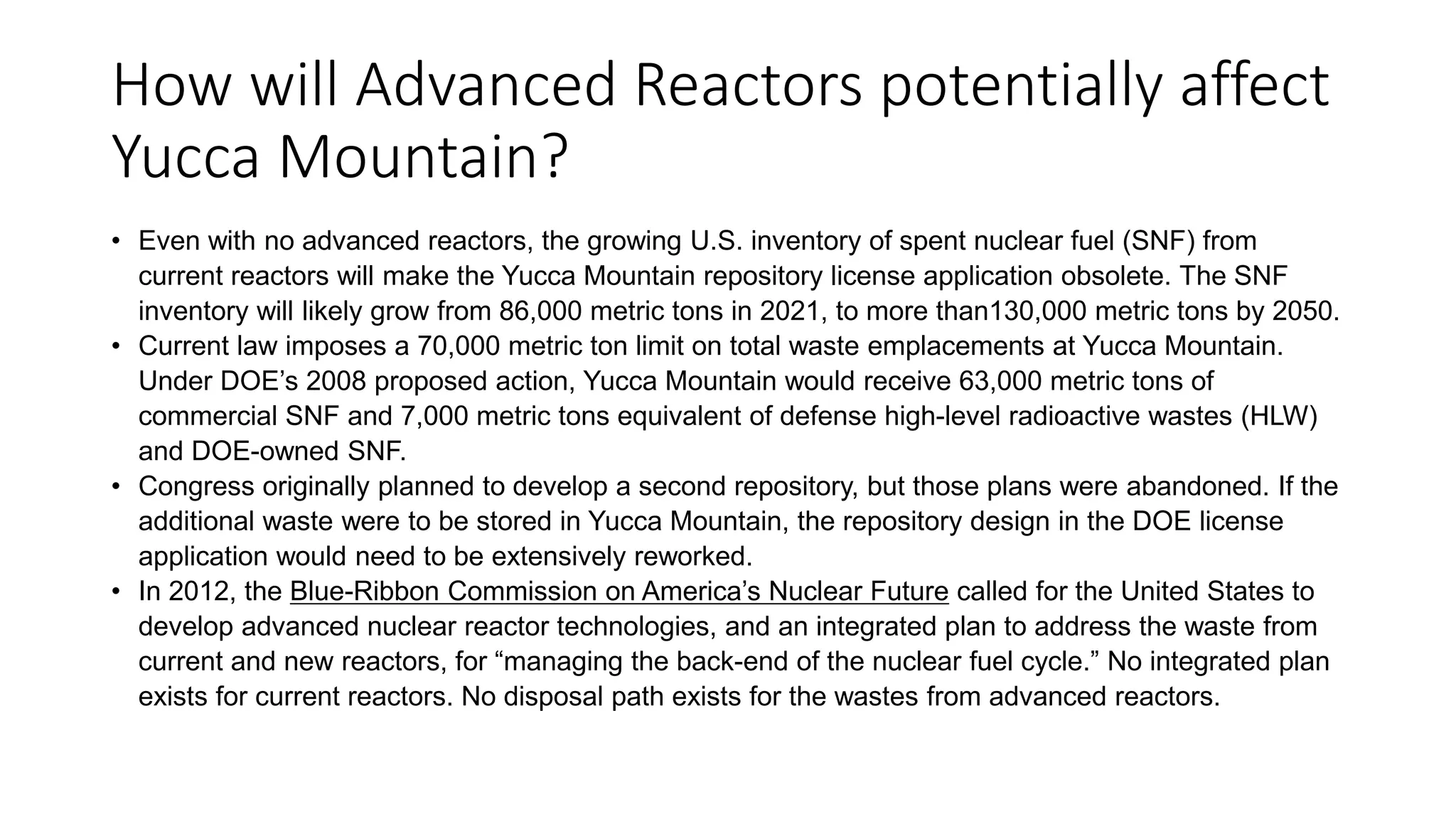
• Even with no advanced reactors, the growing U.S. inventory of spent nuclear fuel (SNF) from
current reactors will make the Yucca Mountain repository license application obsolete. The SNF
inventory will likely grow from 86,000 metric tons in 2021, to more than130,000 metric tons by 2050.
• Current law imposes a 70,000 metric ton limit on total waste emplacements at Yucca Mountain.
Under DOE’s 2008 proposed action, Yucca Mountain would receive 63,000 metric tons of
commercial SNF and 7,000 metric tons equivalent of defense high-level radioactive wastes (HLW)
and DOE-owned SNF.
• Congress originally planned to develop a second repository, but those plans were abandoned. If the
additional waste were to be stored in Yucca Mountain, the repository design in the DOE license
application would need to be extensively reworked.
• In 2012, the Blue-Ribbon Commission on America’s Nuclear Future called for the United States to
develop advanced nuclear reactor technologies, and an integrated plan to address the waste from
current and new reactors, for “managing the back-end of the nuclear fuel cycle.” No integrated plan
exists for current reactors. No disposal path exists for the wastes from advanced reactors.
References
• CRS, Advanced Nuclear Reactors: Technology Overview and Current Issues, April 18, 2019, R45706,
https://crsreports.congress.gov/product/pdf/R/R45706
• https://www.congress.gov/115/plaws/publ439/PLAW-115publ439.pdf
• https://www.energy.gov/ne/advanced-small-modular-reactors-smrs
• https://www.nrc.gov/docs/ML2133/ML21337A376.pdf
• https://www.energy.gov/ne/articles/nrc-approves-first-us-small-modular-reactor-design
• https://www.nuscalepower.com/projects/carbon-free-power-project
• https://www.nrc.gov/docs/ML2133/ML21337A378.pdf
• L.M. Krall, A.M. Mcfarlane, R.C. Ewing, “Nuclear waste from small modular reactors,” PNAS (May 31, 2022),
https://www.pnas.org/doi/full/10.1073/pnas.2111833119
• GAO-21-603, Sept. 2021, p.1 https://www.gao.gov/assets/720/716710.pdf
• DOE FSEIS, 2008, Pp. S-8, 2-3, 8-6 https://www.energy.gov/nepa/downloads/eis-0250-s1-final-supplemental-
environmental-impact-statement
• BRC 2012 p.122 https://www.energy.gov/sites/prod/files/2013/04/f0/brc_finalreport_jan2012.pdf
Advanced Reactor Concepts – Fast Reactors
Source: Congressional Research Service, 2019
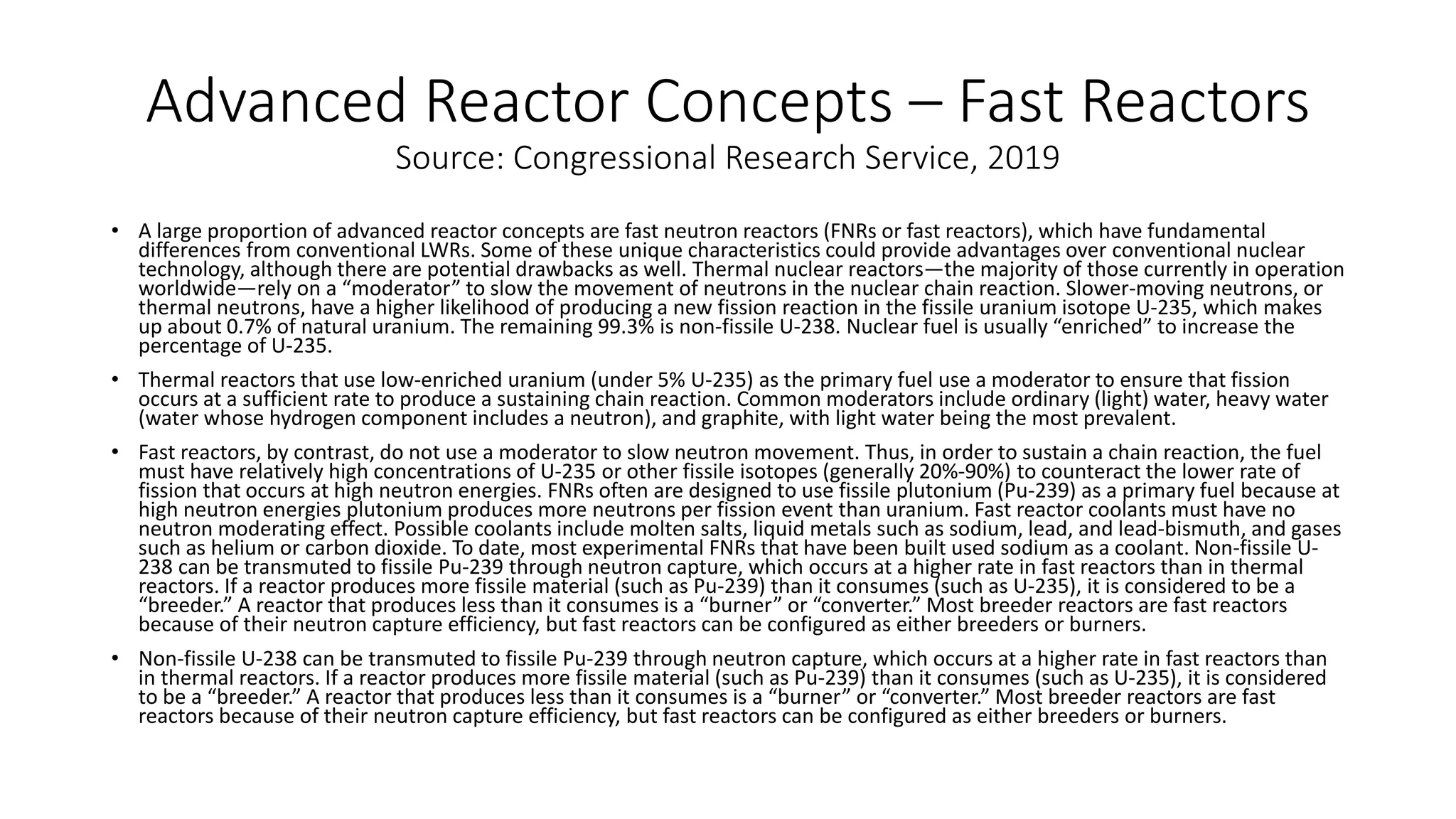
• A large proportion of advanced reactor concepts are fast neutron reactors (FNRs or fast reactors), which have fundamental
differences from conventional LWRs. Some of these unique characteristics could provide advantages over conventional nuclear
technology, although there are potential drawbacks as well. Thermal nuclear reactors—the majority of those currently in operation
worldwide—rely on a “moderator” to slow the movement of neutrons in the nuclear chain reaction. Slower-moving neutrons, or
thermal neutrons, have a higher likelihood of producing a new fission reaction in the fissile uranium isotope U-235, which makes
up about 0.7% of natural uranium. The remaining 99.3% is non-fissile U-238. Nuclear fuel is usually “enriched” to increase the
percentage of U-235.
• Thermal reactors that use low-enriched uranium (under 5% U-235) as the primary fuel use a moderator to ensure that fission
occurs at a sufficient rate to produce a sustaining chain reaction. Common moderators include ordinary (light) water, heavy water
(water whose hydrogen component includes a neutron), and graphite, with light water being the most prevalent.
• Fast reactors, by contrast, do not use a moderator to slow neutron movement. Thus, in order to sustain a chain reaction, the fuel
must have relatively high concentrations of U-235 or other fissile isotopes (generally 20%-90%) to counteract the lower rate of
fission that occurs at high neutron energies. FNRs often are designed to use fissile plutonium (Pu-239) as a primary fuel because at
high neutron energies plutonium produces more neutrons per fission event than uranium. Fast reactor coolants must have no
neutron moderating effect. Possible coolants include molten salts, liquid metals such as sodium, lead, and lead-bismuth, and gases
such as helium or carbon dioxide. To date, most experimental FNRs that have been built used sodium as a coolant. Non-fissile U-
238 can be transmuted to fissile Pu-239 through neutron capture, which occurs at a higher rate in fast reactors than in thermal
reactors. If a reactor produces more fissile material (such as Pu-239) than it consumes (such as U-235), it is considered to be a
“breeder.” A reactor that produces less than it consumes is a “burner” or “converter.” Most breeder reactors are fast reactors
because of their neutron capture efficiency, but fast reactors can be configured as either breeders or burners.
• Non-fissile U-238 can be transmuted to fissile Pu-239 through neutron capture, which occurs at a higher rate in fast reactors than
in thermal reactors. If a reactor produces more fissile material (such as Pu-239) than it consumes (such as U-235), it is considered
to be a “breeder.” A reactor that produces less than it consumes is a “burner” or “converter.” Most breeder reactors are fast
reactors because of their neutron capture efficiency, but fast reactors can be configured as either breeders or burners.
Advanced Reactor Concepts - Fast Reactors
(continued)
• Fast neutrons are also more effective than thermal reactors at fissioning plutonium and actinides, which are
converted to relatively short-lived fission products such as cesium 137 and strontium 90. This effectiveness
at fissioning a wide variety of isotopes allows fast reactors to operate well with fuel made from the
plutonium and uranium separated during the reprocessing (or “recycling”) of spent nuclear fuel. Unlike
thermal reactors, fast reactors could theoretically re-use their spent fuel indefinitely—disposing only of the
highly radioactive fission products. Such a “closed” fuel cycle would be in contrast to the current “open” or
“once through” fuel cycle, in which spent fuel would be permanently disposed of in a deep repository
without reprocessing.
• In theory, the closed fuel cycle (with the re-use of uranium and plutonium) could extend fuel supplies and
potentially reduce duration of the radioactive hazard of nuclear waste from more than a million years to less
than 1,000 years. If breeder reactors were employed to maximize the conversion of U-238 to plutonium, the
amount of energy released from a given quantity of natural uranium could be increased by a factor of 60.16
A drawback of the closed fuel cycle is that the separation of plutonium from spent fuel is widely perceived as
a nuclear weapons proliferation risk, because plutonium is a key weapons material. As a result, U.S. policy
has been based on the once-through fuel cycle since the mid-1970s.
• FNRs are not a new concept. The first FNR was built in 1946 in the United States, 17 and the world’s first
reactor to generate electricity was a U.S.-built fast reactor.18 Since the 1940s, there have been more than 20
fast reactors built—including 10 in the United States—mostly for either experimental or demonstration
purposes.19 There are five fast reactors currently in operation globally. 20 Despite that experience, the
commercial viability of FNRs, as with other types of advanced reactors, remains uncertain.

SMR Presentation for 6222022.pdf

  • 1.
    Advanced Nuclear Reactors,Small Modular Reactors(SMRs), & Nuclear Waste: An Overview Fred Dilger, PhD Executive Director, Nevada Agency for Nuclear Projects Presentation to Nevada Commission on Nuclear Projects June 22, 2022
  • 2.
    What are AdvancedNuclear Reactors? • U.S. nuclear electricity is currently generated by light water reactors (LWRs), commercialized in the 1950s and early 1960s, and now used throughout most of the world. LWRs are cooled by ordinary (“light”) water, which also slows (“moderates”) the neutrons that maintain the nuclear fission chain reaction. • An “advanced nuclear reactor” is defined in 2018 legislation as “a nuclear fission reactor with significant improvements over the most recent generation of nuclear fission reactors” or a reactor using nuclear fusion (P.L. 115-248). Advanced nuclear reactors include new LWR designs; gas-cooled reactors, which could use graphite as a neutron moderator or have no moderator; liquid metal-cooled reactors, which would be cooled by liquid sodium or other metals and have no moderator; molten salt reactors, which would use liquid fuel; and fusion reactors, which would release energy through the combination of light atomic nuclei rather than the splitting (fission) of heavy nuclei such as uranium. • The Nuclear Energy Innovation and Modernization Act (NEIMA), enacted on January 14, 2019, is intended to promote the commercialization of new nuclear reactor designs that, compared to current reactors, provide additional inherent safety features, significantly lower levelized cost of electricity, lower waste yields, greater fuel utilization, enhanced reliability, increased proliferation resistance, increased thermal efficiency, or ability to integrate into electric and nonelectric applications. • Most advanced reactor types have never been constructed in the U.S. and require new safety and environmental analyses before licensing; some were last operated in the U.S. several decades ago.
  • 3.
    Current U.S. LightWater Nuclear Reactors Diagram of a boiling-water nuclear reactor Diagram of a pressurized-water nuclear reactor Source: U.S. Nuclear Regulatory Commission (public domain) Source: U.S. Nuclear Regulatory Commission (public domain)
  • 4.
    COOLED TECHNOLOGY - - - - PWR ADVANCED REACTORS GASCOOLED TECHNOLOGY SCWR GCR iP'NR GFR MOLTEN METAL COOLED TECHNOLOGY SFR LFR MOLTEN SALT COOLED TECHNOLOGY MSR SMR Advanced Nuclear Reactor Technologies Source: International Atomic Energy Agency, 2016
  • 5.
    What are SmallModular Reactors (SMRs)? • Small modular reactors (SMRs) are advanced reactors that have electric generating capacities up to 300 megawatts, compared to the current average 1,000 megawatts for existing U.S. commercial reactors. Microreactors would produce 1-20 megawatts of thermal energy for use directly as industrial heat sources, for generating electricity, and/or for district heating. • Many SMRs would use high-assay low enriched uranium (HALEU) fuel, enriched up to 20 percent uranium- 235 (current fuels are enriched up to 5 percent). Availability of U.S. HALEU is currently a major constraint. • As of 2022, four companies have submitted license applications to the NRC for light-water advanced SMRs: the NuScale 50 MW pressurized water reactor; the General Electric-Hitachi BWRX-300 300 MW boiling water reactor; the HOLTEC SMR-160, a 160 MW pressurized water reactor; and the BWXT mPower 180 MW pressurized water reactor. • Some SMRs under licensing review by the NRC could be deployed by 2030. NuScale plans to operate its first SMR at the Idaho National Laboratory by 2029. • NRC expects to issue new regulations for licensing non-LWR SMRs by July 2025. Non-LWR SMRs – including high-temperature gas reactors, gas-cooled fast reactors, sodium-cooled fast reactors, lead-cooled fast reactors, and molten salt reactors - could be deployed in the 2030s.
  • 6.
    Pressurizer Steam Generators Reactor Pressure Vessel ReactorCore 76 ft SMR design: NuScale 60 MWe Light Water Reactor for Multiple Unit Installation Power module comprises integrated reactor vessel, pressurizer, steam generator, and containment vessel Artist concept of 6-reactor installation (Seeking Alpha, May 6, 2022) (Dive/Wire December 15, 2021)
  • 7.
    ... Outer Pyrolytic Carbon SiliconCarbide Inner Pyrolytic Carbon Porous Carbon Buffer Fuel Kernel (UCO, UO2) SMR design: XE-100, 320 MWe High- temperature Gas-cooled Reactor One of four Helium-cooled 80 MWe reactor units for total of 320 MWe HALEU TRISO-X fuel pebble and TRISO fuel kernel (Frazier, May 2022) (Frazier, May 2022)
  • 8.
    Reactor Building HITACHI ~ ~ RVACSDucts RVACS _ _ ,.._, 11)'0-ng tAC ,_,_, 11 MCOOl,ng RVACS Base~nl Area R actor Bu1 ld1ng Reactor and Core Used Fuel W;iter Pool SMR design: Natrium 340 WMe Sodium- cooled Pool-type Fast Reactor Artist concept of reactor building (lower center) and Reactor and Reactor Building energy generation and storage (upper right) (Frazier, May 2022) (Frazier, May 2022)
  • 9.
    What is themotivation for producing SMRs? • The quest for SMRs grew out of excessive costs and long construction times for large reactors in the 1990s, and safety concerns after Three Mile Island and Fukushima accidents; intended to be less expensive, safer, easier to fabricate and operate than existing LWRs; potential advantages: -Economics: lower initial capital cost, standardized designs, factory fabrication, easier component transportation to site, shorter construction time, smaller work force, lower operating costs -Versatility: size-customization, sequential deployment, utility applications, industrial applications, remote locations, off-grid locations -Impacts: smaller physical footprint, reduced material requirements & land use, higher thermal efficiencies, reduced thermal discharges -Safety: automated controls, passive safety systems, accident tolerant fuels, smaller amount of radioactive material in core, smaller accident/incident off-site radiological consequences -Fast reactors: closed fuel systems, actinide burning, smaller amount of long-lived waste -Metallic fuels: used fuel suitable for pyro-processing, possibly decentralized
  • 10.
    What are theexpected characteristics of nuclear waste produced by SMRs? • Recent study published in Proceedings of the National Academy of Sciences concluded “… SMRs will exacerbate the challenges of nuclear waste management and disposal.” [p.1] • “This analysis of three distinct SMR designs shows that, relative to a gigawatt-scale PWR, these reactors will increase the energy-equivalent volumes of SNF, long-lived LILW, and short-lived LILW by factors of up to 5.5, 30, and 35, respectively. These findings stand in contrast to the waste reduction benefits that advocates have claimed for advanced nuclear technologies.” [p.10] • “… SMR waste streams will bear significant (radio-)chemical differences from those of existing reactors. Molten salt– and sodium-cooled SMRs will use highly corrosive and pyrophoric fuels and coolants that, following irradiation, will become highly radioactive. Relatively high concentrations of [plutonium-239] and [uranium-235] in low–burnup SMR SNF will render recriticality a significant risk for these chemically unstable waste streams.” [p.10] • “SMR waste streams that are susceptible to exothermic chemical reactions or nuclear criticality when in contact with water or other repository materials are unsuitable for direct geologic disposal. Hence, the large volumes of reactive SMR waste will need to be treated, conditioned, and appropriately packaged prior to geological disposal.“ [p.10] • “Given that SMRs are incompatible with existing nuclear waste disposal technologies and concepts, future studies should address whether safe interim storage of reactive SMR waste streams is credible in the context of a continued delay in the development of a geologic repository in the United States.” [p.11] L.M. Krall, A.M. Mcfarlane, R.C. Ewing, “Nuclear waste from small modular reactors,” PNAS (May 31, 2022), https://www.pnas.org/doi/full/10.1073/pnas.2111833119, downloaded June 13, 2022.
  • 11.
    How will AdvancedReactors potentially affect Yucca Mountain? • Even with no advanced reactors, the growing U.S. inventory of spent nuclear fuel (SNF) from current reactors will make the Yucca Mountain repository license application obsolete. The SNF inventory will likely grow from 86,000 metric tons in 2021, to more than130,000 metric tons by 2050. • Current law imposes a 70,000 metric ton limit on total waste emplacements at Yucca Mountain. Under DOE’s 2008 proposed action, Yucca Mountain would receive 63,000 metric tons of commercial SNF and 7,000 metric tons equivalent of defense high-level radioactive wastes (HLW) and DOE-owned SNF. • Congress originally planned to develop a second repository, but those plans were abandoned. If the additional waste were to be stored in Yucca Mountain, the repository design in the DOE license application would need to be extensively reworked. • In 2012, the Blue-Ribbon Commission on America’s Nuclear Future called for the United States to develop advanced nuclear reactor technologies, and an integrated plan to address the waste from current and new reactors, for “managing the back-end of the nuclear fuel cycle.” No integrated plan exists for current reactors. No disposal path exists for the wastes from advanced reactors.
  • 12.
    References • CRS, AdvancedNuclear Reactors: Technology Overview and Current Issues, April 18, 2019, R45706, https://crsreports.congress.gov/product/pdf/R/R45706 • https://www.congress.gov/115/plaws/publ439/PLAW-115publ439.pdf • https://www.energy.gov/ne/advanced-small-modular-reactors-smrs • https://www.nrc.gov/docs/ML2133/ML21337A376.pdf • https://www.energy.gov/ne/articles/nrc-approves-first-us-small-modular-reactor-design • https://www.nuscalepower.com/projects/carbon-free-power-project • https://www.nrc.gov/docs/ML2133/ML21337A378.pdf • L.M. Krall, A.M. Mcfarlane, R.C. Ewing, “Nuclear waste from small modular reactors,” PNAS (May 31, 2022), https://www.pnas.org/doi/full/10.1073/pnas.2111833119 • GAO-21-603, Sept. 2021, p.1 https://www.gao.gov/assets/720/716710.pdf • DOE FSEIS, 2008, Pp. S-8, 2-3, 8-6 https://www.energy.gov/nepa/downloads/eis-0250-s1-final-supplemental- environmental-impact-statement • BRC 2012 p.122 https://www.energy.gov/sites/prod/files/2013/04/f0/brc_finalreport_jan2012.pdf
  • 13.
    Advanced Reactor Concepts– Fast Reactors Source: Congressional Research Service, 2019 • A large proportion of advanced reactor concepts are fast neutron reactors (FNRs or fast reactors), which have fundamental differences from conventional LWRs. Some of these unique characteristics could provide advantages over conventional nuclear technology, although there are potential drawbacks as well. Thermal nuclear reactors—the majority of those currently in operation worldwide—rely on a “moderator” to slow the movement of neutrons in the nuclear chain reaction. Slower-moving neutrons, or thermal neutrons, have a higher likelihood of producing a new fission reaction in the fissile uranium isotope U-235, which makes up about 0.7% of natural uranium. The remaining 99.3% is non-fissile U-238. Nuclear fuel is usually “enriched” to increase the percentage of U-235. • Thermal reactors that use low-enriched uranium (under 5% U-235) as the primary fuel use a moderator to ensure that fission occurs at a sufficient rate to produce a sustaining chain reaction. Common moderators include ordinary (light) water, heavy water (water whose hydrogen component includes a neutron), and graphite, with light water being the most prevalent. • Fast reactors, by contrast, do not use a moderator to slow neutron movement. Thus, in order to sustain a chain reaction, the fuel must have relatively high concentrations of U-235 or other fissile isotopes (generally 20%-90%) to counteract the lower rate of fission that occurs at high neutron energies. FNRs often are designed to use fissile plutonium (Pu-239) as a primary fuel because at high neutron energies plutonium produces more neutrons per fission event than uranium. Fast reactor coolants must have no neutron moderating effect. Possible coolants include molten salts, liquid metals such as sodium, lead, and lead-bismuth, and gases such as helium or carbon dioxide. To date, most experimental FNRs that have been built used sodium as a coolant. Non-fissile U- 238 can be transmuted to fissile Pu-239 through neutron capture, which occurs at a higher rate in fast reactors than in thermal reactors. If a reactor produces more fissile material (such as Pu-239) than it consumes (such as U-235), it is considered to be a “breeder.” A reactor that produces less than it consumes is a “burner” or “converter.” Most breeder reactors are fast reactors because of their neutron capture efficiency, but fast reactors can be configured as either breeders or burners. • Non-fissile U-238 can be transmuted to fissile Pu-239 through neutron capture, which occurs at a higher rate in fast reactors than in thermal reactors. If a reactor produces more fissile material (such as Pu-239) than it consumes (such as U-235), it is considered to be a “breeder.” A reactor that produces less than it consumes is a “burner” or “converter.” Most breeder reactors are fast reactors because of their neutron capture efficiency, but fast reactors can be configured as either breeders or burners.
  • 14.
    Advanced Reactor Concepts- Fast Reactors (continued) • Fast neutrons are also more effective than thermal reactors at fissioning plutonium and actinides, which are converted to relatively short-lived fission products such as cesium 137 and strontium 90. This effectiveness at fissioning a wide variety of isotopes allows fast reactors to operate well with fuel made from the plutonium and uranium separated during the reprocessing (or “recycling”) of spent nuclear fuel. Unlike thermal reactors, fast reactors could theoretically re-use their spent fuel indefinitely—disposing only of the highly radioactive fission products. Such a “closed” fuel cycle would be in contrast to the current “open” or “once through” fuel cycle, in which spent fuel would be permanently disposed of in a deep repository without reprocessing. • In theory, the closed fuel cycle (with the re-use of uranium and plutonium) could extend fuel supplies and potentially reduce duration of the radioactive hazard of nuclear waste from more than a million years to less than 1,000 years. If breeder reactors were employed to maximize the conversion of U-238 to plutonium, the amount of energy released from a given quantity of natural uranium could be increased by a factor of 60.16 A drawback of the closed fuel cycle is that the separation of plutonium from spent fuel is widely perceived as a nuclear weapons proliferation risk, because plutonium is a key weapons material. As a result, U.S. policy has been based on the once-through fuel cycle since the mid-1970s. • FNRs are not a new concept. The first FNR was built in 1946 in the United States, 17 and the world’s first reactor to generate electricity was a U.S.-built fast reactor.18 Since the 1940s, there have been more than 20 fast reactors built—including 10 in the United States—mostly for either experimental or demonstration purposes.19 There are five fast reactors currently in operation globally. 20 Despite that experience, the commercial viability of FNRs, as with other types of advanced reactors, remains uncertain.