N.A. Hanania and A. Sharafkhaneh (eds.), COPD: A Guide to Diagnosis
and Clinical Management, Respiratory Medicine, DOI 10.1007/978-1-59745-357-8_9,
© Springer Science+Business Media, LLC 2011
Key Points:
Cigarette smoking is an addiction and a chronic relapsing disorder.•	
It is the arguably the most important preventable cause of COPD in the developed•	
world.
Nicotine sustains the addictive tobacco use. The•	 a4b2 nicotine acetylcholine receptor
subtype is the main receptor mediating nicotine dependence.
The clinician must be prepared to address the problem of smoking on a regular basis•	
and to retreat patients who backslide.
The best hope of improved treatment for smoking cessation occurs from combining•	
existing and new pharmacotherapies with effective behavioral therapy.
To obtain optimum results the therapy should be individualized for each patient.•	
Keywords  Chronic obstructive pulmonary disease • nicotine • smoking cessation
Introduction
Chronic obstructive pulmonary disease (COPD) is defined as a disease state characterized
by the presence of airflow obstruction due to chronic bronchitis or emphysema;
the airflow obstruction is generally progressive. No therapy other than smoking
cessation can affect the survival in this group of patients on a similar scale [1]. Thus
the strategy of smoking cessation has been mentioned as the corner stone of therapy
for COPD [2, 3].
Cigarette smoke causes an inflammatory response in the lower respiratory tract
characterized by the accumulation of pigment-laden alveolar macrophages together
with recruitment of smaller numbers of neutrophils [4]. These activated inflammatory
cells release a variety of mediators, including proteases, oxidants, and toxic peptides,
which can damage lung structures and are believed to be a major cause of the tissue
destruction that leads to emphysema [5]. Thus, prevention and treatment of COPD by
a broad approach, such as smoking cessation education should also be an important
goal for healthcare professionals.
The present chapter mainly focuses on the smoking cessation strategies according to
the recommendations, with particular reference to patients with COPD.
9
Smoking Cessation
Arunabh Talwar, Virginia Reichert, and Kalpalatha Guntupalli
149
150  A. Talwar et al.
Epidemiology of Cigarette Smoking
Cigarette smoking is an addiction and a chronic relapsing disorder, and is
regarded as a primary disorder by the Department of Health and Human
Services Guidelines in the USA and by the World Health Organization (WHO)
[6]. Therefore, treating tobacco use and dependence should be regarded as
a primary and specific ­intervention. Smoking should be routinely evaluated
whenever a patient presents to a healthcare facility, and all smokers should
be offered the best chance to treat this disorder. Successful treatment of this
addiction can have a substantial benefit in reducing incidence and complica-
tions of COPD.
World Health Organization (WHO) estimates the total number of tobacco
smokers at 1.1 billion [7]. Approximately 47% of men and 12% of women in
the world smoke at this time [8]. Approximately one third to half of these die
of smoking related diseases [9].
Tobacco use in the United States exacts profound human and economic
costs. These costs argue eloquently for bold, scientifically grounded strategies
to curb tobacco use [10]. The 1999 National Health Interview Survey (NHIS)
estimated that, in the US, 46.5 million adults smoke (25.7% of men and 21.5%
of women). According to the recent Surgeon General’s report, smoking kills
an estimated 440,000 Americans each year. On average, men who smoke cut
their lives short by 13.2 years, and female smokers lose 14.5 years. The eco-
nomic toll exceeds $157 billion each year in the United States – $75 billion in
direct medical costs and $82 billion in lost productivity [6].
Tobacco dependence is a complex behavior problem involving pharmaco-
logical, psychological and social components. Cigarette smoking is an addic-
tion and a chronic relapsing disorder. Smoking should be routinely evaluated
whenever a patient presents to a healthcare facility and all smokers should
be offered the best chance to treat this disorder. Nicotine is the main alkaloid
found in tobacco and is responsible for its addictive potential.
The most comprehensive of the guidelines prepared on smoking cessation
is the Tobacco Use and Dependence evidence based guidelines sponsored by
the US Department of Health and Homan Services and released in 2000 [11].
The guidelines and the meta analyses on which they are based are available
online (Office of the Surgeon General. Tobacco Cessation Guideline. http://
www.surgeongeneral.gov/tobacco/.htm). The key findings of this report are
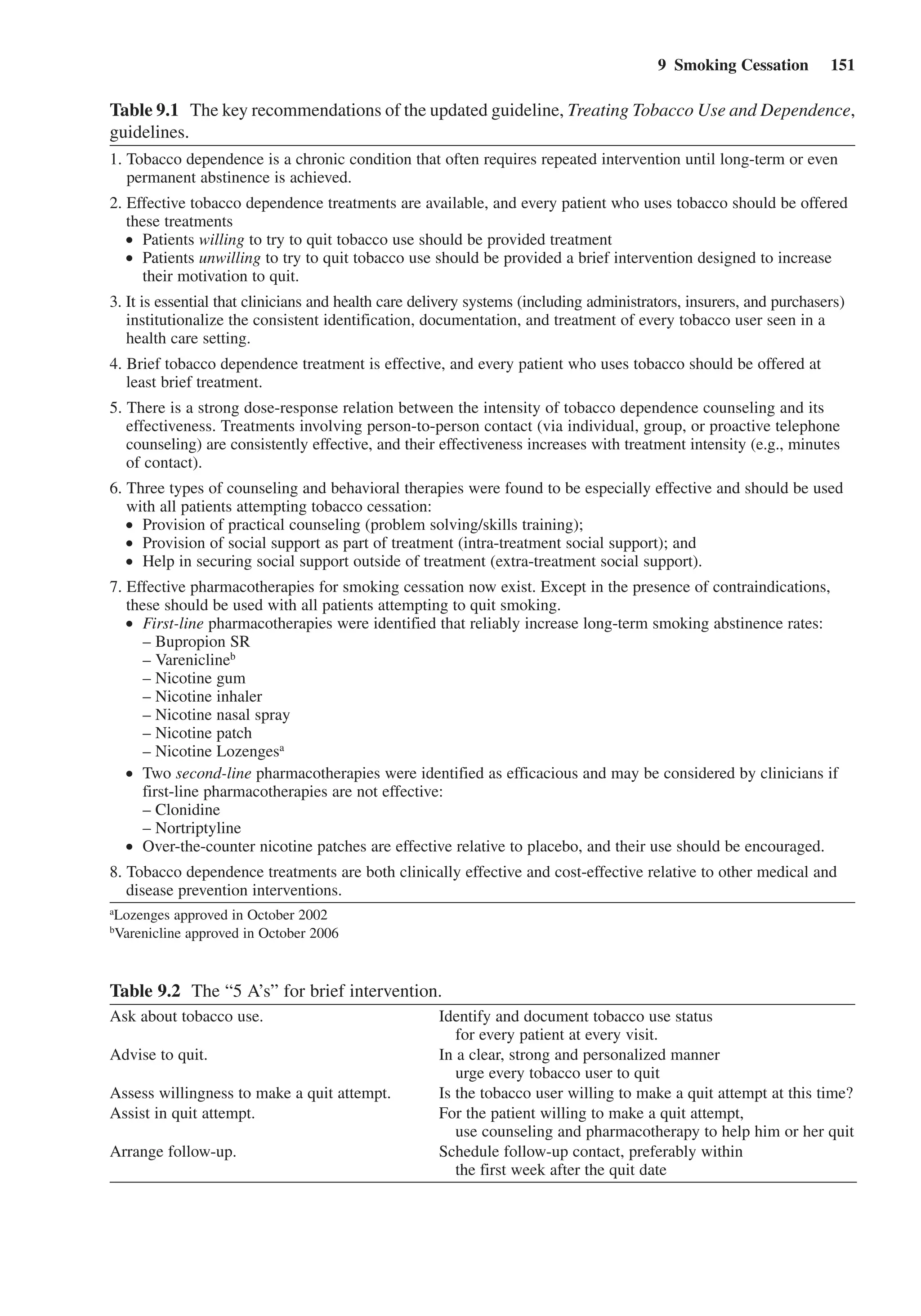
summarized in Table 9.1.
Brief Intervention
An estimated 70% of smokers see a physician each year, providing physicians
with a substantial opportunity to influence smoking behavior [6]. Given that
so many tobacco users visit a primary care clinician each year, it is important
that these clinicians be prepared to intervene with tobacco users who are will-
ing to quit. The five major steps (the “5 A’s”) to intervention in the primary
care setting are listed in Table 9.2. It is important for the clinician to ask the
patient if he or she uses tobacco, advise him or her to quit, assess willingness
to make a quit attempt, assist him or her in making a quit attempt, and arrange
9  Smoking Cessation  151
Table 9.1  The key recommendations of the updated guideline, Treating Tobacco Use and Dependence,
guidelines.
1. Tobacco dependence is a chronic condition that often requires repeated intervention until long-term or even
permanent abstinence is achieved.
2. Effective tobacco dependence treatments are available, and every patient who uses tobacco should be offered
these treatments
●	 Patients willing to try to quit tobacco use should be provided treatment
●	 Patients unwilling to try to quit tobacco use should be provided a brief intervention designed to increase
their motivation to quit.
3. It is essential that clinicians and health care delivery systems (including administrators, insurers, and purchasers)
institutionalize the consistent identification, documentation, and treatment of every tobacco user seen in a
health care setting.
4. Brief tobacco dependence treatment is effective, and every patient who uses tobacco should be offered at
least brief treatment.
5. There is a strong dose-response relation between the intensity of tobacco dependence counseling and its
effectiveness. Treatments involving person-to-person contact (via individual, group, or proactive telephone
counseling) are consistently effective, and their effectiveness increases with treatment intensity (e.g., minutes
of contact).
6. Three types of counseling and behavioral therapies were found to be especially effective and should be used
with all patients attempting tobacco cessation:
●	 Provision of practical counseling (problem solving/skills training);
●	 Provision of social support as part of treatment (intra-treatment social support); and
●	 Help in securing social support outside of treatment (extra-treatment social support).
7. Effective pharmacotherapies for smoking cessation now exist. Except in the presence of contraindications,
these should be used with all patients attempting to quit smoking.
●	 First-line pharmacotherapies were identified that reliably increase long-term smoking abstinence rates:
– Bupropion SR
– Vareniclineb
– Nicotine gum
– Nicotine inhaler
– Nicotine nasal spray
– Nicotine patch
– Nicotine Lozengesa
●	 Two second-line pharmacotherapies were identified as efficacious and may be considered by clinicians if
first-line pharmacotherapies are not effective:
– Clonidine
– Nortriptyline
●	 Over-the-counter nicotine patches are effective relative to placebo, and their use should be encouraged.
8. Tobacco dependence treatments are both clinically effective and cost-effective relative to other medical and
disease prevention interventions.
a
Lozenges approved in October 2002
b
Varenicline approved in October 2006
Table 9.2  The “5 A’s” for brief intervention.
Ask about tobacco use. Identify and document tobacco use status
for every patient at every visit.
Advise to quit. In a clear, strong and personalized manner
urge every tobacco user to quit
Assess willingness to make a quit attempt. Is the tobacco user willing to make a quit attempt at this time?
Assist in quit attempt. For the patient willing to make a quit attempt,
use counseling and pharmacotherapy to help him or her quit
Arrange follow-up. Schedule follow-up contact, preferably within
the first week after the quit date
152  A. Talwar et al.
for follow-up contacts to prevent relapse. The strategies are designed to be brief,
requiring 3 min or less of direct clinician time. Permanent remission can be achieved
in a substantial number of smokers with the currently available treatments. Another
useful method is called the 5 R’s: relevance, risks, rewards, roadblocks, and repetition
(Table 9.3).
Smokers unwilling to make a quit attempt should be offered a brief motivational
intervention. Tobacco control programs should build motivation to quit smoking and
address salient barriers to cessation, such as emotional ­distress, post cessation weight
gain problem, and access to and coverage for treatment, and should also educate smok-
ers regarding the specific health benefits of cessation. Smokers interested in quitting
should be informed of the variety of effective interventions available to them and pro-
vided with assistance in selecting the most appropriate option for their circumstances
and needs. The effectiveness of counseling increases with the intensity of treatments,
but even brief interventions are of benefit [6, 11]. Regardless of intensity, all interven-
tions should involve three key components: pharmacologic treatment, clinician-pro-
vided social support and information on ­problem- solving/ skills training. Clinicians
should also identify and discuss barriers to quitting smoking.
Patients who are interested in quitting within the next month should be helped to
set a quit date, offered pharmacotherapy with nicotine replacement or bupropion or
Varenicline, and referred to a counseling program. The choice of pharmacotherapy
should be based on the patient’s preferences, needs, tolerability and any prior expe-
rience. Symptoms of nicotine withdrawal (tension, agitation, depression, disturbed
sleep) and side effects of nicotine replacement therapy, bupropion and Varenicline
should be explained to patients. If the smoker has severe withdrawal symptoms, crav-
ings, or difficulty maintaining abstinence, a general approach is to start with one NRT
agent and add another NRT agent if needed. Adding pharmacotherapy to in-person
or telephone behavioral counseling doubles the cessation rate, but counseling is also
effective by itself. Follow-up visits should be arranged to prevent relapse. All relapses
should be followed up with discussions of new strategies for the next attempt to quit.
Clinicians should monitor the progress of patients who are trying to quit, and view
relapses not as failures but as opportunities to learn from what happened and to change
tactics [12]. This more aggressive and continuous focus on smoking might be particu-
lar relevance in COPD patients who seem to be more hard core smokers with greater
difficulty in quitting [13]. The educational component of smoking cessation prepares
patients and significant others to be actively involved in providing care, improves their
understanding of the smoking cessation process, and teaches practical ways of dealing
Table 9.3  Enhancing motivation to quit tobacco with the 5 R’s.
Relevance Encourage the patient to indicate why quitting smoking is personally relevant
being as specific as possible
Risks Encourage the patient to identify possible negative consequences of tobacco
use. This can be elaborated into acute risks, long term risks, and environ-
mental risks
Rewards Ask the patient to identify potential benefits of stopping tobacco use
Roadblocks Ask the patient to identify barriers of impediments to quitting and offer treatments
to address these barriers
Repetition The motivational intervention should be repeated with every visit of an unmoti-
vated patient
9  Smoking Cessation  153
with disabling relapsing symptoms; this reliance on patients and supportive others to
assume charge is known as a collaborative self management [14].
It might be advantageous to use lung function testing and carbon dioxide monitoring
to motivate the COPD patients [1].All rehabilitation programs must include smoking
cessation as this is the only factor that affects survival in COPD (except for oxygen
therapy in the end stage COPD). Given that the number of providers delivering a mes-
sage may have an important impact on outcomes, the addition of counseling by allied
health professionals (e.g., nurses, respiratory therapist), who typically have more con-
tact with patients, may be more effective than counseling by physicians alone. Table 9.4
summarizes recommendations for smoking cessation in patients with COPD.
Basic Neurobiology of Smoking
The major physiological obstacle to quitting is the addictive nature of nicotine. When
tobacco use is stopped there is a withdrawal syndrome characterized by irritability,
anger, impatience, restlessness, difficulty concentrating, insomnia, increased appetite,
anxiety, and depressed mood. These symptoms usually begin a few hours after the last
cigarette, peak 2–3 days later, and wane over a period of several weeks or months.
After inhaling smoke from a modern cigarette, arterial nicotine levels increase
markedly within 15 s [15]. This nicotine activates the brain reward center (in nucleus
accumbens) by increasing the dopamine release [16]. This brain reward system is a
common pathway for pleasurable activities and most drug addiction. This peak in
plasma nicotine level, and the transient activation of the reward system, is followed by
a gradual fall in nicotine levels into a state of withdrawal [17] which in turn is relieved
by the next cigarette. Dependence arises from the temporal association of the ritual and
sensory inputs with the repeated stimulation and relief of withdrawal.
A greater part of difficulty in quitting is craving for tobacco combined with nicotine
withdrawal syndrome and the pharmacological treatments available so far claim to
relieve craving as well as the withdrawal syndrome.
Table 9.4  Recommendations for smoking cessation in patients with chronic
obstructive pulmonary disease (COPD) (Modified from [1]).
Address smoking at every visit
Use lung function as a risk factor, as well as other individual risk factors
Use carbon monoxide measurements as a natural opportunity to talk about smoking
Help the patient develop a quit plan
Set a quit date – ideally within the next 2 weeks
Provide behavioral support
Anticipate challenges, including withdrawal
Remove all tobacco products. Prior to quitting, avoid smoking in places
where you spend a lot of time (e.g., work, house, car)
Use pharmacotherapeutic agents with frequent clinic visits
Give frequent motivation and support at follow-up visits
Reconsider smoking status every 3–5 months
Use carbon monoxide monitoring as a surrogate for quit status
Smoking cessation should be included in all COPD rehabilitation programs
Arrange follow-up clinic visits in smokers to start a new course of smoking cessation
154  A. Talwar et al.
Assessment of Nicotine Dependence
In counseling smokers about the optimal means to achieve cessation, clinicians
should make an assessment of the nicotine dependence, which can be measured via the
Fagerstrom Test of Nicotine Dependence Scale score [18] (greater than or equal to 5)
(see Table 9.5). The two questions that most strongly correlate with the dependence
are the time to first cigarette in the morning (30 vs  30 min) and the number of
cigarettes smoked per day. Decisions about the best form of therapy can be based on
patient preference, on degree of nicotine dependence measured via the Fagerstrom Test
of Nicotine Dependence Scale score, or habitually smoking the first cigarette within
30 min of awakening) or nicotine replacement therapy history, which includes number
and outcome of previous quit attempts, specific method used, duration, side effects,
and proper usage.
Pharmacological Treatment
Nicotine Replacement Therapy
At present, –Nicotine Replacement Therapy is the most common form of medication
used for the treatment of tobacco dependence. Nicotine medications improve cessation
efforts through one or more of the following five mechanisms: [19] (a) Reducing the
withdrawal symptoms, (b) Reducing the cravings, (c) reducing the reinforcing effects of
tobacco delivered nicotine, (d) providing the reinforcing coping strategy at times when
Table 9.5  Fagerstrom test for level of nicotine dependence.
How soon after waking do you smoke first cigarette?	 – Points
Less than 5 min: 3 points
5–30 min: 2 points
31–60 min: 1 point
Do you find it difficult to refrain from smoking in places where it is forbidden
Yes: 1 point
No: 0 point	 – points
Which cigarette would you most hate to give up?
First one in the morning: 1 point
Any other: 0 point	 – points
How many cigarettes do you smoke per day?	 – Points
More than 30 per day: 3 points
21–30 per day: 2 points
11–20 per day: 1 point
Do you smoke more frequently during the first hours after waking than during the rest of the day
Yes: 1 point
No: 0 point	 – points
Do you smoke if you are so ill that you are in bed most of the day
Yes: 1 point
No: 0 point	 – points
		 Total Points
Interpretation
Total points	 Level of dependence	 Nicotine replacement therapy
5–6 points	 heavy nicotine dependence	 consider 21-mg nicotine patch
3–4 points	 moderate nicotine dependence	 consider 14-mg nicotine patch
0–2 points	 light nicotine dependence	 consider 7-mg nicotine patch or no patch
9  Smoking Cessation  155
craving may occur e.g., stress etc, and (e) providing an alternate source of reinforcing
nicotine effect.
Studies have demonstrated that the use of NRT can significantly increase the abstinence
rate compared to a placebo group, almost doubling the long-term success rate (Table 9.6)
[20]. The initial doses of NRT should be sufficiently high to allow complete suppression
of nicotine withdrawal symptoms, then gradually reduced (usually over 2–6 weeks)
Table 9.6  Pharmacological smoking cessation interventions.
Pharmacological
intervention
Estimated OR
(95% CI) Dose Duration
Adverse effects/
contraindications
Varenicline 3.85 (2.43–4.27) 1 mg bid 12 weeks if quit attempt
can be extended, for
another 12 weeks
Nausea, Insomnia
Bupropion SR 2.1 (1.5–3.0) 150 mg every morning for
3 days. then 150 mg
BID (begin treatment
1–2 weeks pre-quit)
7–12 weeks, mainte-
nance up to 6 months
Insomnia, dry
mouth
Caution: history of
seizures, eating
disorders
Nicotine gum 1.5 (1.3–1.8) 1–24 cigarettes/day: 2 mg
gum (up to 24 pieces);
25 cigarettes/day: 4 mg
gum (up to 24 pieces)
Up to 12 weeks Mouth soreness,
dyspepsia
Nicotine inhaler 2.5 (1.7–3.6) 6–16 cartridges/day Up to 6 months Local irritation
of mouth and
throat
Nicotine nasal
spray
2.7 (1.8–4.1) 8–40 doses/day 3–6 months Nasal irritation
Nicotine patch 1.9 (1.7–2.2) 1–25 cigarettes/day 4 weeks Local skin irrita-
tion, insomnia21 mg/24 h 2 weeks
14 mg/24 h 2 weeks
7 mg/24 h
25 cigarettes/day can start
with 21–42 mg/24 h
Nicotine
Lozenges
NR Smoke 1st cigarette
30 min after awakening
– 2 mg (min 9 mg/max
20 lozenges/day)
8 weeks Mouth soreness,
dyspepsia
Smoke 1st cigarette within
30 min after awakening
– 4 mg (min 9 mg/max
20 lozenges/day)
Clonidine 2.1 (1.4–3.2) 0.15–0.75 mg/day 3–10 weeks Dry mouth, dizzi-
ness, sedation
Caution: rebound
hypertension
Nortriptyline 3.2 (1.8–5.7) 75–100 mg/day 12 weeks Sedation, dry
mouth
Caution: risk of
arrhythmias
OR odds ratio, CI confidence interval, BID twice daily, NR not reported
The information contained within this table is not ­comprehensive. Please see the package insert for additional information
Nicotine nasal spray and Nicotrol inhaler are available by prescription only. Others (patches, gums, and lozenges) are available
over the counter
Clonidine and Nortriptyline are second-line pharmacotherapeutics (not approved for use for smoking cessation by the FDA)
Varenicline data from reference [68]
156  A. Talwar et al.
as tobacco abstinence becomes established. The average 12-month success rate reported
in most studies is about 15–25% [6]. The US Public Health Service recommends that
except in special circumstances (medical contraindications, smoking 10 cigarettes daily,
pregnancy, or breastfeeding), all smokers attempting to quit should be offered nicotine
replacement therapy (strength of recommendation) [6]. When smokers use these products
they must cease all tobacco use before starting the NRT because of concerns about nicotine
toxicity with concurrent NRT and tobacco use.
Food and Drugs Administration (FDA) has approved five types of NRT for use by
smokers to help in quitting. These are Nicotine gum (2 and 4 mg). Nicotine patch
(7–21 mg), nicotine oral inhaler, nicotine nasal spray and nicotine polacrilex loz-
enge (2 and 4 mg). In USA, Nicotine Gum, patches, and lozenges are available over
the counter, whereas the inhaler and spray can only be obtained with a physician’s
­prescription. The faster acting NRT’s (e.g., spray, gum, inhaler) are self dosing sys-
tems to be used ad libitum and help reduce craving [21] and in contrast, the patch
supplies constant, low level of nicotine which can help relieve nicotine withdrawal
symptoms [22]. Nicotine sublingual tablets are also available in some countries out-
side USA. A number of other products, including nicotine water, and lollipops are
available to public in other countries without having been properly evaluated to obtain
medicine license [23].
In a review of 108 trials, the odds ratio for abstinence with NRT compared to control
was 1.73 (95% confidence interval 1.62–1.85). The odds ratios for the different forms
of NRT were 1.66 for gum, 1.76 for patches, 2.27 for nasal spray, 2.08 for inhaled
nicotine and 1.73 for nicotine sublingual tablet. These odds were largely independent
of the duration of therapy, the intensity of additional support provided, or the setting
in which the NRT was offered. In highly dependent smokers, there was a significant
benefit of 4 mg gum compared with 2 mg gum (odds ratio 2.67, 95% confidence interval
1.69–4.22) [20].
Nicotine Product Choices
Use of nicotine replacement therapy should be preferentially directed to smokers who
are motivated to quit, and have high levels of nicotine dependency. Choice of which
form to use should reflect patient needs, tolerability and cost considerations. Patches
are likely to be easier to use than gum or nasal spray in primary care settings [20].
Patients report a preference for patches over gums, sprays or the inhaler and tend to
use patches nearer to the fashion recommended, but these differences do not affect
cessation rate [24]. Comparative studies suggest that all the available forms of NRTs
are roughly equally efficacious [25, 26].
Smokers unwilling to give up oral and behavioral rituals of smoking may perceive
the inhaler as being more helpful [27]. Higher doses of nicotine gum or lozenge (4 mg
vs 2 mg) increase quit rates in heavy smokers. Use of high-dose patches (21 mg) may
benefit heavy smokers or those who relapse due to nicotine withdrawal [11].
Patients who have a stomach ulcer or diabetes should not use gum or lozenges, but
may use patches. However, patients who have an allergy to adhesive tape or preexisting
skin problems should not choose nicotine patch. Nicotine gum 2 mg is for those who
smoke fewer than 25 cigarettes daily, but Nicotine gum 4 mg is for those who smoke
25 or more daily. Lozenges use a different index for the initial choice. Those who
smoke their first cigarette more than 30 min after waking should begin with the 2-mg
lozenge, and those who smoke their first cigarette within 30 min of waking up should
begin by using the 4-mg lozenge [28]. All nicotine replacement therapies delay but do
not prevent weight gain. There is a dose-response relationship between nicotine gum
9  Smoking Cessation  157
and weight gain: smokers who use more gum gain less weight [11]. NRT has been used
in COPD patients as well. In the lung health study, 3,094 smokers with mild COPD
were followed for 5 years. The use of 2 mg gum appeared safe with no significant
side effects [29].
Safety of NRT
Continued smoking whilst on NRT is likely to cause adverse effects due to higher
nicotine levels. These may include headache, heartburn, hiccoughs, nausea, vomiting,
coughing, irritation in the mouth and throat, aphthous ulcers, acne, confusion, abdominal
pain, back pain, myalgia, flatulence, and more rarely, palpitations, sleep disturbance,
and dizziness. Some have questioned the possibility of oral cancer from close contact
of the lozenges with oral mucosa. While oral cancer results from the use of chewing
tobacco and snuff, lozenges (like Nicorette Gum) are free of the carcinogens that are
formed from nicotine during curing, aging, and fermentation of tobacco [30].
Cardiovascular risk and the use of NRT have been systematically studied since the
nicotine patch was released in 1991. The doses of nicotine from cigarette smoking
are generally higher and more rapid than from the slower NRT delivery [31]. There are
also other cardiotoxic substances apart from nicotine in cigarette smoke. The flat dose
response relation for nicotine ensures that the effects of smoking along with NRT are
similar to that of smoking alone. Trials apparently suggest that NRT use in those with
stable CV disease does not increase CV risk [32]. Separate analyses have documented
the lack of an association between use of the nicotine patch and acute cardiovascular
events, even in patients who continue to smoke intermittently while using the nicotine
patch [33]. Others have advocated the use of a lower dose patch in post MI patients who
are at risk for resuming smoking [34].
Nicotine is metabolized more quickly in pregnancy [35]. Plasma clearances of
nicotine and cotinine (its principal metabolite) are increased by 60% and 140%,
respectively, and the half life of cotinine is reduced in pregnant women (9 vs 17 h
in non-pregnant women). Among continuing smokers this could, in theory, lead
to compensatory smoking to maintain desired nicotine concentrations, and hence
increase fetal harm. It may also reduce the efficacy of nicotine replacement since
conventional doses will provide less nicotine substitution. To date, however, the
efficacy of nicotine replacement therapy in pregnancy is not known. The only com-
pleted and published randomized controlled trial of nicotine replacement (delivered
by transdermal patches) showed no difference from placebo, but the numbers studied
were small, and the trial was underpowered to determine whether nicotine replace-
ment was effective [36]. Nevertheless, babies born to women in the nicotine treat-
ment group had significantly higher birth weights than those in the placebo group
(mean difference 186 g (95% confidence interval 35 to 336 g)), indicating that the
intrauterine growth restriction caused by smoking is probably not attributable to
nicotine. Pregnant patients should be encouraged to quit on their own. Those who
fail and make an informed choice about the NRT should probably be advised to use
shorter acting products (Nasal sprays and chewing gum) to minimize fetal exposure
to nicotine overnight [37].
Combination Nicotine Products
A strategy for further improving the efficacy of NRT is the combination of one medi-
cation that allows for passive nicotine delivery (e.g., transdermal patch) with another
medication that permits ad libitum nicotine delivery (e.g., gum, nasal spray, and inhaler)
158  A. Talwar et al.
[38, 39]. The rationale for combining NRT medications is that smokers may need both a
slow delivery system to achieve a constant concentration of nicotine to relieve cravings
and tobacco withdrawal symptoms, as well as a faster acting preparation that can be
administered on demand for immediate relief of breakthrough cravings and withdrawal
symptoms [40]. Patients should be encouraged to use combined treatments if unable to
quit using a single form of first-line pharmacotherapy [11, 41].
Bupropion
There are at least two reasons to believe antidepressants might help in smoking ces-
sation. Depression may be a symptom of nicotine withdrawal, and smoking cessation
sometimes precipitates depression. In some individuals, nicotine may have antidepres-
sant effects that maintain smoking [42].Antidepressants may substitute for this effect.
Sustained release bupropion (Bupropion SR) is the only antidepressant currently
approved by the FDA for smoking cessation in USA; although it is not licensed for that
purpose in many other countries. It is a dopamine and norepinephrine reuptake inhibi-
tor and ameliorates the extent of withdrawal symptoms during abstinence [43]. It may
also act as a nicotine receptor antagonist, reducing the reinforcing potential of nicotine
[44, 45], Typically, bupropion is initiated 1 week before the target quit date, with dos-
ing at 150 mg/day for 3 days and then 150 mg twice daily for the remainder of the
duration. Unlike the NRTs, there is no absolute requirement that smokers should quit
before the target quit date. At this dose abstinence rate of up to 44% has been reported
at 7 weeks after the treatment [46]. Recent studies have extended its use to prevent-
ing smoking relapse after initial achievement of smoking cessation [47]. Treatment
for as long as a year has been reported, but an inability to maintain abstinence after
4 weeks would warrant termination of treatment with bupropion [48]. Meta analysis
published by the Cochrane groups reveals that bupropion doubles quit rates as com-
pared to placebo (OR 1.97, 95% CI 1.67–2.34) [49]. Bupropion SR seems particularly
more effective in individuals who smoke more than 10–15 cigarettes per day and are
motivated to quit [50]. The primary side effects are headache, jitteriness, dry mouth,
initial insomnia, and gastrointestinal symptoms. The drug is contraindicated in patients
with seizures but otherwise appears safe [51]; the rate of de novo seizures is very low
(approximately 0.1%) and observed mainly when the dose exceeds 450 mg/day. There
are few studies that have used bupropion successfully for smoking cessation treatments
in subjects with COPD [52, 53].
When combined with the nicotine patch, the control of cravings is better in groups
using bupropion plus nicotine patch than in groups with bupropion or the patch alone [54].
However, the most appropriate place of such combination treatment in the therapeutic
armamentarium requires further study and consideration.
Varenicline
Varenicline affects the central nicotine receptors by binding to the specific a4b2
receptors as a partial nicotine agonist and selective nicotinic receptor modulator. As
a partial agonist, it is believed to eliminate the reward from smoking and prevent
withdrawal symptoms. Varenicline is well absorbed and primarily excreted unchanged
(92%) in urine. It has a half-life of 17 h and takes 4.3 h to reach maximum concentra-
tion. Smokers are asked to up-titrate their dose to Varenicline 1 mg twice daily during
the first 7 days of treatment, to stop smoking on day 8, and to continue treatment for
12 weeks.
9  Smoking Cessation  159
In two studies (n = 1,025 and 1,027) with similar design, Varenicline 1 mg bid was
compared with buropion SR 150 mg BID versus placebo for 3 months. The quit rate
after 1 year was 22% (and 23%) for Varenicline, 16.4% (and 15%) for bupropion,
and 8.4 (and 10.3%) for placebo, i.e., quit rates for Varenicline were significantly
higher versus placebo and bupropion [55, 56]. The major side effects were nausea
and abnormal dreams. Varenicline employs a new and interesting mechanism for the
treatment of tobacco dependence. In a maintenance study, 1,927 smokers were treated
open-label with Varenicline for 3 months, with a 3-month point prevalence quit rate
of 64.1%. Successful quitters continued with Varenicline for another 3  months
in a double-blind design, with a quit rate from week 13–52 of 43.6 versus 36.9%
(p = 0.02), suggesting that some smokers may benefit from 6 months’ therapy with
varenicline to maintain abstinence [57].It is expected that with more documentation
and experience, Varenicline will be a first-line drug in smoking ­cessation [58].
Second Line Medications for Smoking Cessation
There has been a general surge of interest in the use of other antidepressants for aiding
long-term smoking cessation. Tricyclic antidepressants (TCA) such as nortriptyline
inhibit the reuptake of norepinephrine and 5 HT, and may help in smoking cessation.
However TCAs have significant side effects such as anticholinergic activity and possi-
bility of overdose. Five trials of nortriptyline for smoking cessation have demonstrated
its efficacy, with a pooled odds ratio of 2.8 (95% confidence interval = 1.8–4.3) [49].
Doses used in smoking cessation trials have initiated treatment at a dose of 25 mg/
day, increasing gradually to a target dose of 75–100  mg/day. Therapy is initiated
10–28 days before the quit date to allow nortriptyline to reach steady state at the target
dose. Duration of treatment used in smoking cessation trials has been approximately
12 weeks. Most commonly reported side effects of Nortriptyline include sedation, dry
mouth, blurred vision, urinary retention, lightheadedness, and shaky hands. In view of
the risk of arrhythmias, nortriptyline should be used with extreme caution in patients
with cardiovascular disease. Similarly, Selegiline – a monoamine oxidase type B
(MAO–B) inhibitor that increases presynaptic dopaminergic concentration has shown
promise in initial trials [59]. Other drugs that have been studied include doxepin [60]
(e.g., fluoxetine, paroxetine), moclobemide, Buspar, and venlafaxine. While the results
of the trials of these drugs is outside the scope of this article, none of these drugs have
the strength of evidence to make them realistic contenders for the first-line treatments
for tobacco dependence.
Clonidine
Clonidine is a a 2-adrenoreceptor agonist used as a hypertension receptor, but it is
also found useful in the treatment of opioid withdrawal. The Surgeon General’s report
and the Cochrane review rank clonidine as a second-line agent [61]. Meta analyses of
published studies suggest that it nearly doubles the quit rate [62]. Usually, it is initiated
on the quit date or shortly before (up to 3 days) the quit date. Initial dosing is typically
0.10 mg twice daily or 0.10-mg/day transdermal patch, increasing by 0.10 mg/day/
week if needed. The dose duration has varied across the clinical trials, ranging from 3
to 10 weeks. The most commonly reported side effects include dry mouth, drowsiness,
dizziness, sedation, and constipation. As an antihypertensive medication, clonidine can
be expected to lower blood pressure in most patients. Therefore, clinicians may need
to monitor blood pressure when using this medication. Abrupt cessation can cause
rebound hypertension.
160  A. Talwar et al.
Recent Advances in Smoking Cessation Therapy
A cornerstone of effective treatment is tobacco dependence counseling, for which there
is a dose response relation between the intensity of counseling (total minutes of con-
tact) and its effectiveness. A broad range of non pharmacologic support strategies are
available, including behavioral, cognitive and motivational interventions (Table 9.7).
There are clear synergies when behavioral support and pharmacotherapy are used in
combination. The best results occur when clinicians individualize a specific therapeutic
program for each patient. In addition, recognizing that smoking is a relapsing disorder,
the clinician must be prepared to readdress the problem of smoking on a regular basis
and retreat patients who relapse.
The recent interest in smoking cessation has triggered a rapid increase in development
of potential new non-nicotine pharmacotherapies, including, anabasine, reboxetine,
and rimonabant. Successful new products need to have excellent side-effect profiles in
addition to proven efficacy.
The drug rimonabant (Acomplia) is effective for weight loss and smoking cessation;
Rimonabant has been called the anti-marijuana. CB1 blockers act on the endocannabinoid
Table 9.7  Summary of cognitive and behavioral tobacco cessation counseling strategies [69, 70].
Strategy Comment
Cognitive approaches
Commitment to quit Have patients verbalize out loud that they want to be a nonsmoker and that they
will overcome temporary temptations
Distract thought pattern Encourage patients to think about something else when the urge to smoke occurs
Think positive Smokers should give themselves “pep talks” to keep on track despite obstacles
they face
Relaxation through imagery Focus thinking on positive, relaxing images
Rehearse responses to
possible scenarios
Practice how to react when temptations arise, such as if at a social gathering
where there are other smokers, or if someone offers a cigarette
Behavioral approaches
Coping with Stress Rehearse coping strategies to deal with work, school, or with family stresses,
e.g., taking a walk, deep breathing, calling a friend for support, or massaging
Alcohol Alcohol use can lead to relapse so patients should be advised to limit or abstain
from drinking, especially in the early stages of trying to quit
Other tobacco users Try to limit exposure to fellow family members, co-workers, and friends who are
smoking. Encourage them to not smoke in your presence
Satisfying oral gratification
urges
Keep non-tobacco oral substitutes on hand, including gum, sugarless candy,
straws, bottled water, or NTR
Break automatic smoking
routines
Identify situations when smoking is often part of an everyday activity and try
to displace the smoking behavior from the routine. For example, smoking
while drinking morning coffee – take a walk after breakfast; driving – have
car detailed and aired out to remove all signs of cigarettes in the vehicle such as
ashtrays, etc. and have some gum handy when they drive; telephone – keep hands
busy, walk and talk, limit length of call; after meals – don’t linger at the table,
call a friend
Post-cessation weight gain Can be a barrier to quitting so address the issue, encouraging healthful eating
with increased fruits and vegetables, adequate water intake and a modest exercise
program; moderation is the key
Tobacco cravings Usually temporary, 5–10 min in duration; encourage distractive behavior and
thinking
9  Smoking Cessation  161
system (the EC system), a natural system that modulates the body’s energy balance
and nicotine dependence. An over-stimulated EC system is thought to play a role in
obesity and in tobacco dependence, and CB1 blockers are supposed to reduce this
overstimulation. Results from a recently presented trial shows that rimonabant is effec-
tive for smoking cessation and post cessation weight gain. The 10-week trial enrolled
nearly 800 men and women who smoked an average of 23 cigarettes a day before the
study began. The goal was no smoking for at least 4 consecutive weeks. Of those who
completed the study, 36.2% of those who received a 20-mg dose of rimonabant quit
smoking compared with about one fifth of those who received placebo. None of these
smokers were obese. But participants in the placebo group gained 6.6 lb, while those in
the rimonabant group gained only 1.5 lb [63].
Anabaseine is a compound that binds selectively to a subtype of nicotinic receptors,
the a7 nicotinic acetylcholinergic receptors (nAChR). In addition, it is also an antagonist
of a4-b2 receptors. The a7- may be an important modulator of neurons in brain that
control both the reward and aversive properties of nicotine [64]. Its role in impacting
smoking cessation is still being studied.
Other formulations under development include a nicotine buccal adhesive tablet
[65], rapid release nicotine gum [21] and nicotine solution drops [66]. These new
faster delivery nicotine replacement products have the promise of addressing a broader
list of indications, including treatment of nicotine withdrawal during temporary absti-
nence and long-term nicotine maintenance. Phase I trials of Trials of nicotine vaccine
[67] have been completed but any future nicotine vaccine will need to demonstrate
clinical efficacy and also improve certain consumer acceptability characteristics (e.g.,
frequency of injections required) before they can become widely used and successful
therapies [19].
Conclusion
Smoking cessation is a low cost intervention; it is of proven benefit in patients with
COPD. Smoking cessation activities and support for its implementation should be
integrated into the health care system. Despite evidence that physicians can impact
smoking habits, this component of intervention remains underutilized. The outcome
of smoking cessation has improved with the availability of proper behavior approaches
and medications. Incorporating these guidelines into daily clinical practice ensures that
as health care providers we provide the opportunity for our patients to quit smoking.
The best hope of improved treatment comes from combining existing and new phar-
macotherapies with effective behavioral therapy [19].
NRT and bupropion SR are first-line treatments for smoking cessation. Smokers
attempting to quit should be encouraged to use these drugs to aid cessation, except in
the presence of contraindications. Different NRTs (gum, patch, inhaler, nasal spray,
lozenge and sublingual tablets) are equally effective as smoking cessation treatments.
Combining the nicotine patch with a self-administered form of NRT can be more effec-
tive than a single form of NRT. NRT should be used to aid cessation in all smokers with
COPD, regardless of disease severity and number of cigarettes smoked). Combined
treatment with bupropion SR and NRT might be more effective in heavy smokers. Both
NRT and bupropion SR are effective and well tolerated in smokers with stable cardio-
vascular disease and in COPD patients (evidence level A). There is no evidence that
selective serotonin re-uptake inhibitors (SSRIs) have any effect in smoking cessation.
Varenicline might have an additional therapeutic effect as smoking cessation treatment.
162  A. Talwar et al.
However until more documentation and experience is needed in patients with occur.
Regular follow-up visits are important and are linked with longer-term successful out-
come. The best hope of improved treatment comes from combining existing and new
pharmacotherapies with effective behavioral therapy [58]. Table 9.6 summarizes the
data on efficacy of various pharmacological agents used for smoking cessation.
References
	 1.	 Gratziou C, Tonnesen P (2006) Smoking cessation and prevention. Eur Respir Mon 38:242–57
	 2.	Celli BR, MacNee W (2004) Standards for the diagnosis and treatment of patients with
COPD: a summary of the ATS/ERS position paper. Eur Respir J 23(6):932–46
	 3.	GIfCOLDG (2005) Workshop Report: global strategy for the diagnosis, management, and
prevention of chronic obstructive pulmonary disease. Update 2005: Available at: www.
goldcopd.com
	 4.	Rennard SI, Togo S, Holz O (2006) Cigarette smoke inhibits alveolar repair: a mechanism
for the development of emphysema. Proc Am Thorac Soc 3(8):703–8
	 5.	Repine JE, Bast A, Lankhorst I (1997) Oxidative stress in chronic obstructive pulmonary
disease. Oxidative stress study group. Am J Respir Crit Care Med 156(2 Pt 1):341–57
	 6.	A clinical practice guideline for treating tobacco use and dependence: A US Public Health
Service report (2000) The tobacco use and dependence clinical practice guideline panel,
staff, and consortium representatives. J Am Med Assoc 283(24):3244–54
	 7.	Karnath B (2002) Smoking cessation. Am J Med 112(5):399–405
	 8.	Fagerstrom K (2002) The epidemiology of smoking: health consequences and benefits of
cessation. Drugs 62(Suppl 2):1–9
	 9.	Doll R, Peto R (1976) Mortality in relation to smoking: 20 years’ observations on male
British doctors. Br Med J 2(6051):1525–36
	10.	Fiore MC, McCarthy DE, Jackson TC et al (2004) Integrating smoking cessation treatment
into primary care: an effectiveness study. Prev Med 38(4):412–20
	11.	Fiore MC, Bailey WC, Cohen SJ (2000) Treating tobacco use and dependence: clinical
practice guideline. US Department of Health and Human Services, Public Health Service,
Rockville, June 2000
	12.	Talwar A, Jain M, Vijayan VK (2004) Pharmacotherapy of tobacco dependence. Med Clin
North Am 88(6):1517–34
	13.	Chronic obstructive pulmonary disease (2004) National clinical guideline on management
of chronic obstructive pulmonary disease in adults in primary and secondary care. Thorax
59(Suppl 1):1–232
	14.	Tougaard L, Krone T, Sorknaes A, Ellegaard H (1992) Economic benefits of teaching
patients with chronic obstructive pulmonary disease about their illness. The PASTMA
group. Lancet 339(8808):1517–20
	15.	Stauffer HP, Riedwyl H (1977) Interaction and pH dependence of effects of nicotine and
carbon monoxide in cigarette smoke inhalation experiments with rats. Agents Actions
7(5–6):579–88
	16.	Zhou FM, Liang Y, Dani JA (2001) Endogenous nicotinic cholinergic activity regulates
dopamine release in the striatum. Nat Neurosci 4(12):1224–9
	17.	Pontieri FE, Tanda G, Orzi F, Di Chiara G (1996) Effects of nicotine on the nucleus
accumbens and similarity to those of addictive drugs. Nature 382(6588):255–7
	18.	Heatherton TF, Kozlowski LT, Frecker RC, Fagerstrom KO (1991) The Fagerstrom test
for nicotine dependence: a revision of the Fagerstrom tolerance questionnaire. Br J Addict
86(9):1119–27
	19.	Foulds J, Burke M, Steinberg M, Williams JM, Ziedonis DM (2004) Advances in pharma-
cotherapy for tobacco dependence. Expert Opin Emerg Drugs 9(1):39–53
	20.	Silagy C, Lancaster T, Stead L, Mant D, Fowler G (2001) Nicotine replacement therapy for
smoking cessation. Cochrane Database Syst Rev (3):CD000146
9  Smoking Cessation  163
	21.	 Shiffman S, Shadel WG, Niaura R et al (2003) Efficacy of acute administration of nicotine
gum in relief of cue-provoked cigarette craving. Psychopharmacology (Berl) 166(4):343–50
	22.	Hughes JR, Goldstein MG, Hurt RD, Shiffman S (1999) Recent advances in the pharmaco-
therapy of smoking. J Am Med Assoc 281(1):72–6
	23.	Foulds J, Russell MA, Jarvis MJ, Feyerabend C (1998) Nicotine absorption and dependence
in unlicensed lozenges available over the counter. Addiction 93(9):1427–31
	24.	West R, Hajek P, Nilsson F, Foulds J, May S, Meadows A (2001) Individual differences in
preferences for and responses to four nicotine replacement products. Psychopharmacology
(Berl) 153(2):225–30
	25.	 Hajek P, West R, Foulds J, Nilsson F, Burrows S, Meadow A (1999) Randomized comparative
trial of nicotine polacrilex, a transdermal patch, nasal spray, and an inhaler. Arch Intern Med
159(17):2033–8
	26.	 Hughes JR, Shiffman S, Callas P, Zhang J (2003) A meta-analysis of the efficacy of over-the-
counter nicotine replacement. Tob Control 12(1):21–7
	27.	Schneider NG, Olmstead R, Nilsson F, Mody FV, Franzon M, Doan K (1996) Efficacy of
a nicotine inhaler in smoking cessation: a double-blind, placebo-controlled trial. Addiction
91(9):1293–306
	28.	Shiffman S, Dresler CM, Hajek P, Gilburt SJ, Targett DA, Strahs KR (2002) Efficacy of a
nicotine lozenge for smoking cessation. Arch Intern Med 162(11):1267–76
	29.	Murray RP, Bailey WC, Daniels K et al (1996) Safety of nicotine polacrilex gum used
by 3, 094 participants in the lung health study. Lung Health Study Research Group. Chest
109(2):438–45
	30.	 Hoffmann D, Djordjevic MV (1997) Chemical composition and carcinogenicity of smokeless
tobacco. Adv Dent Res 11(3):322–9
	31.	Benowitz NL, Gourlay SG (1997) Cardiovascular toxicity of nicotine: implications for
nicotine replacement therapy. J Am Coll Cardiol 29(7):1422–31
	32.	Keeley EC, Pirwitz MJ, Landau C et al (1996) Intranasal nicotine spray does not augment
the adverse effects of cigarette smoking on myocardial oxygen demand or coronary arterial
dimensions. Am J Med 101(4):357–63
	33.	Nicotine replacement therapy for patients with coronary artery disease (1994) Working
group for the study of transdermal nicotine in patients with coronary artery disease. Arch
Intern Med 154(9):989–95
	34.	Benowitz NL (1993) Nicotine replacement therapy. What has been accomplished – can we
do better? Drugs 45(2):157–70
	35.	Dempsey D, Jacob P 3rd, Benowitz NL (2002) Accelerated metabolism of nicotine and
cotinine in pregnant smokers. J Pharmacol Exp Ther 301(2):594–8
	36.	Wisborg K, Henriksen TB, Jespersen LB, Secher NJ (2000) Nicotine patches for pregnant
smokers: a randomized controlled study. Obstet Gynecol 96(6):967–71
	37.	Molyneux A (2004) Nicotine replacement therapy. Br Med J 328(7437):454–6
	38.	Sweeney CT, Fant RV, Fagerstrom KO, McGovern JF, Henningfield JE (2001) Combination
nicotine replacement therapy for smoking cessation: rationale, efficacy and tolerability.
CNS Drugs 15(6):453–67
	39.	Fagerstrom KO, Schneider NG, Lunell E (1993) Effectiveness of nicotine patch and
nicotine gum as individual versus combined treatments for tobacco withdrawal symptoms.
Psychopharmacology (Berl) 111(3):271–7
	40.	Kornitzer M, Boutsen M, Dramaix M, Thijs J, Gustavsson G (1995) Combined use of
nicotine patch and gum in smoking cessation: a placebo-controlled clinical trial. Prev Med
24(1):41–7
	41.	Bohadana A, Nilsson F, Rasmussen T, Martinet Y (2000) Nicotine inhaler and nicotine
patch as a combination therapy for smoking cessation: a randomized, double-blind, placebo-
controlled trial. Arch Intern Med 160(20):3128–34
	42.	Kassel JD, Stroud LR, Paronis CA (2003) Smoking, stress, and negative affect: correlation,
causation, and context across stages of smoking. Psychol Bull 129(2):270–304
	43.	Ascher JA, Cole JO, Colin JN et al (1995) Bupropion: a review of its mechanism of antide-
pressant activity. J Clin Psychiatry 56(9):395–401
164  A. Talwar et al.
	44.	Slemmer JE, Martin BR, Damaj MI (2000) Bupropion is a nicotinic antagonist. J Pharmacol
Exp Ther 295(1):321–7
	45.	Rauhut AS, Neugebauer N, Dwoskin LP, Bardo MT (2003) Effect of bupropion on nicotine
self-administration in rats. Psychopharmacology (Berl) 169(1):1–9
	46.	Hurt RD, Sachs DP, Glover ED et al (1997) A comparison of sustained-release bupropion
and placebo for smoking cessation. N Engl J Med 337(17):1195–202
	47.	Hays JT, Hurt RD, Rigotti NA et al (2001) Sustained-release bupropion for pharmacologic
relapse prevention after smoking cessation. a randomized, controlled trial. Ann Intern Med
135(6):423–33
	48.	Hays JT, Ebbert JO (2003) Bupropion sustained release for treatment of tobacco dependence.
Mayo Clin Proc 78(8):1020–4, quiz 4
	49.	Hughes JR, Stead LF, Lancaster T (2003) Antidepressants for smoking cessation. Cochrane
Database Syst Rev (2):CD000031
	50.	Coleman T (2001) Smoking cessation: integrating recent advances into clinical practice.
Thorax 56(7):579–82
	51.	Martinez-Raga J, Keaney F, Sutherland G, Perez-Galvez B, Strang J (2003) Treatment of
nicotine dependence with bupropion SR: review of its efficacy, safety and pharmacological
profile. Addict Biol 8(1):13–21
	52.	Tashkin D, Kanner R, Bailey W et al (2001) Smoking cessation in patients with chronic
obstructive pulmonary disease: a double-blind, placebo-controlled, randomised trial. Lancet
357(9268):1571–5
	53.	Wagena EJ, Knipschild PG, Huibers MJ, Wouters EF, van Schayck CP (2005) Efficacy of
bupropion and nortriptyline for smoking cessation among people at risk for or with chronic
obstructive pulmonary disease. Arch Intern Med 165(19):2286–92
	54.	Jorenby DE, Leischow SJ, Nides MA et al (1999) A controlled trial of sustained-release
bupropion, a nicotine patch, or both for smoking cessation. N Engl J Med 340(9):685–91
	55.	Gonzales D, Rennard SI, Nides M et al (2006) Varenicline, an a4b2 nicotinic acetylcholine
receptor partial agonist, vs sustained-release bupropion and placebo for smoking cessation:
a randomized controlled trial. J Am Med Assoc 296(1):47–55
	56.	Jorenby DE, Hays JT, Rigotti NA et al (2006) Efficacy of varenicline, an a4b2 nicotinic
acetylcholine receptor partial agonist, vs placebo or sustained-release bupropion for smoking
cessation: a randomized controlled trial. J Am Med Assoc 296(1):56–63
	57.	Tonstad S, Tonnesen P, Hajek P, Williams KE, Billing CB, Reeves KR (2006) Effect of
maintenance therapy with varenicline on smoking cessation: a randomized controlled trial.
J Am Med Assoc 296(1):64–71
	58.	Tonnesen P, Carrozzi L, Fagerstrom KO et al (2007) Smoking cessation in patients with respi-
ratory diseases: a high priority, integral component of therapy. Eur Respir J 29(2):390–417
	59.	George TP, Vessicchio JC, Termine A, Jatlow PI, Kosten TR, O’Malley SS (2003) A pre-
liminary placebo-controlled trial of selegiline hydrochloride for smoking cessation. Biol
Psychiatry 53(2):136–43
	60.	Edwards NB, Murphy JK, Downs AD, Ackerman BJ, Rosenthal TL (1989) Doxepin as an
adjunct to smoking cessation: a double-blind pilot study. Am J Psychiatry 146(3):373–6
	61.	Gourlay SG, Stead LF, Benowitz NL (2000) Clonidine for smoking cessation. Cochrane
Database Syst Rev (2):CD000058
	62.	Gourlay SG, Benowitz NL (1995) Is clonidine an effective smoking cessation therapy?
Drugs 50(2):197–207
	63.	Anthenelli RM (2004) Effects of rimonabant in the reduction of major cardiovascular
risk factors. Results from the STRATUS-US trial (Smoking cessation in smokers motivated
to quit). In: American college of cardiology 53rd annual scientific meeting, New Orleans,
9 March 2004
	64.	Laviolette SR, van der Kooy D (2004) The neurobiology of nicotine addiction: bridging the
gap from molecules to behaviour. Nat Rev Neurosci 5(1):55–65
	65.	Park CR, Munday DL (2002) Development and evaluation of a biphasic buccal adhesive
tablet for nicotine replacement therapy. Int J Pharm 237(1–2):215–26
9  Smoking Cessation  165
	66.	Westman EC, Tomlin KF, Perkins CE, Rose JE (2001) Oral nicotine solution for smoking
cessation: a pilot tolerability study. Nicotine Tob Res 3(4):391–6
	67.	 Lindmayer K, Horwith G, Fattom A, et.al (2003) Results of phase I double-blinded controlled
safety and immunogenicity trial of NICVAX, a nicotine conjugated vaccine. Society for
Research on Nicotine and Tobacco, 9th Annual Meeting, New Orleans (Abstract)
	68.	Cachill K, Stead LF, Lancaster T (2007) Nicotine receptor partial agonists for smoking
cessation. Cochrane Database Syst Rev (January 24) (1):CD006103
	69.	Rigotti NA (2002) Clinical practice. Treatment of tobacco use and dependence. N Engl J
Med 346(7):506–12
	70. Villano LM, White AR (2004) Alternative therapies for tobacco dependence. Med Clin
North Am 88(6):1607–21

SMOKING CESSATION _ CODP 8

  • 1.
    N.A. Hanania andA. Sharafkhaneh (eds.), COPD: A Guide to Diagnosis and Clinical Management, Respiratory Medicine, DOI 10.1007/978-1-59745-357-8_9, © Springer Science+Business Media, LLC 2011 Key Points: Cigarette smoking is an addiction and a chronic relapsing disorder.• It is the arguably the most important preventable cause of COPD in the developed• world. Nicotine sustains the addictive tobacco use. The• a4b2 nicotine acetylcholine receptor subtype is the main receptor mediating nicotine dependence. The clinician must be prepared to address the problem of smoking on a regular basis• and to retreat patients who backslide. The best hope of improved treatment for smoking cessation occurs from combining• existing and new pharmacotherapies with effective behavioral therapy. To obtain optimum results the therapy should be individualized for each patient.• Keywords  Chronic obstructive pulmonary disease • nicotine • smoking cessation Introduction Chronic obstructive pulmonary disease (COPD) is defined as a disease state characterized by the presence of airflow obstruction due to chronic bronchitis or emphysema; the airflow obstruction is generally progressive. No therapy other than smoking cessation can affect the survival in this group of patients on a similar scale [1]. Thus the strategy of smoking cessation has been mentioned as the corner stone of therapy for COPD [2, 3]. Cigarette smoke causes an inflammatory response in the lower respiratory tract characterized by the accumulation of pigment-laden alveolar macrophages together with recruitment of smaller numbers of neutrophils [4]. These activated inflammatory cells release a variety of mediators, including proteases, oxidants, and toxic peptides, which can damage lung structures and are believed to be a major cause of the tissue destruction that leads to emphysema [5]. Thus, prevention and treatment of COPD by a broad approach, such as smoking cessation education should also be an important goal for healthcare professionals. The present chapter mainly focuses on the smoking cessation strategies according to the recommendations, with particular reference to patients with COPD. 9 Smoking Cessation Arunabh Talwar, Virginia Reichert, and Kalpalatha Guntupalli 149
  • 2.
    150  A. Talwaret al. Epidemiology of Cigarette Smoking Cigarette smoking is an addiction and a chronic relapsing disorder, and is regarded as a primary disorder by the Department of Health and Human Services Guidelines in the USA and by the World Health Organization (WHO) [6]. Therefore, treating tobacco use and dependence should be regarded as a primary and specific ­intervention. Smoking should be routinely evaluated whenever a patient presents to a healthcare facility, and all smokers should be offered the best chance to treat this disorder. Successful treatment of this addiction can have a substantial benefit in reducing incidence and complica- tions of COPD. World Health Organization (WHO) estimates the total number of tobacco smokers at 1.1 billion [7]. Approximately 47% of men and 12% of women in the world smoke at this time [8]. Approximately one third to half of these die of smoking related diseases [9]. Tobacco use in the United States exacts profound human and economic costs. These costs argue eloquently for bold, scientifically grounded strategies to curb tobacco use [10]. The 1999 National Health Interview Survey (NHIS) estimated that, in the US, 46.5 million adults smoke (25.7% of men and 21.5% of women). According to the recent Surgeon General’s report, smoking kills an estimated 440,000 Americans each year. On average, men who smoke cut their lives short by 13.2 years, and female smokers lose 14.5 years. The eco- nomic toll exceeds $157 billion each year in the United States – $75 billion in direct medical costs and $82 billion in lost productivity [6]. Tobacco dependence is a complex behavior problem involving pharmaco- logical, psychological and social components. Cigarette smoking is an addic- tion and a chronic relapsing disorder. Smoking should be routinely evaluated whenever a patient presents to a healthcare facility and all smokers should be offered the best chance to treat this disorder. Nicotine is the main alkaloid found in tobacco and is responsible for its addictive potential. The most comprehensive of the guidelines prepared on smoking cessation is the Tobacco Use and Dependence evidence based guidelines sponsored by the US Department of Health and Homan Services and released in 2000 [11]. The guidelines and the meta analyses on which they are based are available online (Office of the Surgeon General. Tobacco Cessation Guideline. http:// www.surgeongeneral.gov/tobacco/.htm). The key findings of this report are summarized in Table 9.1. Brief Intervention An estimated 70% of smokers see a physician each year, providing physicians with a substantial opportunity to influence smoking behavior [6]. Given that so many tobacco users visit a primary care clinician each year, it is important that these clinicians be prepared to intervene with tobacco users who are will- ing to quit. The five major steps (the “5 A’s”) to intervention in the primary care setting are listed in Table 9.2. It is important for the clinician to ask the patient if he or she uses tobacco, advise him or her to quit, assess willingness to make a quit attempt, assist him or her in making a quit attempt, and arrange
  • 3.
    9  Smoking Cessation 151 Table 9.1  The key recommendations of the updated guideline, Treating Tobacco Use and Dependence, guidelines. 1. Tobacco dependence is a chronic condition that often requires repeated intervention until long-term or even permanent abstinence is achieved. 2. Effective tobacco dependence treatments are available, and every patient who uses tobacco should be offered these treatments ● Patients willing to try to quit tobacco use should be provided treatment ● Patients unwilling to try to quit tobacco use should be provided a brief intervention designed to increase their motivation to quit. 3. It is essential that clinicians and health care delivery systems (including administrators, insurers, and purchasers) institutionalize the consistent identification, documentation, and treatment of every tobacco user seen in a health care setting. 4. Brief tobacco dependence treatment is effective, and every patient who uses tobacco should be offered at least brief treatment. 5. There is a strong dose-response relation between the intensity of tobacco dependence counseling and its effectiveness. Treatments involving person-to-person contact (via individual, group, or proactive telephone counseling) are consistently effective, and their effectiveness increases with treatment intensity (e.g., minutes of contact). 6. Three types of counseling and behavioral therapies were found to be especially effective and should be used with all patients attempting tobacco cessation: ● Provision of practical counseling (problem solving/skills training); ● Provision of social support as part of treatment (intra-treatment social support); and ● Help in securing social support outside of treatment (extra-treatment social support). 7. Effective pharmacotherapies for smoking cessation now exist. Except in the presence of contraindications, these should be used with all patients attempting to quit smoking. ● First-line pharmacotherapies were identified that reliably increase long-term smoking abstinence rates: – Bupropion SR – Vareniclineb – Nicotine gum – Nicotine inhaler – Nicotine nasal spray – Nicotine patch – Nicotine Lozengesa ● Two second-line pharmacotherapies were identified as efficacious and may be considered by clinicians if first-line pharmacotherapies are not effective: – Clonidine – Nortriptyline ● Over-the-counter nicotine patches are effective relative to placebo, and their use should be encouraged. 8. Tobacco dependence treatments are both clinically effective and cost-effective relative to other medical and disease prevention interventions. a Lozenges approved in October 2002 b Varenicline approved in October 2006 Table 9.2  The “5 A’s” for brief intervention. Ask about tobacco use. Identify and document tobacco use status for every patient at every visit. Advise to quit. In a clear, strong and personalized manner urge every tobacco user to quit Assess willingness to make a quit attempt. Is the tobacco user willing to make a quit attempt at this time? Assist in quit attempt. For the patient willing to make a quit attempt, use counseling and pharmacotherapy to help him or her quit Arrange follow-up. Schedule follow-up contact, preferably within the first week after the quit date
  • 4.
    152  A. Talwaret al. for follow-up contacts to prevent relapse. The strategies are designed to be brief, requiring 3 min or less of direct clinician time. Permanent remission can be achieved in a substantial number of smokers with the currently available treatments. Another useful method is called the 5 R’s: relevance, risks, rewards, roadblocks, and repetition (Table 9.3). Smokers unwilling to make a quit attempt should be offered a brief motivational intervention. Tobacco control programs should build motivation to quit smoking and address salient barriers to cessation, such as emotional ­distress, post cessation weight gain problem, and access to and coverage for treatment, and should also educate smok- ers regarding the specific health benefits of cessation. Smokers interested in quitting should be informed of the variety of effective interventions available to them and pro- vided with assistance in selecting the most appropriate option for their circumstances and needs. The effectiveness of counseling increases with the intensity of treatments, but even brief interventions are of benefit [6, 11]. Regardless of intensity, all interven- tions should involve three key components: pharmacologic treatment, clinician-pro- vided social support and information on ­problem- solving/ skills training. Clinicians should also identify and discuss barriers to quitting smoking. Patients who are interested in quitting within the next month should be helped to set a quit date, offered pharmacotherapy with nicotine replacement or bupropion or Varenicline, and referred to a counseling program. The choice of pharmacotherapy should be based on the patient’s preferences, needs, tolerability and any prior expe- rience. Symptoms of nicotine withdrawal (tension, agitation, depression, disturbed sleep) and side effects of nicotine replacement therapy, bupropion and Varenicline should be explained to patients. If the smoker has severe withdrawal symptoms, crav- ings, or difficulty maintaining abstinence, a general approach is to start with one NRT agent and add another NRT agent if needed. Adding pharmacotherapy to in-person or telephone behavioral counseling doubles the cessation rate, but counseling is also effective by itself. Follow-up visits should be arranged to prevent relapse. All relapses should be followed up with discussions of new strategies for the next attempt to quit. Clinicians should monitor the progress of patients who are trying to quit, and view relapses not as failures but as opportunities to learn from what happened and to change tactics [12]. This more aggressive and continuous focus on smoking might be particu- lar relevance in COPD patients who seem to be more hard core smokers with greater difficulty in quitting [13]. The educational component of smoking cessation prepares patients and significant others to be actively involved in providing care, improves their understanding of the smoking cessation process, and teaches practical ways of dealing Table 9.3  Enhancing motivation to quit tobacco with the 5 R’s. Relevance Encourage the patient to indicate why quitting smoking is personally relevant being as specific as possible Risks Encourage the patient to identify possible negative consequences of tobacco use. This can be elaborated into acute risks, long term risks, and environ- mental risks Rewards Ask the patient to identify potential benefits of stopping tobacco use Roadblocks Ask the patient to identify barriers of impediments to quitting and offer treatments to address these barriers Repetition The motivational intervention should be repeated with every visit of an unmoti- vated patient
  • 5.
    9  Smoking Cessation 153 with disabling relapsing symptoms; this reliance on patients and supportive others to assume charge is known as a collaborative self management [14]. It might be advantageous to use lung function testing and carbon dioxide monitoring to motivate the COPD patients [1].All rehabilitation programs must include smoking cessation as this is the only factor that affects survival in COPD (except for oxygen therapy in the end stage COPD). Given that the number of providers delivering a mes- sage may have an important impact on outcomes, the addition of counseling by allied health professionals (e.g., nurses, respiratory therapist), who typically have more con- tact with patients, may be more effective than counseling by physicians alone. Table 9.4 summarizes recommendations for smoking cessation in patients with COPD. Basic Neurobiology of Smoking The major physiological obstacle to quitting is the addictive nature of nicotine. When tobacco use is stopped there is a withdrawal syndrome characterized by irritability, anger, impatience, restlessness, difficulty concentrating, insomnia, increased appetite, anxiety, and depressed mood. These symptoms usually begin a few hours after the last cigarette, peak 2–3 days later, and wane over a period of several weeks or months. After inhaling smoke from a modern cigarette, arterial nicotine levels increase markedly within 15 s [15]. This nicotine activates the brain reward center (in nucleus accumbens) by increasing the dopamine release [16]. This brain reward system is a common pathway for pleasurable activities and most drug addiction. This peak in plasma nicotine level, and the transient activation of the reward system, is followed by a gradual fall in nicotine levels into a state of withdrawal [17] which in turn is relieved by the next cigarette. Dependence arises from the temporal association of the ritual and sensory inputs with the repeated stimulation and relief of withdrawal. A greater part of difficulty in quitting is craving for tobacco combined with nicotine withdrawal syndrome and the pharmacological treatments available so far claim to relieve craving as well as the withdrawal syndrome. Table 9.4  Recommendations for smoking cessation in patients with chronic obstructive pulmonary disease (COPD) (Modified from [1]). Address smoking at every visit Use lung function as a risk factor, as well as other individual risk factors Use carbon monoxide measurements as a natural opportunity to talk about smoking Help the patient develop a quit plan Set a quit date – ideally within the next 2 weeks Provide behavioral support Anticipate challenges, including withdrawal Remove all tobacco products. Prior to quitting, avoid smoking in places where you spend a lot of time (e.g., work, house, car) Use pharmacotherapeutic agents with frequent clinic visits Give frequent motivation and support at follow-up visits Reconsider smoking status every 3–5 months Use carbon monoxide monitoring as a surrogate for quit status Smoking cessation should be included in all COPD rehabilitation programs Arrange follow-up clinic visits in smokers to start a new course of smoking cessation
  • 6.
    154  A. Talwaret al. Assessment of Nicotine Dependence In counseling smokers about the optimal means to achieve cessation, clinicians should make an assessment of the nicotine dependence, which can be measured via the Fagerstrom Test of Nicotine Dependence Scale score [18] (greater than or equal to 5) (see Table 9.5). The two questions that most strongly correlate with the dependence are the time to first cigarette in the morning (30 vs  30 min) and the number of cigarettes smoked per day. Decisions about the best form of therapy can be based on patient preference, on degree of nicotine dependence measured via the Fagerstrom Test of Nicotine Dependence Scale score, or habitually smoking the first cigarette within 30 min of awakening) or nicotine replacement therapy history, which includes number and outcome of previous quit attempts, specific method used, duration, side effects, and proper usage. Pharmacological Treatment Nicotine Replacement Therapy At present, –Nicotine Replacement Therapy is the most common form of medication used for the treatment of tobacco dependence. Nicotine medications improve cessation efforts through one or more of the following five mechanisms: [19] (a) Reducing the withdrawal symptoms, (b) Reducing the cravings, (c) reducing the reinforcing effects of tobacco delivered nicotine, (d) providing the reinforcing coping strategy at times when Table 9.5  Fagerstrom test for level of nicotine dependence. How soon after waking do you smoke first cigarette? – Points Less than 5 min: 3 points 5–30 min: 2 points 31–60 min: 1 point Do you find it difficult to refrain from smoking in places where it is forbidden Yes: 1 point No: 0 point – points Which cigarette would you most hate to give up? First one in the morning: 1 point Any other: 0 point – points How many cigarettes do you smoke per day? – Points More than 30 per day: 3 points 21–30 per day: 2 points 11–20 per day: 1 point Do you smoke more frequently during the first hours after waking than during the rest of the day Yes: 1 point No: 0 point – points Do you smoke if you are so ill that you are in bed most of the day Yes: 1 point No: 0 point – points Total Points Interpretation Total points Level of dependence Nicotine replacement therapy 5–6 points heavy nicotine dependence consider 21-mg nicotine patch 3–4 points moderate nicotine dependence consider 14-mg nicotine patch 0–2 points light nicotine dependence consider 7-mg nicotine patch or no patch
  • 7.
    9  Smoking Cessation 155 craving may occur e.g., stress etc, and (e) providing an alternate source of reinforcing nicotine effect. Studies have demonstrated that the use of NRT can significantly increase the abstinence rate compared to a placebo group, almost doubling the long-term success rate (Table 9.6) [20]. The initial doses of NRT should be sufficiently high to allow complete suppression of nicotine withdrawal symptoms, then gradually reduced (usually over 2–6 weeks) Table 9.6  Pharmacological smoking cessation interventions. Pharmacological intervention Estimated OR (95% CI) Dose Duration Adverse effects/ contraindications Varenicline 3.85 (2.43–4.27) 1 mg bid 12 weeks if quit attempt can be extended, for another 12 weeks Nausea, Insomnia Bupropion SR 2.1 (1.5–3.0) 150 mg every morning for 3 days. then 150 mg BID (begin treatment 1–2 weeks pre-quit) 7–12 weeks, mainte- nance up to 6 months Insomnia, dry mouth Caution: history of seizures, eating disorders Nicotine gum 1.5 (1.3–1.8) 1–24 cigarettes/day: 2 mg gum (up to 24 pieces); 25 cigarettes/day: 4 mg gum (up to 24 pieces) Up to 12 weeks Mouth soreness, dyspepsia Nicotine inhaler 2.5 (1.7–3.6) 6–16 cartridges/day Up to 6 months Local irritation of mouth and throat Nicotine nasal spray 2.7 (1.8–4.1) 8–40 doses/day 3–6 months Nasal irritation Nicotine patch 1.9 (1.7–2.2) 1–25 cigarettes/day 4 weeks Local skin irrita- tion, insomnia21 mg/24 h 2 weeks 14 mg/24 h 2 weeks 7 mg/24 h 25 cigarettes/day can start with 21–42 mg/24 h Nicotine Lozenges NR Smoke 1st cigarette 30 min after awakening – 2 mg (min 9 mg/max 20 lozenges/day) 8 weeks Mouth soreness, dyspepsia Smoke 1st cigarette within 30 min after awakening – 4 mg (min 9 mg/max 20 lozenges/day) Clonidine 2.1 (1.4–3.2) 0.15–0.75 mg/day 3–10 weeks Dry mouth, dizzi- ness, sedation Caution: rebound hypertension Nortriptyline 3.2 (1.8–5.7) 75–100 mg/day 12 weeks Sedation, dry mouth Caution: risk of arrhythmias OR odds ratio, CI confidence interval, BID twice daily, NR not reported The information contained within this table is not ­comprehensive. Please see the package insert for additional information Nicotine nasal spray and Nicotrol inhaler are available by prescription only. Others (patches, gums, and lozenges) are available over the counter Clonidine and Nortriptyline are second-line pharmacotherapeutics (not approved for use for smoking cessation by the FDA) Varenicline data from reference [68]
  • 8.
    156  A. Talwaret al. as tobacco abstinence becomes established. The average 12-month success rate reported in most studies is about 15–25% [6]. The US Public Health Service recommends that except in special circumstances (medical contraindications, smoking 10 cigarettes daily, pregnancy, or breastfeeding), all smokers attempting to quit should be offered nicotine replacement therapy (strength of recommendation) [6]. When smokers use these products they must cease all tobacco use before starting the NRT because of concerns about nicotine toxicity with concurrent NRT and tobacco use. Food and Drugs Administration (FDA) has approved five types of NRT for use by smokers to help in quitting. These are Nicotine gum (2 and 4 mg). Nicotine patch (7–21 mg), nicotine oral inhaler, nicotine nasal spray and nicotine polacrilex loz- enge (2 and 4 mg). In USA, Nicotine Gum, patches, and lozenges are available over the counter, whereas the inhaler and spray can only be obtained with a physician’s ­prescription. The faster acting NRT’s (e.g., spray, gum, inhaler) are self dosing sys- tems to be used ad libitum and help reduce craving [21] and in contrast, the patch supplies constant, low level of nicotine which can help relieve nicotine withdrawal symptoms [22]. Nicotine sublingual tablets are also available in some countries out- side USA. A number of other products, including nicotine water, and lollipops are available to public in other countries without having been properly evaluated to obtain medicine license [23]. In a review of 108 trials, the odds ratio for abstinence with NRT compared to control was 1.73 (95% confidence interval 1.62–1.85). The odds ratios for the different forms of NRT were 1.66 for gum, 1.76 for patches, 2.27 for nasal spray, 2.08 for inhaled nicotine and 1.73 for nicotine sublingual tablet. These odds were largely independent of the duration of therapy, the intensity of additional support provided, or the setting in which the NRT was offered. In highly dependent smokers, there was a significant benefit of 4 mg gum compared with 2 mg gum (odds ratio 2.67, 95% confidence interval 1.69–4.22) [20]. Nicotine Product Choices Use of nicotine replacement therapy should be preferentially directed to smokers who are motivated to quit, and have high levels of nicotine dependency. Choice of which form to use should reflect patient needs, tolerability and cost considerations. Patches are likely to be easier to use than gum or nasal spray in primary care settings [20]. Patients report a preference for patches over gums, sprays or the inhaler and tend to use patches nearer to the fashion recommended, but these differences do not affect cessation rate [24]. Comparative studies suggest that all the available forms of NRTs are roughly equally efficacious [25, 26]. Smokers unwilling to give up oral and behavioral rituals of smoking may perceive the inhaler as being more helpful [27]. Higher doses of nicotine gum or lozenge (4 mg vs 2 mg) increase quit rates in heavy smokers. Use of high-dose patches (21 mg) may benefit heavy smokers or those who relapse due to nicotine withdrawal [11]. Patients who have a stomach ulcer or diabetes should not use gum or lozenges, but may use patches. However, patients who have an allergy to adhesive tape or preexisting skin problems should not choose nicotine patch. Nicotine gum 2 mg is for those who smoke fewer than 25 cigarettes daily, but Nicotine gum 4 mg is for those who smoke 25 or more daily. Lozenges use a different index for the initial choice. Those who smoke their first cigarette more than 30 min after waking should begin with the 2-mg lozenge, and those who smoke their first cigarette within 30 min of waking up should begin by using the 4-mg lozenge [28]. All nicotine replacement therapies delay but do not prevent weight gain. There is a dose-response relationship between nicotine gum
  • 9.
    9  Smoking Cessation 157 and weight gain: smokers who use more gum gain less weight [11]. NRT has been used in COPD patients as well. In the lung health study, 3,094 smokers with mild COPD were followed for 5 years. The use of 2 mg gum appeared safe with no significant side effects [29]. Safety of NRT Continued smoking whilst on NRT is likely to cause adverse effects due to higher nicotine levels. These may include headache, heartburn, hiccoughs, nausea, vomiting, coughing, irritation in the mouth and throat, aphthous ulcers, acne, confusion, abdominal pain, back pain, myalgia, flatulence, and more rarely, palpitations, sleep disturbance, and dizziness. Some have questioned the possibility of oral cancer from close contact of the lozenges with oral mucosa. While oral cancer results from the use of chewing tobacco and snuff, lozenges (like Nicorette Gum) are free of the carcinogens that are formed from nicotine during curing, aging, and fermentation of tobacco [30]. Cardiovascular risk and the use of NRT have been systematically studied since the nicotine patch was released in 1991. The doses of nicotine from cigarette smoking are generally higher and more rapid than from the slower NRT delivery [31]. There are also other cardiotoxic substances apart from nicotine in cigarette smoke. The flat dose response relation for nicotine ensures that the effects of smoking along with NRT are similar to that of smoking alone. Trials apparently suggest that NRT use in those with stable CV disease does not increase CV risk [32]. Separate analyses have documented the lack of an association between use of the nicotine patch and acute cardiovascular events, even in patients who continue to smoke intermittently while using the nicotine patch [33]. Others have advocated the use of a lower dose patch in post MI patients who are at risk for resuming smoking [34]. Nicotine is metabolized more quickly in pregnancy [35]. Plasma clearances of nicotine and cotinine (its principal metabolite) are increased by 60% and 140%, respectively, and the half life of cotinine is reduced in pregnant women (9 vs 17 h in non-pregnant women). Among continuing smokers this could, in theory, lead to compensatory smoking to maintain desired nicotine concentrations, and hence increase fetal harm. It may also reduce the efficacy of nicotine replacement since conventional doses will provide less nicotine substitution. To date, however, the efficacy of nicotine replacement therapy in pregnancy is not known. The only com- pleted and published randomized controlled trial of nicotine replacement (delivered by transdermal patches) showed no difference from placebo, but the numbers studied were small, and the trial was underpowered to determine whether nicotine replace- ment was effective [36]. Nevertheless, babies born to women in the nicotine treat- ment group had significantly higher birth weights than those in the placebo group (mean difference 186 g (95% confidence interval 35 to 336 g)), indicating that the intrauterine growth restriction caused by smoking is probably not attributable to nicotine. Pregnant patients should be encouraged to quit on their own. Those who fail and make an informed choice about the NRT should probably be advised to use shorter acting products (Nasal sprays and chewing gum) to minimize fetal exposure to nicotine overnight [37]. Combination Nicotine Products A strategy for further improving the efficacy of NRT is the combination of one medi- cation that allows for passive nicotine delivery (e.g., transdermal patch) with another medication that permits ad libitum nicotine delivery (e.g., gum, nasal spray, and inhaler)
  • 10.
    158  A. Talwaret al. [38, 39]. The rationale for combining NRT medications is that smokers may need both a slow delivery system to achieve a constant concentration of nicotine to relieve cravings and tobacco withdrawal symptoms, as well as a faster acting preparation that can be administered on demand for immediate relief of breakthrough cravings and withdrawal symptoms [40]. Patients should be encouraged to use combined treatments if unable to quit using a single form of first-line pharmacotherapy [11, 41]. Bupropion There are at least two reasons to believe antidepressants might help in smoking ces- sation. Depression may be a symptom of nicotine withdrawal, and smoking cessation sometimes precipitates depression. In some individuals, nicotine may have antidepres- sant effects that maintain smoking [42].Antidepressants may substitute for this effect. Sustained release bupropion (Bupropion SR) is the only antidepressant currently approved by the FDA for smoking cessation in USA; although it is not licensed for that purpose in many other countries. It is a dopamine and norepinephrine reuptake inhibi- tor and ameliorates the extent of withdrawal symptoms during abstinence [43]. It may also act as a nicotine receptor antagonist, reducing the reinforcing potential of nicotine [44, 45], Typically, bupropion is initiated 1 week before the target quit date, with dos- ing at 150 mg/day for 3 days and then 150 mg twice daily for the remainder of the duration. Unlike the NRTs, there is no absolute requirement that smokers should quit before the target quit date. At this dose abstinence rate of up to 44% has been reported at 7 weeks after the treatment [46]. Recent studies have extended its use to prevent- ing smoking relapse after initial achievement of smoking cessation [47]. Treatment for as long as a year has been reported, but an inability to maintain abstinence after 4 weeks would warrant termination of treatment with bupropion [48]. Meta analysis published by the Cochrane groups reveals that bupropion doubles quit rates as com- pared to placebo (OR 1.97, 95% CI 1.67–2.34) [49]. Bupropion SR seems particularly more effective in individuals who smoke more than 10–15 cigarettes per day and are motivated to quit [50]. The primary side effects are headache, jitteriness, dry mouth, initial insomnia, and gastrointestinal symptoms. The drug is contraindicated in patients with seizures but otherwise appears safe [51]; the rate of de novo seizures is very low (approximately 0.1%) and observed mainly when the dose exceeds 450 mg/day. There are few studies that have used bupropion successfully for smoking cessation treatments in subjects with COPD [52, 53]. When combined with the nicotine patch, the control of cravings is better in groups using bupropion plus nicotine patch than in groups with bupropion or the patch alone [54]. However, the most appropriate place of such combination treatment in the therapeutic armamentarium requires further study and consideration. Varenicline Varenicline affects the central nicotine receptors by binding to the specific a4b2 receptors as a partial nicotine agonist and selective nicotinic receptor modulator. As a partial agonist, it is believed to eliminate the reward from smoking and prevent withdrawal symptoms. Varenicline is well absorbed and primarily excreted unchanged (92%) in urine. It has a half-life of 17 h and takes 4.3 h to reach maximum concentra- tion. Smokers are asked to up-titrate their dose to Varenicline 1 mg twice daily during the first 7 days of treatment, to stop smoking on day 8, and to continue treatment for 12 weeks.
  • 11.
    9  Smoking Cessation 159 In two studies (n = 1,025 and 1,027) with similar design, Varenicline 1 mg bid was compared with buropion SR 150 mg BID versus placebo for 3 months. The quit rate after 1 year was 22% (and 23%) for Varenicline, 16.4% (and 15%) for bupropion, and 8.4 (and 10.3%) for placebo, i.e., quit rates for Varenicline were significantly higher versus placebo and bupropion [55, 56]. The major side effects were nausea and abnormal dreams. Varenicline employs a new and interesting mechanism for the treatment of tobacco dependence. In a maintenance study, 1,927 smokers were treated open-label with Varenicline for 3 months, with a 3-month point prevalence quit rate of 64.1%. Successful quitters continued with Varenicline for another 3  months in a double-blind design, with a quit rate from week 13–52 of 43.6 versus 36.9% (p = 0.02), suggesting that some smokers may benefit from 6 months’ therapy with varenicline to maintain abstinence [57].It is expected that with more documentation and experience, Varenicline will be a first-line drug in smoking ­cessation [58]. Second Line Medications for Smoking Cessation There has been a general surge of interest in the use of other antidepressants for aiding long-term smoking cessation. Tricyclic antidepressants (TCA) such as nortriptyline inhibit the reuptake of norepinephrine and 5 HT, and may help in smoking cessation. However TCAs have significant side effects such as anticholinergic activity and possi- bility of overdose. Five trials of nortriptyline for smoking cessation have demonstrated its efficacy, with a pooled odds ratio of 2.8 (95% confidence interval = 1.8–4.3) [49]. Doses used in smoking cessation trials have initiated treatment at a dose of 25 mg/ day, increasing gradually to a target dose of 75–100  mg/day. Therapy is initiated 10–28 days before the quit date to allow nortriptyline to reach steady state at the target dose. Duration of treatment used in smoking cessation trials has been approximately 12 weeks. Most commonly reported side effects of Nortriptyline include sedation, dry mouth, blurred vision, urinary retention, lightheadedness, and shaky hands. In view of the risk of arrhythmias, nortriptyline should be used with extreme caution in patients with cardiovascular disease. Similarly, Selegiline – a monoamine oxidase type B (MAO–B) inhibitor that increases presynaptic dopaminergic concentration has shown promise in initial trials [59]. Other drugs that have been studied include doxepin [60] (e.g., fluoxetine, paroxetine), moclobemide, Buspar, and venlafaxine. While the results of the trials of these drugs is outside the scope of this article, none of these drugs have the strength of evidence to make them realistic contenders for the first-line treatments for tobacco dependence. Clonidine Clonidine is a a 2-adrenoreceptor agonist used as a hypertension receptor, but it is also found useful in the treatment of opioid withdrawal. The Surgeon General’s report and the Cochrane review rank clonidine as a second-line agent [61]. Meta analyses of published studies suggest that it nearly doubles the quit rate [62]. Usually, it is initiated on the quit date or shortly before (up to 3 days) the quit date. Initial dosing is typically 0.10 mg twice daily or 0.10-mg/day transdermal patch, increasing by 0.10 mg/day/ week if needed. The dose duration has varied across the clinical trials, ranging from 3 to 10 weeks. The most commonly reported side effects include dry mouth, drowsiness, dizziness, sedation, and constipation. As an antihypertensive medication, clonidine can be expected to lower blood pressure in most patients. Therefore, clinicians may need to monitor blood pressure when using this medication. Abrupt cessation can cause rebound hypertension.
  • 12.
    160  A. Talwaret al. Recent Advances in Smoking Cessation Therapy A cornerstone of effective treatment is tobacco dependence counseling, for which there is a dose response relation between the intensity of counseling (total minutes of con- tact) and its effectiveness. A broad range of non pharmacologic support strategies are available, including behavioral, cognitive and motivational interventions (Table 9.7). There are clear synergies when behavioral support and pharmacotherapy are used in combination. The best results occur when clinicians individualize a specific therapeutic program for each patient. In addition, recognizing that smoking is a relapsing disorder, the clinician must be prepared to readdress the problem of smoking on a regular basis and retreat patients who relapse. The recent interest in smoking cessation has triggered a rapid increase in development of potential new non-nicotine pharmacotherapies, including, anabasine, reboxetine, and rimonabant. Successful new products need to have excellent side-effect profiles in addition to proven efficacy. The drug rimonabant (Acomplia) is effective for weight loss and smoking cessation; Rimonabant has been called the anti-marijuana. CB1 blockers act on the endocannabinoid Table 9.7  Summary of cognitive and behavioral tobacco cessation counseling strategies [69, 70]. Strategy Comment Cognitive approaches Commitment to quit Have patients verbalize out loud that they want to be a nonsmoker and that they will overcome temporary temptations Distract thought pattern Encourage patients to think about something else when the urge to smoke occurs Think positive Smokers should give themselves “pep talks” to keep on track despite obstacles they face Relaxation through imagery Focus thinking on positive, relaxing images Rehearse responses to possible scenarios Practice how to react when temptations arise, such as if at a social gathering where there are other smokers, or if someone offers a cigarette Behavioral approaches Coping with Stress Rehearse coping strategies to deal with work, school, or with family stresses, e.g., taking a walk, deep breathing, calling a friend for support, or massaging Alcohol Alcohol use can lead to relapse so patients should be advised to limit or abstain from drinking, especially in the early stages of trying to quit Other tobacco users Try to limit exposure to fellow family members, co-workers, and friends who are smoking. Encourage them to not smoke in your presence Satisfying oral gratification urges Keep non-tobacco oral substitutes on hand, including gum, sugarless candy, straws, bottled water, or NTR Break automatic smoking routines Identify situations when smoking is often part of an everyday activity and try to displace the smoking behavior from the routine. For example, smoking while drinking morning coffee – take a walk after breakfast; driving – have car detailed and aired out to remove all signs of cigarettes in the vehicle such as ashtrays, etc. and have some gum handy when they drive; telephone – keep hands busy, walk and talk, limit length of call; after meals – don’t linger at the table, call a friend Post-cessation weight gain Can be a barrier to quitting so address the issue, encouraging healthful eating with increased fruits and vegetables, adequate water intake and a modest exercise program; moderation is the key Tobacco cravings Usually temporary, 5–10 min in duration; encourage distractive behavior and thinking
  • 13.
    9  Smoking Cessation 161 system (the EC system), a natural system that modulates the body’s energy balance and nicotine dependence. An over-stimulated EC system is thought to play a role in obesity and in tobacco dependence, and CB1 blockers are supposed to reduce this overstimulation. Results from a recently presented trial shows that rimonabant is effec- tive for smoking cessation and post cessation weight gain. The 10-week trial enrolled nearly 800 men and women who smoked an average of 23 cigarettes a day before the study began. The goal was no smoking for at least 4 consecutive weeks. Of those who completed the study, 36.2% of those who received a 20-mg dose of rimonabant quit smoking compared with about one fifth of those who received placebo. None of these smokers were obese. But participants in the placebo group gained 6.6 lb, while those in the rimonabant group gained only 1.5 lb [63]. Anabaseine is a compound that binds selectively to a subtype of nicotinic receptors, the a7 nicotinic acetylcholinergic receptors (nAChR). In addition, it is also an antagonist of a4-b2 receptors. The a7- may be an important modulator of neurons in brain that control both the reward and aversive properties of nicotine [64]. Its role in impacting smoking cessation is still being studied. Other formulations under development include a nicotine buccal adhesive tablet [65], rapid release nicotine gum [21] and nicotine solution drops [66]. These new faster delivery nicotine replacement products have the promise of addressing a broader list of indications, including treatment of nicotine withdrawal during temporary absti- nence and long-term nicotine maintenance. Phase I trials of Trials of nicotine vaccine [67] have been completed but any future nicotine vaccine will need to demonstrate clinical efficacy and also improve certain consumer acceptability characteristics (e.g., frequency of injections required) before they can become widely used and successful therapies [19]. Conclusion Smoking cessation is a low cost intervention; it is of proven benefit in patients with COPD. Smoking cessation activities and support for its implementation should be integrated into the health care system. Despite evidence that physicians can impact smoking habits, this component of intervention remains underutilized. The outcome of smoking cessation has improved with the availability of proper behavior approaches and medications. Incorporating these guidelines into daily clinical practice ensures that as health care providers we provide the opportunity for our patients to quit smoking. The best hope of improved treatment comes from combining existing and new phar- macotherapies with effective behavioral therapy [19]. NRT and bupropion SR are first-line treatments for smoking cessation. Smokers attempting to quit should be encouraged to use these drugs to aid cessation, except in the presence of contraindications. Different NRTs (gum, patch, inhaler, nasal spray, lozenge and sublingual tablets) are equally effective as smoking cessation treatments. Combining the nicotine patch with a self-administered form of NRT can be more effec- tive than a single form of NRT. NRT should be used to aid cessation in all smokers with COPD, regardless of disease severity and number of cigarettes smoked). Combined treatment with bupropion SR and NRT might be more effective in heavy smokers. Both NRT and bupropion SR are effective and well tolerated in smokers with stable cardio- vascular disease and in COPD patients (evidence level A). There is no evidence that selective serotonin re-uptake inhibitors (SSRIs) have any effect in smoking cessation. Varenicline might have an additional therapeutic effect as smoking cessation treatment.
  • 14.
    162  A. Talwaret al. However until more documentation and experience is needed in patients with occur. Regular follow-up visits are important and are linked with longer-term successful out- come. The best hope of improved treatment comes from combining existing and new pharmacotherapies with effective behavioral therapy [58]. Table 9.6 summarizes the data on efficacy of various pharmacological agents used for smoking cessation. References 1. Gratziou C, Tonnesen P (2006) Smoking cessation and prevention. Eur Respir Mon 38:242–57 2. Celli BR, MacNee W (2004) Standards for the diagnosis and treatment of patients with COPD: a summary of the ATS/ERS position paper. Eur Respir J 23(6):932–46 3. GIfCOLDG (2005) Workshop Report: global strategy for the diagnosis, management, and prevention of chronic obstructive pulmonary disease. Update 2005: Available at: www. goldcopd.com 4. Rennard SI, Togo S, Holz O (2006) Cigarette smoke inhibits alveolar repair: a mechanism for the development of emphysema. Proc Am Thorac Soc 3(8):703–8 5. Repine JE, Bast A, Lankhorst I (1997) Oxidative stress in chronic obstructive pulmonary disease. Oxidative stress study group. Am J Respir Crit Care Med 156(2 Pt 1):341–57 6. A clinical practice guideline for treating tobacco use and dependence: A US Public Health Service report (2000) The tobacco use and dependence clinical practice guideline panel, staff, and consortium representatives. J Am Med Assoc 283(24):3244–54 7. Karnath B (2002) Smoking cessation. Am J Med 112(5):399–405 8. Fagerstrom K (2002) The epidemiology of smoking: health consequences and benefits of cessation. Drugs 62(Suppl 2):1–9 9. Doll R, Peto R (1976) Mortality in relation to smoking: 20 years’ observations on male British doctors. Br Med J 2(6051):1525–36 10. Fiore MC, McCarthy DE, Jackson TC et al (2004) Integrating smoking cessation treatment into primary care: an effectiveness study. Prev Med 38(4):412–20 11. Fiore MC, Bailey WC, Cohen SJ (2000) Treating tobacco use and dependence: clinical practice guideline. US Department of Health and Human Services, Public Health Service, Rockville, June 2000 12. Talwar A, Jain M, Vijayan VK (2004) Pharmacotherapy of tobacco dependence. Med Clin North Am 88(6):1517–34 13. Chronic obstructive pulmonary disease (2004) National clinical guideline on management of chronic obstructive pulmonary disease in adults in primary and secondary care. Thorax 59(Suppl 1):1–232 14. Tougaard L, Krone T, Sorknaes A, Ellegaard H (1992) Economic benefits of teaching patients with chronic obstructive pulmonary disease about their illness. The PASTMA group. Lancet 339(8808):1517–20 15. Stauffer HP, Riedwyl H (1977) Interaction and pH dependence of effects of nicotine and carbon monoxide in cigarette smoke inhalation experiments with rats. Agents Actions 7(5–6):579–88 16. Zhou FM, Liang Y, Dani JA (2001) Endogenous nicotinic cholinergic activity regulates dopamine release in the striatum. Nat Neurosci 4(12):1224–9 17. Pontieri FE, Tanda G, Orzi F, Di Chiara G (1996) Effects of nicotine on the nucleus accumbens and similarity to those of addictive drugs. Nature 382(6588):255–7 18. Heatherton TF, Kozlowski LT, Frecker RC, Fagerstrom KO (1991) The Fagerstrom test for nicotine dependence: a revision of the Fagerstrom tolerance questionnaire. Br J Addict 86(9):1119–27 19. Foulds J, Burke M, Steinberg M, Williams JM, Ziedonis DM (2004) Advances in pharma- cotherapy for tobacco dependence. Expert Opin Emerg Drugs 9(1):39–53 20. Silagy C, Lancaster T, Stead L, Mant D, Fowler G (2001) Nicotine replacement therapy for smoking cessation. Cochrane Database Syst Rev (3):CD000146
  • 15.
    9  Smoking Cessation 163 21. Shiffman S, Shadel WG, Niaura R et al (2003) Efficacy of acute administration of nicotine gum in relief of cue-provoked cigarette craving. Psychopharmacology (Berl) 166(4):343–50 22. Hughes JR, Goldstein MG, Hurt RD, Shiffman S (1999) Recent advances in the pharmaco- therapy of smoking. J Am Med Assoc 281(1):72–6 23. Foulds J, Russell MA, Jarvis MJ, Feyerabend C (1998) Nicotine absorption and dependence in unlicensed lozenges available over the counter. Addiction 93(9):1427–31 24. West R, Hajek P, Nilsson F, Foulds J, May S, Meadows A (2001) Individual differences in preferences for and responses to four nicotine replacement products. Psychopharmacology (Berl) 153(2):225–30 25. Hajek P, West R, Foulds J, Nilsson F, Burrows S, Meadow A (1999) Randomized comparative trial of nicotine polacrilex, a transdermal patch, nasal spray, and an inhaler. Arch Intern Med 159(17):2033–8 26. Hughes JR, Shiffman S, Callas P, Zhang J (2003) A meta-analysis of the efficacy of over-the- counter nicotine replacement. Tob Control 12(1):21–7 27. Schneider NG, Olmstead R, Nilsson F, Mody FV, Franzon M, Doan K (1996) Efficacy of a nicotine inhaler in smoking cessation: a double-blind, placebo-controlled trial. Addiction 91(9):1293–306 28. Shiffman S, Dresler CM, Hajek P, Gilburt SJ, Targett DA, Strahs KR (2002) Efficacy of a nicotine lozenge for smoking cessation. Arch Intern Med 162(11):1267–76 29. Murray RP, Bailey WC, Daniels K et al (1996) Safety of nicotine polacrilex gum used by 3, 094 participants in the lung health study. Lung Health Study Research Group. Chest 109(2):438–45 30. Hoffmann D, Djordjevic MV (1997) Chemical composition and carcinogenicity of smokeless tobacco. Adv Dent Res 11(3):322–9 31. Benowitz NL, Gourlay SG (1997) Cardiovascular toxicity of nicotine: implications for nicotine replacement therapy. J Am Coll Cardiol 29(7):1422–31 32. Keeley EC, Pirwitz MJ, Landau C et al (1996) Intranasal nicotine spray does not augment the adverse effects of cigarette smoking on myocardial oxygen demand or coronary arterial dimensions. Am J Med 101(4):357–63 33. Nicotine replacement therapy for patients with coronary artery disease (1994) Working group for the study of transdermal nicotine in patients with coronary artery disease. Arch Intern Med 154(9):989–95 34. Benowitz NL (1993) Nicotine replacement therapy. What has been accomplished – can we do better? Drugs 45(2):157–70 35. Dempsey D, Jacob P 3rd, Benowitz NL (2002) Accelerated metabolism of nicotine and cotinine in pregnant smokers. J Pharmacol Exp Ther 301(2):594–8 36. Wisborg K, Henriksen TB, Jespersen LB, Secher NJ (2000) Nicotine patches for pregnant smokers: a randomized controlled study. Obstet Gynecol 96(6):967–71 37. Molyneux A (2004) Nicotine replacement therapy. Br Med J 328(7437):454–6 38. Sweeney CT, Fant RV, Fagerstrom KO, McGovern JF, Henningfield JE (2001) Combination nicotine replacement therapy for smoking cessation: rationale, efficacy and tolerability. CNS Drugs 15(6):453–67 39. Fagerstrom KO, Schneider NG, Lunell E (1993) Effectiveness of nicotine patch and nicotine gum as individual versus combined treatments for tobacco withdrawal symptoms. Psychopharmacology (Berl) 111(3):271–7 40. Kornitzer M, Boutsen M, Dramaix M, Thijs J, Gustavsson G (1995) Combined use of nicotine patch and gum in smoking cessation: a placebo-controlled clinical trial. Prev Med 24(1):41–7 41. Bohadana A, Nilsson F, Rasmussen T, Martinet Y (2000) Nicotine inhaler and nicotine patch as a combination therapy for smoking cessation: a randomized, double-blind, placebo- controlled trial. Arch Intern Med 160(20):3128–34 42. Kassel JD, Stroud LR, Paronis CA (2003) Smoking, stress, and negative affect: correlation, causation, and context across stages of smoking. Psychol Bull 129(2):270–304 43. Ascher JA, Cole JO, Colin JN et al (1995) Bupropion: a review of its mechanism of antide- pressant activity. J Clin Psychiatry 56(9):395–401
  • 16.
    164  A. Talwaret al. 44. Slemmer JE, Martin BR, Damaj MI (2000) Bupropion is a nicotinic antagonist. J Pharmacol Exp Ther 295(1):321–7 45. Rauhut AS, Neugebauer N, Dwoskin LP, Bardo MT (2003) Effect of bupropion on nicotine self-administration in rats. Psychopharmacology (Berl) 169(1):1–9 46. Hurt RD, Sachs DP, Glover ED et al (1997) A comparison of sustained-release bupropion and placebo for smoking cessation. N Engl J Med 337(17):1195–202 47. Hays JT, Hurt RD, Rigotti NA et al (2001) Sustained-release bupropion for pharmacologic relapse prevention after smoking cessation. a randomized, controlled trial. Ann Intern Med 135(6):423–33 48. Hays JT, Ebbert JO (2003) Bupropion sustained release for treatment of tobacco dependence. Mayo Clin Proc 78(8):1020–4, quiz 4 49. Hughes JR, Stead LF, Lancaster T (2003) Antidepressants for smoking cessation. Cochrane Database Syst Rev (2):CD000031 50. Coleman T (2001) Smoking cessation: integrating recent advances into clinical practice. Thorax 56(7):579–82 51. Martinez-Raga J, Keaney F, Sutherland G, Perez-Galvez B, Strang J (2003) Treatment of nicotine dependence with bupropion SR: review of its efficacy, safety and pharmacological profile. Addict Biol 8(1):13–21 52. Tashkin D, Kanner R, Bailey W et al (2001) Smoking cessation in patients with chronic obstructive pulmonary disease: a double-blind, placebo-controlled, randomised trial. Lancet 357(9268):1571–5 53. Wagena EJ, Knipschild PG, Huibers MJ, Wouters EF, van Schayck CP (2005) Efficacy of bupropion and nortriptyline for smoking cessation among people at risk for or with chronic obstructive pulmonary disease. Arch Intern Med 165(19):2286–92 54. Jorenby DE, Leischow SJ, Nides MA et al (1999) A controlled trial of sustained-release bupropion, a nicotine patch, or both for smoking cessation. N Engl J Med 340(9):685–91 55. Gonzales D, Rennard SI, Nides M et al (2006) Varenicline, an a4b2 nicotinic acetylcholine receptor partial agonist, vs sustained-release bupropion and placebo for smoking cessation: a randomized controlled trial. J Am Med Assoc 296(1):47–55 56. Jorenby DE, Hays JT, Rigotti NA et al (2006) Efficacy of varenicline, an a4b2 nicotinic acetylcholine receptor partial agonist, vs placebo or sustained-release bupropion for smoking cessation: a randomized controlled trial. J Am Med Assoc 296(1):56–63 57. Tonstad S, Tonnesen P, Hajek P, Williams KE, Billing CB, Reeves KR (2006) Effect of maintenance therapy with varenicline on smoking cessation: a randomized controlled trial. J Am Med Assoc 296(1):64–71 58. Tonnesen P, Carrozzi L, Fagerstrom KO et al (2007) Smoking cessation in patients with respi- ratory diseases: a high priority, integral component of therapy. Eur Respir J 29(2):390–417 59. George TP, Vessicchio JC, Termine A, Jatlow PI, Kosten TR, O’Malley SS (2003) A pre- liminary placebo-controlled trial of selegiline hydrochloride for smoking cessation. Biol Psychiatry 53(2):136–43 60. Edwards NB, Murphy JK, Downs AD, Ackerman BJ, Rosenthal TL (1989) Doxepin as an adjunct to smoking cessation: a double-blind pilot study. Am J Psychiatry 146(3):373–6 61. Gourlay SG, Stead LF, Benowitz NL (2000) Clonidine for smoking cessation. Cochrane Database Syst Rev (2):CD000058 62. Gourlay SG, Benowitz NL (1995) Is clonidine an effective smoking cessation therapy? Drugs 50(2):197–207 63. Anthenelli RM (2004) Effects of rimonabant in the reduction of major cardiovascular risk factors. Results from the STRATUS-US trial (Smoking cessation in smokers motivated to quit). In: American college of cardiology 53rd annual scientific meeting, New Orleans, 9 March 2004 64. Laviolette SR, van der Kooy D (2004) The neurobiology of nicotine addiction: bridging the gap from molecules to behaviour. Nat Rev Neurosci 5(1):55–65 65. Park CR, Munday DL (2002) Development and evaluation of a biphasic buccal adhesive tablet for nicotine replacement therapy. Int J Pharm 237(1–2):215–26
  • 17.
    9  Smoking Cessation 165 66. Westman EC, Tomlin KF, Perkins CE, Rose JE (2001) Oral nicotine solution for smoking cessation: a pilot tolerability study. Nicotine Tob Res 3(4):391–6 67. Lindmayer K, Horwith G, Fattom A, et.al (2003) Results of phase I double-blinded controlled safety and immunogenicity trial of NICVAX, a nicotine conjugated vaccine. Society for Research on Nicotine and Tobacco, 9th Annual Meeting, New Orleans (Abstract) 68. Cachill K, Stead LF, Lancaster T (2007) Nicotine receptor partial agonists for smoking cessation. Cochrane Database Syst Rev (January 24) (1):CD006103 69. Rigotti NA (2002) Clinical practice. Treatment of tobacco use and dependence. N Engl J Med 346(7):506–12 70. Villano LM, White AR (2004) Alternative therapies for tobacco dependence. Med Clin North Am 88(6):1607–21