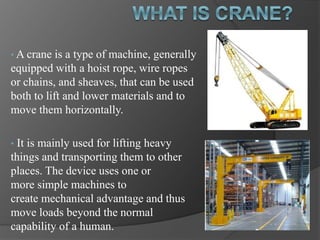
• A crane is a type of machine, generally
equipped with a hoist rope, wire ropes
or chains, and sheaves, that can be used
both to lift and lower materials and to
move them horizontally.
• It is mainly used for lifting heavy
things and transporting them to other
places. The device uses one or
more simple machines to
create mechanical advantage and thus
move loads beyond the normal
capability of a human.
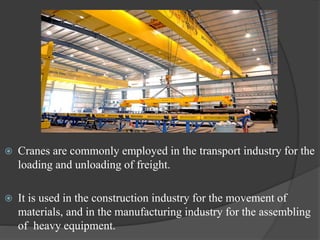
 Cranes are commonly employed in the transport industry for the
loading and unloading of freight.
 It is used in the construction industry for the movement of
materials, and in the manufacturing industry for the assembling
of heavy equipment.
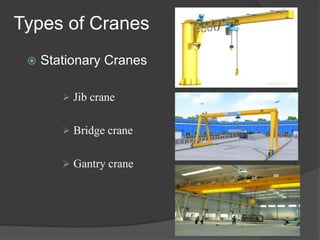
Types of Cranes
 Stationary Cranes
 Jib crane
 Bridge crane
 Gantry crane
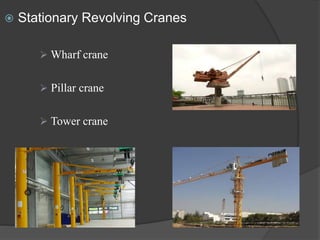
 Stationary Revolving Cranes
 Wharf crane
 Pillar crane
 Tower crane
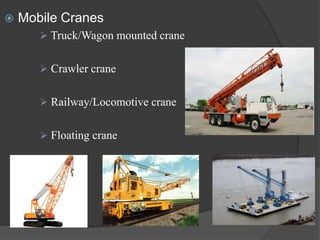
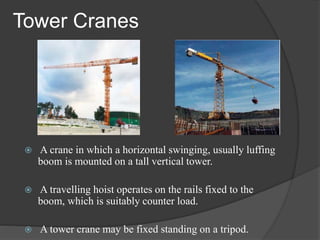
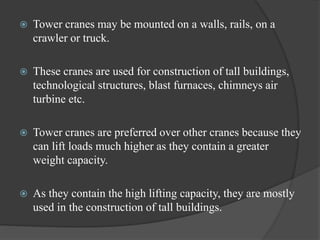
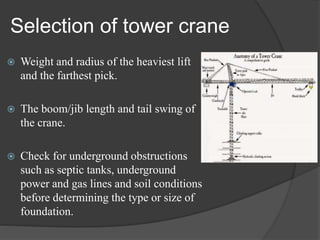
 Mobile Cranes
 Truck/Wagon mounted crane
 Crawler crane
 Railway/Locomotive crane
 Floating crane
Tower Cranes
 A crane in which a horizontal swinging, usually luffing
boom is mounted on a tall vertical tower.
 A travelling hoist operates on the rails fixed to the
boom, which is suitably counter load.
 A tower crane may be fixed standing on a tripod.
 Tower cranes may be mounted on a walls, rails, on a
crawler or truck.
 These cranes are used for construction of tall buildings,
technological structures, blast furnaces, chimneys air
turbine etc.
 Tower cranes are preferred over other cranes because they
can lift loads much higher as they contain a greater
weight capacity.
 As they contain the high lifting capacity, they are mostly
used in the construction of tall buildings.
Selection of tower crane
 Weight and radius of the heaviest lift
and the farthest pick.
 The boom/jib length and tail swing of
the crane.
 Check for underground obstructions
such as septic tanks, underground
power and gas lines and soil conditions
before determining the type or size of
foundation.
 Power and hook line speeds.
 Noise and environmental restrictions.
 Transportation Cost.
 The window of operation.
 Safety regulations (such as OSHA, ANSI and DIN).
Maintenance of Tower
Cranes
 To ensure safe and economic operation of the tower
crane for a longer service life, it must be properly
maintained and lubricated.
 Keep the crane constantly clean.
 Check speed reducers for oil quantity. Fill oil in
time.
 Check wires ropes frequently and replace the
broken and worn-out wires.
 Check brakes for performance and clearance to
ensure reliable sensitivity.
 Check for bolt connections and Re-tighten the bolts
once again when they have been used for a certain
period of time.
 Check the rods, web rods and welds of metal structure
members for fractures and fissures. Pay special
attention to the positions where the paints are peeled.
 Conduct rust removing and painting of the whole tower
crane and its metal mechanisms after completion of
their each use in a project.
THANK YOU

Smme

  • 2.
    • A craneis a type of machine, generally equipped with a hoist rope, wire ropes or chains, and sheaves, that can be used both to lift and lower materials and to move them horizontally. • It is mainly used for lifting heavy things and transporting them to other places. The device uses one or more simple machines to create mechanical advantage and thus move loads beyond the normal capability of a human.
  • 3.
     Cranes arecommonly employed in the transport industry for the loading and unloading of freight.  It is used in the construction industry for the movement of materials, and in the manufacturing industry for the assembling of heavy equipment.
  • 4.
    Types of Cranes Stationary Cranes  Jib crane  Bridge crane  Gantry crane
  • 5.
     Stationary RevolvingCranes  Wharf crane  Pillar crane  Tower crane
  • 6.
     Mobile Cranes Truck/Wagon mounted crane  Crawler crane  Railway/Locomotive crane  Floating crane
  • 7.
    Tower Cranes  Acrane in which a horizontal swinging, usually luffing boom is mounted on a tall vertical tower.  A travelling hoist operates on the rails fixed to the boom, which is suitably counter load.  A tower crane may be fixed standing on a tripod.
  • 8.
     Tower cranesmay be mounted on a walls, rails, on a crawler or truck.  These cranes are used for construction of tall buildings, technological structures, blast furnaces, chimneys air turbine etc.  Tower cranes are preferred over other cranes because they can lift loads much higher as they contain a greater weight capacity.  As they contain the high lifting capacity, they are mostly used in the construction of tall buildings.
  • 10.
    Selection of towercrane  Weight and radius of the heaviest lift and the farthest pick.  The boom/jib length and tail swing of the crane.  Check for underground obstructions such as septic tanks, underground power and gas lines and soil conditions before determining the type or size of foundation.
  • 11.
     Power andhook line speeds.  Noise and environmental restrictions.  Transportation Cost.  The window of operation.  Safety regulations (such as OSHA, ANSI and DIN).
  • 12.
    Maintenance of Tower Cranes To ensure safe and economic operation of the tower crane for a longer service life, it must be properly maintained and lubricated.  Keep the crane constantly clean.  Check speed reducers for oil quantity. Fill oil in time.
  • 13.
     Check wiresropes frequently and replace the broken and worn-out wires.  Check brakes for performance and clearance to ensure reliable sensitivity.  Check for bolt connections and Re-tighten the bolts once again when they have been used for a certain period of time.
  • 14.
     Check therods, web rods and welds of metal structure members for fractures and fissures. Pay special attention to the positions where the paints are peeled.  Conduct rust removing and painting of the whole tower crane and its metal mechanisms after completion of their each use in a project.
  • 16.