Eng: Mohamed Ibrahim
 Conveyors Systems
 Conveyor Types
 Production Systems
 Case Study “ Powered Turntable Conveyor “
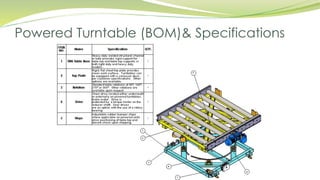
 Powered Turntable (BOM) & Specifications
 Powered Turntable Process design and Machines Capabilities
Content
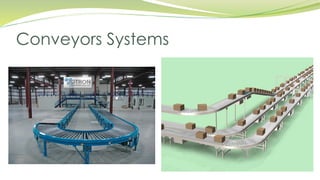
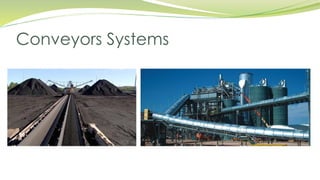
Large family of material transport equipment designed to move materials
over fixed paths, usually in large quantities or volumes
1. Non-powered
 Materials moved by human workers or by gravity
2. Powered
 Power mechanism for transporting materials is contained in the fixed
path, using chains, belts, rollers or other mechanical devices
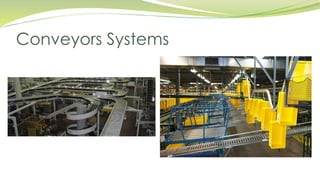
Conveyors Systems
Conveyors Systems
Conveyors Systems
Conveyors Systems
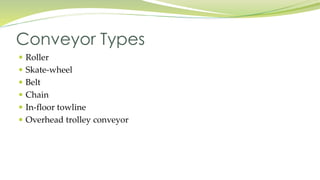
 Roller
 Skate-wheel
 Belt
 Chain
 In-floor towline
 Overhead trolley conveyor
Conveyor Types
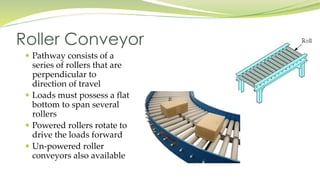
Roller Conveyor
 Pathway consists of a
series of rollers that are
perpendicular to
direction of travel
 Loads must possess a flat
bottom to span several
rollers
 Powered rollers rotate to
drive the loads forward
 Un-powered roller
conveyors also available
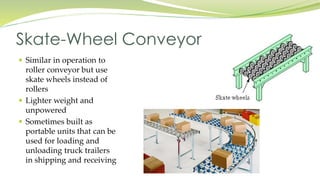
Skate-Wheel Conveyor
 Similar in operation to
roller conveyor but use
skate wheels instead of
rollers
 Lighter weight and
unpowered
 Sometimes built as
portable units that can be
used for loading and
unloading truck trailers
in shipping and receiving
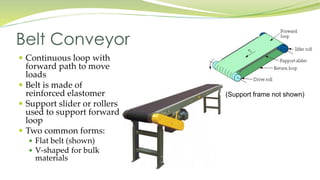
Belt Conveyor
 Continuous loop with
forward path to move
loads
 Belt is made of
reinforced elastomer
 Support slider or rollers
used to support forward
loop
 Two common forms:
 Flat belt (shown)
 V-shaped for bulk
materials
(Support frame not shown)
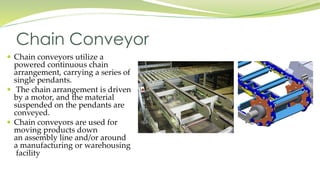
Chain Conveyor
 Chain conveyors utilize a
powered continuous chain
arrangement, carrying a series of
single pendants.
 The chain arrangement is driven
by a motor, and the material
suspended on the pendants are
conveyed.
 Chain conveyors are used for
moving products down
an assembly line and/or around
a manufacturing or warehousing
facility
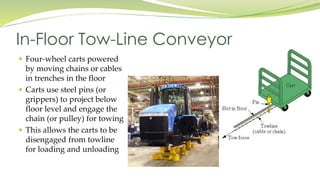
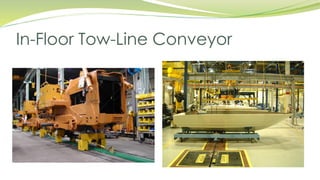
In-Floor Tow-Line Conveyor
 Four-wheel carts powered
by moving chains or cables
in trenches in the floor
 Carts use steel pins (or
grippers) to project below
floor level and engage the
chain (or pulley) for towing
 This allows the carts to be
disengaged from towline
for loading and unloading
In-Floor Tow-Line Conveyor
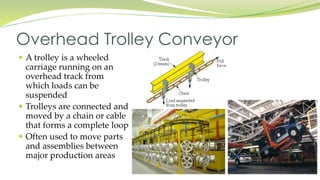
Overhead Trolley Conveyor
 A trolley is a wheeled
carriage running on an
overhead track from
which loads can be
suspended
 Trolleys are connected and
moved by a chain or cable
that forms a complete loop
 Often used to move parts
and assemblies between
major production areas
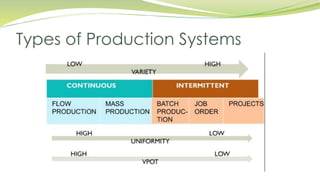
Types of Production Systems
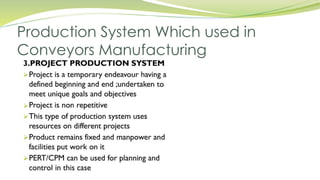
Production System Which used in
Conveyors Manufacturing
Production System Which used in
Conveyors Manufacturing
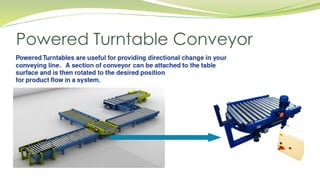
Powered Turntable Conveyor
Powered Turntable application video
https://www.youtube.com/watch?v=Eknf8Djhlm0
Powered Turntable application video
https://www.youtube.com/watch?v=RS3nGJeZyFY
Powered Turntable (BOM)& Specifications
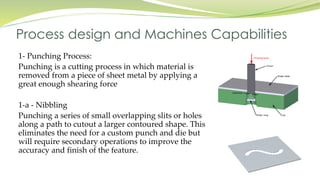
1- Punching Process:
Punching is a cutting process in which material is
removed from a piece of sheet metal by applying a
great enough shearing force
1-a - Nibbling
Punching a series of small overlapping slits or holes
along a path to cutout a larger contoured shape. This
eliminates the need for a custom punch and die but
will require secondary operations to improve the
accuracy and finish of the feature.
Process design and Machines Capabilities
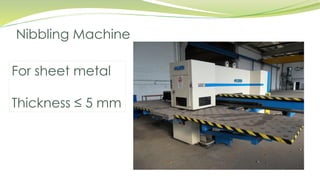
Nibbling Machine
For sheet metal
Thickness ≤ 5 mm
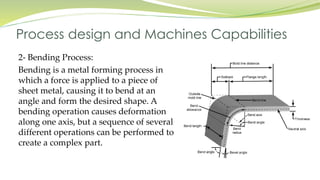
2- Bending Process:
Bending is a metal forming process in
which a force is applied to a piece of
sheet metal, causing it to bend at an
angle and form the desired shape. A
bending operation causes deformation
along one axis, but a sequence of several
different operations can be performed to
create a complex part.
Process design and Machines Capabilities
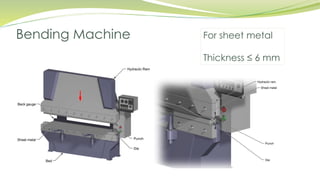
Bending Machine For sheet metal
Thickness ≤ 6 mm
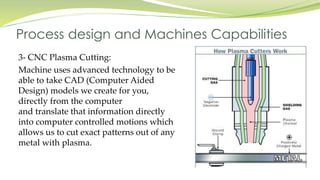
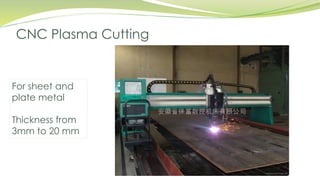
3- CNC Plasma Cutting:
Machine uses advanced technology to be
able to take CAD (Computer Aided
Design) models we create for you,
directly from the computer
and translate that information directly
into computer controlled motions which
allows us to cut exact patterns out of any
metal with plasma.
Process design and Machines Capabilities
CNC Plasma Cutting
For sheet and
plate metal
Thickness from
3mm to 20 mm
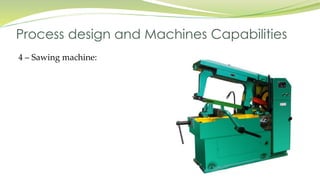
4 – Sawing machine:
Process design and Machines Capabilities
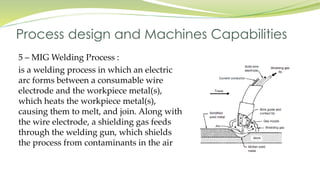
5 – MIG Welding Process :
is a welding process in which an electric
arc forms between a consumable wire
electrode and the workpiece metal(s),
which heats the workpiece metal(s),
causing them to melt, and join. Along with
the wire electrode, a shielding gas feeds
through the welding gun, which shields
the process from contaminants in the air
Process design and Machines Capabilities
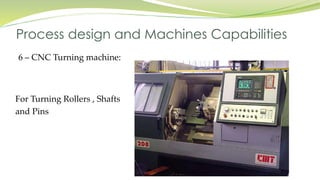
6 – CNC Turning machine:
Process design and Machines Capabilities
For Turning Rollers , Shafts
and Pins
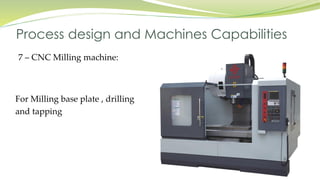
7 – CNC Milling machine:
Process design and Machines Capabilities
For Milling base plate , drilling
and tapping
Thank YOU

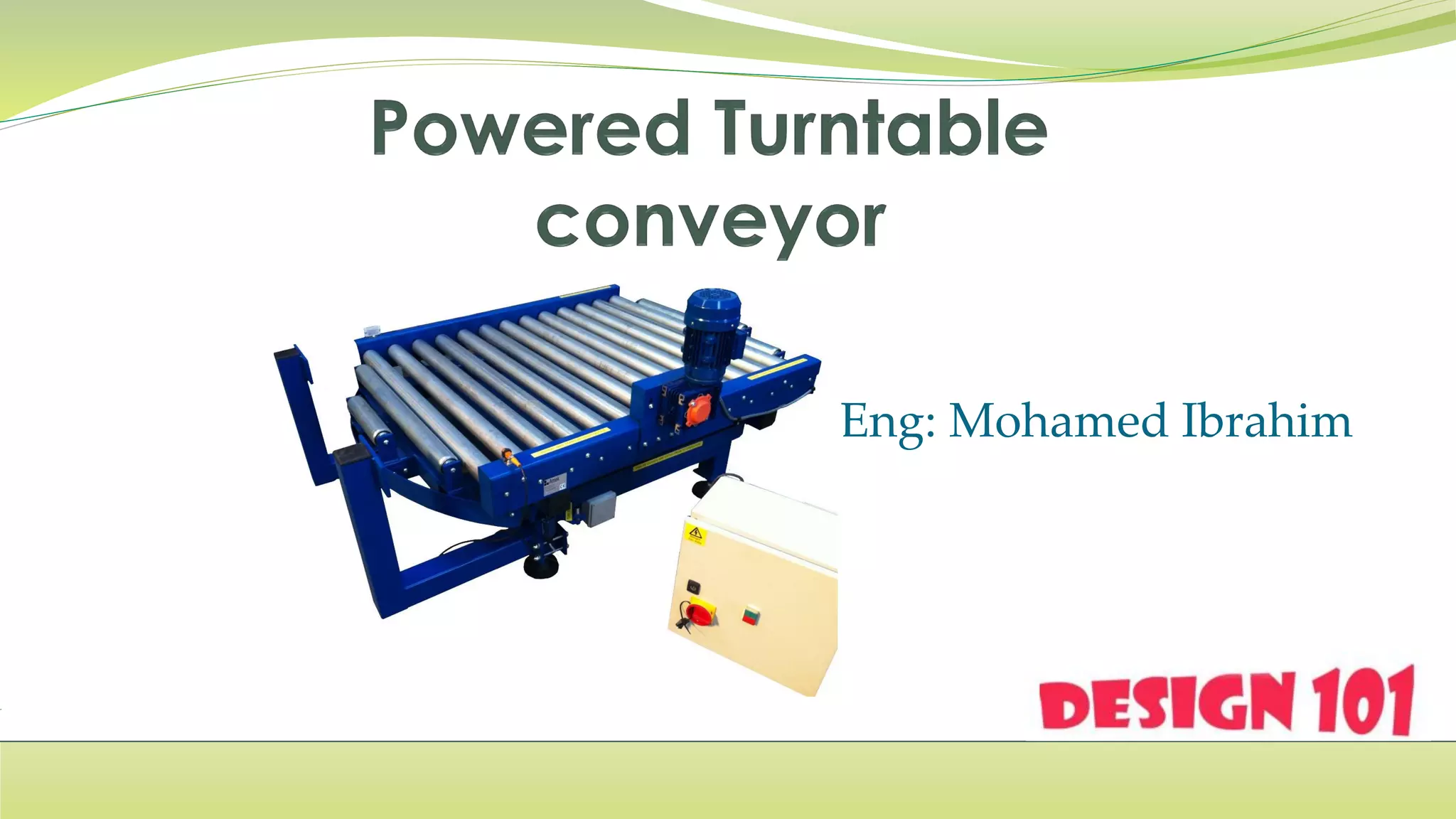
Powered turntable conveyor 90 degree

  • 1.
  • 2.
     Conveyors Systems Conveyor Types  Production Systems  Case Study “ Powered Turntable Conveyor “  Powered Turntable (BOM) & Specifications  Powered Turntable Process design and Machines Capabilities Content
  • 3.
    Large family ofmaterial transport equipment designed to move materials over fixed paths, usually in large quantities or volumes 1. Non-powered  Materials moved by human workers or by gravity 2. Powered  Power mechanism for transporting materials is contained in the fixed path, using chains, belts, rollers or other mechanical devices Conveyors Systems
  • 4.
  • 5.
  • 6.
  • 7.
     Roller  Skate-wheel Belt  Chain  In-floor towline  Overhead trolley conveyor Conveyor Types
  • 8.
    Roller Conveyor  Pathwayconsists of a series of rollers that are perpendicular to direction of travel  Loads must possess a flat bottom to span several rollers  Powered rollers rotate to drive the loads forward  Un-powered roller conveyors also available
  • 9.
    Skate-Wheel Conveyor  Similarin operation to roller conveyor but use skate wheels instead of rollers  Lighter weight and unpowered  Sometimes built as portable units that can be used for loading and unloading truck trailers in shipping and receiving
  • 10.
    Belt Conveyor  Continuousloop with forward path to move loads  Belt is made of reinforced elastomer  Support slider or rollers used to support forward loop  Two common forms:  Flat belt (shown)  V-shaped for bulk materials (Support frame not shown)
  • 11.
    Chain Conveyor  Chainconveyors utilize a powered continuous chain arrangement, carrying a series of single pendants.  The chain arrangement is driven by a motor, and the material suspended on the pendants are conveyed.  Chain conveyors are used for moving products down an assembly line and/or around a manufacturing or warehousing facility
  • 12.
    In-Floor Tow-Line Conveyor Four-wheel carts powered by moving chains or cables in trenches in the floor  Carts use steel pins (or grippers) to project below floor level and engage the chain (or pulley) for towing  This allows the carts to be disengaged from towline for loading and unloading
  • 13.
  • 14.
    Overhead Trolley Conveyor A trolley is a wheeled carriage running on an overhead track from which loads can be suspended  Trolleys are connected and moved by a chain or cable that forms a complete loop  Often used to move parts and assemblies between major production areas
  • 15.
  • 16.
    Production System Whichused in Conveyors Manufacturing
  • 17.
    Production System Whichused in Conveyors Manufacturing
  • 18.
  • 19.
    Powered Turntable Conveyor PoweredTurntable application video https://www.youtube.com/watch?v=Eknf8Djhlm0 Powered Turntable application video https://www.youtube.com/watch?v=RS3nGJeZyFY
  • 20.
  • 21.
    1- Punching Process: Punchingis a cutting process in which material is removed from a piece of sheet metal by applying a great enough shearing force 1-a - Nibbling Punching a series of small overlapping slits or holes along a path to cutout a larger contoured shape. This eliminates the need for a custom punch and die but will require secondary operations to improve the accuracy and finish of the feature. Process design and Machines Capabilities
  • 22.
    Nibbling Machine For sheetmetal Thickness ≤ 5 mm
  • 23.
    2- Bending Process: Bendingis a metal forming process in which a force is applied to a piece of sheet metal, causing it to bend at an angle and form the desired shape. A bending operation causes deformation along one axis, but a sequence of several different operations can be performed to create a complex part. Process design and Machines Capabilities
  • 24.
    Bending Machine Forsheet metal Thickness ≤ 6 mm
  • 25.
    3- CNC PlasmaCutting: Machine uses advanced technology to be able to take CAD (Computer Aided Design) models we create for you, directly from the computer and translate that information directly into computer controlled motions which allows us to cut exact patterns out of any metal with plasma. Process design and Machines Capabilities
  • 26.
    CNC Plasma Cutting Forsheet and plate metal Thickness from 3mm to 20 mm
  • 27.
    4 – Sawingmachine: Process design and Machines Capabilities
  • 28.
    5 – MIGWelding Process : is a welding process in which an electric arc forms between a consumable wire electrode and the workpiece metal(s), which heats the workpiece metal(s), causing them to melt, and join. Along with the wire electrode, a shielding gas feeds through the welding gun, which shields the process from contaminants in the air Process design and Machines Capabilities
  • 29.
    6 – CNCTurning machine: Process design and Machines Capabilities For Turning Rollers , Shafts and Pins
  • 30.
    7 – CNCMilling machine: Process design and Machines Capabilities For Milling base plate , drilling and tapping
  • 31.