SMART	
  WORKSPACES	


CDX	
  Forum	
  
November	
  2,	
  2015	
  
mediaX.stanford.edu	
  
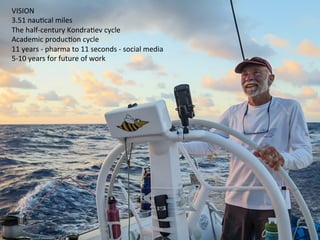
VISION	
  
3.51	
  nauHcal	
  miles	


The	
  half-­‐century	
  KondraHev	
  cycle	
  
Academic	
  producHon	
  cycle	
  	
  
11	
  years	
  -­‐	
  pharma	
  to	
  11	
  seconds	
  -­‐	
  social	
  media	
  
5-­‐10	
  years	
  for	
  future	
  of	
  work	
  
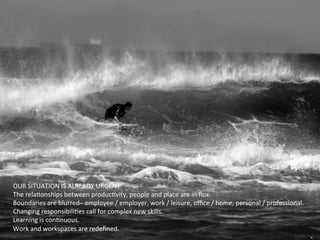
OUR	
  SITUATION	
  IS	
  ALREADY	
  URGENT	
  
The	
  relaHonships	
  between	
  producHvity,	
  people	
  and	
  place	
  are	
  in	
  flux.	
  
Boundaries	
  are	
  blurred–	
  employee	
  /	
  employer,	
  work	
  /	
  leisure,	
  office	
  /	
  home,	
  personal	
  /	
  professional.	
  
Changing	
  responsibiliHes	
  call	
  for	
  complex	
  new	
  skills.	
  	
  
Learning	
  is	
  conHnuous.	
  
Work	
  and	
  workspaces	
  are	
  redefined.	


I.  Global	
  Forces	
  
II.  Workplace	
  Trends	
  –	
  Employee	
  Mindsets	
  
III.  Smart	
  Workspaces	
  
IV.  Knowledge	
  Landscape	
  
V.  Management	
  Challenges	
  
VI.  Looking	
  Ahead	
  to	
  2020	
  
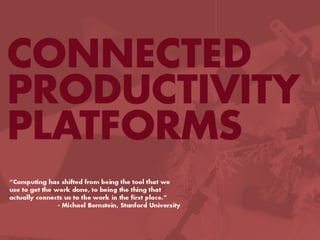
•  Connected	
  Produc,vity	
  Pla2orms	
  
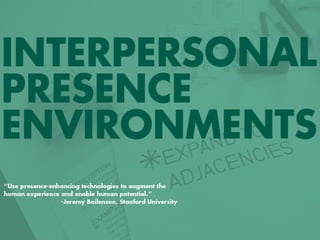
•  Interpersonal	
  Presence	
  Environments	
  
•  Augmented	
  Personal	
  Intelligence	
  &	
  
Wellbeing	
  
VII. QuesHons	
  for	
  Research	
  
Agenda	
  
Agenda	
  
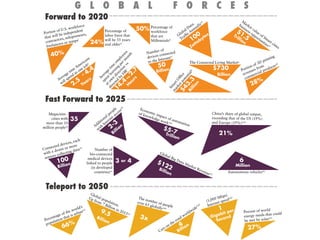
Global	
  Forces	
  
Workforce	
  Trends	


  Employee	
  Mindset	
  
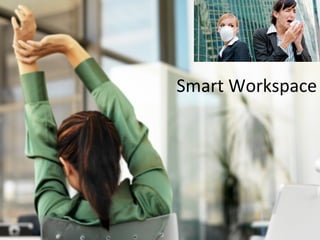
Smart	
  Workspace	
  
Knowledge	
  	
  
Landscape	
  
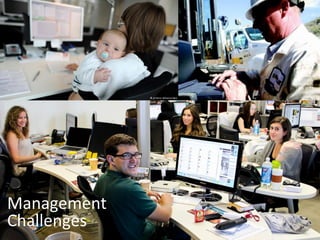
Management	
  	
  
Challenges	
  
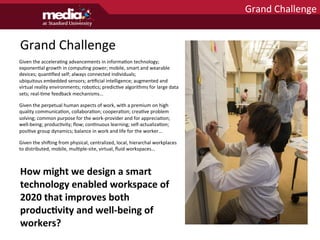
Grand	
  Challenge	
  
Grand	
  Challenge	
  
Given	
  the	
  acceleraHng	
  advancements	
  in	
  informaHon	
  technology;	
  
exponenHal	
  growth	
  in	
  compuHng	
  power;	
  mobile,	
  smart	
  and	
  wearable	
  
devices;	
  quanHfied	
  self;	
  always	
  connected	
  individuals;	
  
ubiquitous	
  embedded	
  sensors;	
  arHficial	
  intelligence;	
  augmented	
  and	
  
virtual	
  reality	
  environments;	
  roboHcs;	
  predicHve	
  algorithms	
  for	
  large	
  data	
  
sets;	
  real-­‐Hme	
  feedback	
  mechanisms...	
  
Given	
  the	
  perpetual	
  human	
  aspects	
  of	
  work,	
  with	
  a	
  premium	
  on	
  high	
  
quality	
  communicaHon,	
  collaboraHon;	
  cooperaHon;	
  creaHve	
  problem	
  
solving;	
  common	
  purpose	
  for	
  the	
  work-­‐provider	
  and	
  for	
  appreciaHon;	
  
well-­‐being;	
  producHvity;	
  flow;	
  conHnuous	
  learning;	
  self-­‐actualizaHon;	
  
posiHve	
  group	
  dynamics;	
  balance	
  in	
  work	
  and	
  life	
  for	
  the	
  worker...	
  
Given	
  the	
  shiaing	
  from	
  physical,	
  centralized,	
  local,	
  hierarchal	
  workplaces	
  
to	
  distributed,	
  mobile,	
  mulHple-­‐site,	
  virtual,	
  fluid	
  workspaces…	


How	
  might	
  we	
  design	
  a	
  smart	
  
technology	
  enabled	
  workspace	
  of	
  
2020	
  that	
  improves	
  both	
  
produc,vity	
  and	
  well-­‐being	
  of	
  
workers?	
  
Smart Workspaces
Connected Productivity Platforms
Interpersonal Presence Environments
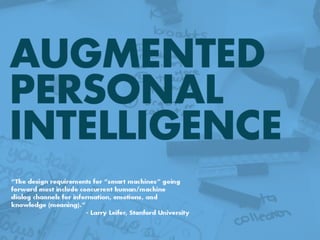
Augmented Personal Intelligence
Smart	
  Workspaces	
  
A	
  Placorm	
  to	
  Unite	
  Them	
  All	
  
Specialized	
  Hubs	
  for	
  B2B	
  
AI	
  and	
  I	
  
Am	
  What	
  I	
  Wear	
  
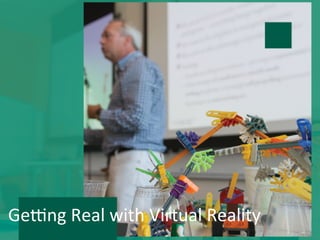
Geeng	
  Real	
  with	
  Virtual	
  Reality	
  
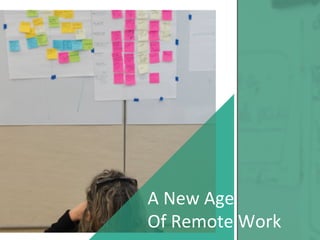
A	
  New	
  Age	
  	
  
Of	
  Remote	
  Work	
  
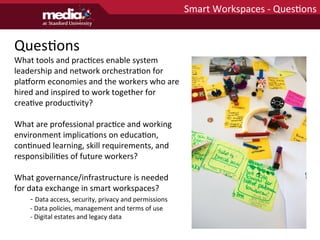
QuesHons	
  
What	
  tools	
  and	
  pracHces	
  enable	
  system	
  
leadership	
  and	
  network	
  orchestraHon	
  for	
  
placorm	
  economies	
  and	
  the	
  workers	
  who	
  are	
  
hired	
  and	
  inspired	
  to	
  work	
  together	
  for	
  
creaHve	
  producHvity?	


What	
  are	
  professional	
  pracHce	
  and	
  working	
  
environment	
  implicaHons	
  on	
  educaHon,	
  
conHnued	
  learning,	
  skill	
  requirements,	
  and	
  
responsibiliHes	
  of	
  future	
  workers?	


What	
  governance/infrastructure	
  is	
  needed	
  
for	
  data	
  exchange	
  in	
  smart	
  workspaces?	
  	
  
-­‐	
  Data	
  access,	
  security,	
  privacy	
  and	
  permissions	
  
-­‐	
  Data	
  policies,	
  management	
  and	
  terms	
  of	
  use	
  
-­‐	
  Digital	
  estates	
  and	
  legacy	
  data	


Smart	
  Workspaces	
  -­‐	
  QuesHons	
  
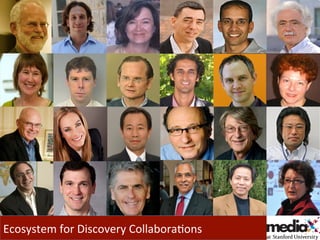
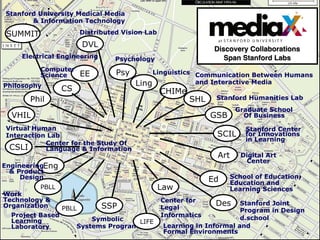
Ecosystem	
  for	
  Discovery	
  CollaboraHons	
  
CSLI
Eng
EE Psy
Ed
SSP
SCIL
SUMMIT
PBLL
GSB
Ling
CHIMe
Art
Discovery Collaborations
Span Stanford Labs
School of Education;
Education and
Learning Sciences
Digital Art
Center
Graduate School
Of Business
Communication Between Humans
and Interactive Media
Stanford Center
for Innovations
in Learning
Project Based
Learning
Laboratory
Symbolic
Systems Program
Engineering
& Product
Design
Center for the Study Of
Language & Information
Stanford University Medical Media
& Information Technology
Computer
Science
Psychology
Linguistics
Phil
Philosophy
Law
Center for
Legal
Informatics
LIFE
Learning in Informal and
Formal Environments
CS
Electrical Engineering
SHL Stanford Humanities Lab
VHIL
Virtual Human
Interaction Lab
PBLL
Work
Technology &
Organization
DVL
Distributed Vision Lab
Des Stanford Joint
Program in Design
d.school
at S T A N F O R D U N I V E R S I T Y
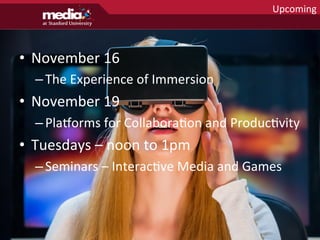
•  November	
  16	
  
– The	
  Experience	
  of	
  Immersion	
  
•  November	
  19	
  
– Placorms	
  for	
  CollaboraHon	
  and	
  ProducHvity	
  
•  Tuesdays	
  –	
  noon	
  to	
  1pm	
  
– Seminars	
  –	
  InteracHve	
  Media	
  and	
  Games	


Upcoming	


  Thank	
  You	
  
Martha	
  G	
  Russell	
  
Martha.russell@stanford.edu	
  

Smart Workspaces

  • 1.
    SMART  WORKSPACES         CDX  Forum   November  2,  2015   mediaX.stanford.edu  
  • 2.
    VISION   3.51  nauHcal  miles       The  half-­‐century  KondraHev  cycle   Academic  producHon  cycle     11  years  -­‐  pharma  to  11  seconds  -­‐  social  media   5-­‐10  years  for  future  of  work  
  • 3.
    OUR  SITUATION  IS  ALREADY  URGENT   The  relaHonships  between  producHvity,  people  and  place  are  in  flux.   Boundaries  are  blurred–  employee  /  employer,  work  /  leisure,  office  /  home,  personal  /  professional.   Changing  responsibiliHes  call  for  complex  new  skills.     Learning  is  conHnuous.   Work  and  workspaces  are  redefined.    
  • 4.
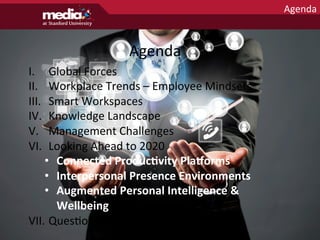
    I.  Global  Forces   II.  Workplace  Trends  –  Employee  Mindsets   III.  Smart  Workspaces   IV.  Knowledge  Landscape   V.  Management  Challenges   VI.  Looking  Ahead  to  2020   •  Connected  Produc,vity  Pla2orms   •  Interpersonal  Presence  Environments   •  Augmented  Personal  Intelligence  &   Wellbeing   VII. QuesHons  for  Research   Agenda   Agenda  
  • 5.
  • 7.
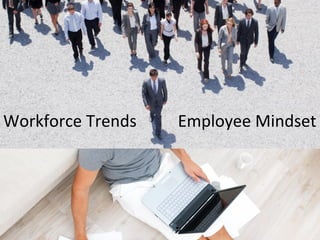
    Workforce  Trends                    Employee  Mindset  
  • 8.
  • 9.
  • 10.
  • 11.
    Grand  Challenge   Grand  Challenge   Given  the  acceleraHng  advancements  in  informaHon  technology;   exponenHal  growth  in  compuHng  power;  mobile,  smart  and  wearable   devices;  quanHfied  self;  always  connected  individuals;   ubiquitous  embedded  sensors;  arHficial  intelligence;  augmented  and   virtual  reality  environments;  roboHcs;  predicHve  algorithms  for  large  data   sets;  real-­‐Hme  feedback  mechanisms...   Given  the  perpetual  human  aspects  of  work,  with  a  premium  on  high   quality  communicaHon,  collaboraHon;  cooperaHon;  creaHve  problem   solving;  common  purpose  for  the  work-­‐provider  and  for  appreciaHon;   well-­‐being;  producHvity;  flow;  conHnuous  learning;  self-­‐actualizaHon;   posiHve  group  dynamics;  balance  in  work  and  life  for  the  worker...   Given  the  shiaing  from  physical,  centralized,  local,  hierarchal  workplaces   to  distributed,  mobile,  mulHple-­‐site,  virtual,  fluid  workspaces…       How  might  we  design  a  smart   technology  enabled  workspace  of   2020  that  improves  both   produc,vity  and  well-­‐being  of   workers?  
  • 12.
    Smart Workspaces Connected ProductivityPlatforms Interpersonal Presence Environments Augmented Personal Intelligence Smart  Workspaces  
  • 14.
    A  Placorm  to  Unite  Them  All  
  • 15.
  • 17.
    AI  and  I   Am  What  I  Wear  
  • 19.
    Geeng  Real  with  Virtual  Reality  
  • 20.
    A  New  Age     Of  Remote  Work  
  • 22.
    QuesHons   What  tools  and  pracHces  enable  system   leadership  and  network  orchestraHon  for   placorm  economies  and  the  workers  who  are   hired  and  inspired  to  work  together  for   creaHve  producHvity?     What  are  professional  pracHce  and  working   environment  implicaHons  on  educaHon,   conHnued  learning,  skill  requirements,  and   responsibiliHes  of  future  workers?     What  governance/infrastructure  is  needed   for  data  exchange  in  smart  workspaces?     -­‐  Data  access,  security,  privacy  and  permissions   -­‐  Data  policies,  management  and  terms  of  use   -­‐  Digital  estates  and  legacy  data     Smart  Workspaces  -­‐  QuesHons  
  • 23.
    Ecosystem  for  Discovery  CollaboraHons  
  • 24.
    CSLI Eng EE Psy Ed SSP SCIL SUMMIT PBLL GSB Ling CHIMe Art Discovery Collaborations SpanStanford Labs School of Education; Education and Learning Sciences Digital Art Center Graduate School Of Business Communication Between Humans and Interactive Media Stanford Center for Innovations in Learning Project Based Learning Laboratory Symbolic Systems Program Engineering & Product Design Center for the Study Of Language & Information Stanford University Medical Media & Information Technology Computer Science Psychology Linguistics Phil Philosophy Law Center for Legal Informatics LIFE Learning in Informal and Formal Environments CS Electrical Engineering SHL Stanford Humanities Lab VHIL Virtual Human Interaction Lab PBLL Work Technology & Organization DVL Distributed Vision Lab Des Stanford Joint Program in Design d.school at S T A N F O R D U N I V E R S I T Y
  • 25.
    •  November  16   – The  Experience  of  Immersion   •  November  19   – Placorms  for  CollaboraHon  and  ProducHvity   •  Tuesdays  –  noon  to  1pm   – Seminars  –  InteracHve  Media  and  Games     Upcoming  
  • 26.
             Thank  You   Martha  G  Russell   Martha.russell@stanford.edu