Smart Factory - ICT Requirements
S. Klett, D. Petrov, G. Sathya, M. Altstadt, L. Sundari Nürnberg, 15.02.2016
Agenda
History of Industry 4.0
Definitions
Opportunities and Challenges
ICT Requirements
ICT in Smart Factories
IT Systems in Smart Factories
Smart Factory - Today and
Tomorrow
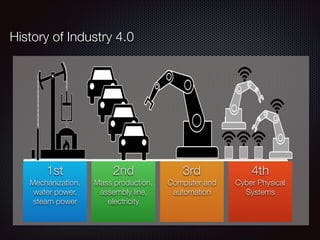
History of Industry 4.0
1st
Mechanization,
water power,
steam power
2nd
Mass production,
assembly line,
electricity
3rd
Computer and
automation
4th
Cyber Physical
Systems
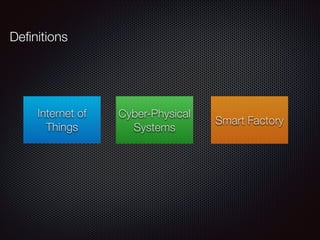
Definitions
Internet of
Things
Cyber-Physical
Systems
Smart Factory
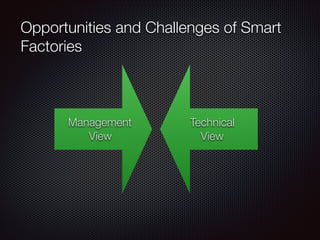
Management
View
Technical
View
Opportunities and Challenges of Smart
Factories
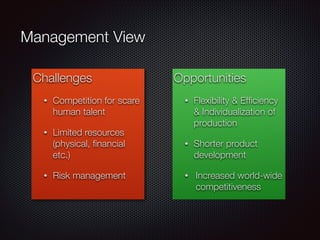
Challenges
• Competition for scare
human talent
• Limited resources
(physical, financial
etc.)
• Risk management
Opportunities
• Flexibility & Efficiency
& Individualization of
production
• Shorter product
development
• Increased world-wide
competitiveness
Management View
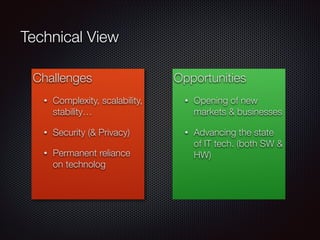
Challenges
• Complexity, scalability,
stability…
• Security (& Privacy)
• Permanent reliance
on technolog
Opportunities
• Opening of new
markets & businesses
• Advancing the state
of IT tech. (both SW &
HW)
Technical View
!
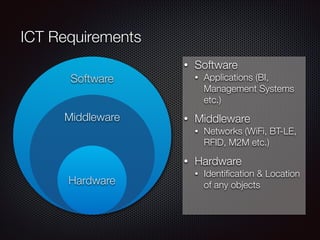
Software
!
Middleware
Hardware
• Software
• Applications (BI,
Management Systems
etc.)
• Middleware
• Networks (WiFi, BT-LE,
RFID, M2M etc.)
• Hardware
• Identification & Location
of any objects
ICT Requirements
ICT in Smart Factories - Information Landscape
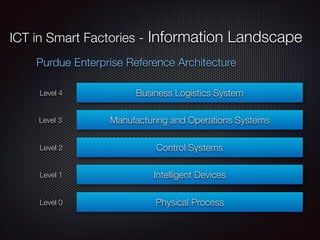
Purdue Enterprise Reference Architecture
Business Logistics System
Manufacturing and Operations Systems
Control Systems
Intelligent Devices
Physical Process
Level 4
Level 3
Level 2
Level 1
Level 0
ICT in Smart Factories - Information Landscape
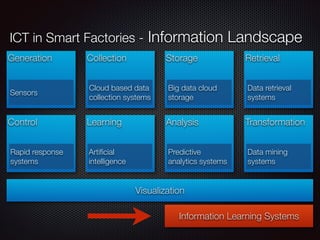
Generation Collection Storage Retrieval
Control Learning Analysis Transformation
Sensors
Cloud based data
collection systems
Big data cloud
storage
Data retrieval
systems
Data mining
systems
Predictive
analytics systems
Artificial
intelligence
Rapid response
systems
Visualization
Information Learning Systems
ICT in Smart Factories - Information Landscape
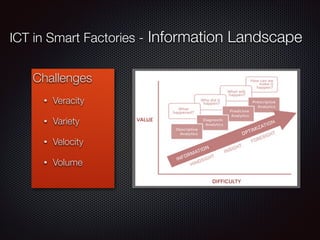
Challenges
• Veracity
• Variety
• Velocity
• Volume
ICT in Smart Factories - Information Landscape
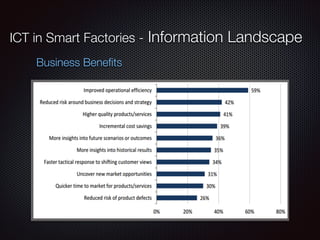
Business Benefits
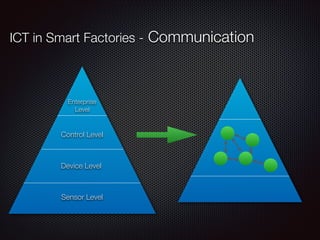
ICT in Smart Factories - Communication
Enterprise
Level
Control Level
Device Level
Sensor Level
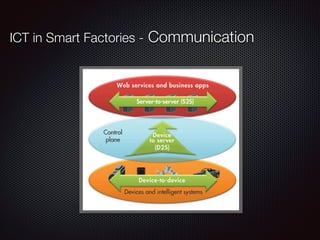
ICT in Smart Factories - Communication
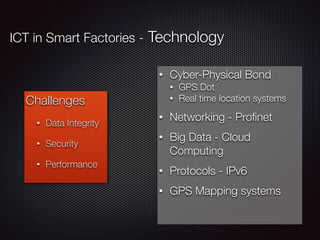
ICT in Smart Factories - Technology
Challenges
• Data Integrity
• Security
• Performance
• Cyber-Physical Bond
• GPS Dot
• Real time location systems
• Networking - Profinet
• Big Data - Cloud
Computing
• Protocols - IPv6
• GPS Mapping systems
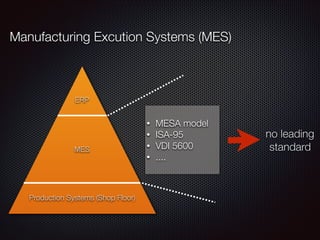
Manufacturing Excution Systems (MES)
Production Systems (Shop Floor)
MES
ERP
• MESA model
• ISA-95
• VDI 5600
• ....
no leading
standard
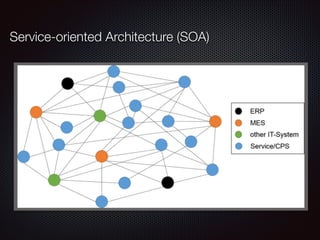
Service-oriented Architecture (SOA)
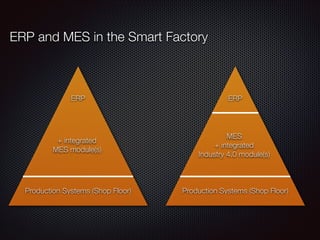
ERP and MES in the Smart Factory
Production Systems (Shop Floor)
+ integrated
MES module(s)
ERP
Production Systems (Shop Floor)
MES
+ integrated
Industry 4.0 module(s)
ERP
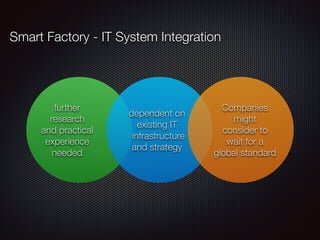
Smart Factory - IT System Integration
further
research
and practical
experience
needed
dependent on
existing IT
infrastructure
and strategy
Companies
might
consider to
wait for a
global standard
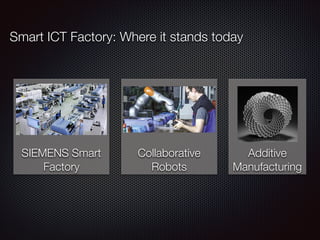
Smart ICT Factory: Where it stands today
SIEMENS Smart
Factory
Collaborative
Robots
Additive
Manufacturing
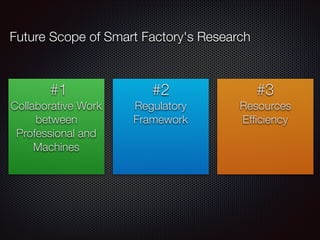
Future Scope of Smart Factory's Research
#1
Collaborative Work
between
Professional and
Machines
#2
Regulatory
Framework
#3
Resources
Efficiency
Thank You for Listening!

Smart Factory: ICT Requirements

  • 1.
    Smart Factory -ICT Requirements S. Klett, D. Petrov, G. Sathya, M. Altstadt, L. Sundari Nürnberg, 15.02.2016
  • 2.
    Agenda History of Industry4.0 Definitions Opportunities and Challenges ICT Requirements ICT in Smart Factories IT Systems in Smart Factories Smart Factory - Today and Tomorrow
  • 3.
    History of Industry4.0 1st Mechanization, water power, steam power 2nd Mass production, assembly line, electricity 3rd Computer and automation 4th Cyber Physical Systems
  • 4.
  • 5.
  • 6.
    Challenges • Competition forscare human talent • Limited resources (physical, financial etc.) • Risk management Opportunities • Flexibility & Efficiency & Individualization of production • Shorter product development • Increased world-wide competitiveness Management View
  • 7.
    Challenges • Complexity, scalability, stability… •Security (& Privacy) • Permanent reliance on technolog Opportunities • Opening of new markets & businesses • Advancing the state of IT tech. (both SW & HW) Technical View
  • 8.
    ! Software ! Middleware Hardware • Software • Applications(BI, Management Systems etc.) • Middleware • Networks (WiFi, BT-LE, RFID, M2M etc.) • Hardware • Identification & Location of any objects ICT Requirements
  • 9.
    ICT in SmartFactories - Information Landscape Purdue Enterprise Reference Architecture Business Logistics System Manufacturing and Operations Systems Control Systems Intelligent Devices Physical Process Level 4 Level 3 Level 2 Level 1 Level 0
  • 10.
    ICT in SmartFactories - Information Landscape Generation Collection Storage Retrieval Control Learning Analysis Transformation Sensors Cloud based data collection systems Big data cloud storage Data retrieval systems Data mining systems Predictive analytics systems Artificial intelligence Rapid response systems Visualization Information Learning Systems
  • 11.
    ICT in SmartFactories - Information Landscape Challenges • Veracity • Variety • Velocity • Volume
  • 12.
    ICT in SmartFactories - Information Landscape Business Benefits
  • 13.
    ICT in SmartFactories - Communication Enterprise Level Control Level Device Level Sensor Level
  • 14.
    ICT in SmartFactories - Communication
  • 15.
    ICT in SmartFactories - Technology Challenges • Data Integrity • Security • Performance • Cyber-Physical Bond • GPS Dot • Real time location systems • Networking - Profinet • Big Data - Cloud Computing • Protocols - IPv6 • GPS Mapping systems
  • 16.
    Manufacturing Excution Systems(MES) Production Systems (Shop Floor) MES ERP • MESA model • ISA-95 • VDI 5600 • .... no leading standard
  • 17.
  • 18.
    ERP and MESin the Smart Factory Production Systems (Shop Floor) + integrated MES module(s) ERP Production Systems (Shop Floor) MES + integrated Industry 4.0 module(s) ERP
  • 19.
    Smart Factory -IT System Integration further research and practical experience needed dependent on existing IT infrastructure and strategy Companies might consider to wait for a global standard
  • 20.
    Smart ICT Factory:Where it stands today SIEMENS Smart Factory Collaborative Robots Additive Manufacturing
  • 21.
    Future Scope ofSmart Factory's Research #1 Collaborative Work between Professional and Machines #2 Regulatory Framework #3 Resources Efficiency
  • 22.
    Thank You forListening!