



Dr. Penina Lam
CEO, eLearning Innovators, Inc.
penina@elearninginnovators.ca
www.elearning-innovators.com
SMART by Design!
Leadership Essentials for Virtual Mentorship
Karibuni Kenya!
Learning Outcomes
Start or scale up
your virtual
mentoring program
Reference:
Lam, P.M. (2015). SMART by
Design! Leadership Essentials
for Virtual Mentorship.
Presented at the African Virtual
University Conference, Nairobi,
July 2-3.
Digital Leadership
Development
Content
Virtual
Conferencing
Virtual
Mentoring &
Coaching
About Me: ELI
Content
Tools
Strategy
1.1
About YOU in 30 sec!
MENTOR MENTEE BOTH
Mentoring: Word Cloud
MENTOR MENTEE
1.1
•Professional qualification mentors
•On-boarding/induction
•Education/learning
•Mainstream/support – change
•Executive
•Expert – SME e.g. entrepreneurship
•General
Mentor Types
Kay & Hinds, 2009
People
Growth
Purposeful
Process
Collaborative
Caring
Conversations
Image source: Pixabay.com
Coaching
Mentoring
Teaching
Or Training
Work
Experience
Experimentation
Other
Self-Study
How do we teach and / or learn?
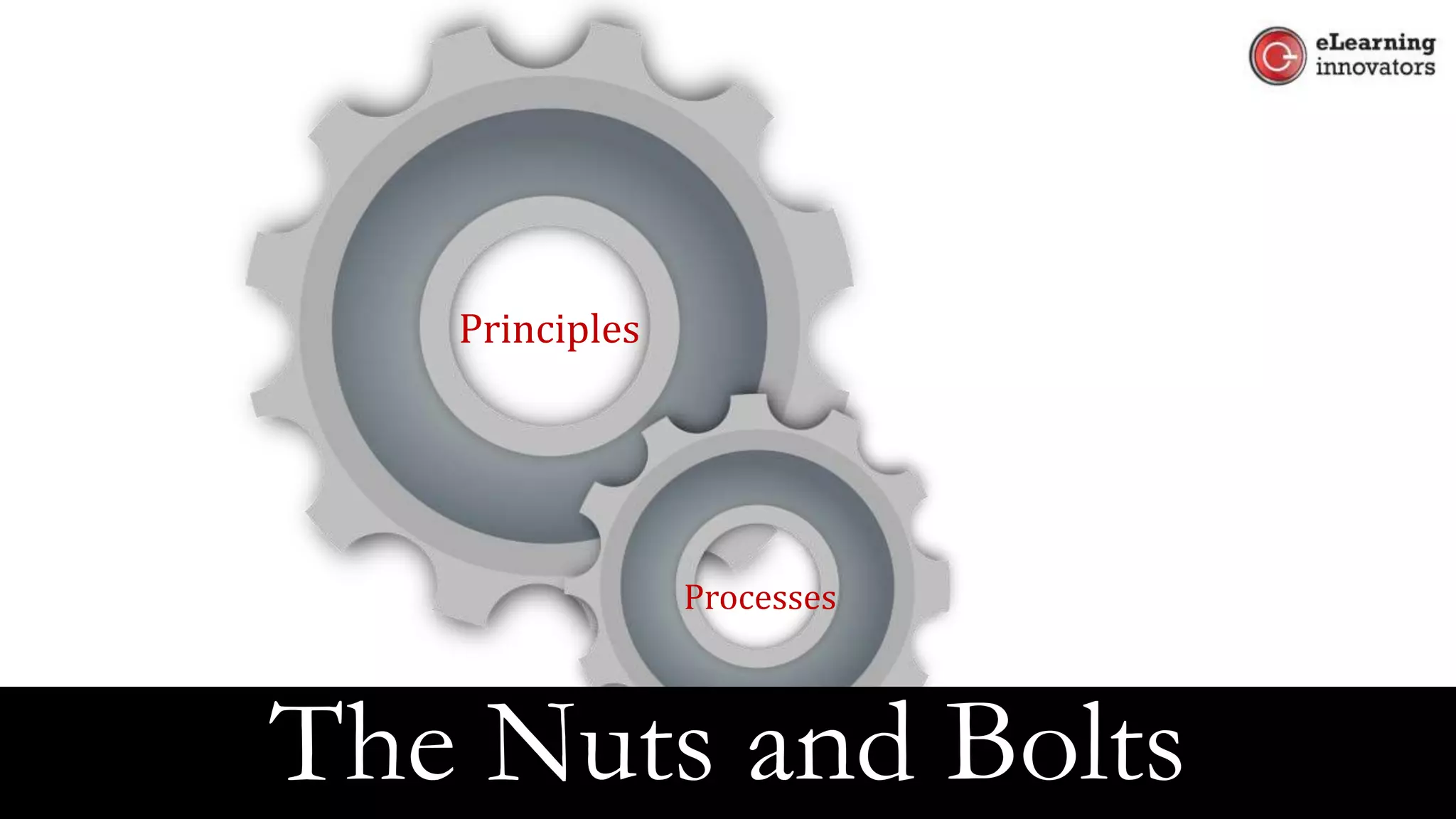
Principles
Processes
The Nuts and Bolts
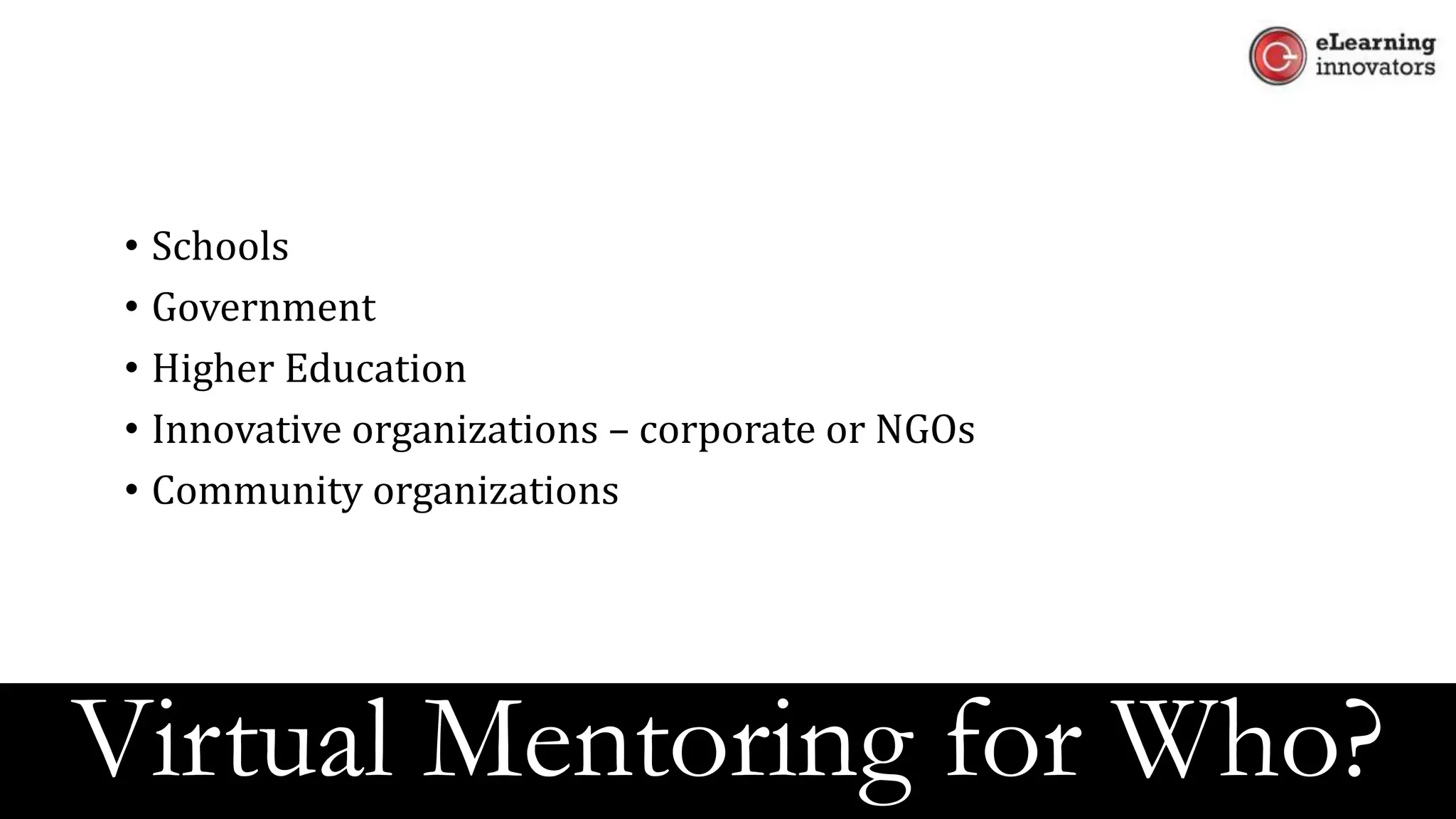
• Schools
• Government
• Higher Education
• Innovative organizations – corporate or NGOs
• Community organizations
Virtual Mentoring for Who?
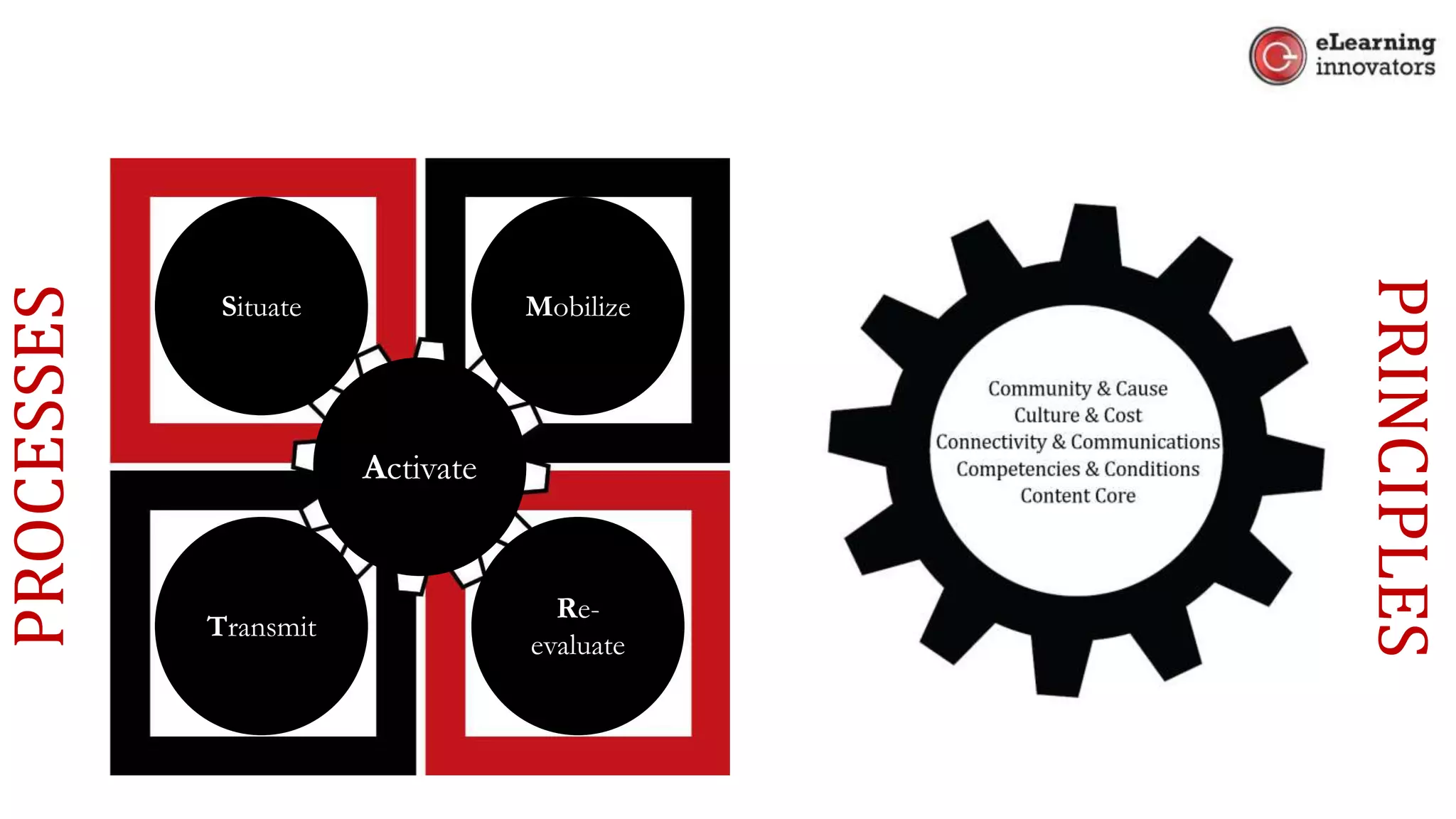
PROCESSES
(Phases)
Situate Mobilize
Re-
evaluate
Transmit
Activate
PRINCIPLES
SITUATE
Why eMentoring?
1.1
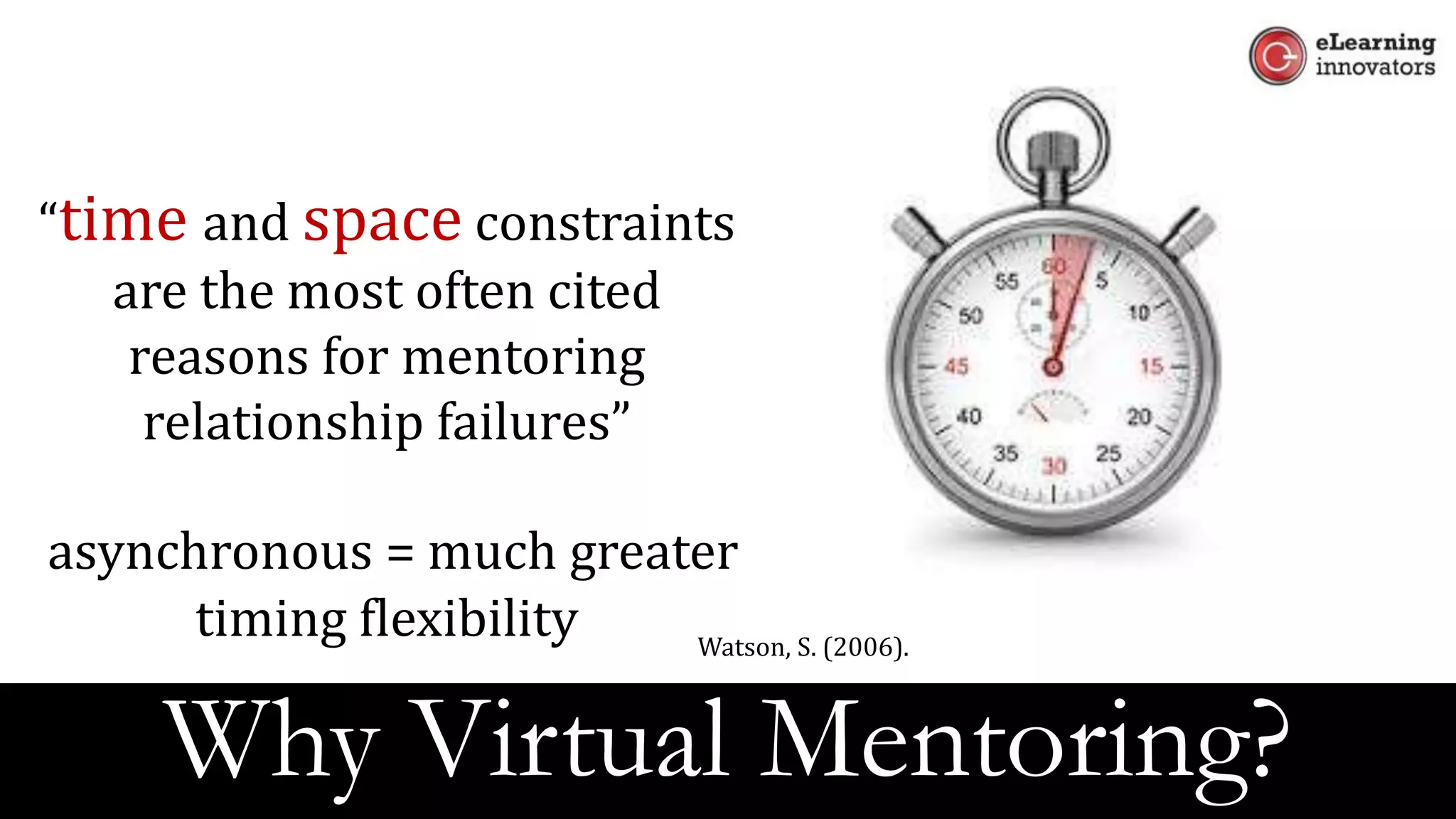
“time and space constraints
are the most often cited
reasons for mentoring
relationship failures”
asynchronous = much greater
timing flexibility
Why Virtual Mentoring?
Watson, S. (2006).
http://www.swc-cfc.gc.ca/initiatives
“88% of entrepreneurs with mentors
survive in business, compared to a 50%
failure rate for those without a mentor.”
“mentoring women entrepreneurs allows
them to develop at a faster pace and improve
business survival rates.”
Why Mentoring?
…as a “result of being mentored, women
participants have increased their awareness
of career opportunities and knowledge of
their fields”
Watson, S. (2006).
Why Mentoring?
“The current speed of change means that
employees need to be trained continuously
in order for companies to avoid the dangers
of being out-thought and out-maneuvered
by competitors.”
Source: Docebo 2014
Why Mentoring?
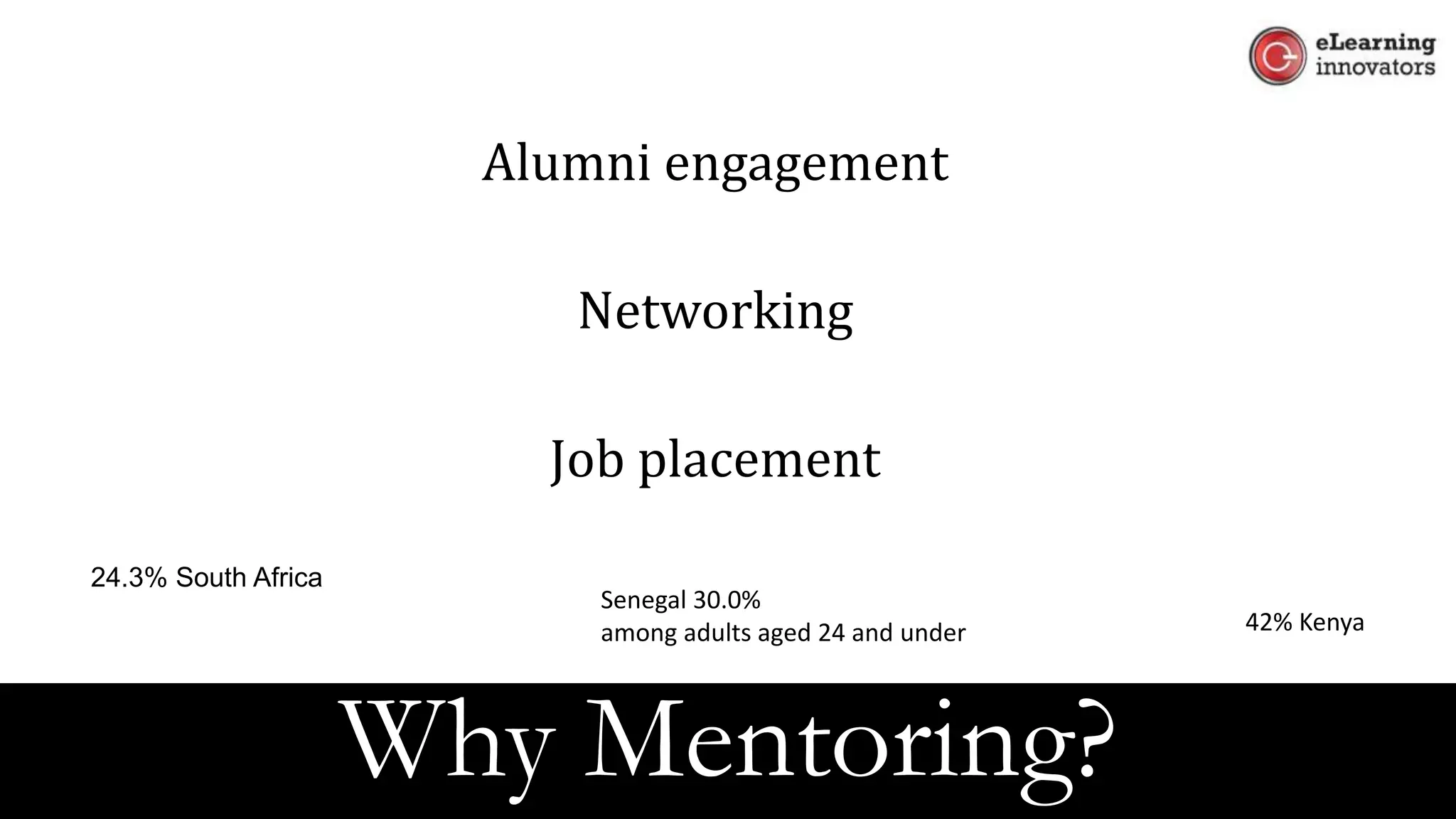
Alumni engagement
Networking
Job placement
Why Mentoring?
24.3% South Africa
42% Kenya
Senegal 30.0%
among adults aged 24 and under
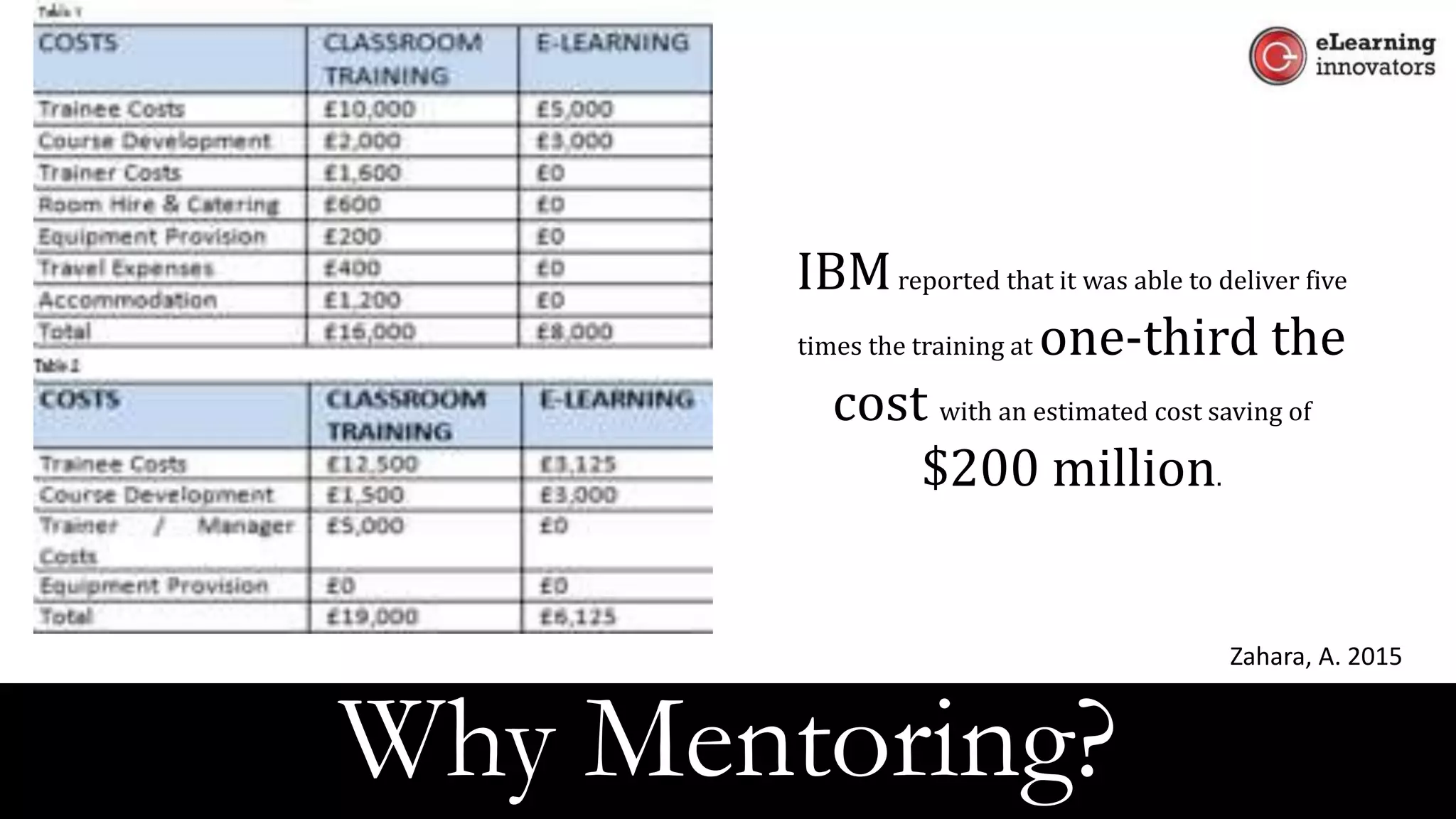
IBMreported that it was able to deliver five
times the training at one-third the
cost with an estimated cost saving of
$200 million.
Why Mentoring?
Zahara, A. 2015
Types of Mentoring
One-on-
One
mentoring
Group
mentoring
Time Format
Participants
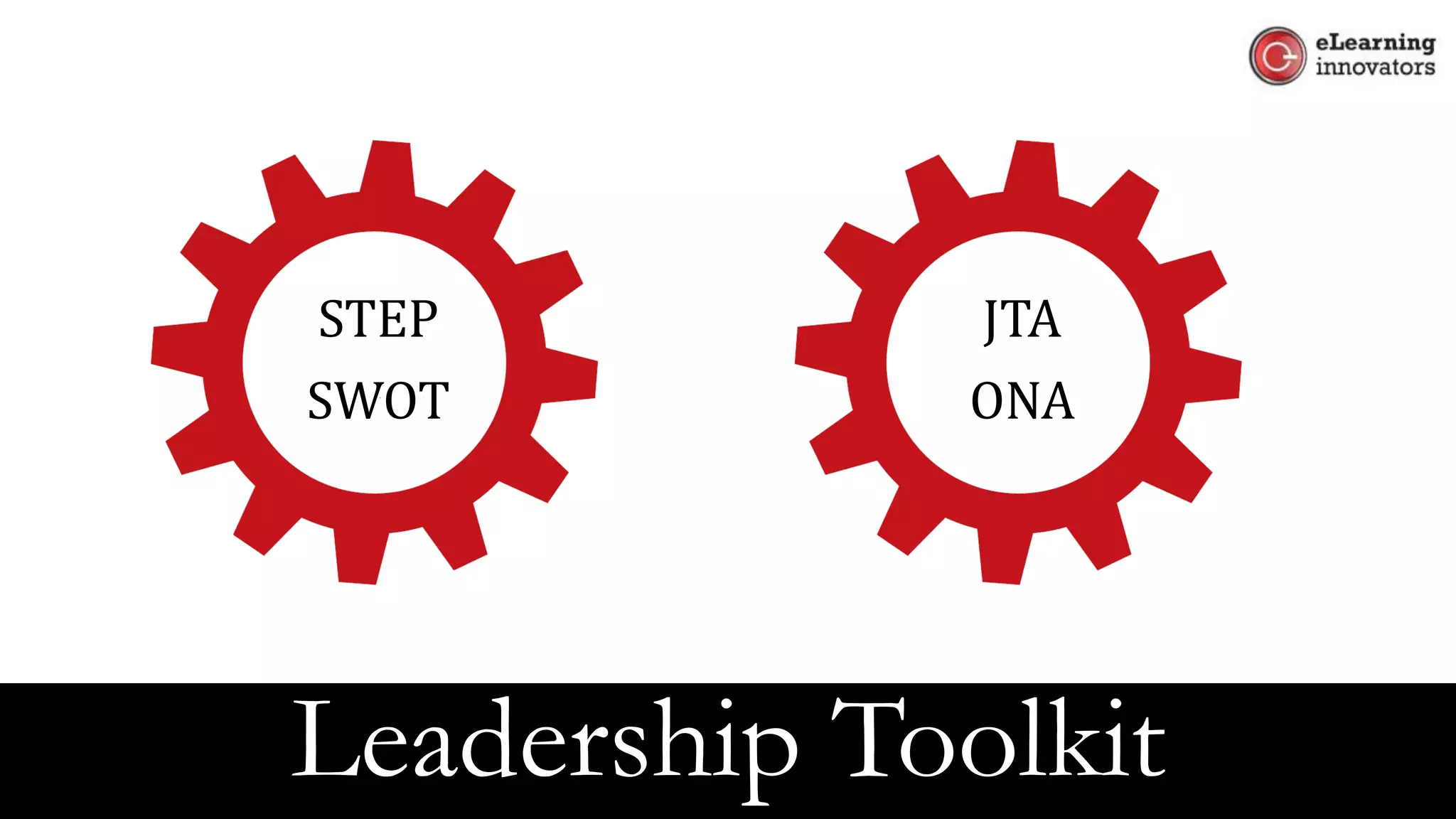
STEP
SWOT
Leadership Toolkit
JTA
ONA
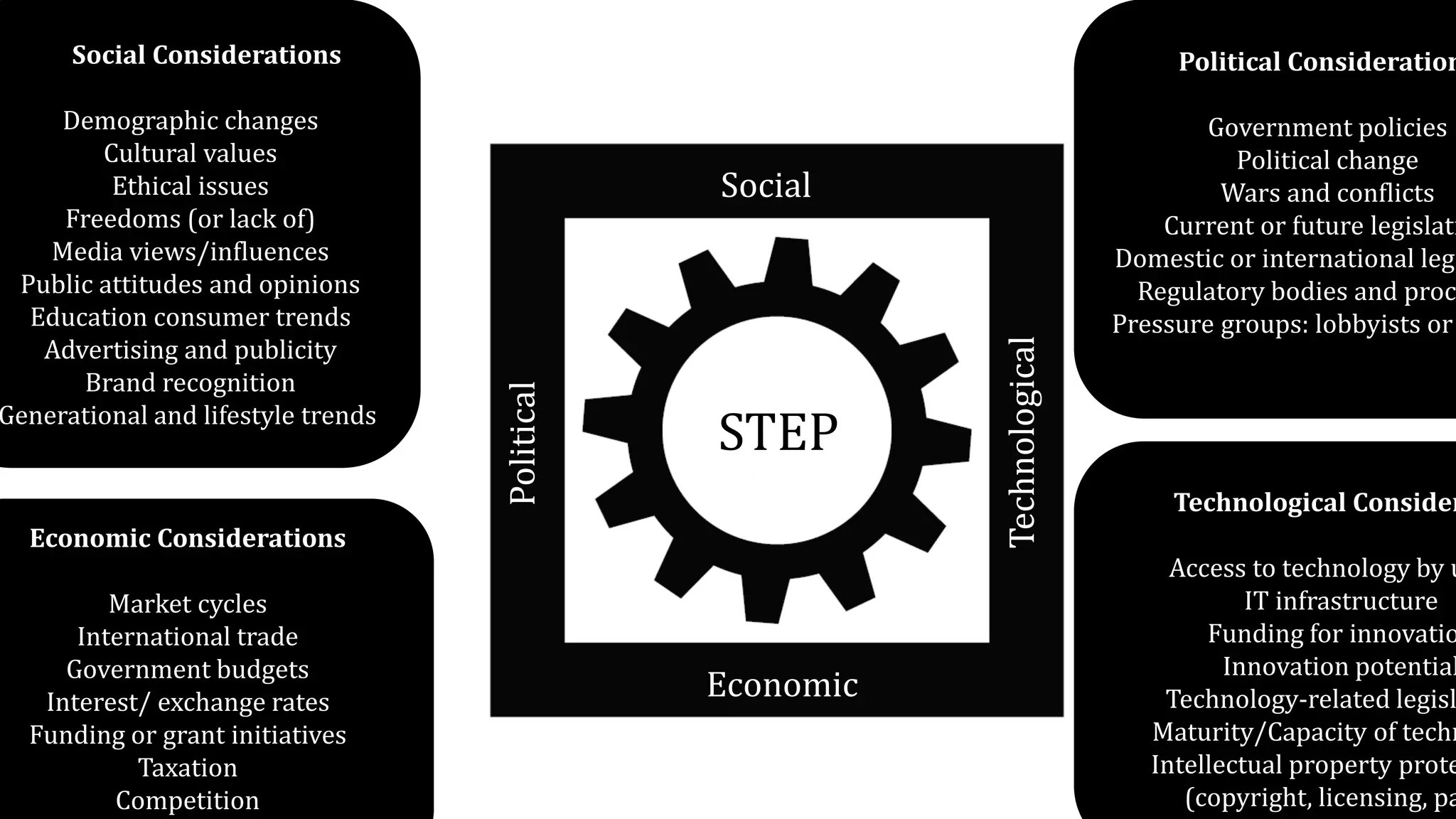
Technological Consider
Access to technology by u
IT infrastructure
Funding for innovatio
Innovation potential
Technology-related legisl
Maturity/Capacity of techn
Intellectual property prote
(copyright, licensing, pa
Political Consideration
Government policies
Political change
Wars and conflicts
Current or future legislati
Domestic or international legi
Regulatory bodies and proc
Pressure groups: lobbyists or
Economic Considerations
Market cycles
International trade
Government budgets
Interest/ exchange rates
Funding or grant initiatives
Taxation
Competition
Social Considerations
Demographic changes
Cultural values
Ethical issues
Freedoms (or lack of)
Media views/influences
Public attitudes and opinions
Education consumer trends
Advertising and publicity
Brand recognition
Generational and lifestyle trends
Social
Technological
Political
Economic
STEP
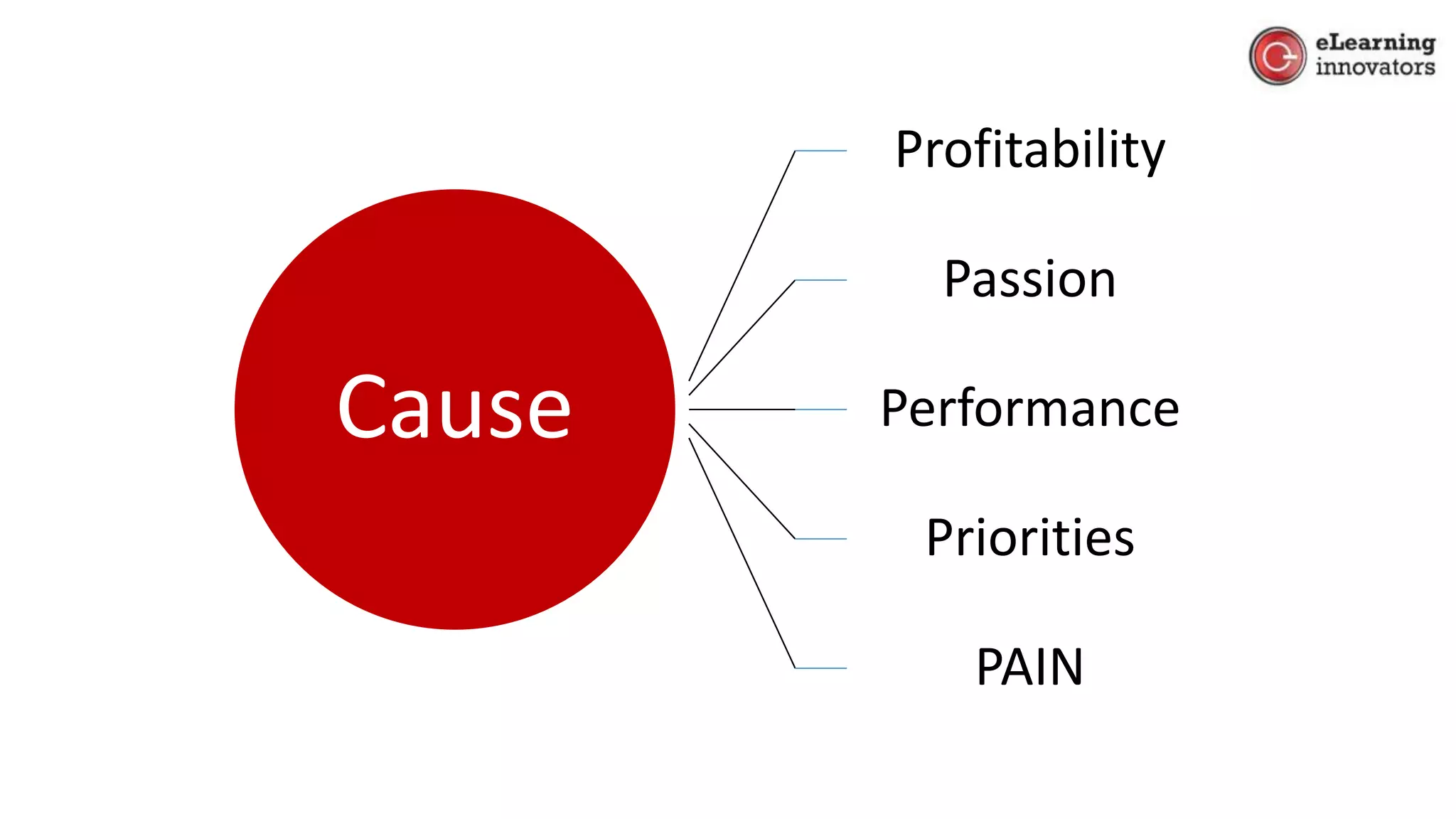
Cause
Profitability
Passion
Performance
Priorities
PAIN
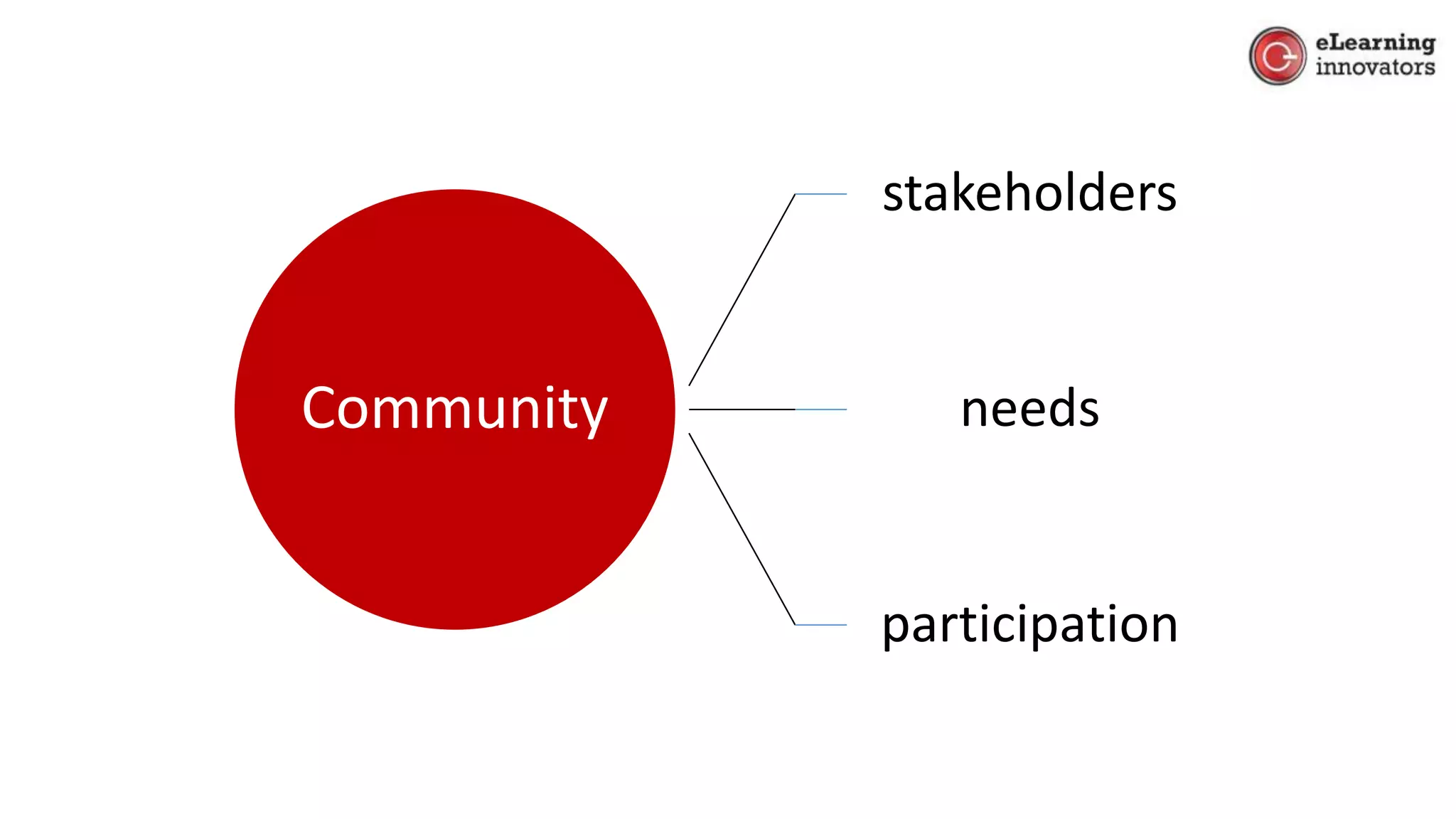
Community
stakeholders
needs
participation
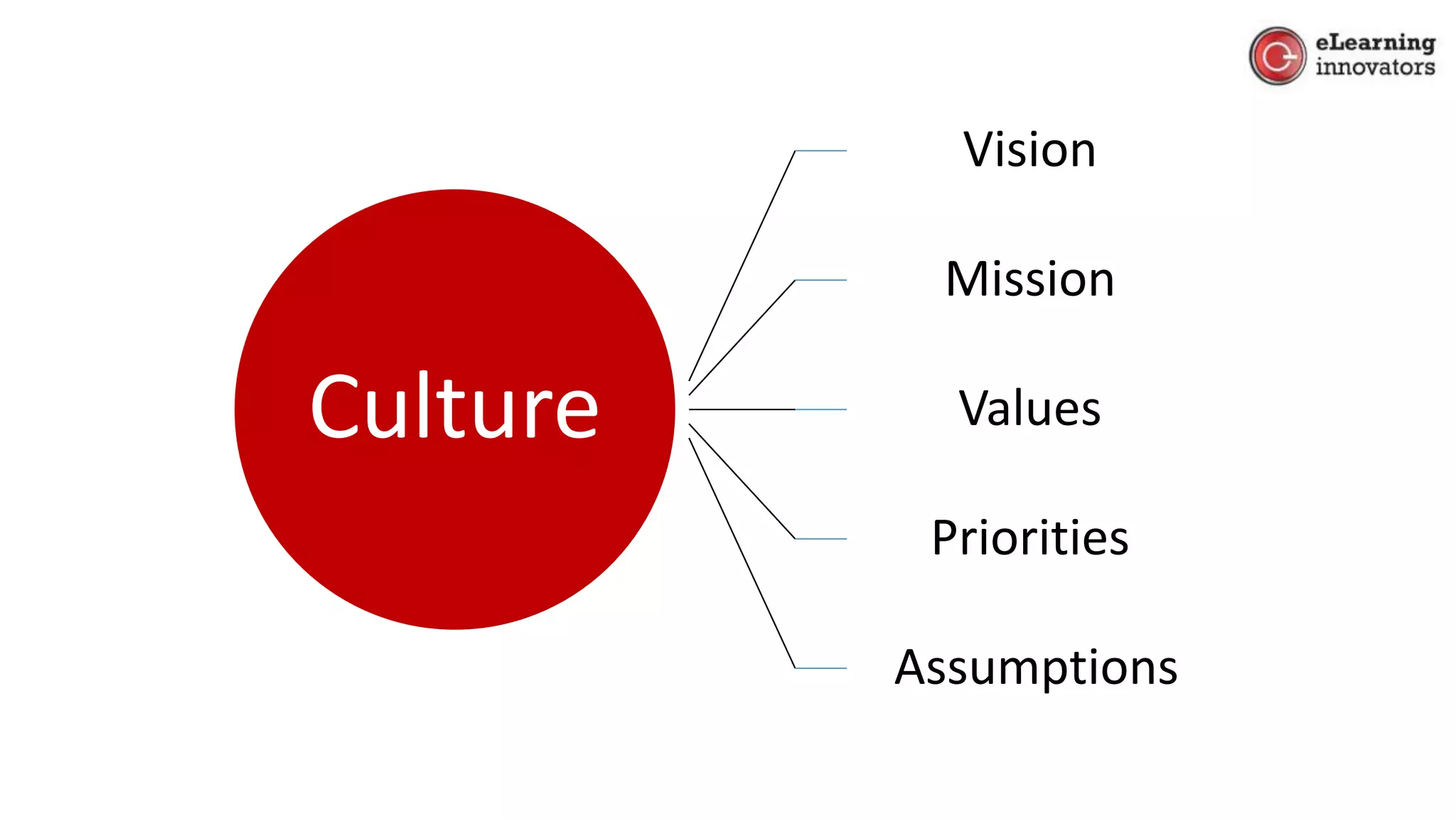
Culture
Vision
Mission
Values
Priorities
Assumptions
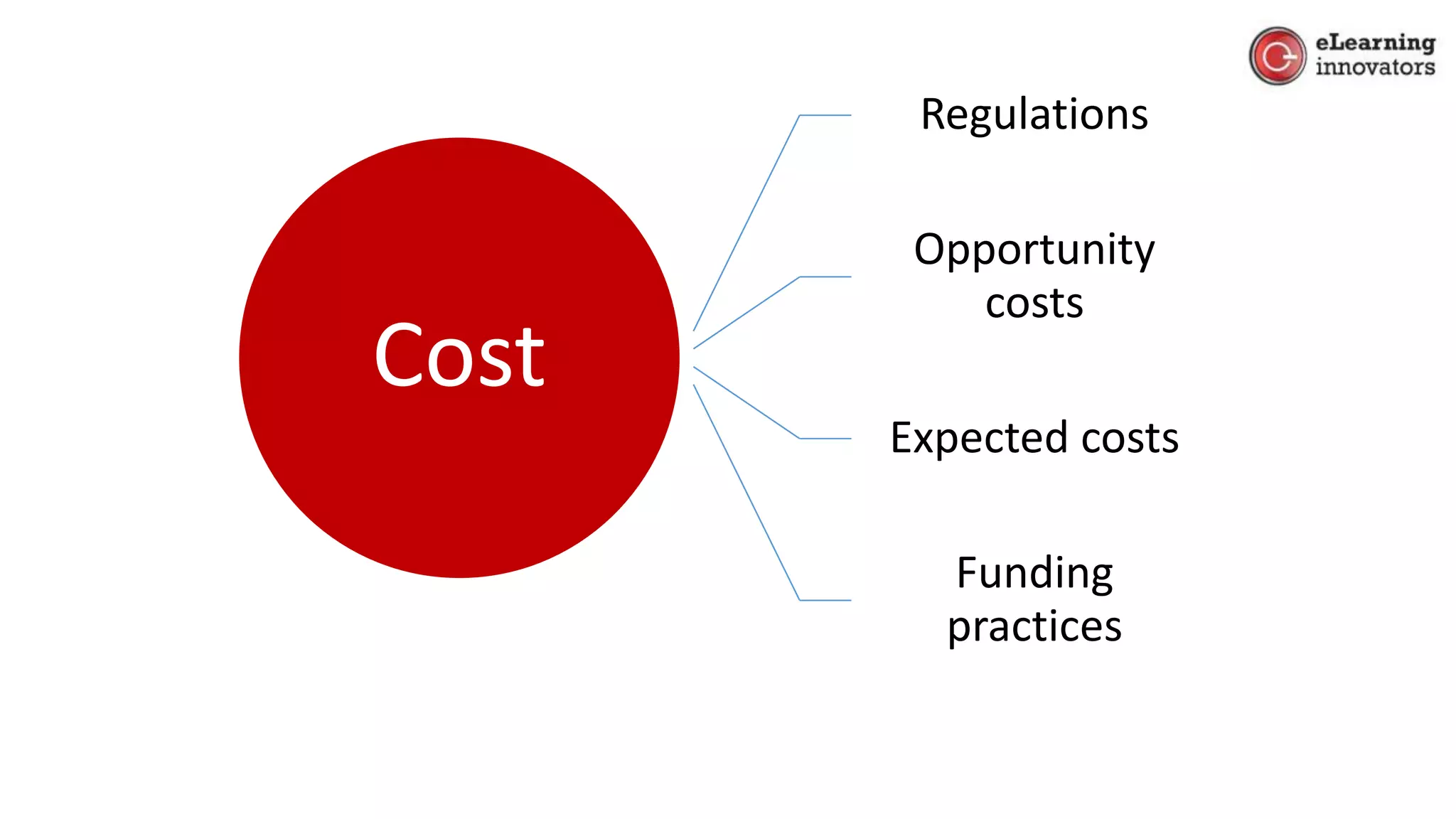
Cost
Regulations
Opportunity
costs
Expected costs
Funding
practices
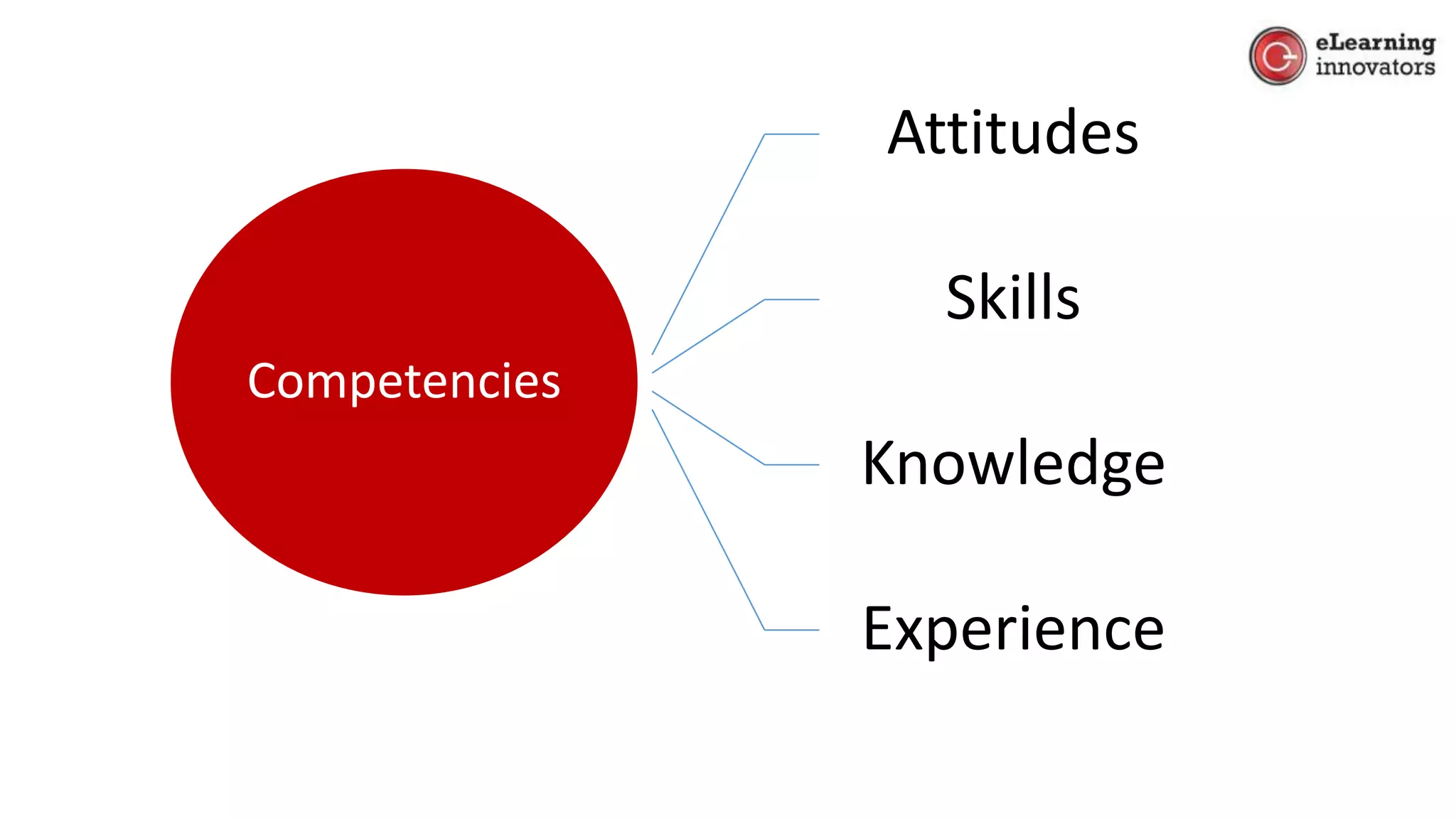
Competencies
Attitudes
Skills
Knowledge
Experience
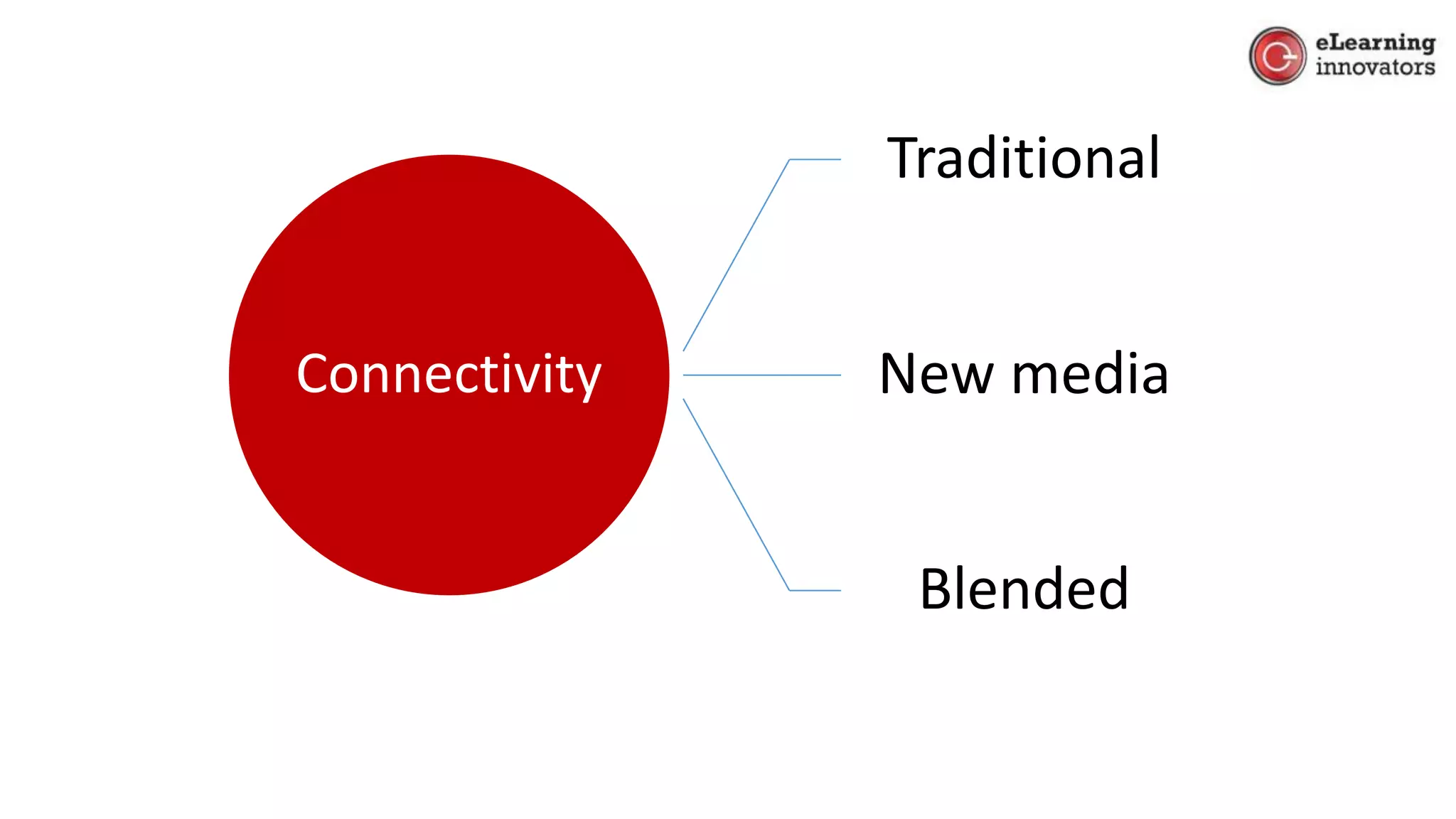
Connectivity
Traditional
New media
Blended
Content
Legacy vs. New
Proprietary vs.
Free / Open
source
Bespoke vs.
Off-the-shelf
SITUATE
Envision
Explore
Expose
Express
Leadership Goals & Actions
Leadership Goals
 Gap identification
 Assumptions
 Situation analysis
 Strategic planning
 Underlying values
MOBILIZE
2.1
Team
Collaborators
Champion(s)
Participants
WHO?
Community
External Mentors
Internal Mentors
Program Staff
Supervisor
Peer Mentor
Mentee
Leadership Toolkit
HOW?
Connectivity Budget
Infrastructure
2.2
Traditional Mentoring formats
Face-to-face meetings
Phone
Mail/Letter writing
eMentoring New Media & Formats
Email
Telephone
Social media
Video-conferencing
Blog-based
Chat (SMS or Web)
Learning Management System
Blended media (combination)
Connectivity & Communication
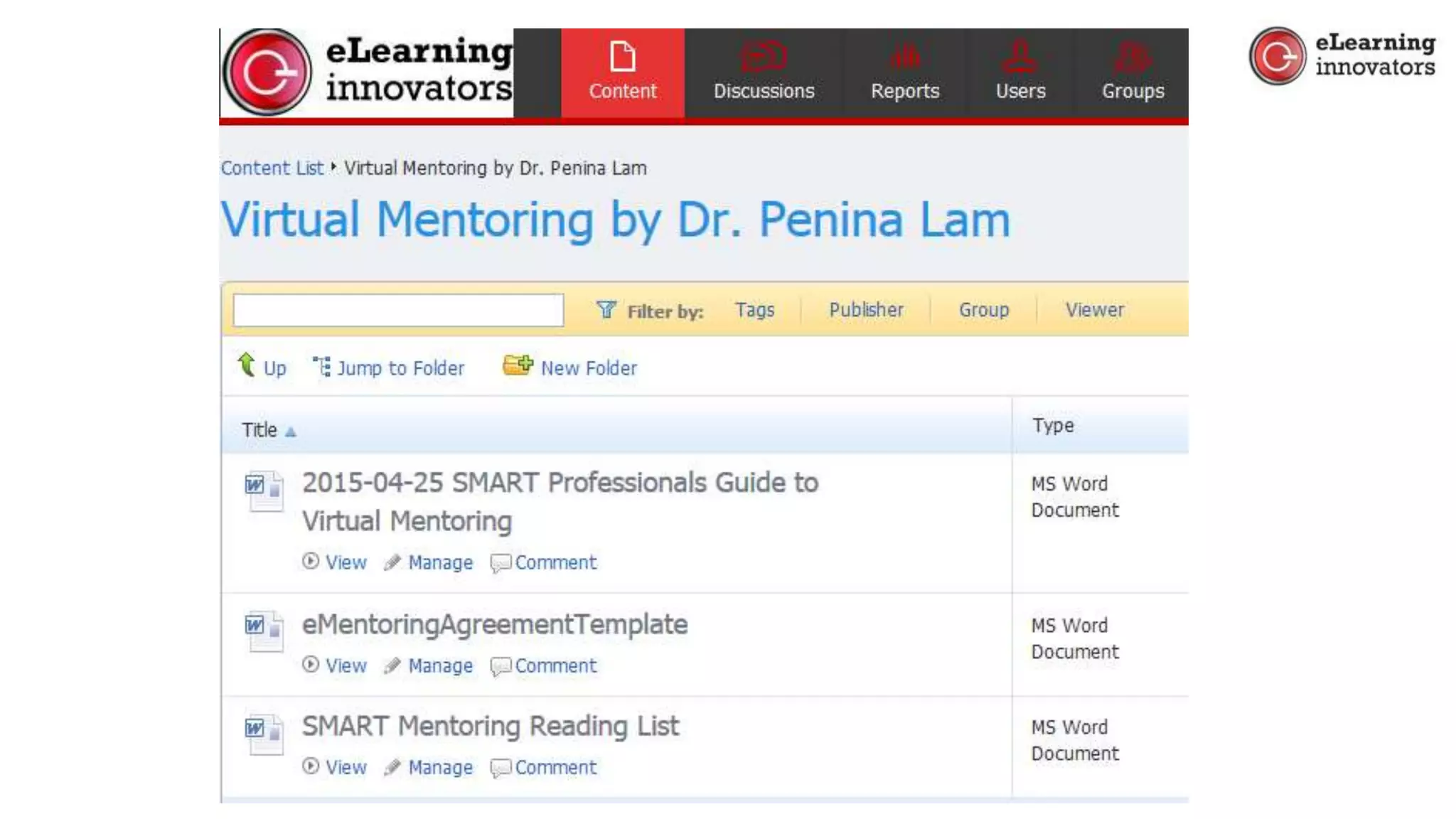
LMS/MMS
recruiting
matching
Communi-
cating
meetings
Content
sharing
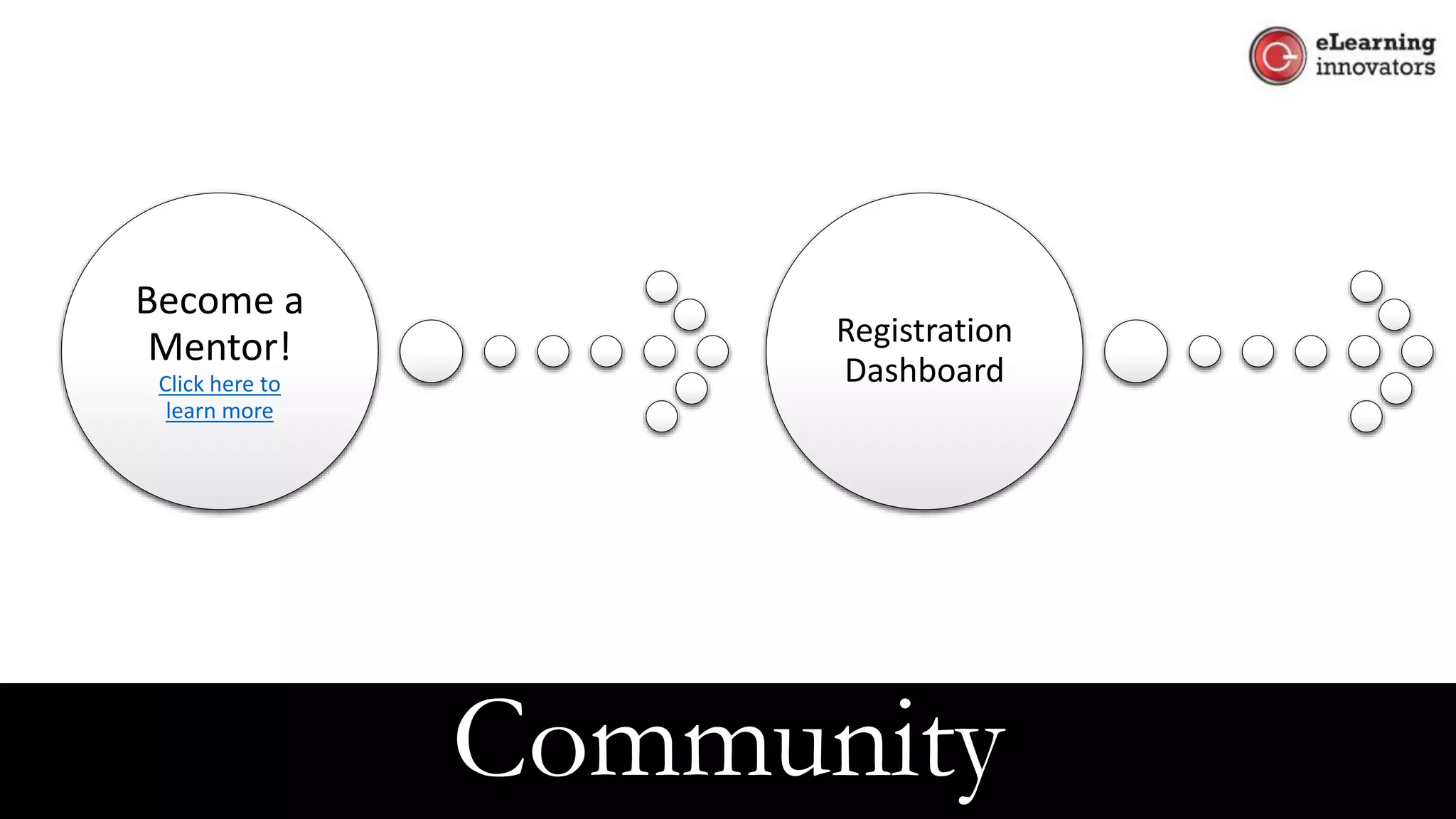
Become a
Mentor!
Click here to
learn more
Registration
Dashboard
Community
Content
WHAT?
Content
Enlist
Excite
Expectations
Engage
MOBILIZE
Leadership Goals & Actions
Leadership Goals
Recruiting participants
obtaining resources
setting expectations
engaging team members
screening
matching
ACTIVATE
Leadership Toolkit
HOW?
Webinars
Webcasts
Mobiles
F2F Meetings
LMS….
Strategies for Success for eMentors
Date: Wed. February 25, 2015
Time: 12:00 p.m. – 12:45 p.m. EST
Location: Virtual
Show in my Time Zone
Webinar Description
This webinar is designed for new mentors as they start their eMentoring relationships. It will provide
you with a fresh ways to engage your mentee(s) virtually, power up your mentor-mentee meetings, and
and engage with your mentee! The Webinar will provide you with best practices for conducting virtual
meetings and using the applications effectively.
Learning Outcomes:
Through this Webinar, you will be able to:
• Use our SMART application to start virtual meetings with your mentee(s)
• Apply engaging strategies that enhance virtual conversations
• Evaluate changes necessary to boost you own meetings
2.3LMS/MMS Essentials
• Communications and Workflows
• Relationship Management
• Data management
• Content management
• Outcome measurement
• Content marketing/showcasing
• Other
3.1
ACTIVATE
Execute
Excel
Experience
Enable
Leadership Goals & Actions
Leadership Goals
 Put action plans in motion
 Be part of the experience
 Manage and Coach
 Support
RE-EVALUATE
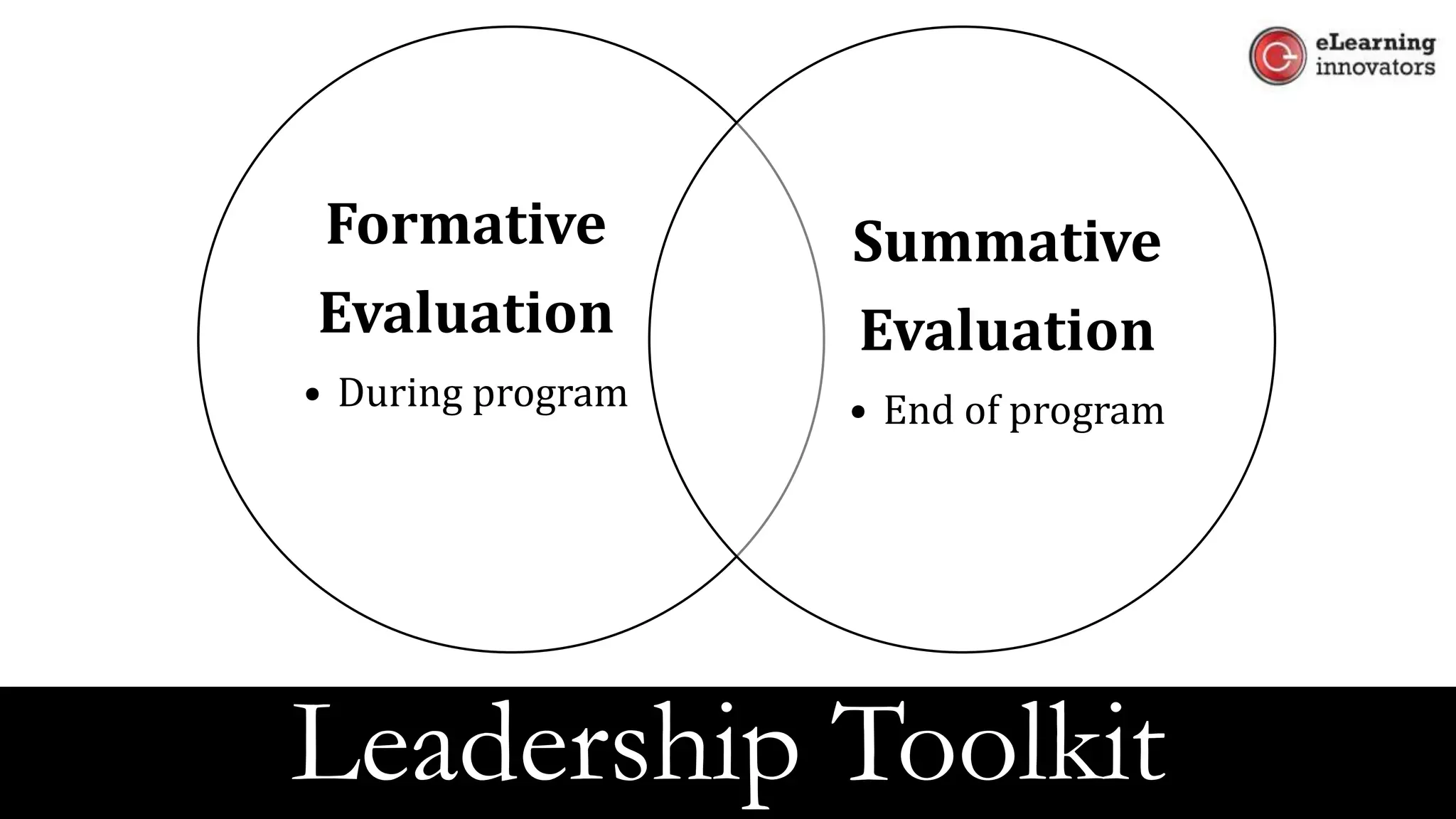
Formative
Evaluation
• During program
Summative
Evaluation
• End of program
Leadership Toolkit
4.1
Which key metrics/KPIs would you track?
 Progress: completion of profiles, Quizzes, Answers,
Scores
 Content: traffic, activity, popular content, slide views,
performance summary, progress,
 People: enrolment, user activity, group activity, active
groups, active users, guestbook responses
 eCommerce: sales history, sales summary, etc.
 Other _____________
Leadership Toolkit
Examine
Evaluate
Exemplify
Eliminate
RE-EVALUATE
Leadership Goals & Actions
Leadership Goals
 Monitor progress
 Review and tracking metrics
 Results-based decisions
 Support for participants
TRANSMIT
Automate
communications
Community
To get the latest updates on eMentoring,
follow us on our social media channels
LinkedIn Group
Facebook
Twitter
Join Our Online
Community!
Community
“Content marketing is a marketing
technique of creating and distributing
valuable, relevant and consistent content
to attract and acquire a clearly defined
audience – with the objective of driving
profitable customer action.”
~ Content Marketing Institute, 2014
Content
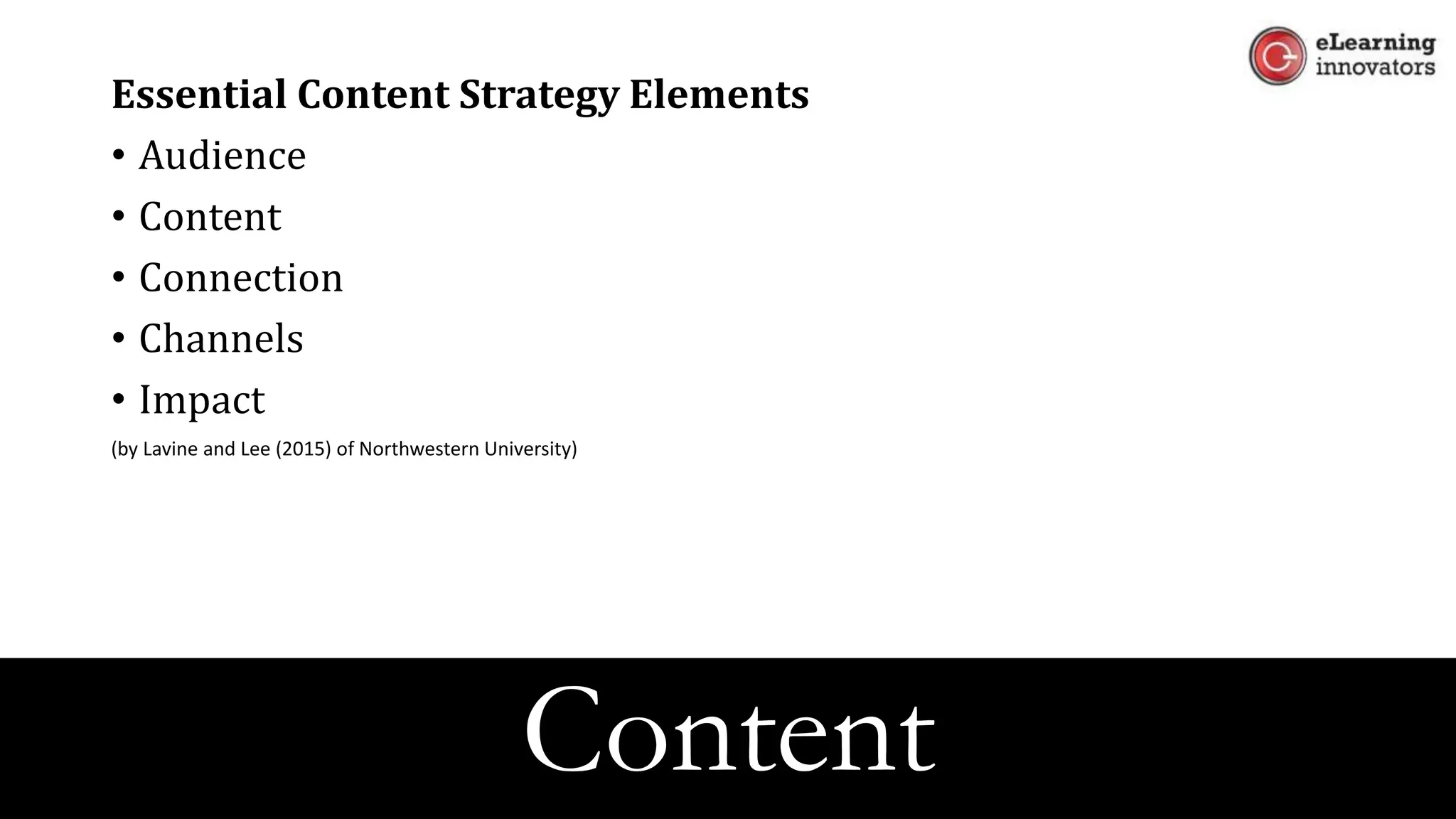
Essential Content Strategy Elements
• Audience
• Content
• Connection
• Channels
• Impact
(by Lavine and Lee (2015) of Northwestern University)
Content
5.1
“Content strategy is the development,
management and distribution of stories
that connect audiences across all
channels, driving engagement.”
~ Lavine & Lee, Northwestern University, 2015.
Read, Watch,
Play
Think
Feel
Do Something!
Content
Enlighten
Evangelize
Extend
Elevate
TRANSMIT
Leadership Actions
 Enlighten others about eMentoring
 Energize: Celebrate Success, thank,
reward
 Evangelize! Talk about it
 Elevate the practice of mentorship
Wrap Up!
Strategic
Allan Zahara, 2015
Community & Cause
Culture & Cost
Connectivity &
Communications
Competencies & Conditions
Content Core
The SMART Principles
Situate Mobilize
Re-
evaluate
Transmit
Activate
The SMART Processes
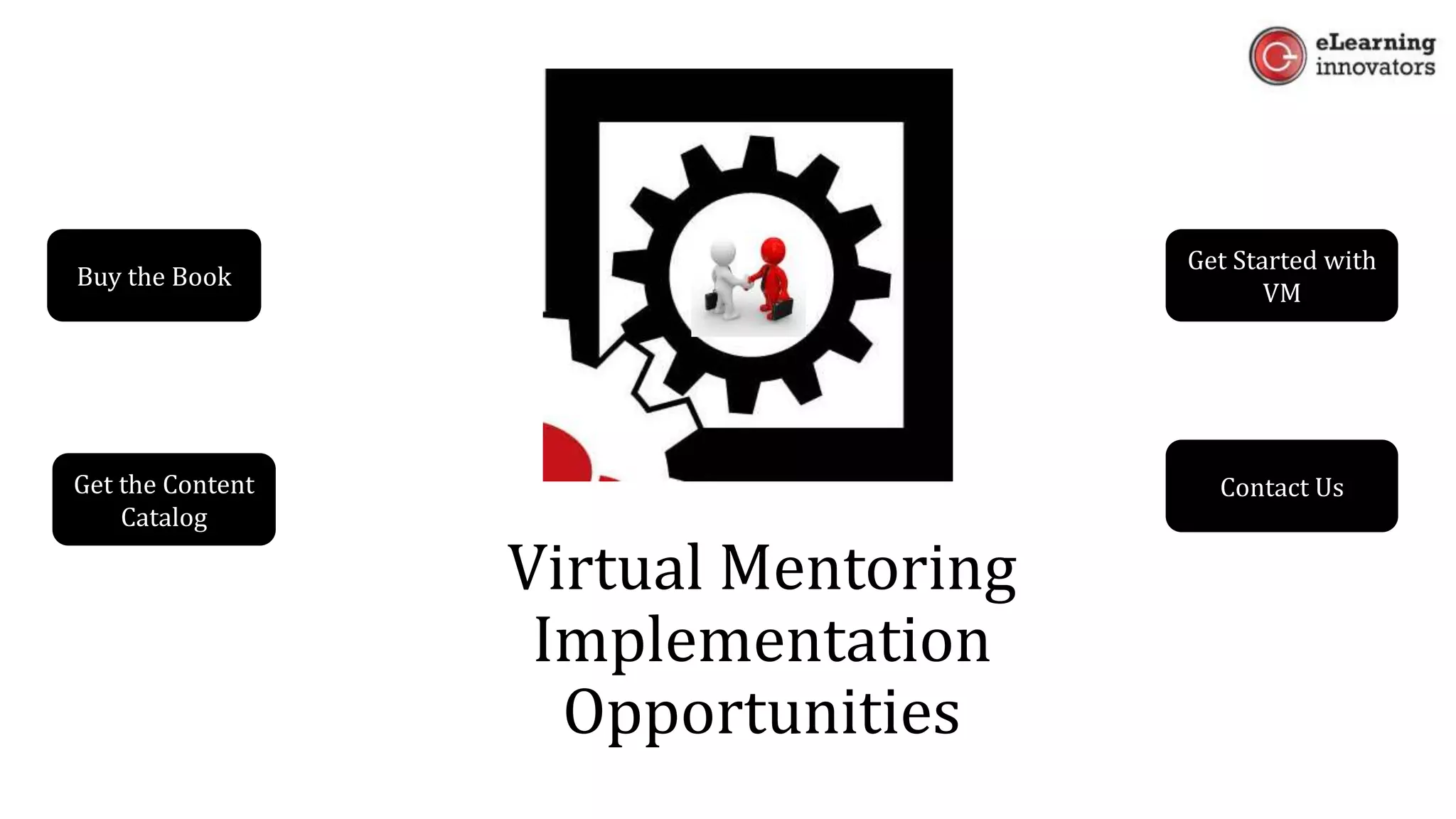
Virtual Mentoring
Implementation
Opportunities
Buy the Book
Get the Content
Catalog
Get Started with
VM
Contact Us
Life is Calling…How far will you go?
Peace Corps
Go light your
world!
Kathy Trocolli
Be a Gift to the
World!
K. R. Ravindran
Rotary 2015-2016
President
Image source: Pixabay.com
Thank You!
Stay in Touch!
Dr. Penina Lam
CEO, eLearning Innovators, Inc.
penina@elearninginnovators.ca
www.elearninginnovators.ca
www.elearning-innovations.com
Twitter: @peninalam
LinkedIn: /peninalam

SMART by Design! Leadership Essentials for Virtual Mentorship - AVU workshop dr penina lam

Editor's Notes

  • #2 AVU Conference - Crown Plaza Hotel, Nairobi, Kenya Format: Workshop Target audience: Senior leaders, Educational Developers, and program administrators SMART VIRTUAL MENTORING: Getting Started with an eMentoring Management System Virtual meetings have taken root as the go-to option for social and professional meetings regardless of the topic of discussion. Mentors and mentees seeking to connect across distances can now take advantage of the growing virtual meeting applications to establish to enhance their relationships. While face-to-face chats over a cup of coffee are still common, engaging in mentorship (thank goodness) is no longer limited by one’s location. Distance, once thought a barrier to effective communication with loved ones, mentors and acquaintances, is now overcome by a host of Web-based and mobile applications, all of which have opened new and exciting avenues to finding mentors, developing relationships, and engaging with networks. HOUSEKEEPING Greetings, location of bathrooms, Materials on the table Translators I welcome questions throughout I will need your participation throughout 15 min. Go round room – each one to self-introduce - name, institution
  • #4 Introduction: This workshop was designed to enhance the practice of mentoring It’s based on my own experiences designing and running mentoring programs and also learning from research and best practice of what others are doing internationally that relates to leveraging the value that mentoring adds to the teaching-learning process. Audience Learning Outcomes By attending this workshop, the audience will be able to: Evaluate opportunities for integrating eMentoring to enrich curriculum relevance Apply the SMART design when launching eMentoring programs Leverage existing LMS infrastructure to facilitate eMentoring Establish opportunities for employer-university collaboration for eMentoring Choose to integrate virtual mentoring in their curricular
  • #6 TIME: 10 MIN. WORKSHEET 1.1 Name institution Your experience as a mentor/mentee/or both HOW you’ve been involved - 30 seconds each Add tally on CHARTS - labelled 3, 4, 5 charts
  • #7 TIME: 10 MIN WORKSHEET 1.1 2 CHARTS STEP 1: Get up and go to the charts around the room and write one word that comes to mind when you hear the word mentor or mentee DEBRIEF:
  • #8  kay d and hinds R, 2009 a practical guide to mentoring
  • #9 These are what we refer to as the mentoring values – at the core of mentorship are PEOPLE
  • #10 Debrief from last Exercise –Talent Development Approaches Multiple ways of learning Accessibility to learning Learning styles Talent Development Approaches Mentoring Coaching Training On-the-Job training Self-study Experience
  • #12 Who Needs Mentoring?
  • #13 The 5 SMART principles (foundations): Community Connectivity Competencies Culture Content The 5 SMART processes (phases): Situate Mobilize Activate Re-evaluate Transmit COMMUNITY & CAUSE Who makes up the core group or community that will participate and why should they engage? CONNECTIVITY & COMMUNICATIONS How will mentors and mentees communicate with program staff or each other and what are the essential communication channels and media to be used? Consider using SMART eMentoring Management Systems (MMS) to power your eMentoring Communications and Workflows, Relationship Management, data and content management, Outcome measurement and to showcase your work. COMPETENCIES & CONDITIONS: What are the digital competencies of the prospective participants? Establish clearly the learning needs and competency gaps (attitudes, skills or knowledge) and align these to the learning materials and mentoring conversations. Keep in mind any other conditions related to competencies for example, regarding quality assurance, professional standards, examination requirements, flow of work, union requirements, and workload implications. These factors may have an impact on how the competency gaps can be closed effectively. CULTURE & COST Understanding current situation should take into account organisational and societal culture, both of which influence change in the organisation. Take into account formal funding structures and regulations that must be met and resource allocation. CONTENT CORE Like any other form of learning, content is at the core of any mentoring initiative. While most content is generated during the mentoring conversations (mentor-mentee interactions), there is core content that is necessary to guide them. the specific needs of an audience that guide the content (training topics) can be assessed and the content can then be designed and made available via selected tools such as the SMART eMentoring Management System or your very own LMS.
  • #14 WORKSHEET 1.1 QUESTION: 4 What is the top 1 reason for your organization would be interested in eMentorship?
  • #15 Challenges of VM voiced concern with the procedure for obtaining mentors, timely responses from some mentors and the degree to which their questions were addressed in some cases. time and space constraints are the most often cited reasons for mentoring relationship failures In fact, according to Noe (1988), time and space constraints are the most often cited reasons for mentoring relationship failures. Because electronic mentoring is asynchronous, it allows much greater timing flexibility. It is also place independent, meaning that pre-service and practicing teachers could participate in a relationship regardless of geographical location. This would be especially beneficial to pre-service teachers in relatively rural or isolated areas who do not have access to a large pool of practicing teachers (Harrington, 1999). It could also expose pre-service teachers to a potentially larger number of practicing teachers with expertise in their grade levels/subject areas. Another advantage of electronic mentoring over traditional mentoring according to Single and Muller (1999) is that “communicating using email allows for the construction of thoughtfully written messages without the pressure of immediately responding, such as in communicating orally” (p. 237). Watson, S. (2006). Virtual Mentoring in Higher Education: Teacher Education and Cyber-Connections International Journal of Teaching and Learning in Higher Education 18:3, 168-179 http://www.isetl.org/ijtlhe/ Watson, S. (2006). Virtual Mentoring in Higher Education: Teacher Education and Cyber-Connections International Journal of Teaching and Learning in Higher Education 18:3, 168-179 http://www.isetl.org/ijtlhe/ http://www.isetl.org/ijtlhe/pdf/IJTLHE18(3).pdf#page=17
  • #16 “…having a mentor can be good for your career and the benefits of mentoring are well known. Studies show that mentoring women entrepreneurs allows them to develop at a faster pace and improve business survival rates. In fact, research suggests that 88% of entrepreneurs with mentors survive in business, compared to a 50% failure rate for those without a mentor.  http://www.swc-cfc.gc.ca/initiatives/swo-mesr/index-en.html
  • #17 BENEFITS result of being mentored, women participants have increased their awareness of career opportunities and knowledge of their fields Watson, S. (2006). Virtual Mentoring in Higher Education: Teacher Education and Cyber-Connections International Journal of Teaching and Learning in Higher Education 18:3, 168-179 http://www.isetl.org/ijtlhe/
  • #18 “These training initiatives need to be monitored and managed via a consistent and reliable Learning Management System. The worldwide market for Self-Paced E-Learning is $51.5 billion”
  • #19 42% Kenya
  • #20 How much does it cost? Zahara, A. 2015 IBM reported that it was able to deliver five times the training at one-third the cost with an estimated cost saving of $200 million.
  • #21 TYPE OF MENTORING There are different types depending on need of the audience, organizational priiorities One-on-one Group Under each of these categories there is are a variety of options LEADERSHIP ESSENTIAL TIP: Think what type would best fit your institution Why?
  • #22 PAGE 3 – 5 of handout Will not complete the SWOT or STEP analysis but they should be familiar with these tools. Goal is to have a very clear rationale for why VM is good for your stakeholders, why invest in it? Leadership actions:
  • #31 Envision Explore Expose Express
  • #33 Budget Infrastructure Content
  • #34 PAGE 6-7 of handout Discuss the demographic considerations Who is on your team? Who will champion the cause? Who will mentor or be mentored?
  • #36 http://www.swc-cfc.gc.ca/initiatives/swo-mesr/index-en.html Leadership Lesson: need to champion the cause
  • #37 WORKSHEET 2.2 PAGE: 8-9 of handouts TOOL KIT: PRINCIPLE: Connectivity & Media considerations – Task discuss with your partner DEBRIEF – Accessiblity of the tools to the users Application: Free or proprietary infrastructure is key - mobile Licencing
  • #38 LEADERSHIP ESSENTIAL TIP - MEDIA Think about what type of VM would best fit your situation and why
  • #39 The app-based software based on the SMART Design may include the following functionalities and focus on eMentoring tools, communications, collaboration tools, and content.   Link/database of mentor-mentee profiles e.g. via LinkedIn Match mentors to mentees (across a range of specific preferences) Engage mentors and mentees Track mentor-mentee engagement/meetings. Allow mentor-mentee meetings to use video-chats, link to Social media sites e.g. YouTube, Twitter, Facebook, LinkedIn or other. Allow participants to post and get feedback on the “subject” that matters to them Allow students to network with alumni and find jobs, network, etc. Allow learning opportunities across a variety of content, customized to audience and client needs Functionalities A mobile-friendly layout of a new/ existing website with responsive stylesheet A mobile app that compliments a companion website. Brandable “sites” or apps  
  • #40 Consider how you will recruit mentors and mentees - the core members of your community This could appear on various media channels most frequented by the target audience QUESTION: WHAT ARE SOME OF THE CHANNELS YOU’D USE WITHIN YOUR INSITUTTION TO RECRUIT MENTORS?
  • #41 Consider how you will OBTAIN content – remember in phase one you did a high level analysis of the content needed to match the competencies. Now with your team in place, you’ll need to design the content and develop it, OR if it’s legacy/existing content, you may use “as is” or repurpose it to fit the new mentoring purpose. In my past experiene, most of our team members already had content designed, they simply repurposed it to fit a diverse audience of faculty and HQPS. QUESTION: WHAT ARE SOME OF THE CHANNELS YOU’D USE WITHIN YOUR INSITUTTION TO OBTAIN CONTENT?
  • #44 WORKSHEET 3.1 PAGE: 10 of handouts TOOL KIT: action plan PRINCIPLE: Connectivity & Media considerations – Task discuss with your partner DEBRIEF – Accessiblity of the tools to the users Application: Free or proprietary infrastructure is key - mobile Licencing
  • #49 Execute Enablers Excel Experience
  • #54 Examine Evaluate Exemplify Eliminate
  • #61 Multiple intelligences Diverse audience with varying learning styles Diverse media channels
  • #62 Elevate Enlighten Evangelize Extend
  • #66 The 5 SMART principles (foundations): Community Connectivity Competencies Culture Content The 5 SMART processes (phases): Situate Mobilize Activate Re-evaluate Transmit COMMUNITY & CAUSE Who makes up the core group or community that will participate and why should they engage? CONNECTIVITY & COMMUNICATIONS How will mentors and mentees communicate with program staff or each other and what are the essential communication channels and media to be used? Consider using SMART eMentoring Management Systems (MMS) to power your eMentoring Communications and Workflows, Relationship Management, data and content management, Outcome measurement and to showcase your work. COMPETENCIES & CONDITIONS: What are the digital competencies of the prospective participants? Establish clearly the learning needs and competency gaps (attitudes, skills or knowledge) and align these to the learning materials and mentoring conversations. Keep in mind any other conditions related to competencies for example, regarding quality assurance, professional standards, examination requirements, flow of work, union requirements, and workload implications. These factors may have an impact on how the competency gaps can be closed effectively. CULTURE & COST Understanding current situation should take into account organisational and societal culture, both of which influence change in the organisation. Take into account formal funding structures and regulations that must be met and resource allocation. CONTENT CORE Like any other form of learning, content is at the core of any mentoring initiative. While most content is generated during the mentoring conversations (mentor-mentee interactions), there is core content that is necessary to guide them. the specific needs of an audience that guide the content (training topics) can be assessed and the content can then be designed and made available via selected tools such as the SMART eMentoring Management System or your very own LMS.
  • #70 Pixabay.com
  • #71 Pixabay.com