Small scale wind energy W. Hulshorst Jan. 2009
Agenda Types of small scale wind energy systems  2) How to estimate the energy output 3) Aspects on the location 4) Case study with RETscreen
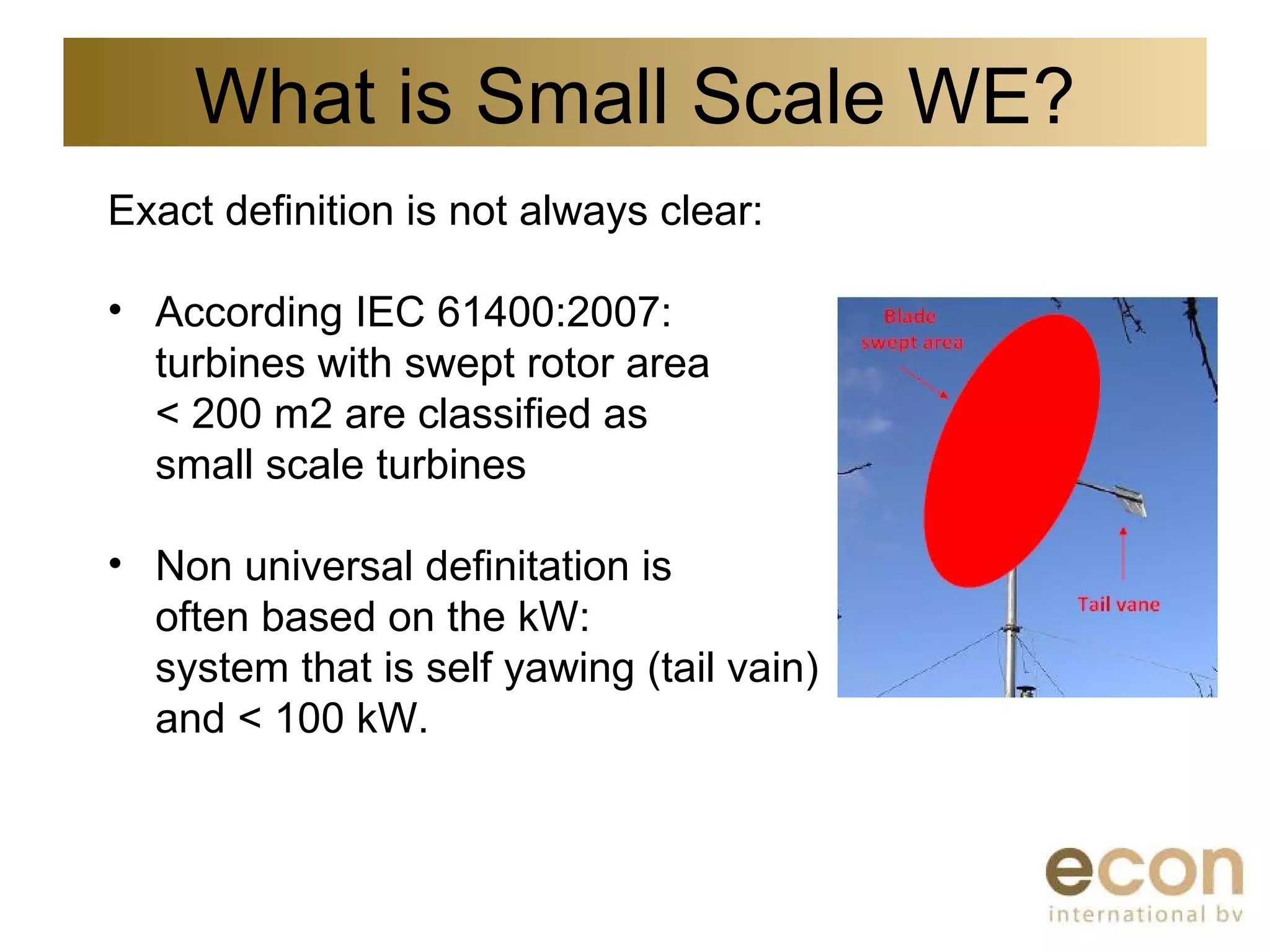
What is Small Scale WE? Exact definition is not always clear: According IEC 61400:2007: turbines with swept rotor area < 200 m2 are classified as small scale turbines Non universal definitation is often based on the kW: system that is self yawing (tail vain) and < 100 kW.
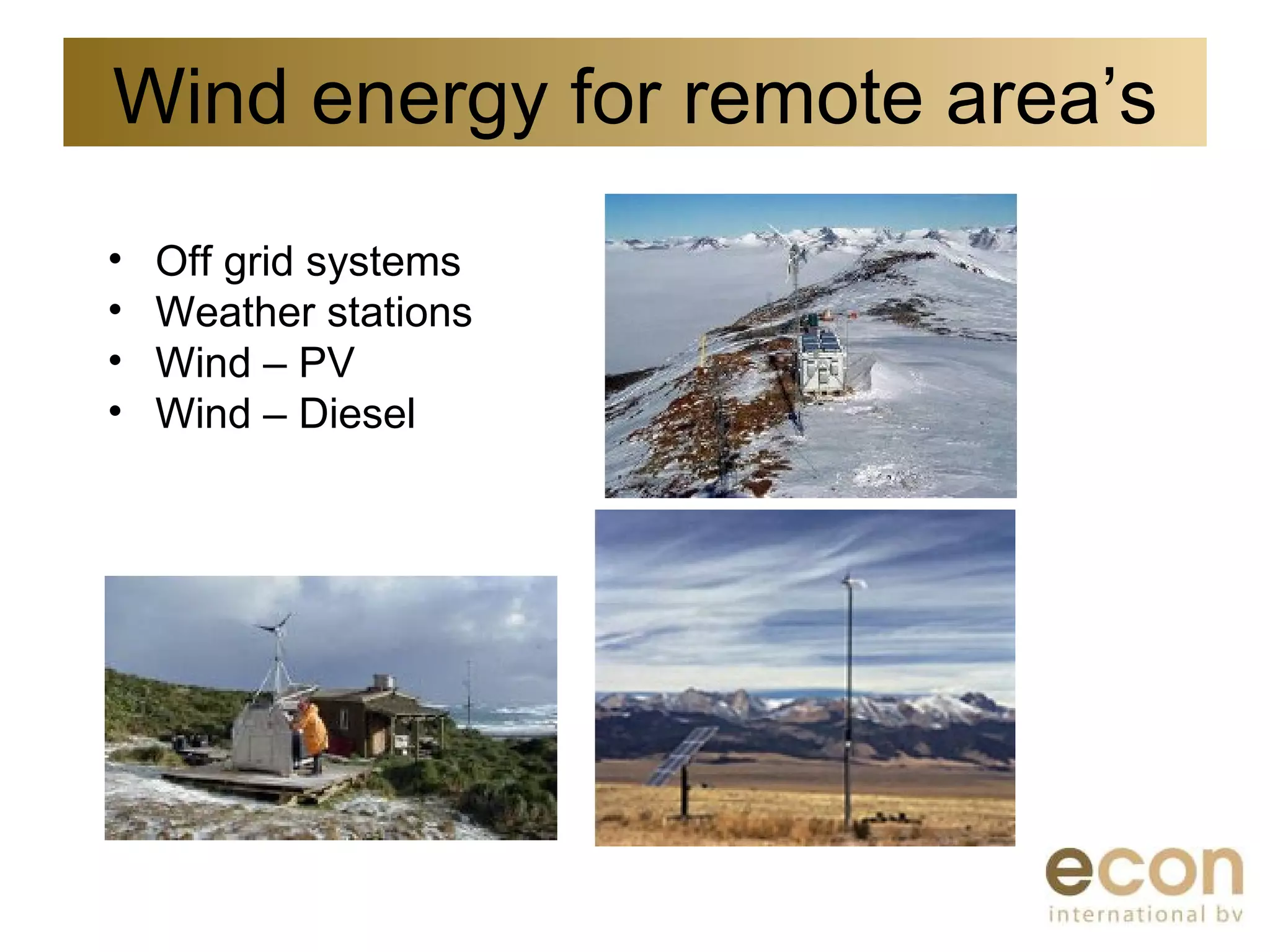
Wind energy for remote area’s Off grid systems Weather stations Wind – PV  Wind – Diesel
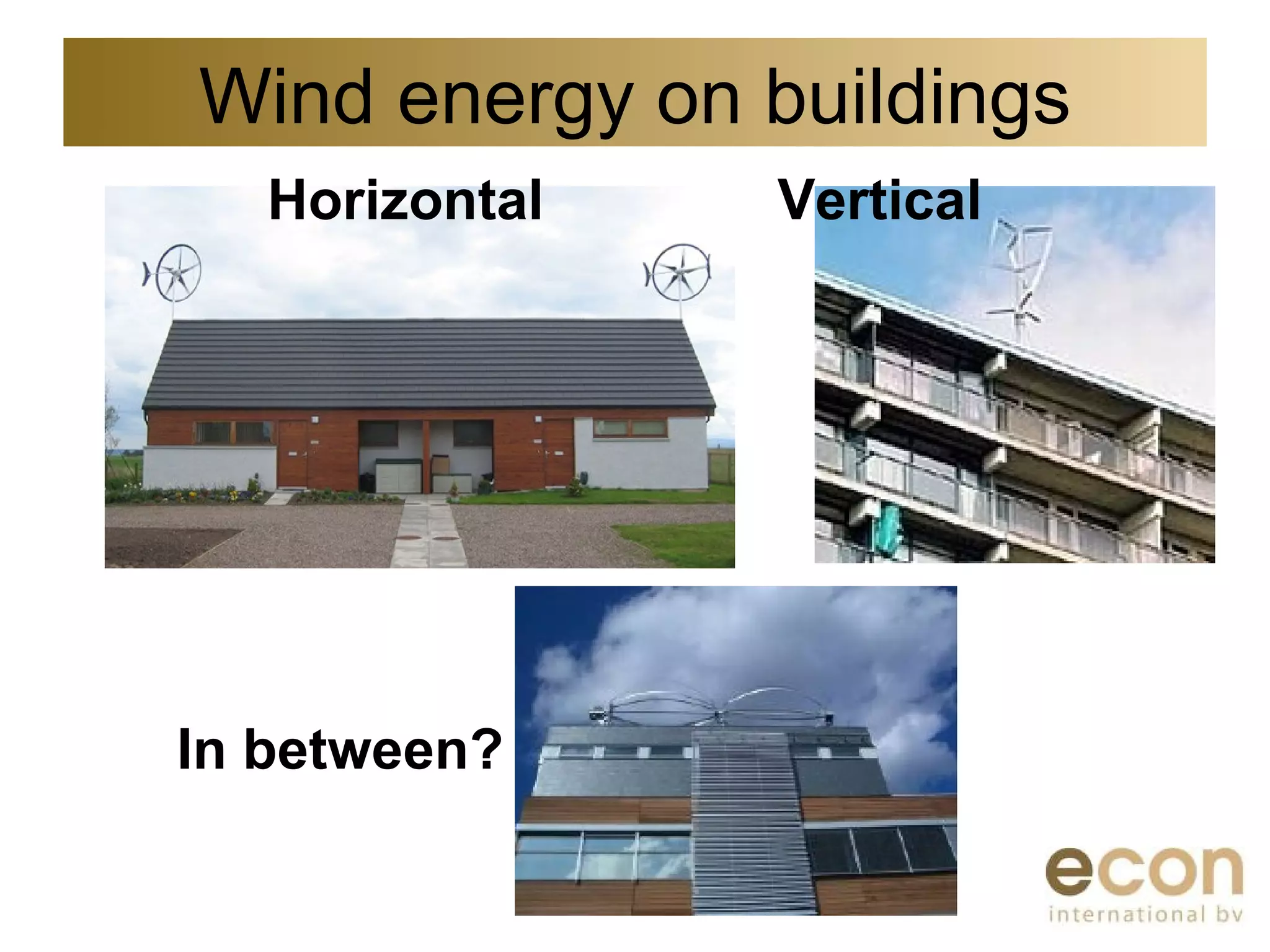
Wind energy on buildings Horizontal Vertical In between?
But also integrated
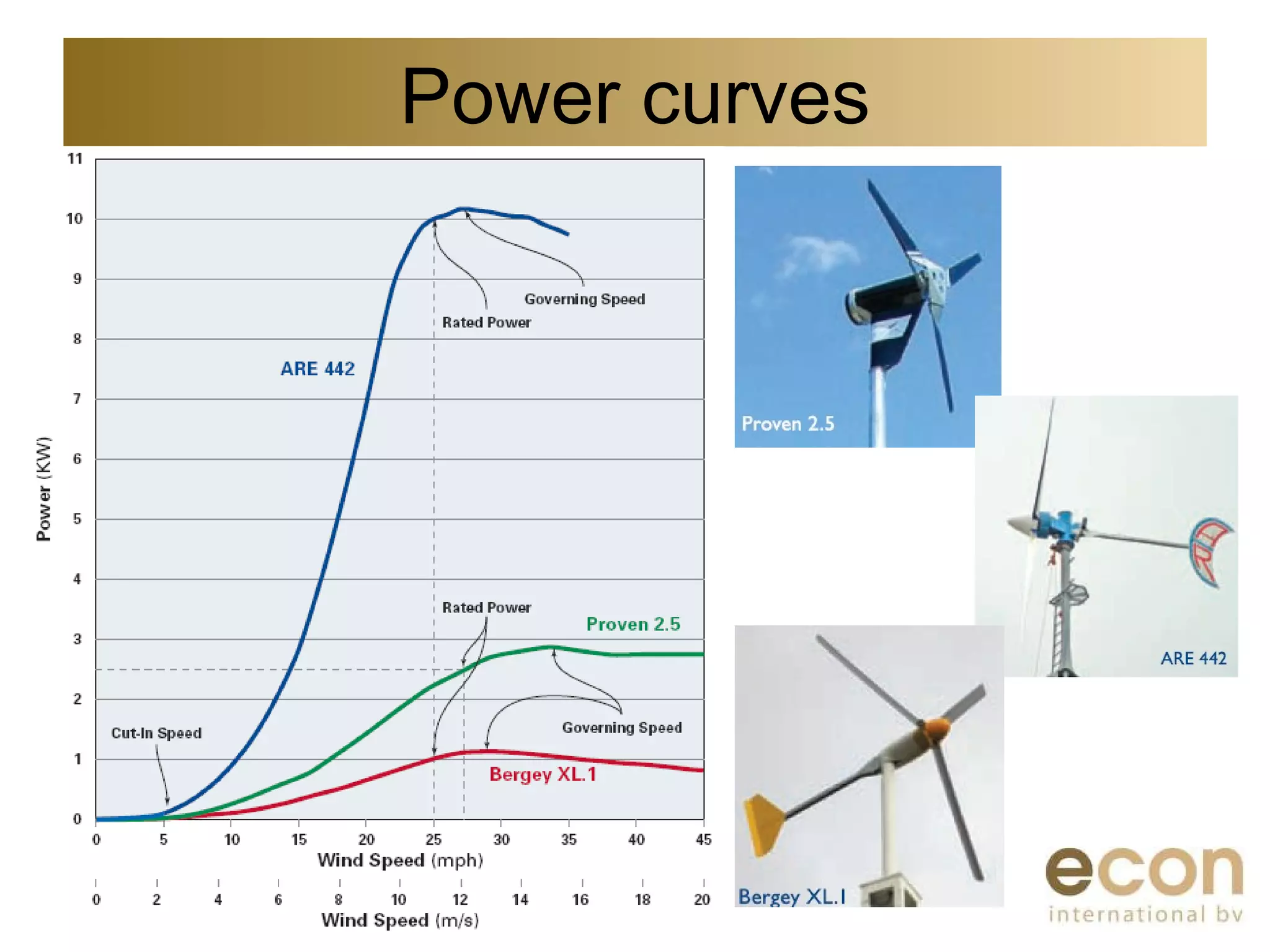
Power curves
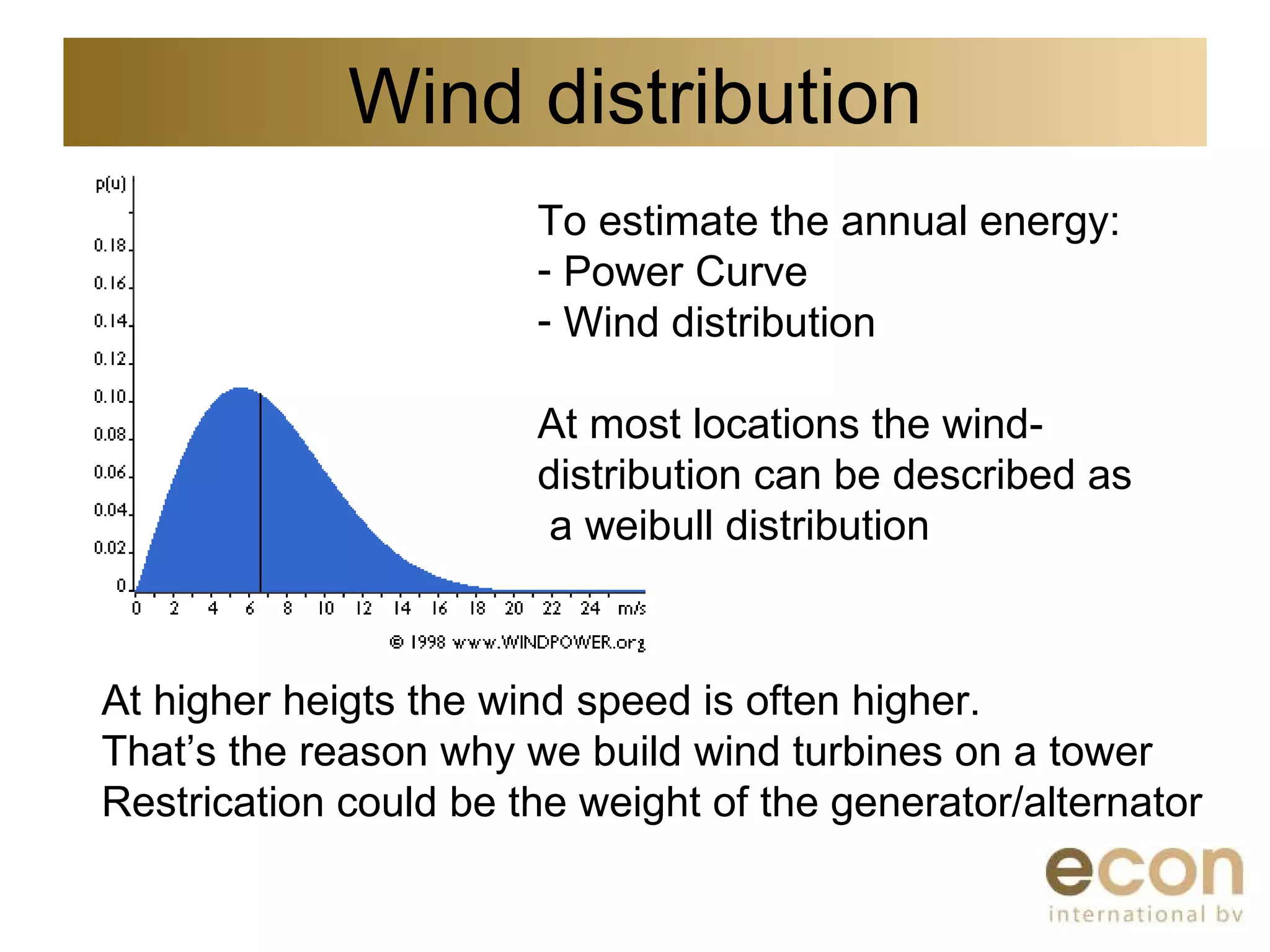
Wind distribution To estimate the annual energy: Power Curve Wind distribution At most locations the wind- distribution can be described as a weibull distribution At higher heigts the wind speed is often higher.  That’s the reason why we build wind turbines on a tower Restrication could be the weight of the generator/alternator
Urban wind characteristics small wind turbines require less wind & land resources than large turbines, so their installation is feasible in a  wider variety of locations. However small scale wind projects in urban area’s do face some constrains: Lower annual mean wind speed Turbulance Potential difficulties in obtaining planning permission
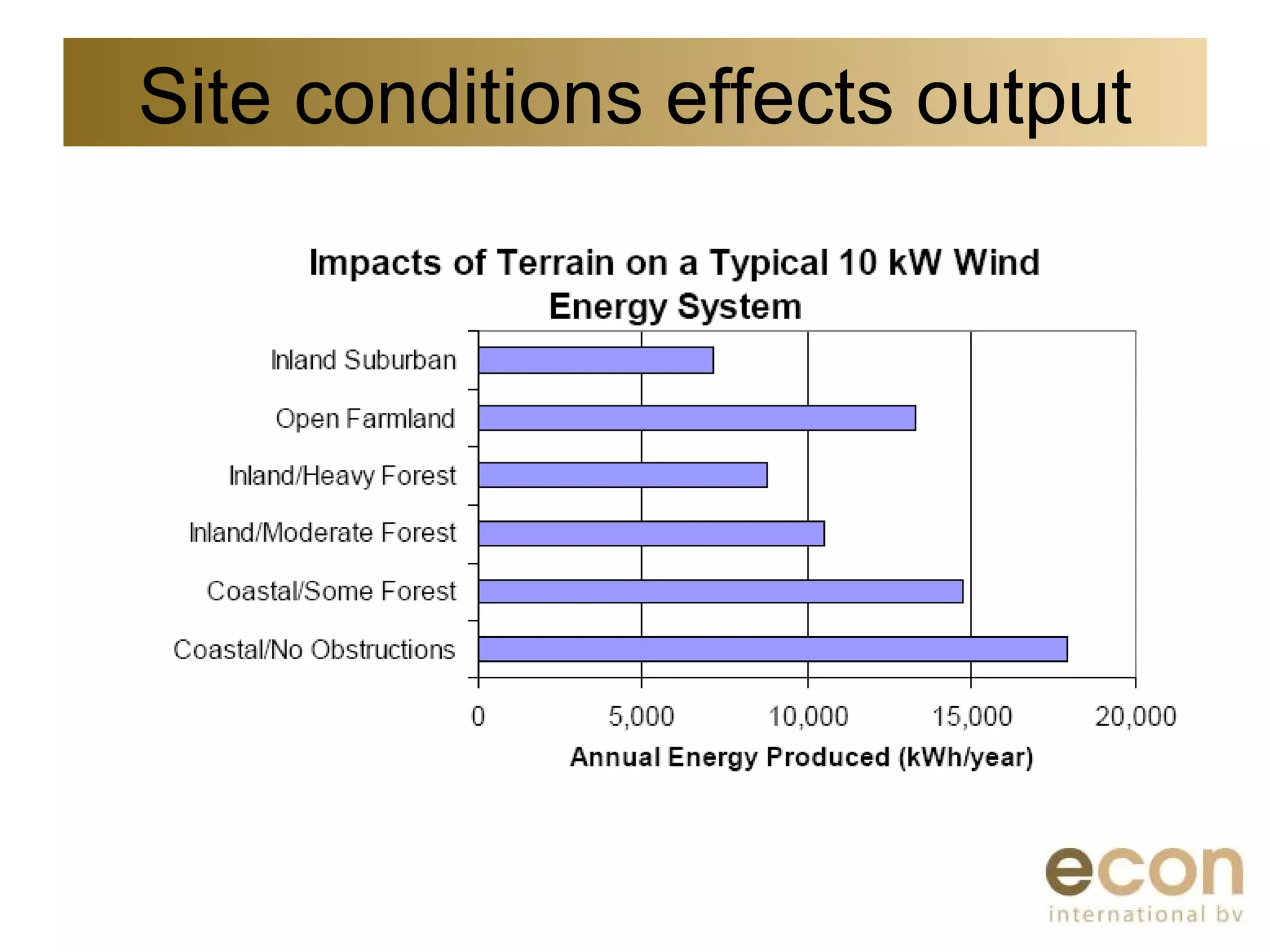
Site conditions effects output
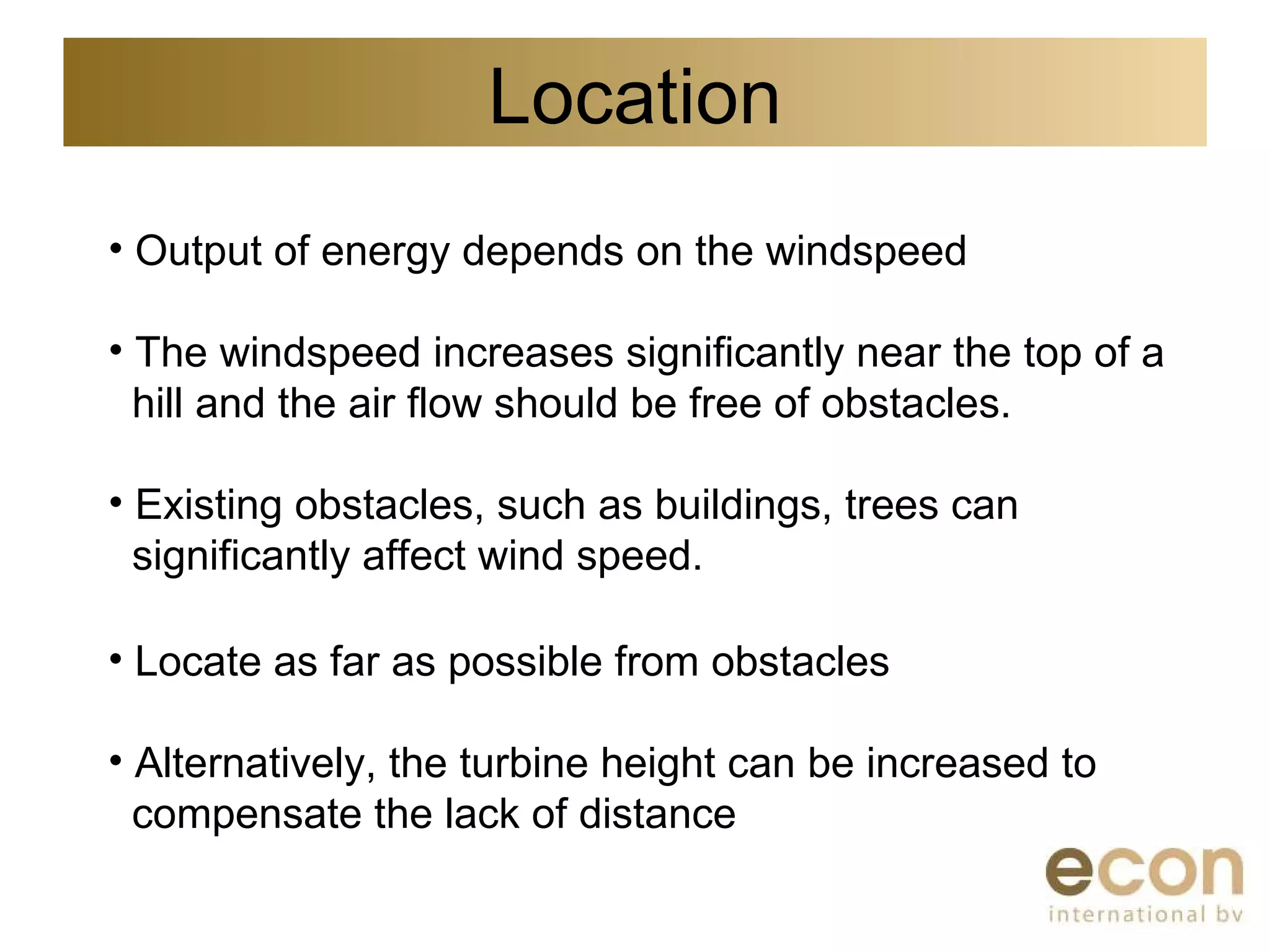
Location Output of energy depends on the windspeed The windspeed increases significantly near the top of a hill and the air flow should be free of obstacles. Existing obstacles, such as buildings, trees can  significantly affect wind speed. Locate as far as possible from obstacles Alternatively, the turbine height can be increased to compensate the lack of distance
Locations
Other issue’s It is recommended that the wind turbine is located  reasonably close to the point of energy use or to the grid connection. Noise and visual impact are particularly sensitive  issues in a residential area. Both can be subjective and  hard to judge.
Some interesting websites General information about renewables: www.leonardo-energy.org Information about wind manufacturers in Europe: www.urbanwind.org www.allsmalwindturbines.org Windspeed in different countries: www.windatlas.dk
Thanks for your attention Walter Hulshorst Econ International B.V.  PO box 5035 6802 EA Arnhem The Netherlands T: + 31 (0)61 047 45 77 F: + 31 (0)26 381 64 82 E:  walter @ econ-international.nl W:  www.econ-international.nl

Small scale wind energy

  • 1.
    Small scale windenergy W. Hulshorst Jan. 2009
  • 2.
    Agenda Types ofsmall scale wind energy systems 2) How to estimate the energy output 3) Aspects on the location 4) Case study with RETscreen
  • 3.
    What is SmallScale WE? Exact definition is not always clear: According IEC 61400:2007: turbines with swept rotor area < 200 m2 are classified as small scale turbines Non universal definitation is often based on the kW: system that is self yawing (tail vain) and < 100 kW.
  • 4.
    Wind energy forremote area’s Off grid systems Weather stations Wind – PV Wind – Diesel
  • 5.
    Wind energy onbuildings Horizontal Vertical In between?
  • 6.
  • 7.
  • 8.
    Wind distribution Toestimate the annual energy: Power Curve Wind distribution At most locations the wind- distribution can be described as a weibull distribution At higher heigts the wind speed is often higher. That’s the reason why we build wind turbines on a tower Restrication could be the weight of the generator/alternator
  • 9.
    Urban wind characteristicssmall wind turbines require less wind & land resources than large turbines, so their installation is feasible in a wider variety of locations. However small scale wind projects in urban area’s do face some constrains: Lower annual mean wind speed Turbulance Potential difficulties in obtaining planning permission
  • 10.
  • 11.
    Location Output ofenergy depends on the windspeed The windspeed increases significantly near the top of a hill and the air flow should be free of obstacles. Existing obstacles, such as buildings, trees can significantly affect wind speed. Locate as far as possible from obstacles Alternatively, the turbine height can be increased to compensate the lack of distance
  • 12.
  • 13.
    Other issue’s Itis recommended that the wind turbine is located reasonably close to the point of energy use or to the grid connection. Noise and visual impact are particularly sensitive issues in a residential area. Both can be subjective and hard to judge.
  • 14.
    Some interesting websitesGeneral information about renewables: www.leonardo-energy.org Information about wind manufacturers in Europe: www.urbanwind.org www.allsmalwindturbines.org Windspeed in different countries: www.windatlas.dk
  • 15.
    Thanks for yourattention Walter Hulshorst Econ International B.V. PO box 5035 6802 EA Arnhem The Netherlands T: + 31 (0)61 047 45 77 F: + 31 (0)26 381 64 82 E: walter @ econ-international.nl W: www.econ-international.nl