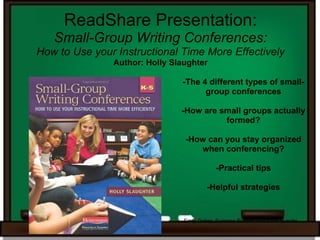
ReadShare Presentation:
   Small-Group Writing Conferences:
How to Use your Instructional Time More Effectively
               Author: Holly Slaughter

                               -The 4 different types of small-
                                     group conferences

                               -How are small groups actually
                                         formed?

                                -How can you stay organized
                                   when conferencing?

                                             -Practical tips

                                         -Helpful strategies


                                Emily Doher, Suzanne Russell, and Katie Bueche
Small-Group Conferencing:
          4 Types:

    Table Conferences

     Skill Conferences

 Expectation Conferences

   Progress Conferences
When launching a new unit of study

                      When reminding students about
                      strategies we’ve already taught

                       When introducing a layered or
                       challenging writing technique
Table Conferences:
                      When presenting a variation on a
 When to Conduct
                               minilesson

                       When sharing a student’s work

                        When sharing a one-to-one
                      conference from which everyone
                                will benefit
Skill Conferences: When to Conduct
        When addressing patterns of student response

                      When studying craft

             When students are revising their work

                  When teaching conventions

 When working with students in the same stage of the writing
                         process

When students are reflecting on their current writing and setting
                   goals for future writing
Expectation Conferences:
            When to Conduct
 When establishing expectations at the beginning of the
                        year

   When helping students who have difficulty following
                     expectations

When helping students who rely on you to get them started

      When introducing a new classroom procedure

         When helping students meet deadlines
Progress Conferences:

                   When helping students meet
                     bottom-line standards


When to Conduct:   When helping kids keep pace
                    with the class as a whole


                        When promoting
                     accountability (“I care, I
                    remember, and My Words
                            Matter”)
How to Make Conference Groups
* Conference groups can be made up many different ways. Here are
a few ideas that the book emphasized upon:
-Don't always place the students who are writing well together.
Sometimes it can greatly benefit struggling students to see a
classmate explain it to them in their own words rather than the teacher
being the only one able to assist during conferencing.
-Teach or reteach a mini lesson with a few students who are
struggling with a specific step in the writing process.
-Form groups based upon what type of conference you want to hold.
 Examples: skill conference, expectation conference, progress
conference, or a table conference
Systematic Planning
and Record Keeping:

     PLAN YOUR CONFERENCES
          THOROUGHLY!

         KEEP RECORD
            OF WHO
           YOU HAVE
          CONFERRED
             WITH!
Practical Tips
to Follow When
Conferring            Don't Overconfer!

                        Allow for Choice

                  Work with Colleagues

         Build and Nurture Relationships
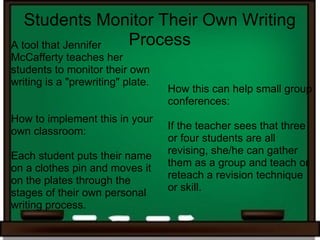
Students Monitor Their Own Writing
A tool that Jennifer Process
McCafferty teaches her
students to monitor their own
writing is a "prewriting" plate.
                                   How this can help small group
                                   conferences:
How to implement this in your
                                   If the teacher sees that three
own classroom:
                                   or four students are all
                                   revising, she/he can gather
Each student puts their name
                                   them as a group and teach or
on a clothes pin and moves it
                                   reteach a revision technique
on the plates through the
                                   or skill.
stages of their own personal
writing process.

Small group conferencing_

  • 1.
    ReadShare Presentation: Small-Group Writing Conferences: How to Use your Instructional Time More Effectively Author: Holly Slaughter -The 4 different types of small- group conferences -How are small groups actually formed? -How can you stay organized when conferencing? -Practical tips -Helpful strategies Emily Doher, Suzanne Russell, and Katie Bueche
  • 2.
    Small-Group Conferencing: 4 Types: Table Conferences Skill Conferences Expectation Conferences Progress Conferences
  • 3.
    When launching anew unit of study When reminding students about strategies we’ve already taught When introducing a layered or challenging writing technique Table Conferences: When presenting a variation on a When to Conduct minilesson When sharing a student’s work When sharing a one-to-one conference from which everyone will benefit
  • 4.
    Skill Conferences: Whento Conduct When addressing patterns of student response When studying craft When students are revising their work When teaching conventions When working with students in the same stage of the writing process When students are reflecting on their current writing and setting goals for future writing
  • 5.
    Expectation Conferences: When to Conduct When establishing expectations at the beginning of the year When helping students who have difficulty following expectations When helping students who rely on you to get them started When introducing a new classroom procedure When helping students meet deadlines
  • 6.
    Progress Conferences: When helping students meet bottom-line standards When to Conduct: When helping kids keep pace with the class as a whole When promoting accountability (“I care, I remember, and My Words Matter”)
  • 7.
    How to MakeConference Groups * Conference groups can be made up many different ways. Here are a few ideas that the book emphasized upon: -Don't always place the students who are writing well together. Sometimes it can greatly benefit struggling students to see a classmate explain it to them in their own words rather than the teacher being the only one able to assist during conferencing. -Teach or reteach a mini lesson with a few students who are struggling with a specific step in the writing process. -Form groups based upon what type of conference you want to hold. Examples: skill conference, expectation conference, progress conference, or a table conference
  • 8.
    Systematic Planning and RecordKeeping: PLAN YOUR CONFERENCES THOROUGHLY! KEEP RECORD OF WHO YOU HAVE CONFERRED WITH!
  • 9.
    Practical Tips to FollowWhen Conferring Don't Overconfer! Allow for Choice Work with Colleagues Build and Nurture Relationships
  • 10.
    Students Monitor TheirOwn Writing A tool that Jennifer Process McCafferty teaches her students to monitor their own writing is a "prewriting" plate. How this can help small group conferences: How to implement this in your If the teacher sees that three own classroom: or four students are all revising, she/he can gather Each student puts their name them as a group and teach or on a clothes pin and moves it reteach a revision technique on the plates through the or skill. stages of their own personal writing process.