Conferring with Students
 Should be done daily in reading
 Should be done daily in writing
 What is the purpose?
Counterfeit Beliefs
 If I meet with small
groups, I don’t
have to meet with
individuals.
 If I don’t meet with
every child every
day, I am not doing
a good job .
 I should do a
running record
every time I meet
with a child.
 I should talk about
all the errors a
student makes
while he or she is
with me.
Counterfeit Beliefs (continued)
 I have to take an
expert stance in
each conference.
 I need to focus on
skills and fluency,
comprehension
comes later.
 When I am talking
to a child about his
or her learning, I
am conferencing.
 I’ve tried conferring
suggestions and
they just don’t
work.
Counterfeit Beliefs (continued)
 I need to confer
with every student
the same number
of times for the
same amount of
time each week.
 I need to give the
rest of the class
something “to do”
so they’ll stay busy
and leave me alone
so I can confer.
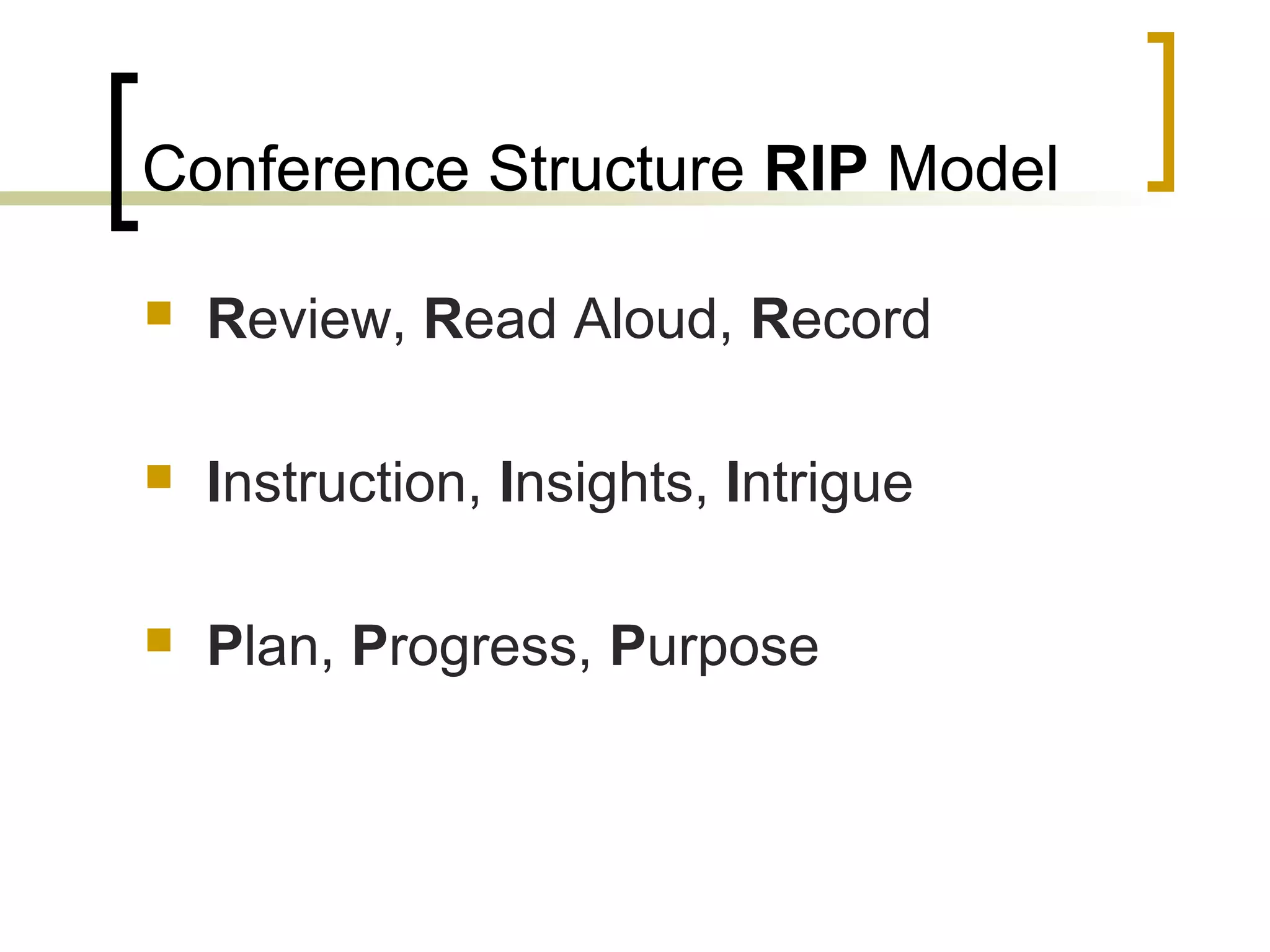
Conference Structure RIP Model
 Review, Read Aloud, Record
 Instruction, Insights, Intrigue
 Plan, Progress, Purpose
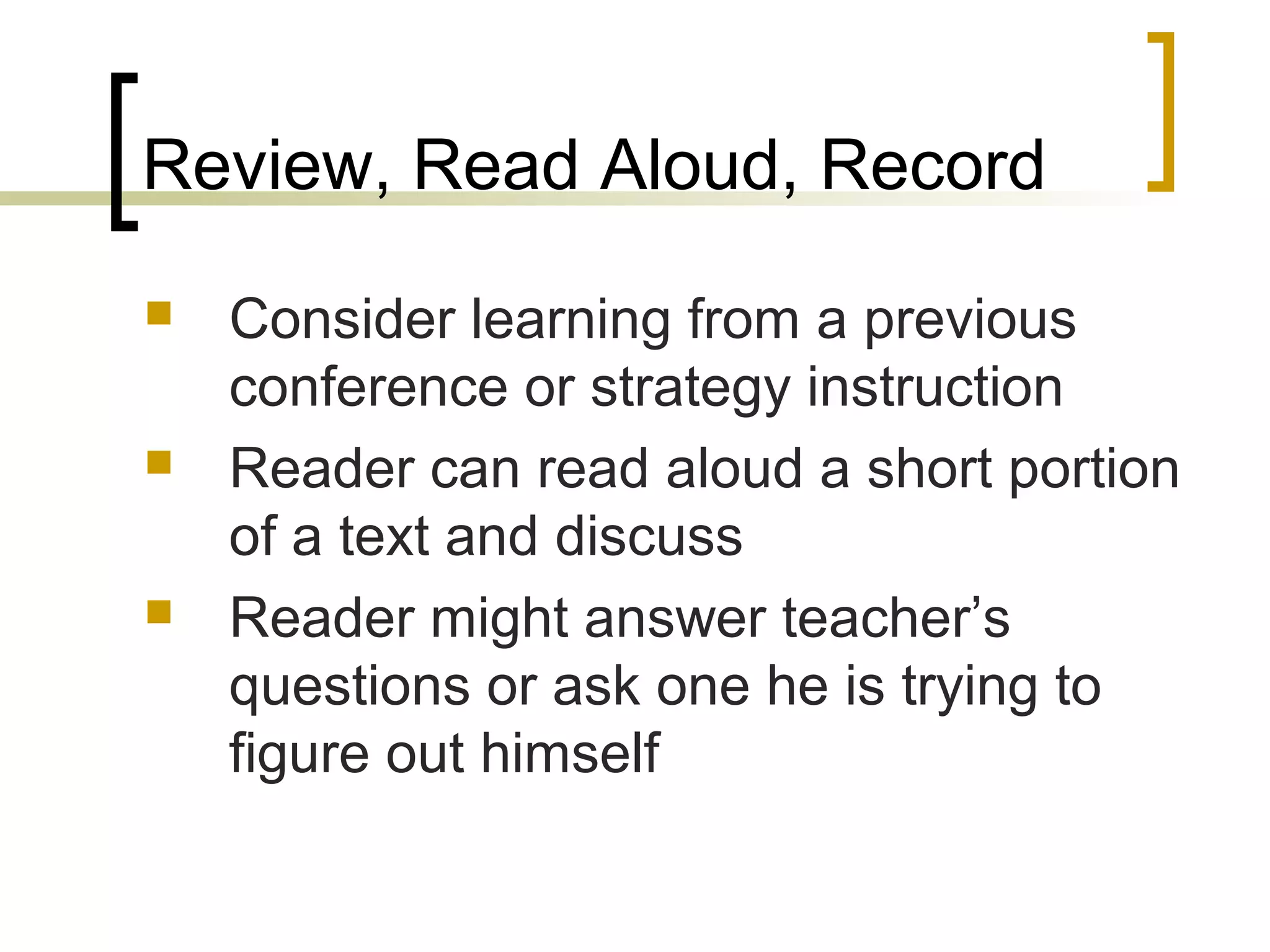
Review, Read Aloud, Record
 Consider learning from a previous
conference or strategy instruction
 Reader can read aloud a short portion
of a text and discuss
 Reader might answer teacher’s
questions or ask one he is trying to
figure out himself
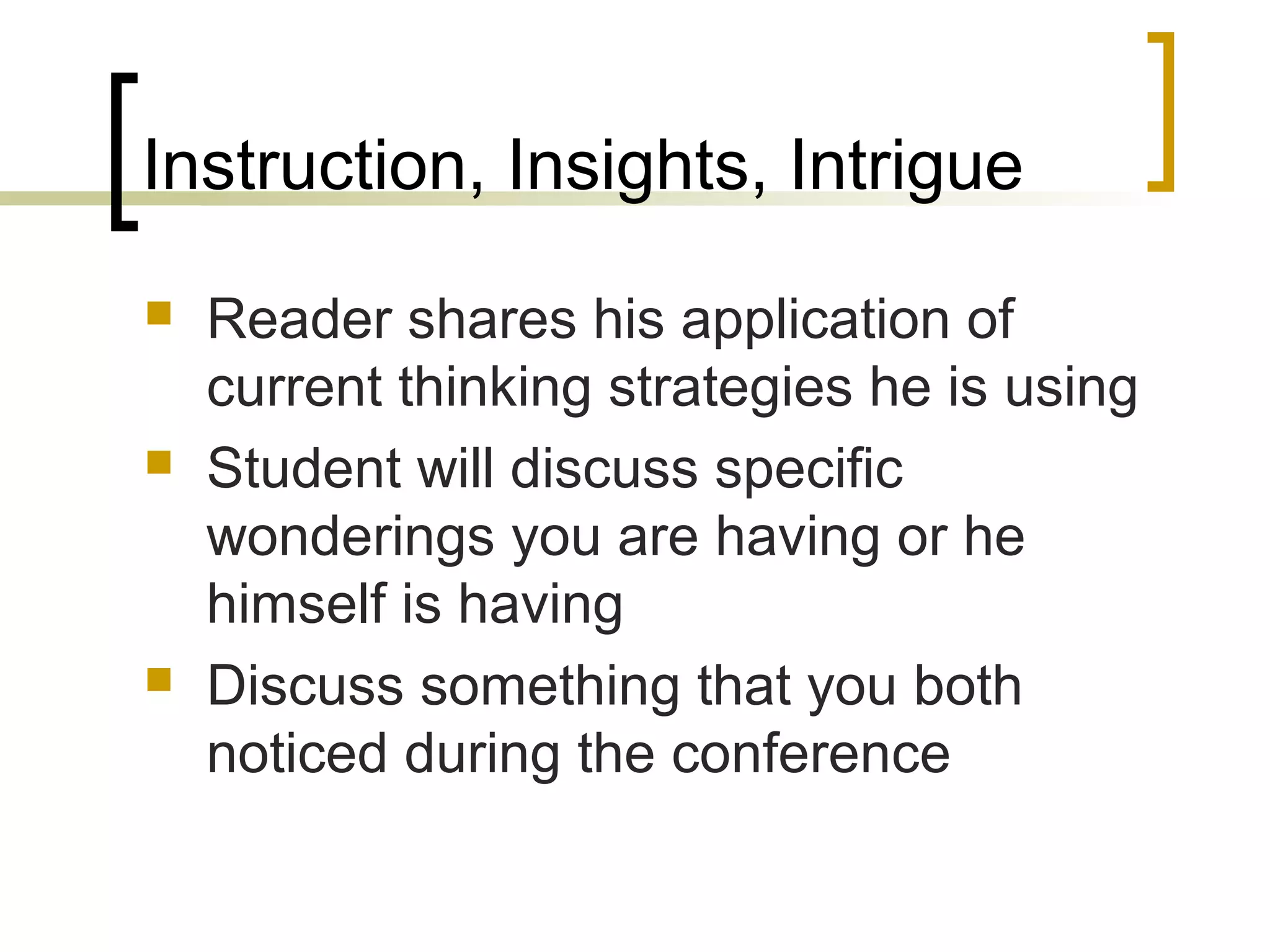
Instruction, Insights, Intrigue
 Reader shares his application of
current thinking strategies he is using
 Student will discuss specific
wonderings you are having or he
himself is having
 Discuss something that you both
noticed during the conference
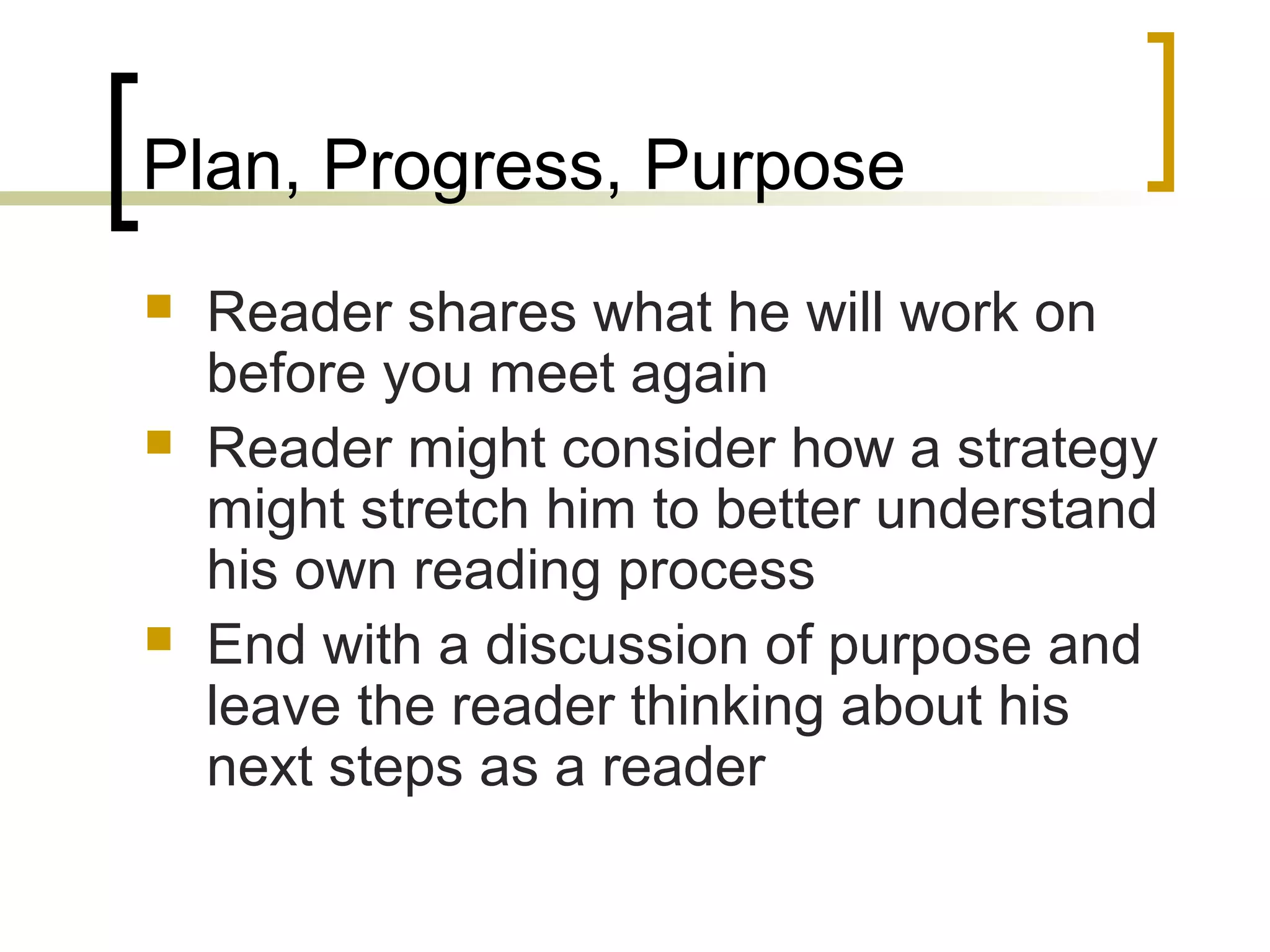
Plan, Progress, Purpose
 Reader shares what he will work on
before you meet again
 Reader might consider how a strategy
might stretch him to better understand
his own reading process
 End with a discussion of purpose and
leave the reader thinking about his
next steps as a reader
Five Instructional Ashlars
 Defining Trust, Respect, and Tone
 Strengthening Endurance & Stamina
 Discussing Purpose & Audience
 Exploring Gradual Release Model
 Focusing on Workshop Structure
Define Rigor, Inquiry & Intimacy
 Cultivate Rigor
Teach the thinker and thinking
 Nurture Inquiry
Using meaningful, documentable data
 Develop Intimacy
Commit to the idea all children can think at high levels
What emerges in a conference?
 History
 Teaching
 Processes
 Records
 Experiences
 Rapport
 Goal Setting
 Strategy Knowledge
 Listening
 Patterns
 Talk
 Challenges
 Instructional Points
 Our Own Learning
History
 How does this conference compare
with previous conferences?
 Have any negatives transformed into
positives over time?
 What historical perspectives are being
gleaned about the student as a
reader?
Teaching
 What is the student’s purpose? Who is
the decision maker?
 What does the student need from you
at that moment?
 What is one thing the student will
leave the conference with and be able
to apply immediately?
Processes
 How does the student describe the act
of reading?
 How does the student describe his
reading process or metacognition?
 What does the student’s process say
about his learning style?
Records
 Who are the records for? What is the
purpose?
 How will your information you gather
be used? How could it be used?
 How will the records be shared with
the student? How about others?
Experiences
 How have conferring experiences
changed over time?
 What characteristics are gleaned
about the student’s previous literacy
experiences?
 What reading experiences has the
student found most rewarding?
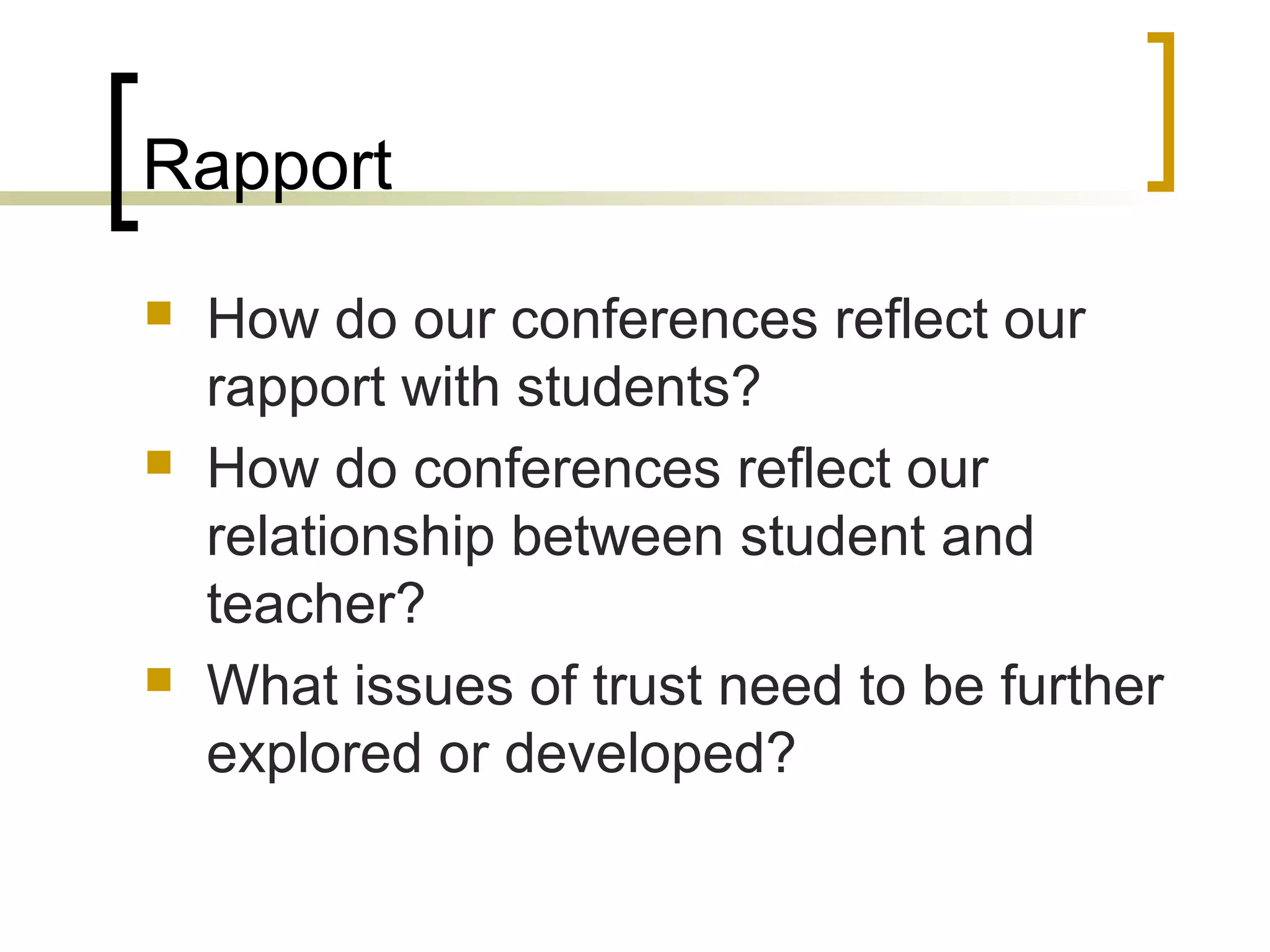
Rapport
 How do our conferences reflect our
rapport with students?
 How do conferences reflect our
relationship between student and
teacher?
 What issues of trust need to be further
explored or developed?
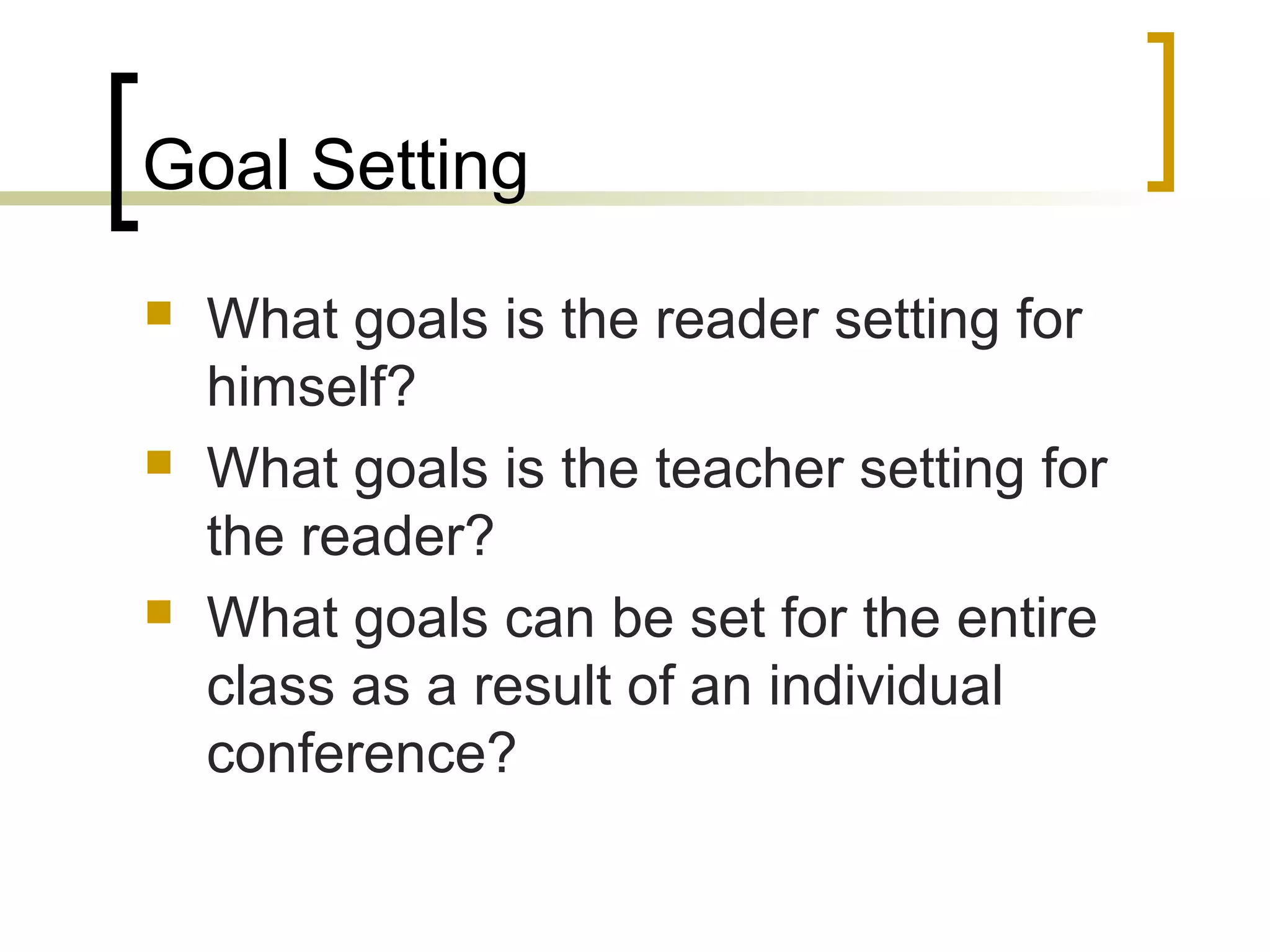
Goal Setting
 What goals is the reader setting for
himself?
 What goals is the teacher setting for
the reader?
 What goals can be set for the entire
class as a result of an individual
conference?
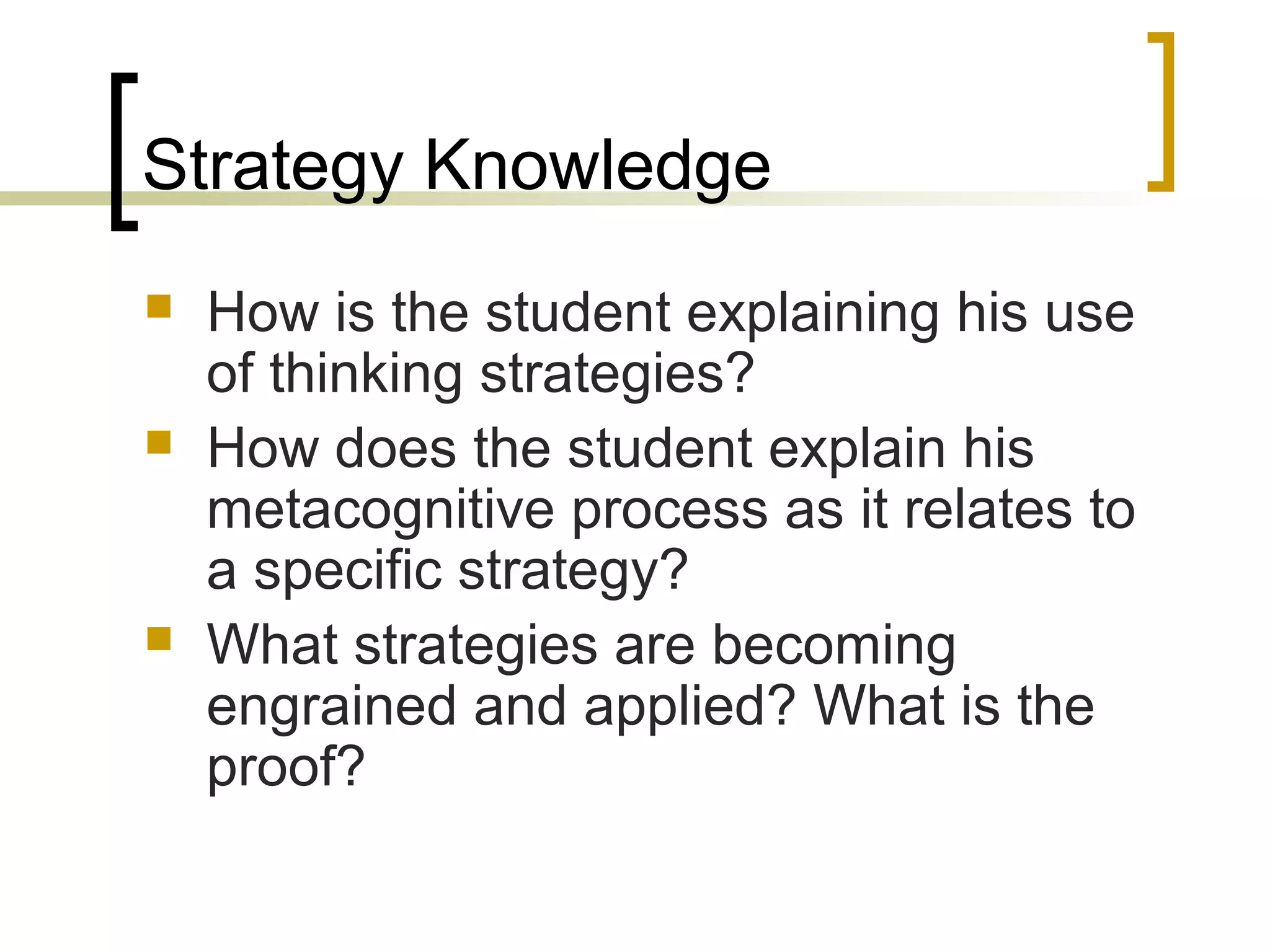
Strategy Knowledge
 How is the student explaining his use
of thinking strategies?
 How does the student explain his
metacognitive process as it relates to
a specific strategy?
 What strategies are becoming
engrained and applied? What is the
proof?
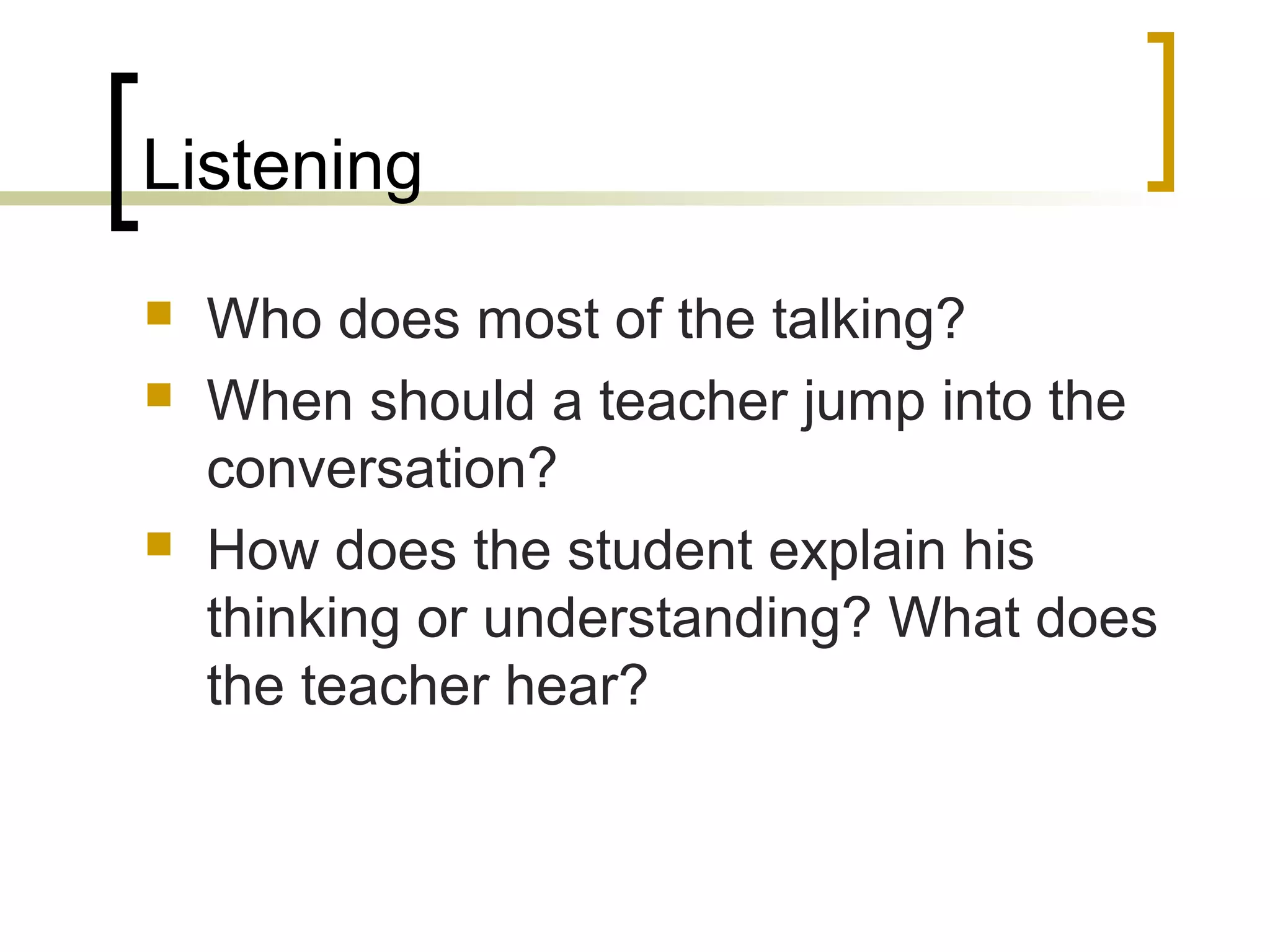
Listening
 Who does most of the talking?
 When should a teacher jump into the
conversation?
 How does the student explain his
thinking or understanding? What does
the teacher hear?
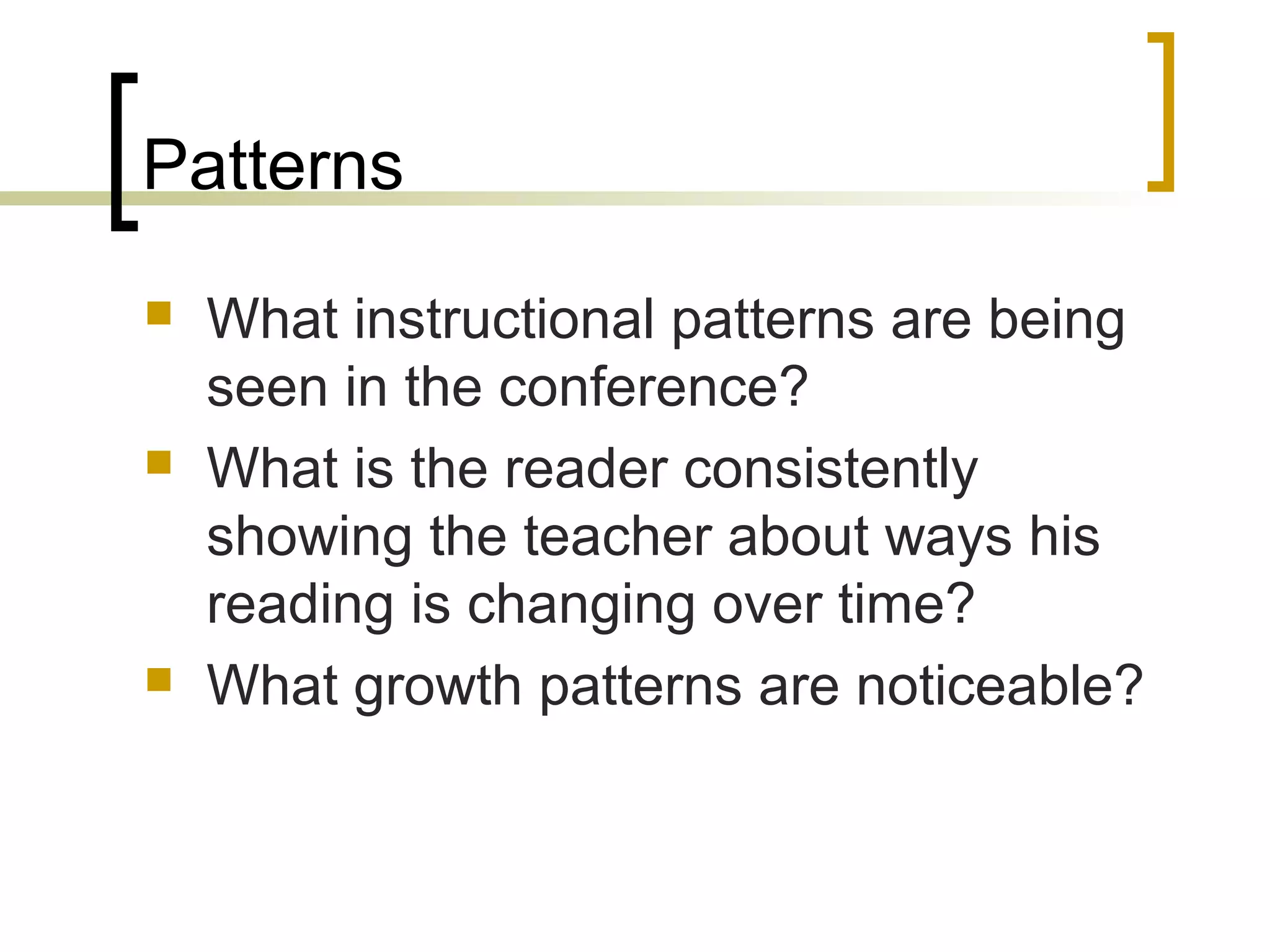
Patterns
 What instructional patterns are being
seen in the conference?
 What is the reader consistently
showing the teacher about ways his
reading is changing over time?
 What growth patterns are noticeable?
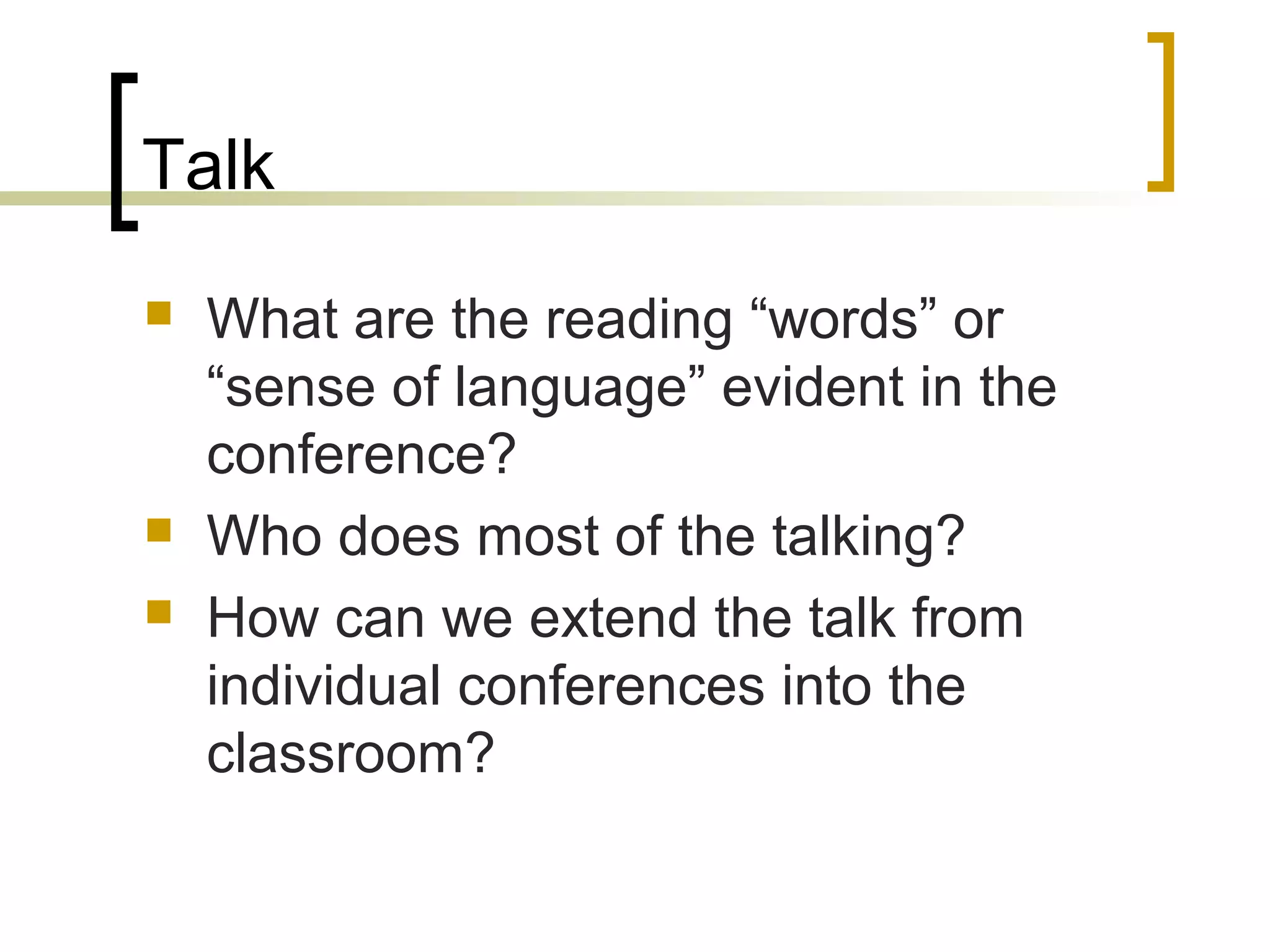
Talk
 What are the reading “words” or
“sense of language” evident in the
conference?
 Who does most of the talking?
 How can we extend the talk from
individual conferences into the
classroom?
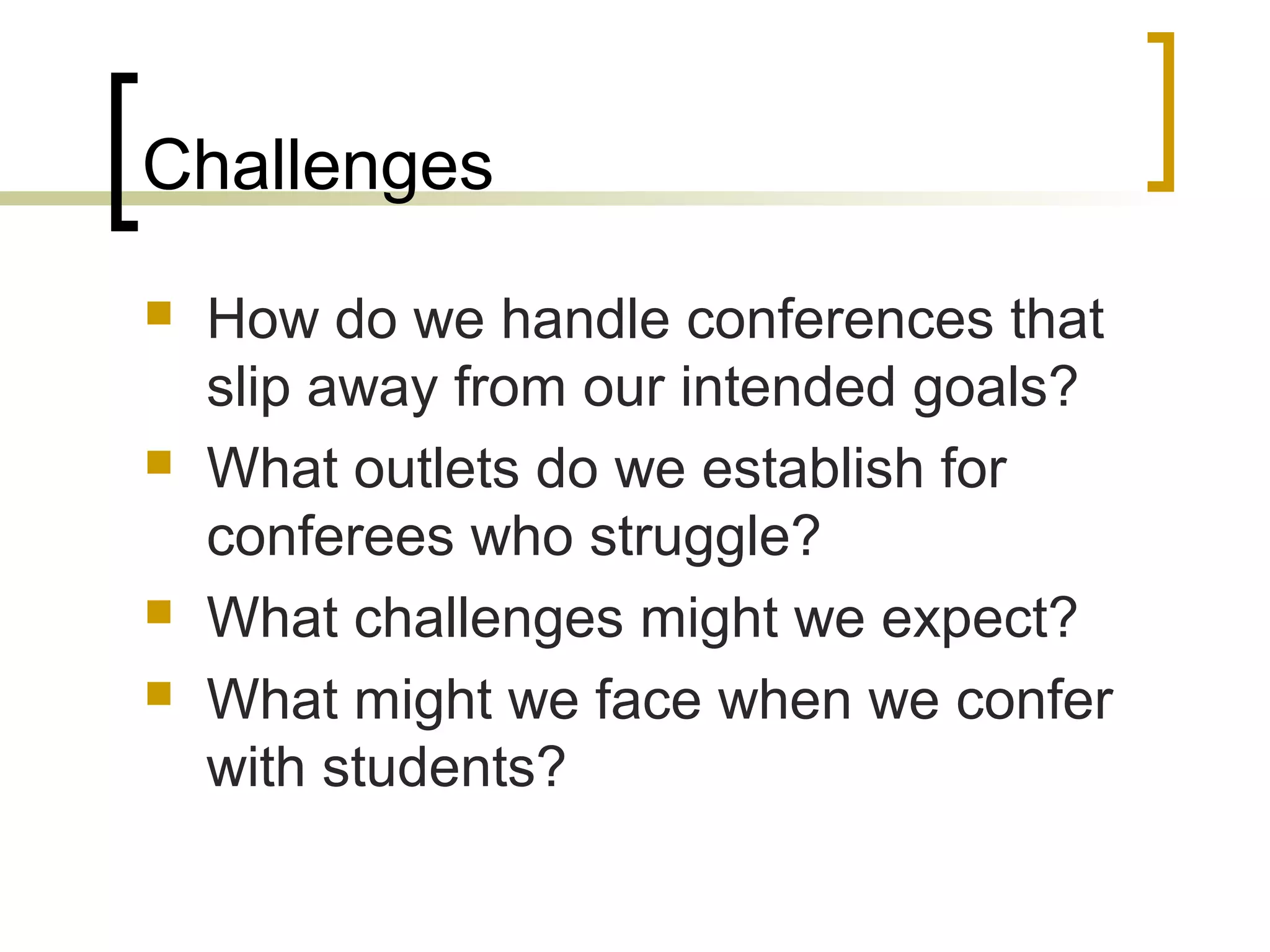
Challenges
 How do we handle conferences that
slip away from our intended goals?
 What outlets do we establish for
conferees who struggle?
 What challenges might we expect?
 What might we face when we confer
with students?
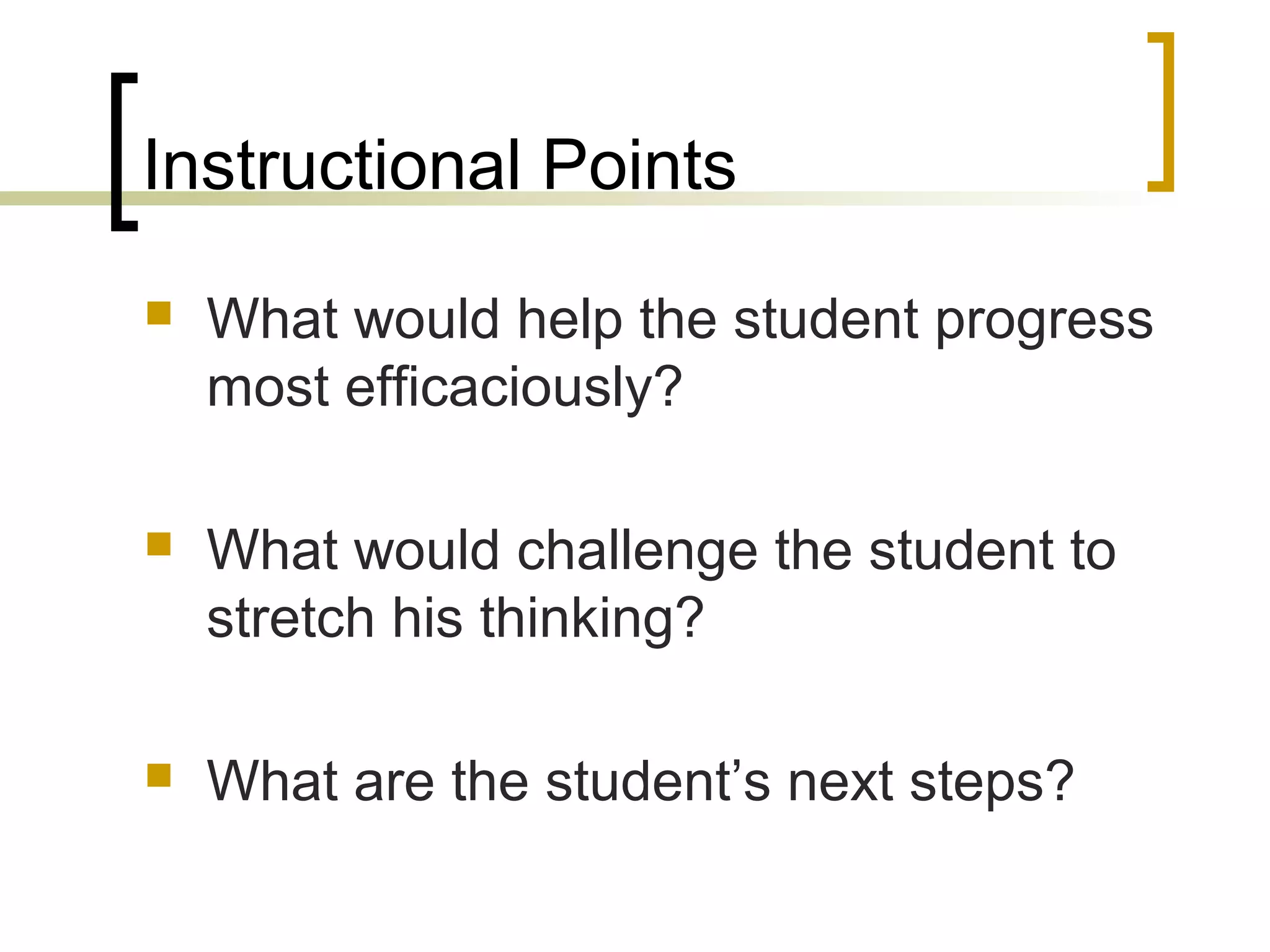
Instructional Points
 What would help the student progress
most efficaciously?
 What would challenge the student to
stretch his thinking?
 What are the student’s next steps?
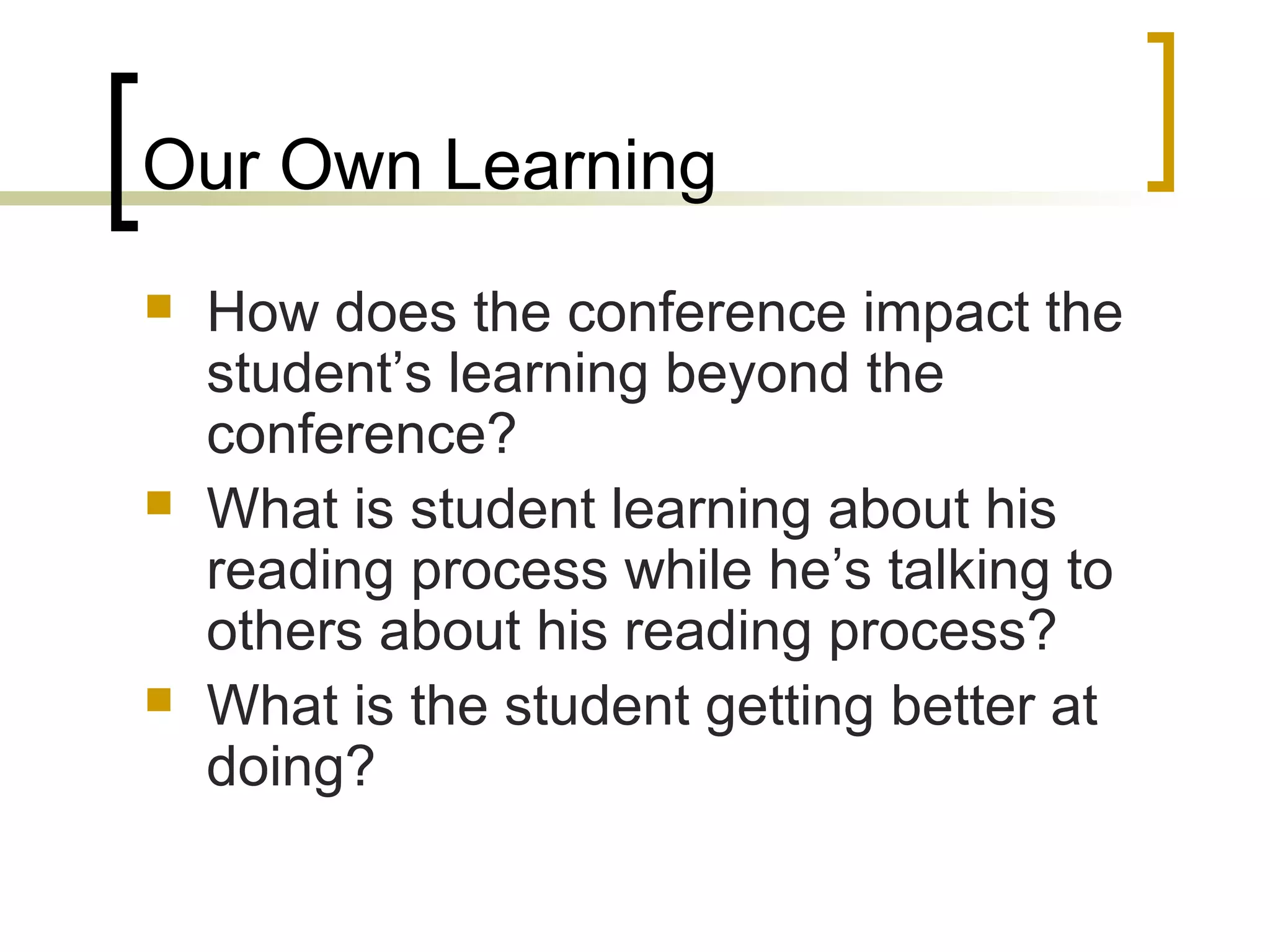
Our Own Learning
 How does the conference impact the
student’s learning beyond the
conference?
 What is student learning about his
reading process while he’s talking to
others about his reading process?
 What is the student getting better at
doing?
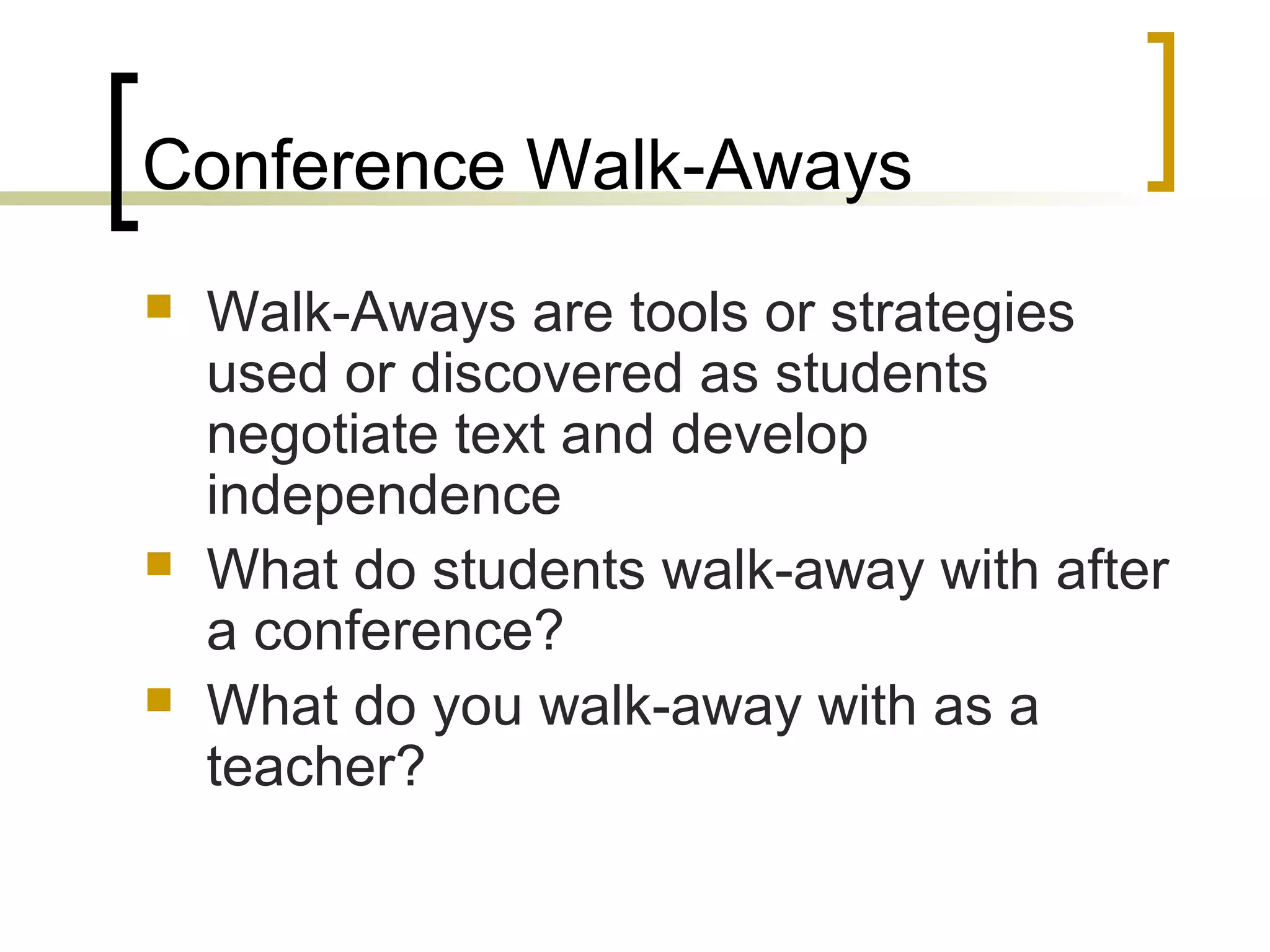
Conference Walk-Aways
 Walk-Aways are tools or strategies
used or discovered as students
negotiate text and develop
independence
 What do students walk-away with after
a conference?
 What do you walk-away with as a
teacher?
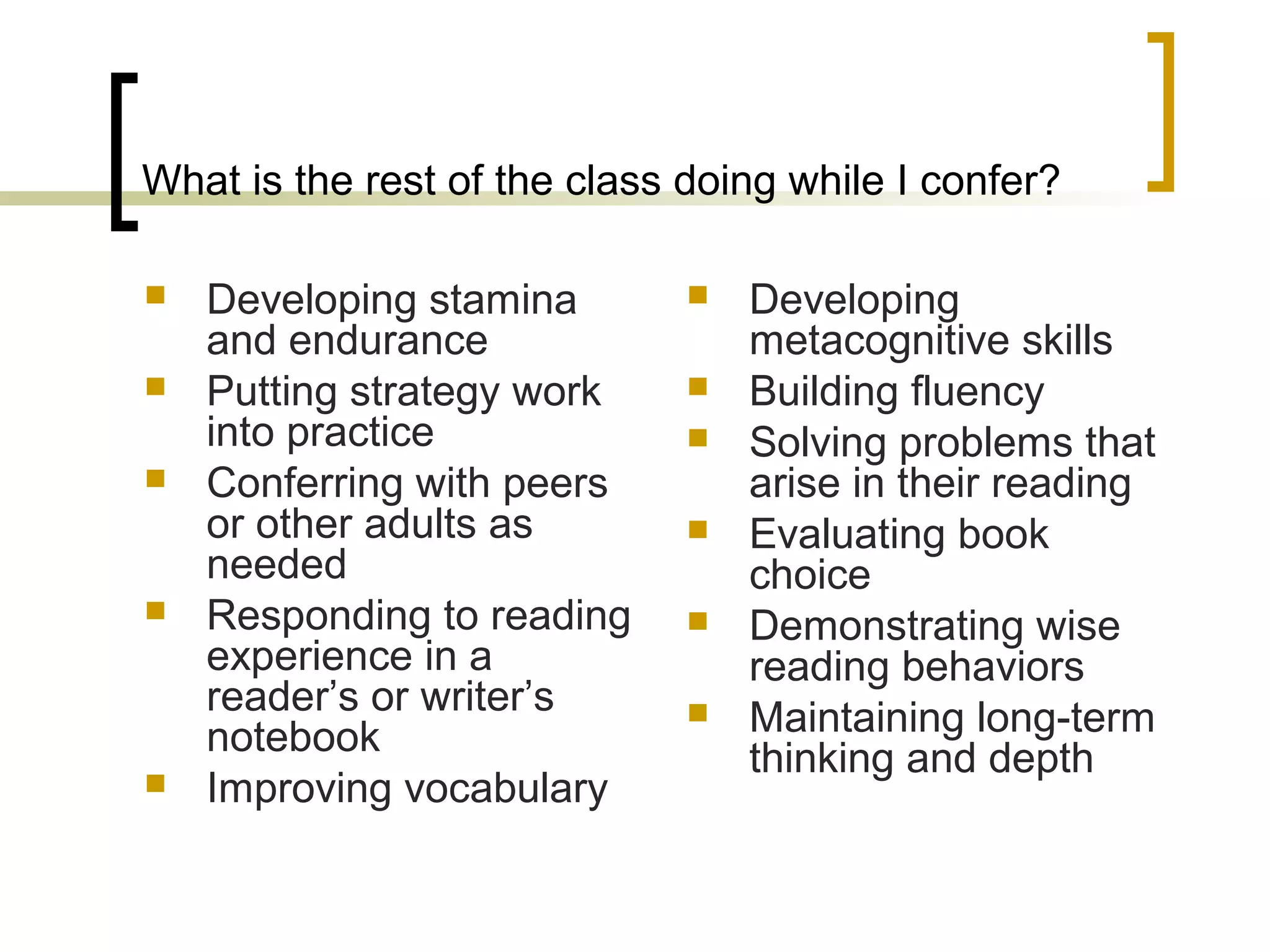
What is the rest of the class doing while I confer?
 Developing stamina
and endurance
 Putting strategy work
into practice
 Conferring with peers
or other adults as
needed
 Responding to reading
experience in a
reader’s or writer’s
notebook
 Improving vocabulary
 Developing
metacognitive skills
 Building fluency
 Solving problems that
arise in their reading
 Evaluating book
choice
 Demonstrating wise
reading behaviors
 Maintaining long-term
thinking and depth

Conferring with students

  • 1.
    Conferring with Students Should be done daily in reading  Should be done daily in writing  What is the purpose?
  • 2.
    Counterfeit Beliefs  IfI meet with small groups, I don’t have to meet with individuals.  If I don’t meet with every child every day, I am not doing a good job .  I should do a running record every time I meet with a child.  I should talk about all the errors a student makes while he or she is with me.
  • 3.
    Counterfeit Beliefs (continued) I have to take an expert stance in each conference.  I need to focus on skills and fluency, comprehension comes later.  When I am talking to a child about his or her learning, I am conferencing.  I’ve tried conferring suggestions and they just don’t work.
  • 4.
    Counterfeit Beliefs (continued) I need to confer with every student the same number of times for the same amount of time each week.  I need to give the rest of the class something “to do” so they’ll stay busy and leave me alone so I can confer.
  • 5.
    Conference Structure RIPModel  Review, Read Aloud, Record  Instruction, Insights, Intrigue  Plan, Progress, Purpose
  • 6.
    Review, Read Aloud,Record  Consider learning from a previous conference or strategy instruction  Reader can read aloud a short portion of a text and discuss  Reader might answer teacher’s questions or ask one he is trying to figure out himself
  • 7.
    Instruction, Insights, Intrigue Reader shares his application of current thinking strategies he is using  Student will discuss specific wonderings you are having or he himself is having  Discuss something that you both noticed during the conference
  • 8.
    Plan, Progress, Purpose Reader shares what he will work on before you meet again  Reader might consider how a strategy might stretch him to better understand his own reading process  End with a discussion of purpose and leave the reader thinking about his next steps as a reader
  • 9.
    Five Instructional Ashlars Defining Trust, Respect, and Tone  Strengthening Endurance & Stamina  Discussing Purpose & Audience  Exploring Gradual Release Model  Focusing on Workshop Structure
  • 10.
    Define Rigor, Inquiry& Intimacy  Cultivate Rigor Teach the thinker and thinking  Nurture Inquiry Using meaningful, documentable data  Develop Intimacy Commit to the idea all children can think at high levels
  • 11.
    What emerges ina conference?  History  Teaching  Processes  Records  Experiences  Rapport  Goal Setting  Strategy Knowledge  Listening  Patterns  Talk  Challenges  Instructional Points  Our Own Learning
  • 12.
    History  How doesthis conference compare with previous conferences?  Have any negatives transformed into positives over time?  What historical perspectives are being gleaned about the student as a reader?
  • 13.
    Teaching  What isthe student’s purpose? Who is the decision maker?  What does the student need from you at that moment?  What is one thing the student will leave the conference with and be able to apply immediately?
  • 14.
    Processes  How doesthe student describe the act of reading?  How does the student describe his reading process or metacognition?  What does the student’s process say about his learning style?
  • 15.
    Records  Who arethe records for? What is the purpose?  How will your information you gather be used? How could it be used?  How will the records be shared with the student? How about others?
  • 16.
    Experiences  How haveconferring experiences changed over time?  What characteristics are gleaned about the student’s previous literacy experiences?  What reading experiences has the student found most rewarding?
  • 17.
    Rapport  How doour conferences reflect our rapport with students?  How do conferences reflect our relationship between student and teacher?  What issues of trust need to be further explored or developed?
  • 18.
    Goal Setting  Whatgoals is the reader setting for himself?  What goals is the teacher setting for the reader?  What goals can be set for the entire class as a result of an individual conference?
  • 19.
    Strategy Knowledge  Howis the student explaining his use of thinking strategies?  How does the student explain his metacognitive process as it relates to a specific strategy?  What strategies are becoming engrained and applied? What is the proof?
  • 20.
    Listening  Who doesmost of the talking?  When should a teacher jump into the conversation?  How does the student explain his thinking or understanding? What does the teacher hear?
  • 21.
    Patterns  What instructionalpatterns are being seen in the conference?  What is the reader consistently showing the teacher about ways his reading is changing over time?  What growth patterns are noticeable?
  • 22.
    Talk  What arethe reading “words” or “sense of language” evident in the conference?  Who does most of the talking?  How can we extend the talk from individual conferences into the classroom?
  • 23.
    Challenges  How dowe handle conferences that slip away from our intended goals?  What outlets do we establish for conferees who struggle?  What challenges might we expect?  What might we face when we confer with students?
  • 24.
    Instructional Points  Whatwould help the student progress most efficaciously?  What would challenge the student to stretch his thinking?  What are the student’s next steps?
  • 25.
    Our Own Learning How does the conference impact the student’s learning beyond the conference?  What is student learning about his reading process while he’s talking to others about his reading process?  What is the student getting better at doing?
  • 26.
    Conference Walk-Aways  Walk-Awaysare tools or strategies used or discovered as students negotiate text and develop independence  What do students walk-away with after a conference?  What do you walk-away with as a teacher?
  • 27.
    What is therest of the class doing while I confer?  Developing stamina and endurance  Putting strategy work into practice  Conferring with peers or other adults as needed  Responding to reading experience in a reader’s or writer’s notebook  Improving vocabulary  Developing metacognitive skills  Building fluency  Solving problems that arise in their reading  Evaluating book choice  Demonstrating wise reading behaviors  Maintaining long-term thinking and depth