STUDENTS’ RESPONSES ON TEACHING ENGLISH THROUGH 
INTEGRATED-SKILLS 
(A Case Study of Students at One of the English Course in 
Bandung) 
Pratiwi Rahayu 
Rifan Rahmawan 
Wiena Novianti
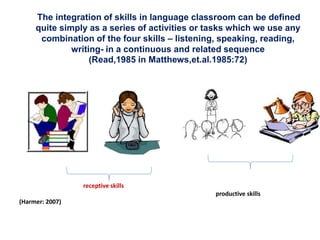
The integration of skills in language classroom can be defined 
quite simply as a series of activities or tasks which we use any 
combination of the four skills – listening, speaking, reading, 
writing- in a continuous and related sequence 
(Read,1985 in Matthews,et.al.1985:72) 
receptive skills 
productive skills 
(Harmer: 2007)
Ozturk (2007) integrating the language 
skills provide meaningful content for 
learners and make them use the 
language in the real contexts provided 
with task based activities. 
How are the students’ responses on 
teaching English through integrated-skills 
in the classroom. 
To know the students’ responses on 
teaching English through integrated-skills 
in the classroom.
to improve their knowledge and understanding about 
teaching English integratedly 
They can use it to add their knowledge about how is the 
students’ responses about teaching English through 
integrated skills 
This research becomes a guidance for other researchers. They 
may doing the same topic for any different level of education 
and compare the result of the response from other students.
• The integration of skills in language classroom can be defined quite simply as a 
series of activities or tasks which we use any combination of the four skills in a 
continuous and related sequence 
(Read, 1985 in Matthews,et.al.1985:72) 
• There are two types of integrated-skills, such as 
content-based language instructions and task-based 
instructions (Rebecca:2001) 
• Teaching integrating four skills does not diminishes 
the importance of the rules of reading, writing, 
speaking and listening (Brown: 1994)
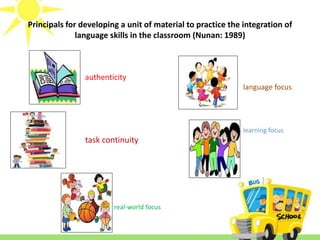
Principals for developing a unit of material to practice the integration of 
language skills in the classroom (Nunan: 1989) 
authenticity 
language focus 
learning focus 
task continuity 
real-world focus
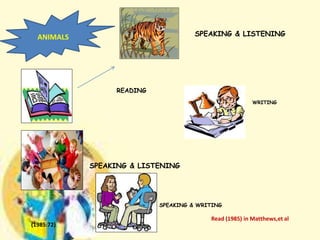
SPEAKING & LISTENING 
READING 
WRITING 
SPEAKING & LISTENING 
S SPEAKING & WRITING 
Read (1985) in Matthews,et al 
ANIMALS 
(1985:72)
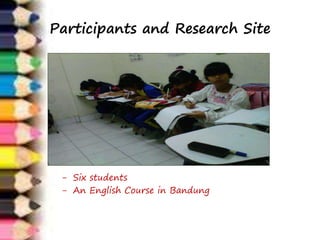
Participants and Research Site 
- Six students 
- An English Course in Bandung
Research Methodology and Data Analysis 
CODING 
Observation 
Interview
Choosing integrated-skills or separated-skills 
Atmosphere Feeling after of the class 
Which one do you like, learning English intergratedly or 
separately? 
Interest in the lesson 
How did you feel after the class? 
Do you like the lesson? 
Interest in topic 
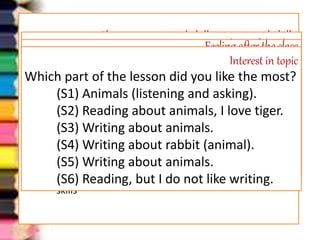
Which part of the lesson did you like the most? 
(S1) Hmm.. I enjoy learning with many skills together. 
(S2) I prefer to learn reading the story, speaking and writing 
• Do you like the atmosphere of the class? 
(S1) Happy and interested in English. 
(S2) Happy but I feel so hungry. 
(S3) I enjoy the class. 
(S4) Happy because we learn together. 
(S5) No at the first, finally I feel enjoy. 
(S6) Happy and cheerful. 
(S1) Hmm.. today I really love the lesson 
(S2) I love because I learn many things. 
(S3) I learn much. 
(S4) Very interesting. 
(S5) I love it. 
(S6) I like it. It can add my knowledge. 
(S1) I like it. I can imagine many things. 
(S2) I love it, but finally get bored. 
(S3) Interesting. So many pictures. 
(S4) I love English. 
(S5) I enjoy because I can see the pictures. 
(S6) I really enjoy because I love English 
(S1) Animals (listening and asking). 
(S2) Reading about animals, I love tiger. 
(S3) Writing about animals. 
(S4) Writing about rabbit (animal). 
(S5) Writing about animals. 
(S6) Reading, but I do not like writing. 
about animals in one time. Just like today. 
(S3) I will get bored when only learn writing in one session. 
(S4) I like learning English just like today because I learn 
many things in one session, like reading an animal 
story, writing and umm answering your question. 
(S5) I like learning like today. 
(S6) Hmm.. I think I love integrated-skills than separated-skills
integrated teaching

integrated teaching

  • 1.
    STUDENTS’ RESPONSES ONTEACHING ENGLISH THROUGH INTEGRATED-SKILLS (A Case Study of Students at One of the English Course in Bandung) Pratiwi Rahayu Rifan Rahmawan Wiena Novianti
  • 2.
    The integration ofskills in language classroom can be defined quite simply as a series of activities or tasks which we use any combination of the four skills – listening, speaking, reading, writing- in a continuous and related sequence (Read,1985 in Matthews,et.al.1985:72) receptive skills productive skills (Harmer: 2007)
  • 3.
    Ozturk (2007) integratingthe language skills provide meaningful content for learners and make them use the language in the real contexts provided with task based activities. How are the students’ responses on teaching English through integrated-skills in the classroom. To know the students’ responses on teaching English through integrated-skills in the classroom.
  • 4.
    to improve theirknowledge and understanding about teaching English integratedly They can use it to add their knowledge about how is the students’ responses about teaching English through integrated skills This research becomes a guidance for other researchers. They may doing the same topic for any different level of education and compare the result of the response from other students.
  • 5.
    • The integrationof skills in language classroom can be defined quite simply as a series of activities or tasks which we use any combination of the four skills in a continuous and related sequence (Read, 1985 in Matthews,et.al.1985:72) • There are two types of integrated-skills, such as content-based language instructions and task-based instructions (Rebecca:2001) • Teaching integrating four skills does not diminishes the importance of the rules of reading, writing, speaking and listening (Brown: 1994)
  • 6.
    Principals for developinga unit of material to practice the integration of language skills in the classroom (Nunan: 1989) authenticity language focus learning focus task continuity real-world focus
  • 7.
    SPEAKING & LISTENING READING WRITING SPEAKING & LISTENING S SPEAKING & WRITING Read (1985) in Matthews,et al ANIMALS (1985:72)
  • 8.
    Participants and ResearchSite - Six students - An English Course in Bandung
  • 9.
    Research Methodology andData Analysis CODING Observation Interview
  • 10.
    Choosing integrated-skills orseparated-skills Atmosphere Feeling after of the class Which one do you like, learning English intergratedly or separately? Interest in the lesson How did you feel after the class? Do you like the lesson? Interest in topic Which part of the lesson did you like the most? (S1) Hmm.. I enjoy learning with many skills together. (S2) I prefer to learn reading the story, speaking and writing • Do you like the atmosphere of the class? (S1) Happy and interested in English. (S2) Happy but I feel so hungry. (S3) I enjoy the class. (S4) Happy because we learn together. (S5) No at the first, finally I feel enjoy. (S6) Happy and cheerful. (S1) Hmm.. today I really love the lesson (S2) I love because I learn many things. (S3) I learn much. (S4) Very interesting. (S5) I love it. (S6) I like it. It can add my knowledge. (S1) I like it. I can imagine many things. (S2) I love it, but finally get bored. (S3) Interesting. So many pictures. (S4) I love English. (S5) I enjoy because I can see the pictures. (S6) I really enjoy because I love English (S1) Animals (listening and asking). (S2) Reading about animals, I love tiger. (S3) Writing about animals. (S4) Writing about rabbit (animal). (S5) Writing about animals. (S6) Reading, but I do not like writing. about animals in one time. Just like today. (S3) I will get bored when only learn writing in one session. (S4) I like learning English just like today because I learn many things in one session, like reading an animal story, writing and umm answering your question. (S5) I like learning like today. (S6) Hmm.. I think I love integrated-skills than separated-skills