SLAB
BEAM
STAIRS
AHSANULLAH UNIVERISTY
Of
Science & Technology
Group - 03
• AFSANA HAQUE AYAAN [13-01-03-031]
• ASHRAFI KHANAM IVY [13-01-03-0..]
• NUSRAT JAHAN NISHA [13-01-03-0..]
• NAHARUL JANNAT [13-01-03-0..]
• AHASAN HRIDOY [13-01-03-040]
• SAMA AHMED [13-01-03-013]
• TANJIM HOSSAIN DISHA [13-01-03-001]
• SHAHID MUNSHI [13-01-03-0..]
• SUNJID [13-01-03-0..]
• APU ROY [13-01-03-0..]
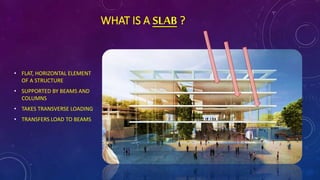
WHAT IS A SLAB ?
• FLAT, HORIZONTAL ELEMENT
OF A STRUCTURE
• SUPPORTED BY BEAMS AND
COLUMNS
• TAKES TRANSVERSE LOADING
• TRANSFERS LOAD TO BEAMS
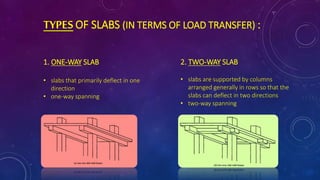
TYPESOF SLABS (IN TERMS OF LOAD TRANSFER) :
1. ONE-WAY SLAB
• slabs that primarily deflect in one
direction
• one-way spanning
2. TWO-WAY SLAB
• slabs are supported by columns
arranged generally in rows so that the
slabs can deflect in two directions
• two-way spanning
TYPES OF SLAB (IN TERMS OF SUPPORT) :
• Simply supported slab
• Cantilever slab
• Overhanging slab
• Fixed slab
• Continuous slab
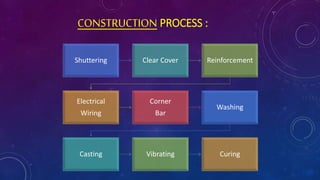
CONSTRUCTION PROCESS :
Shuttering Clear Cover Reinforcement
Electrical
Wiring
Corner
Bar
Washing
Casting Vibrating Curing
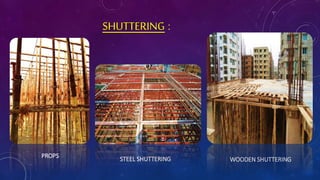
SHUTTERING :
STEEL SHUTTERING WOODEN SHUTTERING
PROPS
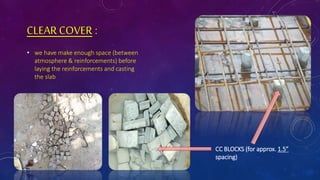
CLEARCOVER :
• we have make enough space (between
atmosphere & reinforcements) before
laying the reinforcements and casting
the slab
CC BLOCKS (for approx. 1.5”
spacing)
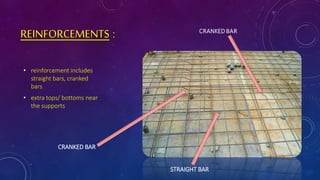
REINFORCEMENTS :
• reinforcement includes
straight bars, cranked
bars
• extra tops/ bottoms near
the supports
CRANKED BAR
STRAIGHT BAR
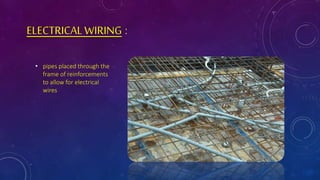
ELECTRICALWIRING :
• pipes placed through the
frame of reinforcements
to allow for electrical
wires
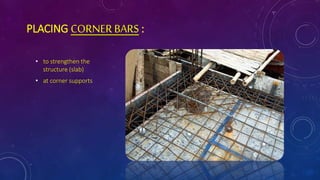
PLACING CORNERBARS:
• to strengthen the
structure (slab)
• at corner supports
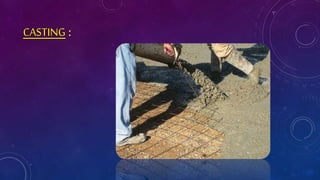
CASTING :
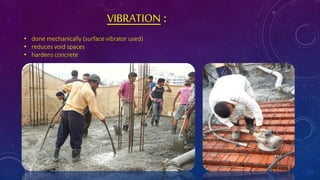
VIBRATION :
• done mechanically (surface vibrator used)
• reduces void spaces
• hardens concrete
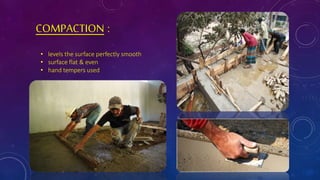
COMPACTION :
• levels the surface perfectly smooth
• surface flat & even
• hand tempers used
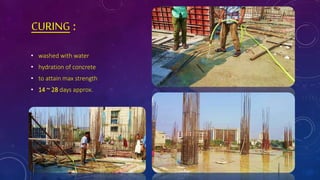
CURING :
• washed with water
• hydration of concrete
• to attain max strength
• 14 ~ 28 days approx.
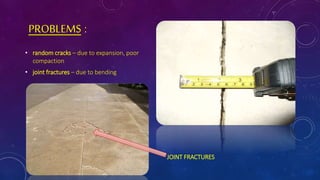
PROBLEMS :
• random cracks – due to expansion, poor
compaction
• joint fractures – due to bending
JOINT FRACTURES
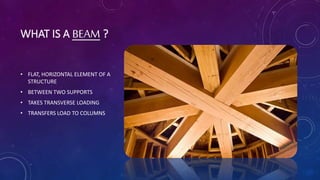
WHAT IS A BEAM ?
• FLAT, HORIZONTAL ELEMENT OF A
STRUCTURE
• BETWEEN TWO SUPPORTS
• TAKES TRANSVERSE LOADING
• TRANSFERS LOAD TO COLUMNS
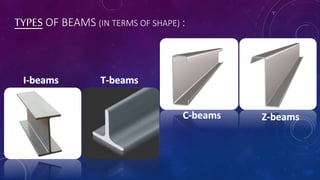
TYPES OF BEAMS (IN TERMS OF SHAPE) :
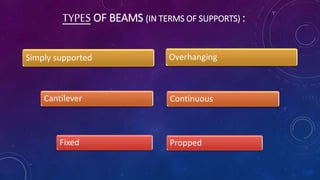
TYPES OF BEAMS (IN TERMS OF SUPPORTS) :
Simply supported
Cantilever
Fixed
Overhanging
Continuous
Propped
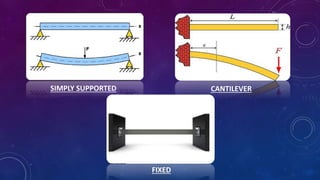
SIMPLY SUPPORTED CANTILEVER
FIXED
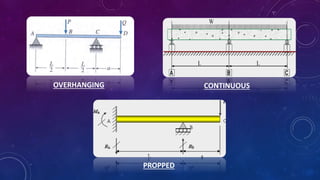
OVERHANGING CONTINUOUS
PROPPED
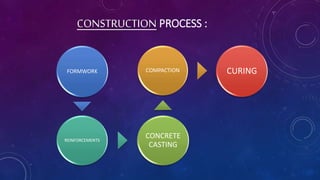
CONSTRUCTION PROCESS :
FORMWORK
REINFORCEMENTS
CONCRETE
CASTING
COMPACTION CURING
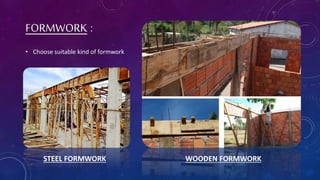
FORMWORK :
• Choose suitable kind of formwork
WOODEN FORMWORKSTEEL FORMWORK
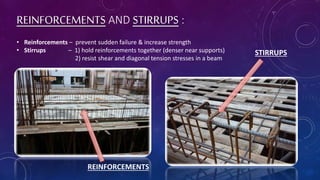
REINFORCEMENTS AND STIRRUPS :
REINFORCEMENTS
STIRRUPS
• Reinforcements – prevent sudden failure & increase strength
• Stirrups – 1) hold reinforcements together (denser near supports)
2) resist shear and diagonal tension stresses in a beam
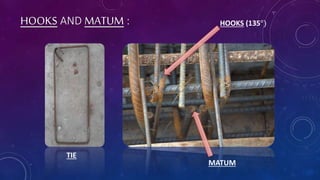
HOOKS AND MATUM : HOOKS (135°)
MATUM
TIE
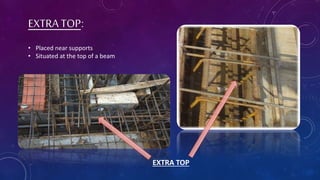
EXTRA TOP:
EXTRA TOP
• Placed near supports
• Situated at the top of a beam
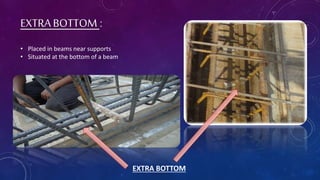
EXTRABOTTOM:
EXTRA BOTTOM
• Placed in beams near supports
• Situated at the bottom of a beam
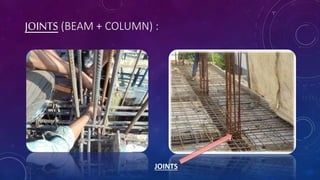
JOINTS (BEAM + COLUMN) :
JOINTS
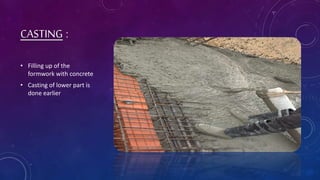
CASTING :
• Filling up of the
formwork with concrete
• Casting of lower part is
done earlier
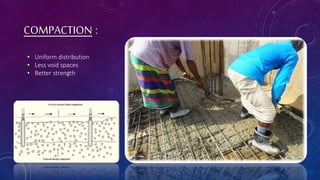
COMPACTION :
• Uniform distribution
• Less void spaces
• Better strength
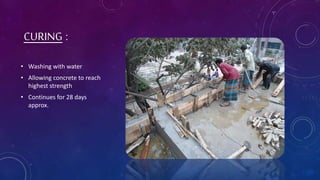
CURING :
• Washing with water
• Allowing concrete to reach
highest strength
• Continues for 28 days
approx.
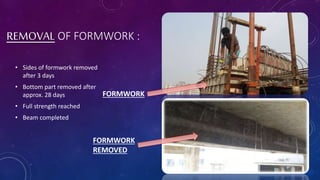
REMOVAL OF FORMWORK :
• Sides of formwork removed
after 3 days
• Bottom part removed after
approx. 28 days
• Full strength reached
• Beam completed
FORMWORK
FORMWORK
REMOVED
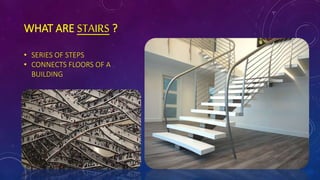
WHAT ARE STAIRS ?
• SERIES OF STEPS
• CONNECTS FLOORS OF A
BUILDING
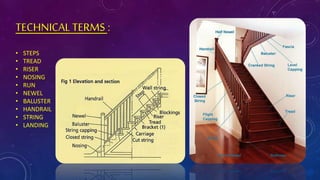
TECHNICALTERMS:
• STEPS
• TREAD
• RISER
• NOSING
• RUN
• NEWEL
• BALUSTER
• HANDRAIL
• STRING
• LANDING
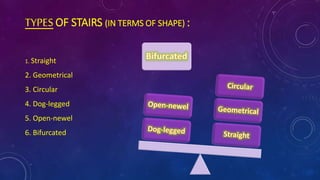
TYPESOF STAIRS (IN TERMS OF SHAPE) :
1. Straight
2. Geometrical
3. Circular
4. Dog-legged
5. Open-newel
6. Bifurcated
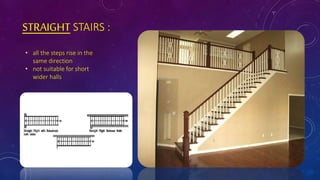
STRAIGHT STAIRS :
• all the steps rise in the
same direction
• not suitable for short
wider halls
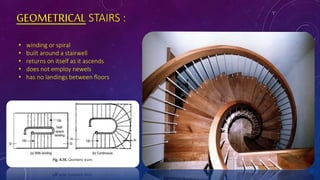
GEOMETRICAL STAIRS :
• winding or spiral
• built around a stairwell
• returns on itself as it ascends
• does not employ newels
• has no landings between floors
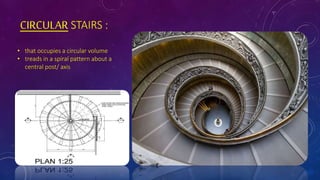
CIRCULAR STAIRS :
• that occupies a circular volume
• treads in a spiral pattern about a
central post/ axis
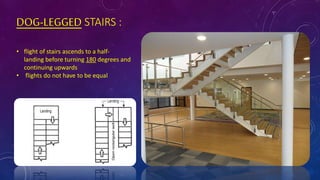
DOG-LEGGED STAIRS :
• flight of stairs ascends to a half-
landing before turning 180 degrees and
continuing upwards
• flights do not have to be equal
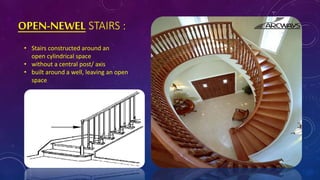
OPEN-NEWEL STAIRS :
• Stairs constructed around an
open cylindrical space
• without a central post/ axis
• built around a well, leaving an open
space
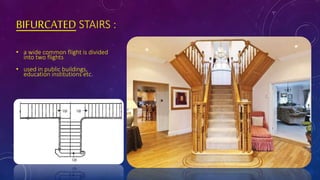
BIFURCATED STAIRS :
• a wide common flight is divided
into two flights
• used in public buildings,
education institutions etc.
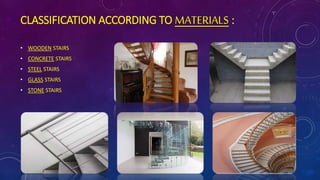
CLASSIFICATION ACCORDING TO MATERIALS :
• WOODEN STAIRS
• CONCRETE STAIRS
• STEEL STAIRS
• GLASS STAIRS
• STONE STAIRS
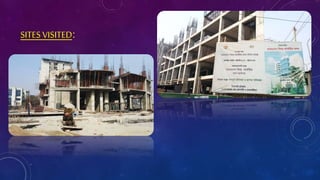
SITESVISITED:
Site engineer (AUST, batch 17)

Slab.beam.stair.ppt