1. List the 5 major functions of the
skeletal system.
A. Protection
B. Storage
C. Support
D. Blood cell production
E. Movement
2. List the 5 major functions of the
muscular system.
A. Pump blood through your body
B. Enable you to breathe
C. Hold you upright
D. Allow you to move
E. Move materials inside your body
3. List 4 types of moveable joints
and give example(s) of each.
A. Ball and socket- Shoulder and hip
B. Hinge- Knee and elbow
C. Gliding- Wrist and ankle
D. Pivot- Neck
4. You have fewer bones now than
as a baby. Why?
•Because as the baby grows it’s
cartilage is replaced by bone and they
fuse together
5. Explain why cartilage is
important in the skeletal system.
•It allows bones to move smoothly
across each other
6. Explain the difference between
voluntary and involuntary muscles
and give an example of each.
•Voluntary- You are able to control its
movement. Ex. Biceps and triceps
•Involuntary- You are unable to control it’s
movement. Ex. Heart, blood vessels,
stomach, etc.
7. Explain how muscle action
results in movement of your arm.
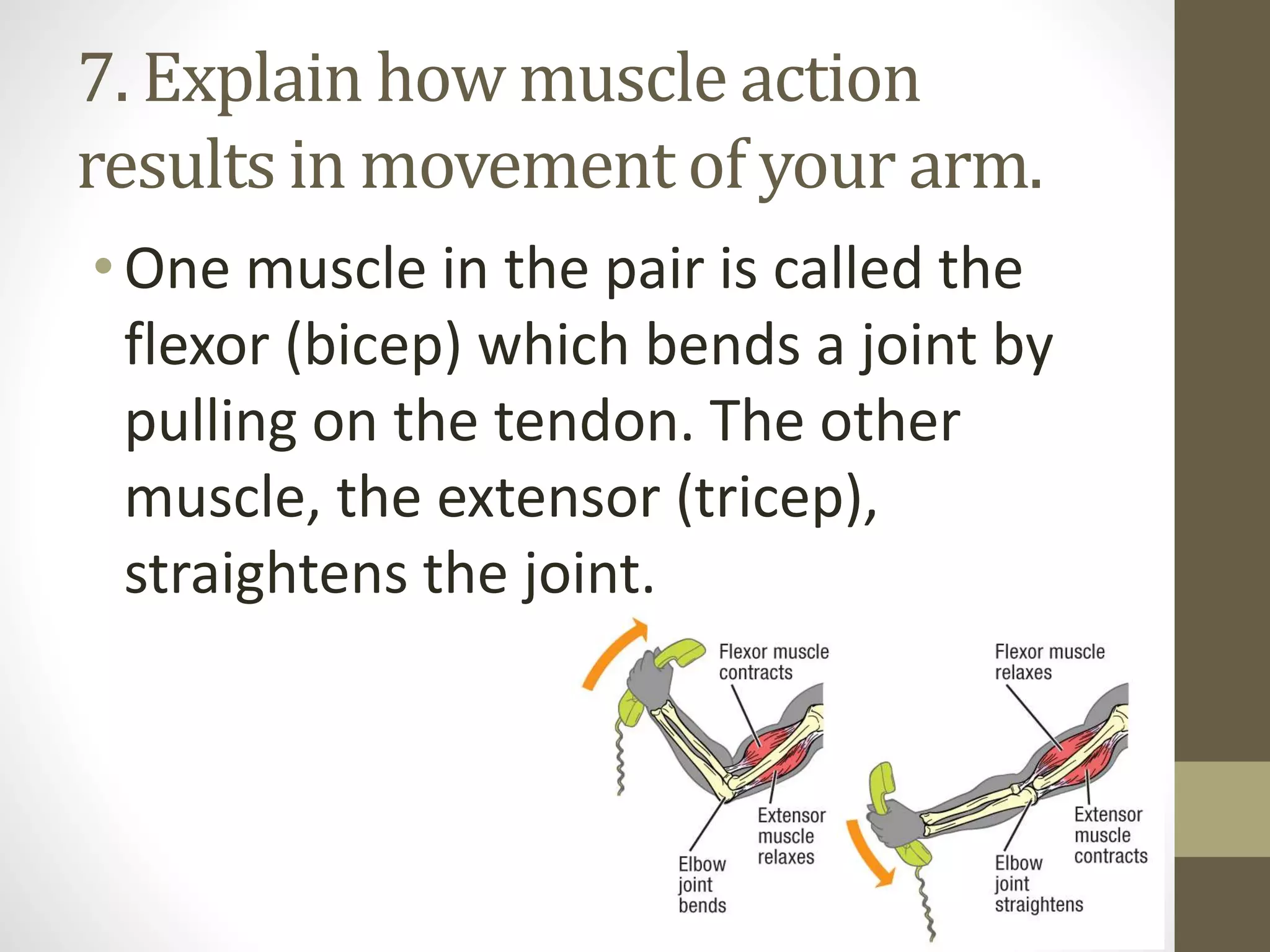
•One muscle in the pair is called the
flexor (bicep) which bends a joint by
pulling on the tendon. The other
muscle, the extensor (tricep),
straightens the joint.
8. Are bones dead or alive? Explain
your answer.
•Bones are alive! They have blood
vessels which supply nutrients and
nerves which signal pain
9. Explain what red and yellow
marrow is.
•Red marrow is the site of platelet and
red and white blood cell production.
Yellow marrow stores fat
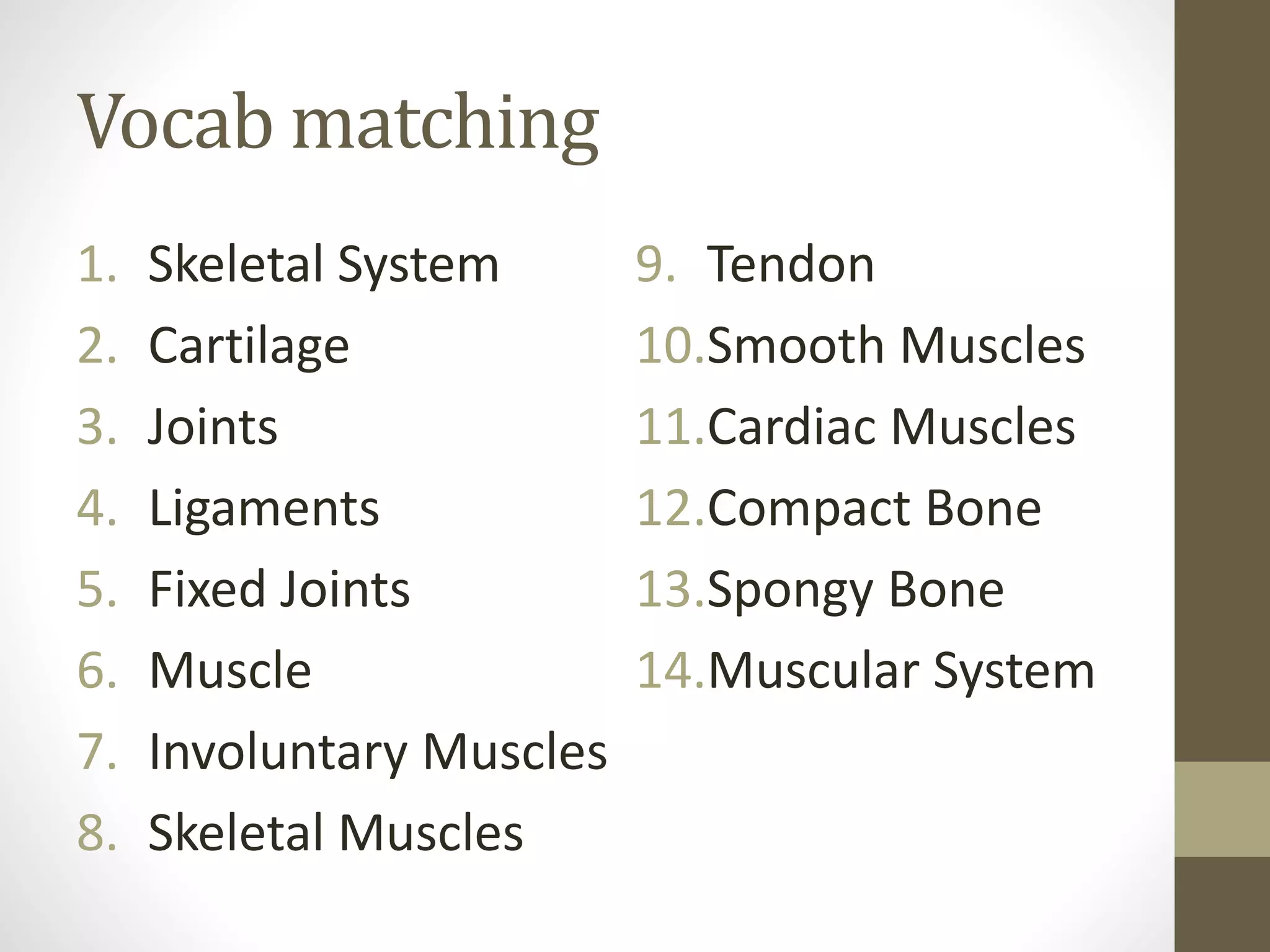
Vocab matching
1. Skeletal System
2. Cartilage
3. Joints
4. Ligaments
5. Fixed Joints
6. Muscle
7. Involuntary Muscles
8. Skeletal Muscles
9. Tendon
10.Smooth Muscles
11.Cardiac Muscles
12.Compact Bone
13.Spongy Bone
14.Muscular System
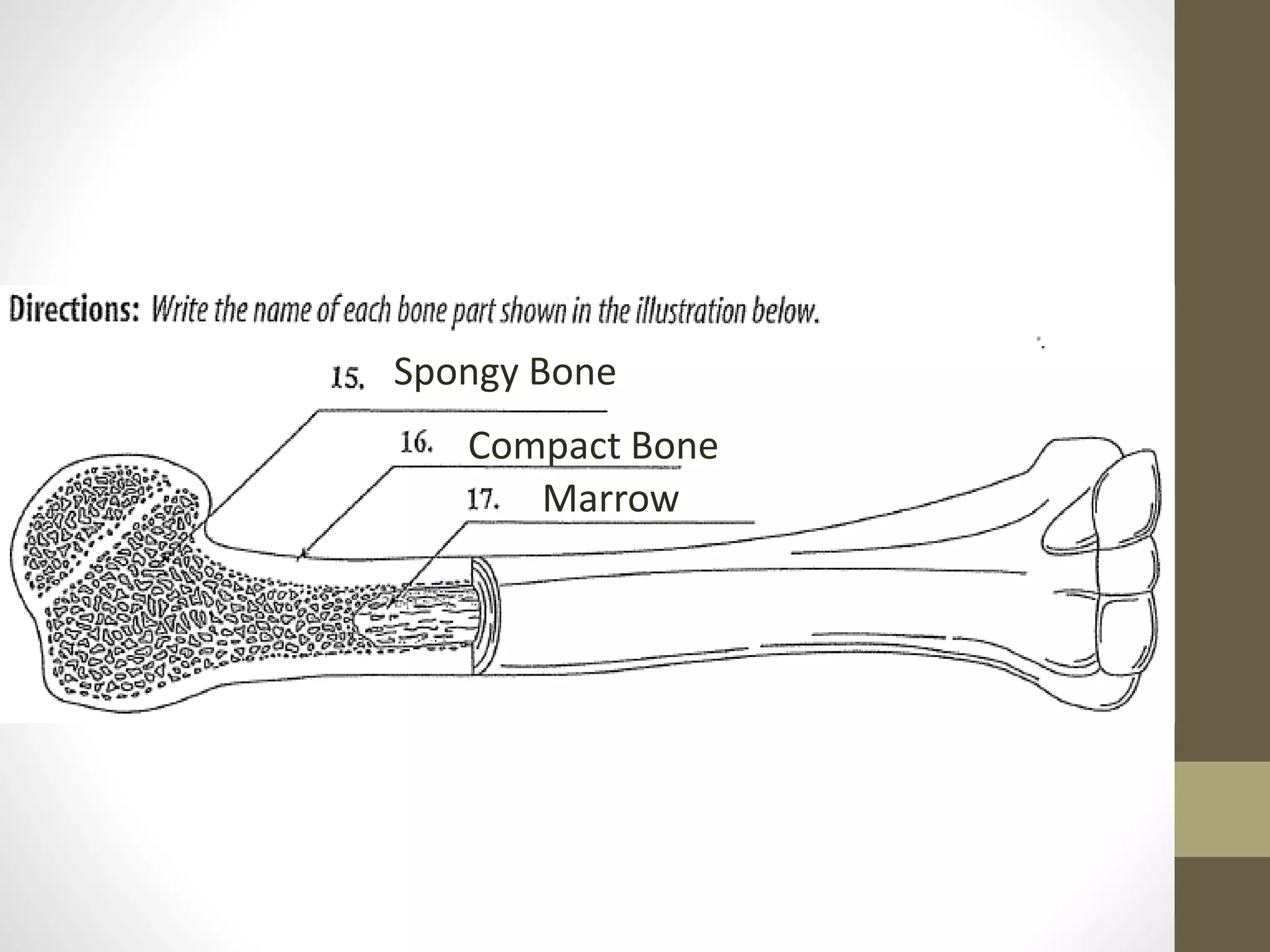
Spongy Bone
Compact Bone
Marrow

Skeletal muscular study guide answers (002)

  • 1.
    1. List the5 major functions of the skeletal system. A. Protection B. Storage C. Support D. Blood cell production E. Movement
  • 2.
    2. List the5 major functions of the muscular system. A. Pump blood through your body B. Enable you to breathe C. Hold you upright D. Allow you to move E. Move materials inside your body
  • 3.
    3. List 4types of moveable joints and give example(s) of each. A. Ball and socket- Shoulder and hip B. Hinge- Knee and elbow C. Gliding- Wrist and ankle D. Pivot- Neck
  • 4.
    4. You havefewer bones now than as a baby. Why? •Because as the baby grows it’s cartilage is replaced by bone and they fuse together
  • 5.
    5. Explain whycartilage is important in the skeletal system. •It allows bones to move smoothly across each other
  • 6.
    6. Explain thedifference between voluntary and involuntary muscles and give an example of each. •Voluntary- You are able to control its movement. Ex. Biceps and triceps •Involuntary- You are unable to control it’s movement. Ex. Heart, blood vessels, stomach, etc.
  • 7.
    7. Explain howmuscle action results in movement of your arm. •One muscle in the pair is called the flexor (bicep) which bends a joint by pulling on the tendon. The other muscle, the extensor (tricep), straightens the joint.
  • 8.
    8. Are bonesdead or alive? Explain your answer. •Bones are alive! They have blood vessels which supply nutrients and nerves which signal pain
  • 9.
    9. Explain whatred and yellow marrow is. •Red marrow is the site of platelet and red and white blood cell production. Yellow marrow stores fat
  • 10.
    Vocab matching 1. SkeletalSystem 2. Cartilage 3. Joints 4. Ligaments 5. Fixed Joints 6. Muscle 7. Involuntary Muscles 8. Skeletal Muscles 9. Tendon 10.Smooth Muscles 11.Cardiac Muscles 12.Compact Bone 13.Spongy Bone 14.Muscular System
  • 11.