Sixth Form Magazine Analysis
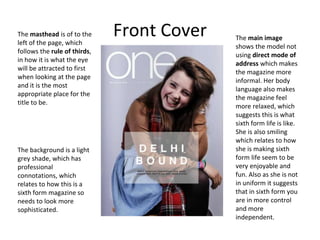
Front CoverThe masthead is of to the
left of the page, which
follows the rule of thirds,
in how it is what the eye
will be attracted to first
when looking at the page
and it is the most
appropriate place for the
title to be.
The background is a light
grey shade, which has
professional
connotations, which
relates to how this is a
sixth form magazine so
needs to look more
sophisticated.
The main image
shows the model not
using direct mode of
address which makes
the magazine more
informal. Her body
language also makes
the magazine feel
more relaxed, which
suggests this is what
sixth form life is like.
She is also smiling
which relates to how
she is making sixth
form life seem to be
very enjoyable and
fun. Also as she is not
in uniform it suggests
that in sixth form you
are in more control
and more
independent.
Contents Page
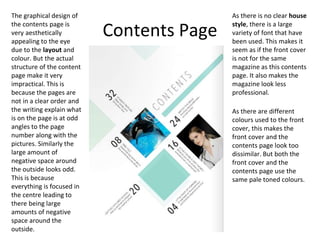
The graphical design of
the contents page is
very aesthetically
appealing to the eye
due to the layout and
colour. But the actual
structure of the content
page make it very
impractical. This is
because the pages are
not in a clear order and
the writing explain what
is on the page is at odd
angles to the page
number along with the
pictures. Similarly the
large amount of
negative space around
the outside looks odd.
This is because
everything is focused in
the centre leading to
there being large
amounts of negative
space around the
outside.
As there is no clear house
style, there is a large
variety of font that have
been used. This makes it
seem as if the front cover
is not for the same
magazine as this contents
page. It also makes the
magazine look less
professional.
As there are different
colours used to the front
cover, this makes the
front cover and the
contents page look too
dissimilar. But both the
front cover and the
contents page use the
same pale toned colours.
4
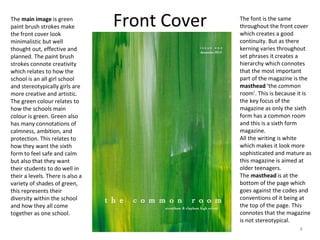
Front CoverThe main image is green
paint brush strokes make
the front cover look
minimalistic but well
thought out, effective and
planned. The paint brush
strokes connote creativity
which relates to how the
school is an all girl school
and stereotypically girls are
more creative and artistic.
The green colour relates to
how the schools main
colour is green. Green also
has many connotations of
calmness, ambition, and
protection. This relates to
how they want the sixth
form to feel safe and calm
but also that they want
their students to do well in
their a levels. There is also a
variety of shades of green,
this represents their
diversity within the school
and how they all come
together as one school.
The font is the same
throughout the front cover
which creates a good
continuity. But as there
kerning varies throughout
set phrases it creates a
hierarchy which connotes
that the most important
part of the magazine is the
masthead ‘the common
room’. This is because it is
the key focus of the
magazine as only the sixth
form has a common room
and this is a sixth form
magazine.
All the writing is white
which makes it look more
sophisticated and mature as
this magazine is aimed at
older teenagers.
The masthead is at the
bottom of the page which
goes against the codes and
conventions of it being at
the top of the page. This
connotes that the magazine
is not stereotypical.
5
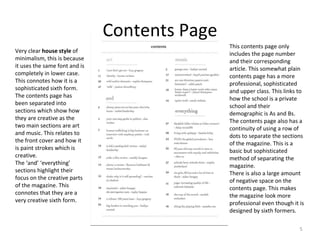
Very clear house style of
minimalism, this is because
it uses the same font and is
completely in lower case.
This connotes how it is a
sophisticated sixth form.
The contents page has
been separated into
sections which show how
they are creative as the
two main sections are art
and music. This relates to
the front cover and how it
is paint strokes which is
creative.
The ‘and’ ‘everything’
sections highlight their
focus on the creative parts
of the magazine. This
connotes that they are a
very creative sixth form.
This contents page only
includes the page number
and their corresponding
article. This somewhat plain
contents page has a more
professional, sophisticated
and upper class. This links to
how the school is a private
school and their
demographic is As and Bs.
The contents page also has a
continuity of using a row of
dots to separate the sections
of the magazine. This is a
basic but sophisticated
method of separating the
magazine.
There is also a large amount
of negative space on the
contents page. This makes
the magazine look more
professional even though it is
designed by sixth formers.
Contents Page
Front Cover
6
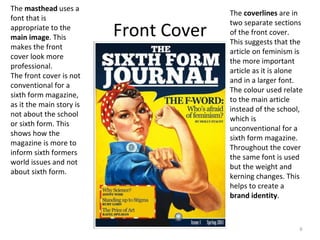
The masthead uses a
font that is
appropriate to the
main image. This
makes the front
cover look more
professional.
The front cover is not
conventional for a
sixth form magazine,
as it the main story is
not about the school
or sixth form. This
shows how the
magazine is more to
inform sixth formers
world issues and not
about sixth form.
The coverlines are in
two separate sections
of the front cover.
This suggests that the
article on feminism is
the more important
article as it is alone
and in a larger font.
The colour used relate
to the main article
instead of the school,
which is
unconventional for a
sixth form magazine.
Throughout the cover
the same font is used
but the weight and
kerning changes. This
helps to create a
brand identity.
Contents Page
7
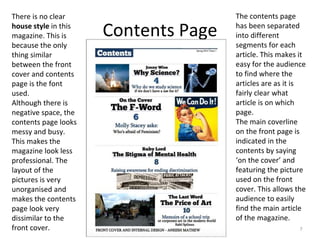
There is no clear
house style in this
magazine. This is
because the only
thing similar
between the front
cover and contents
page is the font
used.
Although there is
negative space, the
contents page looks
messy and busy.
This makes the
magazine look less
professional. The
layout of the
pictures is very
unorganised and
makes the contents
page look very
dissimilar to the
front cover.
The contents page
has been separated
into different
segments for each
article. This makes it
easy for the audience
to find where the
articles are as it is
fairly clear what
article is on which
page.
The main coverline
on the front page is
indicated in the
contents by saying
‘on the cover’ and
featuring the picture
used on the front
cover. This allows the
audience to easily
find the main article
of the magazine.

Sixth Form Magazine Analysis

  • 1.
  • 2.
    Front CoverThe mastheadis of to the left of the page, which follows the rule of thirds, in how it is what the eye will be attracted to first when looking at the page and it is the most appropriate place for the title to be. The background is a light grey shade, which has professional connotations, which relates to how this is a sixth form magazine so needs to look more sophisticated. The main image shows the model not using direct mode of address which makes the magazine more informal. Her body language also makes the magazine feel more relaxed, which suggests this is what sixth form life is like. She is also smiling which relates to how she is making sixth form life seem to be very enjoyable and fun. Also as she is not in uniform it suggests that in sixth form you are in more control and more independent.
  • 3.
    Contents Page The graphicaldesign of the contents page is very aesthetically appealing to the eye due to the layout and colour. But the actual structure of the content page make it very impractical. This is because the pages are not in a clear order and the writing explain what is on the page is at odd angles to the page number along with the pictures. Similarly the large amount of negative space around the outside looks odd. This is because everything is focused in the centre leading to there being large amounts of negative space around the outside. As there is no clear house style, there is a large variety of font that have been used. This makes it seem as if the front cover is not for the same magazine as this contents page. It also makes the magazine look less professional. As there are different colours used to the front cover, this makes the front cover and the contents page look too dissimilar. But both the front cover and the contents page use the same pale toned colours.
  • 4.
    4 Front CoverThe mainimage is green paint brush strokes make the front cover look minimalistic but well thought out, effective and planned. The paint brush strokes connote creativity which relates to how the school is an all girl school and stereotypically girls are more creative and artistic. The green colour relates to how the schools main colour is green. Green also has many connotations of calmness, ambition, and protection. This relates to how they want the sixth form to feel safe and calm but also that they want their students to do well in their a levels. There is also a variety of shades of green, this represents their diversity within the school and how they all come together as one school. The font is the same throughout the front cover which creates a good continuity. But as there kerning varies throughout set phrases it creates a hierarchy which connotes that the most important part of the magazine is the masthead ‘the common room’. This is because it is the key focus of the magazine as only the sixth form has a common room and this is a sixth form magazine. All the writing is white which makes it look more sophisticated and mature as this magazine is aimed at older teenagers. The masthead is at the bottom of the page which goes against the codes and conventions of it being at the top of the page. This connotes that the magazine is not stereotypical.
  • 5.
    5 Very clear housestyle of minimalism, this is because it uses the same font and is completely in lower case. This connotes how it is a sophisticated sixth form. The contents page has been separated into sections which show how they are creative as the two main sections are art and music. This relates to the front cover and how it is paint strokes which is creative. The ‘and’ ‘everything’ sections highlight their focus on the creative parts of the magazine. This connotes that they are a very creative sixth form. This contents page only includes the page number and their corresponding article. This somewhat plain contents page has a more professional, sophisticated and upper class. This links to how the school is a private school and their demographic is As and Bs. The contents page also has a continuity of using a row of dots to separate the sections of the magazine. This is a basic but sophisticated method of separating the magazine. There is also a large amount of negative space on the contents page. This makes the magazine look more professional even though it is designed by sixth formers. Contents Page
  • 6.
    Front Cover 6 The mastheaduses a font that is appropriate to the main image. This makes the front cover look more professional. The front cover is not conventional for a sixth form magazine, as it the main story is not about the school or sixth form. This shows how the magazine is more to inform sixth formers world issues and not about sixth form. The coverlines are in two separate sections of the front cover. This suggests that the article on feminism is the more important article as it is alone and in a larger font. The colour used relate to the main article instead of the school, which is unconventional for a sixth form magazine. Throughout the cover the same font is used but the weight and kerning changes. This helps to create a brand identity.
  • 7.
    Contents Page 7 There isno clear house style in this magazine. This is because the only thing similar between the front cover and contents page is the font used. Although there is negative space, the contents page looks messy and busy. This makes the magazine look less professional. The layout of the pictures is very unorganised and makes the contents page look very dissimilar to the front cover. The contents page has been separated into different segments for each article. This makes it easy for the audience to find where the articles are as it is fairly clear what article is on which page. The main coverline on the front page is indicated in the contents by saying ‘on the cover’ and featuring the picture used on the front cover. This allows the audience to easily find the main article of the magazine.