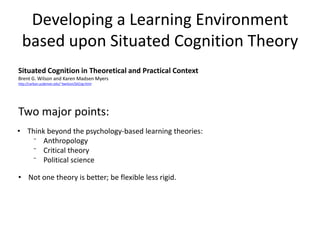
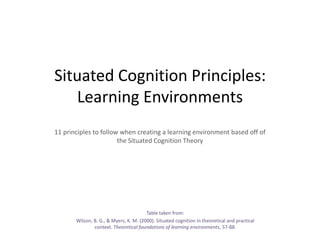
This document discusses situated cognition theory, immersive learning environments, and backward design. [1] Situated cognition proposes that learning occurs through authentic activities and tools within communities of practice. [2] An immersive learning environment embeds learning in relevant contexts to foster active, social, and experiential learning. [3] Backward design, created by Wiggins and McTighe, involves defining learning goals and assessments before planning instruction so that lessons help students achieve deep understanding.