Single Electron Transistor
By
Gaurav Jyoti Dutta
Electronics and communication engineering
What is single Electron Transistor(SET):
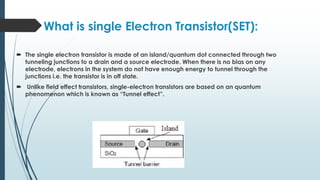
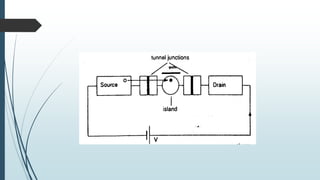
 The single electron transistor is made of an island/quantum dot connected through two
tunneling junctions to a drain and a source electrode. When there is no bias on any
electrode, electrons in the system do not have enough energy to tunnel through the
junctions i.e. the transistor is in off state.
 Unlike field effect transistors, single-electron transistors are based on an quantum
phenomenon which is known as “Tunnel effect”.
How SET works?/Behaviour
 To know the actual behavior of SET
we need to know few things :-
 1) Behavior of quantum dot/island.
 2)Coulomb Blockade.
 3)Temperature effect.
 4)Uncertainty principle.
 We will discuss about all this points in
detail:-
Structure and behavior of
Island/QUANTUM DOT:
 A quantum dot/island is a well for electrons. Electrons are trapped inside
the well.
 It is a island of semiconductor material such al
Alumenialarcenite(AlAs),GaliumArsanite(GaAs).
 The diameter of the quantum dot is less than 10nm.
 It acts like a capacitor. Because it can store charge.
 Energy of a the island 𝐸𝑐 =𝒆𝟐
/2C ;where C is the capacitance of the island.
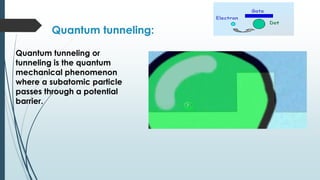
Quantum tunneling:
Quantum tunneling or
tunneling is the quantum
mechanical phenomenon
where a subatomic particle
passes through a potential
barrier.
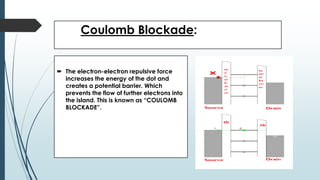
Coulomb Blockade:
 The electron-electron repulsive force
increases the energy of the dot and
creates a potential barrier. Which
prevents the flow of further electrons into
the island. This is known as “COULOMB
BLOCKADE”.
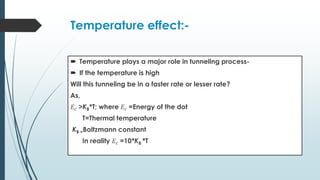
Temperature effect:-
 Temperature plays a major role in tunneling process-
 If the temperature is high
Will this tunneling be in a faster rate or lesser rate?
As,
𝐸𝑐 >KB*T; where 𝐸𝑐 =Energy of the dot
T=Thermal temperature
KB =Boltzmann constant
In reality 𝐸𝑐 =10*KB *T
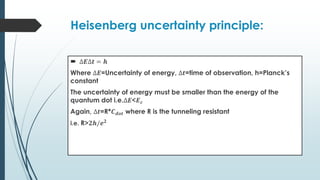
Heisenberg uncertainty principle:
 ∆𝑬∆𝒕 = 𝒉
Where ∆𝑬=Uncertainty of energy, ∆𝒕=time of observation, h=Planck’s
constant
The uncertainty of energy must be smaller than the energy of the
quantum dot i.e.∆𝑬<𝑬𝒄
Again, ∆𝒕=R*𝑪𝒅𝒐𝒕 where R is the tunneling resistant
i.e. R>𝟐𝒉/𝒆𝟐
V
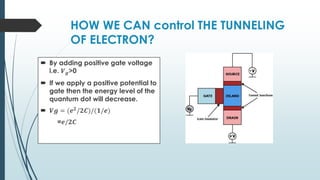
HOW WE CAN control THE TUNNELING
OF ELECTRON?
 By adding positive gate voltage
i.e. 𝑽𝒈>0
 If we apply a positive potential to
gate then the energy level of the
quantum dot will decrease.
 𝑽𝒈 = (𝒆𝟐
/𝟐𝑪)/(𝟏/𝒆)
=𝒆/𝟐𝑪
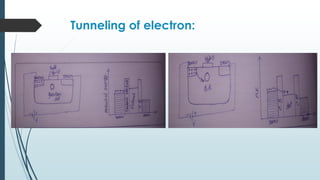
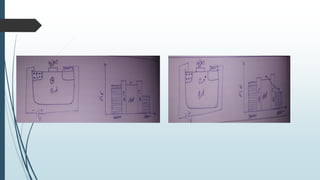
Tunneling of electron:
Gate Voltage Vs Conductance:[5]
Why set?
Advantages :-
1. Very low energy consumption
2. High sensitivity
3. Fast operation: only a few electrons (<100) are transferred, therefore,
the charge/discharge process might be faster than those of
conventional devices[4]
4. Co-integration with CMOS circuits.
Limitations of set:
 Disadvantages:-
1. Integration of SETs in large scale
2. Difficulty to link SETs with the outside environment
3. Practically difficult to fabricate SETs
4. Room temperature operations
Applications of SET:
 Detection of Infrared Radiation[3]:The single-electron transistor can also be
used to detect infrared signals at room temperature. By exciting electrons
over an electrically induced energy barrier, both the range of detectable
wavelengths and the sensitivity of the device can be controlled. The sensor
works when an infrared signal excites.
 Supersensitive Electrometer :The high sensitivity of single-electron transistors
have enabled them as electrometers in unique physical experiments
 Ultrasensitive Microwave Detector[3]
 Quantum computers
CONCLUSION:
 The single-electron transistor is a very interesting device that can
basically take over the same functions of nowadays transistors, yet
the way it functions and operates is very different than field-effect
transistors. Although the SET might not replace the FET in future
electronic and logical systems it will be a very valuable tool for the
investigation of the quantum computer.
 The possibilities of the SET as ultra-sensitive electrometer are very
promising and they are still to be fully investigated in future
research.
REFERENCES:
1. P. Mikheenko, Single electron tunneling, 2019, Universitet i Oslo
2. Rai C, Khursheed A and Haque FZ, “Review on Single Electron Transistor (SET): Emerging
Device in Nanotechnology”
3. Monika Gupta, “A Study of Single Electron Transistor (SET)”, International Journal of Science
and Research (IJSR)
4. Instuctor:Pei-Wen Li,Dept of E.E NCU:Single-Electron Transistors
5. Yasuo Takahashi,Silicon Single-Electron Devices and Their Applications, Conference:
Multiple-Valued Logic, 2000. (ISMVL 2000) Proceedings. 30th IEEE International Symposium on
Youtube tutorial links:
1. https://www.youtube.com/watch?v=YcHprvkD_lY
2. https://www.youtube.com/watch?v=ZTxR2n2mvjc
3. https://www.youtube.com/watch?v=WPZLRtyvEqo
Single Electron Transistor(SET)

Single Electron Transistor(SET)

  • 1.
    Single Electron Transistor By GauravJyoti Dutta Electronics and communication engineering
  • 2.
    What is singleElectron Transistor(SET):  The single electron transistor is made of an island/quantum dot connected through two tunneling junctions to a drain and a source electrode. When there is no bias on any electrode, electrons in the system do not have enough energy to tunnel through the junctions i.e. the transistor is in off state.  Unlike field effect transistors, single-electron transistors are based on an quantum phenomenon which is known as “Tunnel effect”.
  • 3.
    How SET works?/Behaviour To know the actual behavior of SET we need to know few things :-  1) Behavior of quantum dot/island.  2)Coulomb Blockade.  3)Temperature effect.  4)Uncertainty principle.  We will discuss about all this points in detail:-
  • 4.
    Structure and behaviorof Island/QUANTUM DOT:  A quantum dot/island is a well for electrons. Electrons are trapped inside the well.  It is a island of semiconductor material such al Alumenialarcenite(AlAs),GaliumArsanite(GaAs).  The diameter of the quantum dot is less than 10nm.  It acts like a capacitor. Because it can store charge.  Energy of a the island 𝐸𝑐 =𝒆𝟐 /2C ;where C is the capacitance of the island.
  • 5.
    Quantum tunneling: Quantum tunnelingor tunneling is the quantum mechanical phenomenon where a subatomic particle passes through a potential barrier.
  • 6.
    Coulomb Blockade:  Theelectron-electron repulsive force increases the energy of the dot and creates a potential barrier. Which prevents the flow of further electrons into the island. This is known as “COULOMB BLOCKADE”.
  • 7.
    Temperature effect:-  Temperatureplays a major role in tunneling process-  If the temperature is high Will this tunneling be in a faster rate or lesser rate? As, 𝐸𝑐 >KB*T; where 𝐸𝑐 =Energy of the dot T=Thermal temperature KB =Boltzmann constant In reality 𝐸𝑐 =10*KB *T
  • 8.
    Heisenberg uncertainty principle: ∆𝑬∆𝒕 = 𝒉 Where ∆𝑬=Uncertainty of energy, ∆𝒕=time of observation, h=Planck’s constant The uncertainty of energy must be smaller than the energy of the quantum dot i.e.∆𝑬<𝑬𝒄 Again, ∆𝒕=R*𝑪𝒅𝒐𝒕 where R is the tunneling resistant i.e. R>𝟐𝒉/𝒆𝟐
  • 9.
  • 10.
    HOW WE CANcontrol THE TUNNELING OF ELECTRON?  By adding positive gate voltage i.e. 𝑽𝒈>0  If we apply a positive potential to gate then the energy level of the quantum dot will decrease.  𝑽𝒈 = (𝒆𝟐 /𝟐𝑪)/(𝟏/𝒆) =𝒆/𝟐𝑪
  • 11.
  • 13.
    Gate Voltage VsConductance:[5]
  • 14.
    Why set? Advantages :- 1.Very low energy consumption 2. High sensitivity 3. Fast operation: only a few electrons (<100) are transferred, therefore, the charge/discharge process might be faster than those of conventional devices[4] 4. Co-integration with CMOS circuits.
  • 15.
    Limitations of set: Disadvantages:- 1. Integration of SETs in large scale 2. Difficulty to link SETs with the outside environment 3. Practically difficult to fabricate SETs 4. Room temperature operations
  • 16.
    Applications of SET: Detection of Infrared Radiation[3]:The single-electron transistor can also be used to detect infrared signals at room temperature. By exciting electrons over an electrically induced energy barrier, both the range of detectable wavelengths and the sensitivity of the device can be controlled. The sensor works when an infrared signal excites.  Supersensitive Electrometer :The high sensitivity of single-electron transistors have enabled them as electrometers in unique physical experiments  Ultrasensitive Microwave Detector[3]  Quantum computers
  • 17.
    CONCLUSION:  The single-electrontransistor is a very interesting device that can basically take over the same functions of nowadays transistors, yet the way it functions and operates is very different than field-effect transistors. Although the SET might not replace the FET in future electronic and logical systems it will be a very valuable tool for the investigation of the quantum computer.  The possibilities of the SET as ultra-sensitive electrometer are very promising and they are still to be fully investigated in future research.
  • 18.
    REFERENCES: 1. P. Mikheenko,Single electron tunneling, 2019, Universitet i Oslo 2. Rai C, Khursheed A and Haque FZ, “Review on Single Electron Transistor (SET): Emerging Device in Nanotechnology” 3. Monika Gupta, “A Study of Single Electron Transistor (SET)”, International Journal of Science and Research (IJSR) 4. Instuctor:Pei-Wen Li,Dept of E.E NCU:Single-Electron Transistors 5. Yasuo Takahashi,Silicon Single-Electron Devices and Their Applications, Conference: Multiple-Valued Logic, 2000. (ISMVL 2000) Proceedings. 30th IEEE International Symposium on Youtube tutorial links: 1. https://www.youtube.com/watch?v=YcHprvkD_lY 2. https://www.youtube.com/watch?v=ZTxR2n2mvjc 3. https://www.youtube.com/watch?v=WPZLRtyvEqo