ANIRUDH KUMAR
ASST. PROF. COF, DHOLI
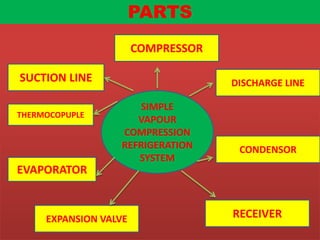
PARTS
SIMPLE
VAPOUR
COMPRESSION
REFRIGERATION
SYSTEM
DISCHARGE LINE
COMPRESSOR
CONDENSOR
RECEIVEREXPANSION VALVE
EVAPORATOR
THERMOCOPUPLE
SUCTION LINE
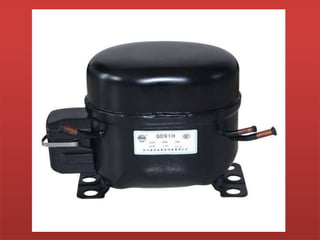
COMPRESSOR
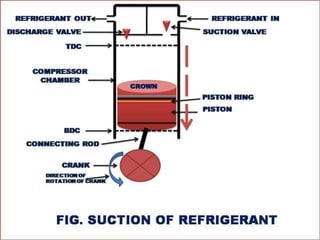
 IT RECEIVE VAPOUR FORM OF REFRIGERANT
FROM RECEIVER THOUGH SUCTION LINE.
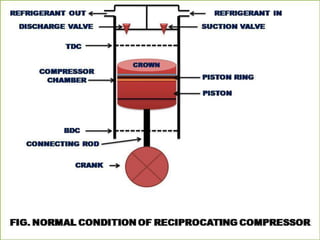
 THE RECEIVED REFRIGERANT GET COMPRESSED IN
COMPRESSOR DUE TO MOVEMENT OF PISTON IN
COMPRESSION CHAMBER.
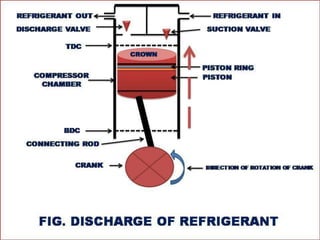
 DUE TO COMPRESSION, TEMP. AND PRESSURE OF
REFRIGERANT GET INCREASED.
 THE HIGH TEMP. AND HIGH PRESSURE
REFRIGERANT GET RELEASED FROM COMPRESSOR
TO CONDENSOR VIA DISCHARGE LINE.
DISCHARGE LINE
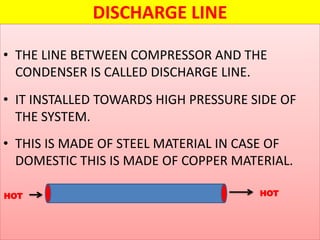
• THE LINE BETWEEN COMPRESSOR AND THE
CONDENSER IS CALLED DISCHARGE LINE.
• IT INSTALLED TOWARDS HIGH PRESSURE SIDE OF
THE SYSTEM.
• THIS IS MADE OF STEEL MATERIAL IN CASE OF
DOMESTIC THIS IS MADE OF COPPER MATERIAL.
HOT HOT
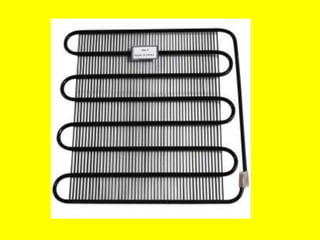
CONDENSOR
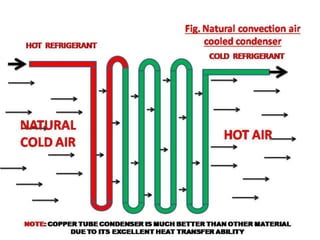
• WHEN HIGH SUPERHEATED REFRIGERANT VAPOUR
COMES IN CONDENSER FROM COMPRESSOR, ITS
TEMPERATURE IS BROUGHT DOWN BY AIR OR
WATER OR BOTH.
• THE HEAT GOES FROM VAPOUR TO CONDENSING
MEDIUM AND REFRIGERANT GETS TRANSFORMED
INTO LIQUID.
CONDENSOR
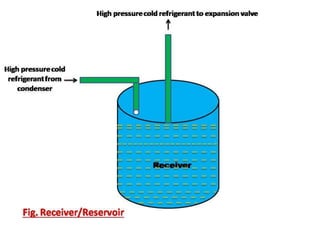
RECEIVER
• This is a storage tank for the refrigerant which is fixed
below the condenser, and is filled with refrigerant.
• The refrigerant inside the receiver is under high
pressure.
• The receiver has inlet valve, outlet valve, safety valve
etc.
• The receiver is fitted in the evaporation type condenser
or water cooled condenser.
• There is no receiver in domestic refrigerators.
• The refrigerants are to be accumulated in the
condenser of the domestic refrigerator.
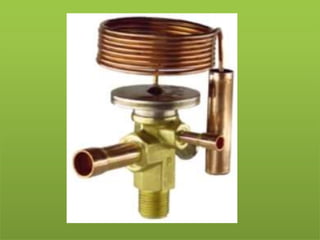
EXPANSION VALVE
• It is a refrigerant controlling device fitted in
between receiver and evaporator.
• The function of the controlling devices is to reduce
high pressure liquid refrigerant from the receiver to
low pressure in the correct quantities and to feed
the liquid refrigerant to the evaporator coils, so as
to operate a system at maximum efficiency without
overloading the compressor.
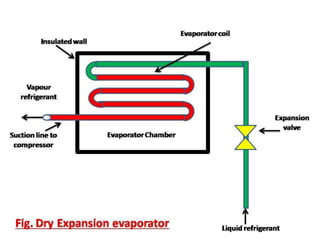
EVAPORATOR
• It is a main component of refrigeration system.
• It is a chamber like structure in which product get
loaded.
• In this chamber the refrigerant pipe line fixed on
the top to extract heat from product.
• The heat extracted in the form of latent heat.
• When refrigerant gain heat from surroundings, the
liquid form of refrigerant get converted into vapour
form.
• After saturation of heat extraction limit, refrigerant
released out via. Thermocouple.
THERMOCOUPLE
• IT IS A CONTROLLING DEVICE.
• IT USED TO CHECK THE TEMPERATURE OF
REFRIGERANT.
• IF REFRIGERANT RECEIVED THEIR DESIRED
TEMPERATURE THEN ONLY THERMOCOUPLE ALLOW
TO MOVE FURTHER TOWARDS SUCTION LINE.
SUCTION LINE
• THE LINE THROUGH WHICH REFRIGERANT
FLOWS FROM EVAPORATOR TO THE
COMPRESSOR IS CALLED SUCTION LINE.
• THESE SUCTION LINES ARE MADE OF
PURE STEEL MATERIAL. IN CASE OF
DOMESTIC THESE ARE MADE OF COPPER
MATERIAL.
ADVANTAGES
• It has smaller size for the given capacity of
refrigeration.
• It has less running cost.
• It can be employed over a large range of
temperatures.
• The coefficient of performance is high.
DISADVANTAGES
• The initial cost is high.
• The prevention of leakages of the refrigerant is the
major problem in this system.
REFRIGERATION EFFECT
• A refrigeration machine can be called efficient only
of it can create maximum refrigerating effect for the
work allotted to it.
• Refrigeration effect means that cooling action
should be done at the rate of heat absorption from
any place in a cycle.
COEFFICIENT OF PERFORMANCE
• The rate of refrigerating effect to the heat equal to
the supplied work is called coefficient of
performance.
Refrigerating effect
C.O.P. = ----------------------------
In put work

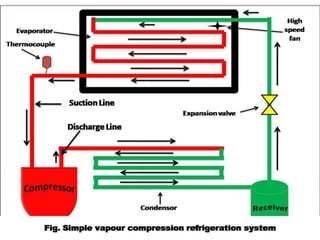
Simple vapour compression refrigeration system

  • 1.
  • 3.
  • 4.
    COMPRESSOR  IT RECEIVEVAPOUR FORM OF REFRIGERANT FROM RECEIVER THOUGH SUCTION LINE.  THE RECEIVED REFRIGERANT GET COMPRESSED IN COMPRESSOR DUE TO MOVEMENT OF PISTON IN COMPRESSION CHAMBER.  DUE TO COMPRESSION, TEMP. AND PRESSURE OF REFRIGERANT GET INCREASED.  THE HIGH TEMP. AND HIGH PRESSURE REFRIGERANT GET RELEASED FROM COMPRESSOR TO CONDENSOR VIA DISCHARGE LINE.
  • 9.
    DISCHARGE LINE • THELINE BETWEEN COMPRESSOR AND THE CONDENSER IS CALLED DISCHARGE LINE. • IT INSTALLED TOWARDS HIGH PRESSURE SIDE OF THE SYSTEM. • THIS IS MADE OF STEEL MATERIAL IN CASE OF DOMESTIC THIS IS MADE OF COPPER MATERIAL. HOT HOT
  • 10.
    CONDENSOR • WHEN HIGHSUPERHEATED REFRIGERANT VAPOUR COMES IN CONDENSER FROM COMPRESSOR, ITS TEMPERATURE IS BROUGHT DOWN BY AIR OR WATER OR BOTH. • THE HEAT GOES FROM VAPOUR TO CONDENSING MEDIUM AND REFRIGERANT GETS TRANSFORMED INTO LIQUID.
  • 12.
  • 13.
    RECEIVER • This isa storage tank for the refrigerant which is fixed below the condenser, and is filled with refrigerant. • The refrigerant inside the receiver is under high pressure. • The receiver has inlet valve, outlet valve, safety valve etc. • The receiver is fitted in the evaporation type condenser or water cooled condenser. • There is no receiver in domestic refrigerators. • The refrigerants are to be accumulated in the condenser of the domestic refrigerator.
  • 15.
    EXPANSION VALVE • Itis a refrigerant controlling device fitted in between receiver and evaporator. • The function of the controlling devices is to reduce high pressure liquid refrigerant from the receiver to low pressure in the correct quantities and to feed the liquid refrigerant to the evaporator coils, so as to operate a system at maximum efficiency without overloading the compressor.
  • 17.
    EVAPORATOR • It isa main component of refrigeration system. • It is a chamber like structure in which product get loaded. • In this chamber the refrigerant pipe line fixed on the top to extract heat from product. • The heat extracted in the form of latent heat. • When refrigerant gain heat from surroundings, the liquid form of refrigerant get converted into vapour form. • After saturation of heat extraction limit, refrigerant released out via. Thermocouple.
  • 19.
    THERMOCOUPLE • IT ISA CONTROLLING DEVICE. • IT USED TO CHECK THE TEMPERATURE OF REFRIGERANT. • IF REFRIGERANT RECEIVED THEIR DESIRED TEMPERATURE THEN ONLY THERMOCOUPLE ALLOW TO MOVE FURTHER TOWARDS SUCTION LINE.
  • 20.
    SUCTION LINE • THELINE THROUGH WHICH REFRIGERANT FLOWS FROM EVAPORATOR TO THE COMPRESSOR IS CALLED SUCTION LINE. • THESE SUCTION LINES ARE MADE OF PURE STEEL MATERIAL. IN CASE OF DOMESTIC THESE ARE MADE OF COPPER MATERIAL.
  • 21.
    ADVANTAGES • It hassmaller size for the given capacity of refrigeration. • It has less running cost. • It can be employed over a large range of temperatures. • The coefficient of performance is high.
  • 22.
    DISADVANTAGES • The initialcost is high. • The prevention of leakages of the refrigerant is the major problem in this system.
  • 23.
    REFRIGERATION EFFECT • Arefrigeration machine can be called efficient only of it can create maximum refrigerating effect for the work allotted to it. • Refrigeration effect means that cooling action should be done at the rate of heat absorption from any place in a cycle.
  • 24.
    COEFFICIENT OF PERFORMANCE •The rate of refrigerating effect to the heat equal to the supplied work is called coefficient of performance. Refrigerating effect C.O.P. = ---------------------------- In put work