
SILOS 
MASS GRAIN STORAGE UNITS
Silos 
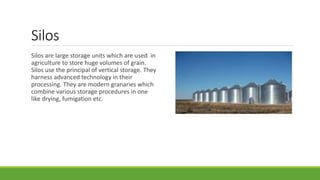
Silos are large storage units which are used in 
agriculture to store huge volumes of grain. 
Silos use the principal of vertical storage. They 
harness advanced technology in their 
processing. They are modern granaries which 
combine various storage procedures in one 
like drying, fumigation etc.
Types of silos 
There are three types of silos: 
1. Tower silos 
2. Bag silos 
3. Bunker silos
Tower silo 
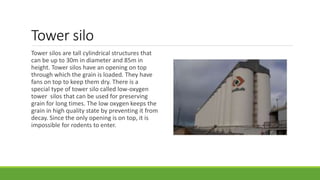
Tower silos are tall cylindrical structures that 
can be up to 30m in diameter and 85m in 
height. Tower silos have an opening on top 
through which the grain is loaded. They have 
fans on top to keep them dry. There is a 
special type of tower silo called low-oxygen 
tower silos that can be used for preserving 
grain for long times. The low oxygen keeps the 
grain in high quality state by preventing it from 
decay. Since the only opening is on top, it is 
impossible for rodents to enter.
Bag silo 
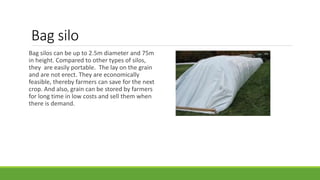
Bag silos can be up to 2.5m diameter and 75m 
in height. Compared to other types of silos, 
they are easily portable. The lay on the grain 
and are not erect. They are economically 
feasible, thereby farmers can save for the next 
crop. And also, grain can be stored by farmers 
for long time in low costs and sell them when 
there is demand.
Bunker silo 
Bunker silos are trenches ,usually with 
concrete walls ,that are filled and packed with 
tractors and loaders. The filled trench is 
covered with a plastic tarp to make it airtight. 
These silos are usually unloaded with a tractor 
and loader. They are inexpensive and 
especially well suited to very large operations
Pros and cons 
PROS 
Prevention against rodent infestation 
Sterile 
Occupies less space 
Maintains optimum storage conditions. 
CONS 
 High risk of fire 
Bridging
Silos vs granaries 
SILOS 
Implement new technology 
Maintain favourable conditions 
Eliminate chance of degradation 
Prevents rodent infestation 
GRANARIES 
Ancient 
Uncontrollable conditions 
Higher chances of degradation 
Rodent infestations reported

"Silos-Mass Grain storage units"My presentation for exhibition at school.

  • 1.
    SILOS MASS GRAINSTORAGE UNITS
  • 2.
    Silos Silos arelarge storage units which are used in agriculture to store huge volumes of grain. Silos use the principal of vertical storage. They harness advanced technology in their processing. They are modern granaries which combine various storage procedures in one like drying, fumigation etc.
  • 3.
    Types of silos There are three types of silos: 1. Tower silos 2. Bag silos 3. Bunker silos
  • 4.
    Tower silo Towersilos are tall cylindrical structures that can be up to 30m in diameter and 85m in height. Tower silos have an opening on top through which the grain is loaded. They have fans on top to keep them dry. There is a special type of tower silo called low-oxygen tower silos that can be used for preserving grain for long times. The low oxygen keeps the grain in high quality state by preventing it from decay. Since the only opening is on top, it is impossible for rodents to enter.
  • 5.
    Bag silo Bagsilos can be up to 2.5m diameter and 75m in height. Compared to other types of silos, they are easily portable. The lay on the grain and are not erect. They are economically feasible, thereby farmers can save for the next crop. And also, grain can be stored by farmers for long time in low costs and sell them when there is demand.
  • 6.
    Bunker silo Bunkersilos are trenches ,usually with concrete walls ,that are filled and packed with tractors and loaders. The filled trench is covered with a plastic tarp to make it airtight. These silos are usually unloaded with a tractor and loader. They are inexpensive and especially well suited to very large operations
  • 7.
    Pros and cons PROS Prevention against rodent infestation Sterile Occupies less space Maintains optimum storage conditions. CONS  High risk of fire Bridging
  • 8.
    Silos vs granaries SILOS Implement new technology Maintain favourable conditions Eliminate chance of degradation Prevents rodent infestation GRANARIES Ancient Uncontrollable conditions Higher chances of degradation Rodent infestations reported