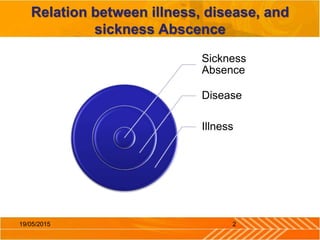
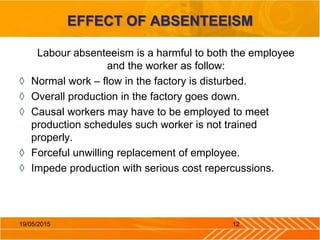
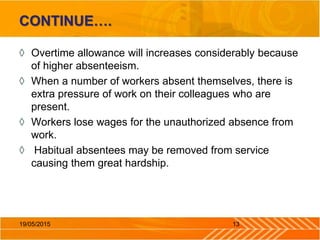
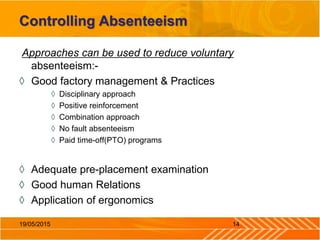
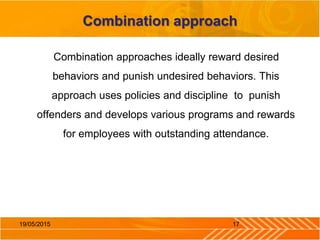
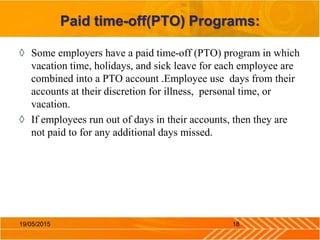
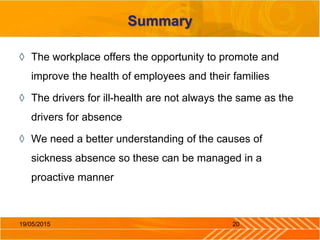
This document discusses sickness absence and its relationship to illness and disease. It defines illness, disease, and sickness and notes that sickness absence rates in India have increased from 8-13% in the early 1950s to 15-20% in recent years. Individual, work-related, and non-work factors can influence sickness absence. Absenteeism can be voluntary or involuntary and has several causes. High absenteeism negatively impacts productivity and costs. Various approaches can be used to control absenteeism, including disciplinary action, positive reinforcement, and paid time-off programs. Effective absence management aims to create work environments where employees feel less inclined to miss work.





![CTEV [ clubfoot] DR ARUN LAL ,DR MOHAMED ASHRAF travancore medical college k...](https://cdn.slidesharecdn.com/ss_thumbnails/ctevclubfootdrarunlaldrmohamedashraftravancoremedicalcollegekollamkeralaindia-260208063247-18fc466c-thumbnail.jpg?width=640&height=640&fit=bounds)


