Ivabradine in 
ORIGINAL ARTICLE 
Stable Coronary Artery Disease without 
Clinical Heart Failure 
Kim Fox et al,NEJM,Aug 31,2014
Does it Signify the benefit of Ivabradine 
or Ignify the existing controversies??
Background 
• An elevated heart rate (HR) is established as a marker of 
cardiovascular risk in the general population and among patients 
with cardiovascular disease. 
• Ivabradine inhibits the If (pacemaker) current in the sinoatrial 
node and reduces the heart rate without affecting BP or LV 
systolic function. 
• It has been shown to lessen symptoms and reduce ischemia in 
patients with stable angina pectoris. 
Efficacy of Ivabradine,compared with atenolol in pts with CSA,Eur Heart J 2005;26:2529-36.
• Ivabradine is known to improve outcomes in patients with systolic 
heart failure. 
SHIFT trial,Lancet 2010;376:875-85. 
• A trial of Ivabradine involving patients with coronary artery disease 
and left ventricular systolic dysfunction did not show clinical 
benefit. Post hoc analyses suggested that Ivabradine improved 
outcomes in patients who had a heart rate of ≥70 bpm , particularly in 
those with angina. 
BEAUTIFUL ,Lancet 2008;372:807-16.
To confirm these findings, 
the Study AssessInG the Morbidity–Mortality BeNefits of the If 
Inhibitor Ivabradine in Patients with CoronarY Artery Disease 
(SIGNIFY), a large, randomized, controlled trial of ivabradine 
involving patients who had stable coronary artery disease without 
clinical heart failure was conducted.
TRIAL DESIGN AND OVERSIGHT 
• Randomized, double-blind, parallel-group, placebo-controlled, 
event-driven study at 1139 centers in 51 countries. 
• The study was designed to determine the effect of the addition of 
Ivabradine to standard therapy in patients with stable CAD. 
• Approved by the ethics committee at each participating institution. 
• The trial was sponsored by Servier
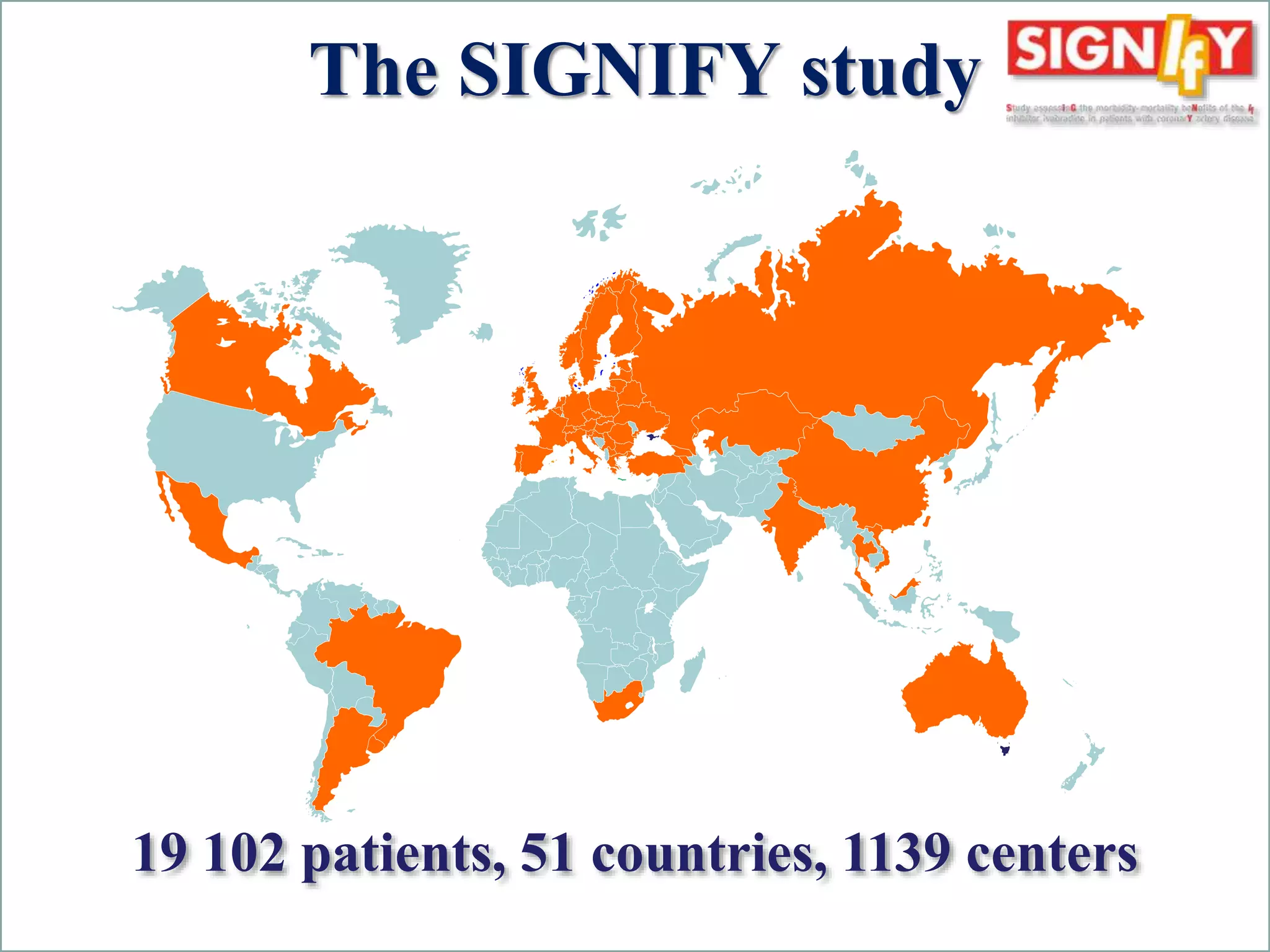
The SIGNIFY study 
19 102 patients, 51 countries, 1139 centers 
Fox K, Ford I, Steg PG, Tardif JC, Tendera M, Ferrari R. Rationale, design, and baseline characteristics of the Study assessInG the morbidity-mortality beNefits of the If inhibitor ivabradine in 
patients with coronarY artery disease (SIGNIFY trial): A randomized, double-blind, placebo-controlled trial of ivabradine in patients with stable coronary artery disease without clinical heart 
failure. Am Heart J. 2013;166:654-661.
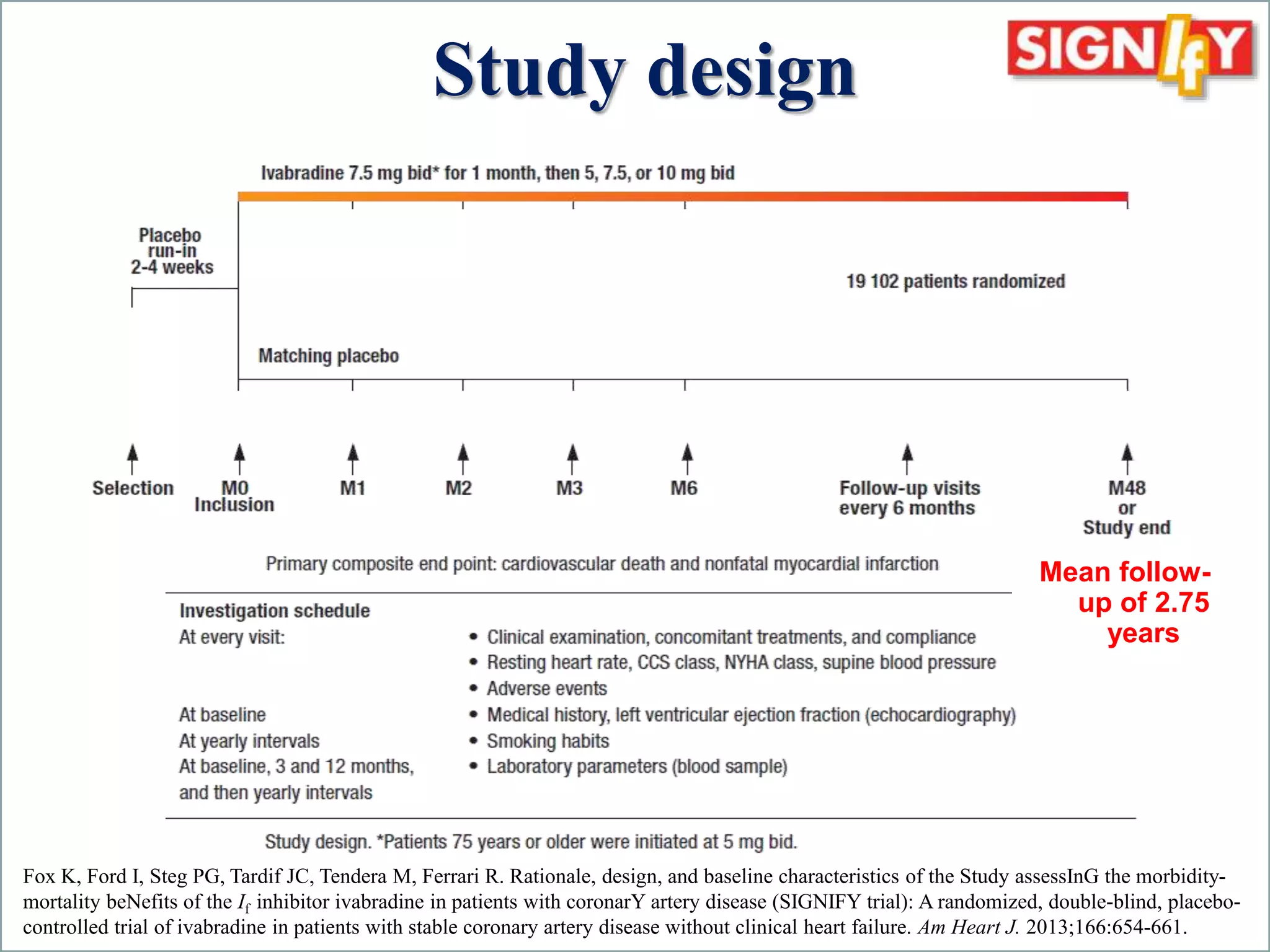
Study design 
Mean follow-up 
of 2.75 
years 
Fox K, Ford I, Steg PG, Tardif JC, Tendera M, Ferrari R. Rationale, design, and baseline characteristics of the Study assessInG the morbidity-mortality 
beNefits of the If inhibitor ivabradine in patients with coronarY artery disease (SIGNIFY trial): A randomized, double-blind, placebo-controlled 
trial of ivabradine in patients with stable coronary artery disease without clinical heart failure. Am Heart J. 2013;166:654-661.
Study population 
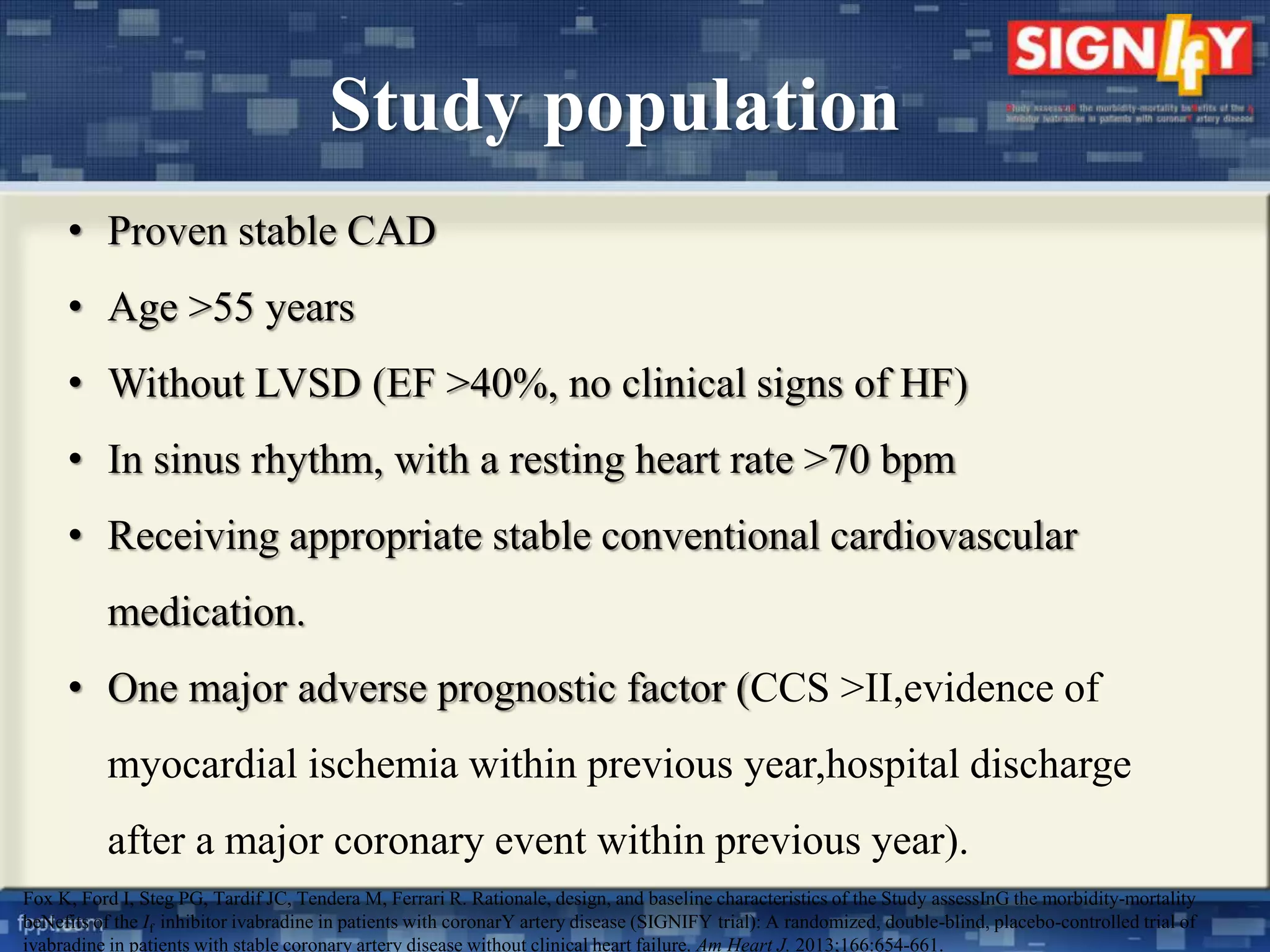
• Proven stable CAD 
• Age >55 years 
• Without LVSD (EF >40%, no clinical signs of HF) 
• In sinus rhythm, with a resting heart rate >70 bpm 
• Receiving appropriate stable conventional cardiovascular 
medication. 
• One major adverse prognostic factor (CCS >II,evidence of 
myocardial ischemia within previous year,hospital discharge 
after a major coronary event within previous year). 
Fox K, Ford I, Steg PG, Tardif JC, Tendera M, Ferrari R. Rationale, design, and baseline characteristics of the Study assessInG the morbidity-mortality 
beNefits of the If inhibitor ivabradine in patients with coronarY artery disease (SIGNIFY trial): A randomized, double-blind, placebo-controlled trial of 
ivabradine in patients with stable coronary artery disease without clinical heart failure. Am Heart J. 2013;166:654-661.
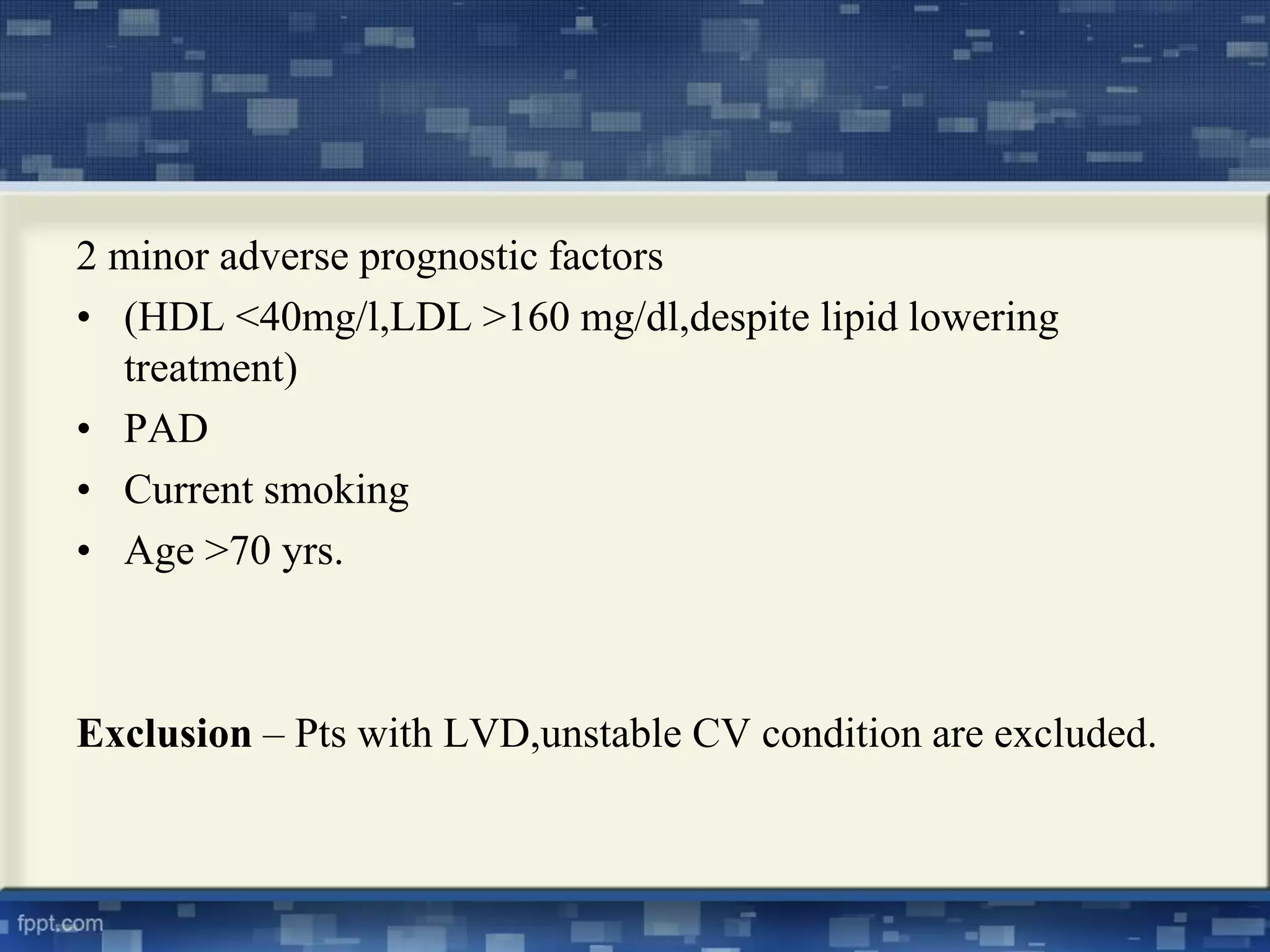
2 minor adverse prognostic factors 
• (HDL <40mg/l,LDL >160 mg/dl,despite lipid lowering 
treatment) 
• PAD 
• Current smoking 
• Age >70 yrs. 
Exclusion – Pts with LVD,unstable CV condition are excluded.
Study end points 
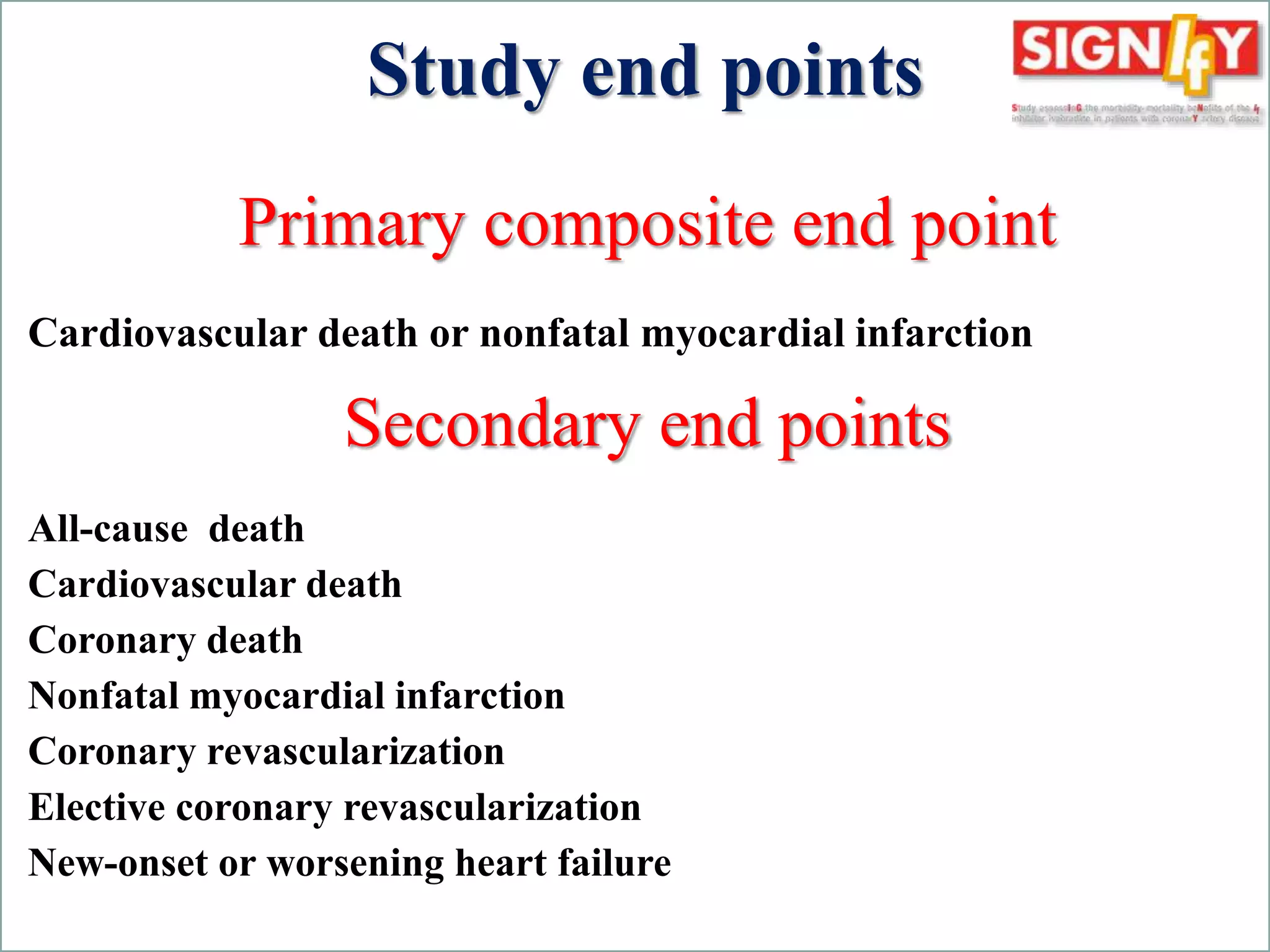
Primary composite end point 
Cardiovascular death or nonfatal myocardial infarction 
Secondary end points 
All-cause death 
Cardiovascular death 
Coronary death 
Nonfatal myocardial infarction 
Coronary revascularization 
Elective coronary revascularization 
New-onset or worsening heart failure 
Fox K, Ford I, Steg PG, Tardif JC, Tendera M, Ferrari R. Rationale, design, and baseline characteristics of the Study assessInG the morbidity-mortality beNefits of the If inhibitor ivabradine in 
patients with coronarY artery disease (SIGNIFY trial): A randomized, double-blind, placebo-controlled trial of ivabradine in patients with stable coronary artery disease without clinical heart 
failure. Am Heart J. 2013;166:654-661.
STATISTICAL ANALYSIS 
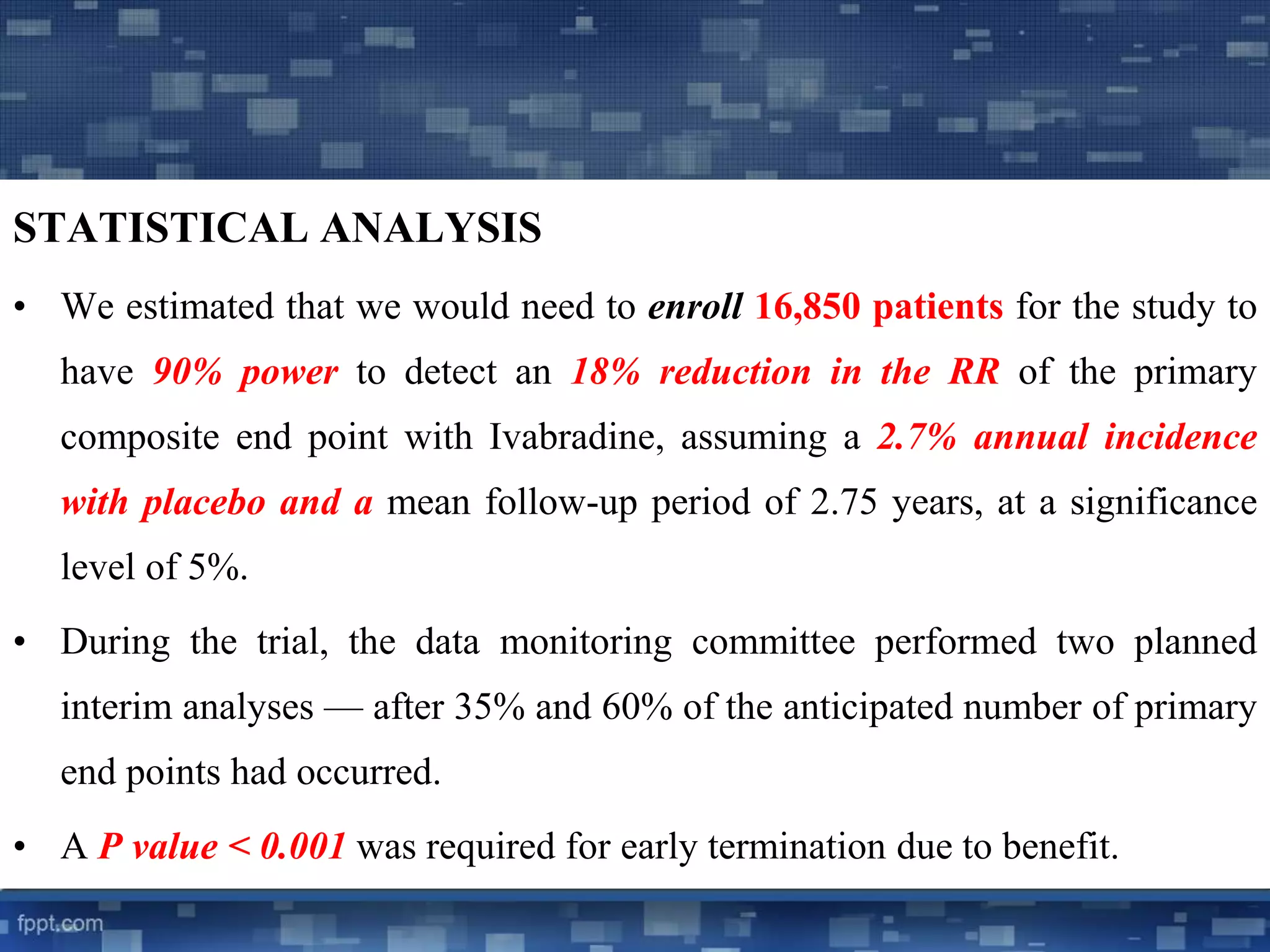
• We estimated that we would need to enroll 16,850 patients for the study to 
have 90% power to detect an 18% reduction in the RR of the primary 
composite end point with Ivabradine, assuming a 2.7% annual incidence 
with placebo and a mean follow-up period of 2.75 years, at a significance 
level of 5%. 
• During the trial, the data monitoring committee performed two planned 
interim analyses — after 35% and 60% of the anticipated number of primary 
end points had occurred. 
• A P value < 0.001 was required for early termination due to benefit.
Results 
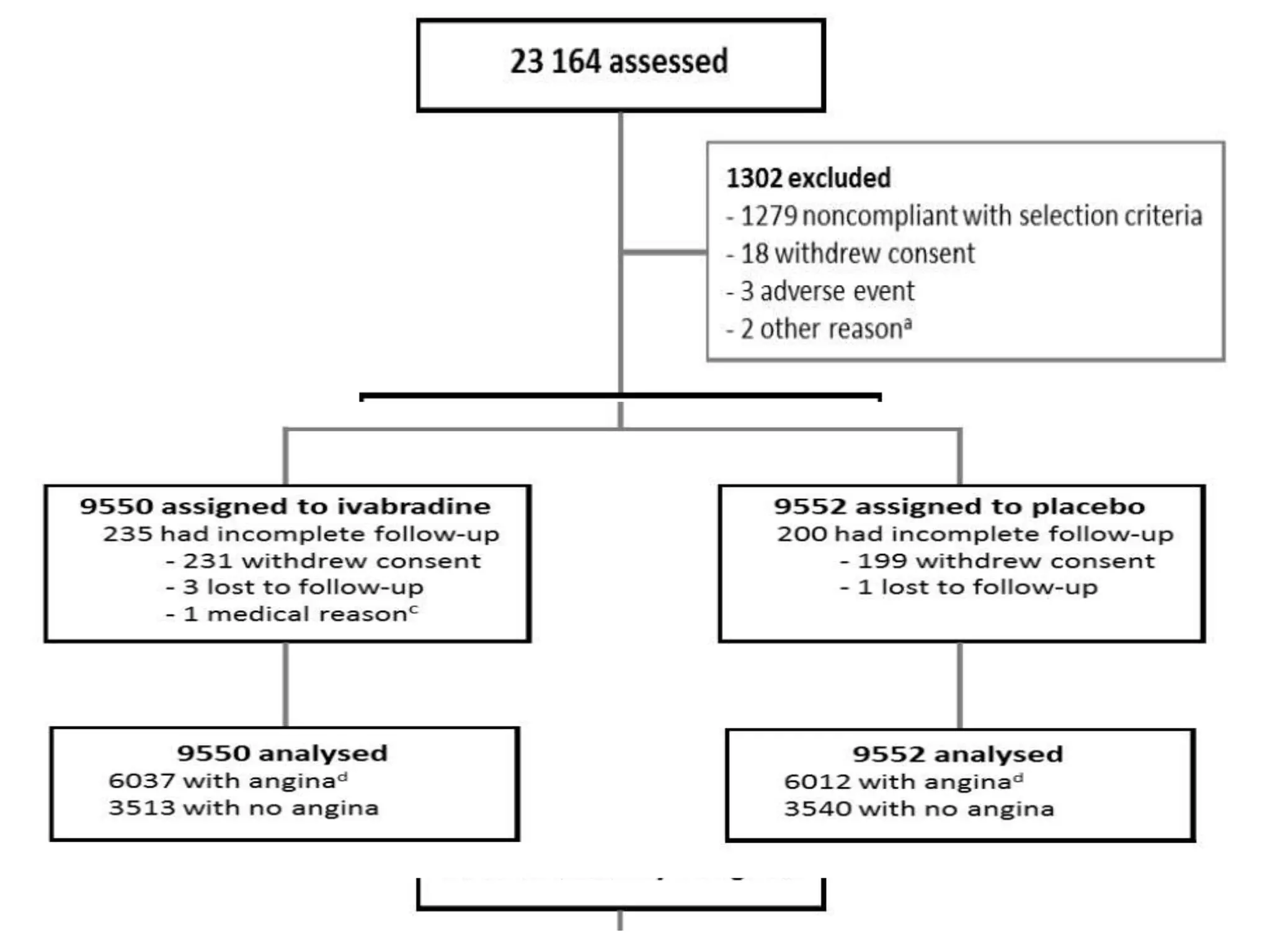
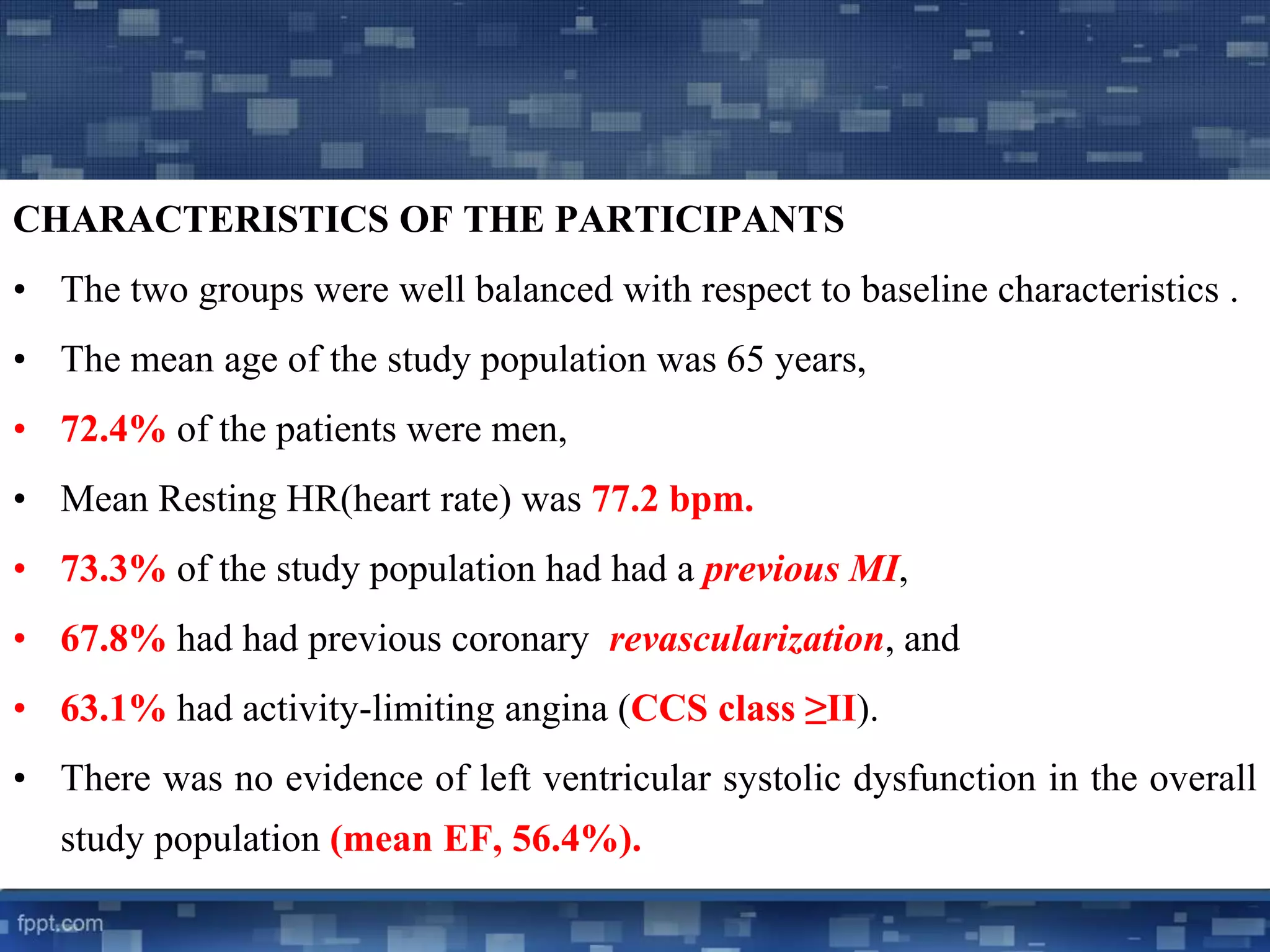
RANDOMIZATION AND FOLLOW-UP 
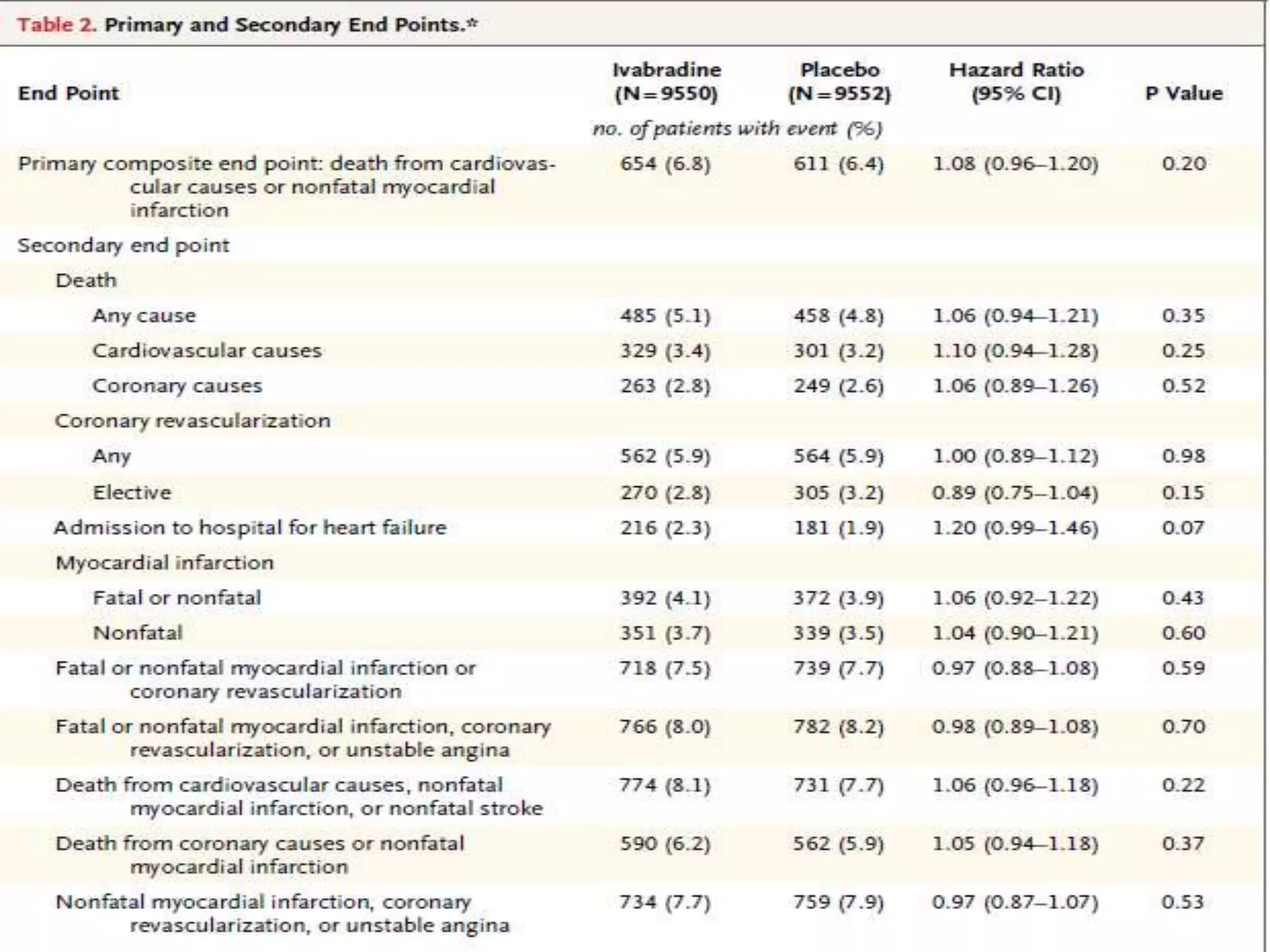
• Between October 12, 2009, and April 30, 2012, a total of 19,102 
patients underwent randomization;9550 were assigned to Ivabradine 
and 9552 to placebo 
• The median duration of follow-up was 27.8 months (interquartile 
range, 21.0 to 35.2).
CHARACTERISTICS OF THE PARTICIPANTS 
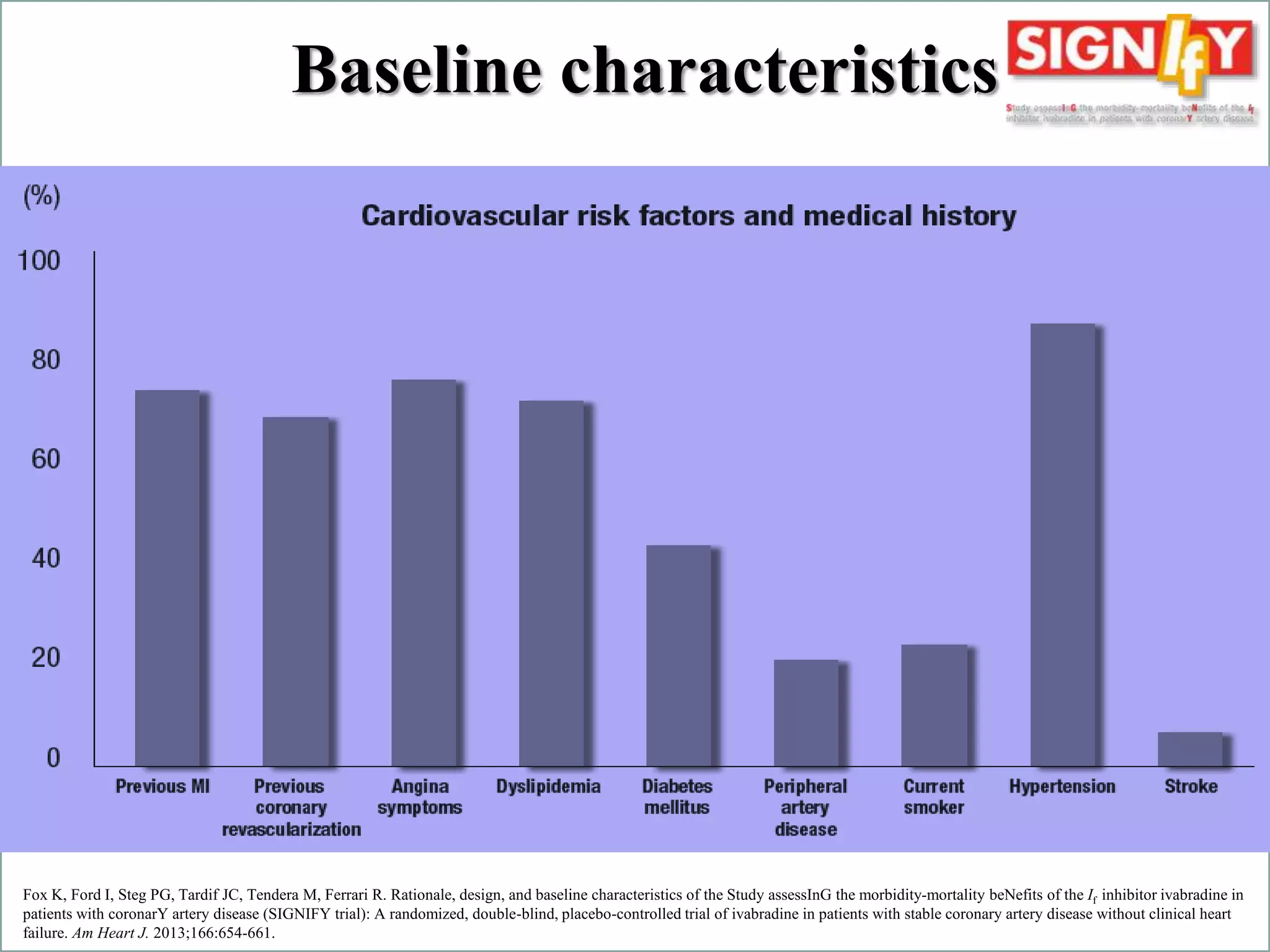
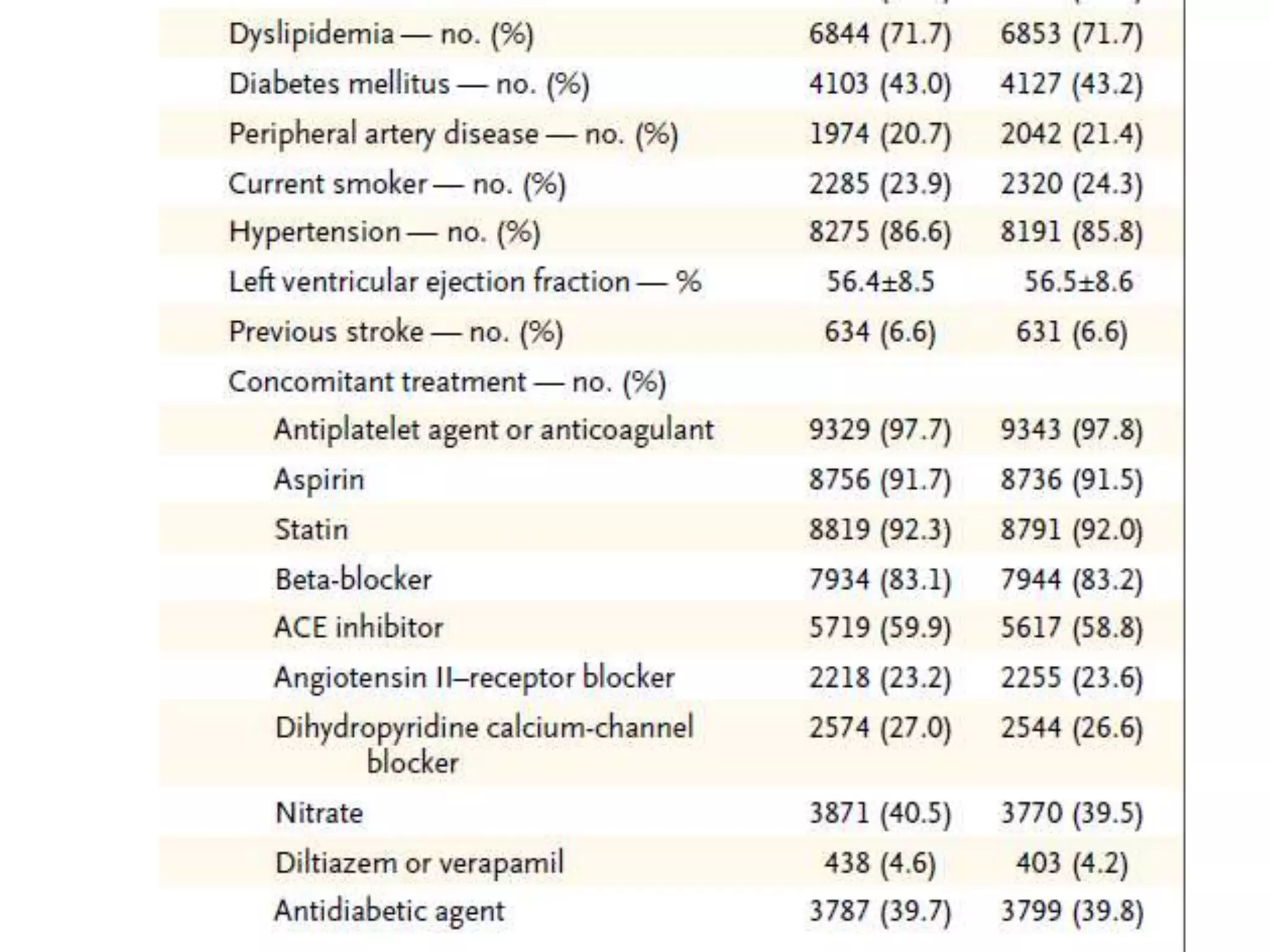
• The two groups were well balanced with respect to baseline characteristics . 
• The mean age of the study population was 65 years, 
• 72.4%of the patients were men, 
• Mean Resting HR(heart rate) was 77.2 bpm. 
• 73.3%of the study population had had a previous MI, 
• 67.8%had had previous coronary revascularization, and 
• 63.1%had activity-limiting angina (CCS class ≥II). 
• There was no evidence of left ventricular systolic dysfunction in the overall 
study population (mean EF, 56.4%).
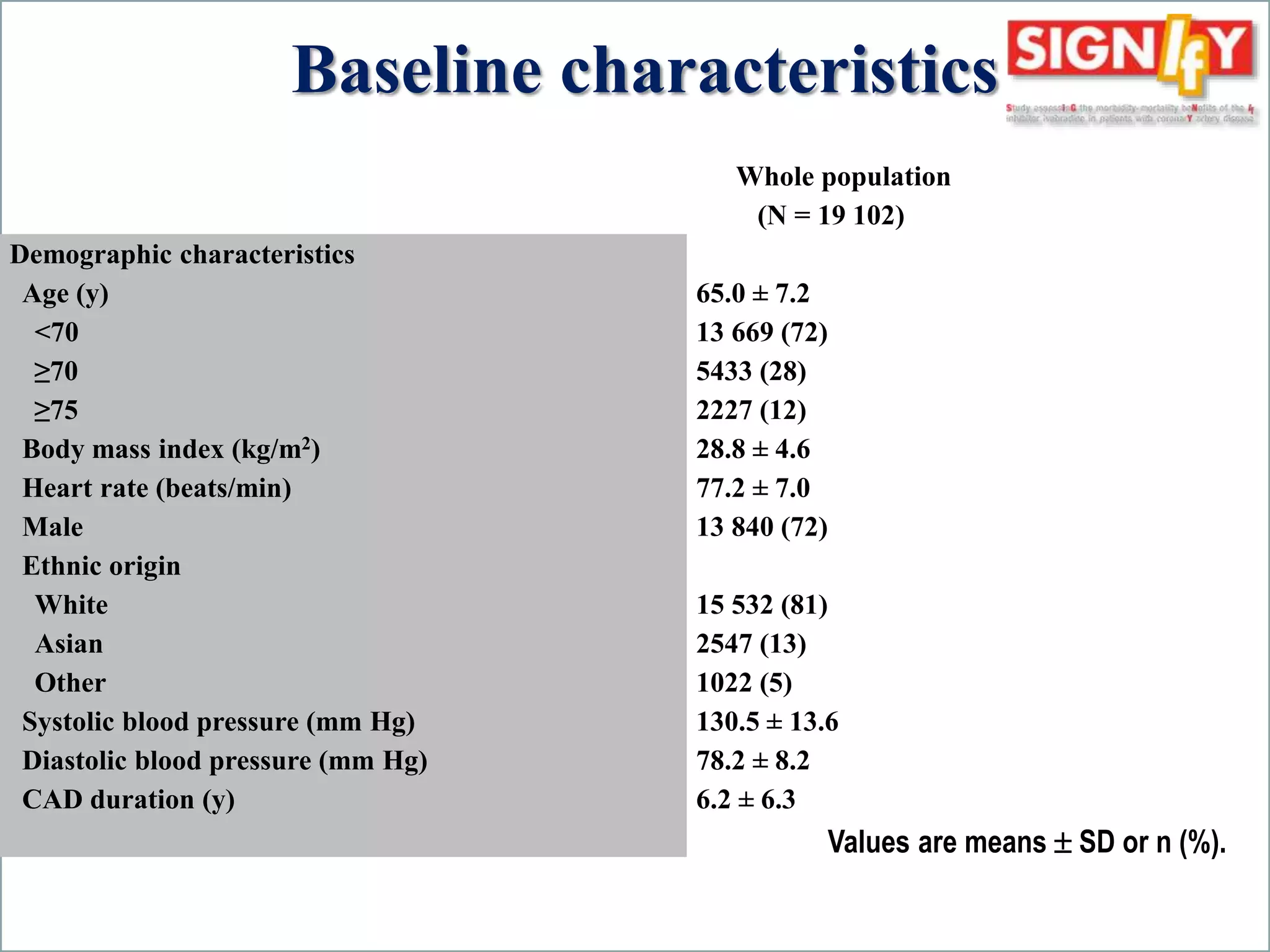
Baseline characteristics 
Whole population 
(N = 19 102) 
Demographic characteristics 
Age (y) 
<70 
≥70 
≥75 
Body mass index (kg/m2) 
Heart rate (beats/min) 
Male 
Ethnic origin 
White 
Asian 
Other 
Systolic blood pressure (mm Hg) 
Diastolic blood pressure (mm Hg) 
CAD duration (y) 
65.0 ± 7.2 
13 669 (72) 
5433 (28) 
2227 (12) 
28.8 ± 4.6 
77.2 ± 7.0 
13 840 (72) 
15 532 (81) 
2547 (13) 
1022 (5) 
130.5 ± 13.6 
78.2 ± 8.2 
6.2 ± 6.3 
Values are means  SD or n (%). 
Fox K, Ford I, Steg PG, Tardif JC, Tendera M, Ferrari R. Rationale, design, and baseline characteristics of the Study assessInG the morbidity-mortality beNefits of the If inhibitor ivabradine in 
patients with coronarY artery disease (SIGNIFY trial): A randomized, double-blind, placebo-controlled trial of ivabradine in patients with stable coronary artery disease without clinical heart 
failure. Am Heart J. 2013;166:654-661.
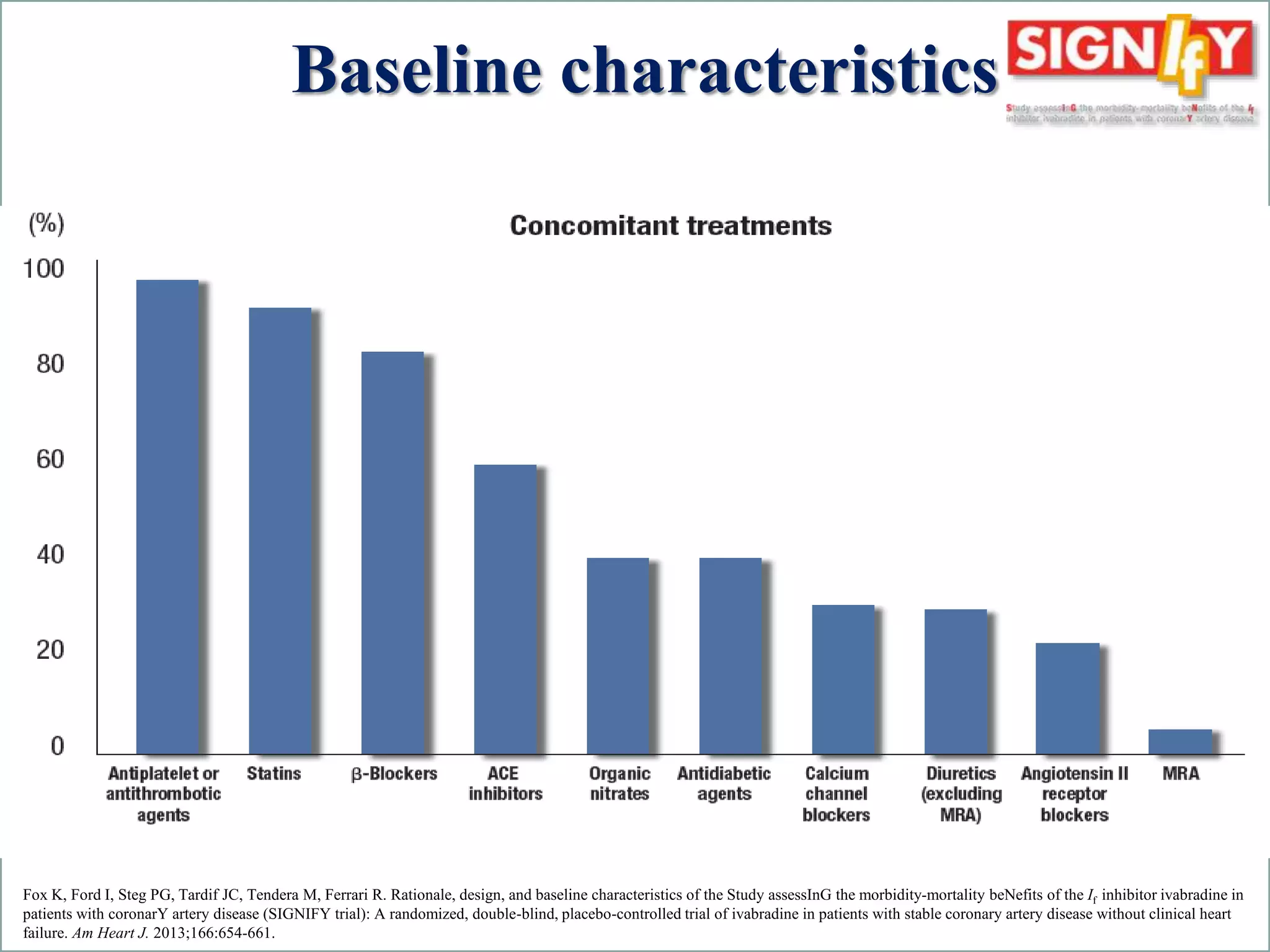
Baseline characteristics 
Fox K, Ford I, Steg PG, Tardif JC, Tendera M, Ferrari R. Rationale, design, and baseline characteristics of the Study assessInG the morbidity-mortality beNefits of the If inhibitor ivabradine in 
patients with coronarY artery disease (SIGNIFY trial): A randomized, double-blind, placebo-controlled trial of ivabradine in patients with stable coronary artery disease without clinical heart 
failure. Am Heart J. 2013;166:654-661.
Baseline characteristics 
Fox K, Ford I, Steg PG, Tardif JC, Tendera M, Ferrari R. Rationale, design, and baseline characteristics of the Study assessInG the morbidity-mortality beNefits of the If inhibitor ivabradine in 
patients with coronarY artery disease (SIGNIFY trial): A randomized, double-blind, placebo-controlled trial of ivabradine in patients with stable coronary artery disease without clinical heart 
failure. Am Heart J. 2013;166:654-661.
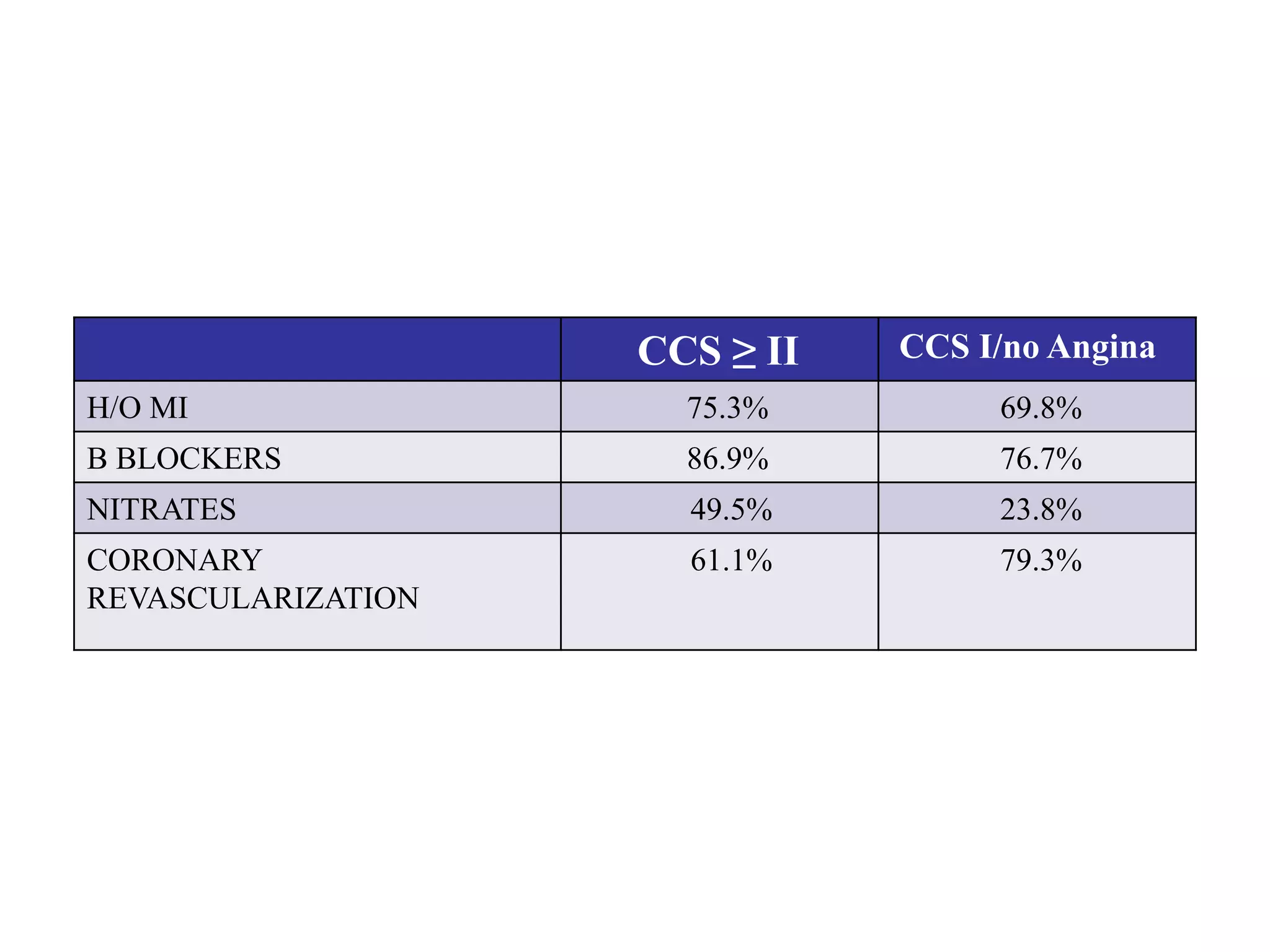
CCS ≥ II CCS I/no Angina 
H/O MI 75.3% 69.8% 
B BLOCKERS 86.9% 76.7% 
NITRATES 49.5% 23.8% 
CORONARY 
61.1% 79.3% 
REVASCULARIZATION
STUDY-DRUG USE AND HEART RATE 
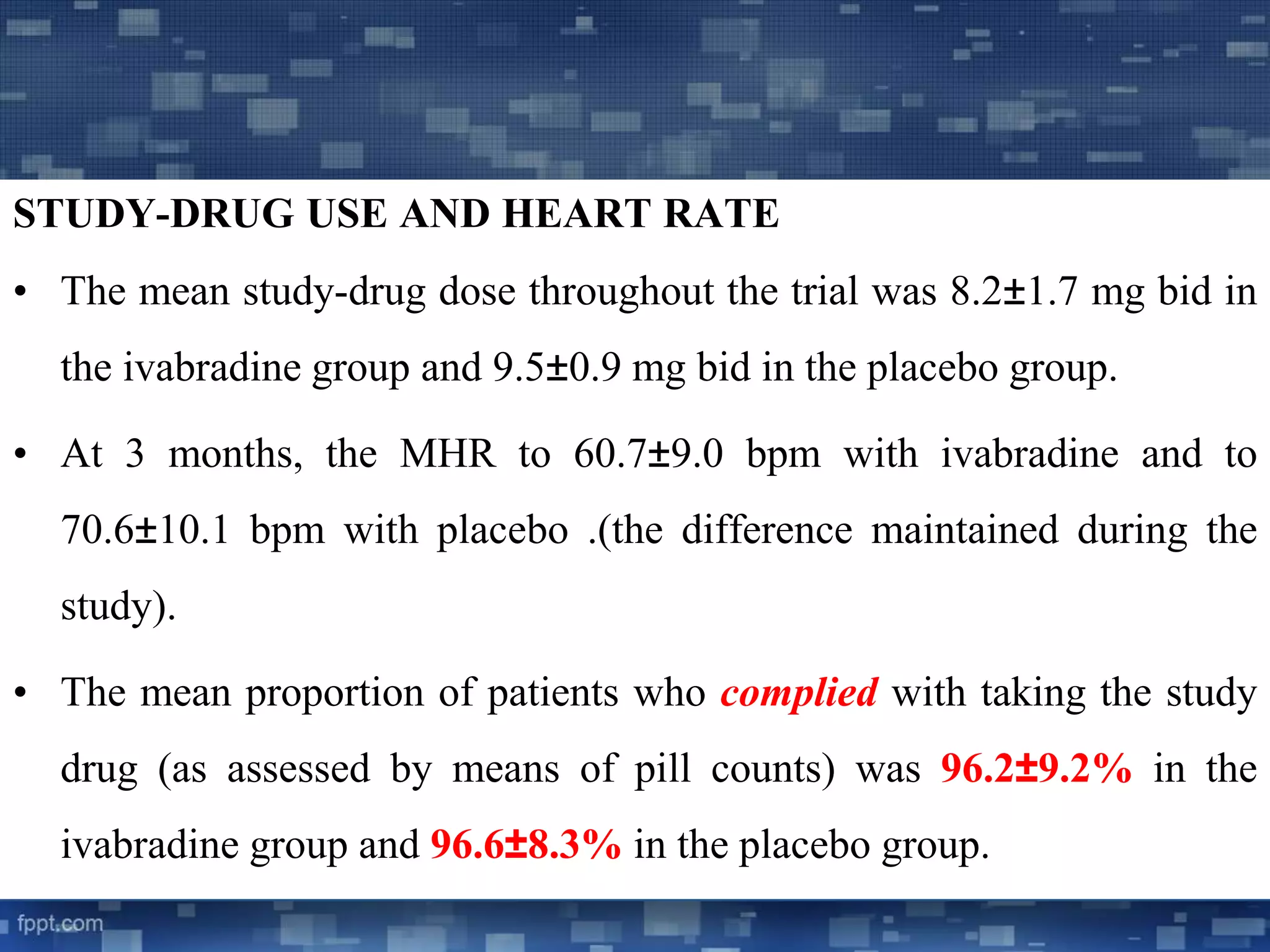
• The mean study-drug dose throughout the trial was 8.2±1.7 mg bid in 
the ivabradine group and 9.5±0.9 mg bid in the placebo group. 
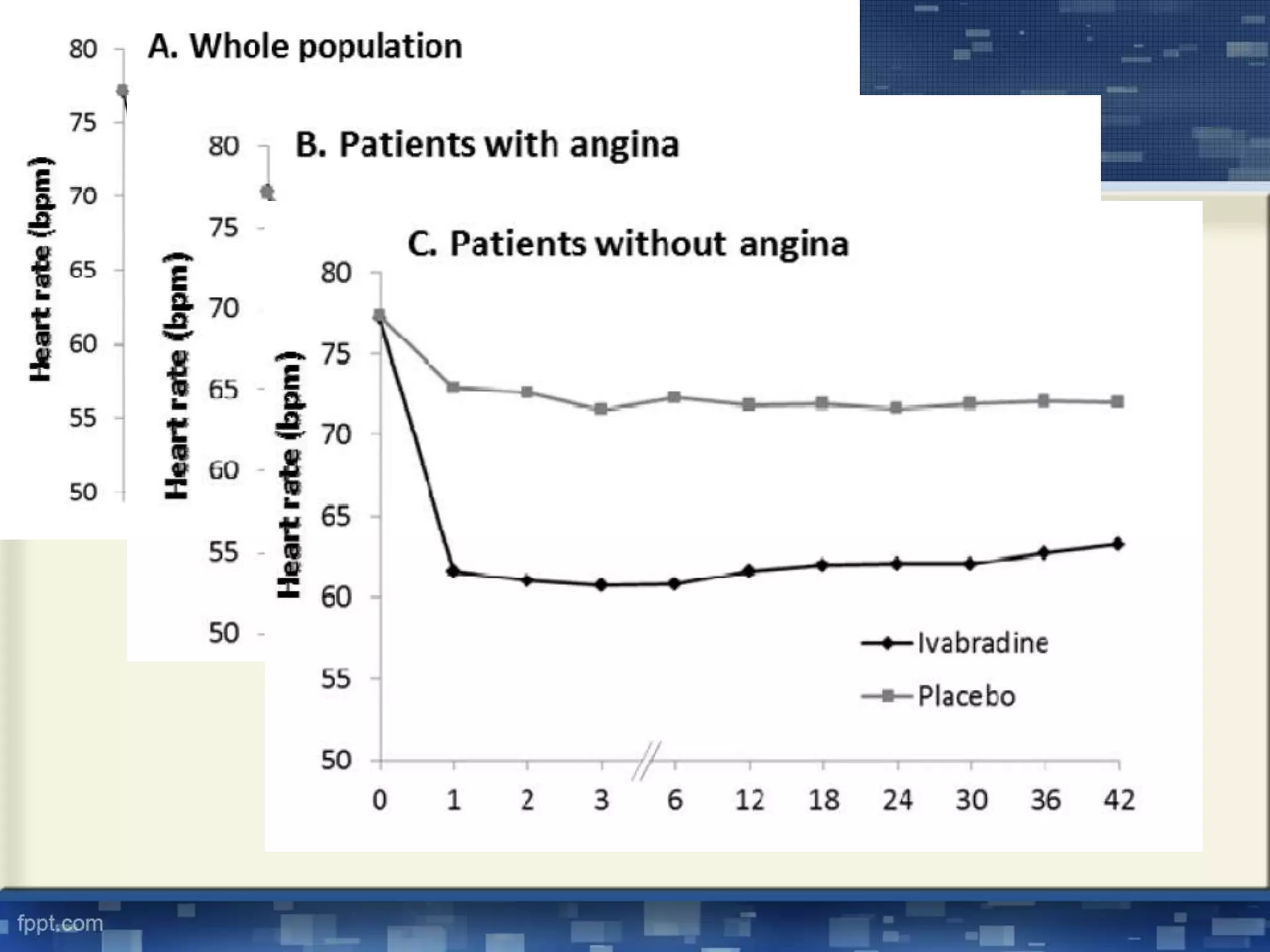
• At 3 months, the MHR to 60.7±9.0 bpm with ivabradine and to 
70.6±10.1 bpm with placebo .(the difference maintained during the 
study). 
• The mean proportion of patients who complied with taking the study 
drug (as assessed by means of pill counts) was 96.2±9.2% in the 
ivabradine group and 96.6±8.3%in the placebo group.
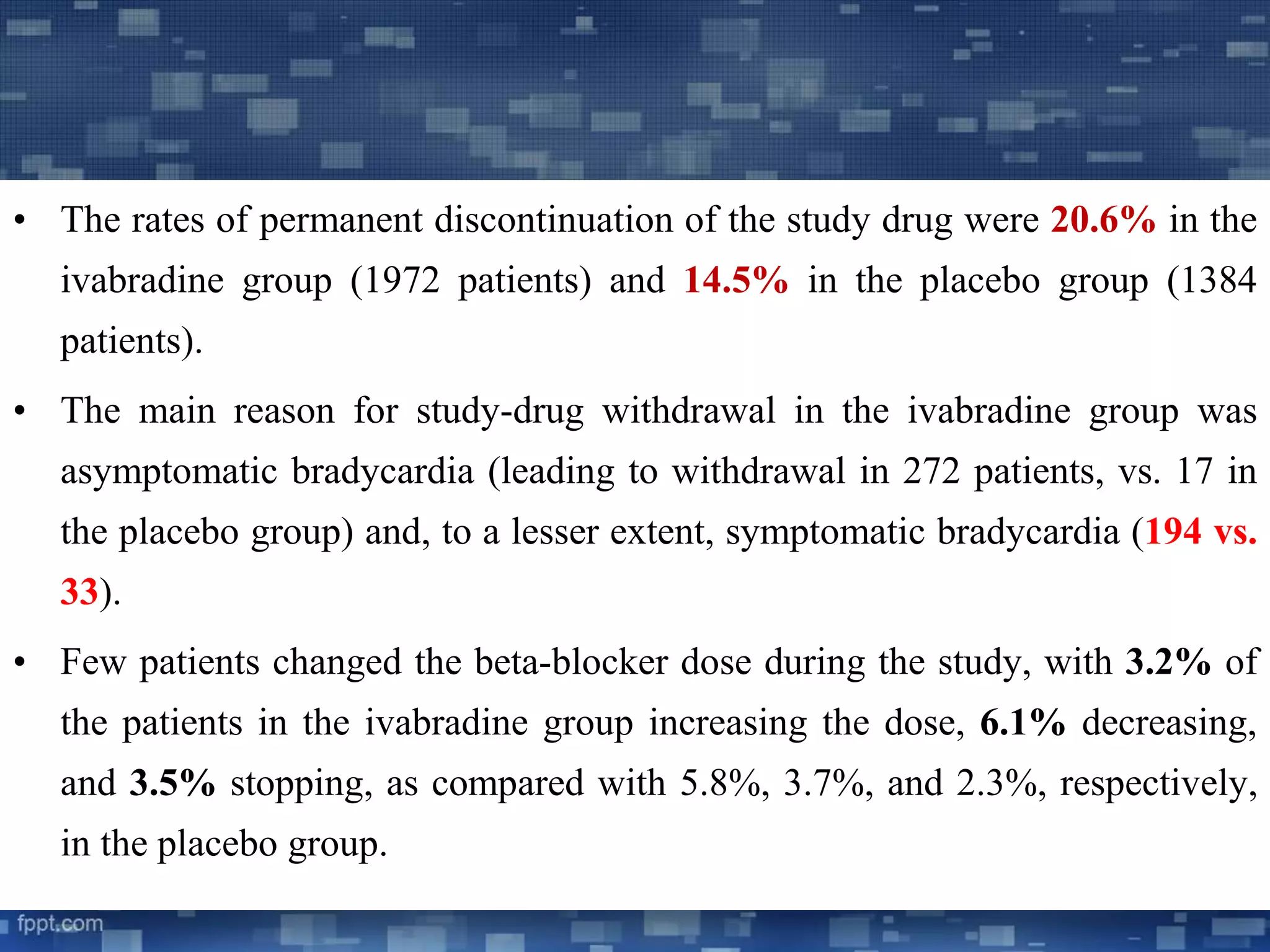
• The rates of permanent discontinuation of the study drug were 20.6% in the 
ivabradine group (1972 patients) and 14.5% in the placebo group (1384 
patients). 
• The main reason for study-drug withdrawal in the ivabradine group was 
asymptomatic bradycardia (leading to withdrawal in 272 patients, vs. 17 in 
the placebo group) and, to a lesser extent, symptomatic bradycardia (194 vs. 
33). 
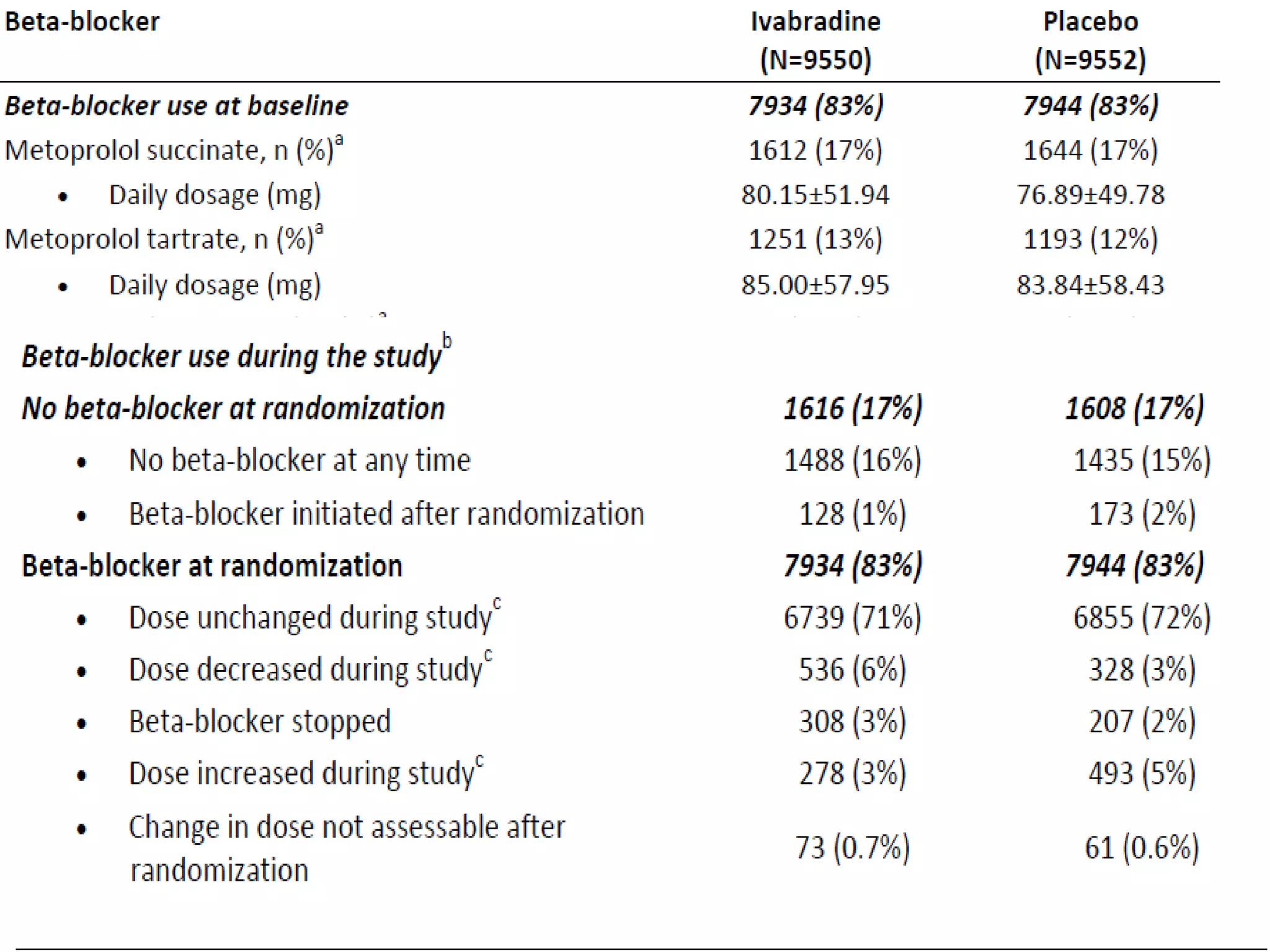
• Few patients changed the beta-blocker dose during the study, with 3.2% of 
the patients in the ivabradine group increasing the dose, 6.1% decreasing, 
and 3.5% stopping, as compared with 5.8%, 3.7%, and 2.3%, respectively, 
in the placebo group.
SUBGROUP ANALYSES 
• There was a significant interaction between the study 
treatment and the presence of angina at baseline in the 
prespecified subgroup defined according to CCS class (P = 
0.02).
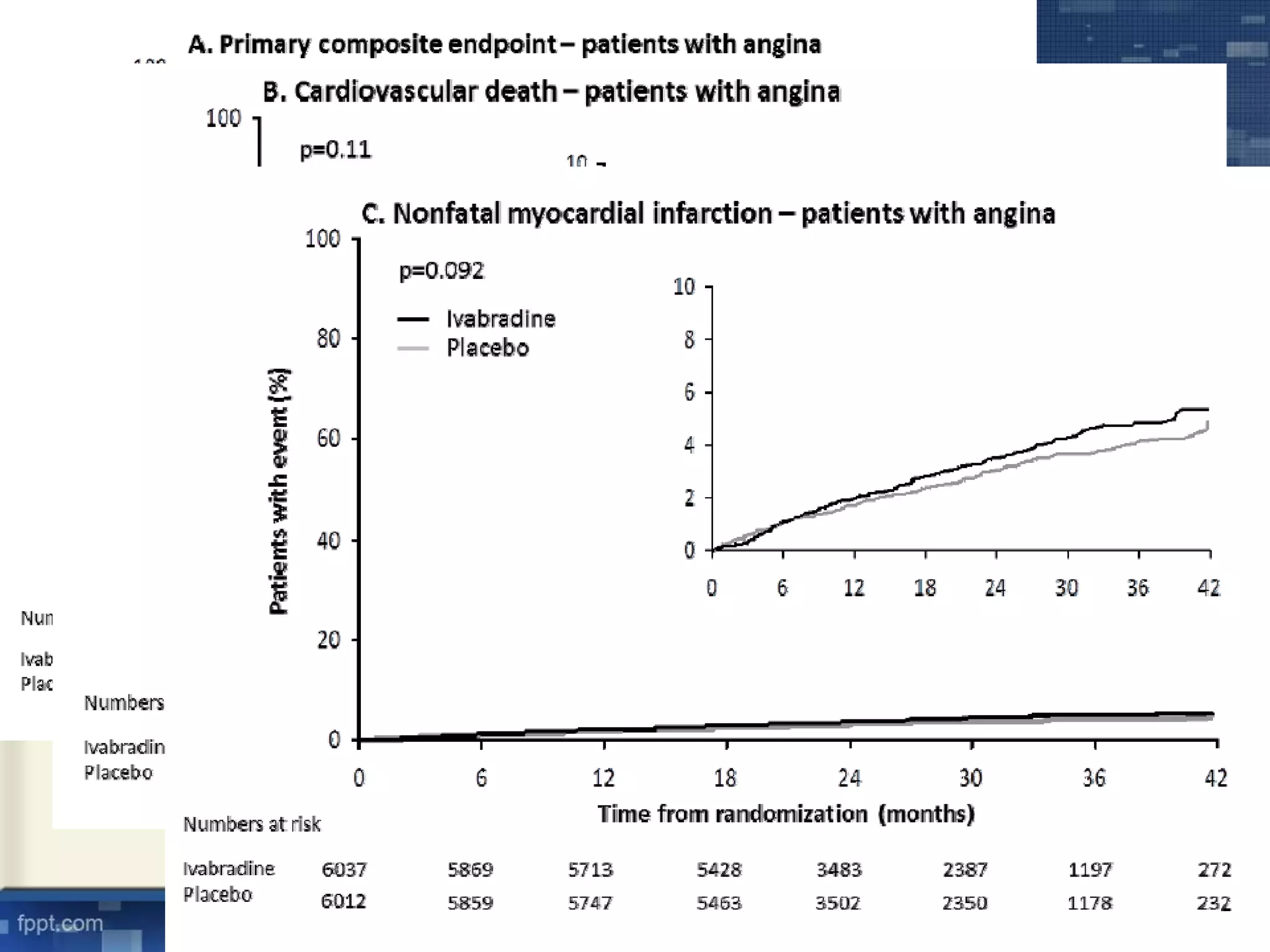
• Ivabradine use was associated with an  in the incidence of the 1end point 
among patients who had angina of CCS ≥class II (7.6%, vs. 6.5% with 
placebo; HR,1.18; 95% CI, 1.03-1.35; P = 0.02) but not among patients 
without angina or those who had angina of class I (HR, 0.89; 95% CI, 0.74 - 
1.08; P = 0.25). 
• The effect of ivabradine among patients with angina of CCS class II or 
higher appeared to be consistent between the two components of the primary 
end point (HR for death from CV causes, 1.16; 95% CI, 0.97-1.40; P = 0.11; 
and HR ratio for nonfatal MI, 1.18; 95% CI, 0.97 to 1.42; P = 0.09).
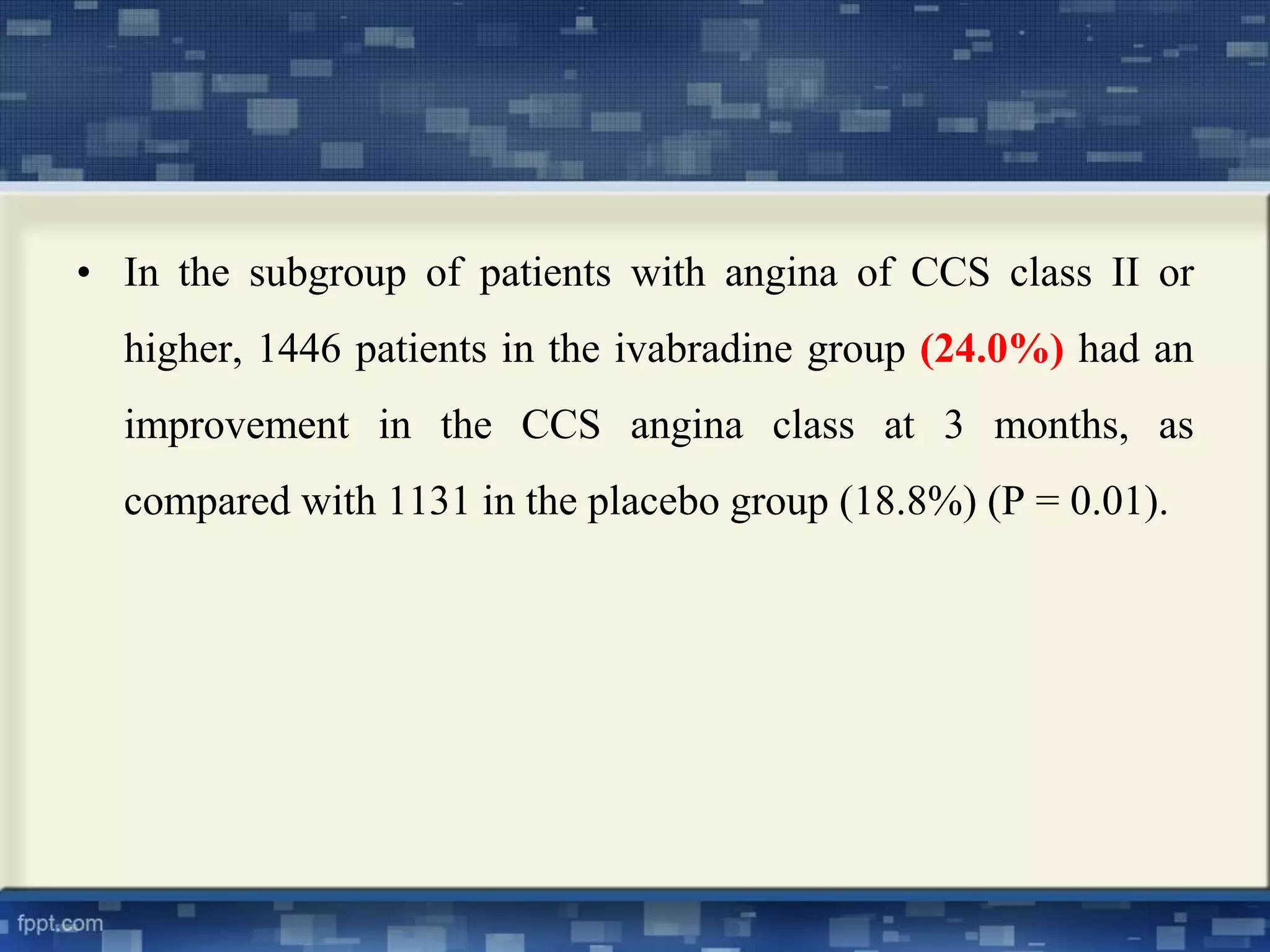
• In the subgroup of patients with angina of CCS class II or 
higher, 1446 patients in the ivabradine group (24.0%) had an 
improvement in the CCS angina class at 3 months, as 
compared with 1131 in the placebo group (18.8%) (P = 0.01).
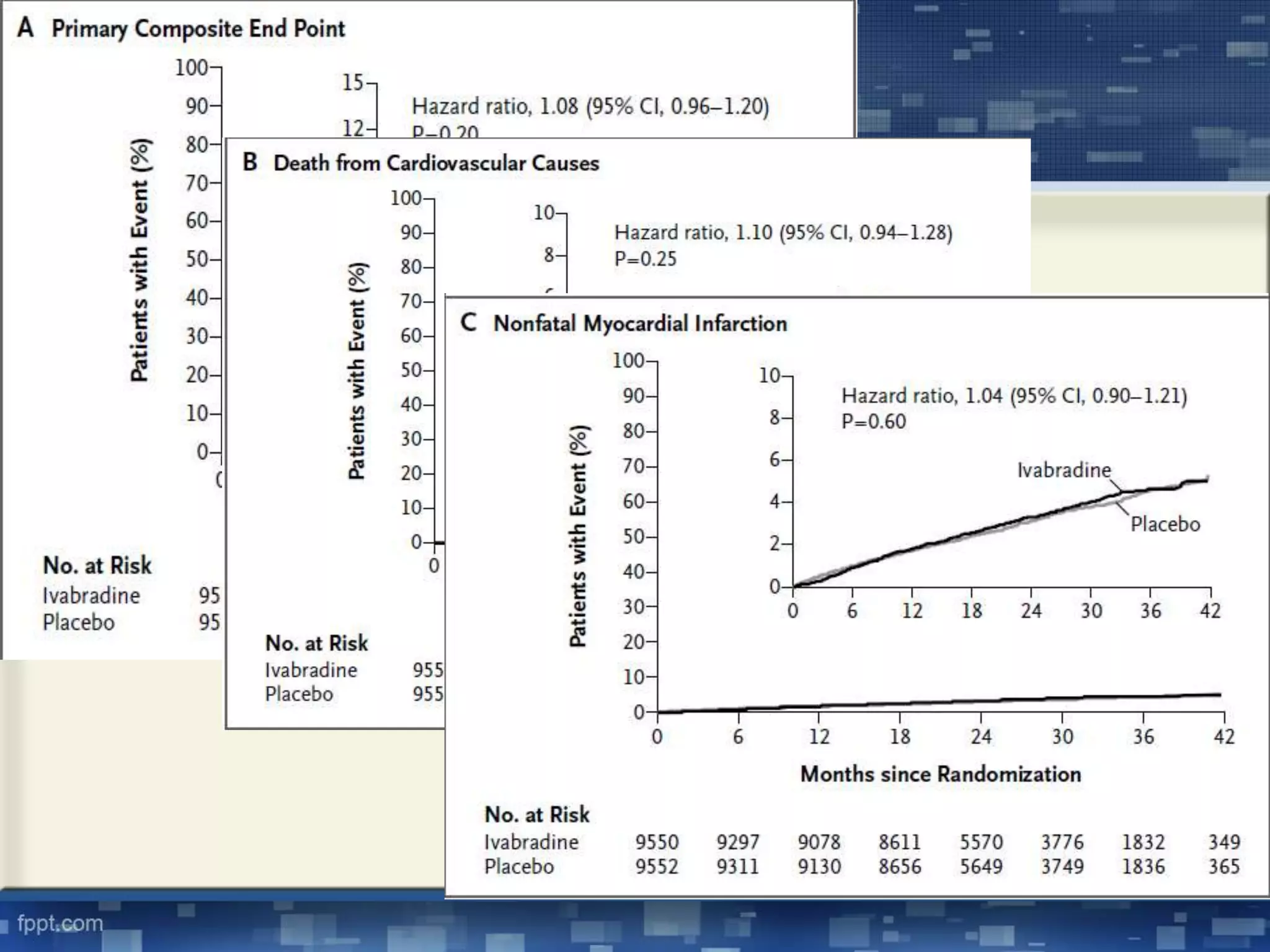
Fig 2
ADVERSE EVENTS 
• Adverse events during the study occurred in 73.3% of the patients in 
the ivabradine group and in 66.9% of those in the placebo group 
(P<0.001). 
• Ivabradine increased the frequency of symptomatic bradycardia 
(7.9%, vs. 1.2% with placebo), asymptomatic bradycardia (11.0% 
vs.1.3%), AF (5.3% vs. 3.8%), and phosphenes (5.4% vs. 0.5%) 
(P<0.001 for all comparisons).
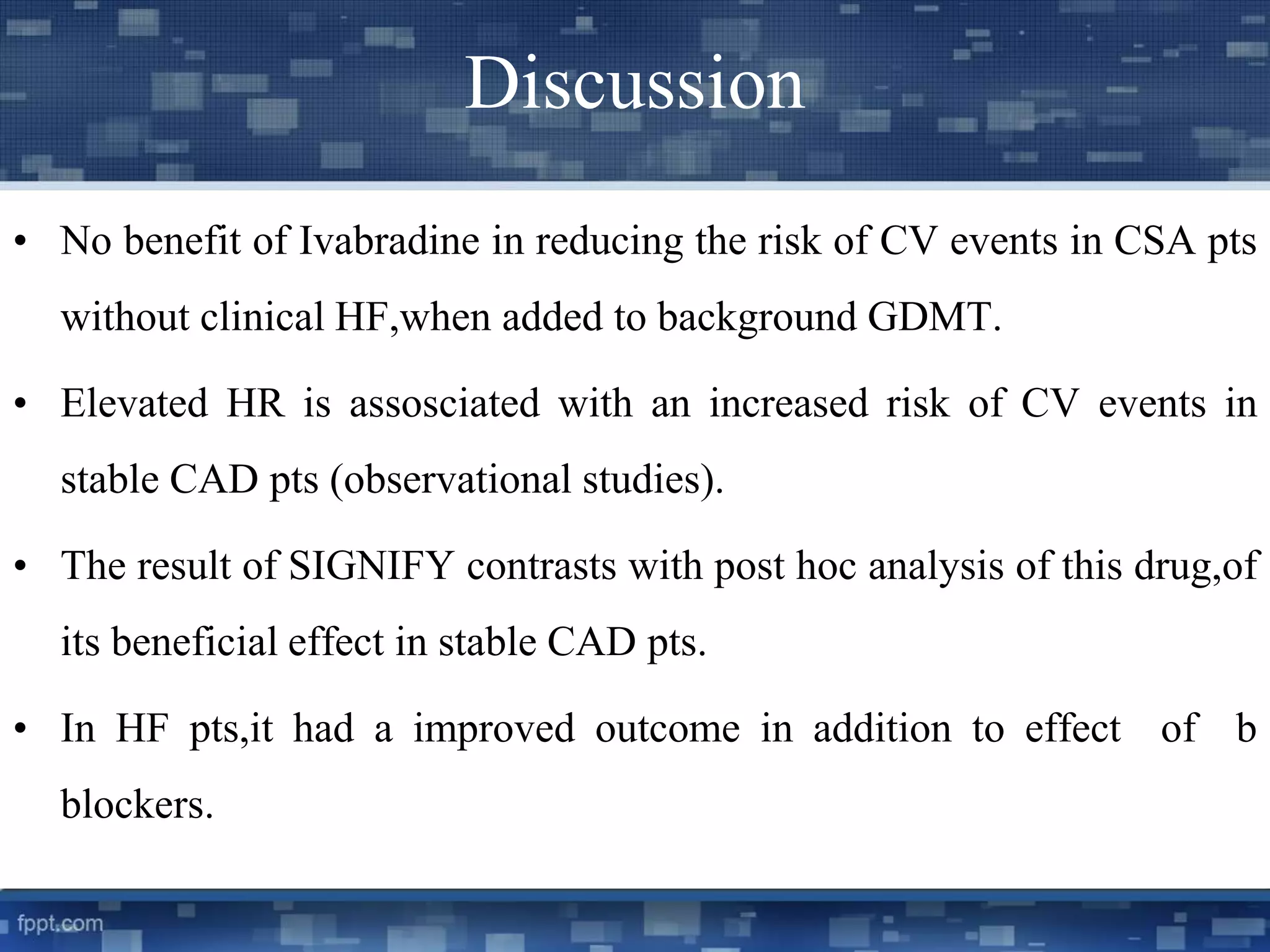
• A serious adverse event occurred during the study in 3588 patients in 
the ivabradine group (37.6%) and in 3375 in the placebo group 
(35.4%) (P = 0.001). 
• These events were classified as cardiac disorders in 19.0% and 16.7% 
of the patients, respectively. 
• Adverse events led to study-drug withdrawal in 13.2% of the patients 
in the ivabradine group and in 7.4% of those in the placebo group 
(P<0.001).
Table 3
Ivabradine
Discussion 
• No benefit of Ivabradine in reducing the risk of CV events in CSA pts 
without clinical HF,when added to background GDMT. 
• Elevated HR is assosciated with an increased risk of CV events in 
stable CAD pts (observational studies). 
• The result of SIGNIFY contrasts with post hoc analysis of this drug,of 
its beneficial effect in stable CAD pts. 
• In HF pts,it had a improved outcome in addition to effect of b 
blockers.
• The incidence of primary end point was relatively low (≈ 2.8%) 
compared to high prevalence of risk factors in the people studied in 
this trial (background therapy beneficial effect) 
• The effect on HR by Ivabradine is clear (10bpm difference). 
• The incidences of bradycardia and AF were higher with ivabradine 
than with placebo.(more than in previous trial,because of high doses 
used )
Why conflicting results? 
• There are a number of hypotheses to explain the lack of a benefit in 
SIGNIFY. 
• It is possible that Ivabradine decreased the heart rate too much or 
that there may be a J-shaped curve for the relationship between 
heart rate and outcome. 
• Ivabradine may have unintended effects (e.g., adjustment of the 
doses of other heart rate lowering agents) that may have affected 
the potential benefits of the lowering of HR with Ivabradine.
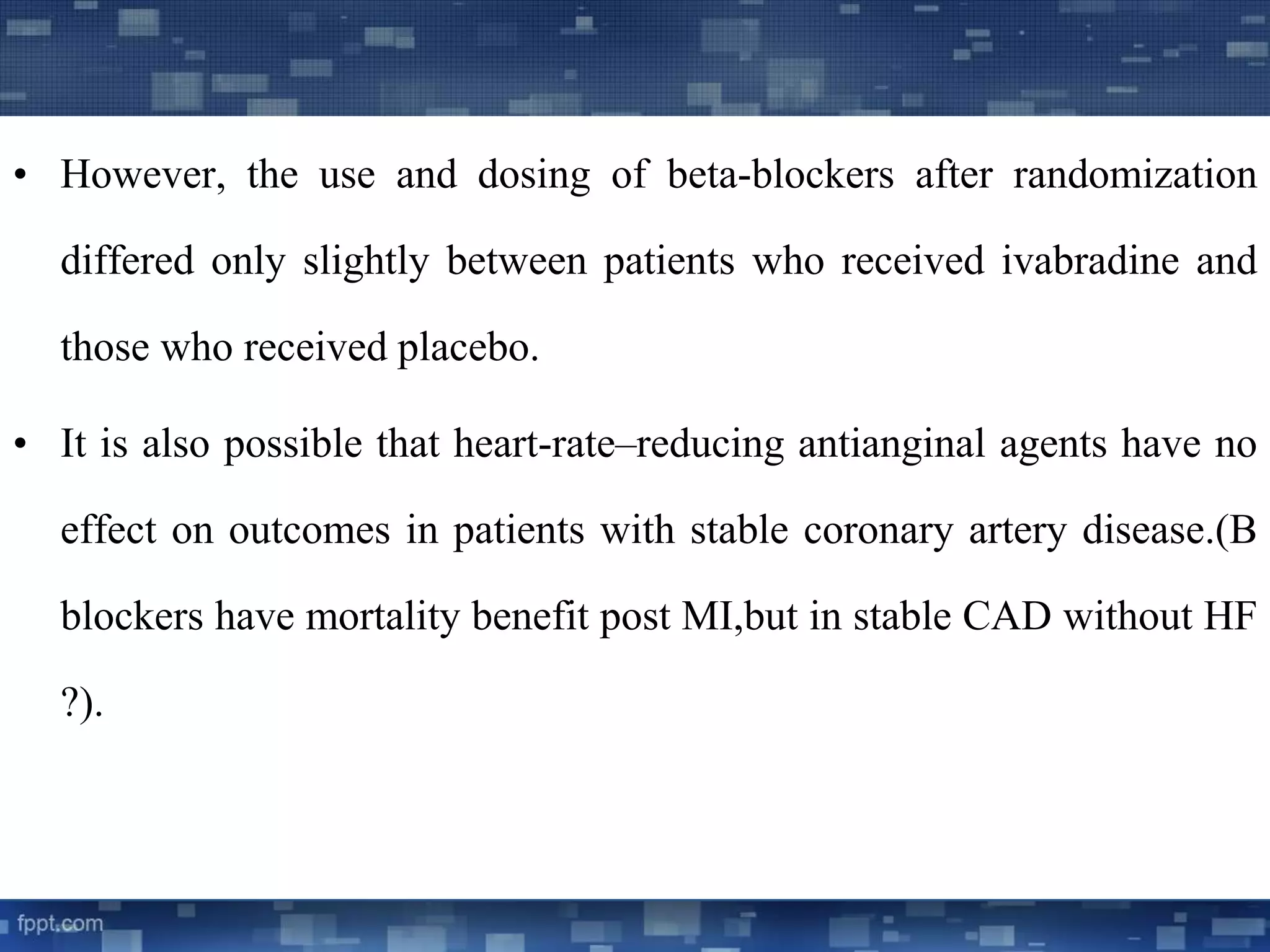
• However, the use and dosing of beta-blockers after randomization 
differed only slightly between patients who received ivabradine and 
those who received placebo. 
• It is also possible that heart-rate–reducing antianginal agents have no 
effect on outcomes in patients with stable coronary artery disease.(B 
blockers have mortality benefit post MI,but in stable CAD without HF 
?).
• In fact, a recent observational analysis has suggested the opposite. 
• This contrasts with the results of trials testing the effects of beta-blockers 
or ivabradine in patients with systolic heart failure, including 
those with heart failure of ischemic origin.
• The benefit observed with lowering the HR in pts with HF but not in 
those with stable CAD may reflect the fact that an elevated HR is due 
to different pathophysiological mechanisms in these two conditions. 
• In patients with HF, there is neurohormonal activation, which in 
itself leads to ventricular remodeling, further left ventricular 
dysfunction, and a vicious cycle of decline. 
• In contrast, there is no neurohormonal activation in stable coronary 
artery disease without left ventricular dysfunction.
• There was a significant interaction between the effect of Ivabradine 
and the presence of angina (CCS class ≥II) at baseline. 
• In that subgroup, Ivabradine increased the absolute risk of the 
primary composite end point of death from cardiovascular causes or 
nonfatal myocardial infarction by 1.1 percentage points. The 
explanation for this surprising finding is uncertain, although it should 
be treated with caution since the results of the primary efficacy 
analysis were not significant.
Conclusion 
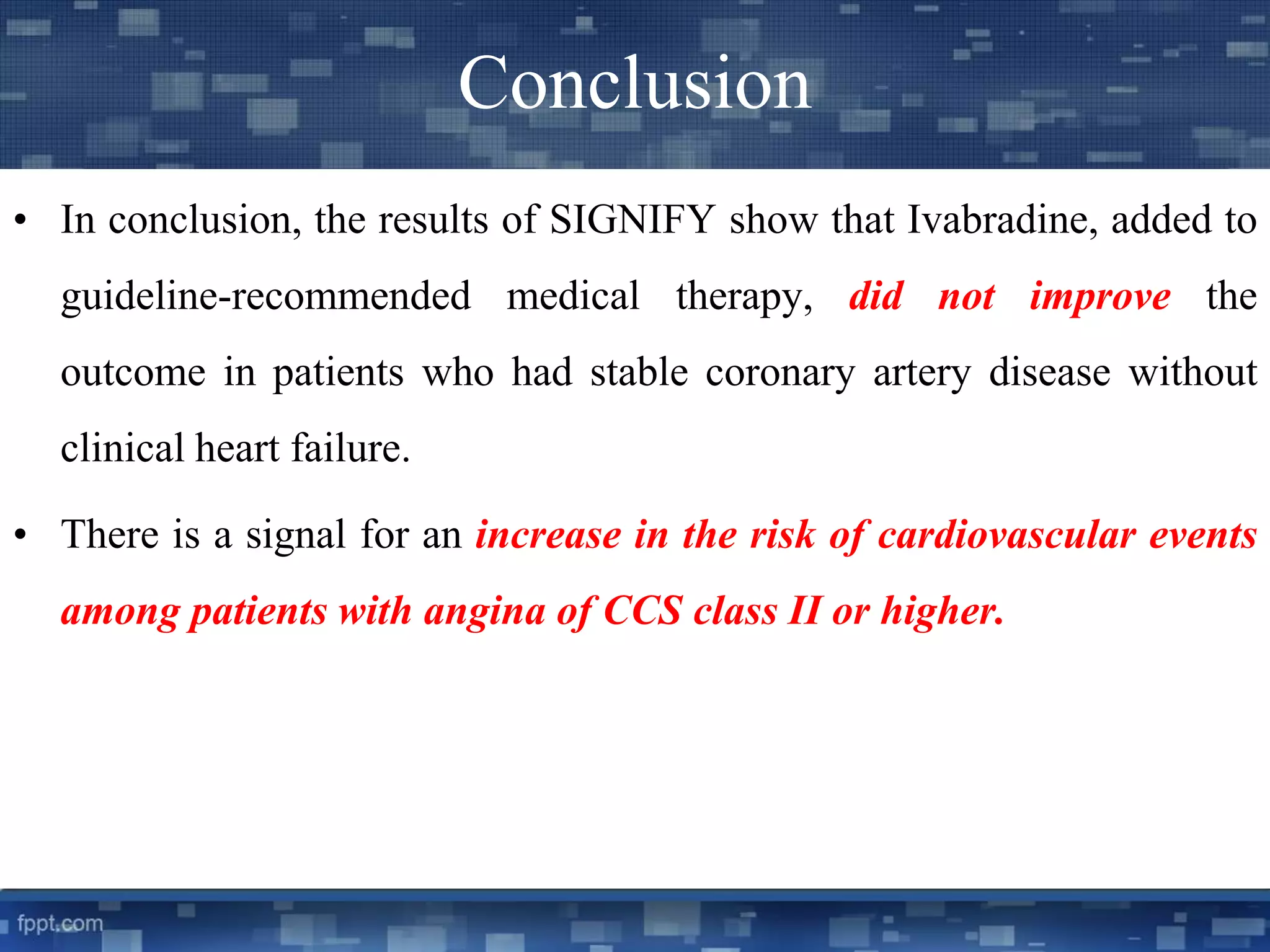
• In conclusion, the results of SIGNIFY show that Ivabradine, added to 
guideline-recommended medical therapy, did not improve the 
outcome in patients who had stable coronary artery disease without 
clinical heart failure. 
• There is a signal for an increase in the risk of cardiovascular events 
among patients with angina of CCS class II or higher.
• Given that the primary cardiovascular effect of Ivabradine is to reduce 
heart rate, these results suggest that an elevated heart rate is only a 
marker of risk — but not a modifiable determinant of outcomes — 
in patients who have stable coronary artery disease without clinical 
heart failure.
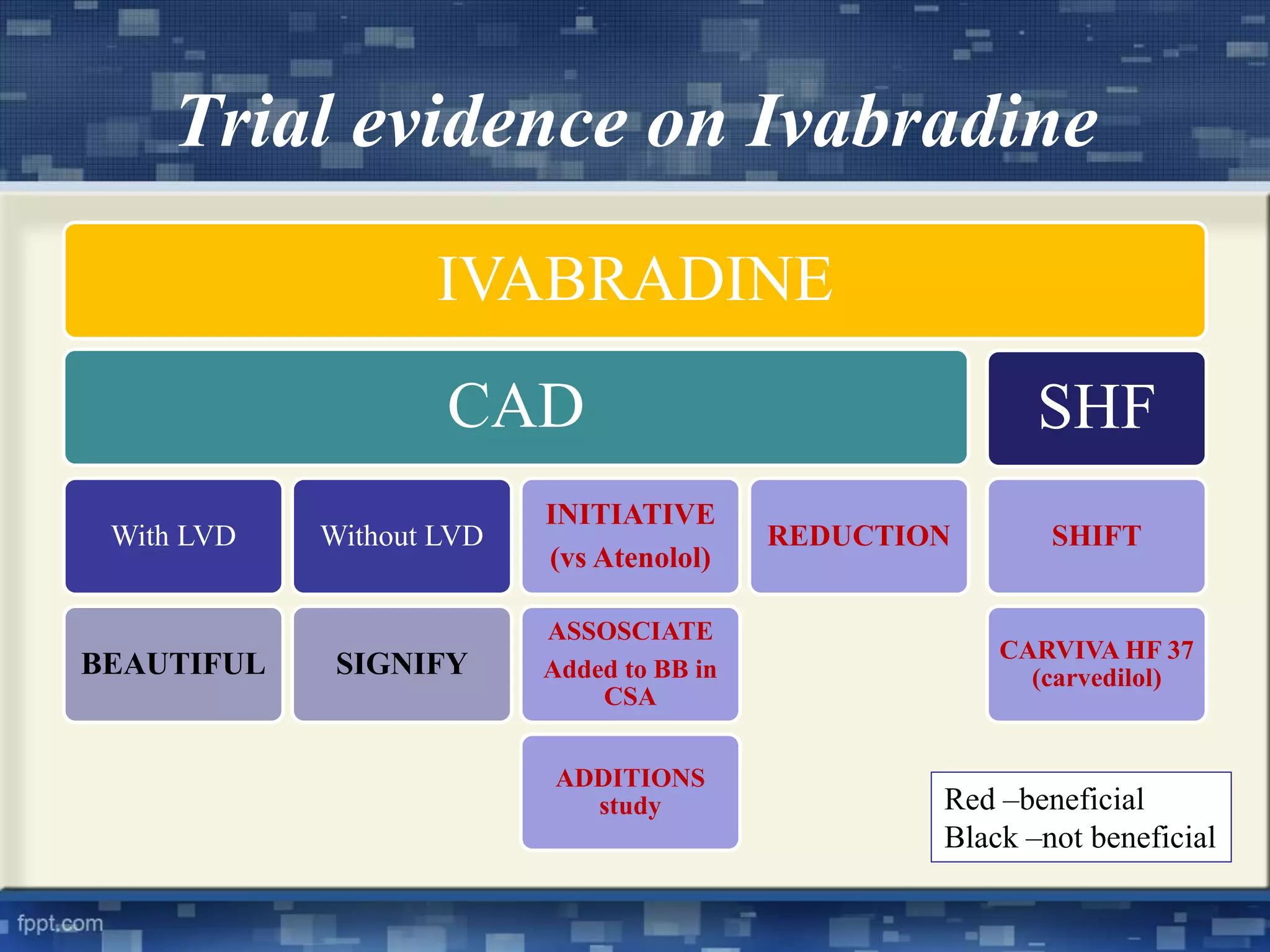
Trial evidence on Ivabradine 
IVABRADINE 
CAD 
With LVD 
BEAUTIFUL 
Without LVD 
SIGNIFY 
INITIATIVE 
(vs Atenolol) 
ASSOSCIATE 
Added to BB in 
CSA 
ADDITIONS 
study 
REDUCTION 
SHF 
SHIFT 
CARVIVA HF 37 
(carvedilol) 
Red –beneficial 
Black –not beneficial
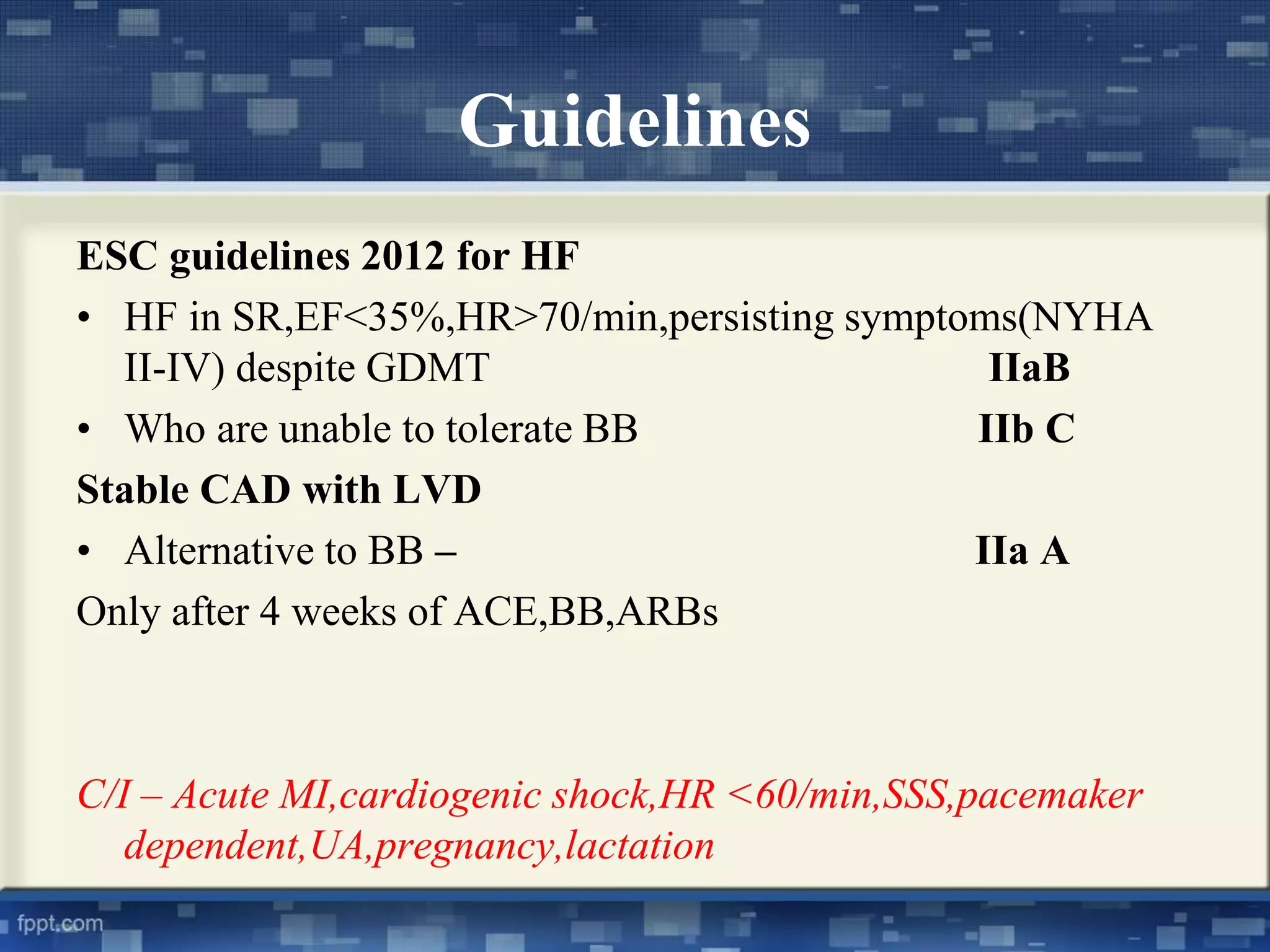
Guidelines 
ESC guidelines 2012 for HF 
• HF in SR,EF<35%,HR>70/min,persisting symptoms(NYHA 
II-IV) despite GDMT IIaB 
• Who are unable to tolerate BB IIb C 
Stable CAD with LVD 
• Alternative to BB – IIa A 
Only after 4 weeks of ACE,BB,ARBs 
C/I – Acute MI,cardiogenic shock,HR <60/min,SSS,pacemaker 
dependent,UA,pregnancy,lactation
SIGNIFY TRIAL

SIGNIFY TRIAL

  • 1.
    Ivabradine in ORIGINALARTICLE Stable Coronary Artery Disease without Clinical Heart Failure Kim Fox et al,NEJM,Aug 31,2014
  • 2.
    Does it Signifythe benefit of Ivabradine or Ignify the existing controversies??
  • 3.
    Background • Anelevated heart rate (HR) is established as a marker of cardiovascular risk in the general population and among patients with cardiovascular disease. • Ivabradine inhibits the If (pacemaker) current in the sinoatrial node and reduces the heart rate without affecting BP or LV systolic function. • It has been shown to lessen symptoms and reduce ischemia in patients with stable angina pectoris. Efficacy of Ivabradine,compared with atenolol in pts with CSA,Eur Heart J 2005;26:2529-36.
  • 4.
    • Ivabradine isknown to improve outcomes in patients with systolic heart failure. SHIFT trial,Lancet 2010;376:875-85. • A trial of Ivabradine involving patients with coronary artery disease and left ventricular systolic dysfunction did not show clinical benefit. Post hoc analyses suggested that Ivabradine improved outcomes in patients who had a heart rate of ≥70 bpm , particularly in those with angina. BEAUTIFUL ,Lancet 2008;372:807-16.
  • 5.
    To confirm thesefindings, the Study AssessInG the Morbidity–Mortality BeNefits of the If Inhibitor Ivabradine in Patients with CoronarY Artery Disease (SIGNIFY), a large, randomized, controlled trial of ivabradine involving patients who had stable coronary artery disease without clinical heart failure was conducted.
  • 6.
    TRIAL DESIGN ANDOVERSIGHT • Randomized, double-blind, parallel-group, placebo-controlled, event-driven study at 1139 centers in 51 countries. • The study was designed to determine the effect of the addition of Ivabradine to standard therapy in patients with stable CAD. • Approved by the ethics committee at each participating institution. • The trial was sponsored by Servier
  • 7.
    The SIGNIFY study 19 102 patients, 51 countries, 1139 centers Fox K, Ford I, Steg PG, Tardif JC, Tendera M, Ferrari R. Rationale, design, and baseline characteristics of the Study assessInG the morbidity-mortality beNefits of the If inhibitor ivabradine in patients with coronarY artery disease (SIGNIFY trial): A randomized, double-blind, placebo-controlled trial of ivabradine in patients with stable coronary artery disease without clinical heart failure. Am Heart J. 2013;166:654-661.
  • 8.
    Study design Meanfollow-up of 2.75 years Fox K, Ford I, Steg PG, Tardif JC, Tendera M, Ferrari R. Rationale, design, and baseline characteristics of the Study assessInG the morbidity-mortality beNefits of the If inhibitor ivabradine in patients with coronarY artery disease (SIGNIFY trial): A randomized, double-blind, placebo-controlled trial of ivabradine in patients with stable coronary artery disease without clinical heart failure. Am Heart J. 2013;166:654-661.
  • 10.
    Study population •Proven stable CAD • Age >55 years • Without LVSD (EF >40%, no clinical signs of HF) • In sinus rhythm, with a resting heart rate >70 bpm • Receiving appropriate stable conventional cardiovascular medication. • One major adverse prognostic factor (CCS >II,evidence of myocardial ischemia within previous year,hospital discharge after a major coronary event within previous year). Fox K, Ford I, Steg PG, Tardif JC, Tendera M, Ferrari R. Rationale, design, and baseline characteristics of the Study assessInG the morbidity-mortality beNefits of the If inhibitor ivabradine in patients with coronarY artery disease (SIGNIFY trial): A randomized, double-blind, placebo-controlled trial of ivabradine in patients with stable coronary artery disease without clinical heart failure. Am Heart J. 2013;166:654-661.
  • 11.
    2 minor adverseprognostic factors • (HDL <40mg/l,LDL >160 mg/dl,despite lipid lowering treatment) • PAD • Current smoking • Age >70 yrs. Exclusion – Pts with LVD,unstable CV condition are excluded.
  • 12.
    Study end points Primary composite end point Cardiovascular death or nonfatal myocardial infarction Secondary end points All-cause death Cardiovascular death Coronary death Nonfatal myocardial infarction Coronary revascularization Elective coronary revascularization New-onset or worsening heart failure Fox K, Ford I, Steg PG, Tardif JC, Tendera M, Ferrari R. Rationale, design, and baseline characteristics of the Study assessInG the morbidity-mortality beNefits of the If inhibitor ivabradine in patients with coronarY artery disease (SIGNIFY trial): A randomized, double-blind, placebo-controlled trial of ivabradine in patients with stable coronary artery disease without clinical heart failure. Am Heart J. 2013;166:654-661.
  • 13.
    STATISTICAL ANALYSIS •We estimated that we would need to enroll 16,850 patients for the study to have 90% power to detect an 18% reduction in the RR of the primary composite end point with Ivabradine, assuming a 2.7% annual incidence with placebo and a mean follow-up period of 2.75 years, at a significance level of 5%. • During the trial, the data monitoring committee performed two planned interim analyses — after 35% and 60% of the anticipated number of primary end points had occurred. • A P value < 0.001 was required for early termination due to benefit.
  • 14.
    Results RANDOMIZATION ANDFOLLOW-UP • Between October 12, 2009, and April 30, 2012, a total of 19,102 patients underwent randomization;9550 were assigned to Ivabradine and 9552 to placebo • The median duration of follow-up was 27.8 months (interquartile range, 21.0 to 35.2).
  • 15.
    CHARACTERISTICS OF THEPARTICIPANTS • The two groups were well balanced with respect to baseline characteristics . • The mean age of the study population was 65 years, • 72.4%of the patients were men, • Mean Resting HR(heart rate) was 77.2 bpm. • 73.3%of the study population had had a previous MI, • 67.8%had had previous coronary revascularization, and • 63.1%had activity-limiting angina (CCS class ≥II). • There was no evidence of left ventricular systolic dysfunction in the overall study population (mean EF, 56.4%).
  • 16.
    Baseline characteristics Wholepopulation (N = 19 102) Demographic characteristics Age (y) <70 ≥70 ≥75 Body mass index (kg/m2) Heart rate (beats/min) Male Ethnic origin White Asian Other Systolic blood pressure (mm Hg) Diastolic blood pressure (mm Hg) CAD duration (y) 65.0 ± 7.2 13 669 (72) 5433 (28) 2227 (12) 28.8 ± 4.6 77.2 ± 7.0 13 840 (72) 15 532 (81) 2547 (13) 1022 (5) 130.5 ± 13.6 78.2 ± 8.2 6.2 ± 6.3 Values are means  SD or n (%). Fox K, Ford I, Steg PG, Tardif JC, Tendera M, Ferrari R. Rationale, design, and baseline characteristics of the Study assessInG the morbidity-mortality beNefits of the If inhibitor ivabradine in patients with coronarY artery disease (SIGNIFY trial): A randomized, double-blind, placebo-controlled trial of ivabradine in patients with stable coronary artery disease without clinical heart failure. Am Heart J. 2013;166:654-661.
  • 17.
    Baseline characteristics FoxK, Ford I, Steg PG, Tardif JC, Tendera M, Ferrari R. Rationale, design, and baseline characteristics of the Study assessInG the morbidity-mortality beNefits of the If inhibitor ivabradine in patients with coronarY artery disease (SIGNIFY trial): A randomized, double-blind, placebo-controlled trial of ivabradine in patients with stable coronary artery disease without clinical heart failure. Am Heart J. 2013;166:654-661.
  • 18.
    Baseline characteristics FoxK, Ford I, Steg PG, Tardif JC, Tendera M, Ferrari R. Rationale, design, and baseline characteristics of the Study assessInG the morbidity-mortality beNefits of the If inhibitor ivabradine in patients with coronarY artery disease (SIGNIFY trial): A randomized, double-blind, placebo-controlled trial of ivabradine in patients with stable coronary artery disease without clinical heart failure. Am Heart J. 2013;166:654-661.
  • 20.
    CCS ≥ IICCS I/no Angina H/O MI 75.3% 69.8% B BLOCKERS 86.9% 76.7% NITRATES 49.5% 23.8% CORONARY 61.1% 79.3% REVASCULARIZATION
  • 21.
    STUDY-DRUG USE ANDHEART RATE • The mean study-drug dose throughout the trial was 8.2±1.7 mg bid in the ivabradine group and 9.5±0.9 mg bid in the placebo group. • At 3 months, the MHR to 60.7±9.0 bpm with ivabradine and to 70.6±10.1 bpm with placebo .(the difference maintained during the study). • The mean proportion of patients who complied with taking the study drug (as assessed by means of pill counts) was 96.2±9.2% in the ivabradine group and 96.6±8.3%in the placebo group.
  • 23.
    • The ratesof permanent discontinuation of the study drug were 20.6% in the ivabradine group (1972 patients) and 14.5% in the placebo group (1384 patients). • The main reason for study-drug withdrawal in the ivabradine group was asymptomatic bradycardia (leading to withdrawal in 272 patients, vs. 17 in the placebo group) and, to a lesser extent, symptomatic bradycardia (194 vs. 33). • Few patients changed the beta-blocker dose during the study, with 3.2% of the patients in the ivabradine group increasing the dose, 6.1% decreasing, and 3.5% stopping, as compared with 5.8%, 3.7%, and 2.3%, respectively, in the placebo group.
  • 27.
    SUBGROUP ANALYSES •There was a significant interaction between the study treatment and the presence of angina at baseline in the prespecified subgroup defined according to CCS class (P = 0.02).
  • 28.
    • Ivabradine usewas associated with an  in the incidence of the 1end point among patients who had angina of CCS ≥class II (7.6%, vs. 6.5% with placebo; HR,1.18; 95% CI, 1.03-1.35; P = 0.02) but not among patients without angina or those who had angina of class I (HR, 0.89; 95% CI, 0.74 - 1.08; P = 0.25). • The effect of ivabradine among patients with angina of CCS class II or higher appeared to be consistent between the two components of the primary end point (HR for death from CV causes, 1.16; 95% CI, 0.97-1.40; P = 0.11; and HR ratio for nonfatal MI, 1.18; 95% CI, 0.97 to 1.42; P = 0.09).
  • 29.
    • In thesubgroup of patients with angina of CCS class II or higher, 1446 patients in the ivabradine group (24.0%) had an improvement in the CCS angina class at 3 months, as compared with 1131 in the placebo group (18.8%) (P = 0.01).
  • 30.
  • 31.
    ADVERSE EVENTS •Adverse events during the study occurred in 73.3% of the patients in the ivabradine group and in 66.9% of those in the placebo group (P<0.001). • Ivabradine increased the frequency of symptomatic bradycardia (7.9%, vs. 1.2% with placebo), asymptomatic bradycardia (11.0% vs.1.3%), AF (5.3% vs. 3.8%), and phosphenes (5.4% vs. 0.5%) (P<0.001 for all comparisons).
  • 32.
    • A seriousadverse event occurred during the study in 3588 patients in the ivabradine group (37.6%) and in 3375 in the placebo group (35.4%) (P = 0.001). • These events were classified as cardiac disorders in 19.0% and 16.7% of the patients, respectively. • Adverse events led to study-drug withdrawal in 13.2% of the patients in the ivabradine group and in 7.4% of those in the placebo group (P<0.001).
  • 33.
  • 34.
  • 35.
    Discussion • Nobenefit of Ivabradine in reducing the risk of CV events in CSA pts without clinical HF,when added to background GDMT. • Elevated HR is assosciated with an increased risk of CV events in stable CAD pts (observational studies). • The result of SIGNIFY contrasts with post hoc analysis of this drug,of its beneficial effect in stable CAD pts. • In HF pts,it had a improved outcome in addition to effect of b blockers.
  • 36.
    • The incidenceof primary end point was relatively low (≈ 2.8%) compared to high prevalence of risk factors in the people studied in this trial (background therapy beneficial effect) • The effect on HR by Ivabradine is clear (10bpm difference). • The incidences of bradycardia and AF were higher with ivabradine than with placebo.(more than in previous trial,because of high doses used )
  • 37.
    Why conflicting results? • There are a number of hypotheses to explain the lack of a benefit in SIGNIFY. • It is possible that Ivabradine decreased the heart rate too much or that there may be a J-shaped curve for the relationship between heart rate and outcome. • Ivabradine may have unintended effects (e.g., adjustment of the doses of other heart rate lowering agents) that may have affected the potential benefits of the lowering of HR with Ivabradine.
  • 38.
    • However, theuse and dosing of beta-blockers after randomization differed only slightly between patients who received ivabradine and those who received placebo. • It is also possible that heart-rate–reducing antianginal agents have no effect on outcomes in patients with stable coronary artery disease.(B blockers have mortality benefit post MI,but in stable CAD without HF ?).
  • 39.
    • In fact,a recent observational analysis has suggested the opposite. • This contrasts with the results of trials testing the effects of beta-blockers or ivabradine in patients with systolic heart failure, including those with heart failure of ischemic origin.
  • 40.
    • The benefitobserved with lowering the HR in pts with HF but not in those with stable CAD may reflect the fact that an elevated HR is due to different pathophysiological mechanisms in these two conditions. • In patients with HF, there is neurohormonal activation, which in itself leads to ventricular remodeling, further left ventricular dysfunction, and a vicious cycle of decline. • In contrast, there is no neurohormonal activation in stable coronary artery disease without left ventricular dysfunction.
  • 41.
    • There wasa significant interaction between the effect of Ivabradine and the presence of angina (CCS class ≥II) at baseline. • In that subgroup, Ivabradine increased the absolute risk of the primary composite end point of death from cardiovascular causes or nonfatal myocardial infarction by 1.1 percentage points. The explanation for this surprising finding is uncertain, although it should be treated with caution since the results of the primary efficacy analysis were not significant.
  • 42.
    Conclusion • Inconclusion, the results of SIGNIFY show that Ivabradine, added to guideline-recommended medical therapy, did not improve the outcome in patients who had stable coronary artery disease without clinical heart failure. • There is a signal for an increase in the risk of cardiovascular events among patients with angina of CCS class II or higher.
  • 43.
    • Given thatthe primary cardiovascular effect of Ivabradine is to reduce heart rate, these results suggest that an elevated heart rate is only a marker of risk — but not a modifiable determinant of outcomes — in patients who have stable coronary artery disease without clinical heart failure.
  • 44.
    Trial evidence onIvabradine IVABRADINE CAD With LVD BEAUTIFUL Without LVD SIGNIFY INITIATIVE (vs Atenolol) ASSOSCIATE Added to BB in CSA ADDITIONS study REDUCTION SHF SHIFT CARVIVA HF 37 (carvedilol) Red –beneficial Black –not beneficial
  • 45.
    Guidelines ESC guidelines2012 for HF • HF in SR,EF<35%,HR>70/min,persisting symptoms(NYHA II-IV) despite GDMT IIaB • Who are unable to tolerate BB IIb C Stable CAD with LVD • Alternative to BB – IIa A Only after 4 weeks of ACE,BB,ARBs C/I – Acute MI,cardiogenic shock,HR <60/min,SSS,pacemaker dependent,UA,pregnancy,lactation