Dr. Chhabi Satpathy
Professor and Head
Department of Cardiology
MKCG Medical College
Berhampur
Odisha
STRONG - HF TRIAL
Safety, tolerability and efficacy of up-titration of guideline-directed medical
therapies for acute heart failure : a multinational, open label, randomised, trial
INTRODUCTION
• The “Vulnerable period”
• No close follow-up
• Rarely reach full dose GDMT
• Paucity of evidence and mixed results
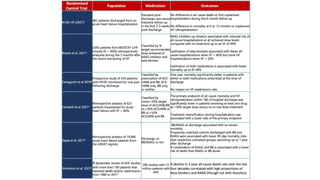
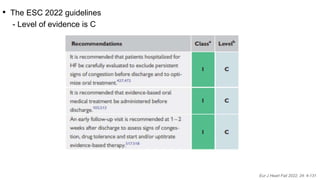
• The ESC 2022 guidelines
- Level of evidence is C
Eur J Heart Fail 2022; 24: 4-131
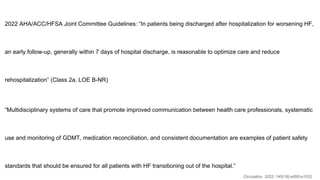
2022 AHA/ACC/HFSA Joint Committee Guidelines: “In patients being discharged after hospitalization for worsening HF,
an early follow-up, generally within 7 days of hospital discharge, is reasonable to optimize care and reduce
rehospitalization” (Class 2a, LOE B-NR)
“Multidisciplinary systems of care that promote improved communication between health care professionals, systematic
use and monitoring of GDMT, medication reconciliation, and consistent documentation are examples of patient safety
standards that should be ensured for all patients with HF transitioning out of the hospital.”
Circulation. 2022; 145(18):e895-e1032
OBJECTIVE
To compare high-intensity early follow-up from AHF hospitalization with rapid up-titration
of GDMT to target doses within 2-3 weeks of discharge to standard post-discharge usual
care.
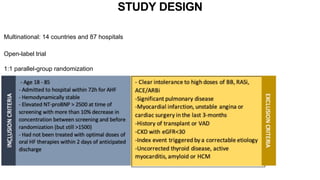
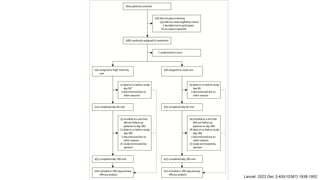
STUDY DESIGN
Multinational: 14 countries and 87 hospitals
Open-label trial
1:1 parallel-group randomization
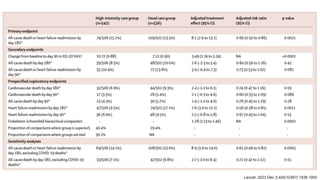
Lancet. 2022 Dec 3;400(10367):1938-1952
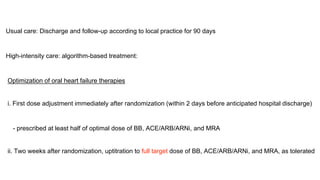
Usual care: Discharge and follow-up according to local practice for 90 days
High-intensity care: algorithm-based treatment:
Optimization of oral heart failure therapies
i. First dose adjustment immediately after randomization (within 2 days before anticipated hospital discharge)
- prescribed at least half of optimal dose of BB, ACE/ARB/ARNi, and MRA
ii. Two weeks after randomization, uptitration to full target dose of BB, ACE/ARB/ARNi, and MRA, as tolerated
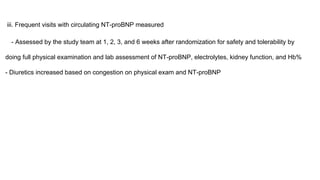
iii. Frequent visits with circulating NT-proBNP measured
- Assessed by the study team at 1, 2, 3, and 6 weeks after randomization for safety and tolerability by
doing full physical examination and lab assessment of NT-proBNP, electrolytes, kidney function, and Hb%
- Diuretics increased based on congestion on physical exam and NT-proBNP
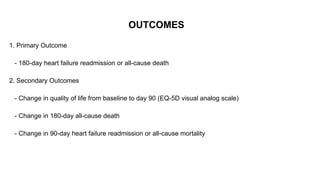
OUTCOMES
1. Primary Outcome
- 180-day heart failure readmission or all-cause death
2. Secondary Outcomes
- Change in quality of life from baseline to day 90 (EQ-5D visual analog scale)
- Change in 180-day all-cause death
- Change in 90-day heart failure readmission or all-cause mortality
STATISTICAL ANALYSIS
1. Intention-to-treat protocol
2. Countries combined into regions for analysis, given the sparseness of events in some countries
3. Protocol amended to increase sample size and change primary endpoint from 90-day to 180-day mid-way
given lower than expected event rate
4. The trial terminated when approximately 1000 patients had 90-day follow-up data given larger than expected
risk reduction of the primary endpoint in the high-intensity care group
RESULTS
1. N = 1085 (542 to high intensity, 536 to usual care)
2. Average age: 63.0 ±13.6 yrs
3. Male: 662 (61%) , Female 423 (39%)
4. Race/Ethnicity: 77% white, 21% Black, ≤1% all other
5. Average LVEF: 36.3% (±12.52%)
6. LVEF ≤40%: 68%
7. LVEF >50%: 15% Ischemic cardiomyopathy: 48% Ischemic cardiomyopathy: 48%
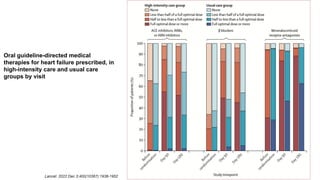
Rates of up-titration of meds :
Percentage of patients on target dose of medication by day 90 were :
1. Renin angiotensin aldosterone inhibition:
High-intensity group: 55% v/s Usual care group: 2%
2. Beta-blockers:
High-intensity group: 49% v/s Usual care group: 4%
3. Mineralocorticoid receptor antagonist:
High-intensity group: 84% v/s Usual care group: 46%
Oral guideline-directed medical
therapies for heart failure prescribed, in
high-intensity care and usual care
groups by visit
Lancet. 2022 Dec 3;400(10367):1938-1952
1. Average visits in 90 days: 4.8 in high intensity group vs 1.0 in usual care group
2. Adjustment treatment effect in vitals and labs:
i. Systolic blood pressure (mmHg): -5.4 (-7.2 to –3.5), p < 0.0001
ii. Diastolic blood pressure (mmHg): -2.3 (-3.5 to –1.1), p = 0.0001
iii. Pulse (bpm): -5.8 (-7.3 to –4.3), p < 0.0001
iv. NYHA class: 1.36 (1.22 to 1.53), P < 0.0001
v. Bodyweight (kg): -1.36 (-1.91 to –0.80), p < 0.0001
vi. Potassium (mmol/L): 0.15 (0.09 to 0.21), p < 0.0001
Lancet. 2022 Dec 3;400(10367):1938-1952
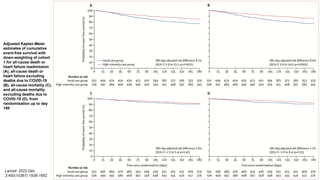
Adjusted Kaplan-Meier
estimates of cumulative
event-free survival with
down-weighting of cohort
1 for all-cause death or
heart failure readmission
(A), all-cause death or
heart failure excluding
deaths due to COVID-19
(B), all-cause mortality (C),
and all-cause mortality
excluding deaths due to
COVID-19 (D), from
randomisation up to day
180
Lancet. 2022 Dec
3;400(10367):1938-1952
Prespecified and post-hoc subgroup analysis
of primary endpoint (difference in 180-day
risk of all-cause death or heart failure
readmission)
Lancet. 2022 Dec 3;400(10367):1938-1952
Adverse Events
223/542 patients in the high-intensity group (41%) vs. 158/536 in the usual care group (29%)
Most commonly observed adverse events: cardiac failure, hypotension, hyperkalemia, renal
impairment, with non-significant differences in occurrences between groups
1. Hypotension 5% vs. <1%
2. Hyperkalemia 3% vs. 0
3. Renal impairment 3% vs. <1%
4. Bradycardia 0.7% vs. 0.4%
CONCLUSION
In this multinational, randomized, open-label trial involving patients discharged following acute heart failure
admission, rapid up-titration of GDMT with scheduled follow-up to achieve specific target doses in the first 90
days was associated with a reduction in 180-day all-cause death or heart failure readmission, improved quality
of life, and reduced symptom burden.
There was no significant difference in serious adverse outcomes.
LIMITATIONS
1. Study amended to change primary endpoint from 90 day to 180 day death or HF readmission due to low
event rate
2. Study was stopped early due to very high significant difference between the groups
3. Study was unblinded which may have affected the perception of study team
4. Cause of readmissions were not adjudicated and were based on investigator’s determination
5. SGLT2i were implemented late in the study as it was not approved at the time of beginning of study
Strong HF trial ppt.pptx

Strong HF trial ppt.pptx

  • 1.
    Dr. Chhabi Satpathy Professorand Head Department of Cardiology MKCG Medical College Berhampur Odisha STRONG - HF TRIAL Safety, tolerability and efficacy of up-titration of guideline-directed medical therapies for acute heart failure : a multinational, open label, randomised, trial
  • 2.
    INTRODUCTION • The “Vulnerableperiod” • No close follow-up • Rarely reach full dose GDMT • Paucity of evidence and mixed results
  • 4.
    • The ESC2022 guidelines - Level of evidence is C Eur J Heart Fail 2022; 24: 4-131
  • 5.
    2022 AHA/ACC/HFSA JointCommittee Guidelines: “In patients being discharged after hospitalization for worsening HF, an early follow-up, generally within 7 days of hospital discharge, is reasonable to optimize care and reduce rehospitalization” (Class 2a, LOE B-NR) “Multidisciplinary systems of care that promote improved communication between health care professionals, systematic use and monitoring of GDMT, medication reconciliation, and consistent documentation are examples of patient safety standards that should be ensured for all patients with HF transitioning out of the hospital.” Circulation. 2022; 145(18):e895-e1032
  • 6.
    OBJECTIVE To compare high-intensityearly follow-up from AHF hospitalization with rapid up-titration of GDMT to target doses within 2-3 weeks of discharge to standard post-discharge usual care.
  • 7.
    STUDY DESIGN Multinational: 14countries and 87 hospitals Open-label trial 1:1 parallel-group randomization
  • 8.
    Lancet. 2022 Dec3;400(10367):1938-1952
  • 9.
    Usual care: Dischargeand follow-up according to local practice for 90 days High-intensity care: algorithm-based treatment: Optimization of oral heart failure therapies i. First dose adjustment immediately after randomization (within 2 days before anticipated hospital discharge) - prescribed at least half of optimal dose of BB, ACE/ARB/ARNi, and MRA ii. Two weeks after randomization, uptitration to full target dose of BB, ACE/ARB/ARNi, and MRA, as tolerated
  • 10.
    iii. Frequent visitswith circulating NT-proBNP measured - Assessed by the study team at 1, 2, 3, and 6 weeks after randomization for safety and tolerability by doing full physical examination and lab assessment of NT-proBNP, electrolytes, kidney function, and Hb% - Diuretics increased based on congestion on physical exam and NT-proBNP
  • 11.
    OUTCOMES 1. Primary Outcome -180-day heart failure readmission or all-cause death 2. Secondary Outcomes - Change in quality of life from baseline to day 90 (EQ-5D visual analog scale) - Change in 180-day all-cause death - Change in 90-day heart failure readmission or all-cause mortality
  • 12.
    STATISTICAL ANALYSIS 1. Intention-to-treatprotocol 2. Countries combined into regions for analysis, given the sparseness of events in some countries 3. Protocol amended to increase sample size and change primary endpoint from 90-day to 180-day mid-way given lower than expected event rate 4. The trial terminated when approximately 1000 patients had 90-day follow-up data given larger than expected risk reduction of the primary endpoint in the high-intensity care group
  • 13.
    RESULTS 1. N =1085 (542 to high intensity, 536 to usual care) 2. Average age: 63.0 ±13.6 yrs 3. Male: 662 (61%) , Female 423 (39%) 4. Race/Ethnicity: 77% white, 21% Black, ≤1% all other 5. Average LVEF: 36.3% (±12.52%) 6. LVEF ≤40%: 68% 7. LVEF >50%: 15% Ischemic cardiomyopathy: 48% Ischemic cardiomyopathy: 48%
  • 14.
    Rates of up-titrationof meds : Percentage of patients on target dose of medication by day 90 were : 1. Renin angiotensin aldosterone inhibition: High-intensity group: 55% v/s Usual care group: 2% 2. Beta-blockers: High-intensity group: 49% v/s Usual care group: 4% 3. Mineralocorticoid receptor antagonist: High-intensity group: 84% v/s Usual care group: 46%
  • 15.
    Oral guideline-directed medical therapiesfor heart failure prescribed, in high-intensity care and usual care groups by visit Lancet. 2022 Dec 3;400(10367):1938-1952
  • 16.
    1. Average visitsin 90 days: 4.8 in high intensity group vs 1.0 in usual care group 2. Adjustment treatment effect in vitals and labs: i. Systolic blood pressure (mmHg): -5.4 (-7.2 to –3.5), p < 0.0001 ii. Diastolic blood pressure (mmHg): -2.3 (-3.5 to –1.1), p = 0.0001 iii. Pulse (bpm): -5.8 (-7.3 to –4.3), p < 0.0001 iv. NYHA class: 1.36 (1.22 to 1.53), P < 0.0001 v. Bodyweight (kg): -1.36 (-1.91 to –0.80), p < 0.0001 vi. Potassium (mmol/L): 0.15 (0.09 to 0.21), p < 0.0001
  • 17.
    Lancet. 2022 Dec3;400(10367):1938-1952
  • 18.
    Adjusted Kaplan-Meier estimates ofcumulative event-free survival with down-weighting of cohort 1 for all-cause death or heart failure readmission (A), all-cause death or heart failure excluding deaths due to COVID-19 (B), all-cause mortality (C), and all-cause mortality excluding deaths due to COVID-19 (D), from randomisation up to day 180 Lancet. 2022 Dec 3;400(10367):1938-1952
  • 19.
    Prespecified and post-hocsubgroup analysis of primary endpoint (difference in 180-day risk of all-cause death or heart failure readmission) Lancet. 2022 Dec 3;400(10367):1938-1952
  • 20.
    Adverse Events 223/542 patientsin the high-intensity group (41%) vs. 158/536 in the usual care group (29%) Most commonly observed adverse events: cardiac failure, hypotension, hyperkalemia, renal impairment, with non-significant differences in occurrences between groups 1. Hypotension 5% vs. <1% 2. Hyperkalemia 3% vs. 0 3. Renal impairment 3% vs. <1% 4. Bradycardia 0.7% vs. 0.4%
  • 21.
    CONCLUSION In this multinational,randomized, open-label trial involving patients discharged following acute heart failure admission, rapid up-titration of GDMT with scheduled follow-up to achieve specific target doses in the first 90 days was associated with a reduction in 180-day all-cause death or heart failure readmission, improved quality of life, and reduced symptom burden. There was no significant difference in serious adverse outcomes.
  • 22.
    LIMITATIONS 1. Study amendedto change primary endpoint from 90 day to 180 day death or HF readmission due to low event rate 2. Study was stopped early due to very high significant difference between the groups 3. Study was unblinded which may have affected the perception of study team 4. Cause of readmissions were not adjudicated and were based on investigator’s determination 5. SGLT2i were implemented late in the study as it was not approved at the time of beginning of study