ACC 2024
Chronicles
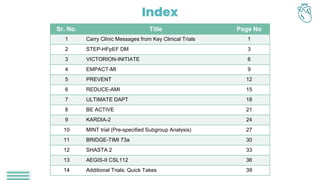
Index
Sr. No. Title Page No
1 Carry Clinic Messages from Key Clinical Trials 1
2 STEP-HFpEF DM 3
3 VICTORION-INITIATE 6
4 EMPACT-MI 9
5 PREVENT 12
6 REDUCE-AMI 15
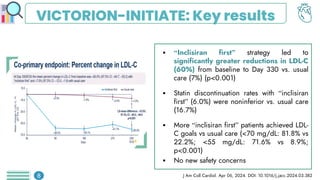
7 ULTIMATE DAPT 18
8 BE ACTIVE 21
9 KARDIA-2 24
10 MINT trial (Pre-specified Subgroup Analysis) 27
11 BRIDGE-TIMI 73a 30
12 SHASTA 2 33
13 AEGIS-II CSL112 36
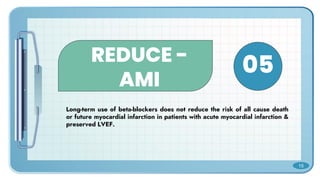
14 Additional Trials: Quick Takes 39
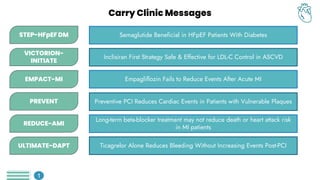
STEP-HFpEF DM Semaglutide Beneficial in HFpEF Patients With Diabetes
VICTORION-
INITIATE
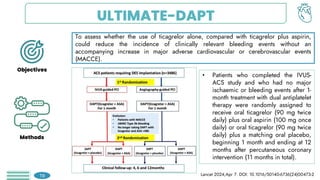
Inclisiran First Strategy Safe & Effective for LDL-C Control in ASCVD
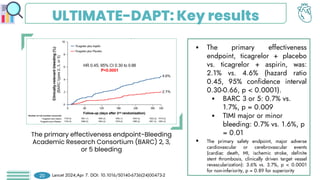
Empagliflozin Fails to Reduce Events After Acute MI
EMPACT-MI
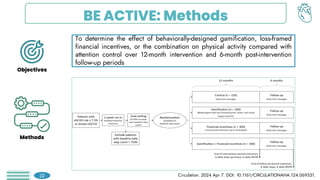
PREVENT Preventive PCI Reduces Cardiac Events in Patients with Vulnerable Plaques
REDUCE-AMI
Long-term beta-blocker treatment may not reduce death or heart attack risk
in MI patients
Ticagrelor Alone Reduces Bleeding Without Increasing Events Post-PCI
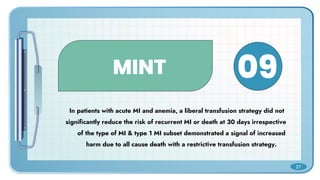
ULTIMATE-DAPT
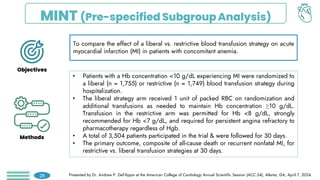
Carry Clinic Messages
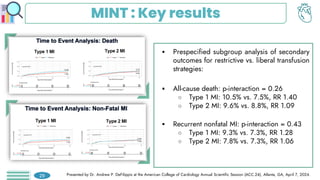
1
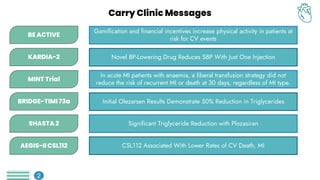
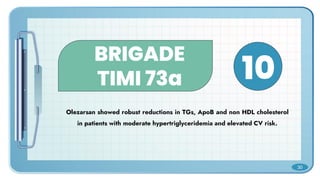
BE ACTIVE
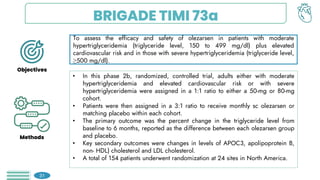
Gamification and financial incentives increase physical activity in patients at
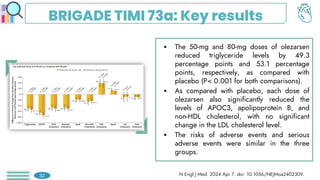
risk for CV events
KARDIA-2 Novel BP-Lowering Drug Reduces SBP With Just One Injection
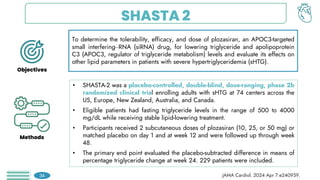
In acute MI patients with anaemia, a liberal transfusion strategy did not
reduce the risk of recurrent MI or death at 30 days, regardless of MI type.
MINT Trial
BRIDGE-TIMI 73a Initial Olezarsen Results Demonstrate 50% Reduction in Triglycerides
SHASTA 2 Significant Triglyceride Reduction with Plozasiran
CSL112 Associated With Lower Rates of CV Death, MI
AEGIS-II CSL112
Carry Clinic Messages
2
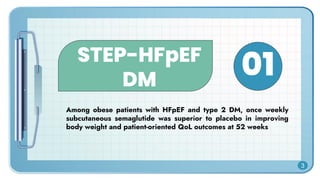
STEP-HFpEF
DM
Among obese patients with HFpEF and type 2 DM, once weekly
subcutaneous semaglutide was superior to placebo in improving
body weight and patient-oriented QoL outcomes at 52 weeks
01
3
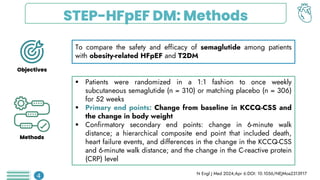
STEP-HFpEF DM: Methods
To compare the safety and efficacy of semaglutide among patients
with obesity-related HFpEF and T2DM
 Patients were randomized in a 1:1 fashion to once weekly
subcutaneous semaglutide (n = 310) or matching placebo (n = 306)
for 52 weeks
 Primary end points: Change from baseline in KCCQ-CSS and
the change in body weight
 Confirmatory secondary end points: change in 6-minute walk
distance; a hierarchical composite end point that included death,
heart failure events, and differences in the change in the KCCQ-CSS
and 6-minute walk distance; and the change in the C-reactive protein
(CRP) level
N Engl J Med 2024;Apr 6:DOI: 10.1056/NEJMoa2313917
4
Objectives
Methods
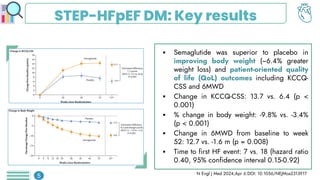
STEP-HFpEF DM: Key results
 Semaglutide was superior to placebo in
improving body weight (~6.4% greater
weight loss) and patient-oriented quality
of life (QoL) outcomes including KCCQ-
CSS and 6MWD
 Change in KCCQ-CSS: 13.7 vs. 6.4 (p <
0.001)
 % change in body weight: -9.8% vs. -3.4%
(p < 0.001)
 Change in 6MWD from baseline to week
52: 12.7 vs. -1.6 m (p = 0.008)
 Time to first HF event: 7 vs. 18 (hazard ratio
0.40, 95% confidence interval 0.15-0.92)
N Engl J Med 2024;Apr 6:DOI: 10.1056/NEJMoa2313917
5
VICTORION-
INITIATE
For patients with atherosclerotic cardiovascular disease who hadn't
achieved LDL-C levels below 70 mg/dL, the prompt addition of
inclisiran resulted in significant reductions in LDL-C levels
02
6
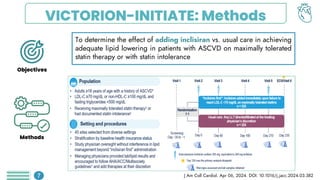
VICTORION-INITIATE: Methods
To determine the effect of adding inclisiran vs. usual care in achieving
adequate lipid lowering in patients with ASCVD on maximally tolerated
statin therapy or with statin intolerance
J Am Coll Cardiol. Apr 06, 2024. DOI: 10.1016/j.jacc.2024.03.382
7
Objectives
Methods
VICTORION-INITIATE: Key results
 “Inclisiran first” strategy led to
significantly greater reductions in LDL-C
(60%) from baseline to Day 330 vs. usual
care (7%) (p<0.001)
 Statin discontinuation rates with “inclisiran
first” (6.0%) were noninferior vs. usual care
(16.7%)
 More “inclisiran first” patients achieved LDL-
C goals vs usual care (<70 mg/dL: 81.8% vs
22.2%; <55 mg/dL: 71.6% vs 8.9%;
p<0.001)
 No new safety concerns
J Am Coll Cardiol. Apr 06, 2024. DOI: 10.1016/j.jacc.2024.03.382
8
EMPACT-MI
Empagliflozin did not lower the risk of a first hospitalization for heart failure
(HF) or death from any cause among patients with an increased risk for HF
following acute myocardial infarction.

03
9
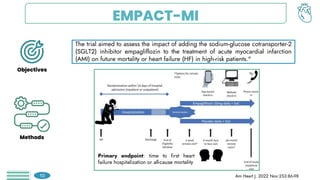
EMPACT-MI
The trial aimed to assess the impact of adding the sodium-glucose cotransporter-2
(SGLT2) inhibitor empagliflozin to the treatment of acute myocardial infarction
(AMI) on future mortality or heart failure (HF) in high-risk patients."
Objectives
Methods
Primary endpoint: time to first heart
failure hospitalization or all-cause mortality
Am Heart J. 2022 Nov:253:86-98
10
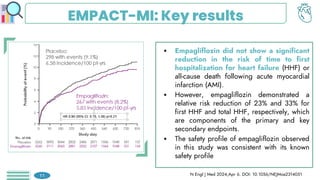
EMPACT-MI: Key results
 Empagliflozin did not show a significant
reduction in the risk of time to first
hospitalization for heart failure (HHF) or
all-cause death following acute myocardial
infarction (AMI).
 However, empagliflozin demonstrated a
relative risk reduction of 23% and 33% for
first HHF and total HHF, respectively, which
are components of the primary and key
secondary endpoints.
 The safety profile of empagliflozin observed
in this study was consistent with its known
safety profile
N Engl J Med 2024;Apr 6. DOI: 10.1056/NEJMoa2314051
11
PREVENT
Preventative PCI in patients with high-risk vulnerable plaques is more
effective than optimal medical therapy alone at preventing serious cardiac
events.
04
12
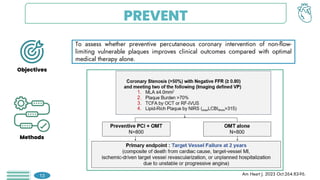
PREVENT
To assess whether preventive percutaneous coronary intervention of non-flow-
limiting vulnerable plaques improves clinical outcomes compared with optimal
medical therapy alone.
Objectives
Methods
Am Heart J. 2023 Oct:264:83-96.
13
PREVENT: Key results
 The primary endpoint of target vessel failure
at 2 years for PCI + OMT vs. OMT alone,
was: 0.4% vs. 3.4% (hazard ratio [HR] 0.11,
95% confidence interval [CI] 0.03-0.36, p =
0.0003).
 Preventive PCI also reduced the composite
patient-oriented outcome of risk of all-cause
death, any MI, or any repeat
revascularization.
 This benefit was sustained throughout the 7-
year follow-up period.
Lancet 2024;Apr 8. DOI:0.1016/S0140-6736(24)00413-6
14
REDUCE -
AMI
Long-term use of beta-blockers does not reduce the risk of all cause death
or future myocardial infarction in patients with acute myocardial infarction &
preserved LVEF.
05
15
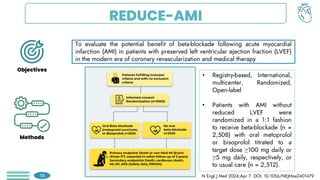
REDUCE-AMI
To evaluate the potential benefit of beta-blockade following acute myocardial
infarction (AMI) in patients with preserved left ventricular ejection fraction (LVEF)
in the modern era of coronary revascularization and medical therapy
Objectives
Methods
• Registry-based, International,
multicenter, Randomized,
Open-label
• Patients with AMI without
reduced LVEF were
randomized in a 1:1 fashion
to receive beta-blockade (n =
2,508) with oral metoprolol
or bisoprolol titrated to a
target dose ≥100 mg daily or
≥5 mg daily, respectively, or
to usual care (n = 2,512).
N Engl J Med 2024;Apr 7. DOI: 10.1056/NEJMoa2401479
16
REDUCE-AMI: Key results
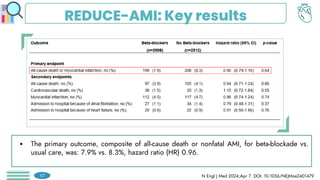
 The primary outcome, composite of all-cause death or nonfatal AMI, for beta-blockade vs.
usual care, was: 7.9% vs. 8.3%, hazard ratio (HR) 0.96.
N Engl J Med 2024;Apr 7. DOI: 10.1056/NEJMoa2401479
17
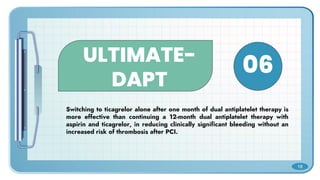
ULTIMATE-
DAPT
Switching to ticagrelor alone after one month of dual antiplatelet therapy is
more effective than continuing a 12-month dual antiplatelet therapy with
aspirin and ticagrelor, in reducing clinically significant bleeding without an
increased risk of thrombosis after PCI.
06
18
ULTIMATE-DAPT
To assess whether the use of ticagrelor alone, compared with ticagrelor plus aspirin,
could reduce the incidence of clinically relevant bleeding events without an
accompanying increase in major adverse cardiovascular or cerebrovascular events
(MACCE).
Objectives
Methods
• Patients who completed the IVUS-
ACS study and who had no major
ischaemic or bleeding events after 1-
month treatment with dual antiplatelet
therapy were randomly assigned to
receive oral ticagrelor (90 mg twice
daily) plus oral aspirin (100 mg once
daily) or oral ticagrelor (90 mg twice
daily) plus a matching oral placebo,
beginning 1 month and ending at 12
months after percutaneous coronary
intervention (11 months in total).
Lancet 2024;Apr 7. DOI: 10.1016/S0140-6736(24)00473-2
19
ULTIMATE-DAPT: Key results
 The primary effectiveness
endpoint, ticagrelor + placebo
vs. ticagrelor + aspirin, was:
2.1% vs. 4.6% (hazard ratio
0.45, 95% confidence interval
0.30-0.66, p < 0.0001).
 BARC 3 or 5: 0.7% vs.
1.7%, p = 0.009
 TIMI major or minor
bleeding: 0.7% vs. 1.6%, p
= 0.01
 The primary safety endpoint, major adverse
cardiovascular or cerebrovascular events
(cardiac death, MI, ischemic stroke, definite
stent thrombosis, clinically driven target vessel
revascularization): 3.6% vs. 3.7%, p < 0.0001
for non-inferiority, p = 0.89 for superiority
The primary effectiveness endpoint-Bleeding
Academic Research Consortium (BARC) 2, 3,
or 5 bleeding
Lancet 2024;Apr 7. DOI: 10.1016/S0140-6736(24)00473-2
20
BE ACTIVE
Home-based incentives related to behavioral economics increased
physical activity in patients at risk for CV events over 12 month
intervention period.
07
21
BE ACTIVE: Methods
To determine the effect of behaviorally-designed gamification, loss-framed
financial incentives, or the combination on physical activity compared with
attention control over 12-month intervention and 6-month post-intervention
follow-up periods
Circulation. 2024 Apr 7. DOI: 10.1161/CIRCULATIONAHA.124.069531.
22
Objectives
Methods
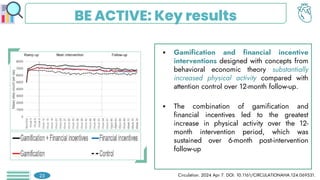
BE ACTIVE: Key results
 Gamification and financial incentive
interventions designed with concepts from
behavioral economic theory substantially
increased physical activity compared with
attention control over 12-month follow-up.
 The combination of gamification and
financial incentives led to the greatest
increase in physical activity over the 12-
month intervention period, which was
sustained over 6-month post-intervention
follow-up
Circulation. 2024 Apr 7. DOI: 10.1161/CIRCULATIONAHA.124.069531.
23
KARDIA-2
Treatment with a single subcutaneous dose of zilebesiran 600 mg
was associated with clinically significant reductions in 24-hr mean
ambulatory and office SBP compared with placebo at Month 3
when added to a diuretic, CCB, or maximum-dose ARB
08
24
KARDIA-2: Methods
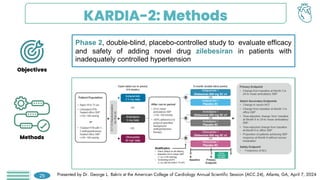
Phase 2, double-blind, placebo-controlled study to evaluate efficacy
and safety of adding novel drug zilebesiran in patients with
inadequately controlled hypertension
Presented by Dr. George L. Bakris at the American College of Cardiology Annual Scientific Session (ACC.24), Atlanta, GA, April 7, 2024
25
Objectives
Methods
KARDIA-2: Key results
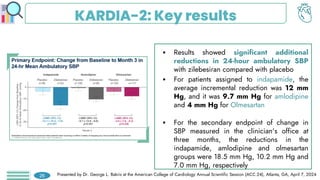
 Results showed significant additional
reductions in 24-hour ambulatory SBP
with zilebesiran compared with placebo
 For patients assigned to indapamide, the
average incremental reduction was 12 mm
Hg, and it was 9.7 mm Hg for amlodipine
and 4 mm Hg for Olmesartan
 For the secondary endpoint of change in
SBP measured in the clinician's office at
three months, the reductions in the
indapamide, amlodipine and olmesartan
groups were 18.5 mm Hg, 10.2 mm Hg and
7.0 mm Hg, respectively
Presented by Dr. George L. Bakris at the American College of Cardiology Annual Scientific Session (ACC.24), Atlanta, GA, April 7, 2024
26
MINT
In patients with acute MI and anemia, a liberal transfusion strategy did not
significantly reduce the risk of recurrent MI or death at 30 days irrespective
of the type of MI & type 1 MI subset demonstrated a signal of increased
harm due to all cause death with a restrictive transfusion strategy.
09
27
MINT (Pre-specified SubgroupAnalysis)
To compare the effect of a liberal vs. restrictive blood transfusion strategy on acute
myocardial infarction (MI) in patients with concomitant anemia.
• Patients with a Hb concentration <10 g/dL experiencing MI were randomized to
a liberal (n = 1,755) or restrictive (n = 1,749) blood transfusion strategy during
hospitalization.
• The liberal strategy arm received 1 unit of packed RBC on randomization and
additional transfusions as needed to maintain Hb concentration ≥10 g/dL.
Transfusion in the restrictive arm was permitted for Hb <8 g/dL, strongly
recommended for Hb <7 g/dL, and required for persistent angina refractory to
pharmacotherapy regardless of Hgb.
• A total of 3,504 patients participated in the trial & were followed for 30 days.
• The primary outcome, composite of all-cause death or recurrent nonfatal MI, for
restrictive vs. liberal transfusion strategies at 30 days.
Presented by Dr. Andrew P. DeFilippis at the American College of Cardiology Annual Scientific Session (ACC.24), Atlanta, GA, April 7, 2024.
28
Objectives
Methods
MINT : Key results
 Prespecified subgroup analysis of secondary
outcomes for restrictive vs. liberal transfusion
strategies:
 All-cause death: p-interaction = 0.26
○ Type 1 MI: 10.5% vs. 7.5%, RR 1.40
○ Type 2 MI: 9.6% vs. 8.8%, RR 1.09
 Recurrent nonfatal MI: p-interaction = 0.43
○ Type 1 MI: 9.3% vs. 7.3%, RR 1.28
○ Type 2 MI: 7.8% vs. 7.3%, RR 1.06
Presented by Dr. Andrew P. DeFilippis at the American College of Cardiology Annual Scientific Session (ACC.24), Atlanta, GA, April 7, 2024.
29
BRIGADE
TIMI 73a
Olezarsan showed robust reductions in TGs, ApoB and non HDL cholesterol
in patients with moderate hypertriglyceridemia and elevated CV risk.
10
30
BRIGADE TIMI 73a
To assess the efficacy and safety of olezarsen in patients with moderate
hypertriglyceridemia (triglyceride level, 150 to 499 mg/dl) plus elevated
cardiovascular risk and in those with severe hypertriglyceridemia (triglyceride level,
≥500 mg/dl).
• In this phase 2b, randomized, controlled trial, adults either with moderate
hypertriglyceridemia and elevated cardiovascular risk or with severe
hypertriglyceridemia were assigned in a 1:1 ratio to either a 50-mg or 80-mg
cohort.
• Patients were then assigned in a 3:1 ratio to receive monthly sc olezarsen or
matching placebo within each cohort.
• The primary outcome was the percent change in the triglyceride level from
baseline to 6 months, reported as the difference between each olezarsen group
and placebo.
• Key secondary outcomes were changes in levels of APOC3, apolipoprotein B,
non- HDL) cholesterol and LDL cholesterol.
• A total of 154 patients underwent randomization at 24 sites in North America.
31
Objectives
Methods
BRIGADE TIMI 73a: Key results
 The 50-mg and 80-mg doses of olezarsen
reduced triglyceride levels by 49.3
percentage points and 53.1 percentage
points, respectively, as compared with
placebo (P< 0.001 for both comparisons).
 As compared with placebo, each dose of
olezarsen also significantly reduced the
levels of APOC3, apolipoprotein B, and
non-HDL cholesterol, with no significant
change in the LDL cholesterol level.
 The risks of adverse events and serious
adverse events were similar in the three
groups.
N Engl J Med. 2024 Apr 7. doi: 10.1056/NEJMoa2402309.
32
SHASTA 2
Novel drug Plozasiran showed robust reductions of TGs in patients at risk of
acute pancreatitis.
11
33
SHASTA 2
To determine the tolerability, efficacy, and dose of plozasiran, an APOC3-targeted
small interfering–RNA (siRNA) drug, for lowering triglyceride and apolipoprotein
C3 (APOC3, regulator of triglyceride metabolism) levels and evaluate its effects on
other lipid parameters in patients with severe hypertriglyceridemia (sHTG).
• SHASTA-2 was a placebo-controlled, double-blind, dose-ranging, phase 2b
randomized clinical trial enrolling adults with sHTG at 74 centers across the
US, Europe, New Zealand, Australia, and Canada.
• Eligible patients had fasting triglyceride levels in the range of 500 to 4000
mg/dL while receiving stable lipid-lowering treatment.
• Participants received 2 subcutaneous doses of plozasiran (10, 25, or 50 mg) or
matched placebo on day 1 and at week 12 and were followed up through week
48.
• The primary end point evaluated the placebo-subtracted difference in means of
percentage triglyceride change at week 24. 229 patients were included.
Objectives
Methods
JAMA Cardiol. 2024 Apr 7:e240959.
34
SHASTA 2: Key results
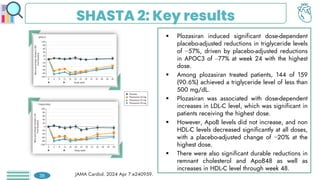
 Plozasiran induced significant dose-dependent
placebo-adjusted reductions in triglyceride levels
of −57%, driven by placebo-adjusted reductions
in APOC3 of –77% at week 24 with the highest
dose.
 Among plozasiran treated patients, 144 of 159
(90.6%) achieved a triglyceride level of less than
500 mg/dL.
 Plozasiran was associated with dose-dependent
increases in LDL-C level, which was significant in
patients receiving the highest dose.
 However, ApoB levels did not increase, and non
HDL-C levels decreased significantly at all doses,
with a placebo-adjusted change of −20% at the
highest dose.
 There were also significant durable reductions in
remnant cholesterol and ApoB48 as well as
increases in HDL-C level through week 48.
JAMA Cardiol. 2024 Apr 7:e240959.
35
AEGIS II
CSL 112
IV infusions of CSL 112, derived from human plasma apoA-1 was linked to
potential decrease in the rates of CV death & MI, although the results
were numerically lower.
12
36
AEGIS II CSL 112
To evaluate if the infusions of CSL112 (human apolipoprotein A1 derived from
plasma) can reduce the risk of recurrent cardiovascular events after acute
myocardial infarction.
• This was a international, double-blind, placebo-controlled trial involving patients
with acute myocardial infarction, multivessel coronary artery disease, and
additional cardiovascular risk factors.
• Patients were randomly assigned to receive either four weekly infusions of 6 g
of CSL112 or matching placebo, with the first infusion administered within 5
days after the first medical contact for the acute myocardial infarction.
• The primary end point was a composite of myocardial infarction, stroke, or
death from cardiovascular causes from randomization through 90 days of
follow-up.
• A total of 18,219 patients were included in the trial (9112 in the CSL112 group
and 9107 in the placebo group).
Objectives
Methods
37 N Engl J Med. 2024 Apr 7. DOI: 10.1056/NEJMoa2400969.
AEGIS II CSL 112: Key results
 There was no significant difference between the
groups in the risk of a primary end-point event at
90 days of follow-up (439 patients [4.8%] in the
CSL112 group vs. 472 patients [5.2%] in the
placebo group; hazard ratio, 0.93 (P=0.24)
 At the end of 180 days of follow-up (622 patients
[6.9%] vs. 683 patients [7.6%]; hazard ratio,
0.91), or at 365 days of follow-up (885 patients
[9.8%] vs. 944 patients [10.5%]; hazard ratio,
0.93).
N Engl J Med. 2024 Apr 7. DOI: 10.1056/NEJMoa2400969.
38
Additional
Trials 13
39
Quick Takes
40
Quick Takes
41
Quick Takes
42
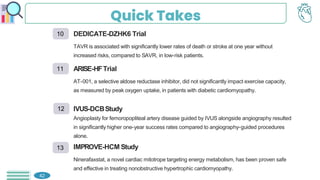
DEDICATE-DZHK6 Trial
TAVR is associated with significantly lower rates of death or stroke at one year without
increased risks, compared to SAVR, in low-risk patients.
ARISE-HFTrial
AT-001, a selective aldose reductase inhibitor, did not significantly impact exercise capacity,
as measured by peak oxygen uptake, in patients with diabetic cardiomyopathy.
IVUS-DCBStudy
Angioplasty for femoropopliteal artery disease guided by IVUS alongside angiography resulted
in significantly higher one-year success rates compared to angiography-guided procedures
alone.
IMPROVE-HCM Study
Ninerafaxstat, a novel cardiac mitotrope targeting energy metabolism, has been proven safe
and effective in treating nonobstructive hypertrophic cardiomyopathy.
10
11
12
13
Quick Takes
43
14 15 16 17
The matter published herein is solely for educational information only. It does not intend either directly or indirectly expressly or impliedly meant to promote,
propagate, advertise or otherwise endorsing any particular product or brand. The matter content does not make any representation or warranties with respect to the
efficacy, accuracy, usefulness or applicability, or fitness, or completeness for any particular purpose. The creators of this publication hereby disclaim any and all
liability to any party for any direct, indirect, implied, punitive, special, incidental or other consequential damages arising directly or indirectly from any use of this
publication, which is provided as is, and without warranties.
This is brought to you by
with the support of
Rosuvastatin Calcium 5/10/15/20/30/40 mg Tablet

ACC 2024 Chronicles. Cardiology. Exam.pdf

  • 1.
  • 2.
    Index Sr. No. TitlePage No 1 Carry Clinic Messages from Key Clinical Trials 1 2 STEP-HFpEF DM 3 3 VICTORION-INITIATE 6 4 EMPACT-MI 9 5 PREVENT 12 6 REDUCE-AMI 15 7 ULTIMATE DAPT 18 8 BE ACTIVE 21 9 KARDIA-2 24 10 MINT trial (Pre-specified Subgroup Analysis) 27 11 BRIDGE-TIMI 73a 30 12 SHASTA 2 33 13 AEGIS-II CSL112 36 14 Additional Trials: Quick Takes 39
  • 3.
    STEP-HFpEF DM SemaglutideBeneficial in HFpEF Patients With Diabetes VICTORION- INITIATE Inclisiran First Strategy Safe & Effective for LDL-C Control in ASCVD Empagliflozin Fails to Reduce Events After Acute MI EMPACT-MI PREVENT Preventive PCI Reduces Cardiac Events in Patients with Vulnerable Plaques REDUCE-AMI Long-term beta-blocker treatment may not reduce death or heart attack risk in MI patients Ticagrelor Alone Reduces Bleeding Without Increasing Events Post-PCI ULTIMATE-DAPT Carry Clinic Messages 1
  • 4.
    BE ACTIVE Gamification andfinancial incentives increase physical activity in patients at risk for CV events KARDIA-2 Novel BP-Lowering Drug Reduces SBP With Just One Injection In acute MI patients with anaemia, a liberal transfusion strategy did not reduce the risk of recurrent MI or death at 30 days, regardless of MI type. MINT Trial BRIDGE-TIMI 73a Initial Olezarsen Results Demonstrate 50% Reduction in Triglycerides SHASTA 2 Significant Triglyceride Reduction with Plozasiran CSL112 Associated With Lower Rates of CV Death, MI AEGIS-II CSL112 Carry Clinic Messages 2
  • 5.
    STEP-HFpEF DM Among obese patientswith HFpEF and type 2 DM, once weekly subcutaneous semaglutide was superior to placebo in improving body weight and patient-oriented QoL outcomes at 52 weeks 01 3
  • 6.
    STEP-HFpEF DM: Methods Tocompare the safety and efficacy of semaglutide among patients with obesity-related HFpEF and T2DM  Patients were randomized in a 1:1 fashion to once weekly subcutaneous semaglutide (n = 310) or matching placebo (n = 306) for 52 weeks  Primary end points: Change from baseline in KCCQ-CSS and the change in body weight  Confirmatory secondary end points: change in 6-minute walk distance; a hierarchical composite end point that included death, heart failure events, and differences in the change in the KCCQ-CSS and 6-minute walk distance; and the change in the C-reactive protein (CRP) level N Engl J Med 2024;Apr 6:DOI: 10.1056/NEJMoa2313917 4 Objectives Methods
  • 7.
    STEP-HFpEF DM: Keyresults  Semaglutide was superior to placebo in improving body weight (~6.4% greater weight loss) and patient-oriented quality of life (QoL) outcomes including KCCQ- CSS and 6MWD  Change in KCCQ-CSS: 13.7 vs. 6.4 (p < 0.001)  % change in body weight: -9.8% vs. -3.4% (p < 0.001)  Change in 6MWD from baseline to week 52: 12.7 vs. -1.6 m (p = 0.008)  Time to first HF event: 7 vs. 18 (hazard ratio 0.40, 95% confidence interval 0.15-0.92) N Engl J Med 2024;Apr 6:DOI: 10.1056/NEJMoa2313917 5
  • 8.
    VICTORION- INITIATE For patients withatherosclerotic cardiovascular disease who hadn't achieved LDL-C levels below 70 mg/dL, the prompt addition of inclisiran resulted in significant reductions in LDL-C levels 02 6
  • 9.
    VICTORION-INITIATE: Methods To determinethe effect of adding inclisiran vs. usual care in achieving adequate lipid lowering in patients with ASCVD on maximally tolerated statin therapy or with statin intolerance J Am Coll Cardiol. Apr 06, 2024. DOI: 10.1016/j.jacc.2024.03.382 7 Objectives Methods
  • 10.
    VICTORION-INITIATE: Key results “Inclisiran first” strategy led to significantly greater reductions in LDL-C (60%) from baseline to Day 330 vs. usual care (7%) (p<0.001)  Statin discontinuation rates with “inclisiran first” (6.0%) were noninferior vs. usual care (16.7%)  More “inclisiran first” patients achieved LDL- C goals vs usual care (<70 mg/dL: 81.8% vs 22.2%; <55 mg/dL: 71.6% vs 8.9%; p<0.001)  No new safety concerns J Am Coll Cardiol. Apr 06, 2024. DOI: 10.1016/j.jacc.2024.03.382 8
  • 11.
    EMPACT-MI Empagliflozin did notlower the risk of a first hospitalization for heart failure (HF) or death from any cause among patients with an increased risk for HF following acute myocardial infarction. 03 9
  • 12.
    EMPACT-MI The trial aimedto assess the impact of adding the sodium-glucose cotransporter-2 (SGLT2) inhibitor empagliflozin to the treatment of acute myocardial infarction (AMI) on future mortality or heart failure (HF) in high-risk patients." Objectives Methods Primary endpoint: time to first heart failure hospitalization or all-cause mortality Am Heart J. 2022 Nov:253:86-98 10
  • 13.
    EMPACT-MI: Key results Empagliflozin did not show a significant reduction in the risk of time to first hospitalization for heart failure (HHF) or all-cause death following acute myocardial infarction (AMI).  However, empagliflozin demonstrated a relative risk reduction of 23% and 33% for first HHF and total HHF, respectively, which are components of the primary and key secondary endpoints.  The safety profile of empagliflozin observed in this study was consistent with its known safety profile N Engl J Med 2024;Apr 6. DOI: 10.1056/NEJMoa2314051 11
  • 14.
    PREVENT Preventative PCI inpatients with high-risk vulnerable plaques is more effective than optimal medical therapy alone at preventing serious cardiac events. 04 12
  • 15.
    PREVENT To assess whetherpreventive percutaneous coronary intervention of non-flow- limiting vulnerable plaques improves clinical outcomes compared with optimal medical therapy alone. Objectives Methods Am Heart J. 2023 Oct:264:83-96. 13
  • 16.
    PREVENT: Key results The primary endpoint of target vessel failure at 2 years for PCI + OMT vs. OMT alone, was: 0.4% vs. 3.4% (hazard ratio [HR] 0.11, 95% confidence interval [CI] 0.03-0.36, p = 0.0003).  Preventive PCI also reduced the composite patient-oriented outcome of risk of all-cause death, any MI, or any repeat revascularization.  This benefit was sustained throughout the 7- year follow-up period. Lancet 2024;Apr 8. DOI:0.1016/S0140-6736(24)00413-6 14
  • 17.
    REDUCE - AMI Long-term useof beta-blockers does not reduce the risk of all cause death or future myocardial infarction in patients with acute myocardial infarction & preserved LVEF. 05 15
  • 18.
    REDUCE-AMI To evaluate thepotential benefit of beta-blockade following acute myocardial infarction (AMI) in patients with preserved left ventricular ejection fraction (LVEF) in the modern era of coronary revascularization and medical therapy Objectives Methods • Registry-based, International, multicenter, Randomized, Open-label • Patients with AMI without reduced LVEF were randomized in a 1:1 fashion to receive beta-blockade (n = 2,508) with oral metoprolol or bisoprolol titrated to a target dose ≥100 mg daily or ≥5 mg daily, respectively, or to usual care (n = 2,512). N Engl J Med 2024;Apr 7. DOI: 10.1056/NEJMoa2401479 16
  • 19.
    REDUCE-AMI: Key results The primary outcome, composite of all-cause death or nonfatal AMI, for beta-blockade vs. usual care, was: 7.9% vs. 8.3%, hazard ratio (HR) 0.96. N Engl J Med 2024;Apr 7. DOI: 10.1056/NEJMoa2401479 17
  • 20.
    ULTIMATE- DAPT Switching to ticagreloralone after one month of dual antiplatelet therapy is more effective than continuing a 12-month dual antiplatelet therapy with aspirin and ticagrelor, in reducing clinically significant bleeding without an increased risk of thrombosis after PCI. 06 18
  • 21.
    ULTIMATE-DAPT To assess whetherthe use of ticagrelor alone, compared with ticagrelor plus aspirin, could reduce the incidence of clinically relevant bleeding events without an accompanying increase in major adverse cardiovascular or cerebrovascular events (MACCE). Objectives Methods • Patients who completed the IVUS- ACS study and who had no major ischaemic or bleeding events after 1- month treatment with dual antiplatelet therapy were randomly assigned to receive oral ticagrelor (90 mg twice daily) plus oral aspirin (100 mg once daily) or oral ticagrelor (90 mg twice daily) plus a matching oral placebo, beginning 1 month and ending at 12 months after percutaneous coronary intervention (11 months in total). Lancet 2024;Apr 7. DOI: 10.1016/S0140-6736(24)00473-2 19
  • 22.
    ULTIMATE-DAPT: Key results The primary effectiveness endpoint, ticagrelor + placebo vs. ticagrelor + aspirin, was: 2.1% vs. 4.6% (hazard ratio 0.45, 95% confidence interval 0.30-0.66, p < 0.0001).  BARC 3 or 5: 0.7% vs. 1.7%, p = 0.009  TIMI major or minor bleeding: 0.7% vs. 1.6%, p = 0.01  The primary safety endpoint, major adverse cardiovascular or cerebrovascular events (cardiac death, MI, ischemic stroke, definite stent thrombosis, clinically driven target vessel revascularization): 3.6% vs. 3.7%, p < 0.0001 for non-inferiority, p = 0.89 for superiority The primary effectiveness endpoint-Bleeding Academic Research Consortium (BARC) 2, 3, or 5 bleeding Lancet 2024;Apr 7. DOI: 10.1016/S0140-6736(24)00473-2 20
  • 23.
    BE ACTIVE Home-based incentivesrelated to behavioral economics increased physical activity in patients at risk for CV events over 12 month intervention period. 07 21
  • 24.
    BE ACTIVE: Methods Todetermine the effect of behaviorally-designed gamification, loss-framed financial incentives, or the combination on physical activity compared with attention control over 12-month intervention and 6-month post-intervention follow-up periods Circulation. 2024 Apr 7. DOI: 10.1161/CIRCULATIONAHA.124.069531. 22 Objectives Methods
  • 25.
    BE ACTIVE: Keyresults  Gamification and financial incentive interventions designed with concepts from behavioral economic theory substantially increased physical activity compared with attention control over 12-month follow-up.  The combination of gamification and financial incentives led to the greatest increase in physical activity over the 12- month intervention period, which was sustained over 6-month post-intervention follow-up Circulation. 2024 Apr 7. DOI: 10.1161/CIRCULATIONAHA.124.069531. 23
  • 26.
    KARDIA-2 Treatment with asingle subcutaneous dose of zilebesiran 600 mg was associated with clinically significant reductions in 24-hr mean ambulatory and office SBP compared with placebo at Month 3 when added to a diuretic, CCB, or maximum-dose ARB 08 24
  • 27.
    KARDIA-2: Methods Phase 2,double-blind, placebo-controlled study to evaluate efficacy and safety of adding novel drug zilebesiran in patients with inadequately controlled hypertension Presented by Dr. George L. Bakris at the American College of Cardiology Annual Scientific Session (ACC.24), Atlanta, GA, April 7, 2024 25 Objectives Methods
  • 28.
    KARDIA-2: Key results Results showed significant additional reductions in 24-hour ambulatory SBP with zilebesiran compared with placebo  For patients assigned to indapamide, the average incremental reduction was 12 mm Hg, and it was 9.7 mm Hg for amlodipine and 4 mm Hg for Olmesartan  For the secondary endpoint of change in SBP measured in the clinician's office at three months, the reductions in the indapamide, amlodipine and olmesartan groups were 18.5 mm Hg, 10.2 mm Hg and 7.0 mm Hg, respectively Presented by Dr. George L. Bakris at the American College of Cardiology Annual Scientific Session (ACC.24), Atlanta, GA, April 7, 2024 26
  • 29.
    MINT In patients withacute MI and anemia, a liberal transfusion strategy did not significantly reduce the risk of recurrent MI or death at 30 days irrespective of the type of MI & type 1 MI subset demonstrated a signal of increased harm due to all cause death with a restrictive transfusion strategy. 09 27
  • 30.
    MINT (Pre-specified SubgroupAnalysis) Tocompare the effect of a liberal vs. restrictive blood transfusion strategy on acute myocardial infarction (MI) in patients with concomitant anemia. • Patients with a Hb concentration <10 g/dL experiencing MI were randomized to a liberal (n = 1,755) or restrictive (n = 1,749) blood transfusion strategy during hospitalization. • The liberal strategy arm received 1 unit of packed RBC on randomization and additional transfusions as needed to maintain Hb concentration ≥10 g/dL. Transfusion in the restrictive arm was permitted for Hb <8 g/dL, strongly recommended for Hb <7 g/dL, and required for persistent angina refractory to pharmacotherapy regardless of Hgb. • A total of 3,504 patients participated in the trial & were followed for 30 days. • The primary outcome, composite of all-cause death or recurrent nonfatal MI, for restrictive vs. liberal transfusion strategies at 30 days. Presented by Dr. Andrew P. DeFilippis at the American College of Cardiology Annual Scientific Session (ACC.24), Atlanta, GA, April 7, 2024. 28 Objectives Methods
  • 31.
    MINT : Keyresults  Prespecified subgroup analysis of secondary outcomes for restrictive vs. liberal transfusion strategies:  All-cause death: p-interaction = 0.26 ○ Type 1 MI: 10.5% vs. 7.5%, RR 1.40 ○ Type 2 MI: 9.6% vs. 8.8%, RR 1.09  Recurrent nonfatal MI: p-interaction = 0.43 ○ Type 1 MI: 9.3% vs. 7.3%, RR 1.28 ○ Type 2 MI: 7.8% vs. 7.3%, RR 1.06 Presented by Dr. Andrew P. DeFilippis at the American College of Cardiology Annual Scientific Session (ACC.24), Atlanta, GA, April 7, 2024. 29
  • 32.
    BRIGADE TIMI 73a Olezarsan showedrobust reductions in TGs, ApoB and non HDL cholesterol in patients with moderate hypertriglyceridemia and elevated CV risk. 10 30
  • 33.
    BRIGADE TIMI 73a Toassess the efficacy and safety of olezarsen in patients with moderate hypertriglyceridemia (triglyceride level, 150 to 499 mg/dl) plus elevated cardiovascular risk and in those with severe hypertriglyceridemia (triglyceride level, ≥500 mg/dl). • In this phase 2b, randomized, controlled trial, adults either with moderate hypertriglyceridemia and elevated cardiovascular risk or with severe hypertriglyceridemia were assigned in a 1:1 ratio to either a 50-mg or 80-mg cohort. • Patients were then assigned in a 3:1 ratio to receive monthly sc olezarsen or matching placebo within each cohort. • The primary outcome was the percent change in the triglyceride level from baseline to 6 months, reported as the difference between each olezarsen group and placebo. • Key secondary outcomes were changes in levels of APOC3, apolipoprotein B, non- HDL) cholesterol and LDL cholesterol. • A total of 154 patients underwent randomization at 24 sites in North America. 31 Objectives Methods
  • 34.
    BRIGADE TIMI 73a:Key results  The 50-mg and 80-mg doses of olezarsen reduced triglyceride levels by 49.3 percentage points and 53.1 percentage points, respectively, as compared with placebo (P< 0.001 for both comparisons).  As compared with placebo, each dose of olezarsen also significantly reduced the levels of APOC3, apolipoprotein B, and non-HDL cholesterol, with no significant change in the LDL cholesterol level.  The risks of adverse events and serious adverse events were similar in the three groups. N Engl J Med. 2024 Apr 7. doi: 10.1056/NEJMoa2402309. 32
  • 35.
    SHASTA 2 Novel drugPlozasiran showed robust reductions of TGs in patients at risk of acute pancreatitis. 11 33
  • 36.
    SHASTA 2 To determinethe tolerability, efficacy, and dose of plozasiran, an APOC3-targeted small interfering–RNA (siRNA) drug, for lowering triglyceride and apolipoprotein C3 (APOC3, regulator of triglyceride metabolism) levels and evaluate its effects on other lipid parameters in patients with severe hypertriglyceridemia (sHTG). • SHASTA-2 was a placebo-controlled, double-blind, dose-ranging, phase 2b randomized clinical trial enrolling adults with sHTG at 74 centers across the US, Europe, New Zealand, Australia, and Canada. • Eligible patients had fasting triglyceride levels in the range of 500 to 4000 mg/dL while receiving stable lipid-lowering treatment. • Participants received 2 subcutaneous doses of plozasiran (10, 25, or 50 mg) or matched placebo on day 1 and at week 12 and were followed up through week 48. • The primary end point evaluated the placebo-subtracted difference in means of percentage triglyceride change at week 24. 229 patients were included. Objectives Methods JAMA Cardiol. 2024 Apr 7:e240959. 34
  • 37.
    SHASTA 2: Keyresults  Plozasiran induced significant dose-dependent placebo-adjusted reductions in triglyceride levels of −57%, driven by placebo-adjusted reductions in APOC3 of –77% at week 24 with the highest dose.  Among plozasiran treated patients, 144 of 159 (90.6%) achieved a triglyceride level of less than 500 mg/dL.  Plozasiran was associated with dose-dependent increases in LDL-C level, which was significant in patients receiving the highest dose.  However, ApoB levels did not increase, and non HDL-C levels decreased significantly at all doses, with a placebo-adjusted change of −20% at the highest dose.  There were also significant durable reductions in remnant cholesterol and ApoB48 as well as increases in HDL-C level through week 48. JAMA Cardiol. 2024 Apr 7:e240959. 35
  • 38.
    AEGIS II CSL 112 IVinfusions of CSL 112, derived from human plasma apoA-1 was linked to potential decrease in the rates of CV death & MI, although the results were numerically lower. 12 36
  • 39.
    AEGIS II CSL112 To evaluate if the infusions of CSL112 (human apolipoprotein A1 derived from plasma) can reduce the risk of recurrent cardiovascular events after acute myocardial infarction. • This was a international, double-blind, placebo-controlled trial involving patients with acute myocardial infarction, multivessel coronary artery disease, and additional cardiovascular risk factors. • Patients were randomly assigned to receive either four weekly infusions of 6 g of CSL112 or matching placebo, with the first infusion administered within 5 days after the first medical contact for the acute myocardial infarction. • The primary end point was a composite of myocardial infarction, stroke, or death from cardiovascular causes from randomization through 90 days of follow-up. • A total of 18,219 patients were included in the trial (9112 in the CSL112 group and 9107 in the placebo group). Objectives Methods 37 N Engl J Med. 2024 Apr 7. DOI: 10.1056/NEJMoa2400969.
  • 40.
    AEGIS II CSL112: Key results  There was no significant difference between the groups in the risk of a primary end-point event at 90 days of follow-up (439 patients [4.8%] in the CSL112 group vs. 472 patients [5.2%] in the placebo group; hazard ratio, 0.93 (P=0.24)  At the end of 180 days of follow-up (622 patients [6.9%] vs. 683 patients [7.6%]; hazard ratio, 0.91), or at 365 days of follow-up (885 patients [9.8%] vs. 944 patients [10.5%]; hazard ratio, 0.93). N Engl J Med. 2024 Apr 7. DOI: 10.1056/NEJMoa2400969. 38
  • 41.
  • 42.
  • 43.
  • 44.
    Quick Takes 42 DEDICATE-DZHK6 Trial TAVRis associated with significantly lower rates of death or stroke at one year without increased risks, compared to SAVR, in low-risk patients. ARISE-HFTrial AT-001, a selective aldose reductase inhibitor, did not significantly impact exercise capacity, as measured by peak oxygen uptake, in patients with diabetic cardiomyopathy. IVUS-DCBStudy Angioplasty for femoropopliteal artery disease guided by IVUS alongside angiography resulted in significantly higher one-year success rates compared to angiography-guided procedures alone. IMPROVE-HCM Study Ninerafaxstat, a novel cardiac mitotrope targeting energy metabolism, has been proven safe and effective in treating nonobstructive hypertrophic cardiomyopathy. 10 11 12 13
  • 45.
  • 46.
    The matter publishedherein is solely for educational information only. It does not intend either directly or indirectly expressly or impliedly meant to promote, propagate, advertise or otherwise endorsing any particular product or brand. The matter content does not make any representation or warranties with respect to the efficacy, accuracy, usefulness or applicability, or fitness, or completeness for any particular purpose. The creators of this publication hereby disclaim any and all liability to any party for any direct, indirect, implied, punitive, special, incidental or other consequential damages arising directly or indirectly from any use of this publication, which is provided as is, and without warranties. This is brought to you by with the support of Rosuvastatin Calcium 5/10/15/20/30/40 mg Tablet