Toufeeq Mallick
Sideroblastic Anemia
Content
Definition
Types
Symptoms
Laboratory Findings
Treatment
Living with Sideroblastic Anemia
Conclution
Definition
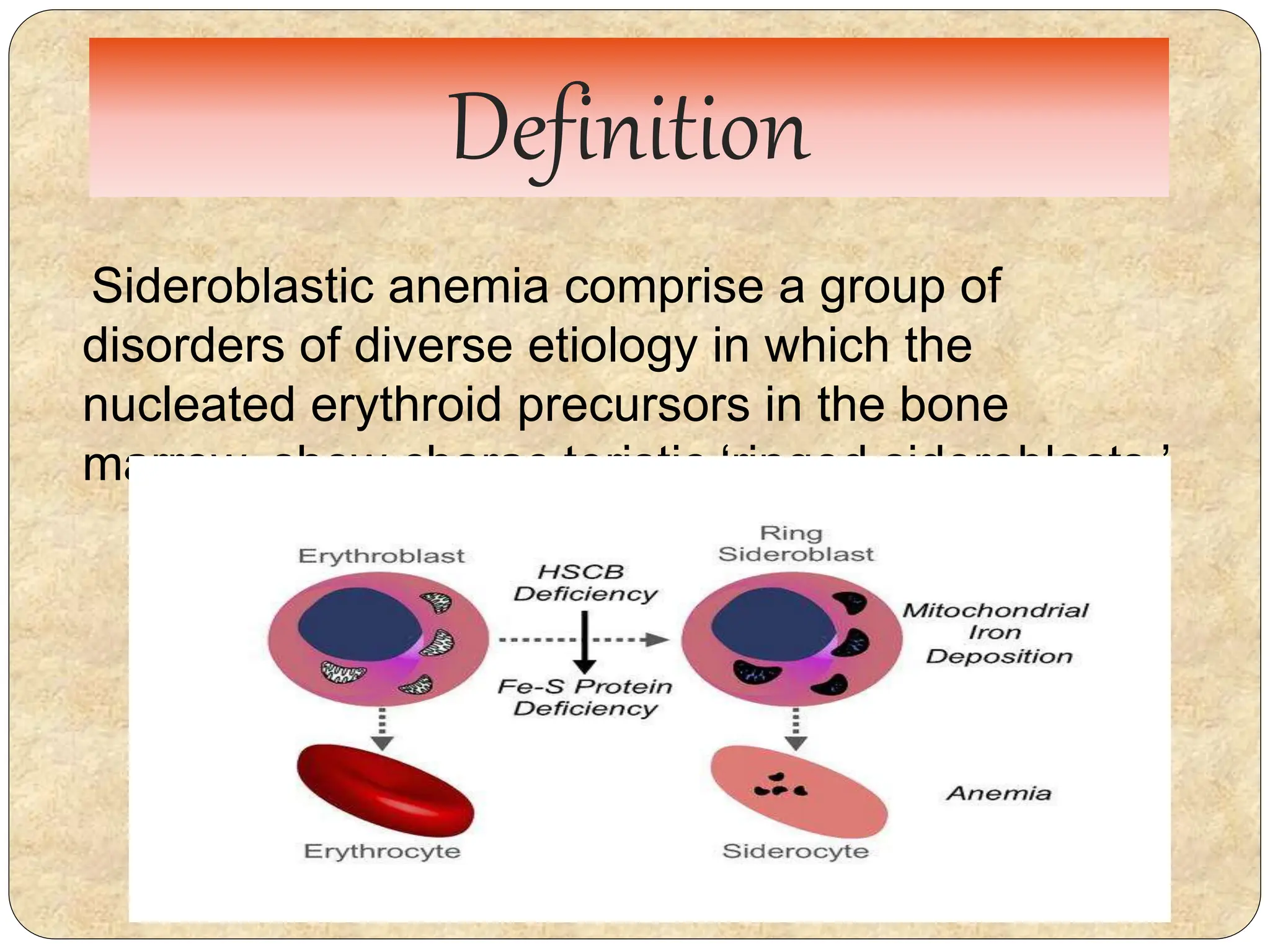
Sideroblastic anemia comprise a group of
disorders of diverse etiology in which the
nucleated erythroid precursors in the bone
marrow, show charac teristic ‘ringed sideroblasts.’
Types of Sideroblastic Anaemia
Inherited:
X-linked (most common)
Autosomal dominant
Autosomal recessive
Acquired:
Myelodysplastic syndromes (MDS)
Certain medications
(isoniazid, chloramphenicol)
Alcohol abuse
Lead poisoning
Copper deficiency
Chronic infections or inflammation
Symptoms
Fatigue
Weakness
Pale skin
Shortness of breath
Dizziness
Headache
Enlarged spleen (Splenomegaly)
LABORATORY FINDINGS
The blood picture shows hypochromic anaemia
which may be microcytic.
Absolute values (MCV, MCH and MCHC) are
reduced in hereditary type but MCV is often raised
in acquired type.
Bone marrow examination shows erythroid
hyperplasia with usually macronormoblastic
erythropoiesis.
Serum ferritin levels are raised.
Serum iron is usually raised with almost complete
saturation of TIBC.
Treatment
The treatment of secondary sideroblastic anaemia is
primarily focussed on removal of the offending agent. No
definite treatment is available for hereditary and
idiopathic types of sideroblastic anemias.
Some options are:-
Stem cell transplantation
Blood transfusition
Iron cheletion therapy( Remove
excess iron)
Living with Sideroblastic Anemia
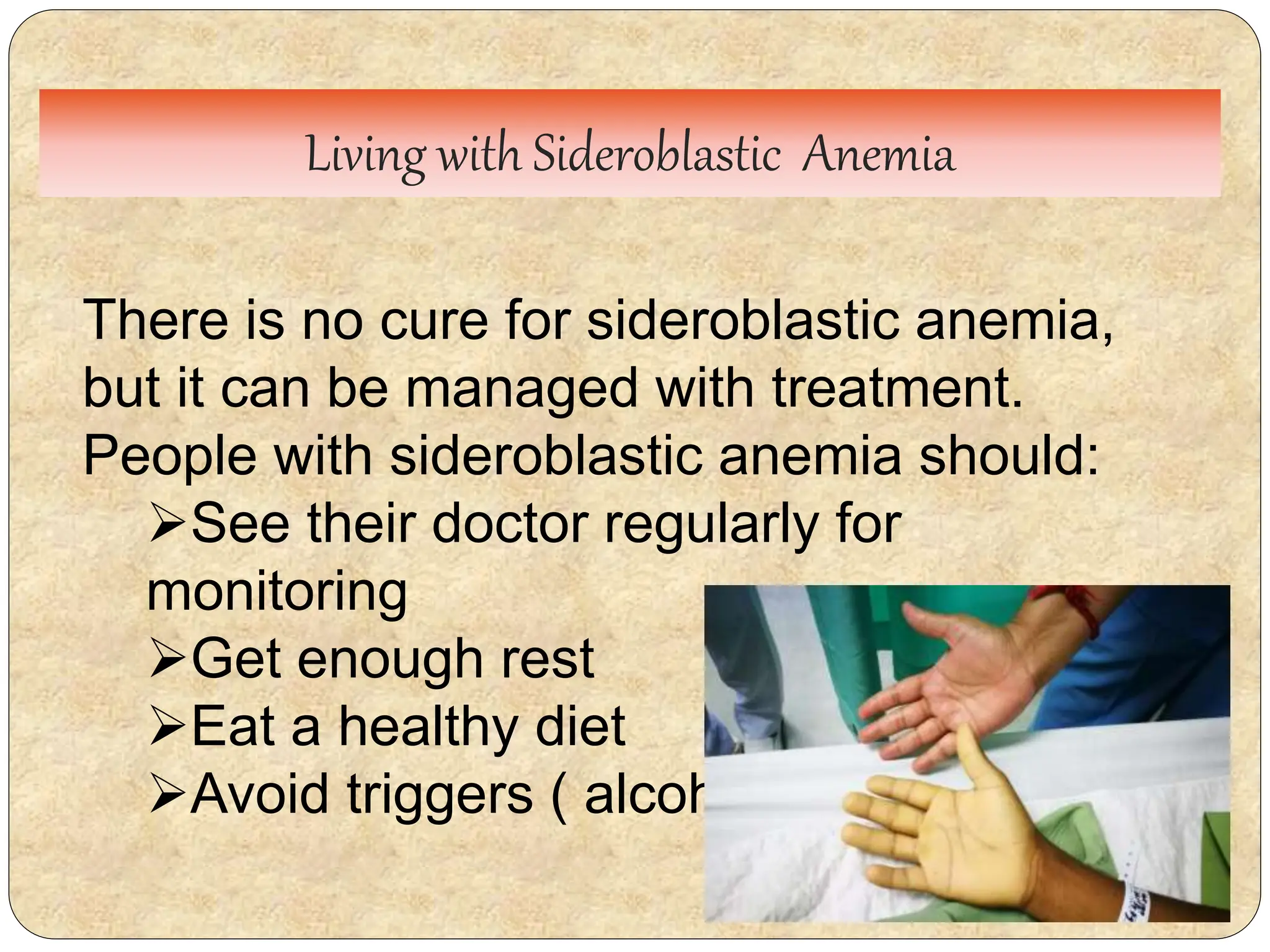
There is no cure for sideroblastic anemia,
but it can be managed with treatment.
People with sideroblastic anemia should:
See their doctor regularly for
monitoring
Get enough rest
Eat a healthy diet
Avoid triggers ( alcohol)
Conclusion
Sideroblastic anemia is a rare blood disorder
that can affect anyone.
Early diagnosis and treatment are important for
managing the condition and improving quality of
life.
There is ongoing research to find new
treatments for sideroblastic anemia.
Sideroblastic anaemia short PPT for students.pptx.

Sideroblastic anaemia short PPT for students.pptx.

  • 1.
  • 2.
  • 3.
    Definition Sideroblastic anemia comprisea group of disorders of diverse etiology in which the nucleated erythroid precursors in the bone marrow, show charac teristic ‘ringed sideroblasts.’
  • 4.
    Types of SideroblasticAnaemia Inherited: X-linked (most common) Autosomal dominant Autosomal recessive Acquired: Myelodysplastic syndromes (MDS) Certain medications (isoniazid, chloramphenicol) Alcohol abuse Lead poisoning Copper deficiency Chronic infections or inflammation
  • 5.
    Symptoms Fatigue Weakness Pale skin Shortness ofbreath Dizziness Headache Enlarged spleen (Splenomegaly)
  • 6.
    LABORATORY FINDINGS The bloodpicture shows hypochromic anaemia which may be microcytic. Absolute values (MCV, MCH and MCHC) are reduced in hereditary type but MCV is often raised in acquired type. Bone marrow examination shows erythroid hyperplasia with usually macronormoblastic erythropoiesis. Serum ferritin levels are raised. Serum iron is usually raised with almost complete saturation of TIBC.
  • 7.
    Treatment The treatment ofsecondary sideroblastic anaemia is primarily focussed on removal of the offending agent. No definite treatment is available for hereditary and idiopathic types of sideroblastic anemias. Some options are:- Stem cell transplantation Blood transfusition Iron cheletion therapy( Remove excess iron)
  • 8.
    Living with SideroblasticAnemia There is no cure for sideroblastic anemia, but it can be managed with treatment. People with sideroblastic anemia should: See their doctor regularly for monitoring Get enough rest Eat a healthy diet Avoid triggers ( alcohol)
  • 9.
    Conclusion Sideroblastic anemia isa rare blood disorder that can affect anyone. Early diagnosis and treatment are important for managing the condition and improving quality of life. There is ongoing research to find new treatments for sideroblastic anemia.