SIDEROBLASTIC
ANEMIA
DR MANJULA N MBBS MD
(PATHOLOGY)
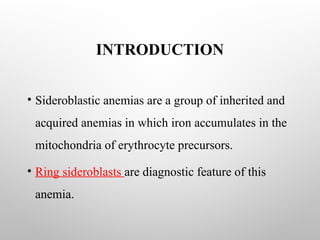
INTRODUCTION
• Sideroblastic anemias are a group of inherited and
acquired anemias in which iron accumulates in the
mitochondria of erythrocyte precursors.
• Ring sideroblasts are diagnostic feature of this
anemia.
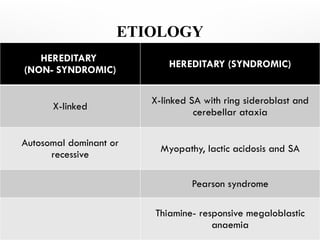
ETIOLOGY
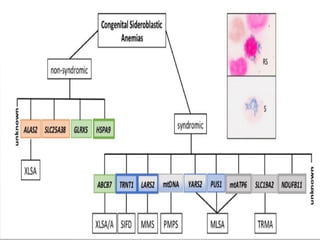
ETIOLOGY: 1. HEREDITARY, 2. ACQUIRED AND 3.
SECONDARY CAUSES.
HEREDITARY
(NON- SYNDROMIC)
HEREDITARY (SYNDROMIC)
X-linked
X-linked SA with ring sideroblast and
cerebellar ataxia
Autosomal dominant or
recessive
Myopathy, lactic acidosis and SA
Pearson syndrome
Thiamine- responsive megaloblastic
anaemia
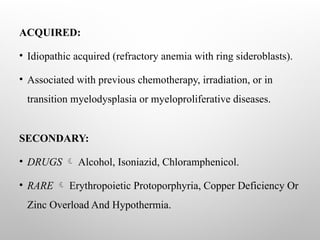
ACQUIRED:
• Idiopathic acquired (refractory anemia with ring sideroblasts).
• Associated with previous chemotherapy, irradiation, or in
transition myelodysplasia or myeloproliferative diseases.
SECONDARY:
• DRUGS  Alcohol, Isoniazid, Chloramphenicol.
• RARE  Erythropoietic Protoporphyria, Copper Deficiency Or
Zinc Overload And Hypothermia.
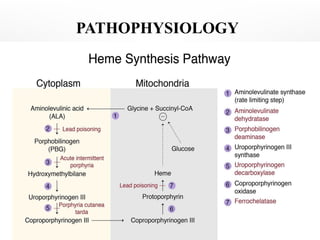
PATHOPHYSIOLOGY
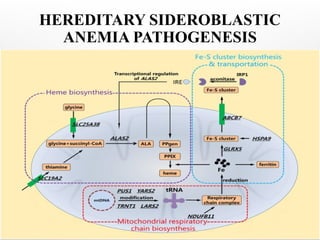
HEREDITARY SIDEROBLASTIC
ANEMIA PATHOGENESIS
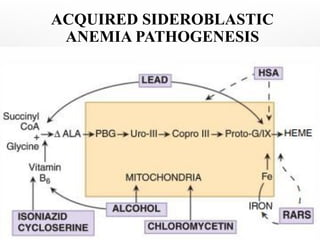
ACQUIRED SIDEROBLASTIC
ANEMIA PATHOGENESIS
CLINICAL FEATURES
XLSA DUE TO ALAS2 DEFICIENCY:
• Male preponderance
• Iron overload symptoms
• Liver cirrhosis
ARSA DUE TO SLC25A38 MUTATION:
• First weeks or months of life.
• Pyridoxine refractory.
• Carriers unaffected.
ABCB7 DEFECT:
• Infants and younger children
• Slow or non-progressive cerebellar ataxia
• Delayed walking
• Dysarthria, intentional tremor, decreased deep tendon reflex,
nystagmus and strabismus.
• Hepatomegaly.
GLRX 5 DEFECT:
• Middle age.
• Iron overload, diabetes, darkened skin.
• Hepatomegaly.
MLASA:
• Myopathy, lactic acidosis and SA.
• Short stature, microcephaly, short philtrum and slow gait.
• Severity varies within the family members.
TRMA:
• Infancy or childhood.
• Megalobastic anemia, sensorineural deafness and diabetes mellitus.
• Nystagmus, optic atrophy, retinitis pigmentosa, short stature, stroke
and cardiac abnormalities.
PMPS:
• Rare and fatal disorder of infancy.
• Macrocytic anemia, pancreatic exocrine dysfunction and lactic
acidosis.
• Failure to thrive and persistent diarrhea.
PRIMARY ACQUIRED SA:
• Late middle age and elderly.
• Breathlessness, fatigue and pallor.
• Hepatomegaly.
• Increased risk of leukemia development.
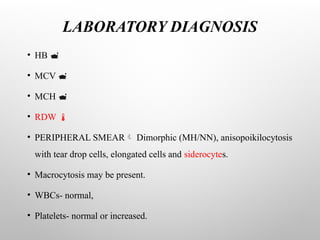
LABORATORY DIAGNOSIS
• HB 
• MCV 
• MCH 
• RDW 
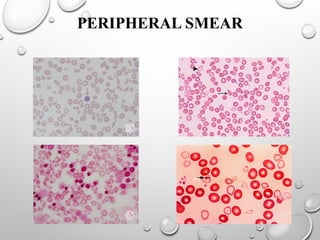
• PERIPHERAL SMEAR Dimorphic (MH/NN), anisopoikilocytosis
with tear drop cells, elongated cells and siderocytes.
• Macrocytosis may be present.
• WBCs- normal,
• Platelets- normal or increased.
PERIPHERAL SMEAR
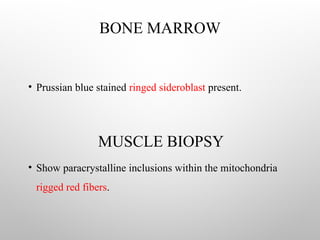
BONE MARROW
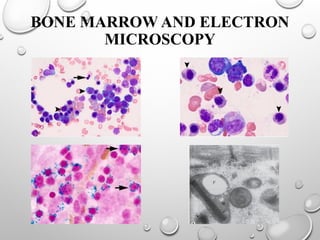
• Prussian blue stained ringed sideroblast present.
MUSCLE BIOPSY
• Show paracrystalline inclusions within the mitochondria
rigged red fibers.
BONE MARROW AND ELECTRON
MICROSCOPY
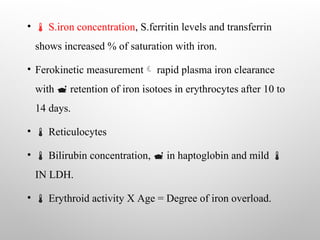
•  S.iron concentration, S.ferritin levels and transferrin
shows increased % of saturation with iron.
• Ferokinetic measurement rapid plasma iron clearance
with  retention of iron isotoes in erythrocytes after 10 to
14 days.
•  Reticulocytes
•  Bilirubin concentration,  in haptoglobin and mild 
IN LDH.
•  Erythroid activity X Age = Degree of iron overload.
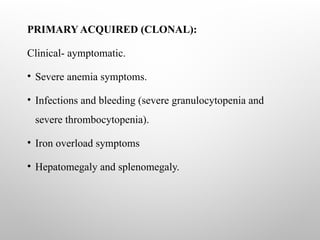
PRIMARY ACQUIRED (CLONAL):
Clinical- aymptomatic.
• Severe anemia symptoms.
• Infections and bleeding (severe granulocytopenia and
severe thrombocytopenia).
• Iron overload symptoms
• Hepatomegaly and splenomegaly.
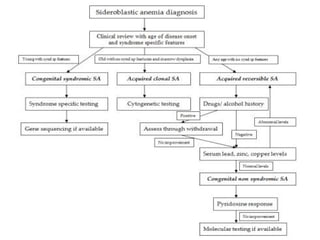
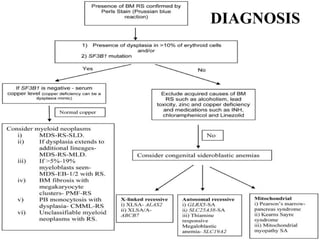
DIAGNOSIS
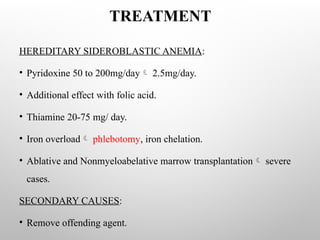
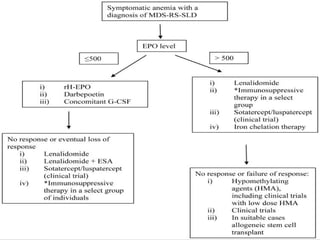
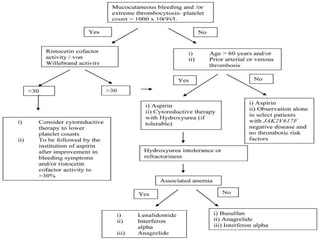
TREATMENT
HEREDITARY SIDEROBLASTIC ANEMIA:
• Pyridoxine 50 to 200mg/day 2.5mg/day.
• Additional effect with folic acid.
• Thiamine 20-75 mg/ day.
• Iron overload phlebotomy, iron chelation.
• Ablative and Nonmyeloabelative marrow transplantation severe
cases.
SECONDARY CAUSES:
• Remove offending agent.
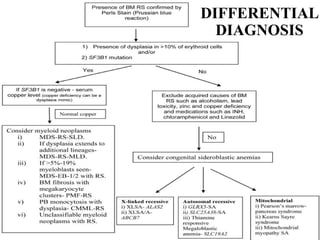
DIFFERENTIAL
DIAGNOSIS
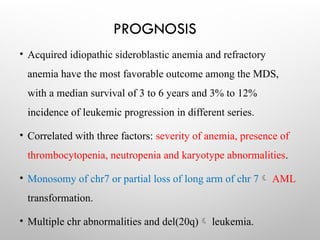
PROGNOSIS
• Acquired idiopathic sideroblastic anemia and refractory
anemia have the most favorable outcome among the MDS,
with a median survival of 3 to 6 years and 3% to 12%
incidence of leukemic progression in different series.
• Correlated with three factors: severity of anemia, presence of
thrombocytopenia, neutropenia and karyotype abnormalities.
• Monosomy of chr7 or partial loss of long arm of chr 7 AML
transformation.
• Multiple chr abnormalities and del(20q) leukemia.
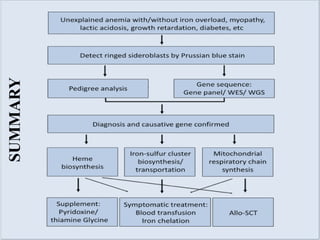
SUMMARY

Sideroblastic anemia .pptx

  • 1.
  • 2.
    INTRODUCTION • Sideroblastic anemiasare a group of inherited and acquired anemias in which iron accumulates in the mitochondria of erythrocyte precursors. • Ring sideroblasts are diagnostic feature of this anemia.
  • 3.
    ETIOLOGY ETIOLOGY: 1. HEREDITARY,2. ACQUIRED AND 3. SECONDARY CAUSES. HEREDITARY (NON- SYNDROMIC) HEREDITARY (SYNDROMIC) X-linked X-linked SA with ring sideroblast and cerebellar ataxia Autosomal dominant or recessive Myopathy, lactic acidosis and SA Pearson syndrome Thiamine- responsive megaloblastic anaemia
  • 4.
    ACQUIRED: • Idiopathic acquired(refractory anemia with ring sideroblasts). • Associated with previous chemotherapy, irradiation, or in transition myelodysplasia or myeloproliferative diseases. SECONDARY: • DRUGS  Alcohol, Isoniazid, Chloramphenicol. • RARE  Erythropoietic Protoporphyria, Copper Deficiency Or Zinc Overload And Hypothermia.
  • 5.
  • 6.
  • 7.
  • 8.
    CLINICAL FEATURES XLSA DUETO ALAS2 DEFICIENCY: • Male preponderance • Iron overload symptoms • Liver cirrhosis ARSA DUE TO SLC25A38 MUTATION: • First weeks or months of life. • Pyridoxine refractory. • Carriers unaffected.
  • 9.
    ABCB7 DEFECT: • Infantsand younger children • Slow or non-progressive cerebellar ataxia • Delayed walking • Dysarthria, intentional tremor, decreased deep tendon reflex, nystagmus and strabismus. • Hepatomegaly.
  • 10.
    GLRX 5 DEFECT: •Middle age. • Iron overload, diabetes, darkened skin. • Hepatomegaly. MLASA: • Myopathy, lactic acidosis and SA. • Short stature, microcephaly, short philtrum and slow gait. • Severity varies within the family members.
  • 11.
    TRMA: • Infancy orchildhood. • Megalobastic anemia, sensorineural deafness and diabetes mellitus. • Nystagmus, optic atrophy, retinitis pigmentosa, short stature, stroke and cardiac abnormalities. PMPS: • Rare and fatal disorder of infancy. • Macrocytic anemia, pancreatic exocrine dysfunction and lactic acidosis. • Failure to thrive and persistent diarrhea.
  • 12.
    PRIMARY ACQUIRED SA: •Late middle age and elderly. • Breathlessness, fatigue and pallor. • Hepatomegaly. • Increased risk of leukemia development.
  • 14.
    LABORATORY DIAGNOSIS • HB • MCV  • MCH  • RDW  • PERIPHERAL SMEAR Dimorphic (MH/NN), anisopoikilocytosis with tear drop cells, elongated cells and siderocytes. • Macrocytosis may be present. • WBCs- normal, • Platelets- normal or increased.
  • 15.
  • 16.
    BONE MARROW • Prussianblue stained ringed sideroblast present. MUSCLE BIOPSY • Show paracrystalline inclusions within the mitochondria rigged red fibers.
  • 17.
    BONE MARROW ANDELECTRON MICROSCOPY
  • 18.
    •  S.ironconcentration, S.ferritin levels and transferrin shows increased % of saturation with iron. • Ferokinetic measurement rapid plasma iron clearance with  retention of iron isotoes in erythrocytes after 10 to 14 days. •  Reticulocytes •  Bilirubin concentration,  in haptoglobin and mild  IN LDH. •  Erythroid activity X Age = Degree of iron overload.
  • 19.
    PRIMARY ACQUIRED (CLONAL): Clinical-aymptomatic. • Severe anemia symptoms. • Infections and bleeding (severe granulocytopenia and severe thrombocytopenia). • Iron overload symptoms • Hepatomegaly and splenomegaly.
  • 21.
  • 22.
    TREATMENT HEREDITARY SIDEROBLASTIC ANEMIA: •Pyridoxine 50 to 200mg/day 2.5mg/day. • Additional effect with folic acid. • Thiamine 20-75 mg/ day. • Iron overload phlebotomy, iron chelation. • Ablative and Nonmyeloabelative marrow transplantation severe cases. SECONDARY CAUSES: • Remove offending agent.
  • 25.
  • 26.
    PROGNOSIS • Acquired idiopathicsideroblastic anemia and refractory anemia have the most favorable outcome among the MDS, with a median survival of 3 to 6 years and 3% to 12% incidence of leukemic progression in different series. • Correlated with three factors: severity of anemia, presence of thrombocytopenia, neutropenia and karyotype abnormalities. • Monosomy of chr7 or partial loss of long arm of chr 7 AML transformation. • Multiple chr abnormalities and del(20q) leukemia.
  • 27.