Shutter Speed
The Shutter Speed
is the amount of
time that the shutter
curtain remains
open to let the
light pass through
and reach the
sensor.
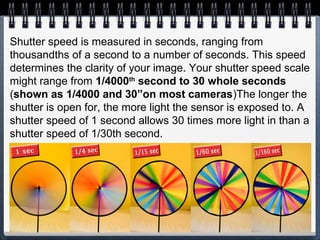
Shutter speed is measured in seconds, ranging from
thousandths of a second to a number of seconds. This speed
determines the clarity of your image. Your shutter speed scale
might range from 1/4000th
second to 30 whole seconds
(shown as 1/4000 and 30”on most cameras)The longer the
shutter is open for, the more light the sensor is exposed to. A
shutter speed of 1 second allows 30 times more light in than a
shutter speed of 1/30th second.
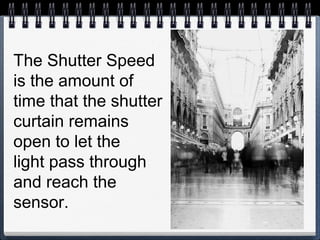
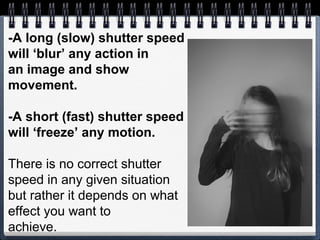
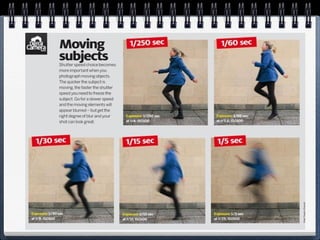
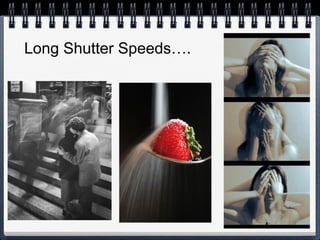
-A long (slow) shutter speed
will ‘blur’ any action in
an image and show
movement.
-A short (fast) shutter speed
will ‘freeze’ any motion.
There is no correct shutter
speed in any given situation
but rather it depends on what
effect you want to
achieve.
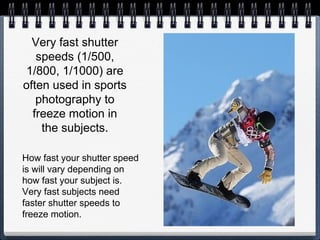
Very fast shutter
speeds (1/500,
1/800, 1/1000) are
often used in sports
photography to
freeze motion in
the subjects.
How fast your shutter speed
is will vary depending on
how fast your subject is.
Very fast subjects need
faster shutter speeds to
freeze motion.
Developing an intuition
for what shutter speed
needs to be used to
freeze different
subjects takes time,
but with plenty of
practice and
experimenting you will
get a good idea of
what works.
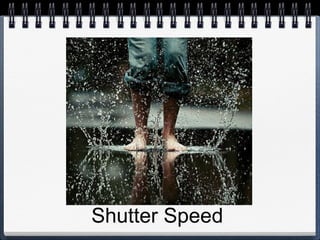
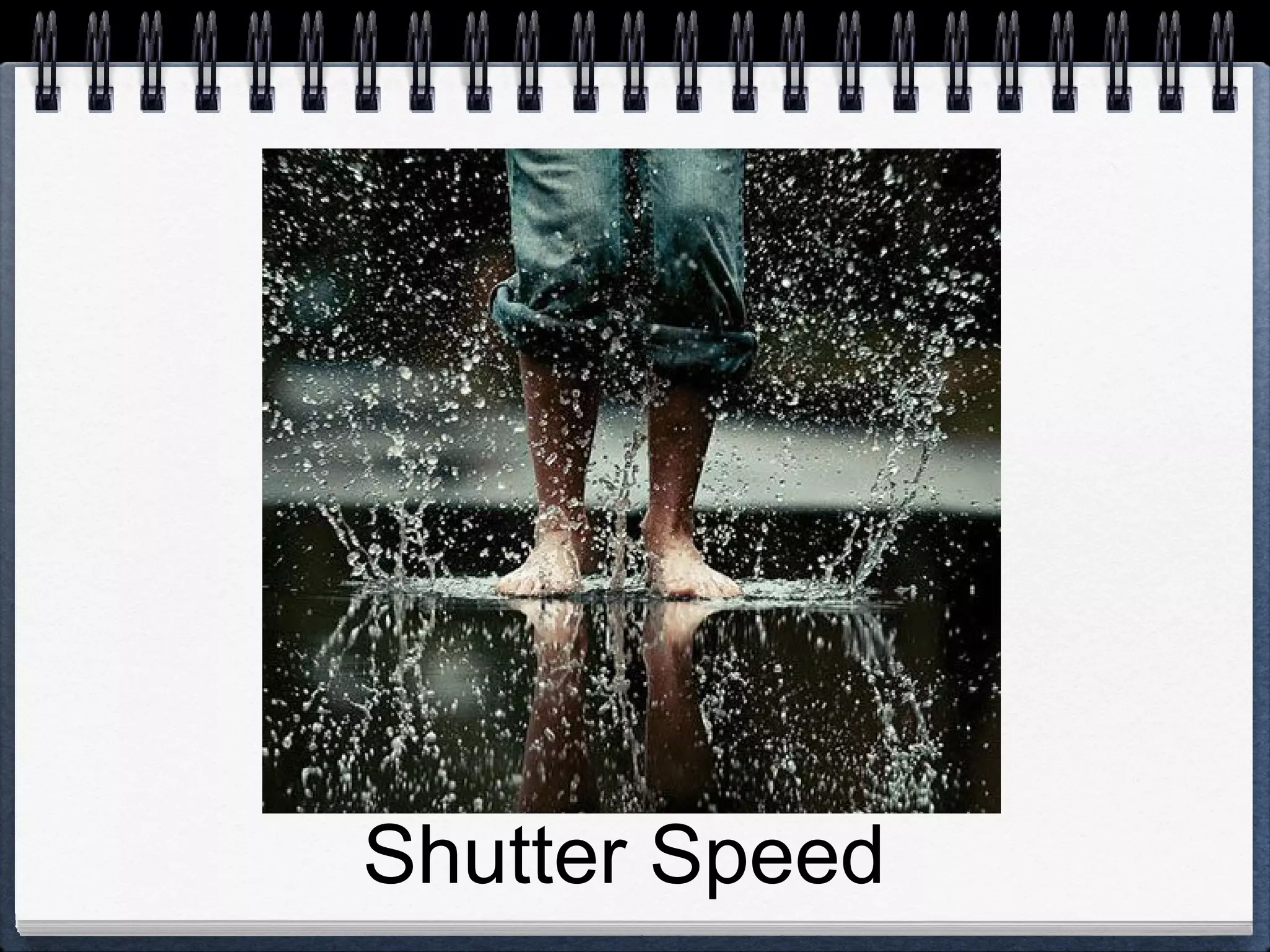
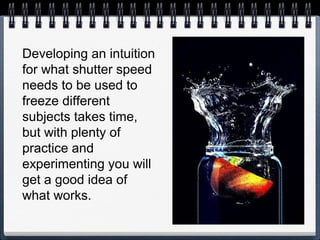
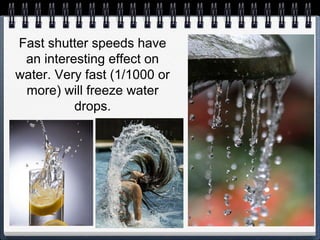
Fast shutter speeds have
an interesting effect on
water. Very fast (1/1000 or
more) will freeze water
drops.
Long Shutter Speeds….
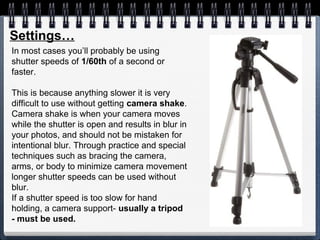
In most cases you’ll probably be using
shutter speeds of 1/60th of a second or
faster.
This is because anything slower it is very
difficult to use without getting camera shake.
Camera shake is when your camera moves
while the shutter is open and results in blur in
your photos, and should not be mistaken for
intentional blur. Through practice and special
techniques such as bracing the camera,
arms, or body to minimize camera movement
longer shutter speeds can be used without
blur.
If a shutter speed is too slow for hand
holding, a camera support- usually a tripod
- must be used.
Settings…
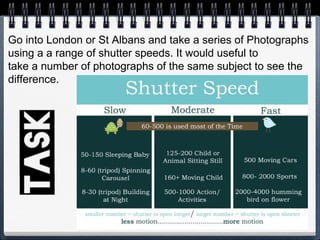
Go into London or St Albans and take a series of Photographs
using a a range of shutter speeds. It would useful to
take a number of photographs of the same subject to see the
difference.
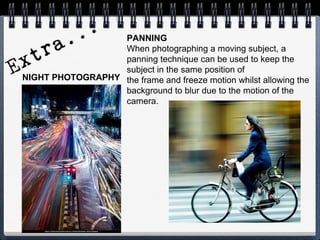
PANNING
When photographing a moving subject, a
panning technique can be used to keep the
subject in the same position of
the frame and freeze motion whilst allowing the
background to blur due to the motion of the
camera.
NIGHT PHOTOGRAPHY
.
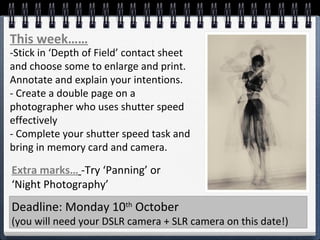
This week……
-Stick in ‘Depth of Field’ contact sheet
and choose some to enlarge and print.
Annotate and explain your intentions.
- Create a double page on a
photographer who uses shutter speed
effectively
- Complete your shutter speed task and
bring in memory card and camera.
Deadline: Monday 10th
October
(you will need your DSLR camera + SLR camera on this date!)
Extra marks… -Try ‘Panning’ or
‘Night Photography’

Shutter speed

  • 1.
  • 2.
    The Shutter Speed isthe amount of time that the shutter curtain remains open to let the light pass through and reach the sensor.
  • 4.
    Shutter speed ismeasured in seconds, ranging from thousandths of a second to a number of seconds. This speed determines the clarity of your image. Your shutter speed scale might range from 1/4000th second to 30 whole seconds (shown as 1/4000 and 30”on most cameras)The longer the shutter is open for, the more light the sensor is exposed to. A shutter speed of 1 second allows 30 times more light in than a shutter speed of 1/30th second.
  • 5.
    -A long (slow)shutter speed will ‘blur’ any action in an image and show movement. -A short (fast) shutter speed will ‘freeze’ any motion. There is no correct shutter speed in any given situation but rather it depends on what effect you want to achieve.
  • 6.
    Very fast shutter speeds(1/500, 1/800, 1/1000) are often used in sports photography to freeze motion in the subjects. How fast your shutter speed is will vary depending on how fast your subject is. Very fast subjects need faster shutter speeds to freeze motion.
  • 7.
    Developing an intuition forwhat shutter speed needs to be used to freeze different subjects takes time, but with plenty of practice and experimenting you will get a good idea of what works.
  • 8.
    Fast shutter speedshave an interesting effect on water. Very fast (1/1000 or more) will freeze water drops.
  • 10.
  • 11.
    In most casesyou’ll probably be using shutter speeds of 1/60th of a second or faster. This is because anything slower it is very difficult to use without getting camera shake. Camera shake is when your camera moves while the shutter is open and results in blur in your photos, and should not be mistaken for intentional blur. Through practice and special techniques such as bracing the camera, arms, or body to minimize camera movement longer shutter speeds can be used without blur. If a shutter speed is too slow for hand holding, a camera support- usually a tripod - must be used. Settings…
  • 12.
    Go into Londonor St Albans and take a series of Photographs using a a range of shutter speeds. It would useful to take a number of photographs of the same subject to see the difference.
  • 13.
    PANNING When photographing amoving subject, a panning technique can be used to keep the subject in the same position of the frame and freeze motion whilst allowing the background to blur due to the motion of the camera. NIGHT PHOTOGRAPHY .
  • 14.
    This week…… -Stick in‘Depth of Field’ contact sheet and choose some to enlarge and print. Annotate and explain your intentions. - Create a double page on a photographer who uses shutter speed effectively - Complete your shutter speed task and bring in memory card and camera. Deadline: Monday 10th October (you will need your DSLR camera + SLR camera on this date!) Extra marks… -Try ‘Panning’ or ‘Night Photography’