Grasping Research Trends
Based on Similar Cited Papers
○Shun Gendo,
Hodooka Koichi,
Mitsunori Matsushita
Kansai University
• Researcher has to survey existing papers
• Many papers have been written in various fields.
• Resent research often spans multiple fields.
Researchers have to read many papers
The burden of the survey is increasing
• They find the papers using search engines.
How researchers collect papers
but…
They sometimes feel the difficulty
when they want to gather many papers as possible.
because
Verbalizing the appropriate keywords
could be difficult in some cases.
Researchers difficult to find papers accurately
Search methods other than search engine
•How to search by citation papers
•How to search by author name
it is difficult to estimate the reason why the paper is cited
This approach could be efficient only if the author writes papers
under one specific topic.
The author often write papers under different topics.
The idea to find the paper we want
You need a way to find a paper which is similar to what you want.
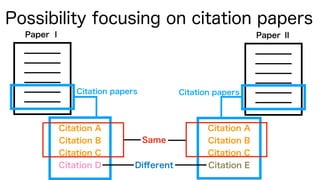
We hypothesize that if some two papers cite many same papers,
that two papers would be similar.
We focus on the similar ratio of citation
to find the related papers efficiently.
Paper Ⅰ Paper Ⅱ
Citation A
Citation B
Citation C
Citation D
Citation A
Citation B
Citation C
Citation E
Different
Same
Citation papers Citation papers
Possibility focusing on citation papers
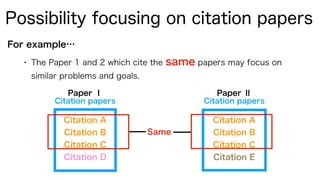
• The Paper 1 and 2 which cite the same papers may focus on
similar problems and goals.
Possibility focusing on citation papers
For example…
Citation A
Citation B
Citation C
Citation D
Citation A
Citation B
Citation C
Citation E
Same
Citation papers Citation papers
Paper Ⅰ Paper Ⅱ
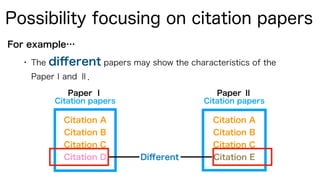
• The different papers may show the characteristics of the
PaperⅠand Ⅱ.
Possibility focusing on citation papers
For example…
Citation A
Citation B
Citation C
Citation D
Citation A
Citation B
Citation C
Citation E
Citation papers Citation papers
Paper Ⅰ Paper Ⅱ
Different
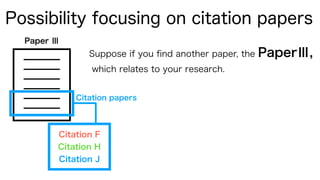
Possibility focusing on citation papers
Paper Ⅲ
Suppose if you find another paper, the PaperⅢ,
which relates to your research.
Citation F
Citation H
Citation J
Citation papers
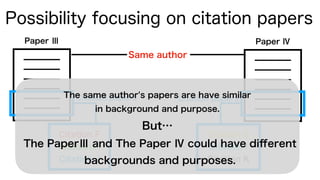
Possibility focusing on citation papers
Paper Ⅲ Paper Ⅳ
Same author
Citation F
Citation H
Citation J
Citation papers
Citation G
Citation I
Citation K
Citation papers
The same author's papers are have similar
in background and purpose.
But…
The PaperⅢ and The Paper Ⅳ could have different
backgrounds and purposes.
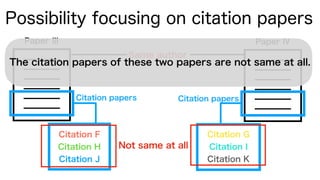
Possibility focusing on citation papers
Paper Ⅲ Paper Ⅳ
Citation F
Citation H
Citation J
Citation papers
Citation G
Citation I
Citation K
Citation papers
Same author
The citation papers of these two papers are not same at all.
Not same at all
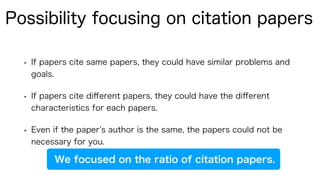
• If papers cite same papers, they could have similar problems and
goals.
• If papers cite different papers, they could have the different
characteristics for each papers.
• Even if the paper s author is the same, the papers could not be
necessary for you.
Possibility focusing on citation papers
We focused on the ratio of citation papers.
• Commonality of papers
• The characteristics of papers
• The necessity of the same author's papers
What researchers can infer from citation information
• Commonality of papers
• 1. A function to find the same citation paper
• The characteristics of papers
• 2. A function to find the different citation papers
• The necessity of the same author's papers
• 3. A function to show papers by the author
• We created a database which includes 350 papers in the
Comic Computing field.
• This database is comprised of paper titles, author names,
publication years, and citation papers.
• This interface is implemented in HTML, CSS, JavaScript, and
jQuery.
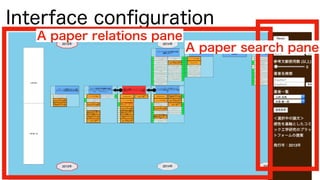
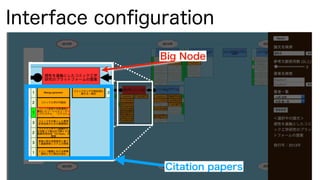
Interface configuration
A paper relations pane
A paper search pane
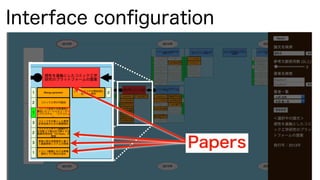
Interface configuration
Papers
Interface configuration
Big Node
Citation papers
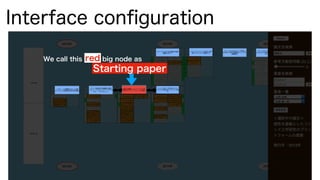
Interface configuration
Starting paper
We call this big node as
red
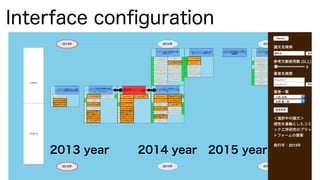
Interface configuration
2013 year 2014 year 2015 year
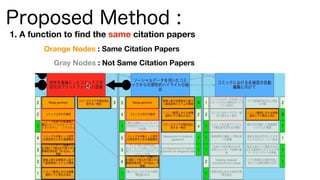
Proposed Method :
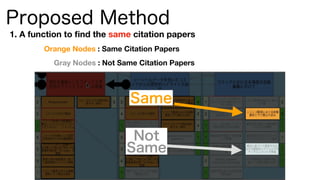
Orange Nodes : Same Citation Papers
Gray Nodes : Not Same Citation Papers
1. A function to find the same citation papers
Proposed Method
Orange Nodes : Same Citation Papers
Gray Nodes : Not Same Citation Papers
1. A function to find the same citation papers
Same
Not
Same
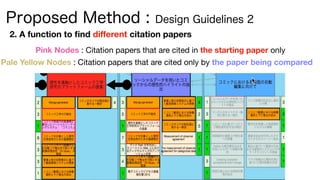
Pale Yellow Nodes : Citation papers that are cited only by the paper being compared
Pink Nodes : Citation papers that are cited in the starting paper only
Proposed Method : Design Guidelines 2
2. A function to find different citation papers
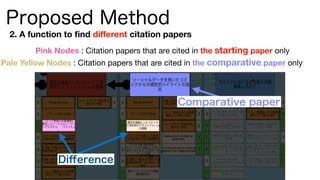
Pale Yellow Nodes : Citation papers that are cited in the comparative paper only
Pink Nodes : Citation papers that are cited in the starting paper only
Proposed Method
2. A function to find different citation papers
Comparative paper
Difference
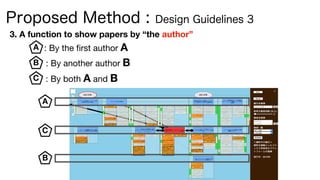
: By the first author A
: By another author B
: By both A and B
A
B
C
A
B
C
Proposed Method : Design Guidelines 3
3. A function to show papers by “the author”
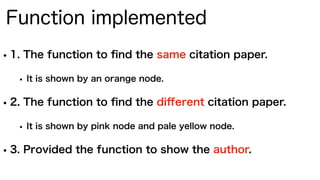
•1. The function to find the same citation paper.
• It is shown by an orange node.
•2. The function to find the different citation paper.
• It is shown by pink node and pale yellow node.
•3. Provided the function to show the author.
Function implemented
• What does user understand from matching citation papers?
• Does user understand the characteristics of the cited papers?
In future
We will survey the user impressions
by asking those questions.
Summary
Purpose : Find a paper that is similar to the paper the user wants
A system for comparing citation papers 

and understanding the relationships
Proposed Method :
In future : We have the user use this interface 

and we hear the impression.

ShunGendo_jsai2020

  • 1.
    Grasping Research Trends Basedon Similar Cited Papers ○Shun Gendo, Hodooka Koichi, Mitsunori Matsushita Kansai University
  • 2.
    • Researcher hasto survey existing papers • Many papers have been written in various fields. • Resent research often spans multiple fields. Researchers have to read many papers The burden of the survey is increasing
  • 3.
    • They findthe papers using search engines. How researchers collect papers but… They sometimes feel the difficulty when they want to gather many papers as possible. because Verbalizing the appropriate keywords could be difficult in some cases.
  • 4.
    Researchers difficult tofind papers accurately Search methods other than search engine •How to search by citation papers •How to search by author name it is difficult to estimate the reason why the paper is cited This approach could be efficient only if the author writes papers under one specific topic. The author often write papers under different topics.
  • 5.
    The idea tofind the paper we want You need a way to find a paper which is similar to what you want. We hypothesize that if some two papers cite many same papers, that two papers would be similar. We focus on the similar ratio of citation to find the related papers efficiently.
  • 6.
    Paper Ⅰ PaperⅡ Citation A Citation B Citation C Citation D Citation A Citation B Citation C Citation E Different Same Citation papers Citation papers Possibility focusing on citation papers
  • 7.
    • The Paper1 and 2 which cite the same papers may focus on similar problems and goals. Possibility focusing on citation papers For example… Citation A Citation B Citation C Citation D Citation A Citation B Citation C Citation E Same Citation papers Citation papers Paper Ⅰ Paper Ⅱ
  • 8.
    • The differentpapers may show the characteristics of the PaperⅠand Ⅱ. Possibility focusing on citation papers For example… Citation A Citation B Citation C Citation D Citation A Citation B Citation C Citation E Citation papers Citation papers Paper Ⅰ Paper Ⅱ Different
  • 9.
    Possibility focusing oncitation papers Paper Ⅲ Suppose if you find another paper, the PaperⅢ, which relates to your research. Citation F Citation H Citation J Citation papers
  • 10.
    Possibility focusing oncitation papers Paper Ⅲ Paper Ⅳ Same author Citation F Citation H Citation J Citation papers Citation G Citation I Citation K Citation papers The same author's papers are have similar in background and purpose. But… The PaperⅢ and The Paper Ⅳ could have different backgrounds and purposes.
  • 11.
    Possibility focusing oncitation papers Paper Ⅲ Paper Ⅳ Citation F Citation H Citation J Citation papers Citation G Citation I Citation K Citation papers Same author The citation papers of these two papers are not same at all. Not same at all
  • 12.
    • If paperscite same papers, they could have similar problems and goals. • If papers cite different papers, they could have the different characteristics for each papers. • Even if the paper s author is the same, the papers could not be necessary for you. Possibility focusing on citation papers We focused on the ratio of citation papers.
  • 13.
    • Commonality ofpapers • The characteristics of papers • The necessity of the same author's papers What researchers can infer from citation information
  • 14.
    What researchers caninfer from citation information • Commonality of papers • 1. A function to find the same citation paper • The characteristics of papers • 2. A function to find the different citation papers • The necessity of the same author's papers • 3. A function to show papers by the author
  • 15.
    • We createda database which includes 350 papers in the Comic Computing field. • This database is comprised of paper titles, author names, publication years, and citation papers. • This interface is implemented in HTML, CSS, JavaScript, and jQuery. Interface configuration
  • 16.
    Interface configuration A paperrelations pane A paper search pane
  • 17.
  • 18.
  • 19.
  • 20.
  • 21.
    Proposed Method : OrangeNodes : Same Citation Papers Gray Nodes : Not Same Citation Papers 1. A function to find the same citation papers
  • 22.
    Proposed Method Orange Nodes: Same Citation Papers Gray Nodes : Not Same Citation Papers 1. A function to find the same citation papers Same Not Same
  • 23.
    Pale Yellow Nodes: Citation papers that are cited only by the paper being compared Pink Nodes : Citation papers that are cited in the starting paper only Proposed Method : Design Guidelines 2 2. A function to find different citation papers
  • 24.
    Pale Yellow Nodes: Citation papers that are cited in the comparative paper only Pink Nodes : Citation papers that are cited in the starting paper only Proposed Method 2. A function to find different citation papers Comparative paper Difference
  • 25.
    : By thefirst author A : By another author B : By both A and B A B C A B C Proposed Method : Design Guidelines 3 3. A function to show papers by “the author”
  • 26.
    •1. The functionto find the same citation paper. • It is shown by an orange node. •2. The function to find the different citation paper. • It is shown by pink node and pale yellow node. •3. Provided the function to show the author. Function implemented
  • 27.
    • What doesuser understand from matching citation papers? • Does user understand the characteristics of the cited papers? In future We will survey the user impressions by asking those questions.
  • 28.
    Summary Purpose : Finda paper that is similar to the paper the user wants A system for comparing citation papers and understanding the relationships Proposed Method : In future : We have the user use this interface and we hear the impression.