Rotator cuff injuries
By- kajal sansoya
What is rotator cuff ?
• Rotator cuff includes both rotator cuff tear
and impingement syndrome.
• Rotator cuff is made up of muscles, tendons &
bones.
• Fine adjustments of the humeral head within
the glenoid is achieved by coordinated activity
of 4 intra-related muscles, arising from the
scapula and is called rotator cuff.
Normal Joint Motions and Bony Positions
Around the Shoulder Joint
SCAPULA
Rotation through arc of 65 degrees with shoulder abduction
Translation on thorax up to 15 cm
GLENOHUMERAL JOINT
Abduction 140 degrees
Internal/external rotation 90 degrees/90 degrees
Translation
Anterior–posterior 5-10mm
Inferior–superior 4–5 mm
Total rotations
Baseball 185 degrees
Tennis 165 degrees
Bones of rotator cuff-
• Scapula
• Humerus
• Clavicle
Muscles of rotator cuff-
• Supraspiantus
• Infraspinatus
• Teres minor
• subscapularis
Types of rotator cuff injuries
• General wear & tear
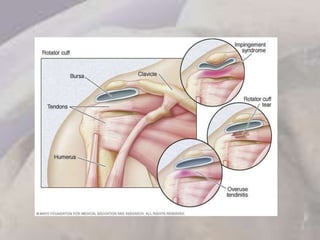
• Tendinitis
• Bursitis
• Tendon strain or tear
• Shoulder impingement
Impingement syndrome
• Problem associated with supraspinatus
tendon occurs when rotator cuff rubs or
catches on the bones in the shoulder.
• Impingement syndrome causes persistent pain
as the tendons are injured and swell.
Causes
• Complete or partial rupture of rotator cuff
• Supraspinatus tendonitis
• Subacromical bursitis
• Periarthritis
• Bicipital tendosynovitis
• # of grater trochanter
• Subdeltoid bursitis
Special test
• Hawkins –kennedy
• Neer impingement
• Empty cane
• Drop-arm test
• Codman’s test
Supraspinatus tendonitis
• Common cause of impingement syndrome.
Impingement occurs beneath the coraco-acromial
arch.
• Structures involved are acromion, head of
humerus, greater tuberosity, supraspinatus
tendon, long head of biceps.
• Major site of compression is anterior to the angle
of the acromion.
• This is called anterior impingement syndrome,
painful arc syndrome.
Neer’s stages of impingement stages
• Edema stage
• Tendinitis and fibrosis
• Rotator cuff tear and rupture of biceps tendon
• Bone chnages.
Types of impingement syndrome
Primary- impingement occurs beneath the
coraco-acromial arch and is due to sub-acromial
overloading.
Secondary- due to relative decraese in
subacromial acrh and to micro-instability of the
glenohumeral joint or scapulo-thoracic instability.
Posterior- seen in overhead atheletes like
swimmers, tennis players. Supraspinatus and
infraspinatus tendons are pinched between the
posterior and superior aspects of glenoid when
the arm is in elevated and externally rotated.
Painful arc syndrome
• It is a clinical syndrome which occurs when the
tendons of rotator cuff muscles becomes irritated
and inflamed as they pass through the sub-
acromial space, the passage beneath the
acromion.
• Painful arc occurs on resisted abduction between
60-120 when the inflamed tendon press against
the acromion.
• Outside the range of 60-120 abduction is pain
free.
Special test
• Neer impingement
• Posterior internal impingement
• Reverse impingement sign
• Supine impingement
Tendon strain and tear
• A partial or full tear occurs the in the tendon
connecting muscles to the bone during on
abrupt or as a result of repeat motion.
• A torn rotator cuff causes pain, weakness and
instability to move the arm freely in full range
of motion
• Pain is overhead activities and when you try to
lift.
Diagnosis and evaluation
• X-rays
• MRI
• Special test
• Goniometer
• MMT
Physiotherapy management
Thank you
happy reading

rotator cuff injuries.pptx

  • 1.
  • 2.
    What is rotatorcuff ? • Rotator cuff includes both rotator cuff tear and impingement syndrome. • Rotator cuff is made up of muscles, tendons & bones. • Fine adjustments of the humeral head within the glenoid is achieved by coordinated activity of 4 intra-related muscles, arising from the scapula and is called rotator cuff.
  • 3.
    Normal Joint Motionsand Bony Positions Around the Shoulder Joint SCAPULA Rotation through arc of 65 degrees with shoulder abduction Translation on thorax up to 15 cm GLENOHUMERAL JOINT Abduction 140 degrees Internal/external rotation 90 degrees/90 degrees Translation Anterior–posterior 5-10mm Inferior–superior 4–5 mm Total rotations Baseball 185 degrees Tennis 165 degrees
  • 4.
    Bones of rotatorcuff- • Scapula • Humerus • Clavicle Muscles of rotator cuff- • Supraspiantus • Infraspinatus • Teres minor • subscapularis
  • 6.
    Types of rotatorcuff injuries • General wear & tear • Tendinitis • Bursitis • Tendon strain or tear • Shoulder impingement
  • 8.
    Impingement syndrome • Problemassociated with supraspinatus tendon occurs when rotator cuff rubs or catches on the bones in the shoulder. • Impingement syndrome causes persistent pain as the tendons are injured and swell.
  • 10.
    Causes • Complete orpartial rupture of rotator cuff • Supraspinatus tendonitis • Subacromical bursitis • Periarthritis • Bicipital tendosynovitis • # of grater trochanter • Subdeltoid bursitis
  • 11.
    Special test • Hawkins–kennedy • Neer impingement • Empty cane • Drop-arm test • Codman’s test
  • 12.
    Supraspinatus tendonitis • Commoncause of impingement syndrome. Impingement occurs beneath the coraco-acromial arch. • Structures involved are acromion, head of humerus, greater tuberosity, supraspinatus tendon, long head of biceps. • Major site of compression is anterior to the angle of the acromion. • This is called anterior impingement syndrome, painful arc syndrome.
  • 14.
    Neer’s stages ofimpingement stages • Edema stage • Tendinitis and fibrosis • Rotator cuff tear and rupture of biceps tendon • Bone chnages.
  • 15.
    Types of impingementsyndrome Primary- impingement occurs beneath the coraco-acromial arch and is due to sub-acromial overloading. Secondary- due to relative decraese in subacromial acrh and to micro-instability of the glenohumeral joint or scapulo-thoracic instability. Posterior- seen in overhead atheletes like swimmers, tennis players. Supraspinatus and infraspinatus tendons are pinched between the posterior and superior aspects of glenoid when the arm is in elevated and externally rotated.
  • 17.
    Painful arc syndrome •It is a clinical syndrome which occurs when the tendons of rotator cuff muscles becomes irritated and inflamed as they pass through the sub- acromial space, the passage beneath the acromion. • Painful arc occurs on resisted abduction between 60-120 when the inflamed tendon press against the acromion. • Outside the range of 60-120 abduction is pain free.
  • 19.
    Special test • Neerimpingement • Posterior internal impingement • Reverse impingement sign • Supine impingement
  • 20.
    Tendon strain andtear • A partial or full tear occurs the in the tendon connecting muscles to the bone during on abrupt or as a result of repeat motion. • A torn rotator cuff causes pain, weakness and instability to move the arm freely in full range of motion • Pain is overhead activities and when you try to lift.
  • 24.
    Diagnosis and evaluation •X-rays • MRI • Special test • Goniometer • MMT
  • 26.
  • 27.