Elements of Fiction Short Stories
5 Basic Elements Characters Setting Plot Point of View Theme
CHARACTERS Actors in the story’s plot May be human, animal, object, etc. Protagonist  – main character Antagonist  – person in conflict with the    main character *Not all stories have an antagonist.
Characterization Characterization -  the creation and convincing representation of fictitious characters Physical appearance Thoughts, feelings, and dreams Actions How others view them
Character Types Individual - round, hae many sides and complex personalities Developing - dynamic, many-sided personalities that change, for better or worse, by the end of the story Static - stereotype, have one or two characteristics that never change
SETTING - Time and location where the story take place Place - geographical location Time - historical period, time of day, year, etc. Weather conditions Social conditions - customs, status Mood or atmosphere - the feeling created in the reader
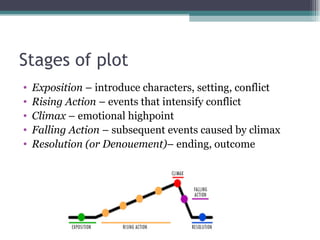
Stages of plot Exposition  – introduce characters, setting, conflict Rising Action  – events that intensify conflict Climax  – emotional highpoint Falling Action  – subsequent events caused by climax Resolution (or Denouement) – ending, outcome
CONFLICT - Internal or External Man vs. Man - External struggle between two or more individuals Man vs. Himself - Internal struggle concerning emotion and decision Man vs. Environment - External struggle between man and his surroundings (including nature) Man vs. Animal - External struggle between man and beast
POINT OF VIEW - Who is telling the story? First Person  – narrator is a character IN the story (“I” is used) Third Person  - narrator is NOT a character is the story (“he or she”) Third Person Limited  – narrator reveals thoughts of only one character Third Person Omniscient  – narrator reveals thoughts of all characters
Theme Central idea or message of the story Stated  – directly presented in story Implied  – theme may be inferred by the reader based on elements of the story

Short Story Notes

  • 1.
    Elements of FictionShort Stories
  • 2.
    5 Basic ElementsCharacters Setting Plot Point of View Theme
  • 3.
    CHARACTERS Actors inthe story’s plot May be human, animal, object, etc. Protagonist – main character Antagonist – person in conflict with the main character *Not all stories have an antagonist.
  • 4.
    Characterization Characterization - the creation and convincing representation of fictitious characters Physical appearance Thoughts, feelings, and dreams Actions How others view them
  • 5.
    Character Types Individual- round, hae many sides and complex personalities Developing - dynamic, many-sided personalities that change, for better or worse, by the end of the story Static - stereotype, have one or two characteristics that never change
  • 6.
    SETTING - Timeand location where the story take place Place - geographical location Time - historical period, time of day, year, etc. Weather conditions Social conditions - customs, status Mood or atmosphere - the feeling created in the reader
  • 7.
    Stages of plotExposition – introduce characters, setting, conflict Rising Action – events that intensify conflict Climax – emotional highpoint Falling Action – subsequent events caused by climax Resolution (or Denouement) – ending, outcome
  • 8.
    CONFLICT - Internalor External Man vs. Man - External struggle between two or more individuals Man vs. Himself - Internal struggle concerning emotion and decision Man vs. Environment - External struggle between man and his surroundings (including nature) Man vs. Animal - External struggle between man and beast
  • 9.
    POINT OF VIEW- Who is telling the story? First Person – narrator is a character IN the story (“I” is used) Third Person - narrator is NOT a character is the story (“he or she”) Third Person Limited – narrator reveals thoughts of only one character Third Person Omniscient – narrator reveals thoughts of all characters
  • 10.
    Theme Central ideaor message of the story Stated – directly presented in story Implied – theme may be inferred by the reader based on elements of the story