Elements of Fiction Short Stories
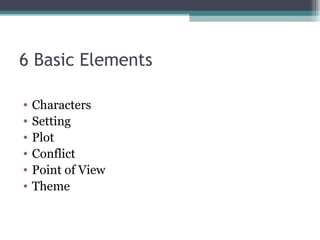
6 Basic Elements Characters Setting Plot Conflict Point of View Theme
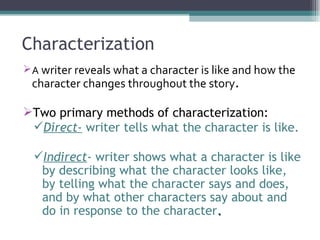
Characterization A  writer reveals what a character is like and how the character changes throughout the story . Two primary methods of characterization: Direct-  writer tells what the character is like. Indirect - writer shows what a character is like by describing what the character looks like, by telling what the character says and does, and by what other characters say about and do in response to the character .
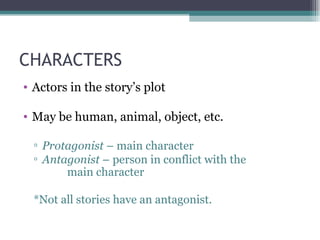
CHARACTERS Actors in the story’s plot May be human, animal, object, etc. Protagonist  – main character Antagonist  – person in conflict with the    main character *Not all stories have an antagonist.
Character Types Major or Minor Protagonist or Antagonist Round or Flat Round – more description, fully developed Flat – two-dimensional; uncomplicated Dynamic or Static Dynamic – undergoes change through complication Static – stays basically the same throughout *Stereotypes=Stock Characters*
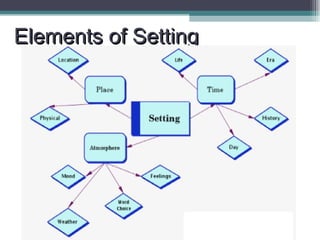
SETTING - Time and location where the story take place Place - geographical location Time - historical period, time of day, year, etc. Weather conditions Social conditions - customs, status Mood or atmosphere - the feeling created in the reader
Elements of Setting
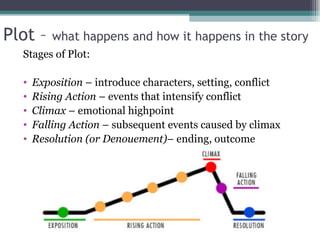
Plot –  what happens and how it happens in the story Stages of Plot: Exposition  – introduce characters, setting, conflict Rising Action  – events that intensify conflict Climax  – emotional highpoint Falling Action  – subsequent events caused by climax Resolution (or Denouement) – ending, outcome
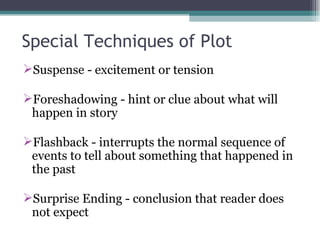
Special Techniques of Plot Suspense - excitement or tension Foreshadowing - hint or clue about what will happen in story Flashback - interrupts the normal sequence of events to tell about something that happened in the past Surprise Ending - conclusion that reader does not expect
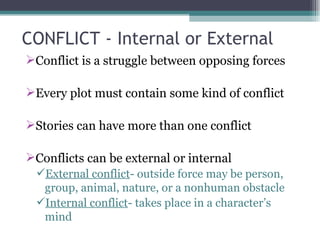
CONFLICT - Internal or External Conflict is a struggle between opposing forces Every plot must contain some kind of conflict Stories can have more than one conflict Conflicts can be external or internal External conflict - outside force may be person, group, animal, nature, or a nonhuman obstacle Internal conflict - takes place in a character’s mind
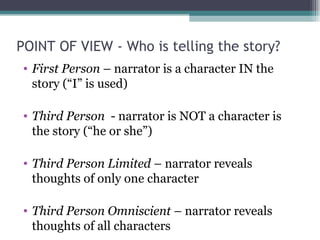
POINT OF VIEW - Who is telling the story? First Person  – narrator is a character IN the story (“I” is used) Third Person  - narrator is NOT a character is the story (“he or she”) Third Person Limited  – narrator reveals thoughts of only one character Third Person Omniscient  – narrator reveals thoughts of all characters
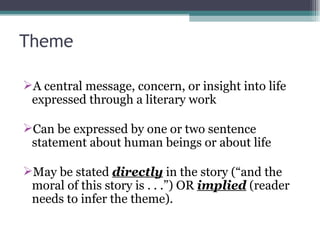
Theme A central message, concern, or insight into life expressed through a literary work Can be expressed by one or two sentence statement about human beings or about life May be stated  directly  in the story (“and the moral of this story is . . .”) OR  implied  (reader needs to infer the theme).
Do you remember these literary elements? Metaphor, personification, simile, alliteration, oxymoron self-contradictory phrase, i.e., “same difference” giving human qualities to something nonhuman repetition of the same consonant sound at the beginning of words in the same sentence comparison or two unlike things using “like” or “as” same as above NOT using “like” or “as”

Short story notes

  • 1.
    Elements of FictionShort Stories
  • 2.
    6 Basic ElementsCharacters Setting Plot Conflict Point of View Theme
  • 3.
    Characterization A writer reveals what a character is like and how the character changes throughout the story . Two primary methods of characterization: Direct- writer tells what the character is like. Indirect - writer shows what a character is like by describing what the character looks like, by telling what the character says and does, and by what other characters say about and do in response to the character .
  • 4.
    CHARACTERS Actors inthe story’s plot May be human, animal, object, etc. Protagonist – main character Antagonist – person in conflict with the main character *Not all stories have an antagonist.
  • 5.
    Character Types Majoror Minor Protagonist or Antagonist Round or Flat Round – more description, fully developed Flat – two-dimensional; uncomplicated Dynamic or Static Dynamic – undergoes change through complication Static – stays basically the same throughout *Stereotypes=Stock Characters*
  • 6.
    SETTING - Timeand location where the story take place Place - geographical location Time - historical period, time of day, year, etc. Weather conditions Social conditions - customs, status Mood or atmosphere - the feeling created in the reader
  • 7.
  • 8.
    Plot – what happens and how it happens in the story Stages of Plot: Exposition – introduce characters, setting, conflict Rising Action – events that intensify conflict Climax – emotional highpoint Falling Action – subsequent events caused by climax Resolution (or Denouement) – ending, outcome
  • 9.
    Special Techniques ofPlot Suspense - excitement or tension Foreshadowing - hint or clue about what will happen in story Flashback - interrupts the normal sequence of events to tell about something that happened in the past Surprise Ending - conclusion that reader does not expect
  • 10.
    CONFLICT - Internalor External Conflict is a struggle between opposing forces Every plot must contain some kind of conflict Stories can have more than one conflict Conflicts can be external or internal External conflict - outside force may be person, group, animal, nature, or a nonhuman obstacle Internal conflict - takes place in a character’s mind
  • 11.
    POINT OF VIEW- Who is telling the story? First Person – narrator is a character IN the story (“I” is used) Third Person - narrator is NOT a character is the story (“he or she”) Third Person Limited – narrator reveals thoughts of only one character Third Person Omniscient – narrator reveals thoughts of all characters
  • 12.
    Theme A centralmessage, concern, or insight into life expressed through a literary work Can be expressed by one or two sentence statement about human beings or about life May be stated directly in the story (“and the moral of this story is . . .”) OR implied (reader needs to infer the theme).
  • 13.
    Do you rememberthese literary elements? Metaphor, personification, simile, alliteration, oxymoron self-contradictory phrase, i.e., “same difference” giving human qualities to something nonhuman repetition of the same consonant sound at the beginning of words in the same sentence comparison or two unlike things using “like” or “as” same as above NOT using “like” or “as”