Elements of a Short Story 
Terms
Plot 
• A series of related 
events that present 
and resolve a conflict
Plot Diagram
Conflict 
• The Primary struggle 
between the main 
character or 
characters and an 
adverse character, 
group or force 
• Internal Conflict 
– A struggle between a 
character and 
him/herself 
• External Conflict 
– A struggle between a 
character and an 
outside force. 
• Man vs. Man 
• Man vs. Nature 
• Man vs. Supernatural 
• Man vs. Society
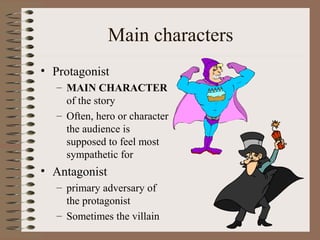
Main characters 
• Protagonist 
– MAIN CHARACTER 
of the story 
– Often, hero or character 
the audience is 
supposed to feel most 
sympathetic for 
• Antagonist 
– primary adversary of 
the protagonist 
– Sometimes the villain
Complications 
• Small problems in 
addition to the 
conflict that add 
interest to the story
Suspense 
• The uncertainty or anxiety that a reader 
feels about what will happen in a story 
– Foreshadowing 
– Dilemma 
– Mystery 
– Reversal
Foreshadowing 
• Clues (real or false) 
that hint at a story’s 
outcome
Dilemma 
• A character that we 
care about is in peril 
or must choose 
between two 
dangerous courses of 
action
Mystery 
• The creation of 
suspense by 
withholding 
information or by 
presenting unusual 
circumstances
Reversal 
• A sudden change in a 
character’s situation 
from good to bad or 
vice versa
Climax and Resolution 
• Climax 
– The most exciting point 
in the story, when the 
conflict is decided 
• Resolution 
– The conflict is resolved 
(positively or negatively) 
and the story is brought 
to a close 
– Also know as 
“Denouement”
Characterization 
• The technique used by a writer 
to create and reveal the 
personalities of the characters 
in a written work. This may be 
done by: 
• Direct Characterization 
– The author directly states 
aspects of the character’s 
personality 
• Indirect Characterization 
– describing the character’s 
physical appearance and 
situation, 
– revealing a characters 
thoughts, or 
– showing the reaction of other 
characters.
Types of Characters 
• Flat Character 
– shows only one trait 
• Round Character 
– Shows many different traits, good and bad 
• Static Character 
– character does not change through the course of the 
story 
• Dynamic Character 
– character develops and grows during the course of the 
story
Setting 
• The time and place in 
which the action of a 
narrative occurs
Theme 
• The underlying meaning 
of a literary work. 
• This differs from the 
subject in that it involves 
a statement of opinion 
about that subject. 
• The theme may be stated 
or implied. 
• Not every literary work 
has a theme, and some 
have more than one
Point of View 
• The relationship 
between the narrator 
of a story and the 
characters in it 
• Narrator is NOT the 
same as author 
• Types of POV: 
– First Person 
– Third Person, 
Omniscient 
– Third Person, Limited 
Omniscient 
– Third Person, 
Objective
P.O.V. continued 
• First Person 
– The narrator offers a 
personal account of their 
own experiences or 
describes what happens to 
other characters as the 
narrator sees it 
• Third Person 
– The narrator stands outside 
the action (non-participatory) 
and presents 
• Omniscient 
– (all-knowing) point of 
view 
– Can see the thoughts & 
emotions of all (or 
numerous) characters 
• Limited Omniscient 
– focuses on one character’s 
thoughts and viewpoints 
• Objective 
– Describes only what can be 
seen 
– “Reporter style”
Irony 
• Irony: differences in appearance and reality, or 
expectations and results, or meaning and 
intention 
– Dramatic Irony: 
• a contradiction between what a character thinks and what the 
reader or audience knows to be true 
– Situational Irony: 
• an event occurs that directly contradicts the expectations of 
the characters, readers, or audience 
– Verbal Irony: 
• words are used to suggest the opposite of what is meant (i.e. 
sarcasm, double-entendre, etc.)

Literary elements chapter one

  • 1.
    Elements of aShort Story Terms
  • 2.
    Plot • Aseries of related events that present and resolve a conflict
  • 3.
  • 4.
    Conflict • ThePrimary struggle between the main character or characters and an adverse character, group or force • Internal Conflict – A struggle between a character and him/herself • External Conflict – A struggle between a character and an outside force. • Man vs. Man • Man vs. Nature • Man vs. Supernatural • Man vs. Society
  • 5.
    Main characters •Protagonist – MAIN CHARACTER of the story – Often, hero or character the audience is supposed to feel most sympathetic for • Antagonist – primary adversary of the protagonist – Sometimes the villain
  • 6.
    Complications • Smallproblems in addition to the conflict that add interest to the story
  • 7.
    Suspense • Theuncertainty or anxiety that a reader feels about what will happen in a story – Foreshadowing – Dilemma – Mystery – Reversal
  • 8.
    Foreshadowing • Clues(real or false) that hint at a story’s outcome
  • 9.
    Dilemma • Acharacter that we care about is in peril or must choose between two dangerous courses of action
  • 10.
    Mystery • Thecreation of suspense by withholding information or by presenting unusual circumstances
  • 11.
    Reversal • Asudden change in a character’s situation from good to bad or vice versa
  • 12.
    Climax and Resolution • Climax – The most exciting point in the story, when the conflict is decided • Resolution – The conflict is resolved (positively or negatively) and the story is brought to a close – Also know as “Denouement”
  • 13.
    Characterization • Thetechnique used by a writer to create and reveal the personalities of the characters in a written work. This may be done by: • Direct Characterization – The author directly states aspects of the character’s personality • Indirect Characterization – describing the character’s physical appearance and situation, – revealing a characters thoughts, or – showing the reaction of other characters.
  • 14.
    Types of Characters • Flat Character – shows only one trait • Round Character – Shows many different traits, good and bad • Static Character – character does not change through the course of the story • Dynamic Character – character develops and grows during the course of the story
  • 15.
    Setting • Thetime and place in which the action of a narrative occurs
  • 16.
    Theme • Theunderlying meaning of a literary work. • This differs from the subject in that it involves a statement of opinion about that subject. • The theme may be stated or implied. • Not every literary work has a theme, and some have more than one
  • 17.
    Point of View • The relationship between the narrator of a story and the characters in it • Narrator is NOT the same as author • Types of POV: – First Person – Third Person, Omniscient – Third Person, Limited Omniscient – Third Person, Objective
  • 18.
    P.O.V. continued •First Person – The narrator offers a personal account of their own experiences or describes what happens to other characters as the narrator sees it • Third Person – The narrator stands outside the action (non-participatory) and presents • Omniscient – (all-knowing) point of view – Can see the thoughts & emotions of all (or numerous) characters • Limited Omniscient – focuses on one character’s thoughts and viewpoints • Objective – Describes only what can be seen – “Reporter style”
  • 19.
    Irony • Irony:differences in appearance and reality, or expectations and results, or meaning and intention – Dramatic Irony: • a contradiction between what a character thinks and what the reader or audience knows to be true – Situational Irony: • an event occurs that directly contradicts the expectations of the characters, readers, or audience – Verbal Irony: • words are used to suggest the opposite of what is meant (i.e. sarcasm, double-entendre, etc.)