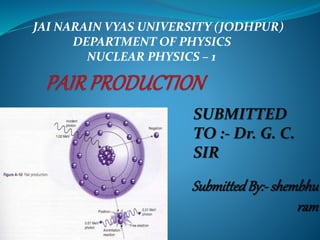
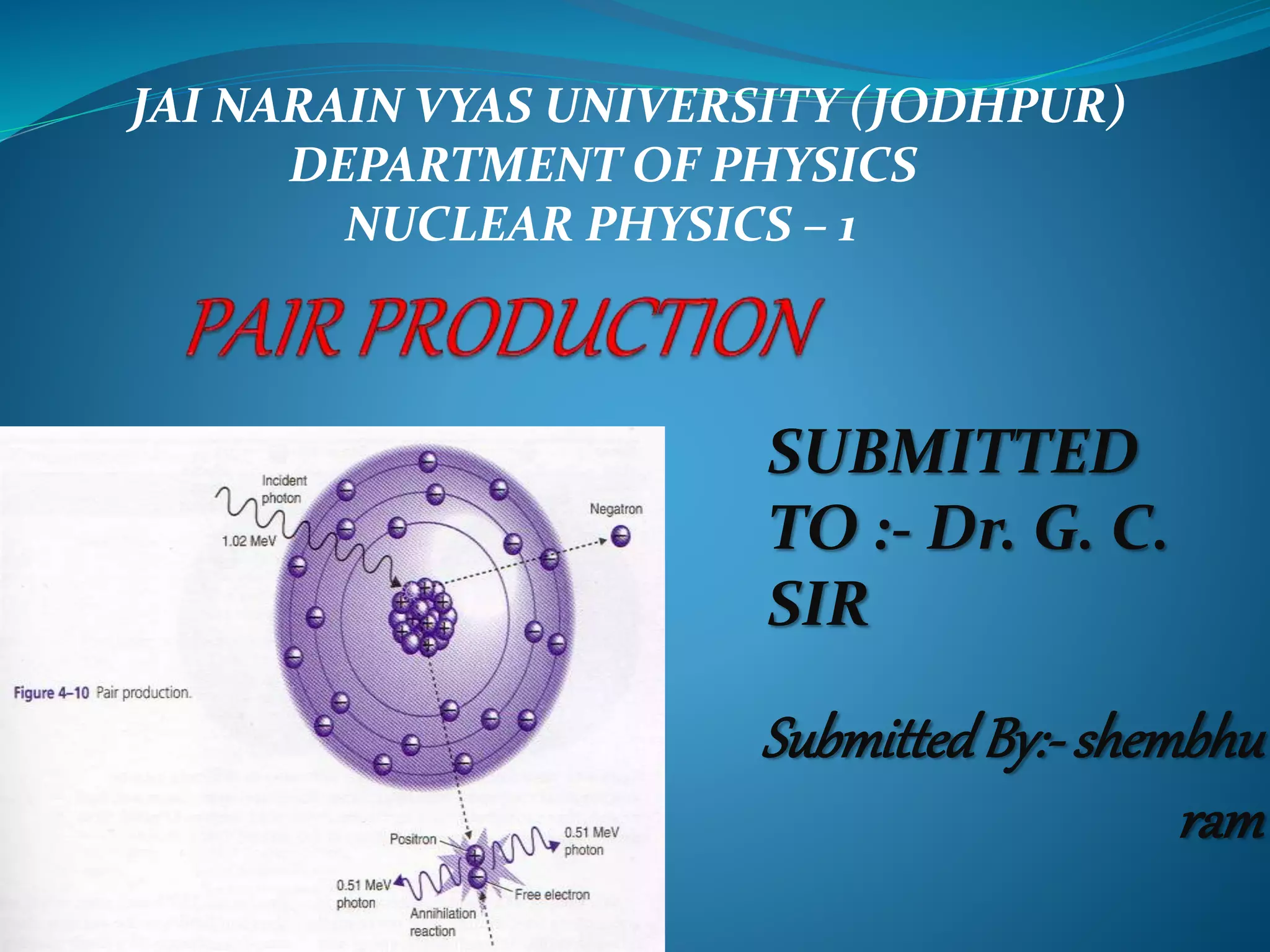
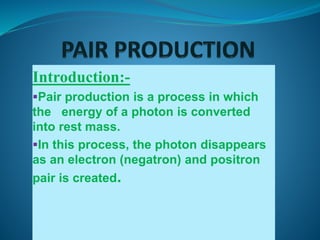
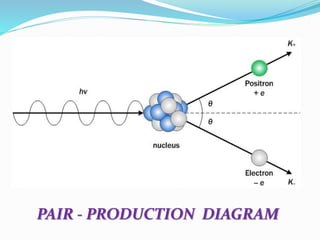
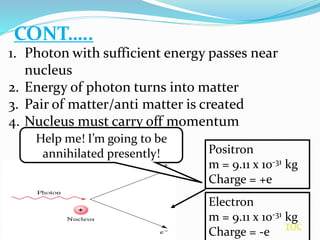
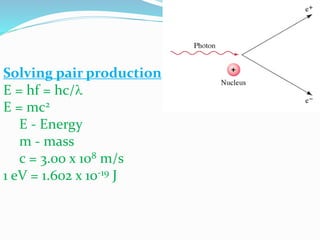
Pair production occurs when a photon interacts with and transfers its energy to an atomic nucleus, creating an electron-positron pair.
The process was first predicted by Paul Dirac in 1925 and involves a high energy photon exceeding 1.02 MeV interacting near an atomic nucleus. This interaction causes the photon's energy to convert into the mass of an electron and positron pair.
For pair production to occur, the photon must pass close enough to an atomic nucleus so that the nucleus can absorb the photon's momentum and allow the electron-positron pair to be created.



![Polymer [ बहुलक ] Chemistry Notes PDF - Irfanullah Mehar - JJ Sir Chemistry.pdf](https://cdn.slidesharecdn.com/ss_thumbnails/polymerchemistrynotespdf-irfanullahmehar-jjsirchemistry-260210172118-3f9b37f7-thumbnail.jpg?width=640&height=640&fit=bounds)


