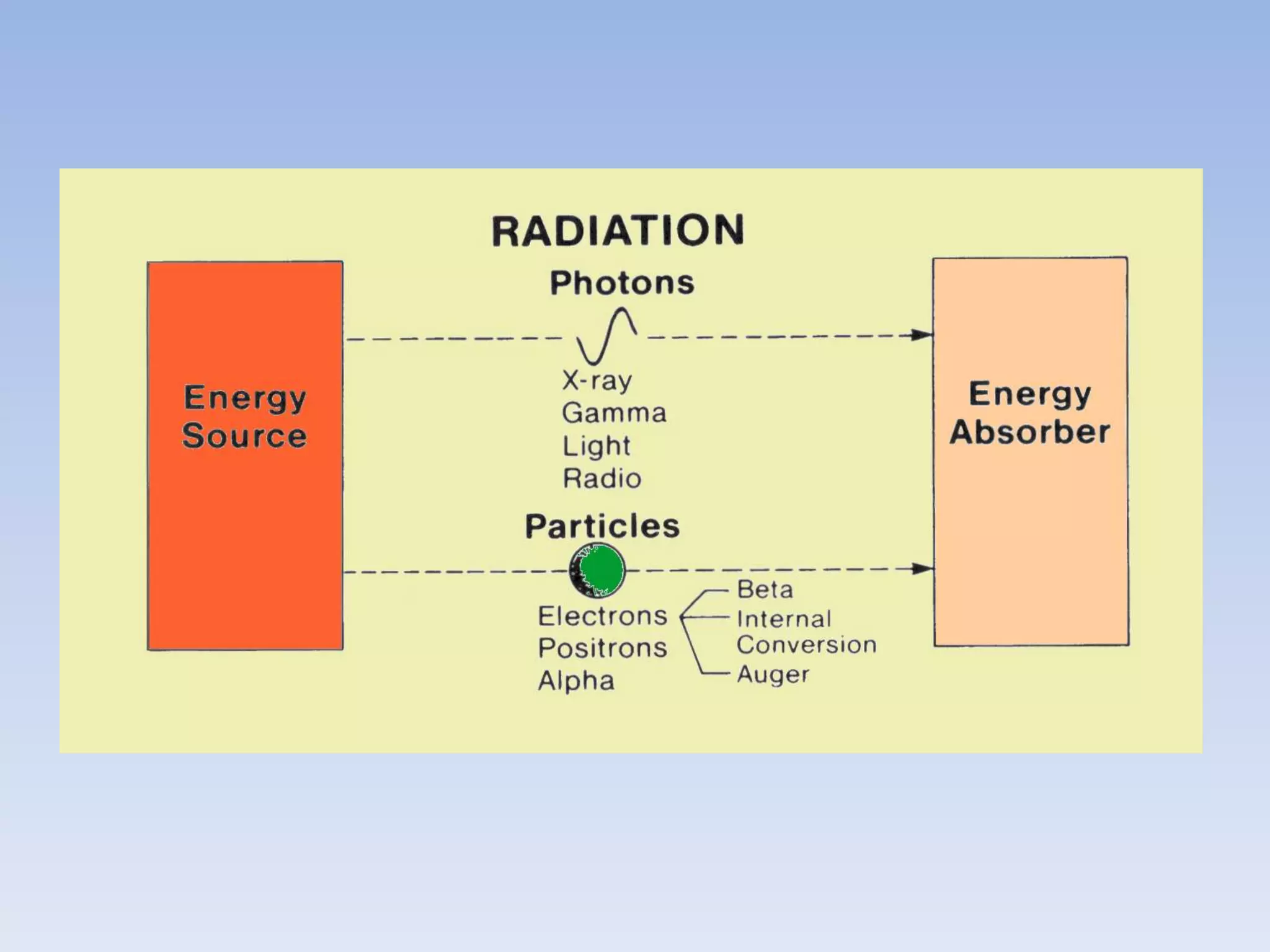
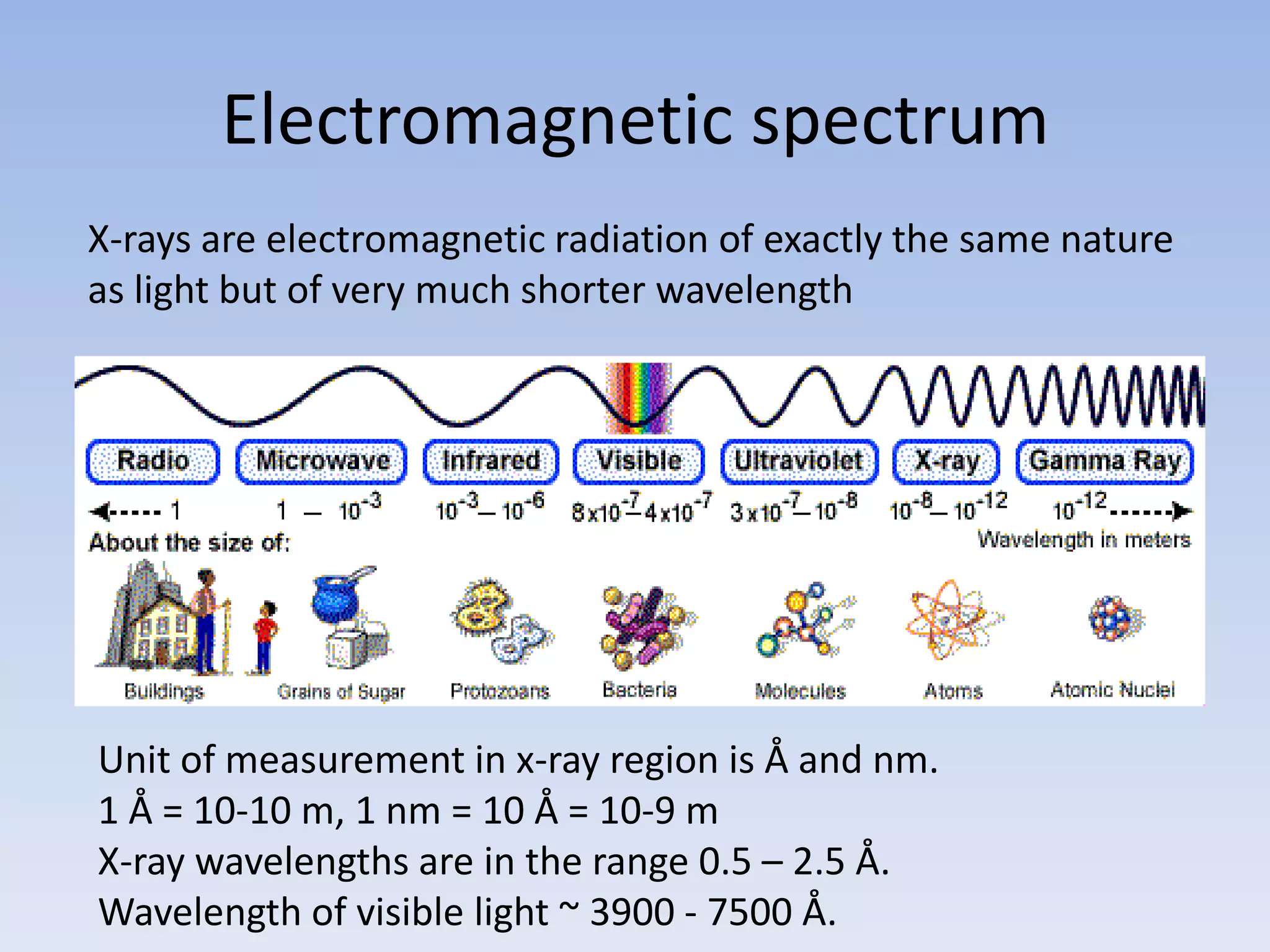
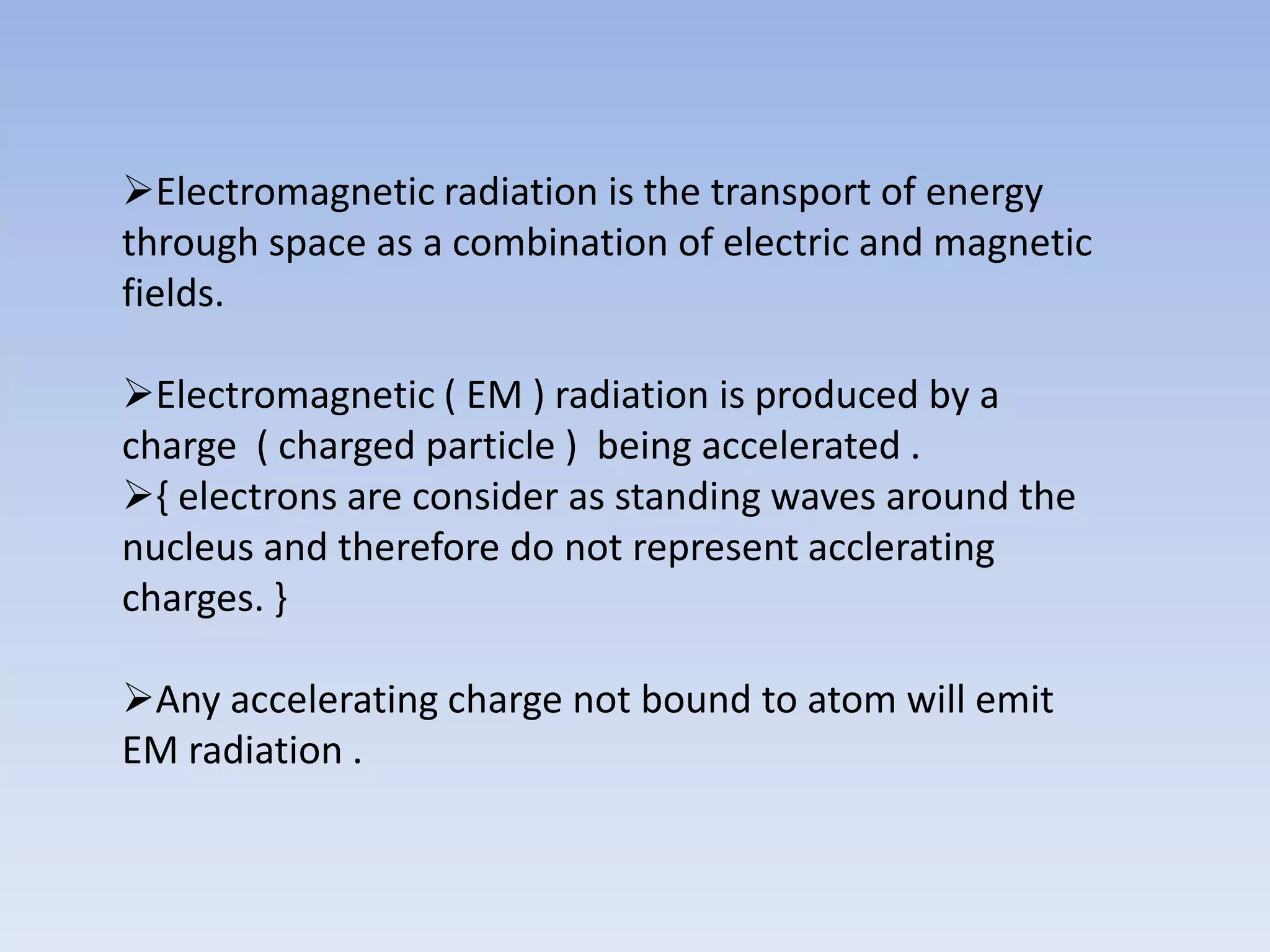
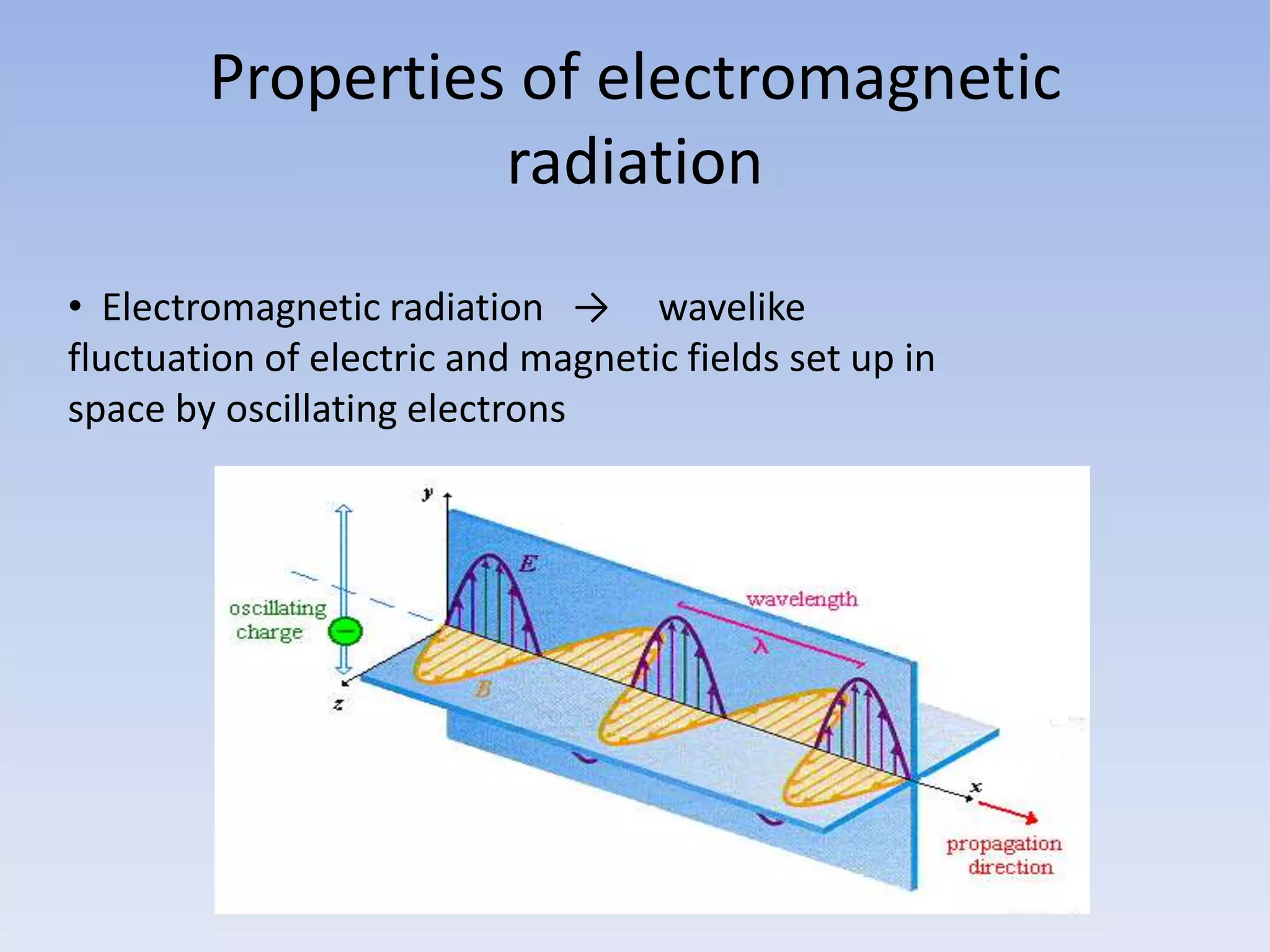
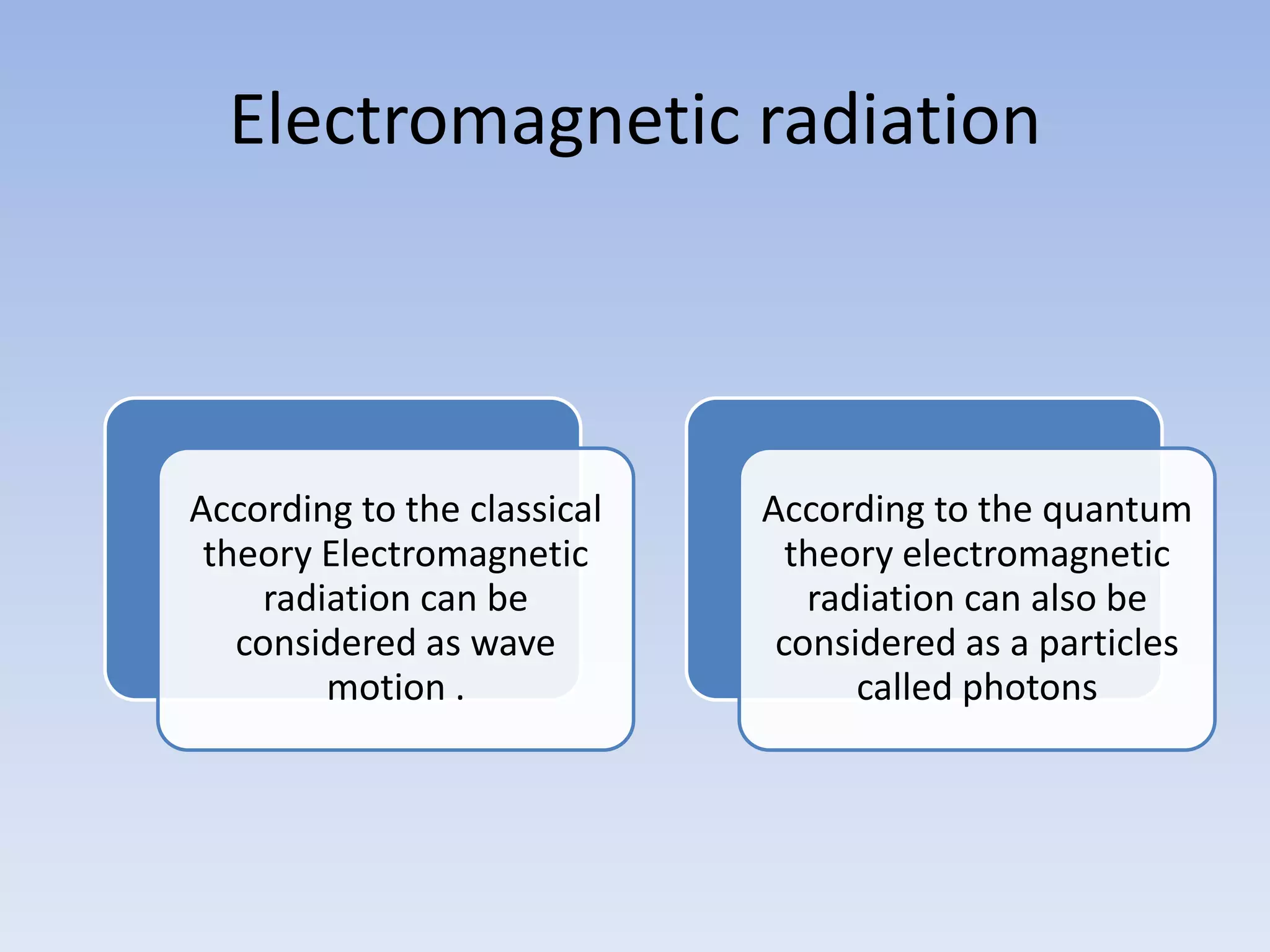
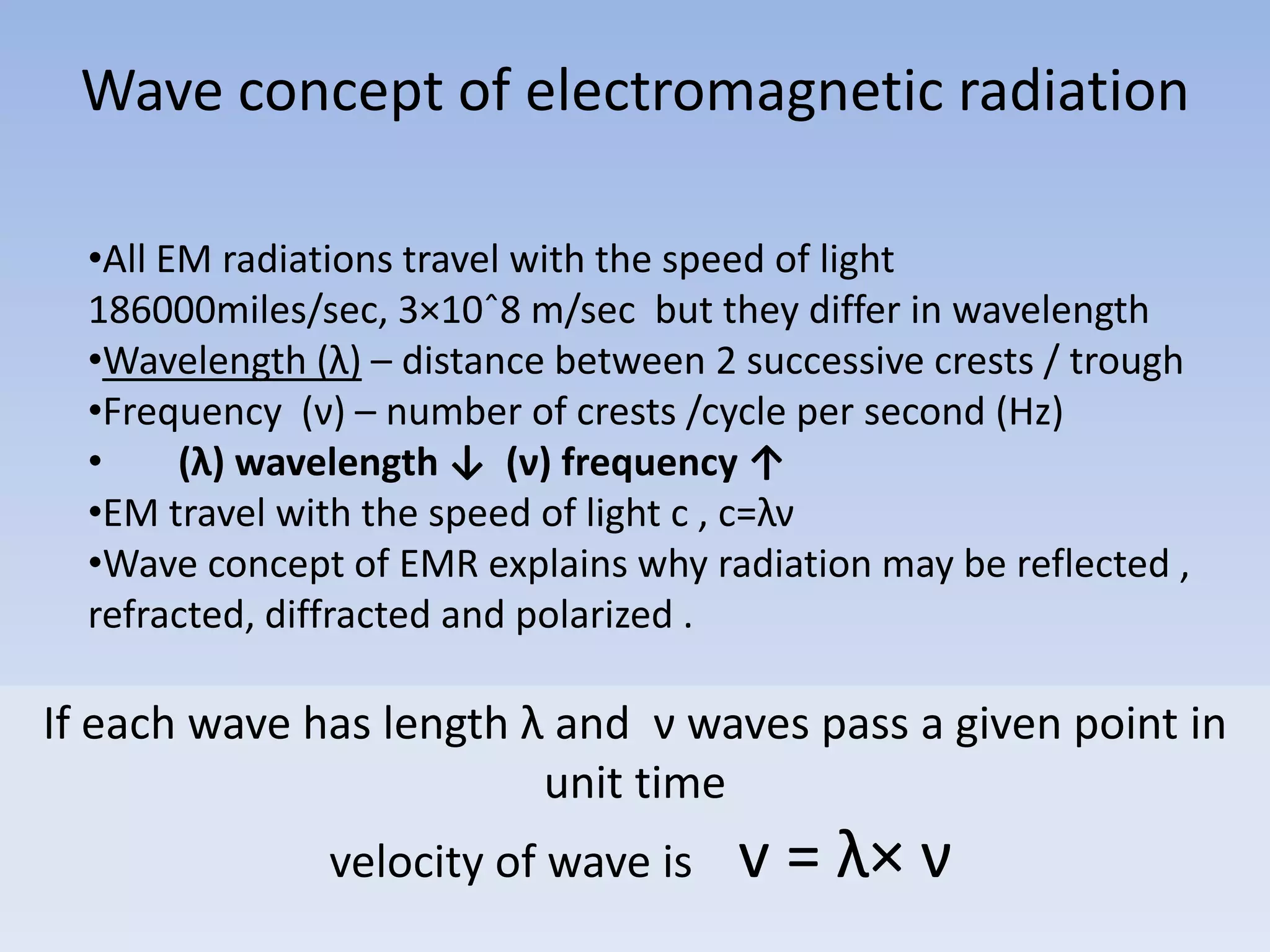
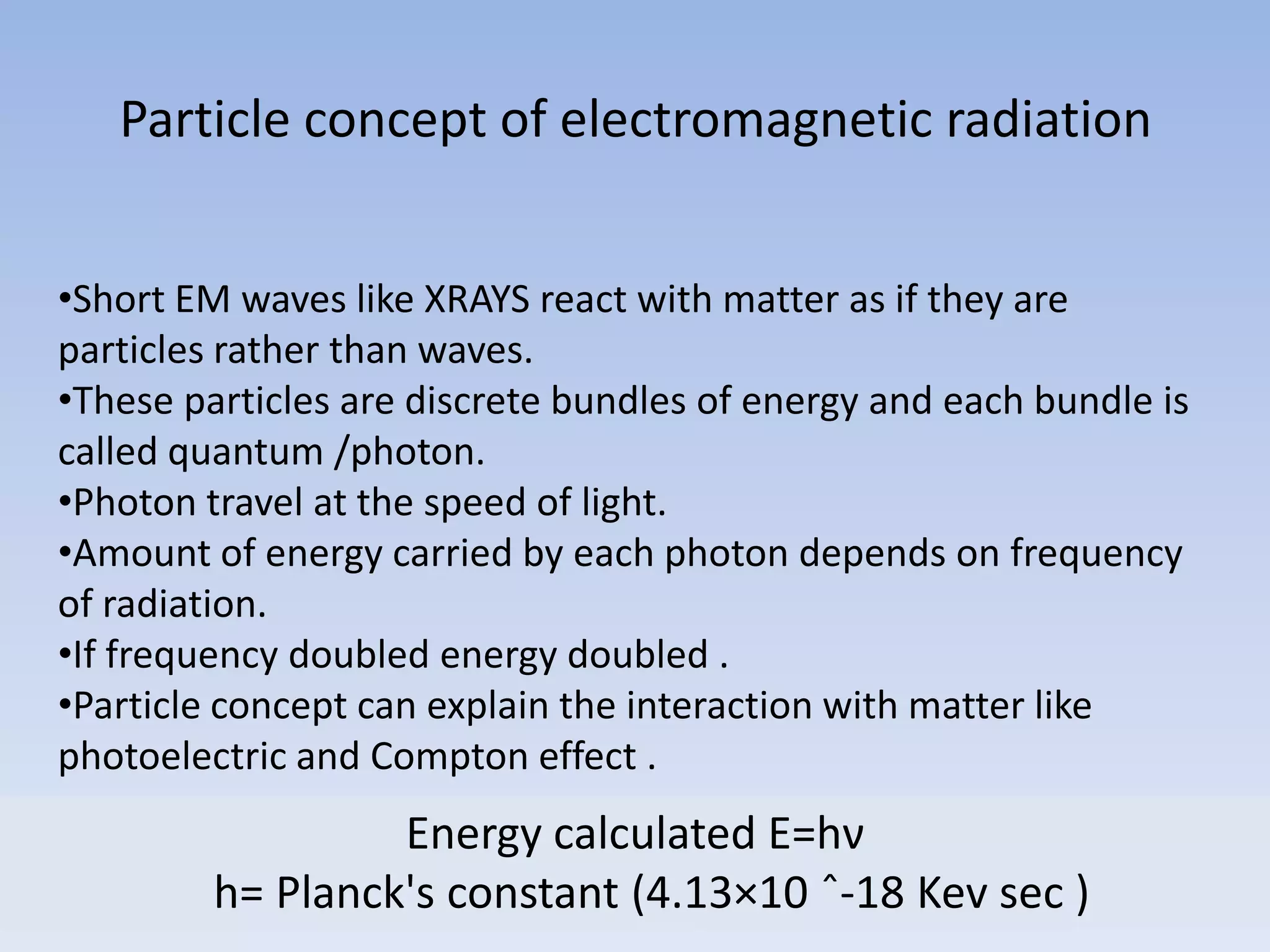
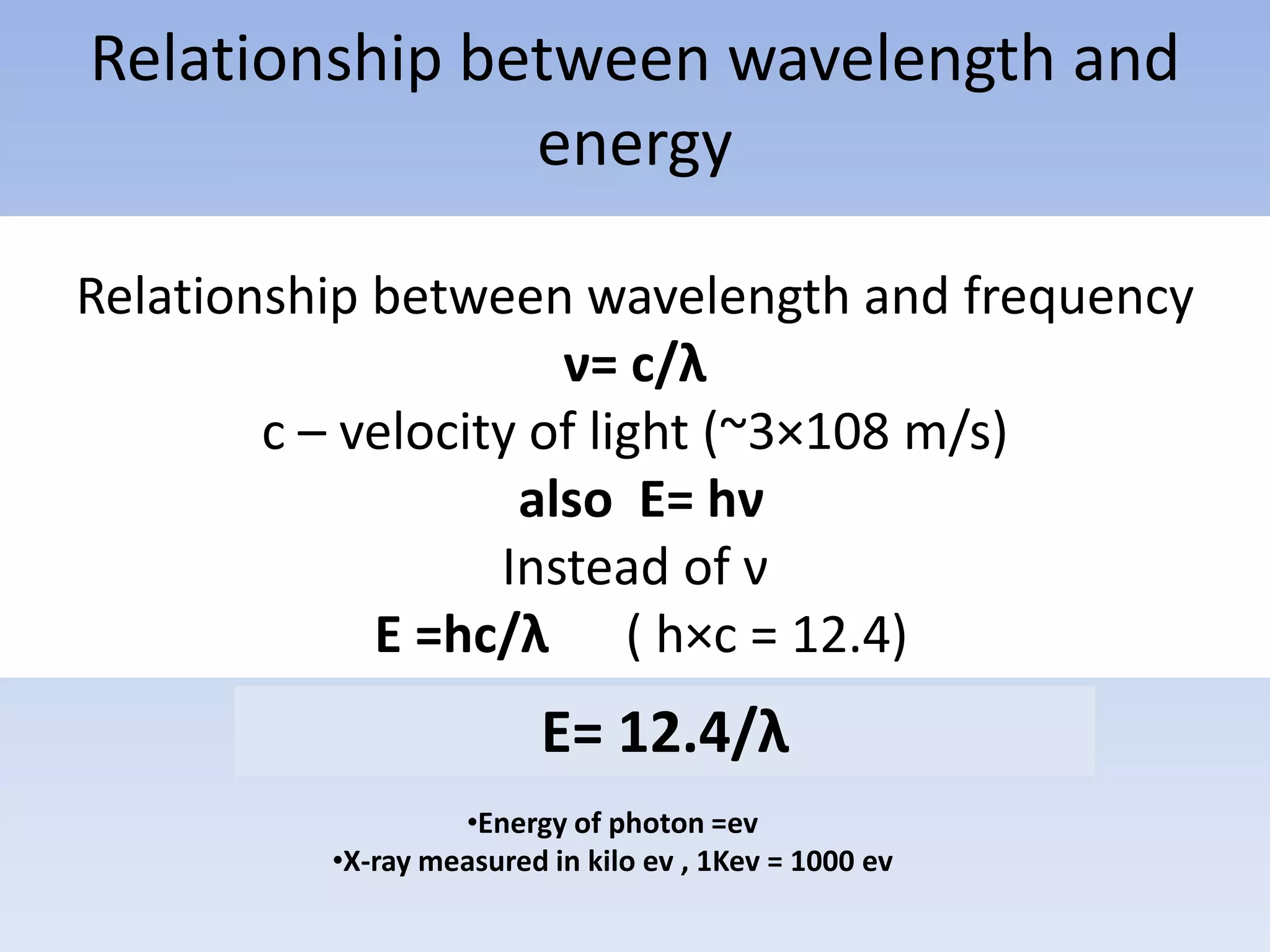
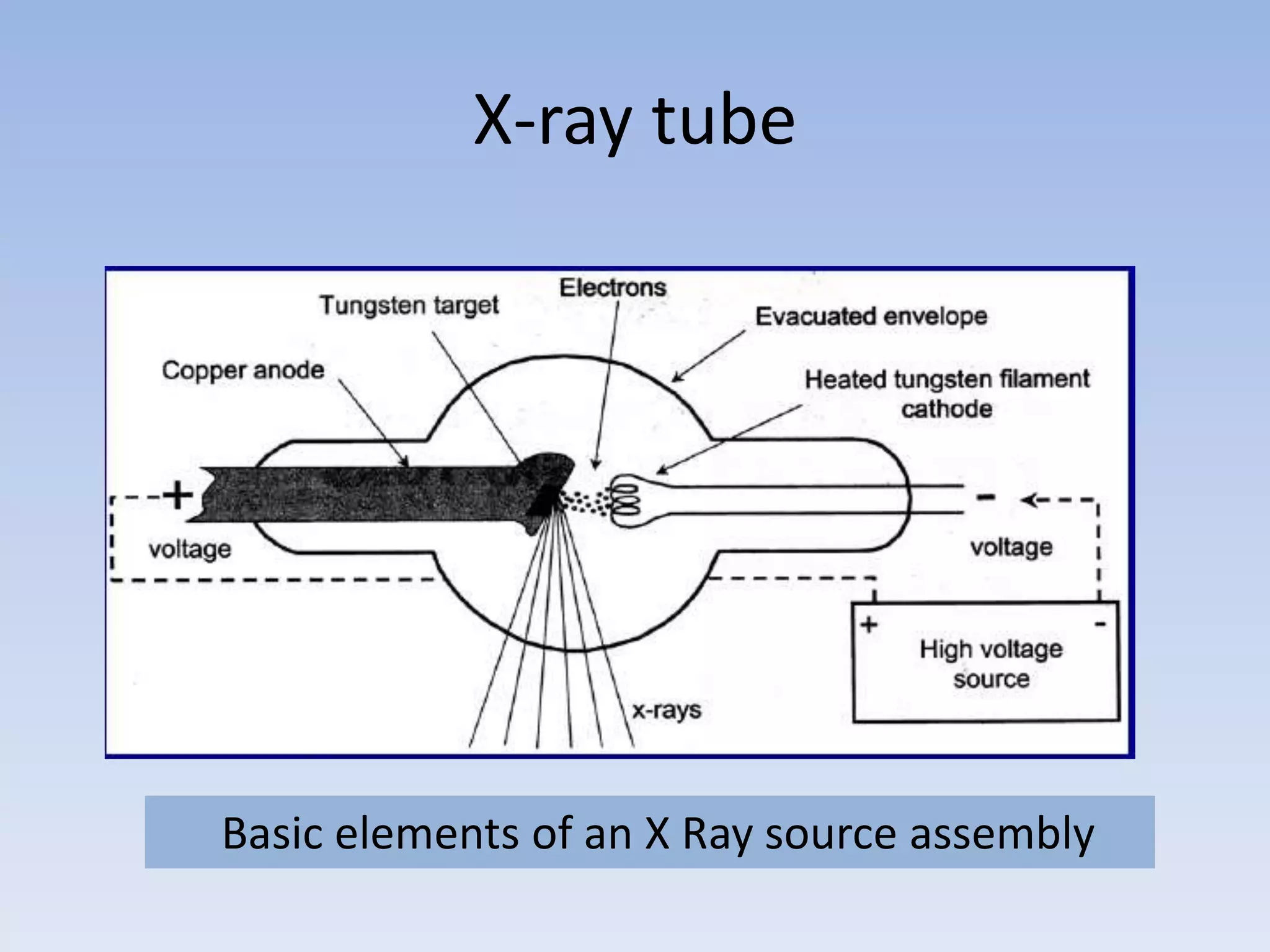
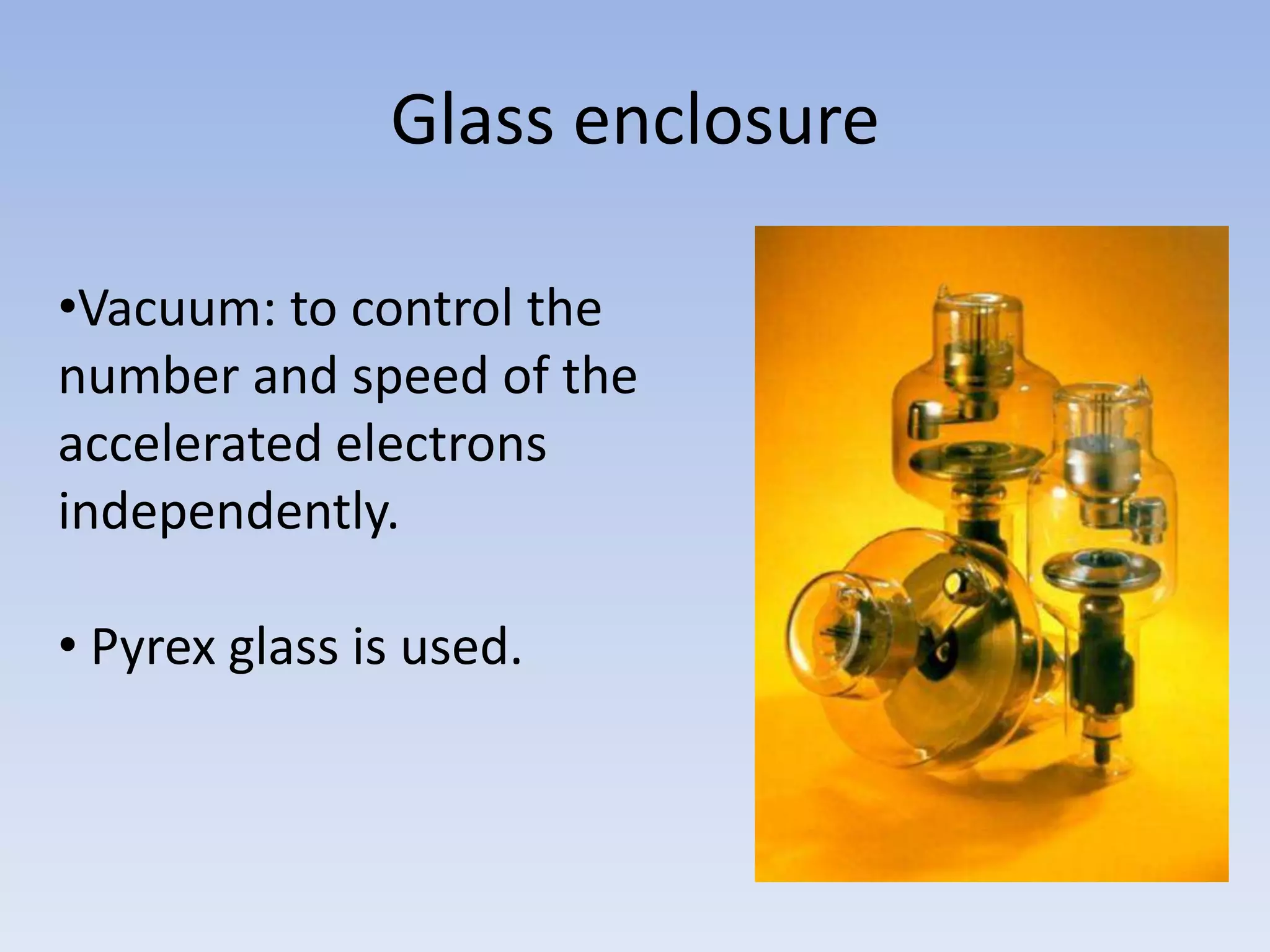
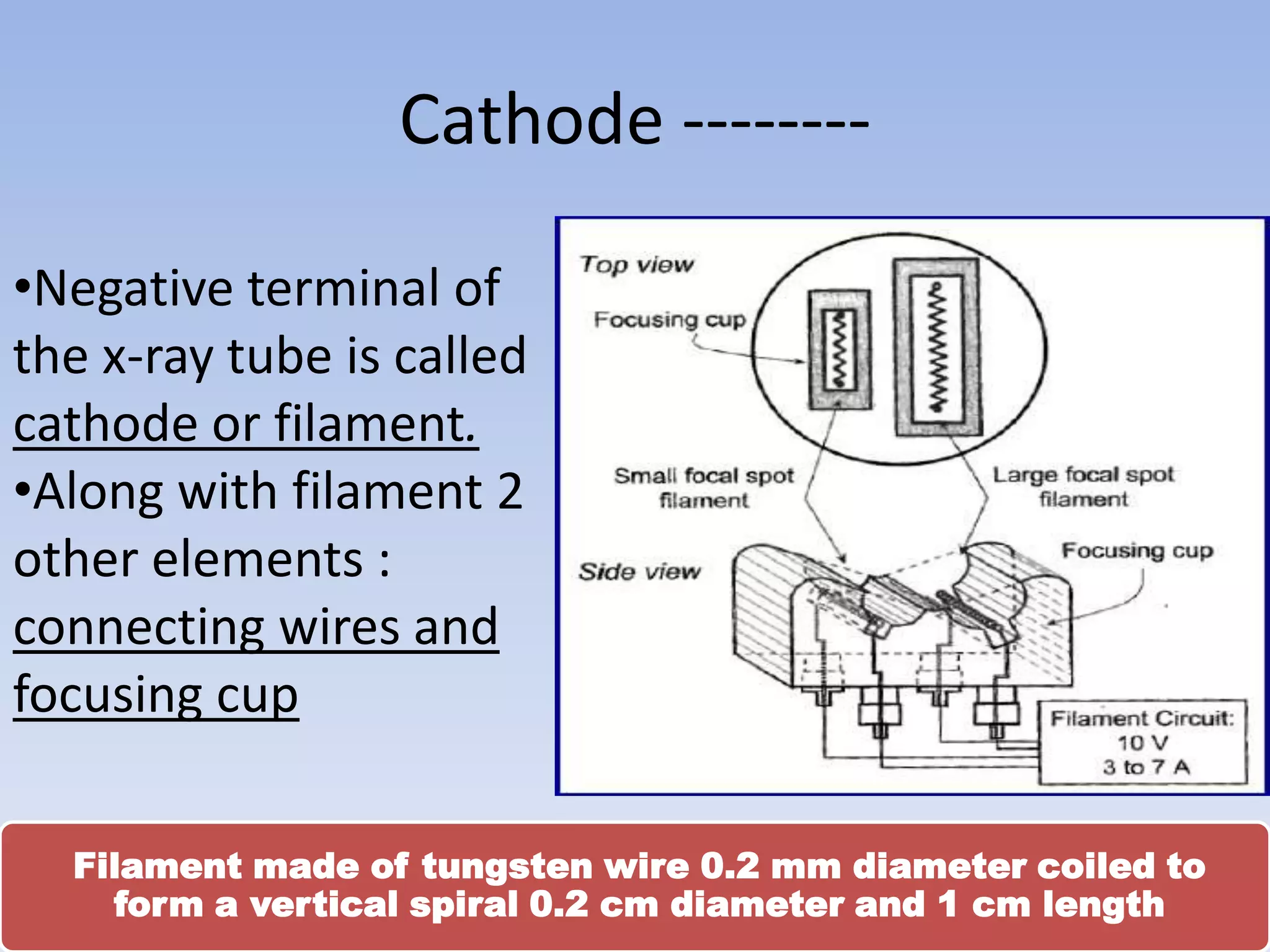
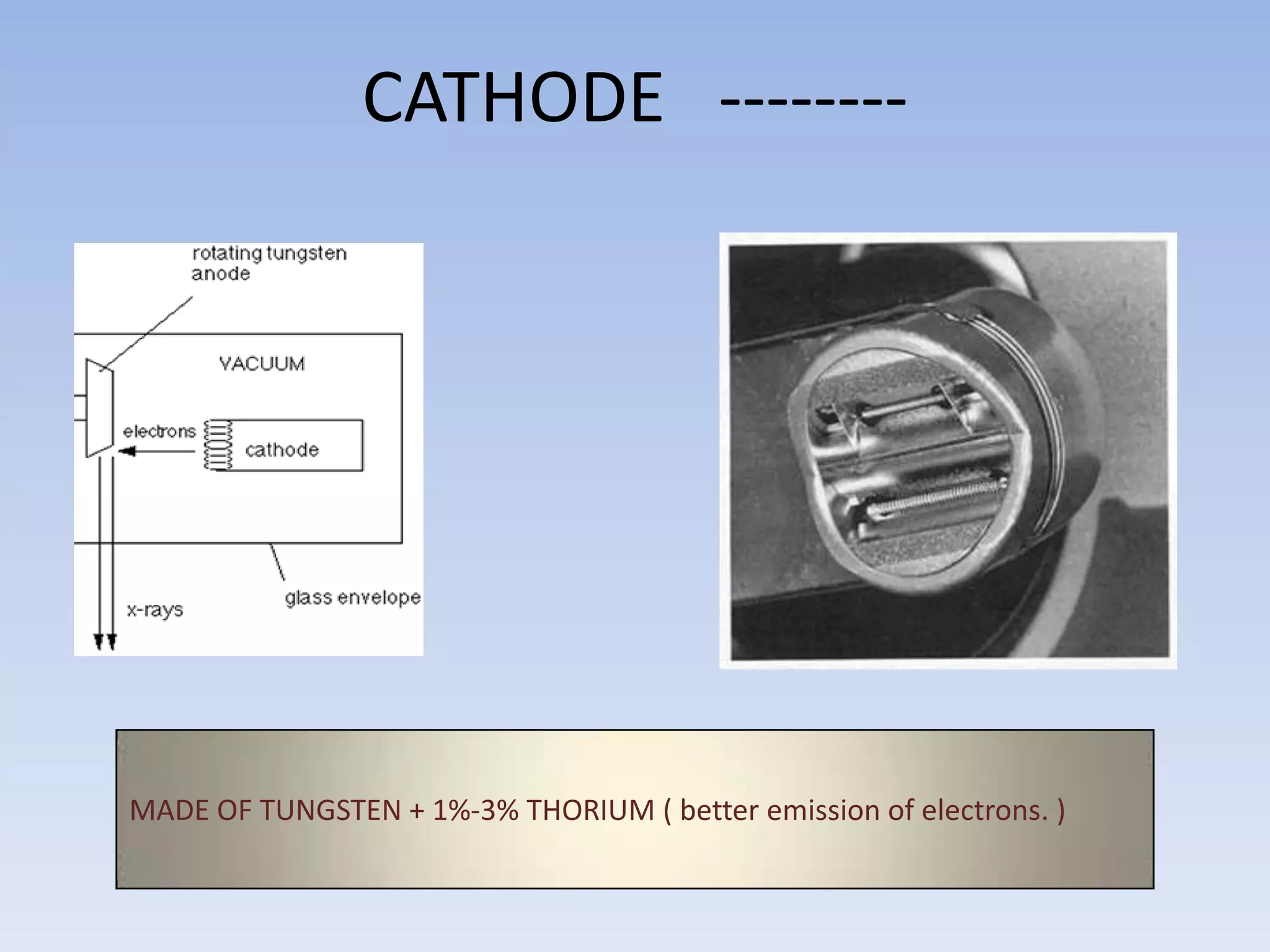
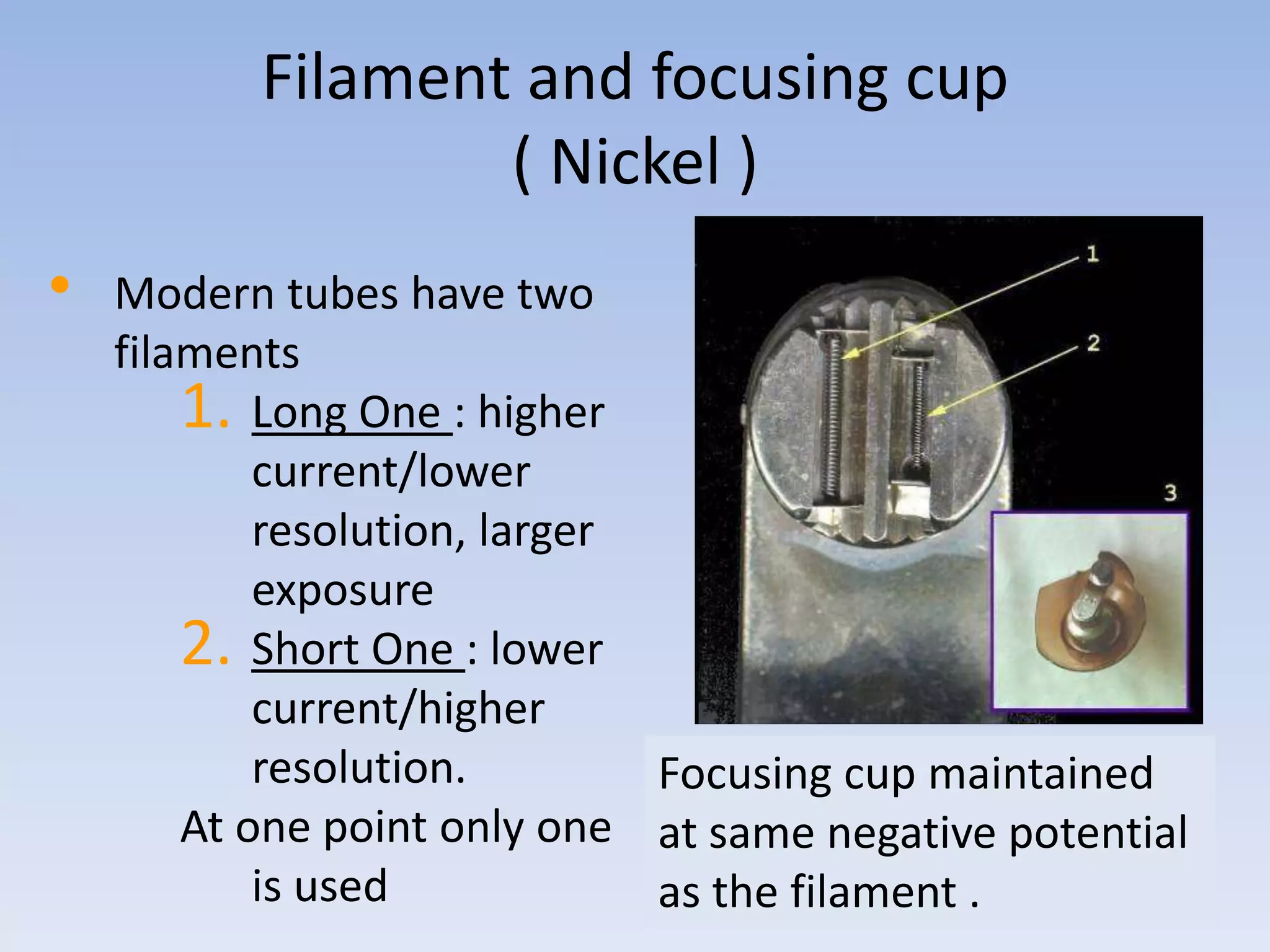
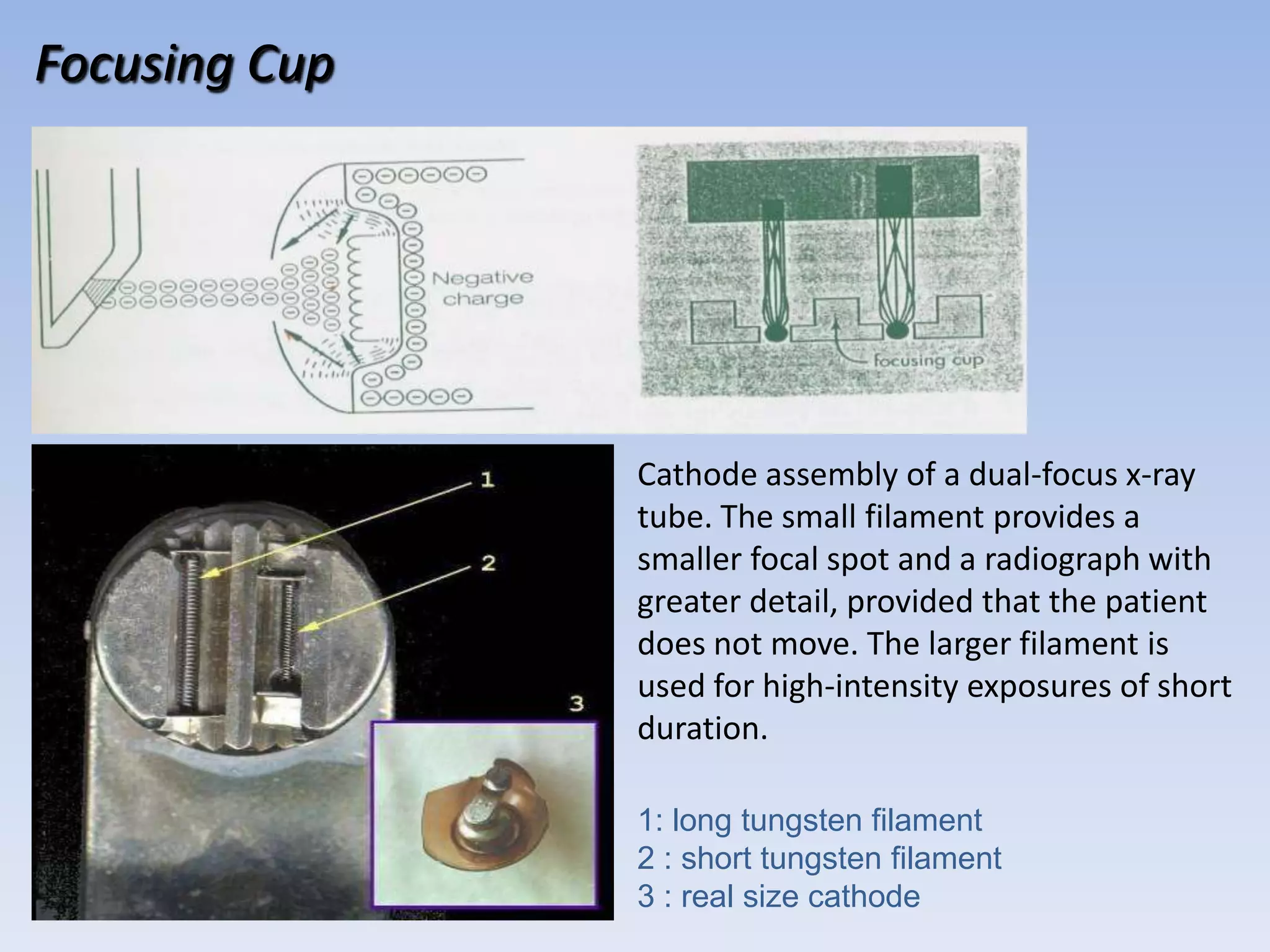
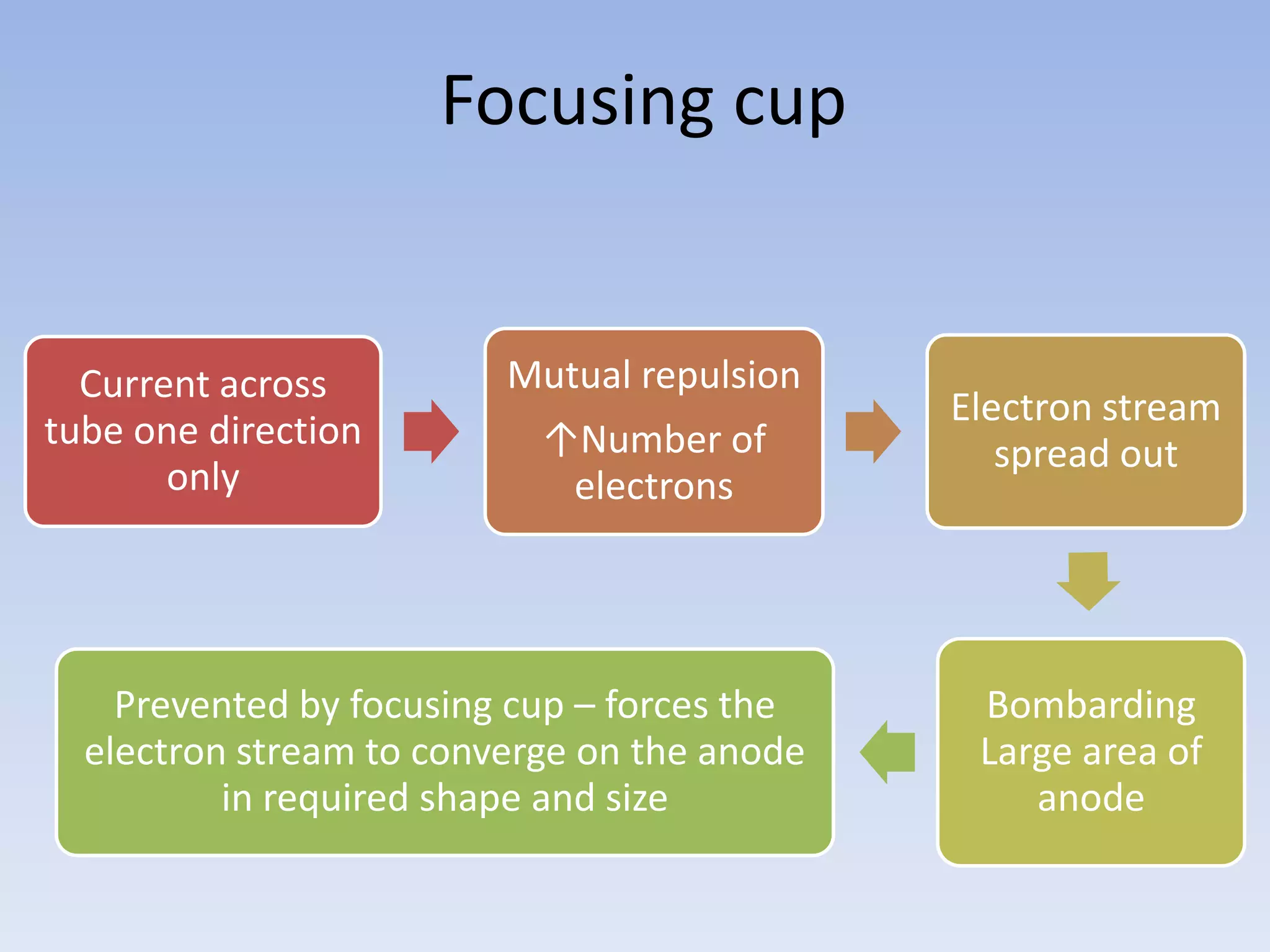
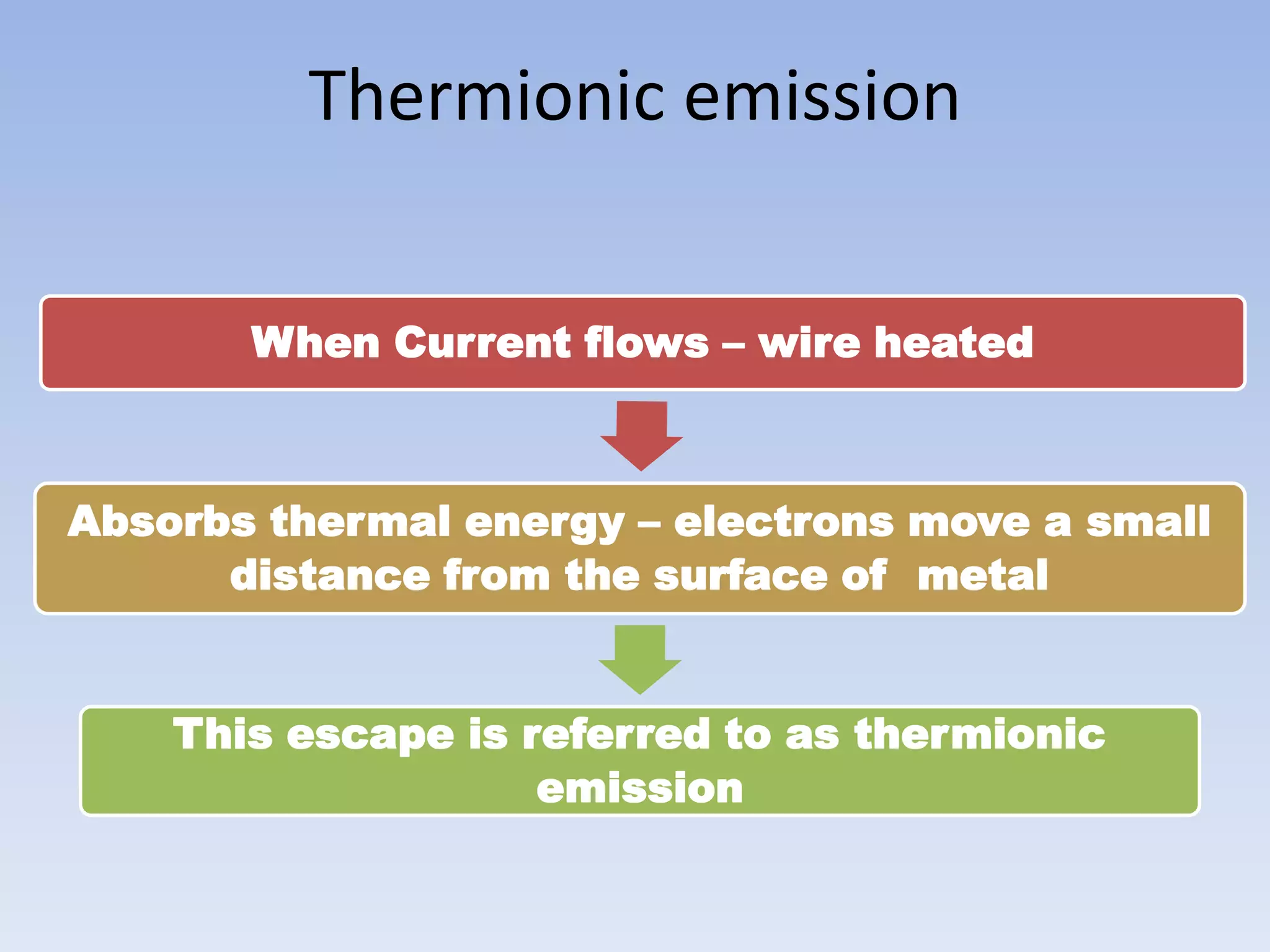
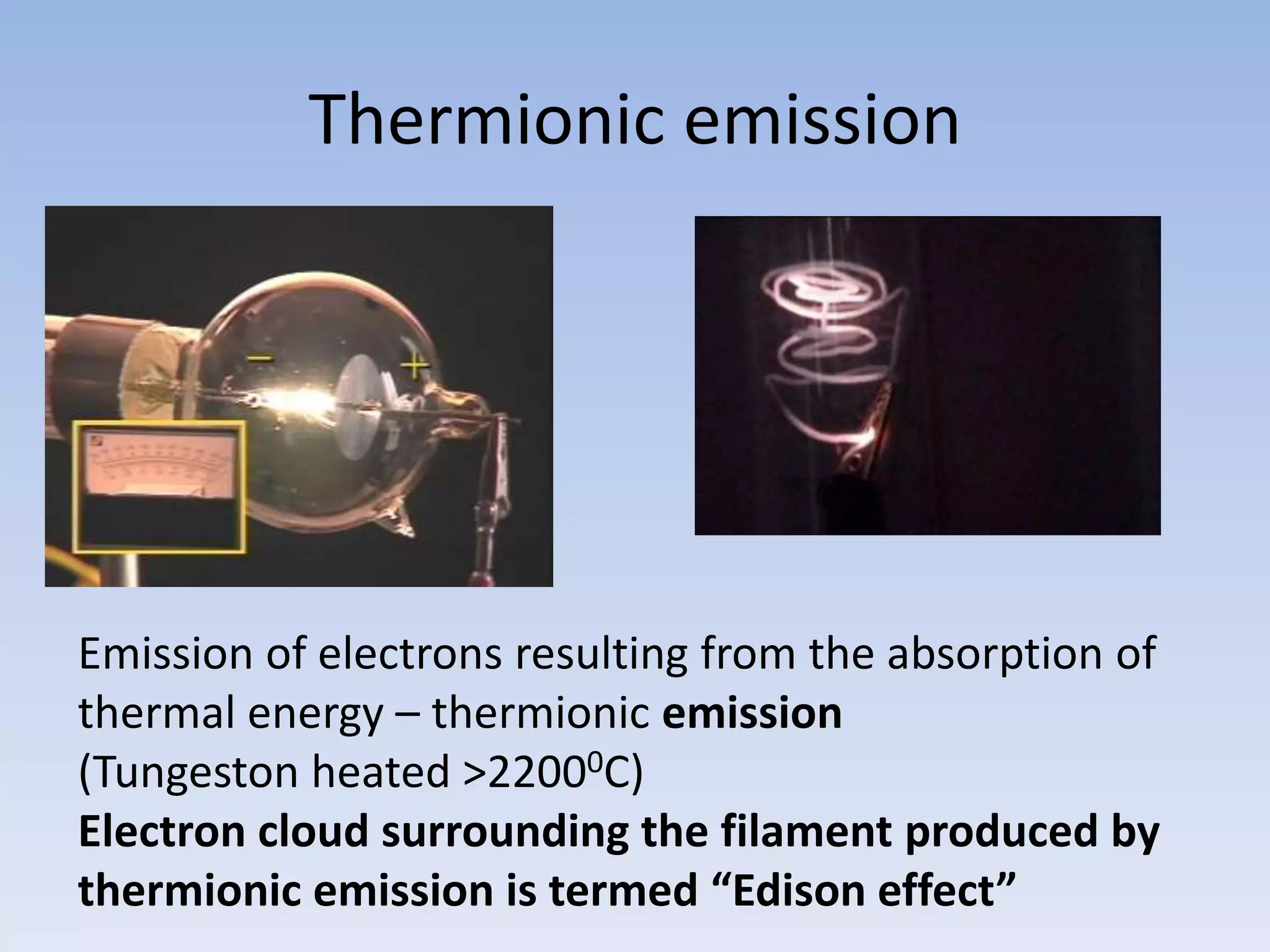
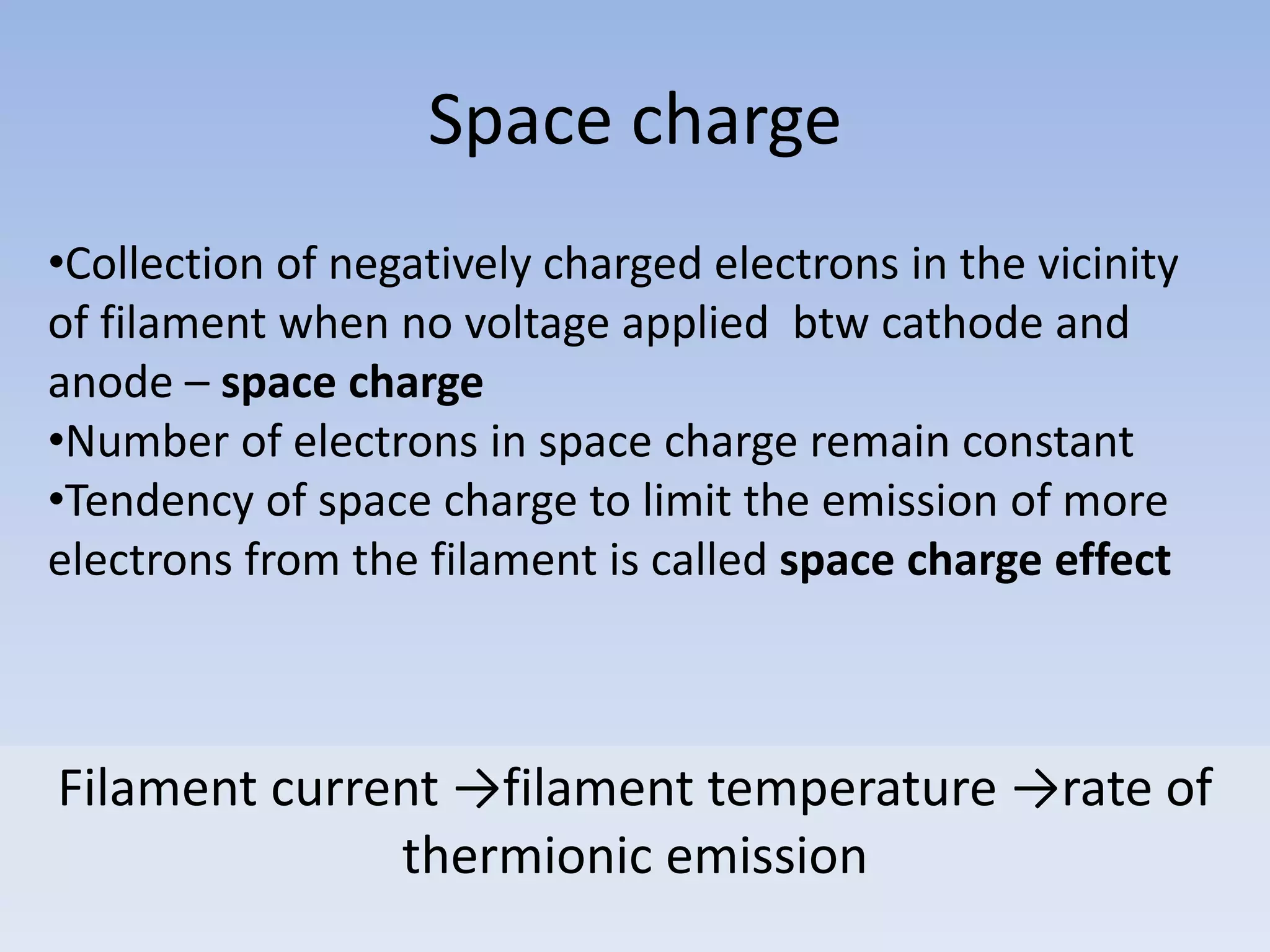
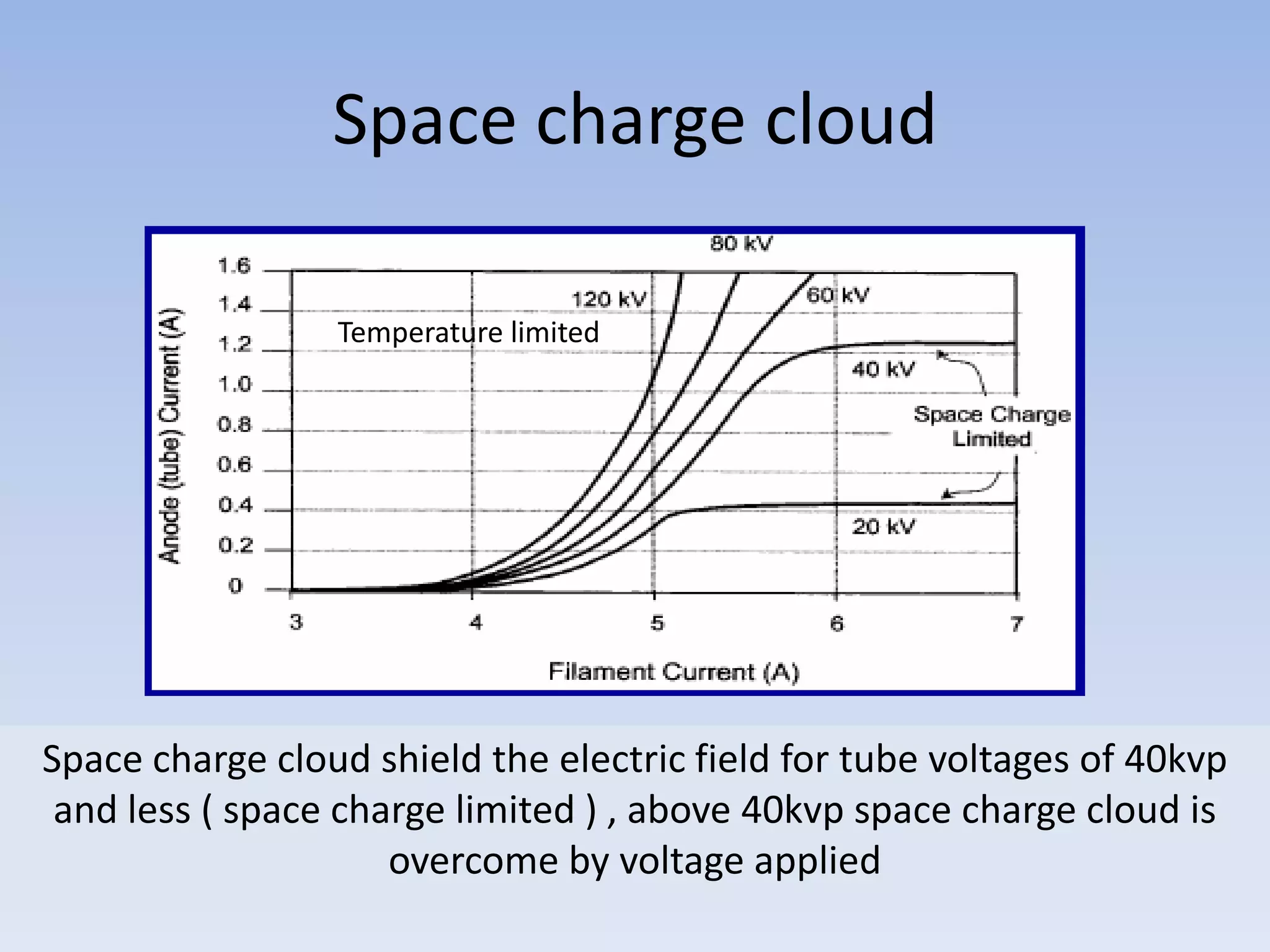
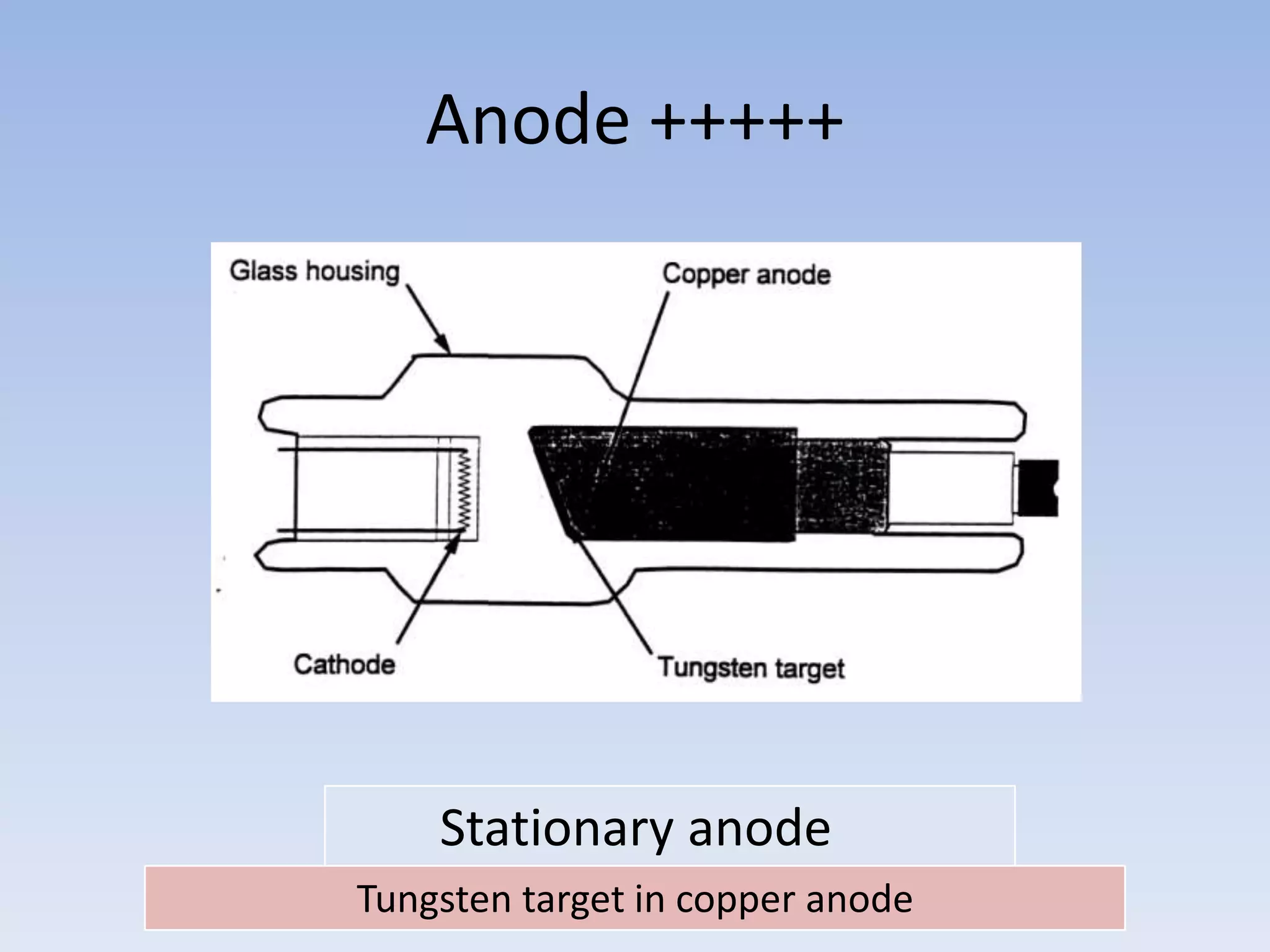
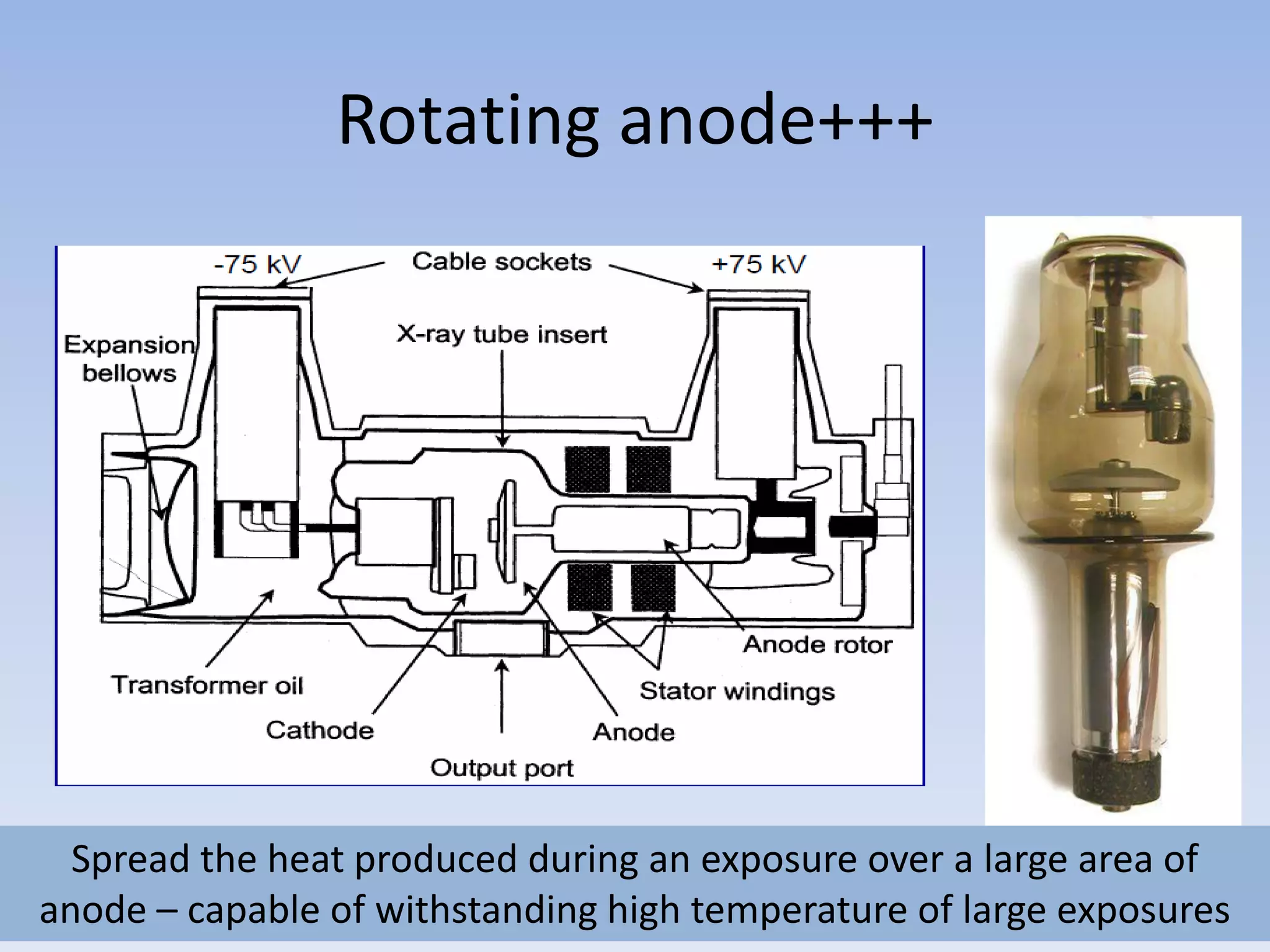
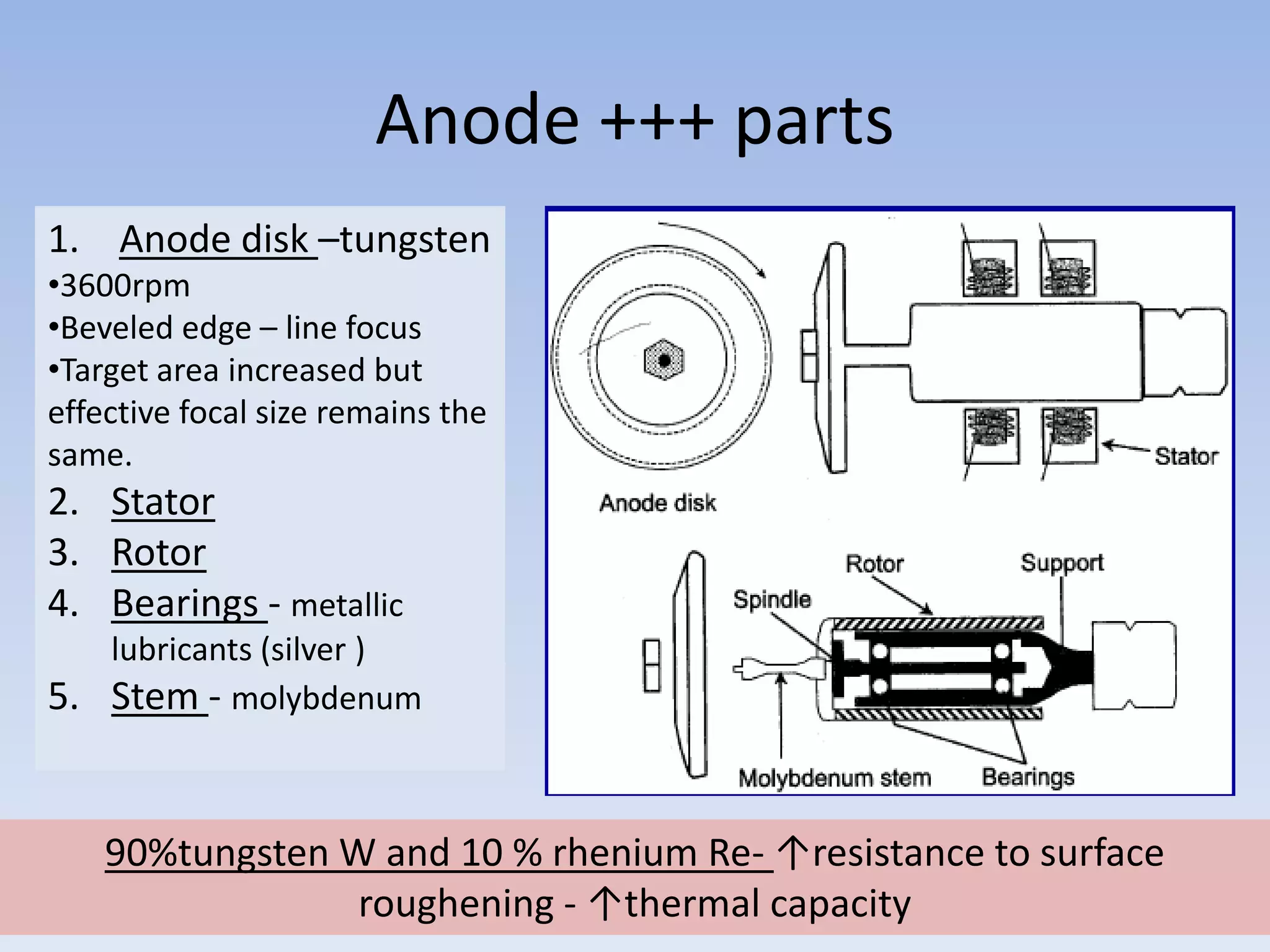
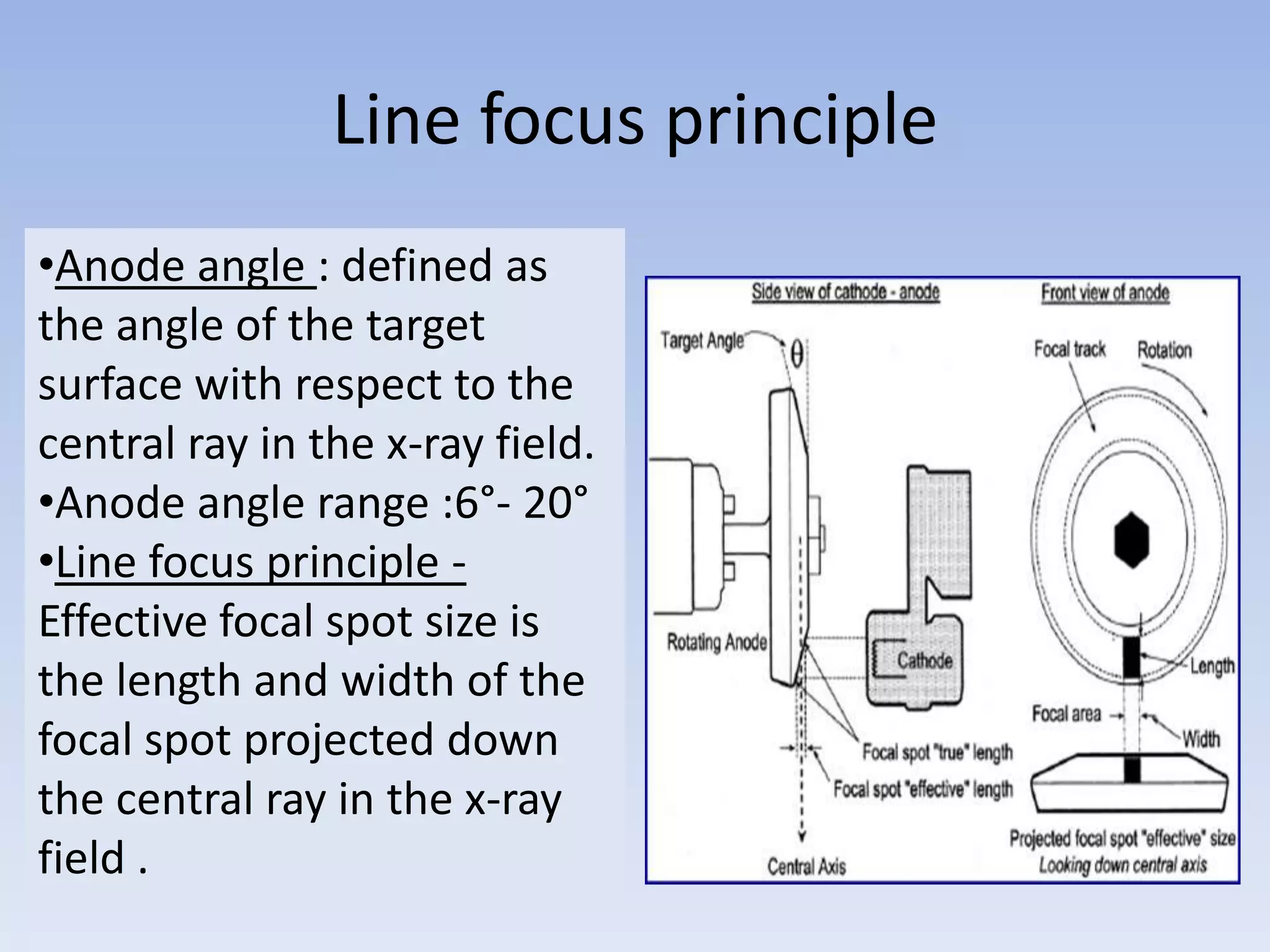
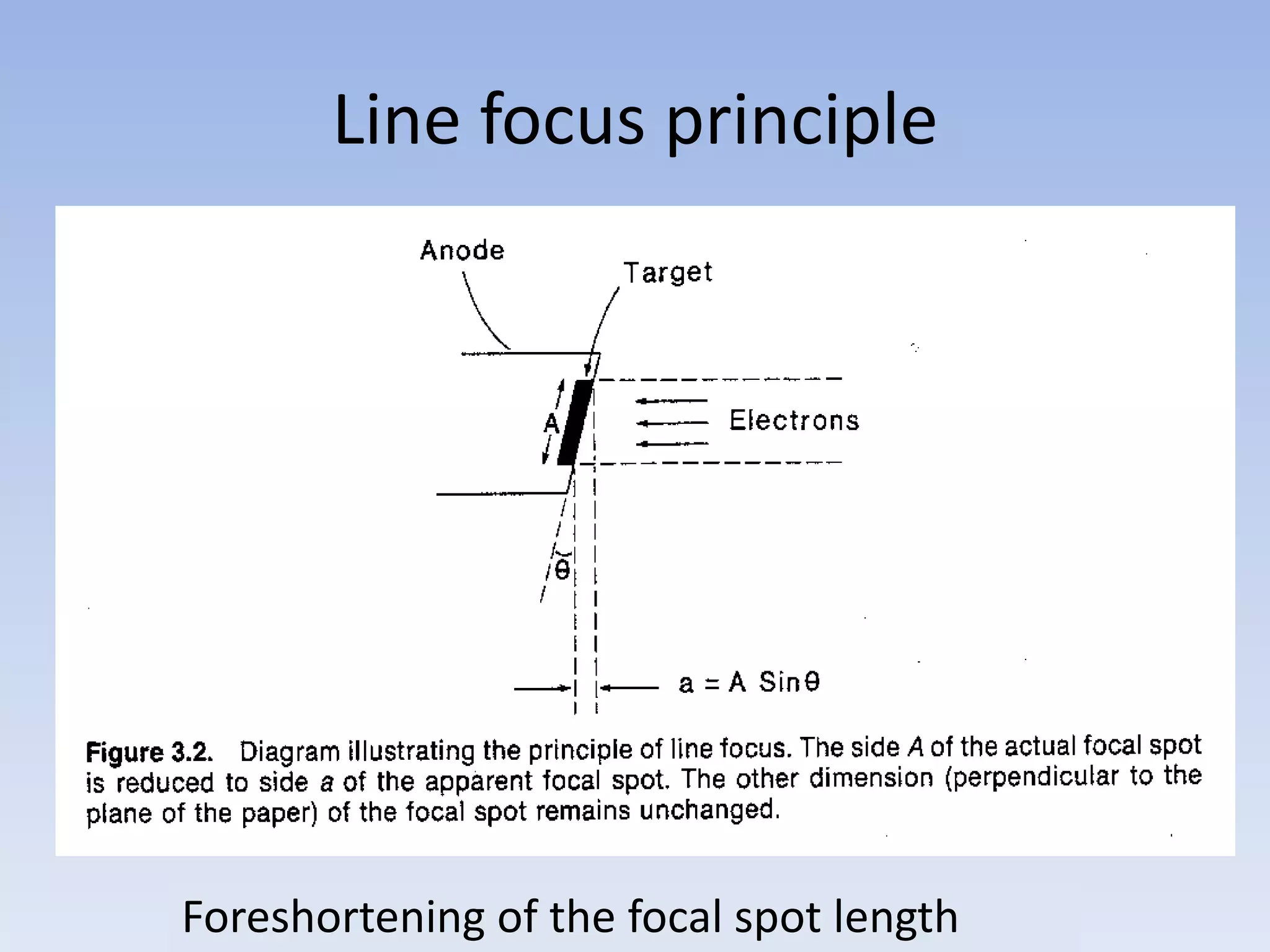
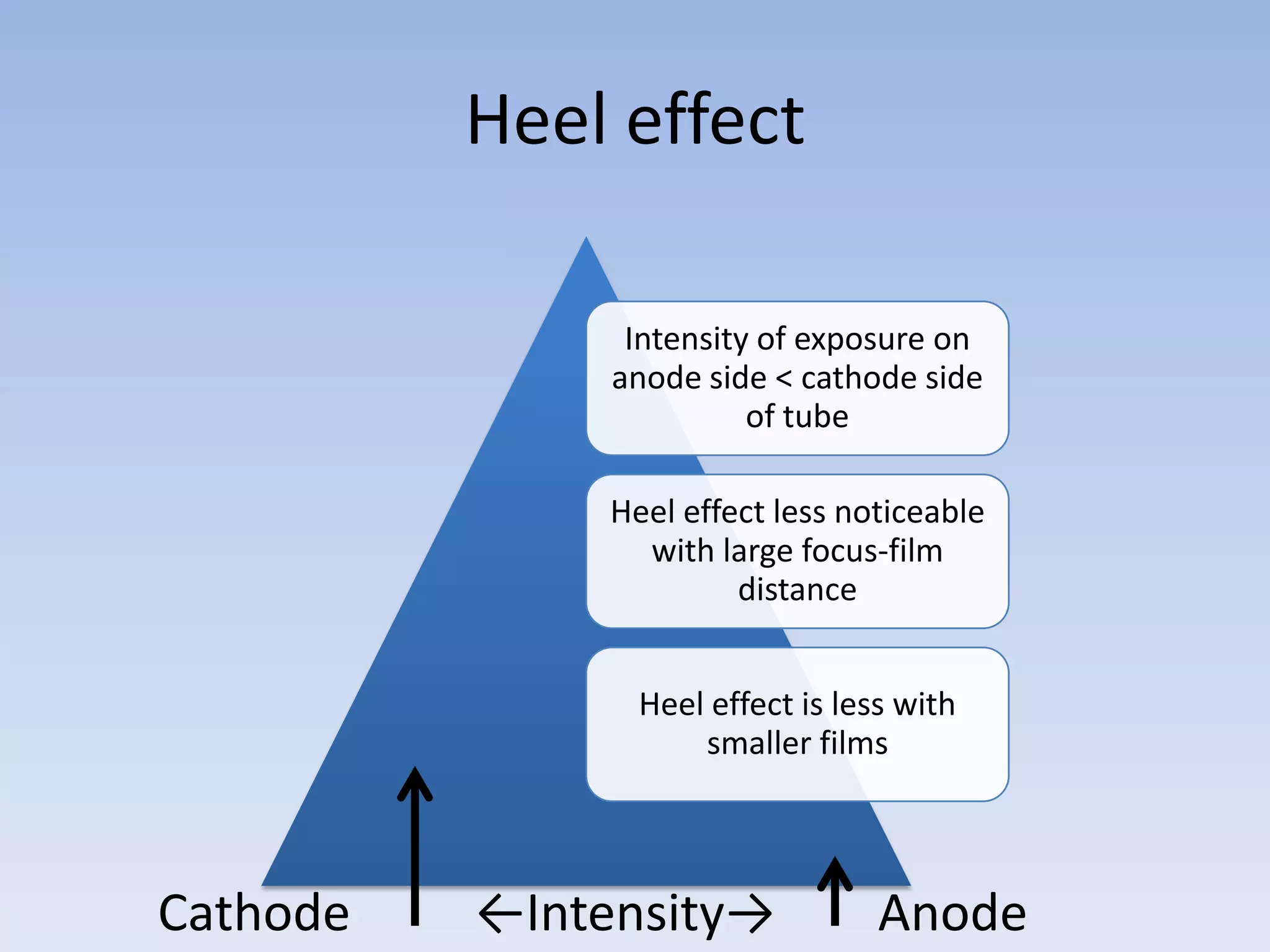
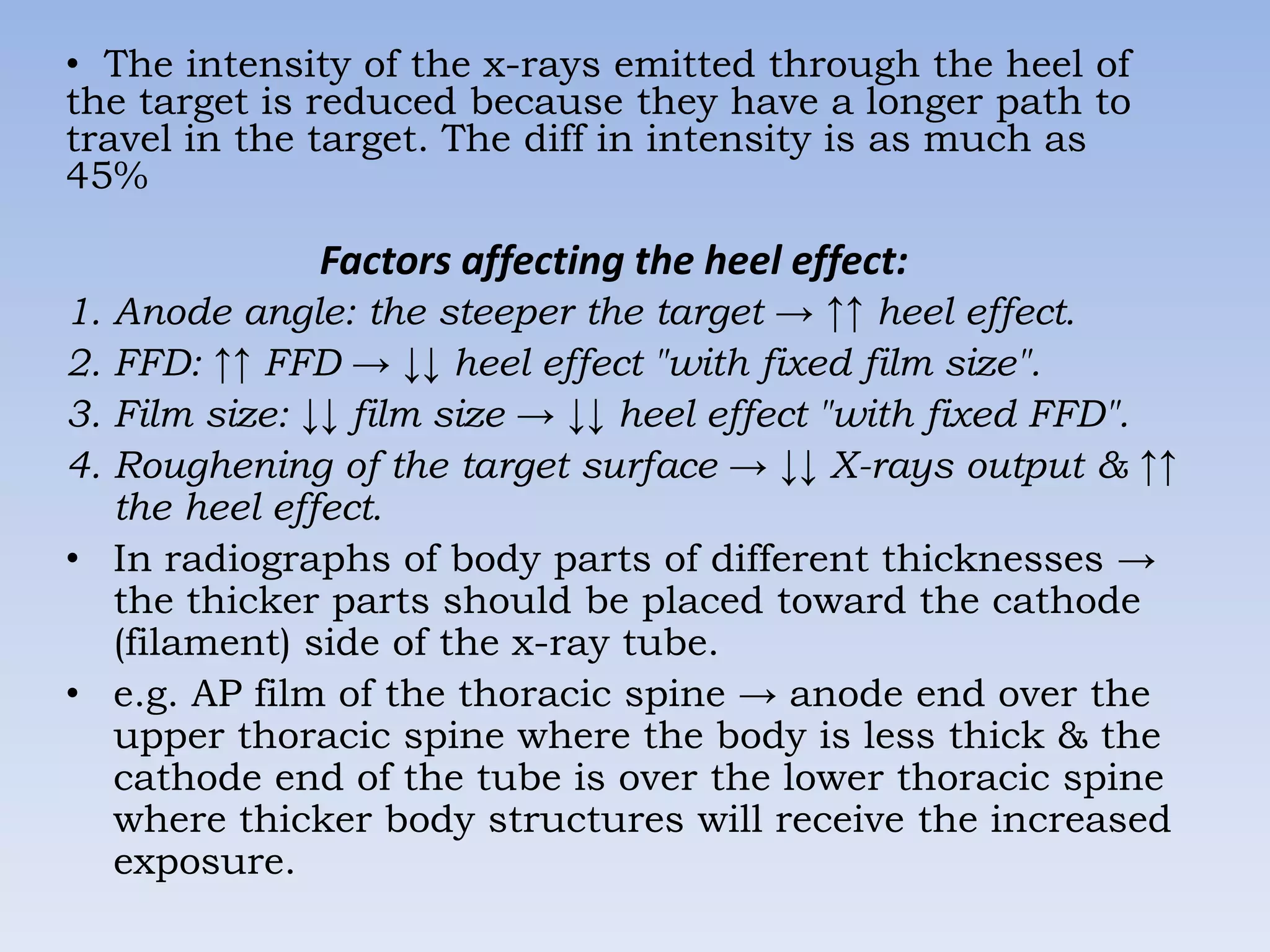
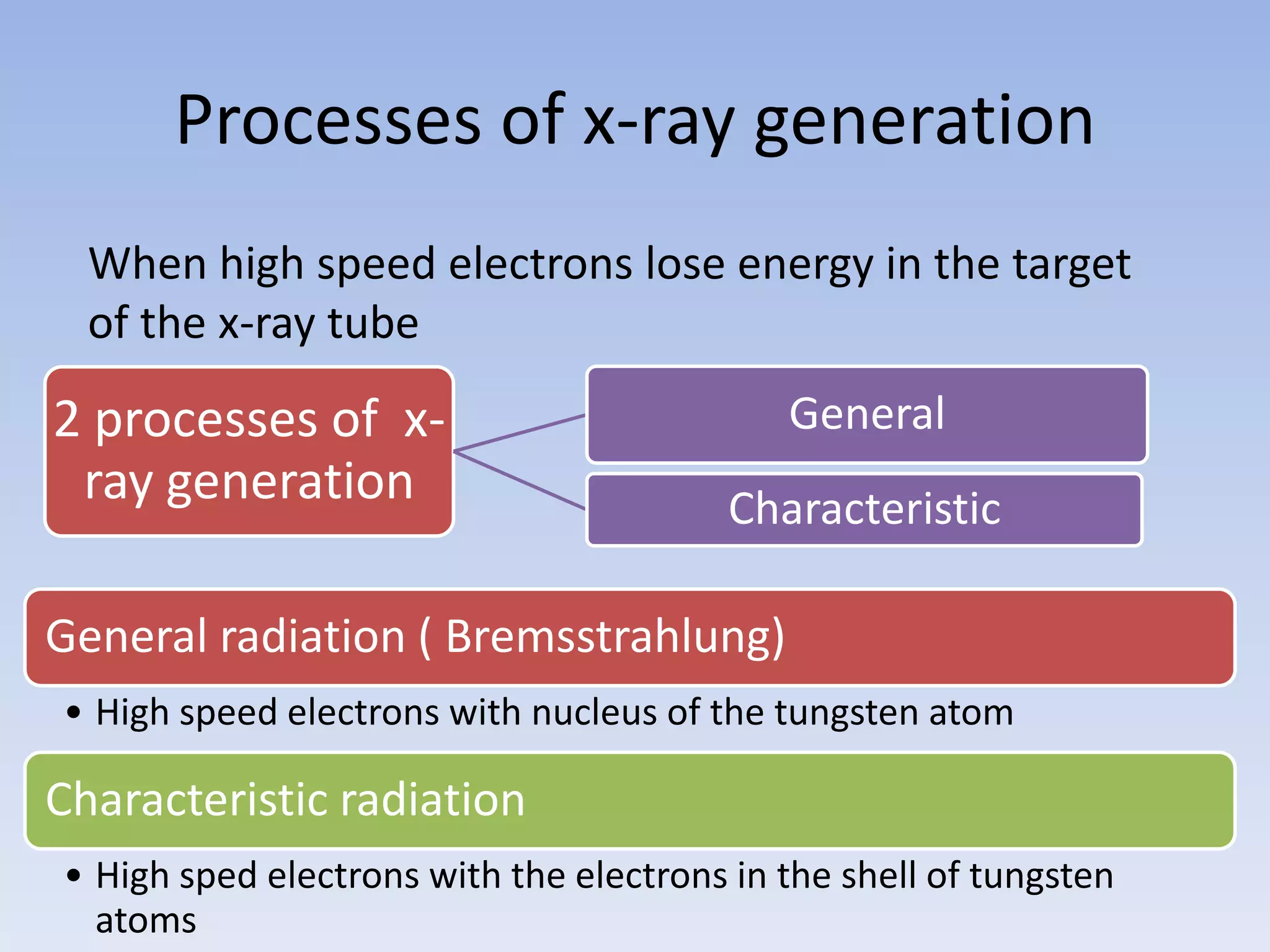
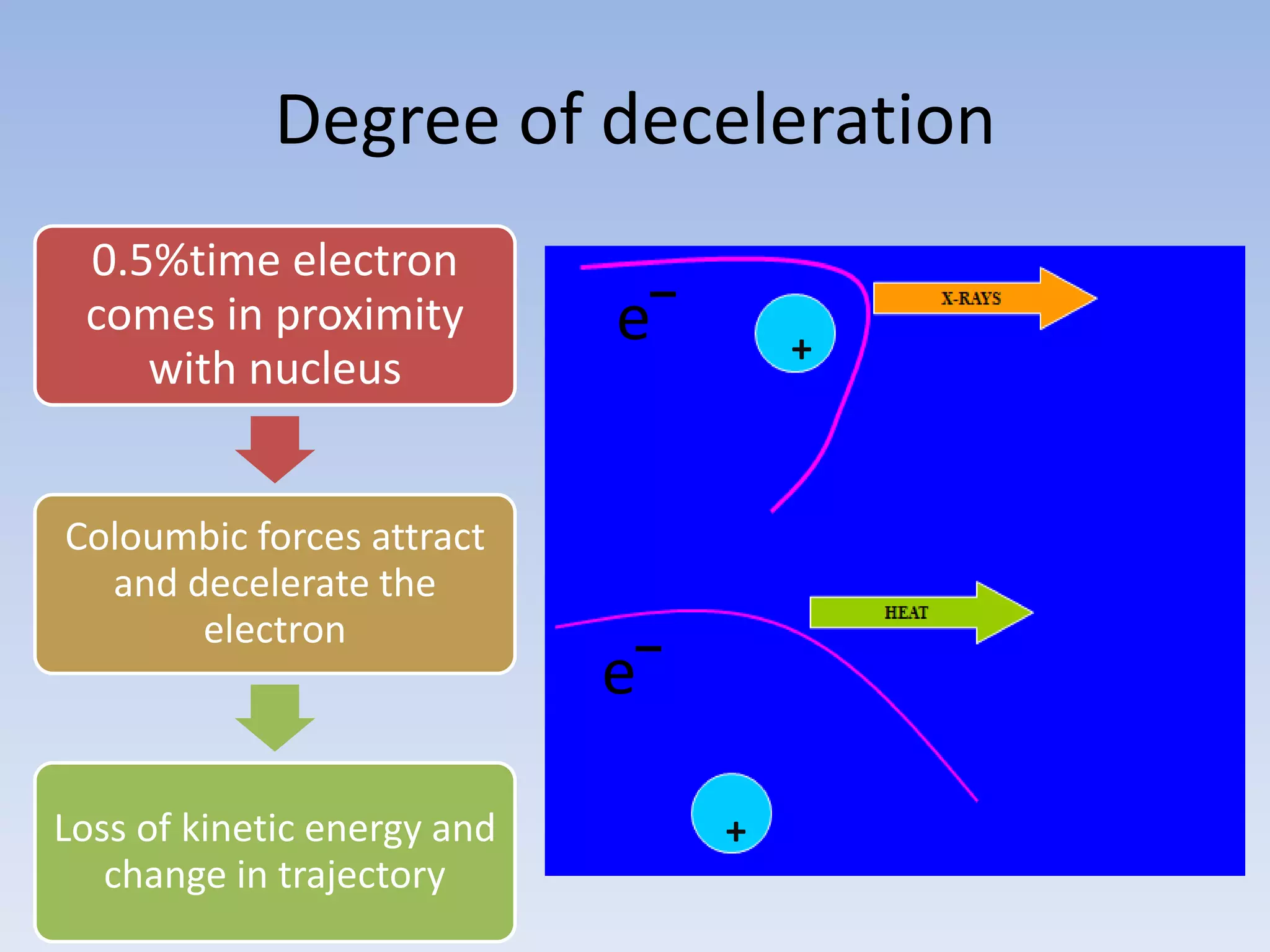
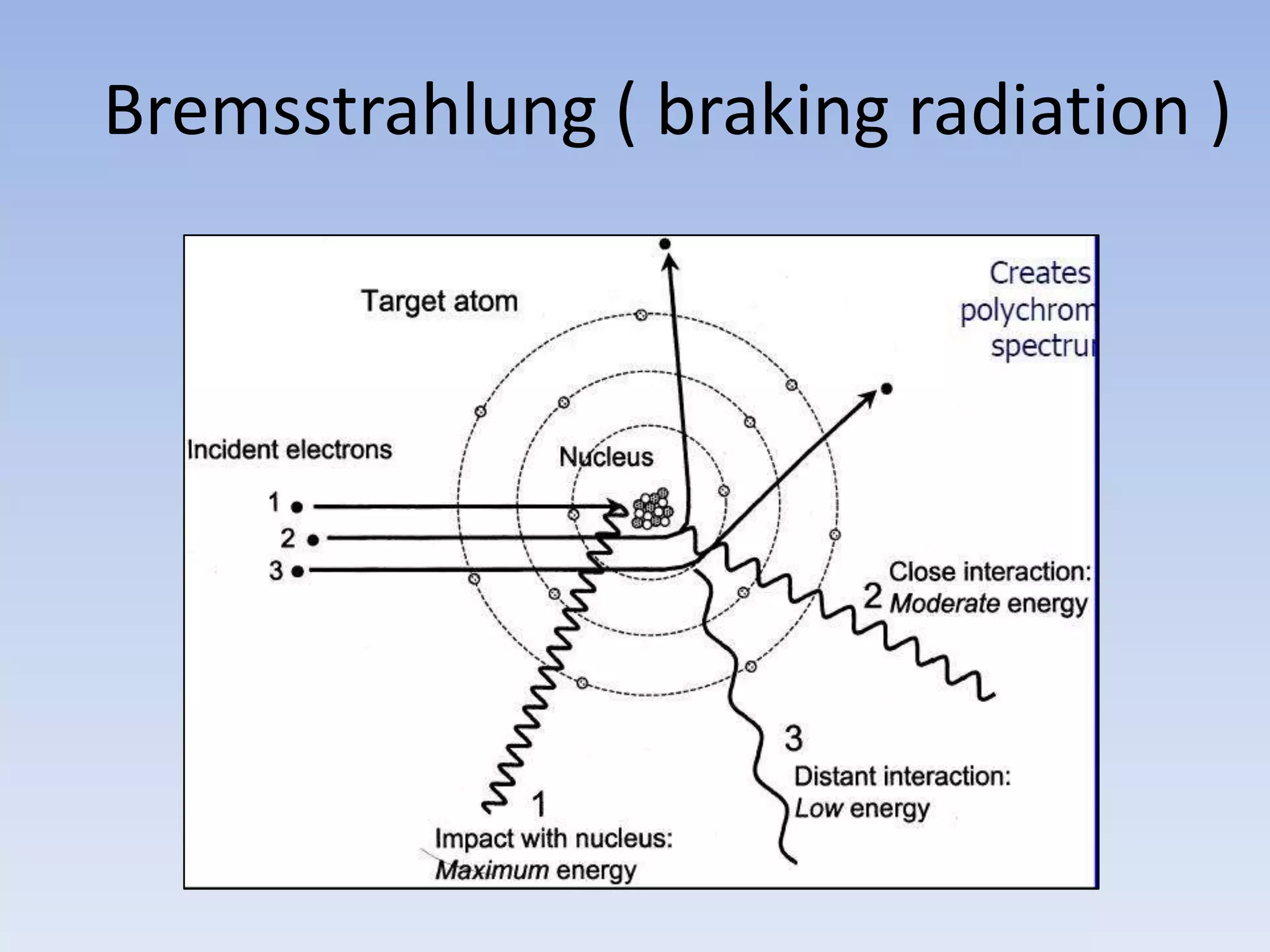
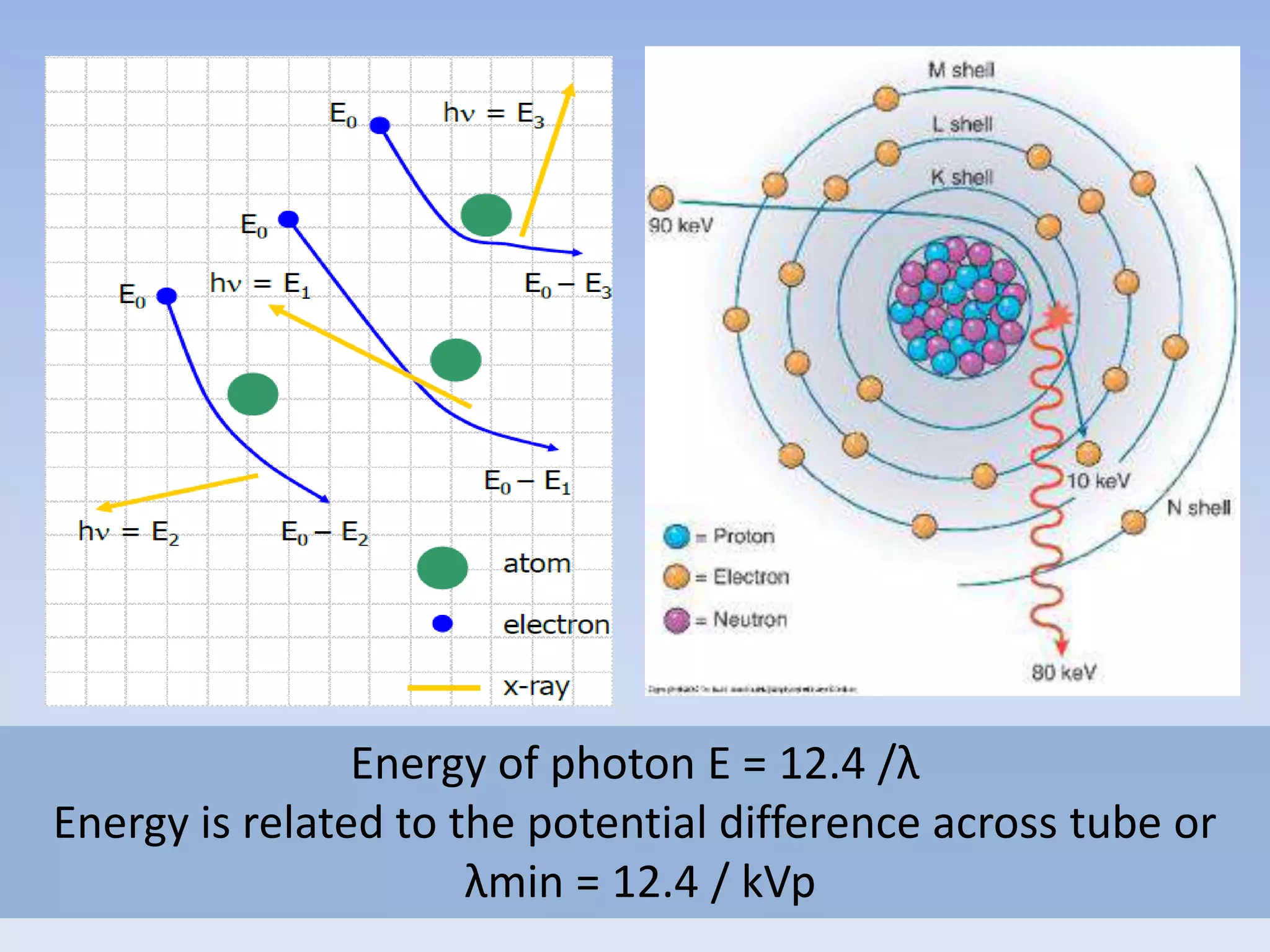
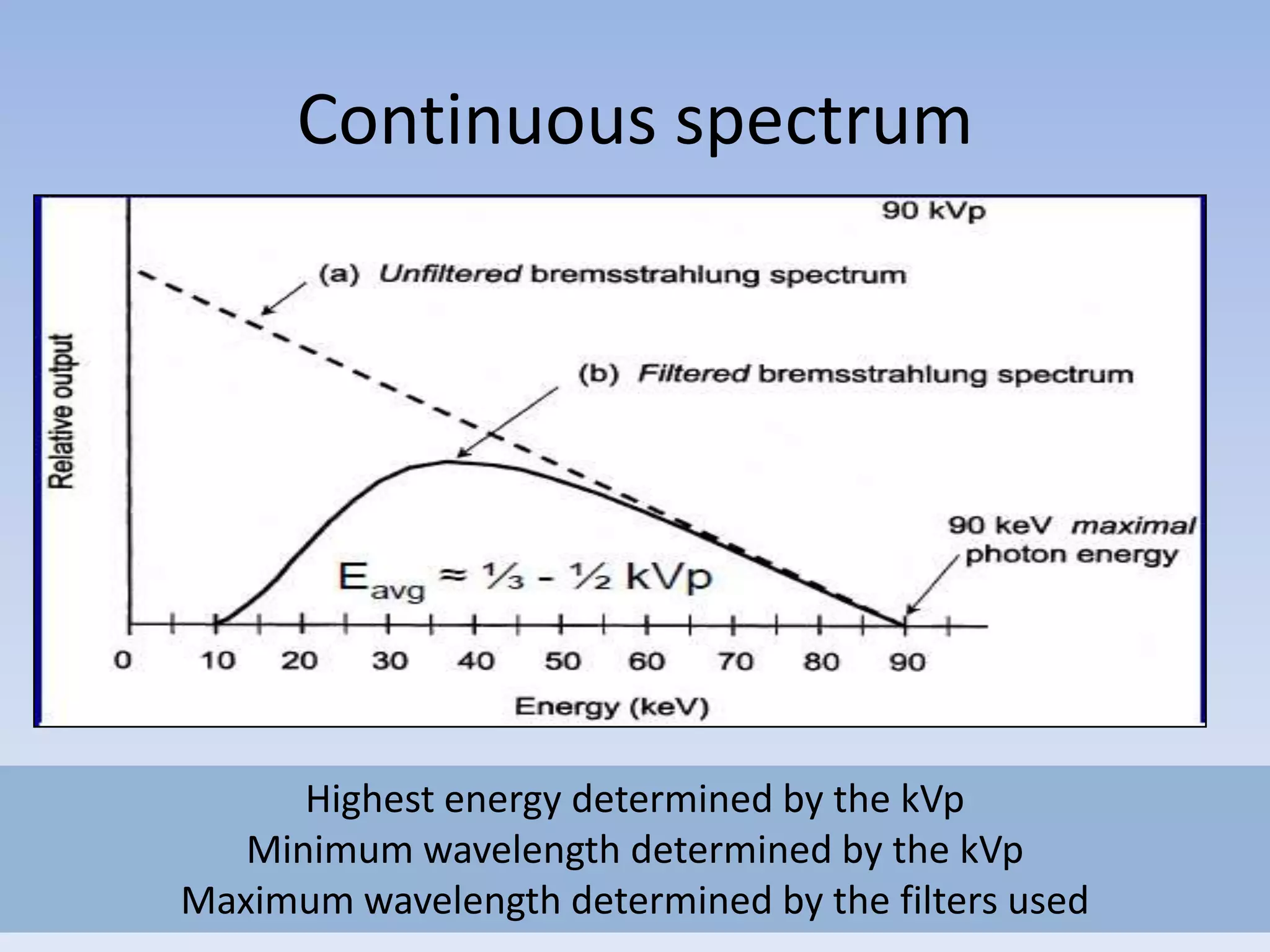
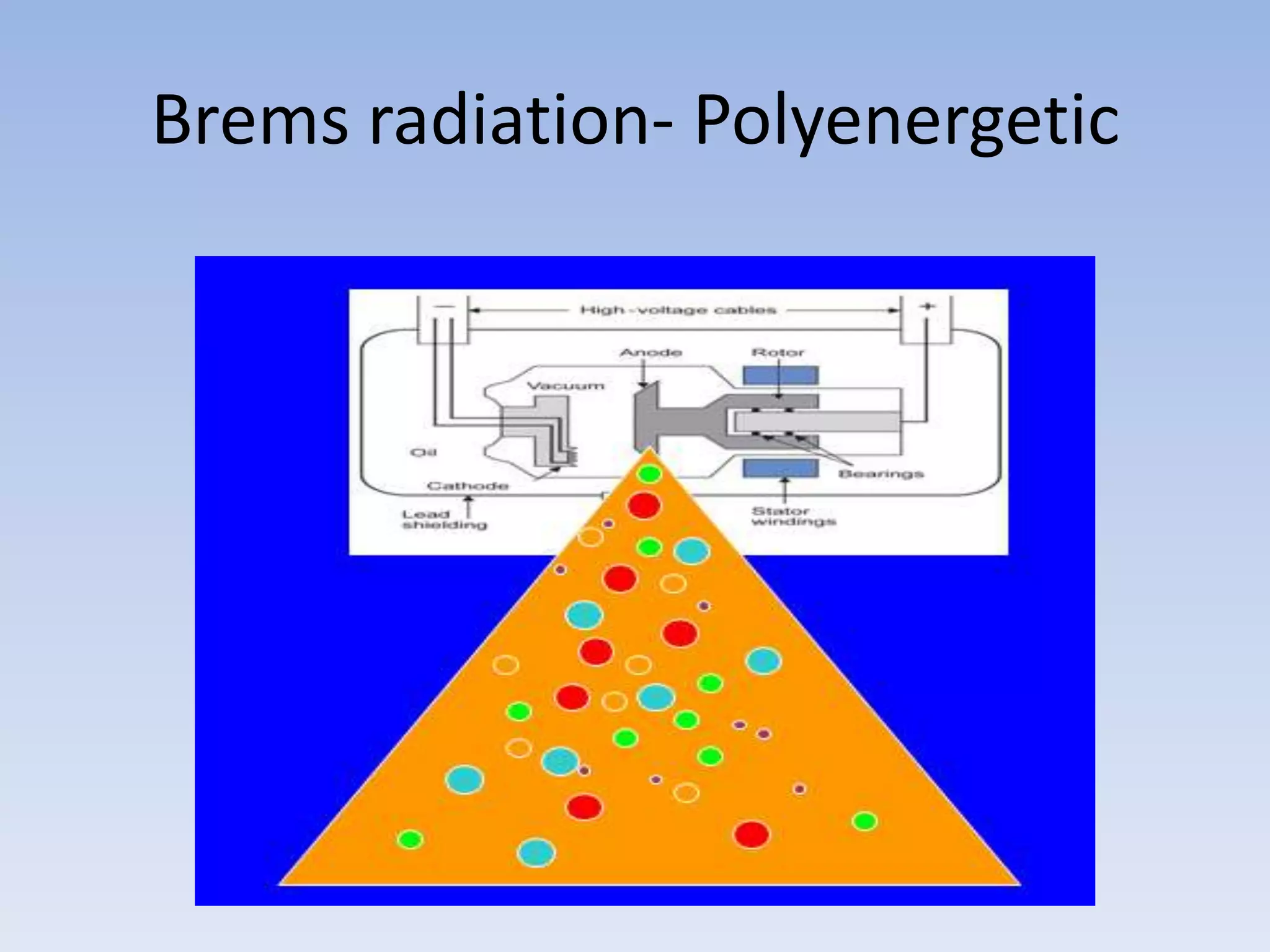
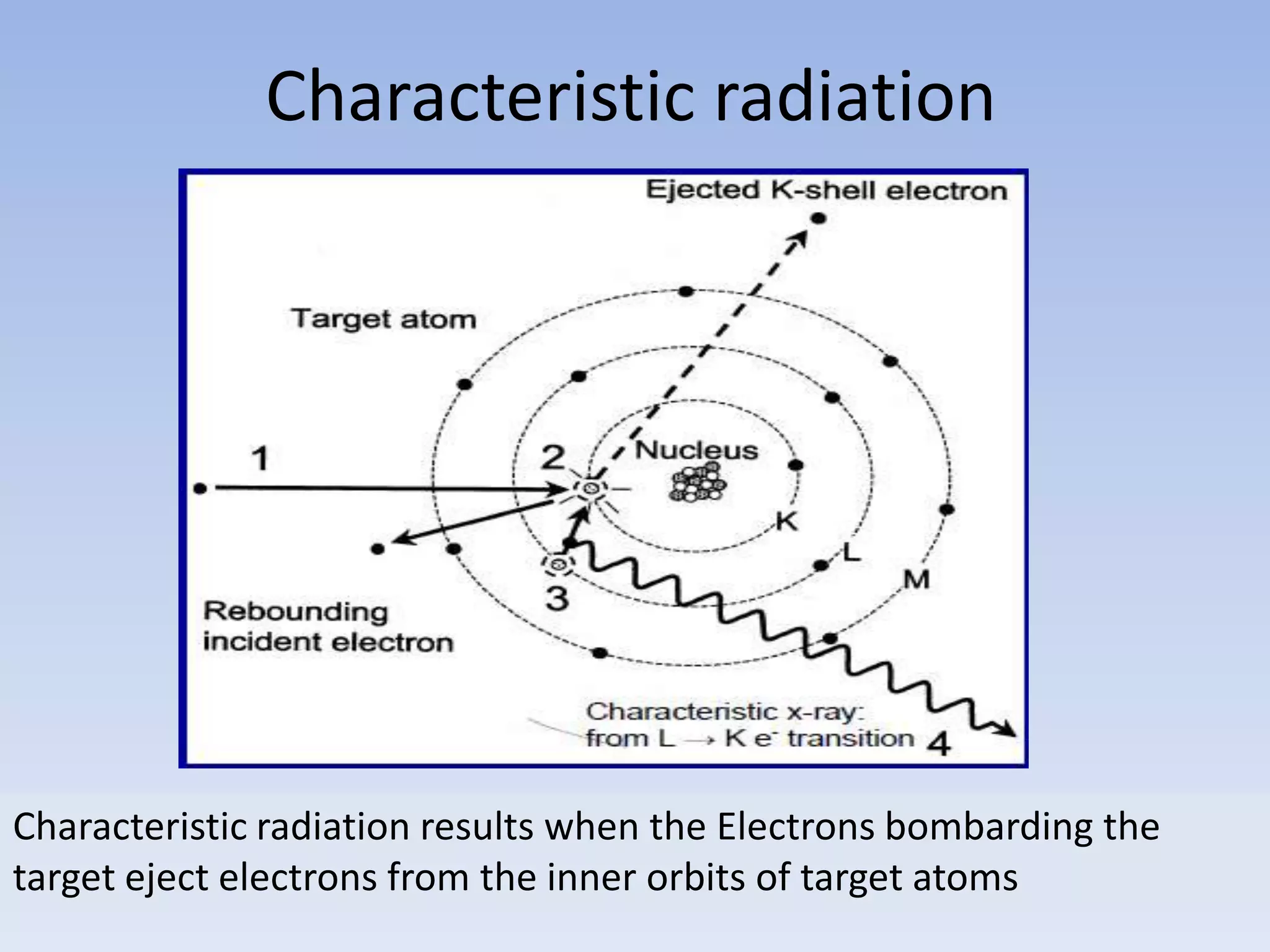
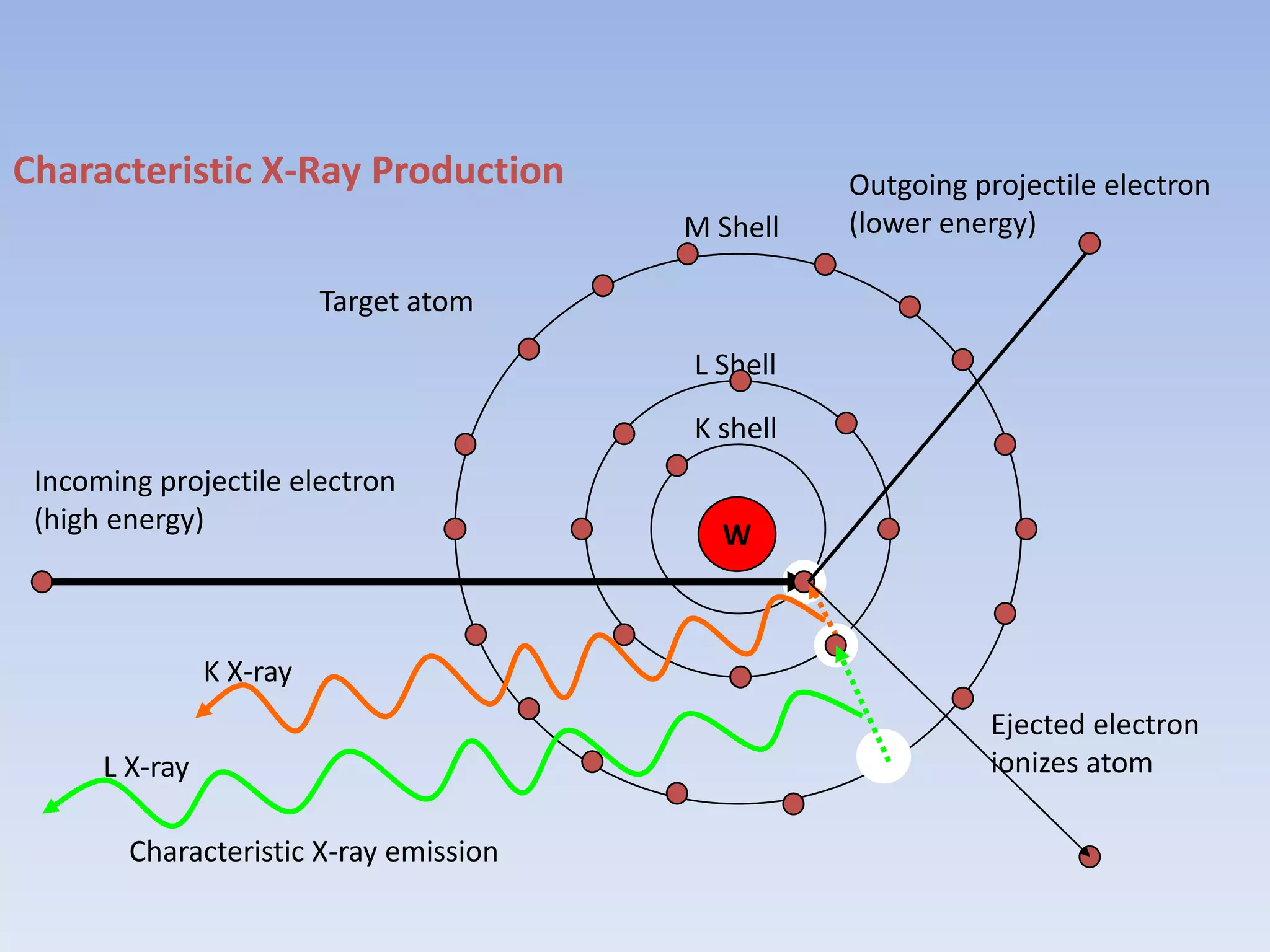
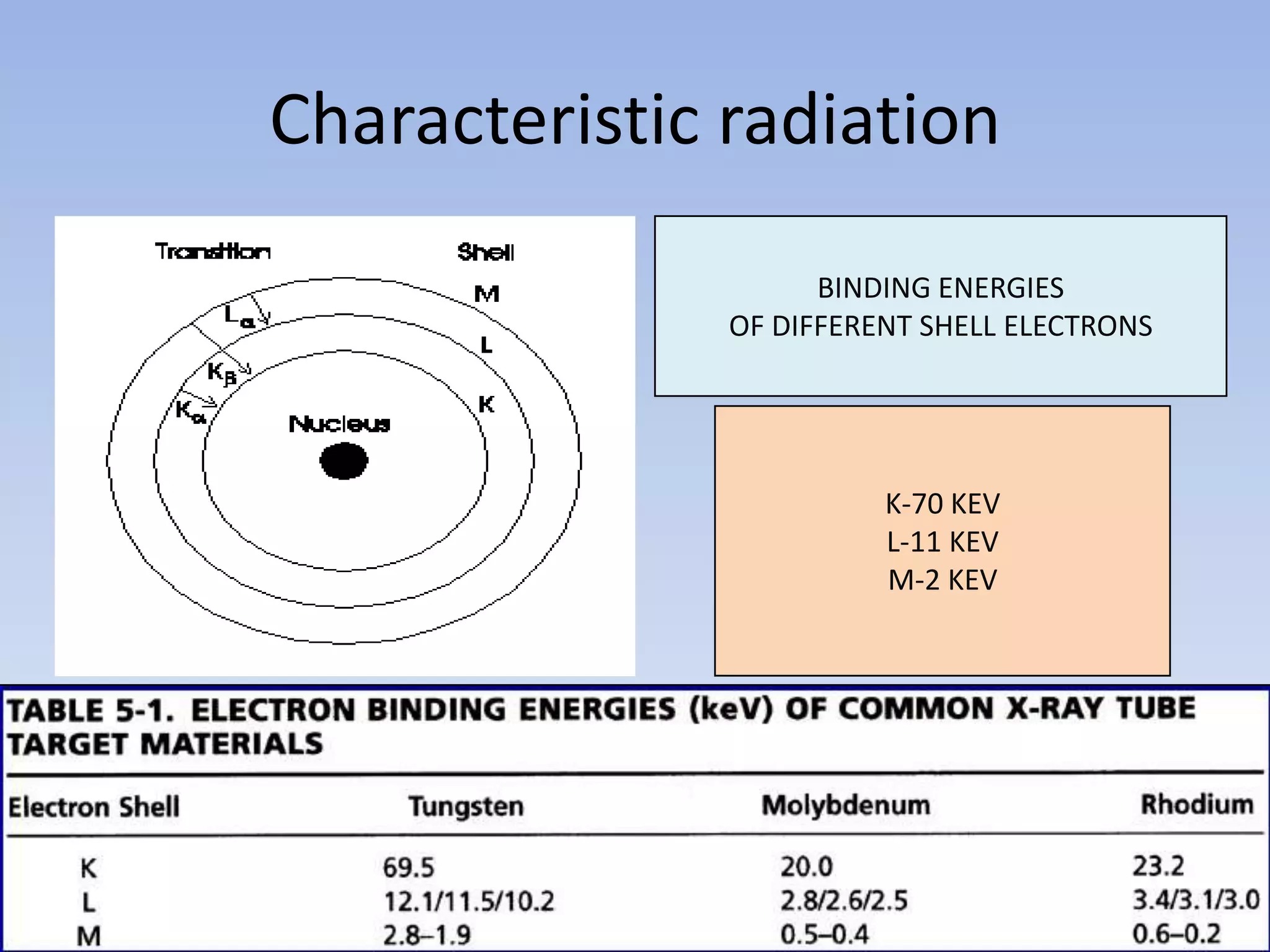
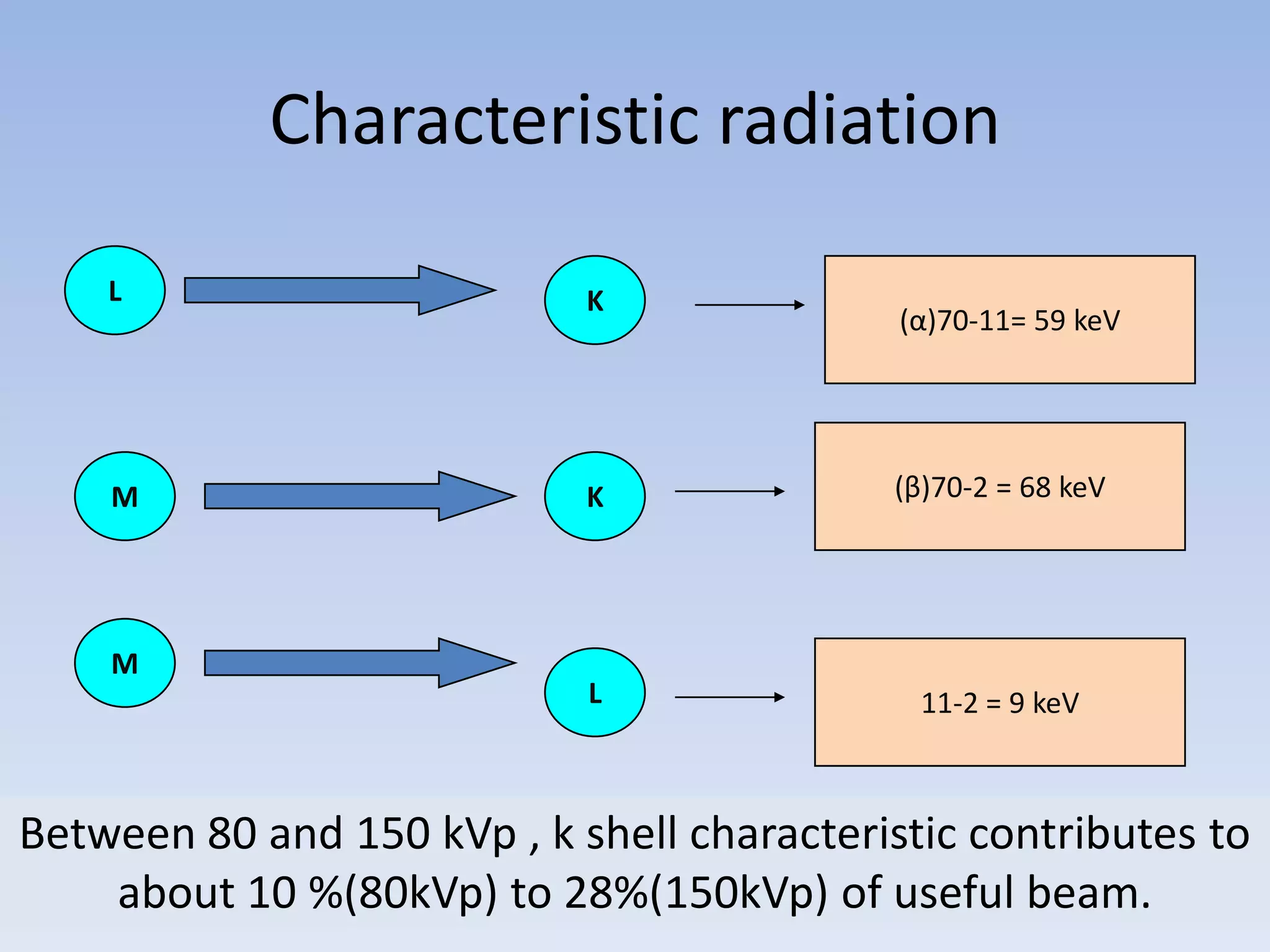
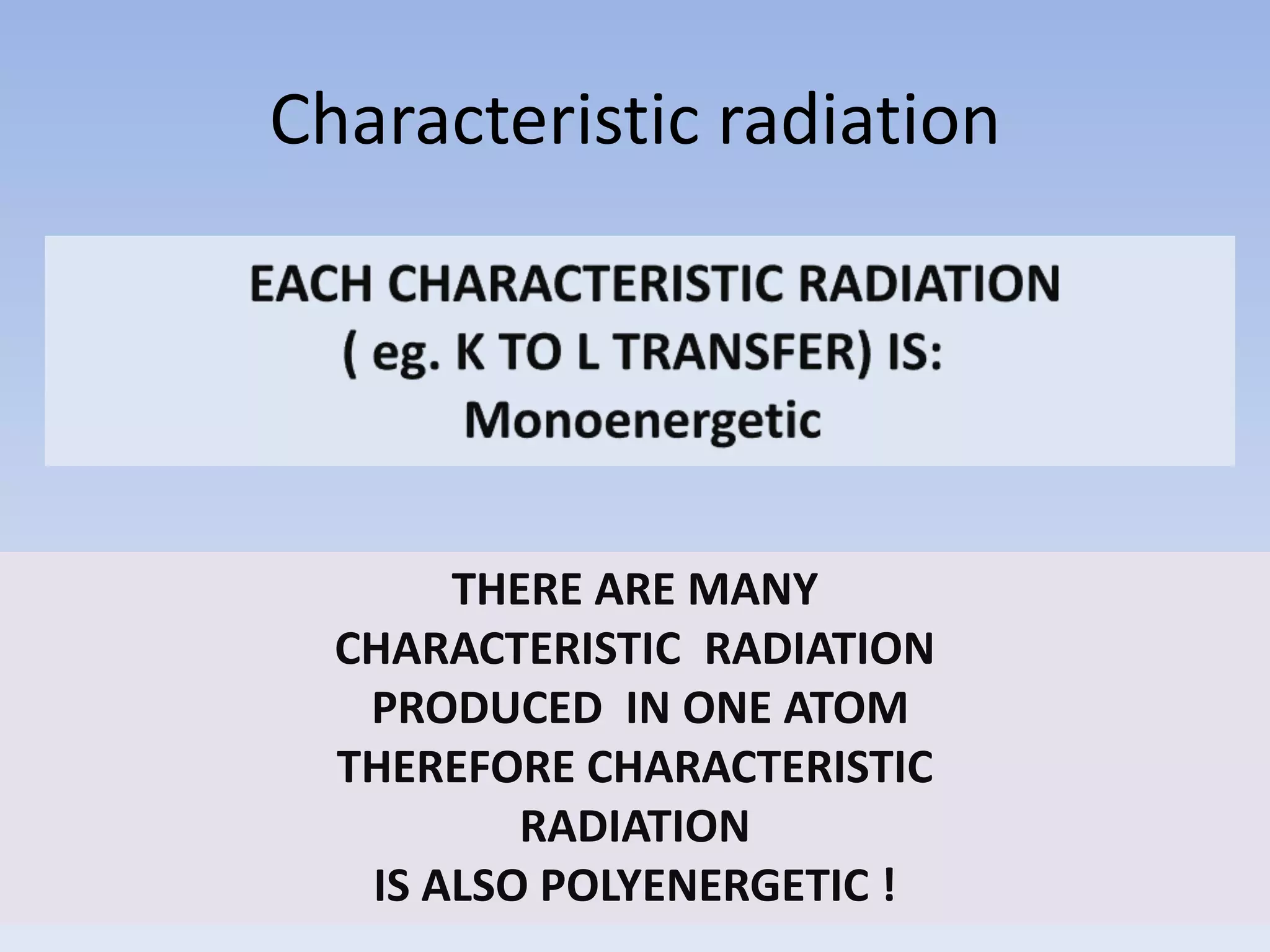
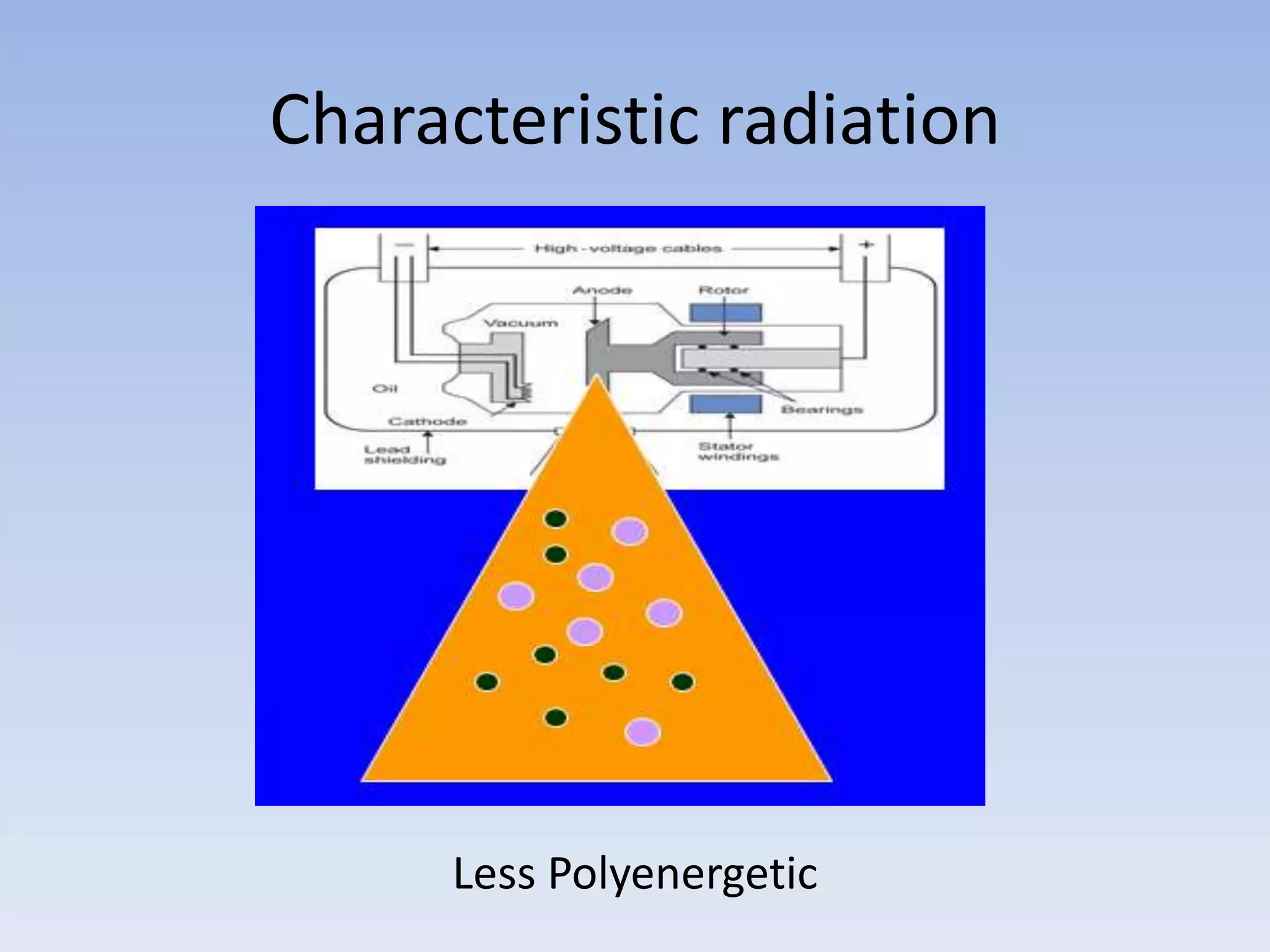
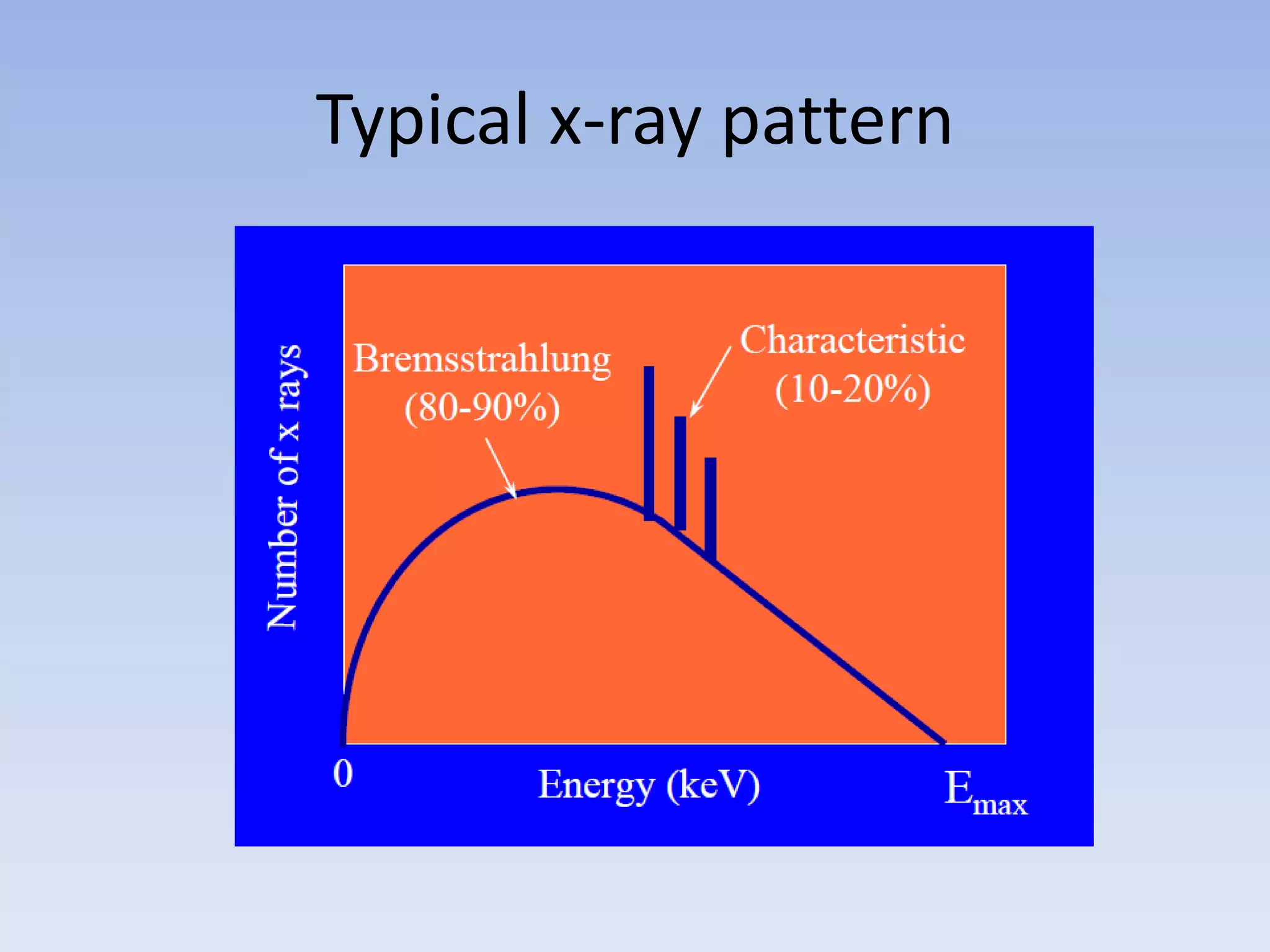
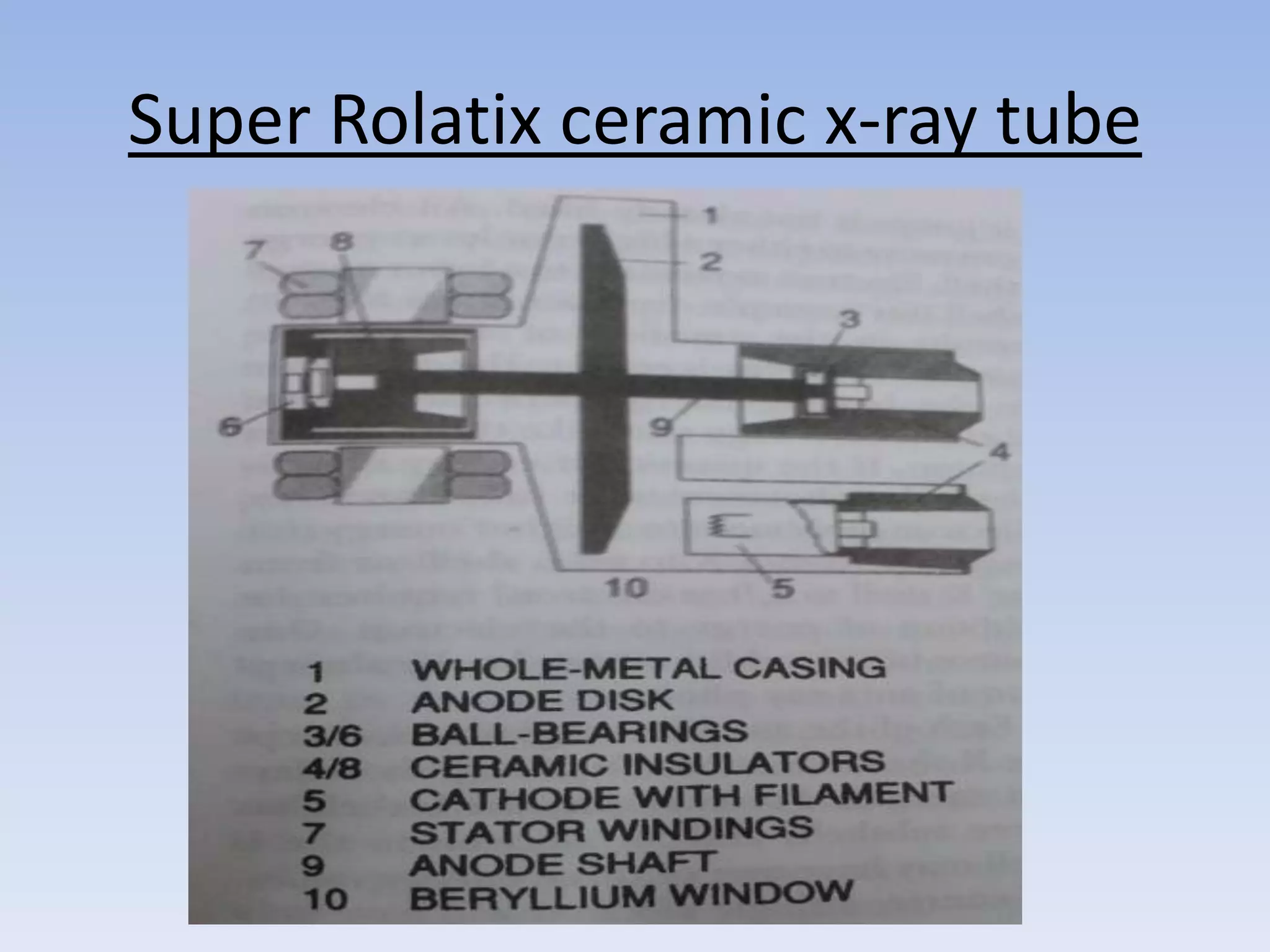
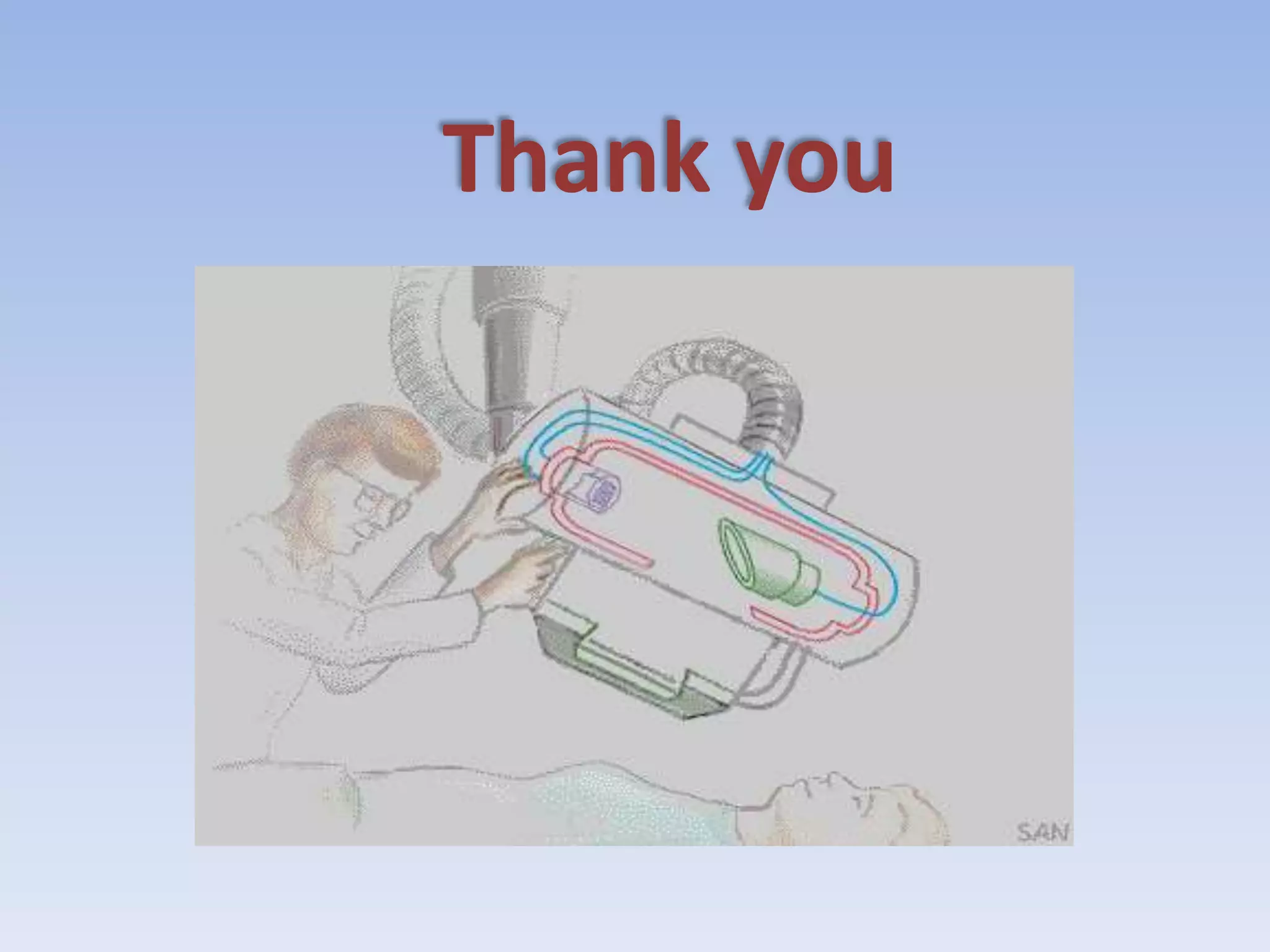
Electromagnetic radiation, including x-rays, is produced when electrons are accelerated and decelerate, such as when they collide with the target material in an x-ray tube. In an x-ray tube, a stream of electrons is emitted from a heated cathode and accelerated toward the anode. When the electrons collide with the anode, they cause the emission of x-rays. This results in a spectrum of x-rays known as bremsstrahlung radiation. Some electrons may also eject inner shell electrons from the anode atoms, producing characteristic x-ray lines. Modern x-ray tubes use a rotating anode to dissipate heat and allow higher outputs.