Sharks have been in the seas for more than 400 millions
years.
Shark are fish that live in seas and oceans around the
world. There are more than 450 different kinds of shark
and they come in many colours , shapes and sizes.
Whale shark
Mako shark
Saw shark
Greenland shark
Blue shark
Tiger shark
Bull shark
Great white shark
Leopard shark
Swell shark
Thresher shark
Hammerhead shark
Sooth hound shark
Jackson shark
Dwarf latern shark
Megalodon shark
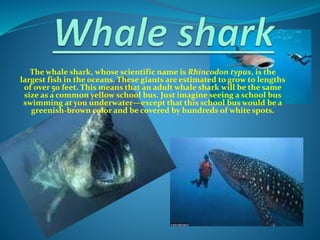
The whale shark, whose scientific name is Rhincodon typus, is the
largest fish in the oceans. These giants are estimated to grow to lengths
of over 50 feet. This means that an adult whale shark will be the same
size as a common yellow school bus. Just imagine seeing a school bus
swimming at you underwater—except that this school bus would be a
greenish-brown color and be covered by hundreds of white spots.
Mako sharks are often hunted for sport since they
aren’t very large. Many trophy hunters want to mount
one of their wall. They are very fast swimmers though
so being able to get one takes a great deal of patience
and skill.
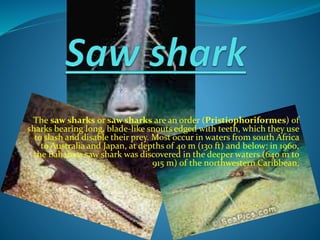
The saw sharks or saw sharks are an order (Pristiophoriformes) of
sharks bearing long, blade-like snouts edged with teeth, which they use
to slash and disable their prey. Most occur in waters from south Africa
to Australia and Japan, at depths of 40 m (130 ft) and below; in 1960,
the Bahamas saw shark was discovered in the deeper waters (640 m to
915 m) of the northwestern Caribbean.
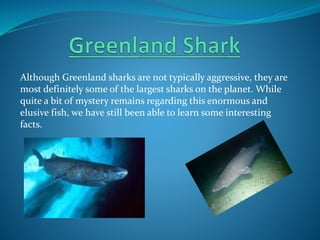
Although Greenland sharks are not typically aggressive, they are
most definitely some of the largest sharks on the planet. While
quite a bit of mystery remains regarding this enormous and
elusive fish, we have still been able to learn some interesting
facts.
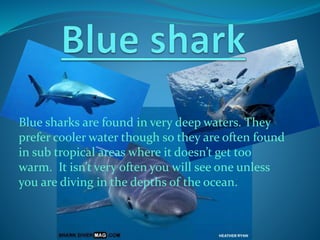
Blue sharks are found in very deep waters. They
prefer cooler water though so they are often found
in sub tropical areas where it doesn’t get too
warm. It isn’t very often you will see one unless
you are diving in the depths of the ocean.
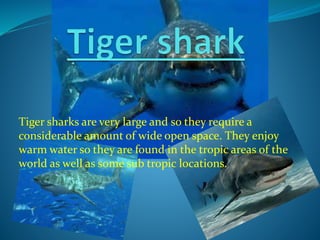
Tiger sharks are very large and so they require a
considerable amount of wide open space. They enjoy
warm water so they are found in the tropic areas of the
world as well as some sub tropic locations.
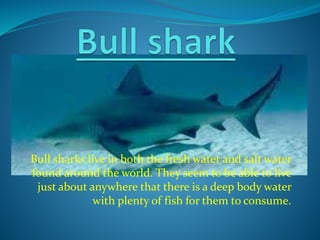
Bull sharks live in both the fresh water and salt water
found around the world. They seem to be able to live
just about anywhere that there is a deep body water
with plenty of fish for them to consume.
The great white shark is one of the most feared in the
world. It is no secret that this is a very aggressive species of
shark. They are known for attacking humans as well so it is
understandable why those who enjoy the open water find
them to be a threat.
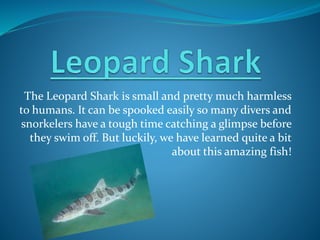
The Leopard Shark is small and pretty much harmless
to humans. It can be spooked easily so many divers and
snorkelers have a tough time catching a glimpse before
they swim off. But luckily, we have learned quite a bit
about this amazing fish!
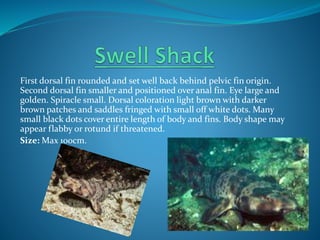
First dorsal fin rounded and set well back behind pelvic fin origin.
Second dorsal fin smaller and positioned over anal fin. Eye large and
golden. Spiracle small. Dorsal coloration light brown with darker
brown patches and saddles fringed with small off white dots. Many
small black dots cover entire length of body and fins. Body shape may
appear flabby or rotund if threatened.
Size: Max 100cm.
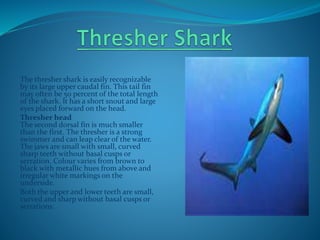
The thresher shark is easily recognizable
by its large upper caudal fin. This tail fin
may often be 50 percent of the total length
of the shark. It has a short snout and large
eyes placed forward on the head.
Thresher head
The second dorsal fin is much smaller
than the first. The thresher is a strong
swimmer and can leap clear of the water.
The jaws are small with small, curved
sharp teeth without basal cusps or
serration. Colour varies from brown to
black with metallic hues from above and
irregular white markings on the
underside.
Both the upper and lower teeth are small,
curved and sharp without basal cusps or
serrations.
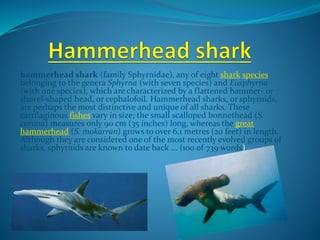
hammerhead shark (family Sphyrnidae), any of eight shark species
belonging to the genera Sphyrna (with seven species) and Eusphyrna
(with one species), which are characterized by a flattened hammer- or
shovel-shaped head, or cephalofoil. Hammerhead sharks, or sphyrnids,
are perhaps the most distinctive and unique of all sharks. These
cartilaginous fishes vary in size; the small scalloped bonnethead (S.
corona) measures only 90 cm (35 inches) long, whereas the great
hammerhead (S. mokarran) grows to over 6.1 metres (20 feet) in length.
Although they are considered one of the most recently evolved groups of
sharks, sphyrnids are known to date back ... (100 of 739 words)
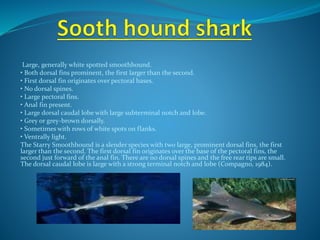
Large, generally white spotted smoothhound.
• Both dorsal fins prominent, the first larger than the second.
• First dorsal fin originates over pectoral bases.
• No dorsal spines.
• Large pectoral fins.
• Anal fin present.
• Large dorsal caudal lobe with large subterminal notch and lobe.
• Grey or grey-brown dorsally.
• Sometimes with rows of white spots on flanks.
• Ventrally light.
The Starry Smoothhound is a slender species with two large, prominent dorsal fins, the first
larger than the second. The first dorsal fin originates over the base of the pectoral fins, the
second just forward of the anal fin. There are no dorsal spines and the free rear tips are small.
The dorsal caudal lobe is large with a strong terminal notch and lobe (Compagno, 1984).
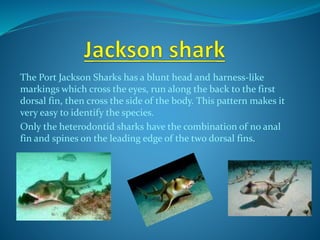
The Port Jackson Sharks has a blunt head and harness-like
markings which cross the eyes, run along the back to the first
dorsal fin, then cross the side of the body. This pattern makes it
very easy to identify the species.
Only the heterodontid sharks have the combination of no anal
fin and spines on the leading edge of the two dorsal fins.
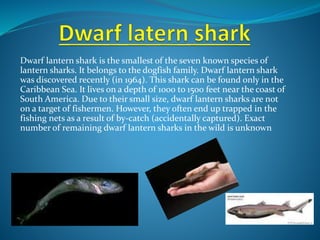
Dwarf lantern shark is the smallest of the seven known species of
lantern sharks. It belongs to the dogfish family. Dwarf lantern shark
was discovered recently (in 1964). This shark can be found only in the
Caribbean Sea. It lives on a depth of 1000 to 1500 feet near the coast of
South America. Due to their small size, dwarf lantern sharks are not
on a target of fishermen. However, they often end up trapped in the
fishing nets as a result of by-catch (accidentally captured). Exact
number of remaining dwarf lantern sharks in the wild is unknown
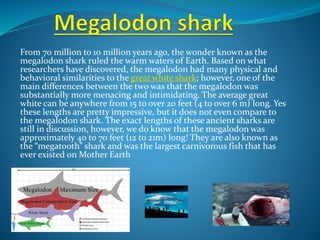
From 70 million to 10 million years ago, the wonder known as the
megalodon shark ruled the warm waters of Earth. Based on what
researchers have discovered, the megalodon had many physical and
behavioral similarities to the great white shark; however, one of the
main differences between the two was that the megalodon was
substantially more menacing and intimidating. The average great
white can be anywhere from 15 to over 20 feet (4 to over 6 m) long. Yes
these lengths are pretty impressive, but it does not even compare to
the megalodon shark. The exact lengths of these ancient sharks are
still in discussion, however, we do know that the megalodon was
approximately 40 to 70 feet (12 to 21m) long! They are also known as
the “megatooth” shark and was the largest carnivorous fish that has
ever existed on Mother Earth

Sharks[1]2,3,4,5,6,7,8,910123456+236

  • 1.
    Sharks have beenin the seas for more than 400 millions years. Shark are fish that live in seas and oceans around the world. There are more than 450 different kinds of shark and they come in many colours , shapes and sizes.
  • 2.
    Whale shark Mako shark Sawshark Greenland shark Blue shark Tiger shark Bull shark Great white shark Leopard shark Swell shark Thresher shark Hammerhead shark Sooth hound shark Jackson shark Dwarf latern shark Megalodon shark
  • 3.
    The whale shark,whose scientific name is Rhincodon typus, is the largest fish in the oceans. These giants are estimated to grow to lengths of over 50 feet. This means that an adult whale shark will be the same size as a common yellow school bus. Just imagine seeing a school bus swimming at you underwater—except that this school bus would be a greenish-brown color and be covered by hundreds of white spots.
  • 4.
    Mako sharks areoften hunted for sport since they aren’t very large. Many trophy hunters want to mount one of their wall. They are very fast swimmers though so being able to get one takes a great deal of patience and skill.
  • 5.
    The saw sharksor saw sharks are an order (Pristiophoriformes) of sharks bearing long, blade-like snouts edged with teeth, which they use to slash and disable their prey. Most occur in waters from south Africa to Australia and Japan, at depths of 40 m (130 ft) and below; in 1960, the Bahamas saw shark was discovered in the deeper waters (640 m to 915 m) of the northwestern Caribbean.
  • 6.
    Although Greenland sharksare not typically aggressive, they are most definitely some of the largest sharks on the planet. While quite a bit of mystery remains regarding this enormous and elusive fish, we have still been able to learn some interesting facts.
  • 7.
    Blue sharks arefound in very deep waters. They prefer cooler water though so they are often found in sub tropical areas where it doesn’t get too warm. It isn’t very often you will see one unless you are diving in the depths of the ocean.
  • 8.
    Tiger sharks arevery large and so they require a considerable amount of wide open space. They enjoy warm water so they are found in the tropic areas of the world as well as some sub tropic locations.
  • 9.
    Bull sharks livein both the fresh water and salt water found around the world. They seem to be able to live just about anywhere that there is a deep body water with plenty of fish for them to consume.
  • 10.
    The great whiteshark is one of the most feared in the world. It is no secret that this is a very aggressive species of shark. They are known for attacking humans as well so it is understandable why those who enjoy the open water find them to be a threat.
  • 11.
    The Leopard Sharkis small and pretty much harmless to humans. It can be spooked easily so many divers and snorkelers have a tough time catching a glimpse before they swim off. But luckily, we have learned quite a bit about this amazing fish!
  • 12.
    First dorsal finrounded and set well back behind pelvic fin origin. Second dorsal fin smaller and positioned over anal fin. Eye large and golden. Spiracle small. Dorsal coloration light brown with darker brown patches and saddles fringed with small off white dots. Many small black dots cover entire length of body and fins. Body shape may appear flabby or rotund if threatened. Size: Max 100cm.
  • 13.
    The thresher sharkis easily recognizable by its large upper caudal fin. This tail fin may often be 50 percent of the total length of the shark. It has a short snout and large eyes placed forward on the head. Thresher head The second dorsal fin is much smaller than the first. The thresher is a strong swimmer and can leap clear of the water. The jaws are small with small, curved sharp teeth without basal cusps or serration. Colour varies from brown to black with metallic hues from above and irregular white markings on the underside. Both the upper and lower teeth are small, curved and sharp without basal cusps or serrations.
  • 14.
    hammerhead shark (familySphyrnidae), any of eight shark species belonging to the genera Sphyrna (with seven species) and Eusphyrna (with one species), which are characterized by a flattened hammer- or shovel-shaped head, or cephalofoil. Hammerhead sharks, or sphyrnids, are perhaps the most distinctive and unique of all sharks. These cartilaginous fishes vary in size; the small scalloped bonnethead (S. corona) measures only 90 cm (35 inches) long, whereas the great hammerhead (S. mokarran) grows to over 6.1 metres (20 feet) in length. Although they are considered one of the most recently evolved groups of sharks, sphyrnids are known to date back ... (100 of 739 words)
  • 15.
    Large, generally whitespotted smoothhound. • Both dorsal fins prominent, the first larger than the second. • First dorsal fin originates over pectoral bases. • No dorsal spines. • Large pectoral fins. • Anal fin present. • Large dorsal caudal lobe with large subterminal notch and lobe. • Grey or grey-brown dorsally. • Sometimes with rows of white spots on flanks. • Ventrally light. The Starry Smoothhound is a slender species with two large, prominent dorsal fins, the first larger than the second. The first dorsal fin originates over the base of the pectoral fins, the second just forward of the anal fin. There are no dorsal spines and the free rear tips are small. The dorsal caudal lobe is large with a strong terminal notch and lobe (Compagno, 1984).
  • 16.
    The Port JacksonSharks has a blunt head and harness-like markings which cross the eyes, run along the back to the first dorsal fin, then cross the side of the body. This pattern makes it very easy to identify the species. Only the heterodontid sharks have the combination of no anal fin and spines on the leading edge of the two dorsal fins.
  • 17.
    Dwarf lantern sharkis the smallest of the seven known species of lantern sharks. It belongs to the dogfish family. Dwarf lantern shark was discovered recently (in 1964). This shark can be found only in the Caribbean Sea. It lives on a depth of 1000 to 1500 feet near the coast of South America. Due to their small size, dwarf lantern sharks are not on a target of fishermen. However, they often end up trapped in the fishing nets as a result of by-catch (accidentally captured). Exact number of remaining dwarf lantern sharks in the wild is unknown
  • 18.
    From 70 millionto 10 million years ago, the wonder known as the megalodon shark ruled the warm waters of Earth. Based on what researchers have discovered, the megalodon had many physical and behavioral similarities to the great white shark; however, one of the main differences between the two was that the megalodon was substantially more menacing and intimidating. The average great white can be anywhere from 15 to over 20 feet (4 to over 6 m) long. Yes these lengths are pretty impressive, but it does not even compare to the megalodon shark. The exact lengths of these ancient sharks are still in discussion, however, we do know that the megalodon was approximately 40 to 70 feet (12 to 21m) long! They are also known as the “megatooth” shark and was the largest carnivorous fish that has ever existed on Mother Earth