Shark Evolution
Mathieu Noe
Shark Evolution
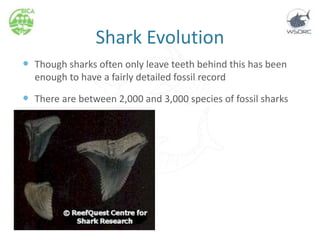
 Though sharks often only leave teeth behind this has been
enough to have a fairly detailed fossil record
 There are between 2,000 and 3,000 species of fossil sharks
Shark Teeth
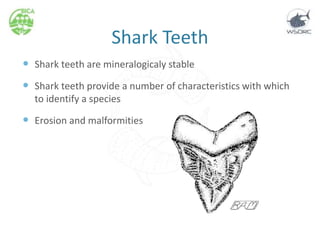
 Shark teeth are mineralogicaly stable
 Shark teeth provide a number of characteristics with which
to identify a species
 Erosion and malformities
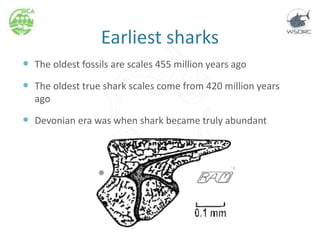
Earliest sharks
 The oldest fossils are scales 455 million years ago
 The oldest true shark scales come from 420 million years
ago
 Devonian era was when shark became truly abundant
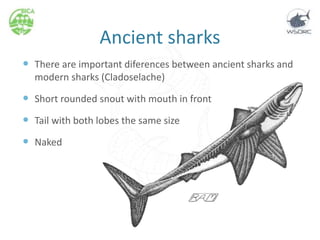
Ancient sharks
 There are important diferences between ancient sharks and
modern sharks (Cladoselache)
 Short rounded snout with mouth in front
 Tail with both lobes the same size
 Naked
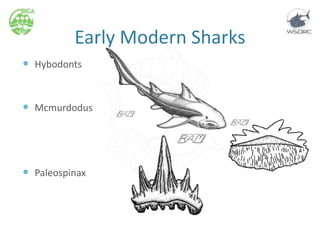
Early Modern Sharks
 Hybodonts
 Mcmurdodus
 Paleospinax
Neoselachians
 100 million years ago
 Expansion of ray fined fishes
 Expansion of higher teleost
 Predominantly near shore predators
 Expanded to a variety of different habitats
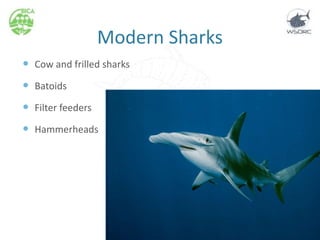
Modern Sharks
 Cow and frilled sharks
 Batoids
 Filter feeders
 Hammerheads
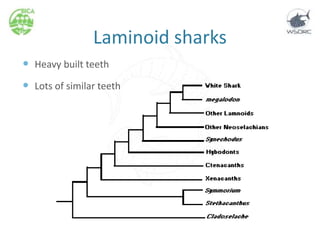
Laminoid sharks
 Heavy built teeth
 Lots of similar teeth
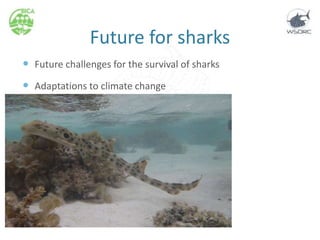
Future for sharks
 Future challenges for the survival of sharks
 Adaptations to climate change

Shark evolution

  • 1.
  • 2.
    Shark Evolution  Thoughsharks often only leave teeth behind this has been enough to have a fairly detailed fossil record  There are between 2,000 and 3,000 species of fossil sharks
  • 3.
    Shark Teeth  Sharkteeth are mineralogicaly stable  Shark teeth provide a number of characteristics with which to identify a species  Erosion and malformities
  • 4.
    Earliest sharks  Theoldest fossils are scales 455 million years ago  The oldest true shark scales come from 420 million years ago  Devonian era was when shark became truly abundant
  • 5.
    Ancient sharks  Thereare important diferences between ancient sharks and modern sharks (Cladoselache)  Short rounded snout with mouth in front  Tail with both lobes the same size  Naked
  • 6.
    Early Modern Sharks Hybodonts  Mcmurdodus  Paleospinax
  • 7.
    Neoselachians  100 millionyears ago  Expansion of ray fined fishes  Expansion of higher teleost  Predominantly near shore predators  Expanded to a variety of different habitats
  • 8.
    Modern Sharks  Cowand frilled sharks  Batoids  Filter feeders  Hammerheads
  • 9.
    Laminoid sharks  Heavybuilt teeth  Lots of similar teeth
  • 10.
    Future for sharks Future challenges for the survival of sharks  Adaptations to climate change

Editor's Notes

  • #3 Dinos have only around 900 fossils
  • #6 Shark characteristics: jaws, replaceble teeth, tooth-like scales, paired fins, internal fertilization cartilogionous fertilization