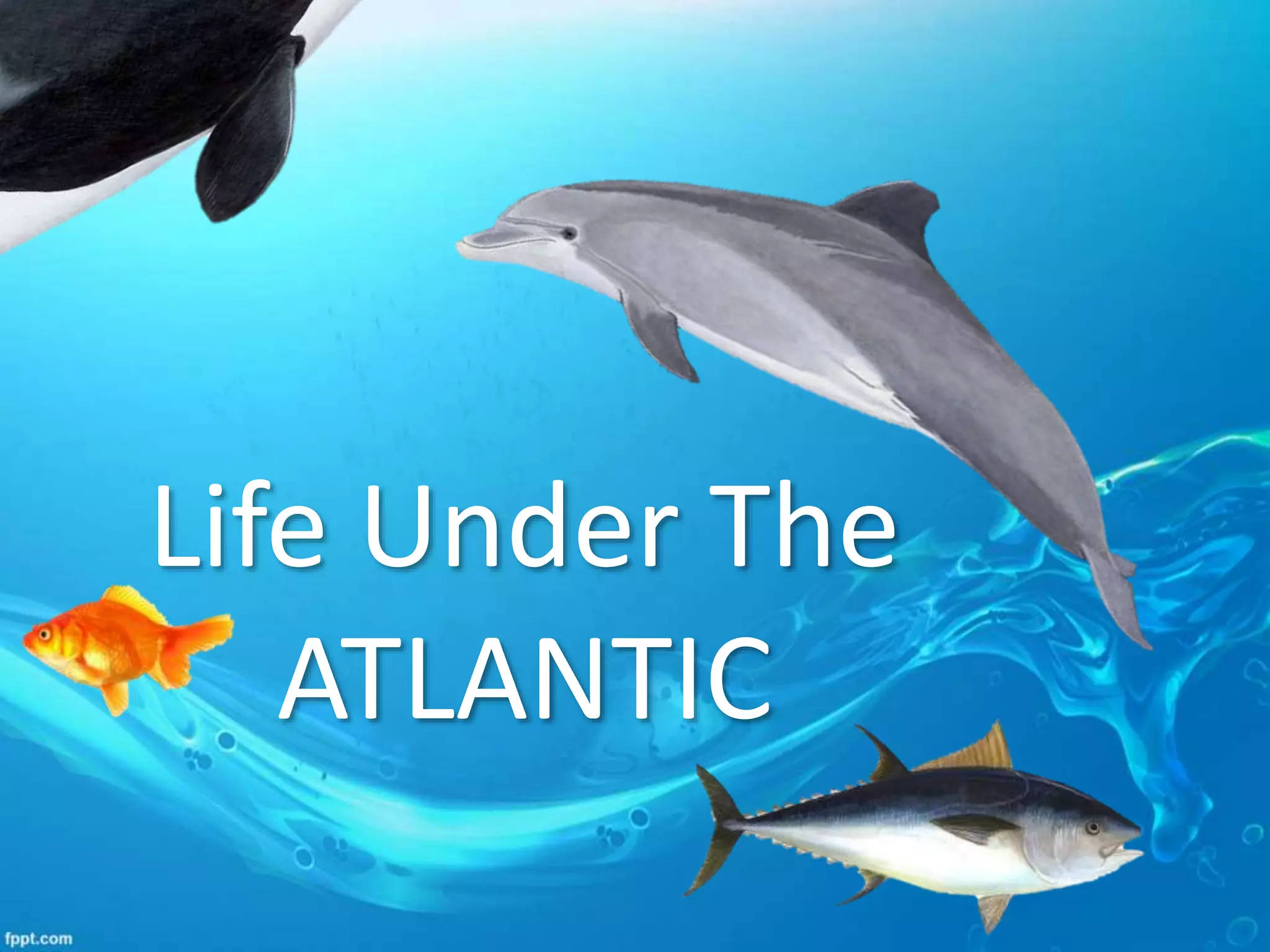
Life Under The
ATLANTIC
Animals living under the Atlantic ocean.
1. Lemon Shark
2. King Penguin
3. Seahorse
4. Killer Shark
5. Walrus
6. Narwhal
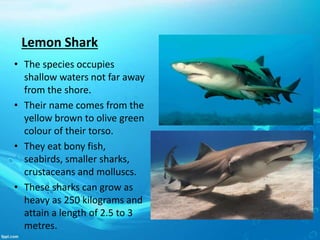
Lemon Shark
• The species occupies
shallow waters not far away
from the shore.
• Their name comes from the
yellow brown to olive green
colour of their torso.
• They eat bony fish,
seabirds, smaller sharks,
crustaceans and molluscs.
• These sharks can grow as
heavy as 250 kilograms and
attain a length of 2.5 to 3
metres.
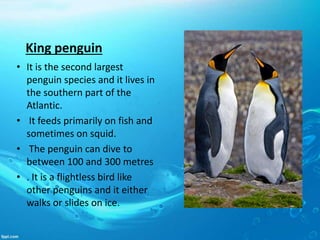
King penguin
• It is the second largest
penguin species and it lives in
the southern part of the
Atlantic.
• It feeds primarily on fish and
sometimes on squid.
• The penguin can dive to
between 100 and 300 metres
• . It is a flightless bird like
other penguins and it either
walks or slides on ice.
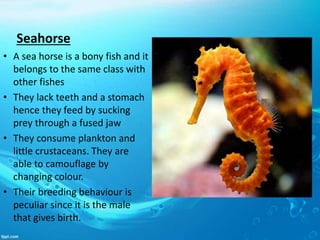
Seahorse
• A sea horse is a bony fish and it
belongs to the same class with
other fishes
• They lack teeth and a stomach
hence they feed by sucking
prey through a fused jaw
• They consume plankton and
little crustaceans. They are
able to camouflage by
changing colour.
• Their breeding behaviour is
peculiar since it is the male
that gives birth.
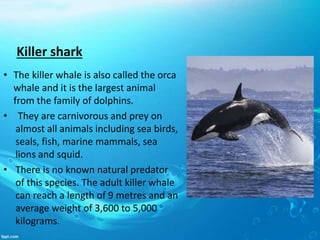
Killer shark
• The killer whale is also called the orca
whale and it is the largest animal
from the family of dolphins.
• They are carnivorous and prey on
almost all animals including sea birds,
seals, fish, marine mammals, sea
lions and squid.
• There is no known natural predator
of this species. The adult killer whale
can reach a length of 9 metres and an
average weight of 3,600 to 5,000
kilograms.
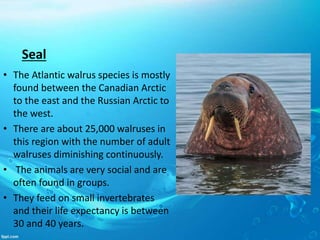
Seal
• The Atlantic walrus species is mostly
found between the Canadian Arctic
to the east and the Russian Arctic to
the west.
• There are about 25,000 walruses in
this region with the number of adult
walruses diminishing continuously.
• The animals are very social and are
often found in groups.
• They feed on small invertebrates
and their life expectancy is between
30 and 40 years.
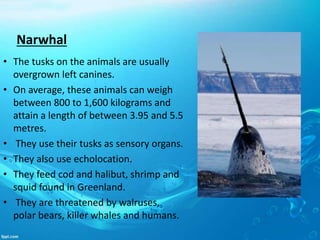
Narwhal
• The tusks on the animals are usually
overgrown left canines.
• On average, these animals can weigh
between 800 to 1,600 kilograms and
attain a length of between 3.95 and 5.5
metres.
• They use their tusks as sensory organs.
• They also use echolocation.
• They feed cod and halibut, shrimp and
squid found in Greenland.
• They are threatened by walruses,
polar bears, killer whales and humans.
Animals living under the Atlantic ocean.
1. Kelp
2. Phytoplankton
3. Sea grass
4. Thong weed
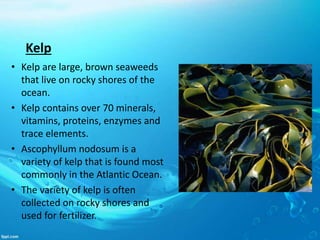
Kelp
• Kelp are large, brown seaweeds
that live on rocky shores of the
ocean.
• Kelp contains over 70 minerals,
vitamins, proteins, enzymes and
trace elements.
• Ascophyllum nodosum is a
variety of kelp that is found most
commonly in the Atlantic Ocean.
• The variety of kelp is often
collected on rocky shores and
used for fertilizer.
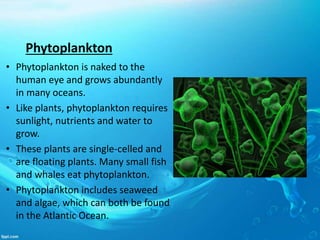
Phytoplankton
• Phytoplankton is naked to the
human eye and grows abundantly
in many oceans.
• Like plants, phytoplankton requires
sunlight, nutrients and water to
grow.
• These plants are single-celled and
are floating plants. Many small fish
and whales eat phytoplankton.
• Phytoplankton includes seaweed
and algae, which can both be found
in the Atlantic Ocean.
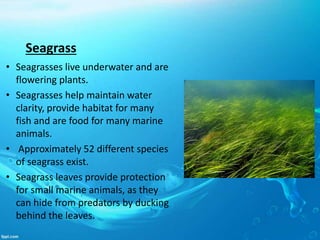
Seagrass
• Seagrasses live underwater and are
flowering plants.
• Seagrasses help maintain water
clarity, provide habitat for many
fish and are food for many marine
animals.
• Approximately 52 different species
of seagrass exist.
• Seagrass leaves provide protection
for small marine animals, as they
can hide from predators by ducking
behind the leaves.
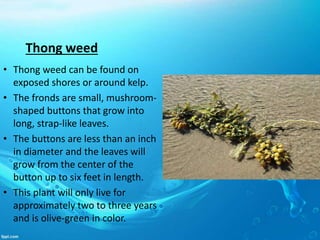
Thong weed
• Thong weed can be found on
exposed shores or around kelp.
• The fronds are small, mushroom-
shaped buttons that grow into
long, strap-like leaves.
• The buttons are less than an inch
in diameter and the leaves will
grow from the center of the
button up to six feet in length.
• This plant will only live for
approximately two to three years
and is olive-green in color.
Thank you

Life under the atlantic ocean

  • 1.
  • 2.
    Animals living underthe Atlantic ocean. 1. Lemon Shark 2. King Penguin 3. Seahorse 4. Killer Shark 5. Walrus 6. Narwhal
  • 3.
    Lemon Shark • Thespecies occupies shallow waters not far away from the shore. • Their name comes from the yellow brown to olive green colour of their torso. • They eat bony fish, seabirds, smaller sharks, crustaceans and molluscs. • These sharks can grow as heavy as 250 kilograms and attain a length of 2.5 to 3 metres.
  • 4.
    King penguin • Itis the second largest penguin species and it lives in the southern part of the Atlantic. • It feeds primarily on fish and sometimes on squid. • The penguin can dive to between 100 and 300 metres • . It is a flightless bird like other penguins and it either walks or slides on ice.
  • 5.
    Seahorse • A seahorse is a bony fish and it belongs to the same class with other fishes • They lack teeth and a stomach hence they feed by sucking prey through a fused jaw • They consume plankton and little crustaceans. They are able to camouflage by changing colour. • Their breeding behaviour is peculiar since it is the male that gives birth.
  • 6.
    Killer shark • Thekiller whale is also called the orca whale and it is the largest animal from the family of dolphins. • They are carnivorous and prey on almost all animals including sea birds, seals, fish, marine mammals, sea lions and squid. • There is no known natural predator of this species. The adult killer whale can reach a length of 9 metres and an average weight of 3,600 to 5,000 kilograms.
  • 7.
    Seal • The Atlanticwalrus species is mostly found between the Canadian Arctic to the east and the Russian Arctic to the west. • There are about 25,000 walruses in this region with the number of adult walruses diminishing continuously. • The animals are very social and are often found in groups. • They feed on small invertebrates and their life expectancy is between 30 and 40 years.
  • 8.
    Narwhal • The tuskson the animals are usually overgrown left canines. • On average, these animals can weigh between 800 to 1,600 kilograms and attain a length of between 3.95 and 5.5 metres. • They use their tusks as sensory organs. • They also use echolocation. • They feed cod and halibut, shrimp and squid found in Greenland. • They are threatened by walruses, polar bears, killer whales and humans.
  • 9.
    Animals living underthe Atlantic ocean. 1. Kelp 2. Phytoplankton 3. Sea grass 4. Thong weed
  • 10.
    Kelp • Kelp arelarge, brown seaweeds that live on rocky shores of the ocean. • Kelp contains over 70 minerals, vitamins, proteins, enzymes and trace elements. • Ascophyllum nodosum is a variety of kelp that is found most commonly in the Atlantic Ocean. • The variety of kelp is often collected on rocky shores and used for fertilizer.
  • 11.
    Phytoplankton • Phytoplankton isnaked to the human eye and grows abundantly in many oceans. • Like plants, phytoplankton requires sunlight, nutrients and water to grow. • These plants are single-celled and are floating plants. Many small fish and whales eat phytoplankton. • Phytoplankton includes seaweed and algae, which can both be found in the Atlantic Ocean.
  • 12.
    Seagrass • Seagrasses liveunderwater and are flowering plants. • Seagrasses help maintain water clarity, provide habitat for many fish and are food for many marine animals. • Approximately 52 different species of seagrass exist. • Seagrass leaves provide protection for small marine animals, as they can hide from predators by ducking behind the leaves.
  • 13.
    Thong weed • Thongweed can be found on exposed shores or around kelp. • The fronds are small, mushroom- shaped buttons that grow into long, strap-like leaves. • The buttons are less than an inch in diameter and the leaves will grow from the center of the button up to six feet in length. • This plant will only live for approximately two to three years and is olive-green in color.
  • 14.