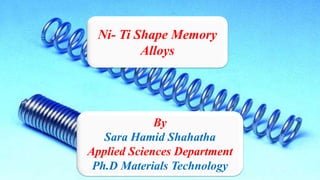




Ni- Ti Shape Memory
Alloys
By
Sara Hamid Shahatha
Applied Sciences Department
Ph.D Materials Technology
Out lines
What is SMA
Advantages, disadvantages
and properties
Manufacturing
Application
Shape Memory Alloys
Metals that can be deformed at one temperature but
when heated or cooled, return to their “Original”
shape
Shape memory materials have two phases, stable
at low and high temperatures
Shape memory alloys exhibit two unique
properties, known as the shape memory effect and
super elasticity.
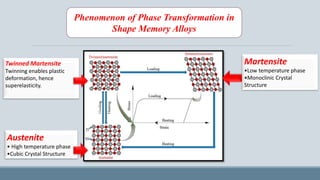
Phenomenon of Phase Transformation in
Shape Memory Alloys
Austenite
• High temperature phase
•Cubic Crystal Structure
Martensite
•Low temperature phase
•Monoclinic Crystal
Structure
Twinned Martensite
Twinning enables plastic
deformation, hence
superelasticity.
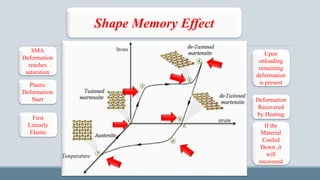
Shape Memory Effect
First
Linearly
Elastic
Plastic
Deformation
Start
SMA
Deformation
reaches
saturation
Deformation
Recovered
by Heating
Upon
unloading
remaining
deformation
is present
If the
Material
Cooled
Down ,it
will
recovered
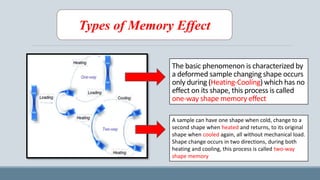
Types of Memory Effect
The basic phenomenon is characterized by
a deformed sample changing shape occurs
only during (Heating-Cooling) which has no
effect on its shape, this process is called
one-way shape memory effect
A sample can have one shape when cold, change to a
second shape when heated and returns, to its original
shape when cooled again, all without mechanical load.
Shape change occurs in two directions, during both
heating and cooling, this process is called two-way
shape memory
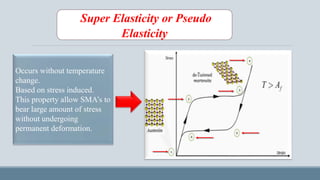
Super Elasticity or Pseudo
Elasticity
Occurs without temperature
change.
Based on stress induced.
This property allow SMA’s to
bear large amount of stress
without undergoing
permanent deformation.
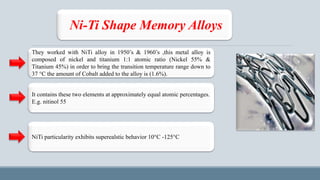
Ni-Ti Shape Memory Alloys
They worked with NiTi alloy in 1950’s & 1960’s ,this metal alloy is
composed of nickel and titanium 1:1 atomic ratio (Nickel 55% &
Titanium 45%) in order to bring the transition temperature range down to
37 °C the amount of Cobalt added to the alloy is (1.6%).
It contains these two elements at approximately equal atomic percentages.
E.g. nitinol 55
NiTi particularity exhibits superealstic behavior 10°C -125°C
Advantages & Disadvantages of
Shape Memory Alloys
Advantages
1. High power / weight
ratio
2. High corrosion
resistance
3. Can be electrically
controlled
Advantages & Disadvantages of
Shape Memory Alloys
Disadvantages
1.Has poor fatigue
properties
2. Highly expensive
Properties of Shape Memory
Alloys
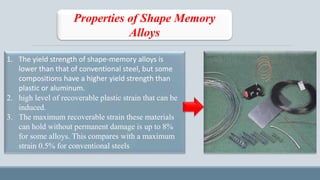
1. The yield strength of shape-memory alloys is
lower than that of conventional steel, but some
compositions have a higher yield strength than
plastic or aluminum.
2. high level of recoverable plastic strain that can be
induced.
3. The maximum recoverable strain these materials
can hold without permanent damage is up to 8%
for some alloys. This compares with a maximum
strain 0.5% for conventional steels
Manufacture of Shape Memory
Alloys
By Casting Using Arc
Vacuum Melting
Using electromagnetic
induction to melt
material in vacuum.
Electro induction
generates eddy current
in the alloy.
Eddy current generated
heats and melts the
alloy.
Application of Shape Memory
Alloys
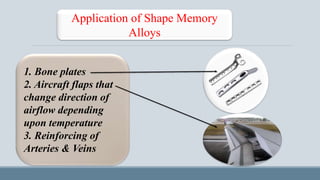
1. Bone plates
2. Aircraft flaps that
change direction of
airflow depending
upon temperature
3. Reinforcing of
Arteries & Veins
Application of Shape Memory
Alloys
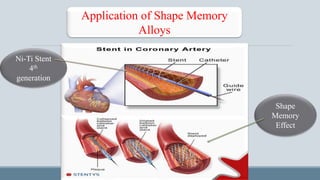
Shape
Memory
Effect
Ni-Ti Stent
4th
generation
Types of Shape Memory Alloys
Alloys of metals having the memory effect at different
temperatures and at different percentages of its solid
solution contents:
1. Cu-Zn-Al
2. Cu-Al-Ni
3. Ni-Ti (50 at.% Ti, nitinol, which
stands for Nickel Titanium Naval
Ordinance Laboratory)
Conclusion
SMA’s have the potential to be used
effectively in advanced application like
medicine, aircraft and aerospace.
The high cost of SMAs is a major
limiting factor for its wider use in the
construction industry,.
Their ability to allow the development of
smart structures with active control of
strength and stiffness and ability of self-
healing and self-repairing opens the door
for exciting opportunities, making them
the construction material of the future.
shape memory alloys

shape memory alloys

  • 1.
    Ni- Ti ShapeMemory Alloys By Sara Hamid Shahatha Applied Sciences Department Ph.D Materials Technology
  • 2.
    Out lines What isSMA Advantages, disadvantages and properties Manufacturing Application
  • 3.
    Shape Memory Alloys Metalsthat can be deformed at one temperature but when heated or cooled, return to their “Original” shape Shape memory materials have two phases, stable at low and high temperatures Shape memory alloys exhibit two unique properties, known as the shape memory effect and super elasticity.
  • 4.
    Phenomenon of PhaseTransformation in Shape Memory Alloys Austenite • High temperature phase •Cubic Crystal Structure Martensite •Low temperature phase •Monoclinic Crystal Structure Twinned Martensite Twinning enables plastic deformation, hence superelasticity.
  • 5.
    Shape Memory Effect First Linearly Elastic Plastic Deformation Start SMA Deformation reaches saturation Deformation Recovered byHeating Upon unloading remaining deformation is present If the Material Cooled Down ,it will recovered
  • 6.
    Types of MemoryEffect The basic phenomenon is characterized by a deformed sample changing shape occurs only during (Heating-Cooling) which has no effect on its shape, this process is called one-way shape memory effect A sample can have one shape when cold, change to a second shape when heated and returns, to its original shape when cooled again, all without mechanical load. Shape change occurs in two directions, during both heating and cooling, this process is called two-way shape memory
  • 7.
    Super Elasticity orPseudo Elasticity Occurs without temperature change. Based on stress induced. This property allow SMA’s to bear large amount of stress without undergoing permanent deformation.
  • 8.
    Ni-Ti Shape MemoryAlloys They worked with NiTi alloy in 1950’s & 1960’s ,this metal alloy is composed of nickel and titanium 1:1 atomic ratio (Nickel 55% & Titanium 45%) in order to bring the transition temperature range down to 37 °C the amount of Cobalt added to the alloy is (1.6%). It contains these two elements at approximately equal atomic percentages. E.g. nitinol 55 NiTi particularity exhibits superealstic behavior 10°C -125°C
  • 9.
    Advantages & Disadvantagesof Shape Memory Alloys Advantages 1. High power / weight ratio 2. High corrosion resistance 3. Can be electrically controlled
  • 10.
    Advantages & Disadvantagesof Shape Memory Alloys Disadvantages 1.Has poor fatigue properties 2. Highly expensive
  • 11.
    Properties of ShapeMemory Alloys 1. The yield strength of shape-memory alloys is lower than that of conventional steel, but some compositions have a higher yield strength than plastic or aluminum. 2. high level of recoverable plastic strain that can be induced. 3. The maximum recoverable strain these materials can hold without permanent damage is up to 8% for some alloys. This compares with a maximum strain 0.5% for conventional steels
  • 12.
    Manufacture of ShapeMemory Alloys By Casting Using Arc Vacuum Melting Using electromagnetic induction to melt material in vacuum. Electro induction generates eddy current in the alloy. Eddy current generated heats and melts the alloy.
  • 13.
    Application of ShapeMemory Alloys 1. Bone plates 2. Aircraft flaps that change direction of airflow depending upon temperature 3. Reinforcing of Arteries & Veins
  • 14.
    Application of ShapeMemory Alloys Shape Memory Effect Ni-Ti Stent 4th generation
  • 15.
    Types of ShapeMemory Alloys Alloys of metals having the memory effect at different temperatures and at different percentages of its solid solution contents: 1. Cu-Zn-Al 2. Cu-Al-Ni 3. Ni-Ti (50 at.% Ti, nitinol, which stands for Nickel Titanium Naval Ordinance Laboratory)
  • 16.
    Conclusion SMA’s have thepotential to be used effectively in advanced application like medicine, aircraft and aerospace. The high cost of SMAs is a major limiting factor for its wider use in the construction industry,. Their ability to allow the development of smart structures with active control of strength and stiffness and ability of self- healing and self-repairing opens the door for exciting opportunities, making them the construction material of the future.