Sexually Transmitted
           Infections
   By: Maria Carmela L. Domocmat, RN, MSN
                            Nurse Instructor
            Northern Luzon Adventist College
refers to any infection contracted
 primarily through sexual activities or
 contacts
 More than 50 organisms known to spread
 through sexual activity


Sexually Transmitted Diseases or
Sexually Transmitted Infections
STI’s are infections that are spread from
 person to person through intimate sexual
 contact.
 STI’s are dangerous because they are
 easily spread and it is hard to tell just by
 looking who has an STI.
 1 in 4 sexually active teens has an
 STI.


What is a Sexually Transmitted
Infection or STI?
65 million of people living in the US has STD
 15 million of new STD cases each year
  2/3 of all STD's occurs in people 25 yrs of age or
  younger
  86% - 15 to 29 yrs old
 one in four new STD cases occur in teenagers
 cervical cancer in women is linked to HPV
 doctors are required to report newly diagnosed
 STD cases of gonorrhea, syphilis, chlamydia and
 hepatitis B to state health departments and the
 CDC


Facts About STD
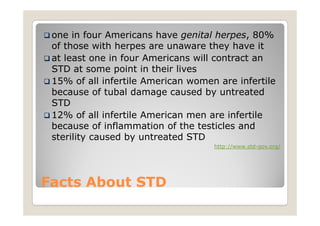
one in four Americans have genital herpes, 80%
 of those with herpes are unaware they have it
 at least one in four Americans will contract an
 STD at some point in their lives
 15% of all infertile American women are infertile
 because of tubal damage caused by untreated
 STD
 12% of all infertile American men are infertile
 because of inflammation of the testicles and
 sterility caused by untreated STD
                                    http://www.std-gov.org/


Facts About STD
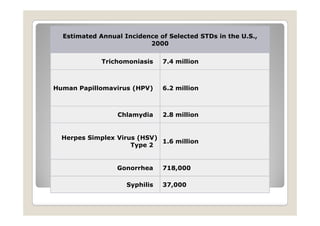
Estimated Annual Incidence of Selected STDs in the U.S.,
                          2000

             Trichomoniasis    7.4 million


Human Papillomavirus (HPV)     6.2 million


                 Chlamydia     2.8 million


  Herpes Simplex Virus (HSV)
                             1.6 million
                     Type 2


                 Gonorrhea     718,000

                    Syphilis   37,000
Prevention is the Key
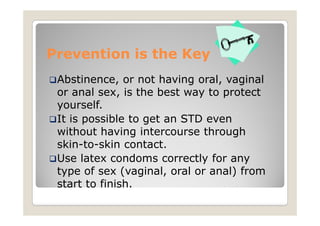
 Abstinence, or not having oral, vaginal
 or anal sex, is the best way to protect
 yourself.
 It is possible to get an STD even
 without having intercourse through
 skin-to-skin contact.
 Use latex condoms correctly for any
 type of sex (vaginal, oral or anal) from
 start to finish.
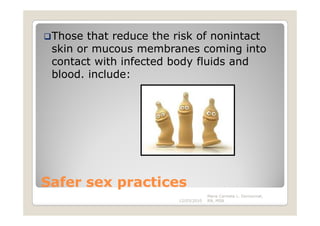
Those that reduce the risk of nonintact
 skin or mucous membranes coming into
 contact with infected body fluids and
 blood. include:


Safer sex practices
                                     Maria Carmela L. Domocmat,
                        12/03/2010   RN, MSN
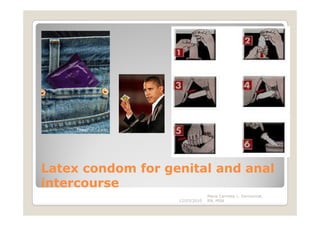
Latex condom for genital and anal
intercourse
                                Maria Carmela L. Domocmat,
                   12/03/2010   RN, MSN
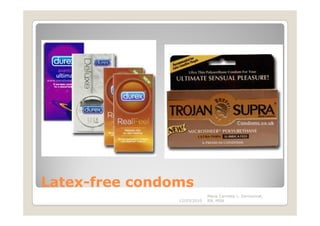
Latex-
Latex-free condoms
                             Maria Carmela L. Domocmat,
                12/03/2010   RN, MSN
Condom or latex barrier over the genital
 or anus during oral-genital or oral-anal
 sexual contact


Dental dam
                                     Maria Carmela L. Domocmat,
                        12/03/2010   RN, MSN
Dental Dam
                          Maria Carmela L. Domocmat,
             12/03/2010   RN, MSN
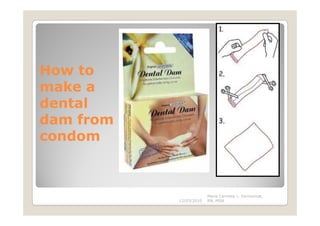
How to
make a
dental
dam from
condom


                        Maria Carmela L. Domocmat,
           12/03/2010   RN, MSN
Dental Dam
                          Maria Carmela L. Domocmat,
             12/03/2010   RN, MSN
Latex gloves for
               finger or hand
               contact with the
               vagina


Latex gloves
                            Maria Carmela L. Domocmat,
               12/03/2010   RN, MSN
Sex toys
dildo
Ez-
Ez-rider ball with purple dildo
Prevention
The surest way to avoid transmission of
 sexually transmitted diseases:

 Abstinence from sex is the best form of
 prevention.

 Having sex with only one uninfected
 partner whom only has sex with you
 (mutual monogamy).


Prevention and Risk Reduction
Using latex condoms from start to finish
every time you have oral, vaginal or anal
sex.

Latex male condoms, when used
consistently and correctly, can reduce the
risk of transmission
Know your partner(s).
 Careful consideration and open
 communication between partners may
 protect all partners involved from
 infection.


Prevention and Risk Reduction
Water-based spermicides can be used
 along with latex condoms for additional
 protection during vaginal intercourse.
 Use of spermicide is not recommended
 nor found to be effective for oral or anal
 intercourse.


Prevention and Risk Reduction
Have regular check-ups if you are sexually
active.

Any genital symptom such as discharge or
burning during urination or an unusual
sore or rash should be a signal to stop
having sex and to consult a health care
provider immediately.
If you have an STD, don't have sex (oral,
 vaginal, anal) until all partners have been
 treated.

 Prompt, qualified and appropriate medical
 intervention, treatment and follow-up are
 important steps in breaking the disease
 cycle.


Prevention and Risk Reduction
A person diagnosed with any STD should
receive treatment and should notify all
recent sex partners so that they can see a
health care provider and be treated.
This reduces the risk that the sex partners
will develop complications and reduces
the risk that the person with will become
re-infected.
Take all medications-even if you start to
 feel better before you finish the bottle.
 Treat all partners.
 Inform all partners.


Follow-
Follow-up
Abstain from sex until all partners are
treated.
Sex should be stopped until the person
with STD and all of his or her recent
partners complete treatment for and have
no symptoms.
Sexually transmitted infections: Prevention

Sexually transmitted infections: Prevention

  • 1.
    Sexually Transmitted Infections By: Maria Carmela L. Domocmat, RN, MSN Nurse Instructor Northern Luzon Adventist College
  • 2.
    refers to anyinfection contracted primarily through sexual activities or contacts More than 50 organisms known to spread through sexual activity Sexually Transmitted Diseases or Sexually Transmitted Infections
  • 3.
    STI’s are infectionsthat are spread from person to person through intimate sexual contact. STI’s are dangerous because they are easily spread and it is hard to tell just by looking who has an STI. 1 in 4 sexually active teens has an STI. What is a Sexually Transmitted Infection or STI?
  • 4.
    65 million ofpeople living in the US has STD 15 million of new STD cases each year 2/3 of all STD's occurs in people 25 yrs of age or younger 86% - 15 to 29 yrs old one in four new STD cases occur in teenagers cervical cancer in women is linked to HPV doctors are required to report newly diagnosed STD cases of gonorrhea, syphilis, chlamydia and hepatitis B to state health departments and the CDC Facts About STD
  • 5.
    one in fourAmericans have genital herpes, 80% of those with herpes are unaware they have it at least one in four Americans will contract an STD at some point in their lives 15% of all infertile American women are infertile because of tubal damage caused by untreated STD 12% of all infertile American men are infertile because of inflammation of the testicles and sterility caused by untreated STD http://www.std-gov.org/ Facts About STD
  • 6.
    Estimated Annual Incidenceof Selected STDs in the U.S., 2000 Trichomoniasis 7.4 million Human Papillomavirus (HPV) 6.2 million Chlamydia 2.8 million Herpes Simplex Virus (HSV) 1.6 million Type 2 Gonorrhea 718,000 Syphilis 37,000
  • 7.
    Prevention is theKey Abstinence, or not having oral, vaginal or anal sex, is the best way to protect yourself. It is possible to get an STD even without having intercourse through skin-to-skin contact. Use latex condoms correctly for any type of sex (vaginal, oral or anal) from start to finish.
  • 8.
    Those that reducethe risk of nonintact skin or mucous membranes coming into contact with infected body fluids and blood. include: Safer sex practices Maria Carmela L. Domocmat, 12/03/2010 RN, MSN
  • 9.
    Latex condom forgenital and anal intercourse Maria Carmela L. Domocmat, 12/03/2010 RN, MSN
  • 10.
    Latex- Latex-free condoms Maria Carmela L. Domocmat, 12/03/2010 RN, MSN
  • 11.
    Condom or latexbarrier over the genital or anus during oral-genital or oral-anal sexual contact Dental dam Maria Carmela L. Domocmat, 12/03/2010 RN, MSN
  • 12.
    Dental Dam Maria Carmela L. Domocmat, 12/03/2010 RN, MSN
  • 13.
    How to make a dental damfrom condom Maria Carmela L. Domocmat, 12/03/2010 RN, MSN
  • 14.
    Dental Dam Maria Carmela L. Domocmat, 12/03/2010 RN, MSN
  • 15.
    Latex gloves for finger or hand contact with the vagina Latex gloves Maria Carmela L. Domocmat, 12/03/2010 RN, MSN
  • 16.
  • 17.
  • 18.
  • 20.
  • 21.
    The surest wayto avoid transmission of sexually transmitted diseases: Abstinence from sex is the best form of prevention. Having sex with only one uninfected partner whom only has sex with you (mutual monogamy). Prevention and Risk Reduction
  • 22.
    Using latex condomsfrom start to finish every time you have oral, vaginal or anal sex. Latex male condoms, when used consistently and correctly, can reduce the risk of transmission
  • 23.
    Know your partner(s). Careful consideration and open communication between partners may protect all partners involved from infection. Prevention and Risk Reduction
  • 24.
    Water-based spermicides canbe used along with latex condoms for additional protection during vaginal intercourse. Use of spermicide is not recommended nor found to be effective for oral or anal intercourse. Prevention and Risk Reduction
  • 25.
    Have regular check-upsif you are sexually active. Any genital symptom such as discharge or burning during urination or an unusual sore or rash should be a signal to stop having sex and to consult a health care provider immediately.
  • 26.
    If you havean STD, don't have sex (oral, vaginal, anal) until all partners have been treated. Prompt, qualified and appropriate medical intervention, treatment and follow-up are important steps in breaking the disease cycle. Prevention and Risk Reduction
  • 27.
    A person diagnosedwith any STD should receive treatment and should notify all recent sex partners so that they can see a health care provider and be treated. This reduces the risk that the sex partners will develop complications and reduces the risk that the person with will become re-infected.
  • 28.
    Take all medications-evenif you start to feel better before you finish the bottle. Treat all partners. Inform all partners. Follow- Follow-up
  • 29.
    Abstain from sexuntil all partners are treated. Sex should be stopped until the person with STD and all of his or her recent partners complete treatment for and have no symptoms.