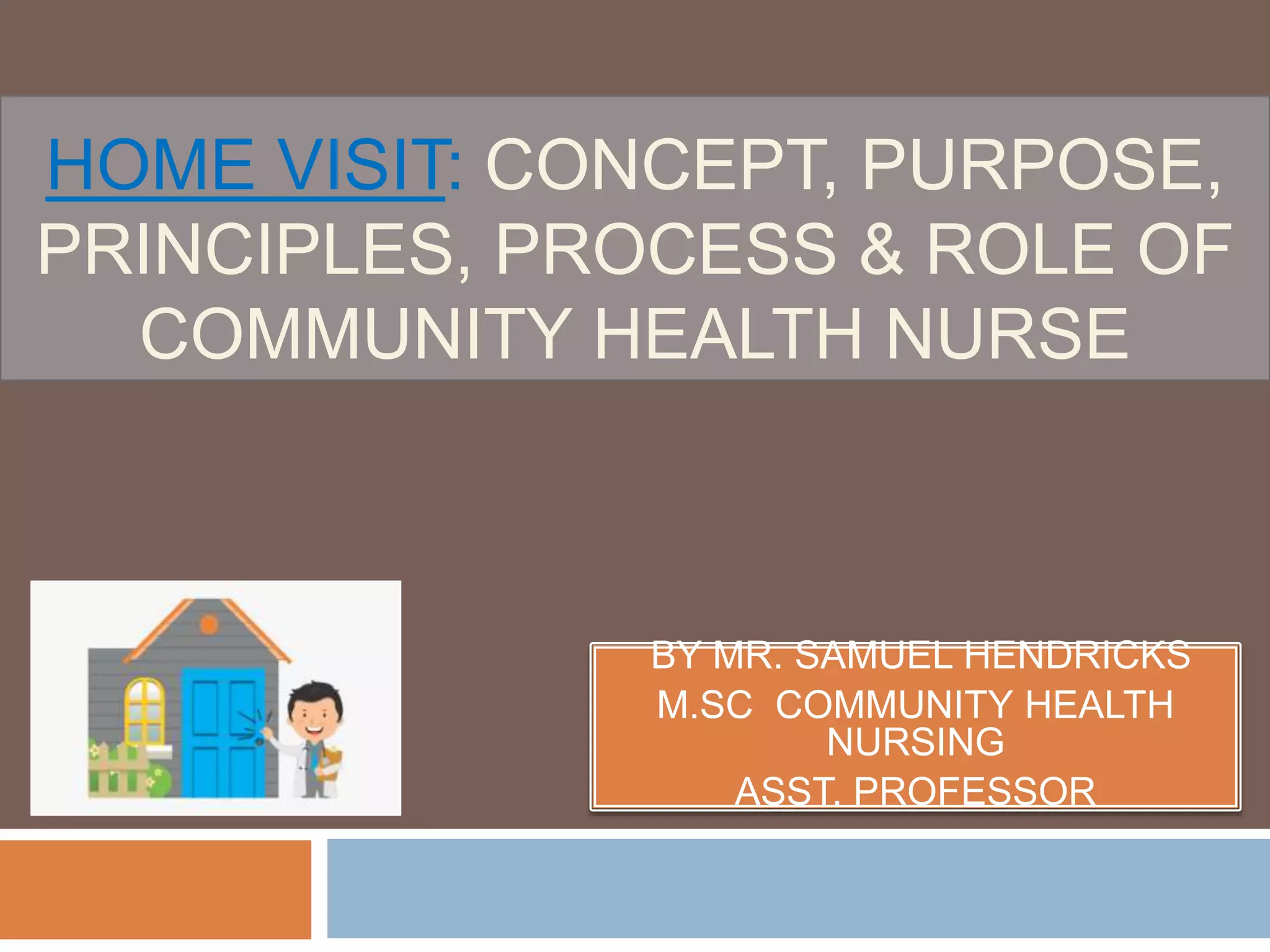
HOME VISIT: CONCEPT, PURPOSE,
PRINCIPLES, PROCESS & ROLE OF
COMMUNITY HEALTH NURSE
BY MR. SAMUEL HENDRICKS
M.SC COMMUNITY HEALTH
NURSING
ASST. PROFESSOR
INTRODUCTION
A home visit is one of the essential parts of the community health
services because most of the people are found in a home. Home visit
fulfils the needs of individual, family and community in general for
nursing service and health counseling. A home visit is considered as
the backbone of community health service. A home visit is a family –
nurse contact which allows the health worker to assess the home and
family situation in order to provide the necessary nursing care and
health-related activities.
DEFINITION
 A home visit is defined as the process of providing the
nursing care to patients at their doorsteps. It requires
technical skills, resourcefulness, judgment,
relationships.
 It is defined as providing the services to family at their
door step to maintain the health & to reduce the
mortality & morbidity in family.
 Its refers to identification and prioritization of health
needs of the individual and family at their door steps
and provision of care using available resources.
CONTINUE…..
 Home visiting is defined as the delivery of
specialized nursing care services in the home
health care setting.
 Home Visit Is A Process Of Providing Nursing
Care To Patient Or Family At Their Doorstep.
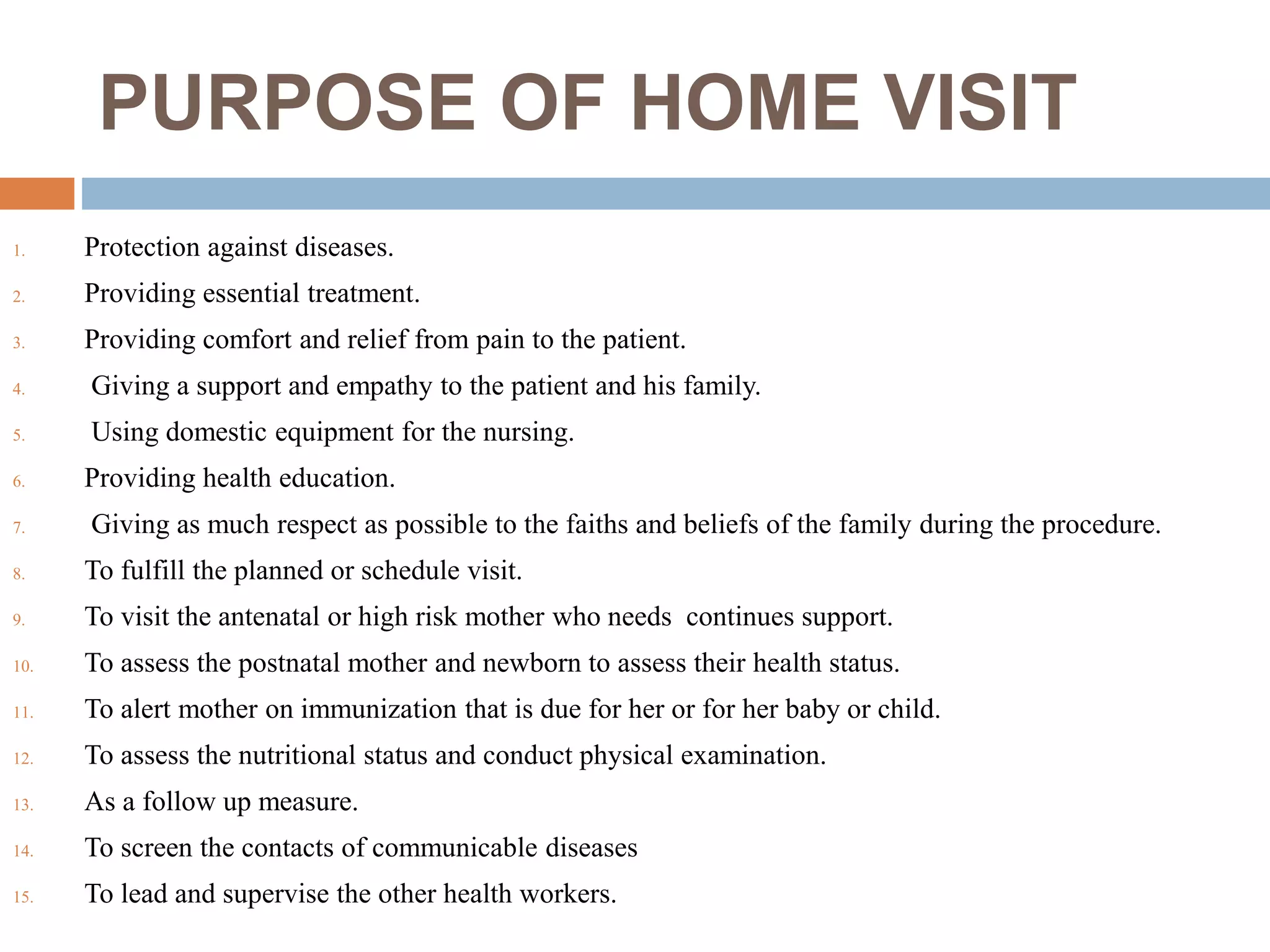
PURPOSE OF HOME VISIT
1. Protection against diseases.
2. Providing essential treatment.
3. Providing comfort and relief from pain to the patient.
4. Giving a support and empathy to the patient and his family.
5. Using domestic equipment for the nursing.
6. Providing health education.
7. Giving as much respect as possible to the faiths and beliefs of the family during the procedure.
8. To fulfill the planned or schedule visit.
9. To visit the antenatal or high risk mother who needs continues support.
10. To assess the postnatal mother and newborn to assess their health status.
11. To alert mother on immunization that is due for her or for her baby or child.
12. To assess the nutritional status and conduct physical examination.
13. As a follow up measure.
14. To screen the contacts of communicable diseases
15. To lead and supervise the other health workers.
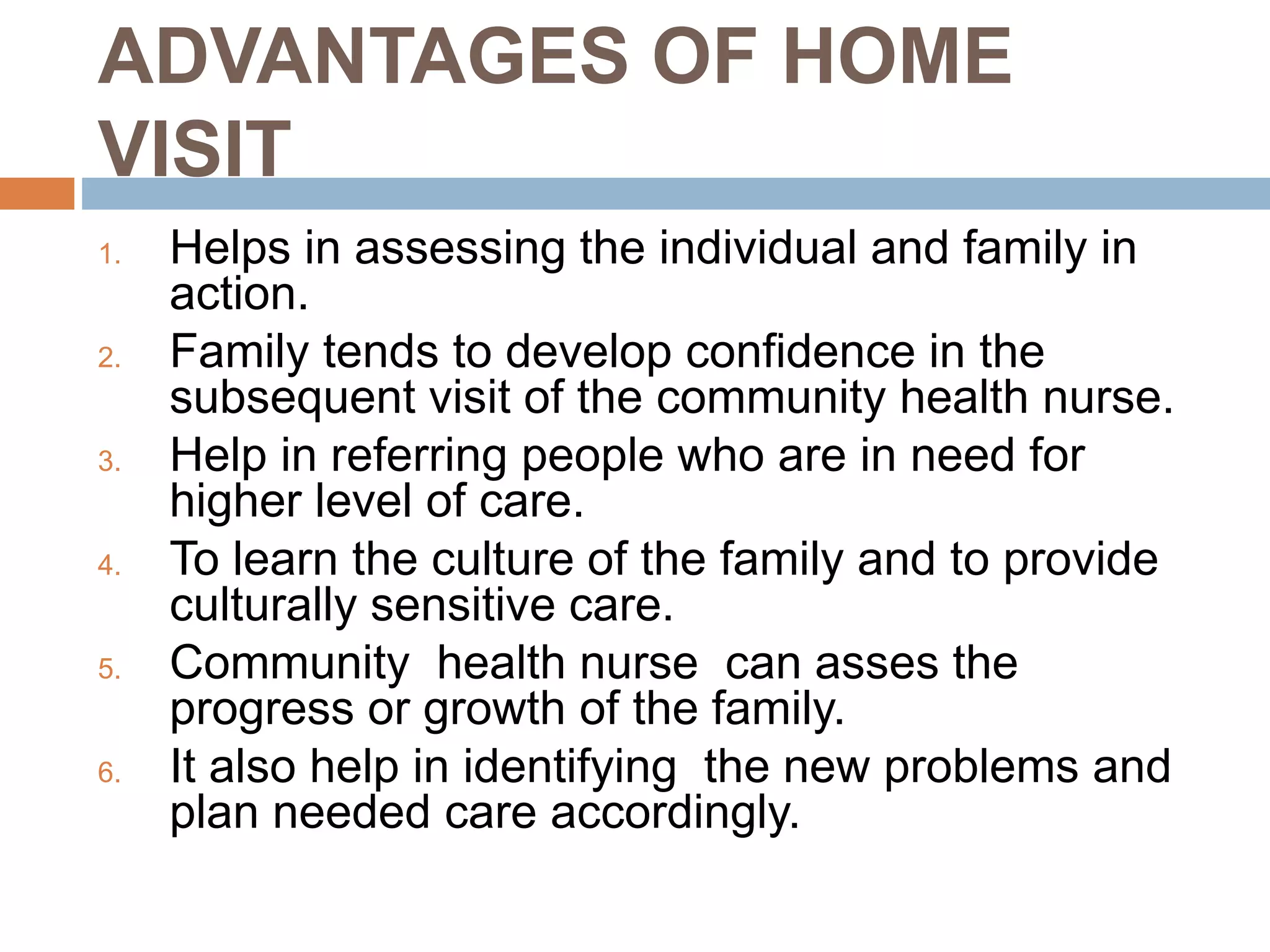
ADVANTAGES OF HOME
VISIT
1. Helps in assessing the individual and family in
action.
2. Family tends to develop confidence in the
subsequent visit of the community health nurse.
3. Help in referring people who are in need for
higher level of care.
4. To learn the culture of the family and to provide
culturally sensitive care.
5. Community health nurse can asses the
progress or growth of the family.
6. It also help in identifying the new problems and
plan needed care accordingly.
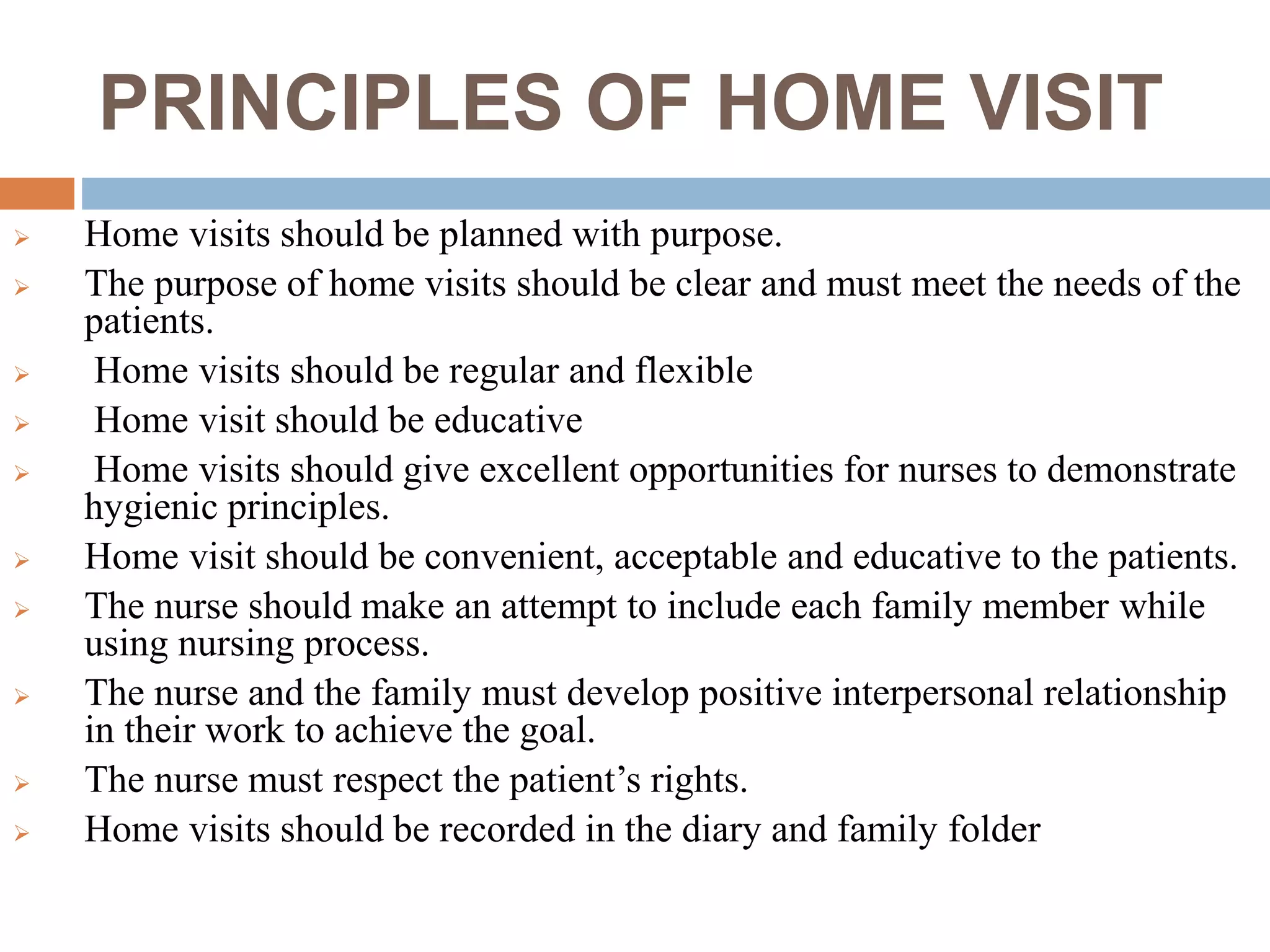
PRINCIPLES OF HOME VISIT
 Home visits should be planned with purpose.
 The purpose of home visits should be clear and must meet the needs of the
patients.
 Home visits should be regular and flexible
 Home visit should be educative
 Home visits should give excellent opportunities for nurses to demonstrate
hygienic principles.
 Home visit should be convenient, acceptable and educative to the patients.
 The nurse should make an attempt to include each family member while
using nursing process.
 The nurse and the family must develop positive interpersonal relationship
in their work to achieve the goal.
 The nurse must respect the patient’s rights.
 Home visits should be recorded in the diary and family folder
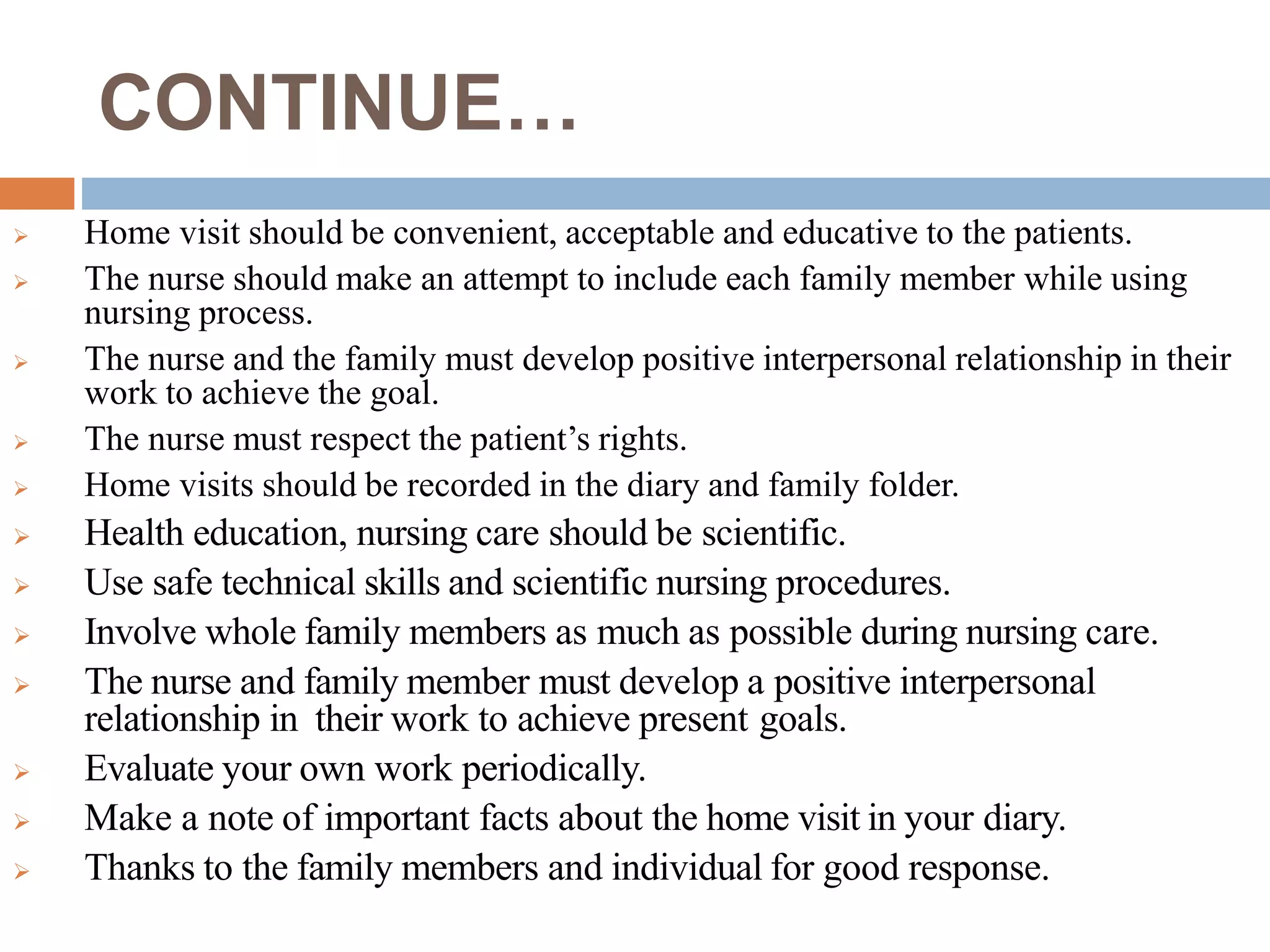
CONTINUE…
 Home visit should be convenient, acceptable and educative to the patients.
 The nurse should make an attempt to include each family member while using
nursing process.
 The nurse and the family must develop positive interpersonal relationship in their
work to achieve the goal.
 The nurse must respect the patient’s rights.
 Home visits should be recorded in the diary and family folder.
 Health education, nursing care should be scientific.
 Use safe technical skills and scientific nursing procedures.
 Involve whole family members as much as possible during nursing care.
 The nurse and family member must develop a positive interpersonal
relationship in their work to achieve present goals.
 Evaluate your own work periodically.
 Make a note of important facts about the home visit in your diary.
 Thanks to the family members and individual for good response.
PROCESS OF HOME VISIT
 Planning for home visit.
 Locating the house.
 Activities during Home Visit
1. Establishing Rapport with the family
2. Observation
3. Interviewing Technique( 3 phases of
interview)
A. Introduction phase
B. Focus or Working phase
C. Termination phase or
ROLE OF COMMUNITY HEALTH
NURSE IN HOME VISIT
 Recording the history of family to ascertain the cause
and duration of illness.
 Providing treatment and related care.
 Demonstrating the nursing procedure to educate the
family members.
 Giving medicines as per the standing orders and
providing essential nursing care in the grave
situations.
 Supervising the nursing procedures provided by family
members.
 Including the patient himself in taking care of chronic
illness (heart, arthritis, cancer, diabetic patients, etc)
and giving them mental support.
Home visit concept, purpose, principles, role of community health nurse in home visit

Home visit concept, purpose, principles, role of community health nurse in home visit

  • 1.
    HOME VISIT: CONCEPT,PURPOSE, PRINCIPLES, PROCESS & ROLE OF COMMUNITY HEALTH NURSE BY MR. SAMUEL HENDRICKS M.SC COMMUNITY HEALTH NURSING ASST. PROFESSOR
  • 2.
    INTRODUCTION A home visitis one of the essential parts of the community health services because most of the people are found in a home. Home visit fulfils the needs of individual, family and community in general for nursing service and health counseling. A home visit is considered as the backbone of community health service. A home visit is a family – nurse contact which allows the health worker to assess the home and family situation in order to provide the necessary nursing care and health-related activities.
  • 3.
    DEFINITION  A homevisit is defined as the process of providing the nursing care to patients at their doorsteps. It requires technical skills, resourcefulness, judgment, relationships.  It is defined as providing the services to family at their door step to maintain the health & to reduce the mortality & morbidity in family.  Its refers to identification and prioritization of health needs of the individual and family at their door steps and provision of care using available resources.
  • 4.
    CONTINUE…..  Home visitingis defined as the delivery of specialized nursing care services in the home health care setting.  Home Visit Is A Process Of Providing Nursing Care To Patient Or Family At Their Doorstep.
  • 5.
    PURPOSE OF HOMEVISIT 1. Protection against diseases. 2. Providing essential treatment. 3. Providing comfort and relief from pain to the patient. 4. Giving a support and empathy to the patient and his family. 5. Using domestic equipment for the nursing. 6. Providing health education. 7. Giving as much respect as possible to the faiths and beliefs of the family during the procedure. 8. To fulfill the planned or schedule visit. 9. To visit the antenatal or high risk mother who needs continues support. 10. To assess the postnatal mother and newborn to assess their health status. 11. To alert mother on immunization that is due for her or for her baby or child. 12. To assess the nutritional status and conduct physical examination. 13. As a follow up measure. 14. To screen the contacts of communicable diseases 15. To lead and supervise the other health workers.
  • 6.
    ADVANTAGES OF HOME VISIT 1.Helps in assessing the individual and family in action. 2. Family tends to develop confidence in the subsequent visit of the community health nurse. 3. Help in referring people who are in need for higher level of care. 4. To learn the culture of the family and to provide culturally sensitive care. 5. Community health nurse can asses the progress or growth of the family. 6. It also help in identifying the new problems and plan needed care accordingly.
  • 7.
    PRINCIPLES OF HOMEVISIT  Home visits should be planned with purpose.  The purpose of home visits should be clear and must meet the needs of the patients.  Home visits should be regular and flexible  Home visit should be educative  Home visits should give excellent opportunities for nurses to demonstrate hygienic principles.  Home visit should be convenient, acceptable and educative to the patients.  The nurse should make an attempt to include each family member while using nursing process.  The nurse and the family must develop positive interpersonal relationship in their work to achieve the goal.  The nurse must respect the patient’s rights.  Home visits should be recorded in the diary and family folder
  • 8.
    CONTINUE…  Home visitshould be convenient, acceptable and educative to the patients.  The nurse should make an attempt to include each family member while using nursing process.  The nurse and the family must develop positive interpersonal relationship in their work to achieve the goal.  The nurse must respect the patient’s rights.  Home visits should be recorded in the diary and family folder.  Health education, nursing care should be scientific.  Use safe technical skills and scientific nursing procedures.  Involve whole family members as much as possible during nursing care.  The nurse and family member must develop a positive interpersonal relationship in their work to achieve present goals.  Evaluate your own work periodically.  Make a note of important facts about the home visit in your diary.  Thanks to the family members and individual for good response.
  • 9.
    PROCESS OF HOMEVISIT  Planning for home visit.  Locating the house.  Activities during Home Visit 1. Establishing Rapport with the family 2. Observation 3. Interviewing Technique( 3 phases of interview) A. Introduction phase B. Focus or Working phase C. Termination phase or
  • 10.
    ROLE OF COMMUNITYHEALTH NURSE IN HOME VISIT  Recording the history of family to ascertain the cause and duration of illness.  Providing treatment and related care.  Demonstrating the nursing procedure to educate the family members.  Giving medicines as per the standing orders and providing essential nursing care in the grave situations.  Supervising the nursing procedures provided by family members.  Including the patient himself in taking care of chronic illness (heart, arthritis, cancer, diabetic patients, etc) and giving them mental support.