


NIN (ICMR)
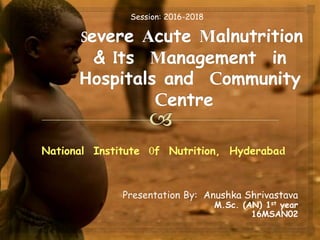
National Institute Of Nutrition, Hyderabad
Presentation By: Anushka Shrivastava
M.Sc. (AN) 1st year
16MSAN02
Session: 2016-2018

N.I.N (ICMR )
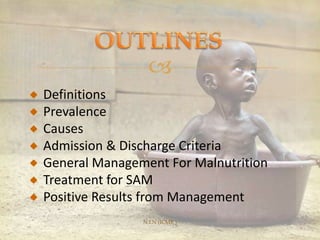
Definitions
Prevalence
Causes
Admission & Discharge Criteria
General Management For Malnutrition
Treatment for SAM
Positive Results from Management

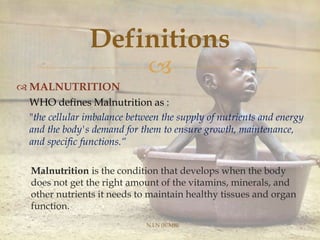
 MALNUTRITION
WHO defines Malnutrition as :
"the cellular imbalance between the supply of nutrients and energy
and the body's demand for them to ensure growth, maintenance,
and specific functions.“
Malnutrition is the condition that develops when the body
does not get the right amount of the vitamins, minerals, and
other nutrients it needs to maintain healthy tissues and organ
function.
N.I.N (ICMR)
Definitions
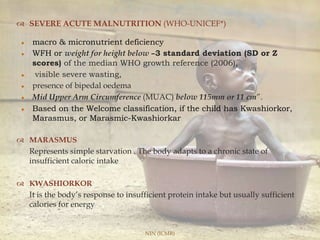
 SEVERE ACUTE MALNUTRITION (WHO-UNICEF*)
macro & micronutrient deficiency
WFH or weight for height below –3 standard deviation (SD or Z
scores) of the median WHO growth reference (2006),
visible severe wasting,
presence of bipedal oedema
Mid Upper Arm Circumference (MUAC) below 115mm or 11 cm”.
Based on the Welcome classification, if the child has Kwashiorkor,
Marasmus, or Marasmic-Kwashiorkar
 MARASMUS
Represents simple starvation . The body adapts to a chronic state of
insufficient caloric intake
 KWASHIORKOR
It is the body’s response to insufficient protein intake but usually sufficient
calories for energy
NIN (ICMR)
NIN (ICMR)
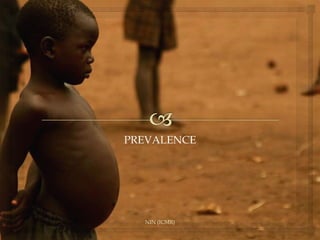
PREVALENCE
NIN (ICMR)
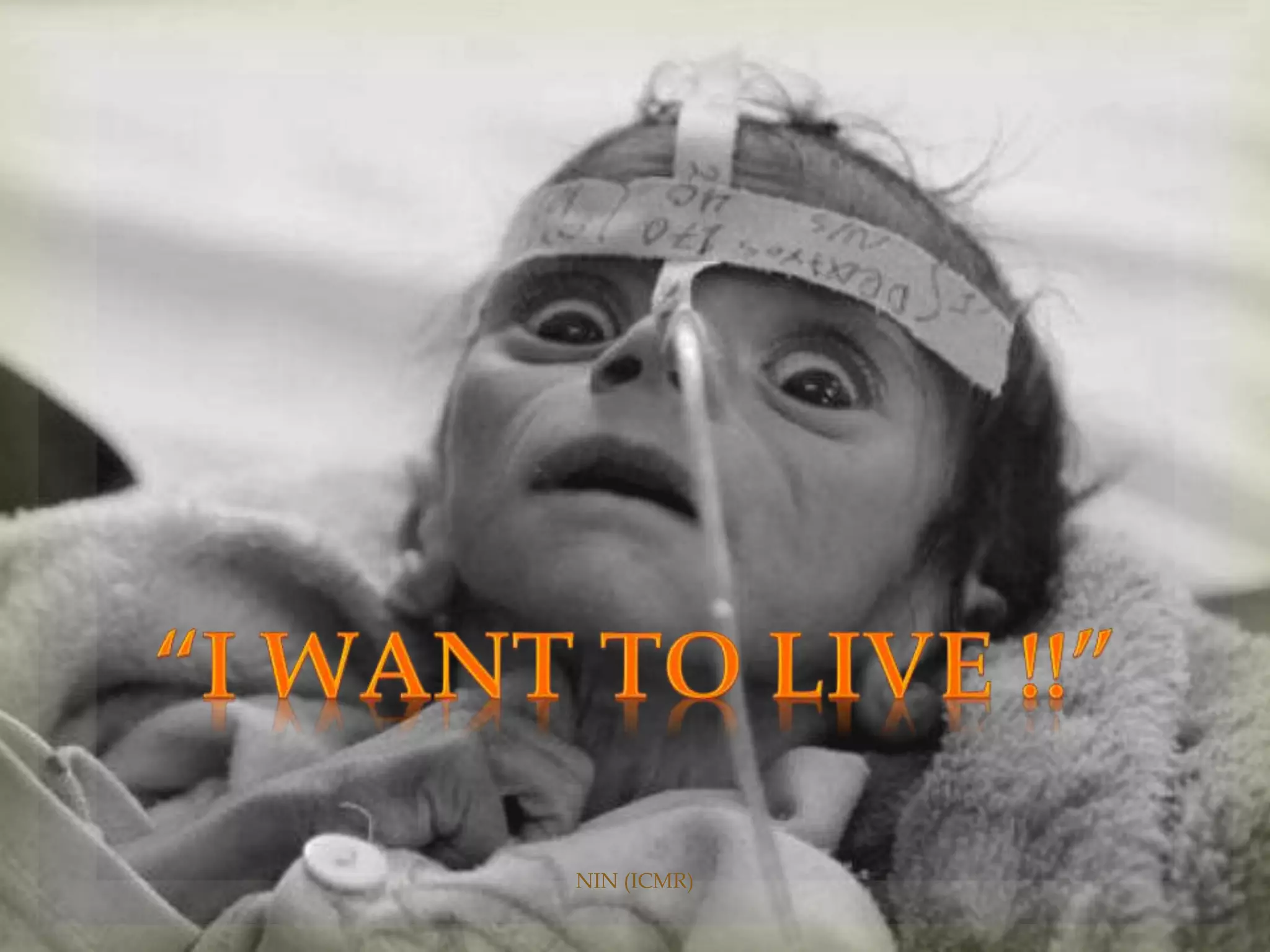
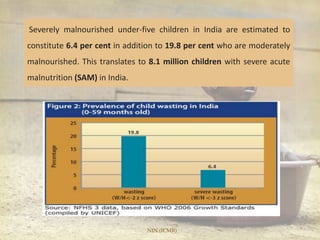
Severely malnourished under-five children in India are estimated to
constitute 6.4 per cent in addition to 19.8 per cent who are moderately
malnourished. This translates to 8.1 million children with severe acute
malnutrition (SAM) in India.
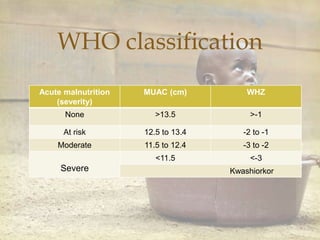
WHO classification
Acute malnutrition
(severity)
MUAC (cm) WHZ
None >13.5 >-1
At risk 12.5 to 13.4 -2 to -1
Moderate 11.5 to 12.4 -3 to -2
Severe
<11.5 <-3
Kwashiorkor
NIN (ICMR)
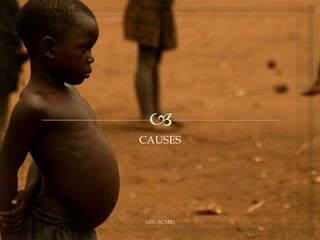
CAUSES
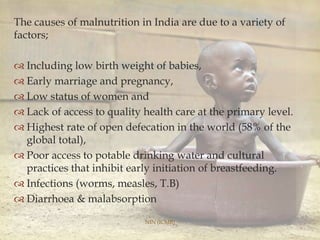
The causes of malnutrition in India are due to a variety of
factors;
 Including low birth weight of babies,
 Early marriage and pregnancy,
 Low status of women and
 Lack of access to quality health care at the primary level.
 Highest rate of open defecation in the world (58% of the
global total),
 Poor access to potable drinking water and cultural
practices that inhibit early initiation of breastfeeding.
 Infections (worms, measles, T.B)
 Diarrhoea & malabsorption
NIN (ICMR)
NIN (ICMR)
ADMISSION AND DISCHARGE CRITERIA
FOR CHILDREN WHO ARE 6–59 MONTHS
OF AGE WITH SEVERE ACUTE
MALNUTRITION

Criteria for identifying children with severe acute
malnutrition for treatment (WHO )
1. IDENTIFICATION IN COMMUNITY:
Trained community health workers and community members should measure:
 the MUAC of infants and children who are 6–59 months of age
 examine them for bilateral pitting oedema.
 Infants and children who are 6–59 months of age and have a mid-upper
arm circumference <115 mm, or who have any degree of bilateral oedema
should be immediately referred for full assessment at a treatment centre for
the management of severe acute malnutrition.
NIN (ICMR)
2. IDENTIFICATION IN PRIMARY HEALTH-CARE FACILITIES
AND HOSPITALS
Health-care workers should assess :
 The mid-upper arm circumference (MUAC) or the weight-for-
height/weight-for-length status of infants and children who are 6–59
months of age
 examine them for bilateral oedema.
 Infants and children who are 6–59 months of age and have a mid-
upper arm circumference <115 mm or a weight-for-height/length <–3
Z-scores of the WHO growth standards (2), or have bilateral oedema,
should be immediately admitted to a programme for the management
of severe acute malnutrition.

Criteria for inpatient or outpatient care*
(WHO )
Children who are identified as having severe acute malnutrition should
first be assessed with
• a full clinical examination
• Children who have appetite (pass the appetite test) and are clinically
well and alert should be treated as outpatients.
• Children who have medical complications, severe oedema (+++)***,
or poor appetite (fail the appetite test****) or present with one or more
IMCI danger signs† should be treated as inpatients.
NIN (ICMR)

Criteria for transferring children from inpatient to
outpatient care* (WHO )
• Children with SAM who are admitted to hospital can be transferred to
outpatient care when their medical complications, including oedema,
are resolving and they have good appetite, and are clinically well and
alert.
• The decision to transfer children from inpatient to outpatient care
should be determined by their clinical condition and not on the basis
of specific anthropometric outcomes such as a specific mid-upper arm
circumference or weight-for-height/length.
NIN (ICMR)

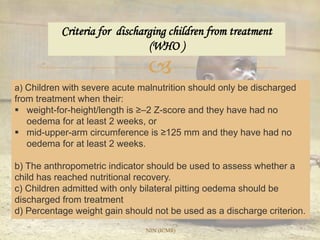
Criteria for discharging children from treatment
(WHO )
a) Children with severe acute malnutrition should only be discharged
from treatment when their:
 weight-for-height/length is ≥–2 Z-score and they have had no
oedema for at least 2 weeks, or
 mid-upper-arm circumference is ≥125 mm and they have had no
oedema for at least 2 weeks.
b) The anthropometric indicator should be used to assess whether a
child has reached nutritional recovery.
c) Children admitted with only bilateral pitting oedema should be
discharged from treatment
d) Percentage weight gain should not be used as a discharge criterion.
NIN (ICMR)
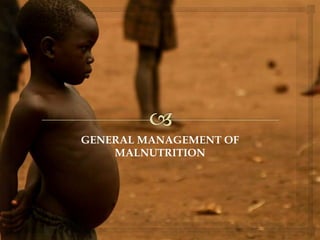
GENERAL MANAGEMENT OF
MALNUTRITION

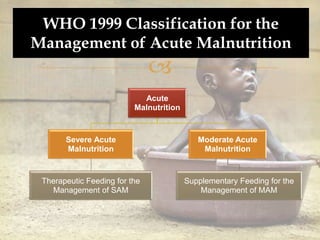
Acute
Malnutrition
Severe Acute
Malnutrition
Therapeutic Feeding for the
Management of SAM
Moderate Acute
Malnutrition
Supplementary Feeding for the
Management of MAM
WHO 1999 Classification for the
Management of Acute Malnutrition

Management of Severe Acute
Malnutrition
World Health Organization (WHO) 1999:
 Facility-based care for the management of severe
acute malnutrition (SAM)
 Children under 5 with SAM are treated until full
recovery in paediatric ward, nutrition
rehabilitation unit, therapeutic feeding centre

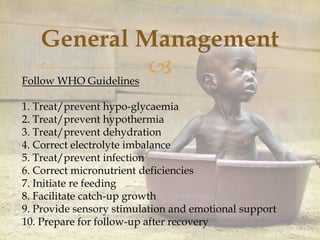
General Management
Follow WHO Guidelines
1. Treat/prevent hypo-glycaemia
2. Treat/prevent hypothermia
3. Treat/prevent dehydration
4. Correct electrolyte imbalance
5. Treat/prevent infection
6. Correct micronutrient deficiencies
7. Initiate re feeding
8. Facilitate catch-up growth
9. Provide sensory stimulation and emotional support
10. Prepare for follow-up after recovery

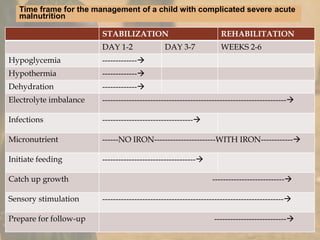
10 step approach
STABILIZATION REHABILITATION
DAY 1-2 DAY 3-7 WEEKS 2-6
Hypoglycemia -------------
Hypothermia -------------
Dehydration -------------
Electrolyte imbalance ---------------------------------------------------------------------
Infections ----------------------------------
Micronutrient ------NO IRON-----------------------WITH IRON------------
Initiate feeding -----------------------------------
Catch up growth ---------------------------
Sensory stimulation --------------------------------------------------------------------
Prepare for follow-up ---------------------------
Time frame for the management of a child with complicated severe acute
malnutrition

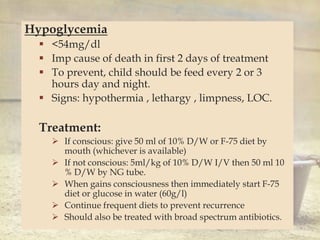
Hypoglycemia
 <54mg/dl
 Imp cause of death in first 2 days of treatment
 To prevent, child should be feed every 2 or 3
hours day and night.
 Signs: hypothermia , lethargy , limpness, LOC.
Treatment:
 If conscious: give 50 ml of 10% D/W or F-75 diet by
mouth (whichever is available)
 If not conscious: 5ml/kg of 10% D/W I/V then 50 ml 10
% D/W by NG tube.
 When gains consciousness then immediately start F-75
diet or glucose in water (60g/l)
 Continue frequent diets to prevent recurrence
 Should also be treated with broad spectrum antibiotics.

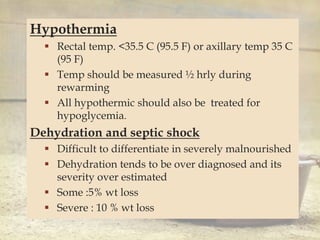
Hypothermia
 Rectal temp. <35.5 C (95.5 F) or axillary temp 35 C
(95 F)
 Temp should be measured ½ hrly during
rewarming
 All hypothermic should also be treated for
hypoglycemia.
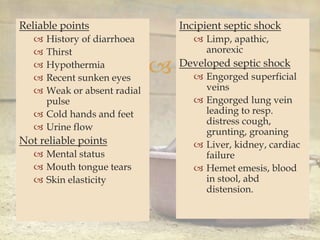
Dehydration and septic shock
 Difficult to differentiate in severely malnourished
 Dehydration tends to be over diagnosed and its
severity over estimated
 Some :5% wt loss
 Severe : 10 % wt loss

Reliable points
 History of diarrhoea
 Thirst
 Hypothermia
 Recent sunken eyes
 Weak or absent radial
pulse
 Cold hands and feet
 Urine flow
Not reliable points
 Mental status
 Mouth tongue tears
 Skin elasticity
Incipient septic shock
 Limp, apathic,
anorexic
Developed septic shock
 Engorged superficial
veins
 Engorged lung vein
leading to resp.
distress cough,
grunting, groaning
 Liver, kidney, cardiac
failure
 Hemet emesis, blood
in stool, abd
distension.
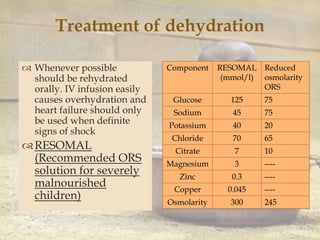
Treatment of dehydration
 Whenever possible
should be rehydrated
orally. IV infusion easily
causes overhydration and
heart failure should only
be used when definite
signs of shock
RESOMAL
(Recommended ORS
solution for severely
malnourished
children)
Component RESOMAL
(mmol/l)
Reduced
osmolarity
ORS
Glucose 125 75
Sodium 45 75
Potassium 40 20
Chloride 70 65
Citrate 7 10
Magnesium 3 ----
Zinc 0.3 ----
Copper 0.045 ----
Osmolarity 300 245

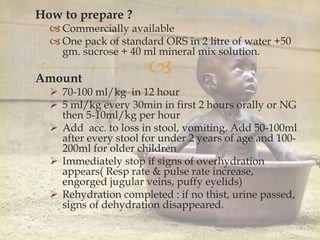
How to prepare ?
 Commercially available
 One pack of standard ORS in 2 litre of water +50
gm. sucrose + 40 ml mineral mix solution.
Amount
 70-100 ml/kg in 12 hour
 5 ml/kg every 30min in first 2 hours orally or NG
then 5-10ml/kg per hour
 Add acc. to loss in stool, vomiting. Add 50-100ml
after every stool for under 2 years of age and 100-
200ml for older children
 Immediately stop if signs of overhydration
appears( Resp rate & pulse rate increase,
engorged jugular veins, puffy eyelids)
 Rehydration completed : if no thist, urine passed,
signs of dehydration disappeared.

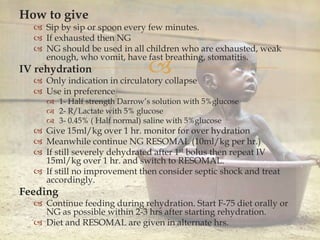
How to give
 Sip by sip or spoon every few minutes.
 If exhausted then NG
 NG should be used in all children who are exhausted, weak
enough, who vomit, have fast breathing, stomatitis.
IV rehydration
 Only indication in circulatory collapse
 Use in preference
 1- Half strength Darrow’s solution with 5%glucose
 2- R/Lactate with 5% glucose
 3- 0.45% ( Half normal) saline with 5%glucose
 Give 15ml/kg over 1 hr. monitor for over hydration
 Meanwhile continue NG RESOMAL (10ml/kg per hr.)
 If still severely dehydrated after 1st bolus then repeat IV
15ml/kg over 1 hr. and switch to RESOMAL.
 If still no improvement then consider septic shock and treat
accordingly.
Feeding
 Continue feeding during rehydration. Start F-75 diet orally or
NG as possible within 2-3 hrs after starting rehydration.
 Diet and RESOMAL are given in alternate hrs.

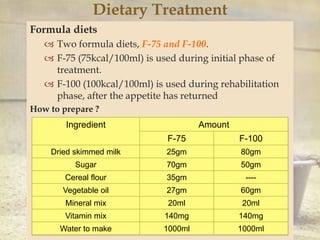
Dietary Treatment
Formula diets
 Two formula diets, F-75 and F-100.
 F-75 (75kcal/100ml) is used during initial phase of
treatment.
 F-100 (100kcal/100ml) is used during rehabilitation
phase, after the appetite has returned
How to prepare ?
Ingredient Amount
F-75 F-100
Dried skimmed milk 25gm 80gm
Sugar 70gm 50gm
Cereal flour 35gm ----
Vegetable oil 27gm 60gm
Mineral mix 20ml 20ml
Vitamin mix 140mg 140mg
Water to make 1000ml 1000ml

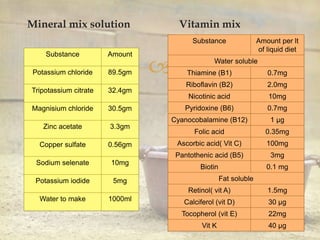
Mineral mix solution Vitamin mix
Substance Amount
Potassium chloride 89.5gm
Tripotassium citrate 32.4gm
Magnisium chloride 30.5gm
Zinc acetate 3.3gm
Copper sulfate 0.56gm
Sodium selenate 10mg
Potassium iodide 5mg
Water to make 1000ml
Substance Amount per lt
of liquid diet
Water soluble
Thiamine (B1) 0.7mg
Riboflavin (B2) 2.0mg
Nicotinic acid 10mg
Pyridoxine (B6) 0.7mg
Cyanocobalamine (B12) 1 µg
Folic acid 0.35mg
Ascorbic acid( Vit C) 100mg
Pantothenic acid (B5) 3mg
Biotin 0.1 mg
Fat soluble
Retinol( vit A) 1.5mg
Calciferol (vit D) 30 µg
Tocopherol (vit E) 22mg
Vit K 40 µg

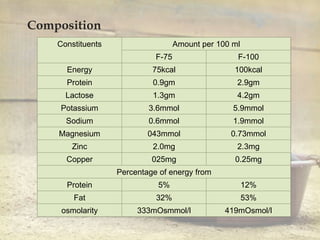
Composition
Constituents Amount per 100 ml
F-75 F-100
Energy 75kcal 100kcal
Protein 0.9gm 2.9gm
Lactose 1.3gm 4.2gm
Potassium 3.6mmol 5.9mmol
Sodium 0.6mmol 1.9mmol
Magnesium 043mmol 0.73mmol
Zinc 2.0mg 2.3mg
Copper 025mg 0.25mg
Percentage of energy from
Protein 5% 12%
Fat 32% 53%
osmolarity 333mOsmmol/l 419mOsmol/l

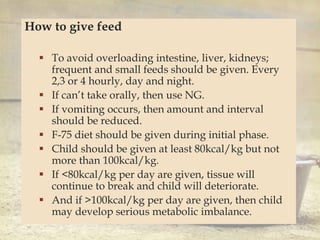
How to give feed
 To avoid overloading intestine, liver, kidneys;
frequent and small feeds should be given. Every
2,3 or 4 hourly, day and night.
 If can’t take orally, then use NG.
 If vomiting occurs, then amount and interval
should be reduced.
 F-75 diet should be given during initial phase.
 Child should be given at least 80kcal/kg but not
more than 100kcal/kg.
 If <80kcal/kg per day are given, tissue will
continue to break and child will deteriorate.
 And if >100kcal/kg per day are given, then child
may develop serious metabolic imbalance.

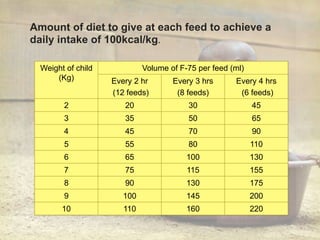
Amount of diet to give at each feed to achieve a
daily intake of 100kcal/kg.
Weight of child
(Kg)
Volume of F-75 per feed (ml)
Every 2 hr
(12 feeds)
Every 3 hrs
(8 feeds)
Every 4 hrs
(6 feeds)
2 20 30 45
3 35 50 65
4 45 70 90
5 55 80 110
6 65 100 130
7 75 115 155
8 90 130 175
9 100 145 200
10 110 160 220

 Child should be fed with cup and spoon, not by feeder
as it is an important source of infection.
 Very weak may be fed using a dropper and syringe.
Nasogastric (NG) feeding
 Many children will not take sufficient diet by mouth during first
few days of treatment due to poor appetite, weakness,
stomatitis. Such patients should be given through NG tube.
 At each feed, the child should first be offered the diet orally.
After the child has taken as much he or she can, the remainder
should be given thru NG.
 NG should be removed when child is taking ¾ of day’s diet
orally, or takes 2 consecutive feeds fully by mouth.
 If next 24 hrs. child fails to take 80kcal/kg then reinsert tube.
 And if child develops distension during NG feed, give 2 ml of
Mg sulfate IM.
 NG should be always aspirated before feeds Are administered.
 Should be passed by trained staff to avoid aspiration

THE INITIAL PHASE OF TREATMENT ENDS
WHEN THE CHILD BECOMES HUNGRY.
This indicates that
 Infections are under control
 Liver is able to metabolize diet
 Other metabolic abnormalities are improving.
 Child is now ready to begin rehabilitation phase.
 This usually occurs after 2-7 days of treatment.
 While children with complication takes longer time
while some are hungry from the start and can be
shifted to F-100.
 Replace the equal amount of F-75 diet with F-100 for
2 days before increasing the volume.
 Type of feed given, amount offered and taken date
time must be recorded accurately after each feed. If
child vomits, the amount lost should be noted in
terms of whole feed, half of feed etc.

Treatment of infection
Nearly all severely malnourished children have bacterial infections
when first admitted. Early anti microbial treatment improves
nutritional response, prevent septic shock, reduce mortality.
 These are divided into :
 First line treatment.
 Which is given empirically to all.
 Ampicillin 2 days then amoxicillin for 5 days
 Gentamycin 7 days
 Second line treatment
 If no response, add chloramphenicol for 5 days.
 If specific infection is detected like dysentery, candidiasis, malaria,
intestinal helminthiasis, then treat accordingly
 Tuberculosis is also very common, ATT should be given only when
TB is diagnosed.
 Measles and other viral infections
 All should be given measles vaccine on admission and on discharge

Vitamin deficiencies
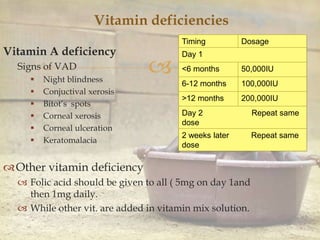
Vitamin A deficiency
Signs of VAD
 Night blindness
 Conjuctival xerosis
 Bitot’s spots
 Corneal xerosis
 Corneal ulceration
 Keratomalacia
Other vitamin deficiency
 Folic acid should be given to all ( 5mg on day 1and
then 1mg daily.
 While other vit. are added in vitamin mix solution.
Timing Dosage
Day 1
<6 months 50,000IU
6-12 months 100,000IU
>12 months 200,000IU
Day 2 Repeat same
dose
2 weeks later Repeat same
dose

Catch up growth
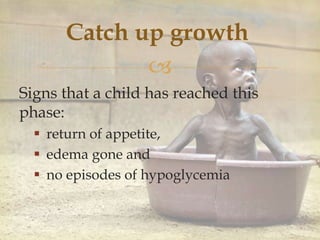
Signs that a child has reached this
phase:
 return of appetite,
 edema gone and
 no episodes of hypoglycemia

Treatment:
 Gradual transition from starter to catch up
 Replace F75 with an equal amount of
F100(100kcal/100ml and 2.9g protein/100ml)
or RUTF for 2-3 days
 On day 3 increase each successive feed by
10ml till some remains uneaten at abt
200ml/kg/d
 Aft gradual transition give frequent feeds
unlimited amts, 150-220kcal/kg/d, 4-6g of
protein/d
Ready-to-Use Therapeutic Food
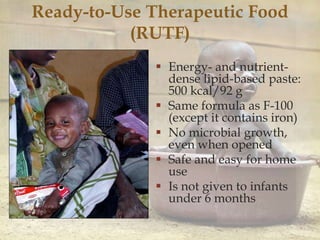
(RUTF)
 Energy- and nutrient-
dense lipid-based paste:
500 kcal/92 g
 Same formula as F-100
(except it contains iron)
 No microbial growth,
even when opened
 Safe and easy for home
use
 Is not given to infants
under 6 months

Sensory stimulation
 Tender, loving care
 Structured play therapy for 15- 30 mins/d
 Physical activity as soon as the child is well
enough.
 A cheerful, stimulating environment.
 Encourage mother’s involvement e.g.
comforting, feeding, bathing, play
 Provide suitable toys for the children.

Associated conditions
Eye problems
 vitamin A, days 1,2,14
 Signs of corneal clouding/ulceration
 Caf/tetracycline eye drops qid for 7-10
days
 Atropine eye drops 1 drops tid 3-5 days
 Cover with saline soaked pads
 Bandage eyes

Severe Anaemia
 Transfuse: Hb < 4gldl,4-6g/dl in resp. distress
 Whole blood – 10 ml/kg slowly for 3hrs + frusemide
1mg/kg iv at the start of transfusion
 Packed cells – 10 ml/kg if in CCF
Continuing diarrhoea
 Replacement fluids CT
 Stool m/c/s and treat accordingly. giardia; flagyl
7.5mg/kg TID x 7d
 Osmotic diarrhoea: Diarrhea worsens with
hyperosmolar F75 and ceases when sugar content and
osmolarity are reduced.Rx-lower osmolar feeds

Rehabilitation
Appetite has returned
 Principles: encourage child to eat as much as
possible, breastfeeding, emotional care, prepare
mum for continued care
 Criteria 4 Discharge : eating well, improved mental
status, normal temp, no vomiting/diarrhea/edema,
gaining weight >5g/kg/d for 3consecutive days.
 Continue monitoring progress.

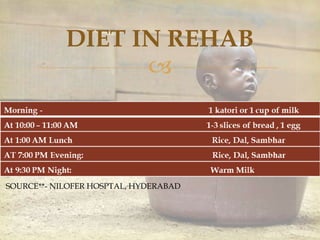
DIET IN REHAB
SOURCE**- NILOFER HOSPTAL, HYDERABAD

Discharge and follow-up
Discharge Criteria
 All infections, other conditions have been treated
 Good appetite and gaining weight (90% expected
WH )
 Lost any oedema
 Appropriate support in the community or home
 Mother/carer: available, understands child’s
needs, able to supply needs

Follow up
 Planned and regular, nutrition clinic
 Risk of relapse greatest aft discharge then
should be seen aft 1wk,2wks,1mth,3mths
 If a problem is identified more frequent
visits
 Aft 6mths,do yearly visits till 3yrs of age.
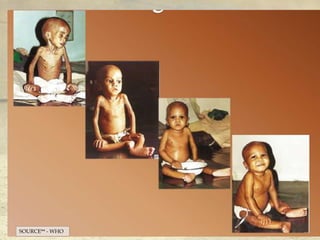
POSITIVE RESULTS FROM
MANAGEMENT OF SAM FROM PAST
STUDIES

SOURCE** - WHO

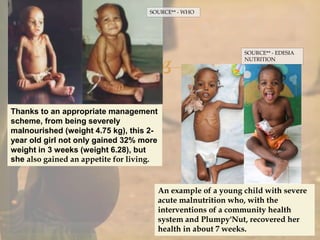
Thanks to an appropriate management
scheme, from being severely
malnourished (weight 4.75 kg), this 2-
year old girl not only gained 32% more
weight in 3 weeks (weight 6.28), but
she also gained an appetite for living.
SOURCE** - WHO
An example of a young child with severe
acute malnutrition who, with the
interventions of a community health
system and Plumpy'Nut, recovered her
health in about 7 weeks.
SOURCE** - EDESIA
NUTRITION
NIN (ICMR)
CONCLUSION

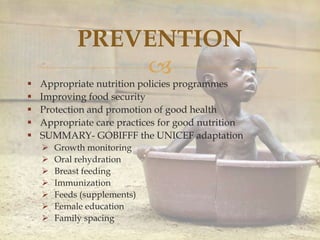
PREVENTION
 Appropriate nutrition policies programmes
 Improving food security
 Protection and promotion of good health
 Appropriate care practices for good nutrition
 SUMMARY- GOBIFFF the UNICEF adaptation
 Growth monitoring
 Oral rehydration
 Breast feeding
 Immunization
 Feeds (supplements)
 Female education
 Family spacing
NIN (ICMR)
1. WHO. Guideline: Updates on the management of severe acute malnutrition in infants and children. Geneva, World Health
Organization; 2013 (http://www.who.int/nutrition/publications/guidelines/updates_management_SAM_
Infant and children/en/).
2. WHO Multicentre Growth Reference Study Group. WHO child growth standards: methods and development. Growth velocity
based on weight, length and head circumference. Geneva, World Health Organization; 2009
(www.who.int/childgrowth/standards/velocity/technical_report/en/index.html).
3. WHO. Management of severe malnutrition: a manual for physicians and other senior health workers. Geneva, World Health
Organization; 1999 (http://www.who.int/nutrition/publications/severemalnutrition/9241545119/en/).
4. WHO, WFP, UNSCN, UNICEF. Community-based management of severe acute malnutrition. A joint statement by the World
Health Organization, World Food Programme, United Nations Standing Committee on Nutrition, United Nations Children’s
Fund. Geneva, World Health Organization; 2007
(http://www.who.int/nutrition/publications/severemalnutrition/9789280641479/en/).
5. WHO child growth standards and the identification of severe acute malnutrition in infants and children. A joint statement by the
World Health Organization and the United Nations Children’s Fund. Geneva:, World Health Organization; 2009
(http://www.who.int/maternal_child_adolescent/documents/9789241598163/en/).
6. Integrated management of childhood illness: caring for newborns and children in the community. Geneva, World Health
Organization; 2011 (http://www.who.int/maternal_child_adolescent/documents/imci_community_care/en/).
BIBLIOGRAPHY
THANK
YOU

SEVERE ACUTE MALNUTRITION

  • 1.
  • 2.
    National Institute OfNutrition, Hyderabad Presentation By: Anushka Shrivastava M.Sc. (AN) 1st year 16MSAN02 Session: 2016-2018
  • 3.
     N.I.N (ICMR ) Definitions Prevalence Causes Admission& Discharge Criteria General Management For Malnutrition Treatment for SAM Positive Results from Management
  • 4.
      MALNUTRITION WHO definesMalnutrition as : "the cellular imbalance between the supply of nutrients and energy and the body's demand for them to ensure growth, maintenance, and specific functions.“ Malnutrition is the condition that develops when the body does not get the right amount of the vitamins, minerals, and other nutrients it needs to maintain healthy tissues and organ function. N.I.N (ICMR) Definitions
  • 5.
     SEVERE ACUTEMALNUTRITION (WHO-UNICEF*) macro & micronutrient deficiency WFH or weight for height below –3 standard deviation (SD or Z scores) of the median WHO growth reference (2006), visible severe wasting, presence of bipedal oedema Mid Upper Arm Circumference (MUAC) below 115mm or 11 cm”. Based on the Welcome classification, if the child has Kwashiorkor, Marasmus, or Marasmic-Kwashiorkar  MARASMUS Represents simple starvation . The body adapts to a chronic state of insufficient caloric intake  KWASHIORKOR It is the body’s response to insufficient protein intake but usually sufficient calories for energy NIN (ICMR)
  • 6.
  • 7.
    NIN (ICMR) Severely malnourishedunder-five children in India are estimated to constitute 6.4 per cent in addition to 19.8 per cent who are moderately malnourished. This translates to 8.1 million children with severe acute malnutrition (SAM) in India.
  • 8.
    WHO classification Acute malnutrition (severity) MUAC(cm) WHZ None >13.5 >-1 At risk 12.5 to 13.4 -2 to -1 Moderate 11.5 to 12.4 -3 to -2 Severe <11.5 <-3 Kwashiorkor
  • 9.
  • 10.
    The causes ofmalnutrition in India are due to a variety of factors;  Including low birth weight of babies,  Early marriage and pregnancy,  Low status of women and  Lack of access to quality health care at the primary level.  Highest rate of open defecation in the world (58% of the global total),  Poor access to potable drinking water and cultural practices that inhibit early initiation of breastfeeding.  Infections (worms, measles, T.B)  Diarrhoea & malabsorption NIN (ICMR)
  • 11.
    NIN (ICMR) ADMISSION ANDDISCHARGE CRITERIA FOR CHILDREN WHO ARE 6–59 MONTHS OF AGE WITH SEVERE ACUTE MALNUTRITION
  • 12.
     Criteria for identifyingchildren with severe acute malnutrition for treatment (WHO ) 1. IDENTIFICATION IN COMMUNITY: Trained community health workers and community members should measure:  the MUAC of infants and children who are 6–59 months of age  examine them for bilateral pitting oedema.  Infants and children who are 6–59 months of age and have a mid-upper arm circumference <115 mm, or who have any degree of bilateral oedema should be immediately referred for full assessment at a treatment centre for the management of severe acute malnutrition.
  • 13.
    NIN (ICMR) 2. IDENTIFICATIONIN PRIMARY HEALTH-CARE FACILITIES AND HOSPITALS Health-care workers should assess :  The mid-upper arm circumference (MUAC) or the weight-for- height/weight-for-length status of infants and children who are 6–59 months of age  examine them for bilateral oedema.  Infants and children who are 6–59 months of age and have a mid- upper arm circumference <115 mm or a weight-for-height/length <–3 Z-scores of the WHO growth standards (2), or have bilateral oedema, should be immediately admitted to a programme for the management of severe acute malnutrition.
  • 14.
     Criteria for inpatientor outpatient care* (WHO ) Children who are identified as having severe acute malnutrition should first be assessed with • a full clinical examination • Children who have appetite (pass the appetite test) and are clinically well and alert should be treated as outpatients. • Children who have medical complications, severe oedema (+++)***, or poor appetite (fail the appetite test****) or present with one or more IMCI danger signs† should be treated as inpatients. NIN (ICMR)
  • 15.
     Criteria for transferringchildren from inpatient to outpatient care* (WHO ) • Children with SAM who are admitted to hospital can be transferred to outpatient care when their medical complications, including oedema, are resolving and they have good appetite, and are clinically well and alert. • The decision to transfer children from inpatient to outpatient care should be determined by their clinical condition and not on the basis of specific anthropometric outcomes such as a specific mid-upper arm circumference or weight-for-height/length. NIN (ICMR)
  • 16.
     Criteria for dischargingchildren from treatment (WHO ) a) Children with severe acute malnutrition should only be discharged from treatment when their:  weight-for-height/length is ≥–2 Z-score and they have had no oedema for at least 2 weeks, or  mid-upper-arm circumference is ≥125 mm and they have had no oedema for at least 2 weeks. b) The anthropometric indicator should be used to assess whether a child has reached nutritional recovery. c) Children admitted with only bilateral pitting oedema should be discharged from treatment d) Percentage weight gain should not be used as a discharge criterion. NIN (ICMR)
  • 17.
  • 18.
     Acute Malnutrition Severe Acute Malnutrition Therapeutic Feedingfor the Management of SAM Moderate Acute Malnutrition Supplementary Feeding for the Management of MAM WHO 1999 Classification for the Management of Acute Malnutrition
  • 19.
     Management of SevereAcute Malnutrition World Health Organization (WHO) 1999:  Facility-based care for the management of severe acute malnutrition (SAM)  Children under 5 with SAM are treated until full recovery in paediatric ward, nutrition rehabilitation unit, therapeutic feeding centre
  • 20.
     General Management Follow WHOGuidelines 1. Treat/prevent hypo-glycaemia 2. Treat/prevent hypothermia 3. Treat/prevent dehydration 4. Correct electrolyte imbalance 5. Treat/prevent infection 6. Correct micronutrient deficiencies 7. Initiate re feeding 8. Facilitate catch-up growth 9. Provide sensory stimulation and emotional support 10. Prepare for follow-up after recovery
  • 21.
     10 step approach STABILIZATIONREHABILITATION DAY 1-2 DAY 3-7 WEEKS 2-6 Hypoglycemia ------------- Hypothermia ------------- Dehydration ------------- Electrolyte imbalance --------------------------------------------------------------------- Infections ---------------------------------- Micronutrient ------NO IRON-----------------------WITH IRON------------ Initiate feeding ----------------------------------- Catch up growth --------------------------- Sensory stimulation -------------------------------------------------------------------- Prepare for follow-up --------------------------- Time frame for the management of a child with complicated severe acute malnutrition
  • 22.
     Hypoglycemia  <54mg/dl  Impcause of death in first 2 days of treatment  To prevent, child should be feed every 2 or 3 hours day and night.  Signs: hypothermia , lethargy , limpness, LOC. Treatment:  If conscious: give 50 ml of 10% D/W or F-75 diet by mouth (whichever is available)  If not conscious: 5ml/kg of 10% D/W I/V then 50 ml 10 % D/W by NG tube.  When gains consciousness then immediately start F-75 diet or glucose in water (60g/l)  Continue frequent diets to prevent recurrence  Should also be treated with broad spectrum antibiotics.
  • 23.
     Hypothermia  Rectal temp.<35.5 C (95.5 F) or axillary temp 35 C (95 F)  Temp should be measured ½ hrly during rewarming  All hypothermic should also be treated for hypoglycemia. Dehydration and septic shock  Difficult to differentiate in severely malnourished  Dehydration tends to be over diagnosed and its severity over estimated  Some :5% wt loss  Severe : 10 % wt loss
  • 24.
     Reliable points  Historyof diarrhoea  Thirst  Hypothermia  Recent sunken eyes  Weak or absent radial pulse  Cold hands and feet  Urine flow Not reliable points  Mental status  Mouth tongue tears  Skin elasticity Incipient septic shock  Limp, apathic, anorexic Developed septic shock  Engorged superficial veins  Engorged lung vein leading to resp. distress cough, grunting, groaning  Liver, kidney, cardiac failure  Hemet emesis, blood in stool, abd distension.
  • 25.
    Treatment of dehydration Whenever possible should be rehydrated orally. IV infusion easily causes overhydration and heart failure should only be used when definite signs of shock RESOMAL (Recommended ORS solution for severely malnourished children) Component RESOMAL (mmol/l) Reduced osmolarity ORS Glucose 125 75 Sodium 45 75 Potassium 40 20 Chloride 70 65 Citrate 7 10 Magnesium 3 ---- Zinc 0.3 ---- Copper 0.045 ---- Osmolarity 300 245
  • 26.
     How to prepare?  Commercially available  One pack of standard ORS in 2 litre of water +50 gm. sucrose + 40 ml mineral mix solution. Amount  70-100 ml/kg in 12 hour  5 ml/kg every 30min in first 2 hours orally or NG then 5-10ml/kg per hour  Add acc. to loss in stool, vomiting. Add 50-100ml after every stool for under 2 years of age and 100- 200ml for older children  Immediately stop if signs of overhydration appears( Resp rate & pulse rate increase, engorged jugular veins, puffy eyelids)  Rehydration completed : if no thist, urine passed, signs of dehydration disappeared.
  • 27.
     How to give Sip by sip or spoon every few minutes.  If exhausted then NG  NG should be used in all children who are exhausted, weak enough, who vomit, have fast breathing, stomatitis. IV rehydration  Only indication in circulatory collapse  Use in preference  1- Half strength Darrow’s solution with 5%glucose  2- R/Lactate with 5% glucose  3- 0.45% ( Half normal) saline with 5%glucose  Give 15ml/kg over 1 hr. monitor for over hydration  Meanwhile continue NG RESOMAL (10ml/kg per hr.)  If still severely dehydrated after 1st bolus then repeat IV 15ml/kg over 1 hr. and switch to RESOMAL.  If still no improvement then consider septic shock and treat accordingly. Feeding  Continue feeding during rehydration. Start F-75 diet orally or NG as possible within 2-3 hrs after starting rehydration.  Diet and RESOMAL are given in alternate hrs.
  • 28.
     Dietary Treatment Formula diets Two formula diets, F-75 and F-100.  F-75 (75kcal/100ml) is used during initial phase of treatment.  F-100 (100kcal/100ml) is used during rehabilitation phase, after the appetite has returned How to prepare ? Ingredient Amount F-75 F-100 Dried skimmed milk 25gm 80gm Sugar 70gm 50gm Cereal flour 35gm ---- Vegetable oil 27gm 60gm Mineral mix 20ml 20ml Vitamin mix 140mg 140mg Water to make 1000ml 1000ml
  • 29.
     Mineral mix solutionVitamin mix Substance Amount Potassium chloride 89.5gm Tripotassium citrate 32.4gm Magnisium chloride 30.5gm Zinc acetate 3.3gm Copper sulfate 0.56gm Sodium selenate 10mg Potassium iodide 5mg Water to make 1000ml Substance Amount per lt of liquid diet Water soluble Thiamine (B1) 0.7mg Riboflavin (B2) 2.0mg Nicotinic acid 10mg Pyridoxine (B6) 0.7mg Cyanocobalamine (B12) 1 µg Folic acid 0.35mg Ascorbic acid( Vit C) 100mg Pantothenic acid (B5) 3mg Biotin 0.1 mg Fat soluble Retinol( vit A) 1.5mg Calciferol (vit D) 30 µg Tocopherol (vit E) 22mg Vit K 40 µg
  • 30.
     Composition Constituents Amount per100 ml F-75 F-100 Energy 75kcal 100kcal Protein 0.9gm 2.9gm Lactose 1.3gm 4.2gm Potassium 3.6mmol 5.9mmol Sodium 0.6mmol 1.9mmol Magnesium 043mmol 0.73mmol Zinc 2.0mg 2.3mg Copper 025mg 0.25mg Percentage of energy from Protein 5% 12% Fat 32% 53% osmolarity 333mOsmmol/l 419mOsmol/l
  • 31.
     How to givefeed  To avoid overloading intestine, liver, kidneys; frequent and small feeds should be given. Every 2,3 or 4 hourly, day and night.  If can’t take orally, then use NG.  If vomiting occurs, then amount and interval should be reduced.  F-75 diet should be given during initial phase.  Child should be given at least 80kcal/kg but not more than 100kcal/kg.  If <80kcal/kg per day are given, tissue will continue to break and child will deteriorate.  And if >100kcal/kg per day are given, then child may develop serious metabolic imbalance.
  • 32.
     Amount of dietto give at each feed to achieve a daily intake of 100kcal/kg. Weight of child (Kg) Volume of F-75 per feed (ml) Every 2 hr (12 feeds) Every 3 hrs (8 feeds) Every 4 hrs (6 feeds) 2 20 30 45 3 35 50 65 4 45 70 90 5 55 80 110 6 65 100 130 7 75 115 155 8 90 130 175 9 100 145 200 10 110 160 220
  • 33.
      Child shouldbe fed with cup and spoon, not by feeder as it is an important source of infection.  Very weak may be fed using a dropper and syringe. Nasogastric (NG) feeding  Many children will not take sufficient diet by mouth during first few days of treatment due to poor appetite, weakness, stomatitis. Such patients should be given through NG tube.  At each feed, the child should first be offered the diet orally. After the child has taken as much he or she can, the remainder should be given thru NG.  NG should be removed when child is taking ¾ of day’s diet orally, or takes 2 consecutive feeds fully by mouth.  If next 24 hrs. child fails to take 80kcal/kg then reinsert tube.  And if child develops distension during NG feed, give 2 ml of Mg sulfate IM.  NG should be always aspirated before feeds Are administered.  Should be passed by trained staff to avoid aspiration
  • 34.
     THE INITIAL PHASEOF TREATMENT ENDS WHEN THE CHILD BECOMES HUNGRY. This indicates that  Infections are under control  Liver is able to metabolize diet  Other metabolic abnormalities are improving.  Child is now ready to begin rehabilitation phase.  This usually occurs after 2-7 days of treatment.  While children with complication takes longer time while some are hungry from the start and can be shifted to F-100.  Replace the equal amount of F-75 diet with F-100 for 2 days before increasing the volume.  Type of feed given, amount offered and taken date time must be recorded accurately after each feed. If child vomits, the amount lost should be noted in terms of whole feed, half of feed etc.
  • 35.
     Treatment of infection Nearlyall severely malnourished children have bacterial infections when first admitted. Early anti microbial treatment improves nutritional response, prevent septic shock, reduce mortality.  These are divided into :  First line treatment.  Which is given empirically to all.  Ampicillin 2 days then amoxicillin for 5 days  Gentamycin 7 days  Second line treatment  If no response, add chloramphenicol for 5 days.  If specific infection is detected like dysentery, candidiasis, malaria, intestinal helminthiasis, then treat accordingly  Tuberculosis is also very common, ATT should be given only when TB is diagnosed.  Measles and other viral infections  All should be given measles vaccine on admission and on discharge
  • 36.
     Vitamin deficiencies Vitamin Adeficiency Signs of VAD  Night blindness  Conjuctival xerosis  Bitot’s spots  Corneal xerosis  Corneal ulceration  Keratomalacia Other vitamin deficiency  Folic acid should be given to all ( 5mg on day 1and then 1mg daily.  While other vit. are added in vitamin mix solution. Timing Dosage Day 1 <6 months 50,000IU 6-12 months 100,000IU >12 months 200,000IU Day 2 Repeat same dose 2 weeks later Repeat same dose
  • 37.
     Catch up growth Signsthat a child has reached this phase:  return of appetite,  edema gone and  no episodes of hypoglycemia
  • 38.
     Treatment:  Gradual transitionfrom starter to catch up  Replace F75 with an equal amount of F100(100kcal/100ml and 2.9g protein/100ml) or RUTF for 2-3 days  On day 3 increase each successive feed by 10ml till some remains uneaten at abt 200ml/kg/d  Aft gradual transition give frequent feeds unlimited amts, 150-220kcal/kg/d, 4-6g of protein/d
  • 39.
    Ready-to-Use Therapeutic Food (RUTF) Energy- and nutrient- dense lipid-based paste: 500 kcal/92 g  Same formula as F-100 (except it contains iron)  No microbial growth, even when opened  Safe and easy for home use  Is not given to infants under 6 months
  • 40.
     Sensory stimulation  Tender,loving care  Structured play therapy for 15- 30 mins/d  Physical activity as soon as the child is well enough.  A cheerful, stimulating environment.  Encourage mother’s involvement e.g. comforting, feeding, bathing, play  Provide suitable toys for the children.
  • 41.
     Associated conditions Eye problems vitamin A, days 1,2,14  Signs of corneal clouding/ulceration  Caf/tetracycline eye drops qid for 7-10 days  Atropine eye drops 1 drops tid 3-5 days  Cover with saline soaked pads  Bandage eyes
  • 42.
     Severe Anaemia  Transfuse:Hb < 4gldl,4-6g/dl in resp. distress  Whole blood – 10 ml/kg slowly for 3hrs + frusemide 1mg/kg iv at the start of transfusion  Packed cells – 10 ml/kg if in CCF Continuing diarrhoea  Replacement fluids CT  Stool m/c/s and treat accordingly. giardia; flagyl 7.5mg/kg TID x 7d  Osmotic diarrhoea: Diarrhea worsens with hyperosmolar F75 and ceases when sugar content and osmolarity are reduced.Rx-lower osmolar feeds
  • 43.
     Rehabilitation Appetite has returned Principles: encourage child to eat as much as possible, breastfeeding, emotional care, prepare mum for continued care  Criteria 4 Discharge : eating well, improved mental status, normal temp, no vomiting/diarrhea/edema, gaining weight >5g/kg/d for 3consecutive days.  Continue monitoring progress.
  • 44.
     DIET IN REHAB SOURCE**-NILOFER HOSPTAL, HYDERABAD
  • 45.
     Discharge and follow-up DischargeCriteria  All infections, other conditions have been treated  Good appetite and gaining weight (90% expected WH )  Lost any oedema  Appropriate support in the community or home  Mother/carer: available, understands child’s needs, able to supply needs
  • 46.
     Follow up  Plannedand regular, nutrition clinic  Risk of relapse greatest aft discharge then should be seen aft 1wk,2wks,1mth,3mths  If a problem is identified more frequent visits  Aft 6mths,do yearly visits till 3yrs of age.
  • 47.
    POSITIVE RESULTS FROM MANAGEMENTOF SAM FROM PAST STUDIES
  • 48.
  • 49.
     Thanks to anappropriate management scheme, from being severely malnourished (weight 4.75 kg), this 2- year old girl not only gained 32% more weight in 3 weeks (weight 6.28), but she also gained an appetite for living. SOURCE** - WHO An example of a young child with severe acute malnutrition who, with the interventions of a community health system and Plumpy'Nut, recovered her health in about 7 weeks. SOURCE** - EDESIA NUTRITION
  • 50.
  • 51.
     PREVENTION  Appropriate nutritionpolicies programmes  Improving food security  Protection and promotion of good health  Appropriate care practices for good nutrition  SUMMARY- GOBIFFF the UNICEF adaptation  Growth monitoring  Oral rehydration  Breast feeding  Immunization  Feeds (supplements)  Female education  Family spacing
  • 52.
    NIN (ICMR) 1. WHO.Guideline: Updates on the management of severe acute malnutrition in infants and children. Geneva, World Health Organization; 2013 (http://www.who.int/nutrition/publications/guidelines/updates_management_SAM_ Infant and children/en/). 2. WHO Multicentre Growth Reference Study Group. WHO child growth standards: methods and development. Growth velocity based on weight, length and head circumference. Geneva, World Health Organization; 2009 (www.who.int/childgrowth/standards/velocity/technical_report/en/index.html). 3. WHO. Management of severe malnutrition: a manual for physicians and other senior health workers. Geneva, World Health Organization; 1999 (http://www.who.int/nutrition/publications/severemalnutrition/9241545119/en/). 4. WHO, WFP, UNSCN, UNICEF. Community-based management of severe acute malnutrition. A joint statement by the World Health Organization, World Food Programme, United Nations Standing Committee on Nutrition, United Nations Children’s Fund. Geneva, World Health Organization; 2007 (http://www.who.int/nutrition/publications/severemalnutrition/9789280641479/en/). 5. WHO child growth standards and the identification of severe acute malnutrition in infants and children. A joint statement by the World Health Organization and the United Nations Children’s Fund. Geneva:, World Health Organization; 2009 (http://www.who.int/maternal_child_adolescent/documents/9789241598163/en/). 6. Integrated management of childhood illness: caring for newborns and children in the community. Geneva, World Health Organization; 2011 (http://www.who.int/maternal_child_adolescent/documents/imci_community_care/en/). BIBLIOGRAPHY
  • 53.