HOW TO MAKE AN
IMPRESSION
DURING A TELEVISED INTERVIEW
Nelson Lewis
PRACTICE
Practice by participating in mock interviews
beforehand. Enlist the help of friends, playback the
video and analyze the results. Look for potential
issues that can be improved, such as unclear speech
and slumped posture.
The preparation process also includes trying to
anticipate what might come up during the interview.
Create a document that contains possible questions,
and come up with refined answers. Get feedback
from people to see the reactions the topics will
garner, and keep the most promising retorts.
APPEARANCE
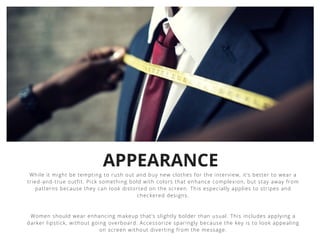
While it might be tempting to rush out and buy new clothes for the interview, it’s better to wear a
tried-and-true outfit. Pick something bold with colors that enhance complexion, but stay away from
patterns because they can look distorted on the screen. This especially applies to stripes and
checkered designs.
Women should wear enhancing makeup that’s slightly bolder than usual. This includes applying a
darker lipstick, without going overboard. Accessorize sparingly because the key is to look appealing
on screen without diverting from the message.
SOUND BITES
If allowed, send the person who is conducting the
session some questions from the prepared sheet.
This will help steer the conversation into familiar
territory.
Otherwise, come up with a list of key points and
sound bites that pertain to the topic. When the time
comes, weave the appropriate ones into the
conversation.
Regardless of the circumstances, keep answers
concise, even on passionate subjects. Don’t elaborate
too much but go beyond one-syllable answers. Let
the journalist set the pace, and give him openings to
ask for more details.
BODY
LANGUAGE AND
SPEECH
Being nervous or excited is normal, but try to
harness this energy during the interview. Maintain
eye contact with the journalist and minimize hand
gestures. Make it a point to concentrate on distinct
speech by not talking too fast. It’s also important to
convey the right image while listening. When the
interviewer speaks, put on a friendly expression.

Nelson Lewis | How to Make an Impression During a Televised Interview

  • 1.
    HOW TO MAKEAN IMPRESSION DURING A TELEVISED INTERVIEW Nelson Lewis
  • 2.
    PRACTICE Practice by participatingin mock interviews beforehand. Enlist the help of friends, playback the video and analyze the results. Look for potential issues that can be improved, such as unclear speech and slumped posture. The preparation process also includes trying to anticipate what might come up during the interview. Create a document that contains possible questions, and come up with refined answers. Get feedback from people to see the reactions the topics will garner, and keep the most promising retorts.
  • 3.
    APPEARANCE While it mightbe tempting to rush out and buy new clothes for the interview, it’s better to wear a tried-and-true outfit. Pick something bold with colors that enhance complexion, but stay away from patterns because they can look distorted on the screen. This especially applies to stripes and checkered designs. Women should wear enhancing makeup that’s slightly bolder than usual. This includes applying a darker lipstick, without going overboard. Accessorize sparingly because the key is to look appealing on screen without diverting from the message.
  • 4.
    SOUND BITES If allowed,send the person who is conducting the session some questions from the prepared sheet. This will help steer the conversation into familiar territory. Otherwise, come up with a list of key points and sound bites that pertain to the topic. When the time comes, weave the appropriate ones into the conversation. Regardless of the circumstances, keep answers concise, even on passionate subjects. Don’t elaborate too much but go beyond one-syllable answers. Let the journalist set the pace, and give him openings to ask for more details.
  • 5.
    BODY LANGUAGE AND SPEECH Being nervousor excited is normal, but try to harness this energy during the interview. Maintain eye contact with the journalist and minimize hand gestures. Make it a point to concentrate on distinct speech by not talking too fast. It’s also important to convey the right image while listening. When the interviewer speaks, put on a friendly expression.